
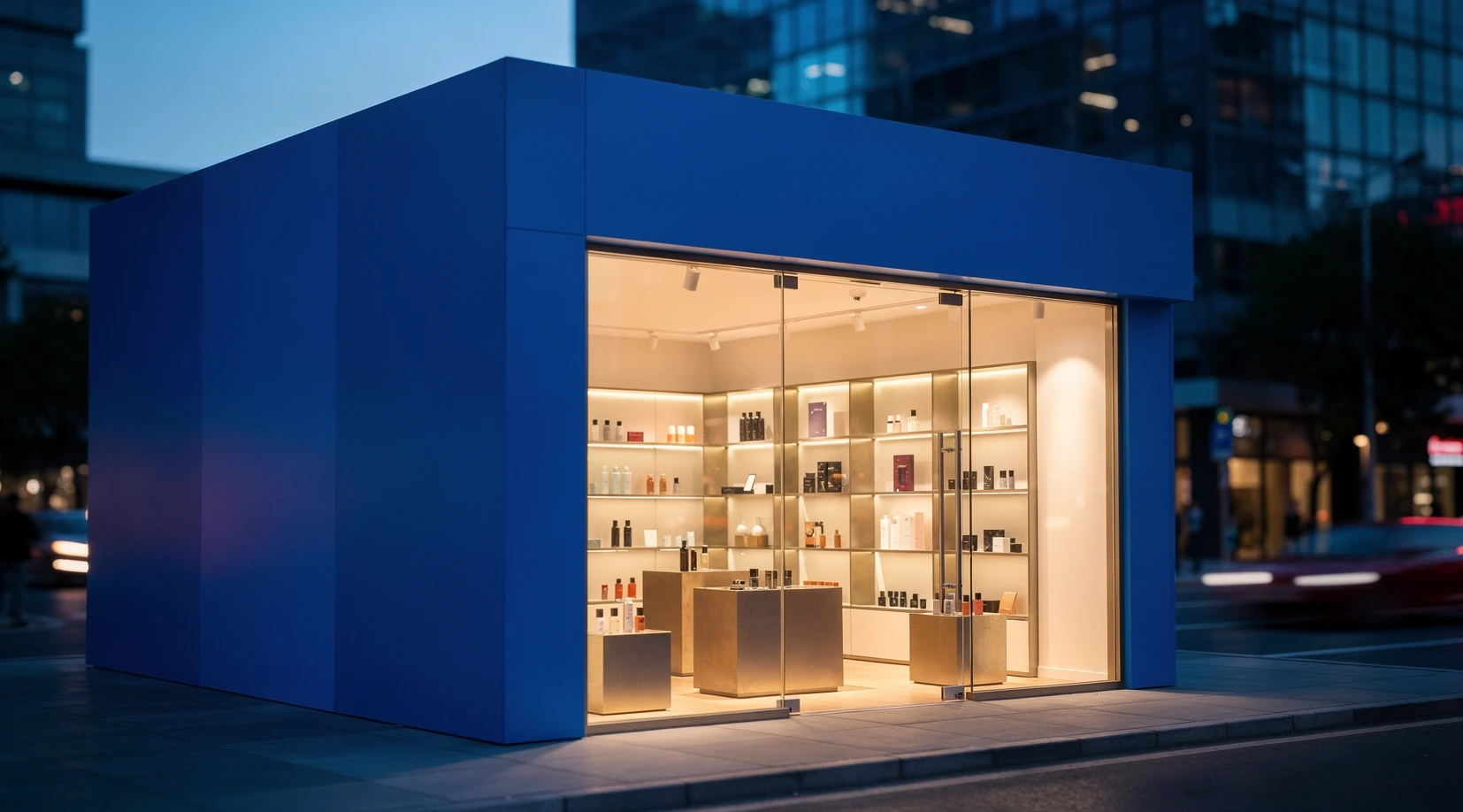
Pop-up retail has moved from a marketing stunt to a core growth channel for brands that need to acquire customers, test markets and build physical presence without signing a decade-long lease. For direct-to-consumer brands, established retailers and e-commerce-first companies alike, a temporary store is now one of the fastest ways to turn online demand into a measurable real-world relationship. This guide explains how pop-up retail works as a brand growth lever, where it creates value, where it quietly destroys margin, and how US teams can build a repeatable playbook rather than a one-off experiment.
In short
- Pop-up retail is a growth channel, not a gimmick. A temporary store compresses customer acquisition, market testing and brand building into a single physical footprint that can be opened in weeks and measured in days.
- The economics only work with a clear objective. A pop-up run for awareness is measured differently from one run for sales, and the most common failure is funding one goal while reporting on another.
- Online brands gain the most. For D2C and marketplace-native brands, a pop-up converts anonymous traffic into first-party data, customer feedback and word of mouth that paid media cannot buy at the same cost.
- Location, duration and staffing drive the result. The same product in the wrong neighborhood, open for the wrong window, staffed by the wrong people will underperform a smaller, sharper activation every time.
- Measurement is the hard part. Foot traffic, capture rate, dwell time, email capture, post-event online lift and customer acquisition cost together tell the real story, and most teams track only the first and the last.
Why pop-up retail matters as a growth lever in 2026
The economics of getting in front of a new customer have shifted. Digital acquisition costs have climbed for years as auction-based ad platforms saturate, privacy changes erode targeting, and the same audiences see the same creative across every feed. A physical activation cuts through that noise because it occupies attention in a way a scrollable ad cannot. For a growing brand, the question is no longer whether to go offline, but how to do it without the fixed cost of permanent stores.
Pop-up retail answers that question by unbundling the value of a store from the commitment of a lease. A brand can rent a space for a weekend, a month or a season, prove that a market exists, and walk away with data instead of a liability. That optionality is the whole point. In a year where many retailers are cautious about long-term real estate and consumers are selective about where they spend, the ability to show up, learn and leave is a structural advantage.
There is also a supply-side reason this works now. Vacancy in many US retail corridors has created a deep inventory of short-term space, and a layer of specialist operators and platforms has emerged to match brands with landlords on flexible terms. What used to require a broker, a lawyer and a build-out crew can now be arranged through a marketplace in a fraction of the time. That friction reduction is what turns pop-ups from a rare campaign into a programmable channel.
How the channel compares to the alternatives
To see why pop-ups have become a default growth tool, it helps to put them next to the other ways a brand can buy reach and presence. Each channel trades off speed, cost, commitment and the quality of the relationship it builds. A pop-up sits in a distinctive spot: faster than a permanent store, deeper than a paid ad, and more measurable than a wholesale placement.
| Growth channel | Time to launch | Commitment | First-party data quality | Best for |
|---|---|---|---|---|
| Pop-up store | 2–8 weeks | Days to months | High | Testing, acquisition, brand moments |
| Permanent store | 6–18 months | 3–10 years | High | Proven markets, anchor presence |
| Paid digital ads | Days | None | Low to medium | Scale, retargeting, fast iteration |
| Wholesale or shop-in-shop | 3–9 months | Season to multi-year | Low | Distribution, credibility, volume |
| Events and markets | 1–4 weeks | Single dates | Medium | Sampling, niche audiences |
The table makes the strategic role clear. A brand that wants pure scale buys ads. A brand that has proven a market and wants permanence signs a lease. A pop-up is the bridge between those states, and increasingly it is also the audition that decides whether a permanent location is justified at all, a decision we cover in more depth in our guide to turning a pop-up into a permanent store.
Key terms and definitions
Pop-up retail has its own vocabulary, and using it precisely keeps a team honest about what it is actually buying. The terms below recur in every brief, budget and post-event review, and confusing them is how activations end up optimized for the wrong outcome.
The core concepts
A pop-up store (see the general background on pop-up retail) is any temporary, physical retail space a brand operates for a defined period, from a single day to several months. A flagship pop-up is a larger, design-led version built primarily for brand storytelling and press rather than unit sales. A shop-in-shop places a temporary branded space inside a larger host retailer, borrowing its foot traffic. A roving or tour pop-up moves between cities on a schedule, trading depth in one market for breadth across several.
On the metrics side, capture rate is the share of passersby who enter the space, and conversion rate is the share of visitors who take the target action, whether that is a purchase, a sign-up or a demo. Dwell time measures how long visitors stay, a strong proxy for engagement. Cost per acquisition in a pop-up context should include the full activation cost divided by the net new customers it produces, not just transaction count.
Objective types that change everything downstream
Every pop-up is built for one of a small set of objectives, and the objective dictates the location, layout, staffing and definition of success. The four most common are awareness, acquisition, sales and research. An awareness pop-up wants reach and shareable moments. An acquisition pop-up wants email and SMS sign-ups it can remarket to. A sales pop-up wants revenue per square foot. A research pop-up wants qualitative feedback and product-market validation.
The practical rule is that a single pop-up can serve one primary objective and one secondary objective, but not all four. Teams that try to maximize every metric at once end up with a confused space that converts poorly on all of them. Naming the primary objective in the brief, before any creative or location work begins, is the single highest-leverage decision in the entire process.
How pop-up retail works in practice
A well-run pop-up follows a predictable lifecycle, and treating it as a project with phases rather than a single event is what separates repeatable programs from lucky one-offs. The lifecycle runs from objective-setting through location, build, operation and the post-event analysis that feeds the next one.
From brief to opening day
The process starts with the objective and a budget envelope, then moves to location scouting against that objective. A brand chasing awareness looks for high-traffic, high-visibility corridors. A brand chasing acquisition in a specific customer segment looks for neighborhoods where that segment already lives and shops. Once a shortlist exists, the brand negotiates a short-term license rather than a traditional lease, which keeps exit clean and fast.
Build-out for a pop-up is deliberately light. The goal is a space that photographs well, communicates the brand in seconds and guides visitors toward the target action, all without the cost of permanent fixtures. Modular displays, rented furniture and reusable signage keep capital expenditure low and let the same kit travel to the next city. The fuller cost breakdown, from rent to staffing to fit-out, is worth modeling carefully before committing, and we walk through real numbers in our analysis of pop-up retail economics for a 30-day space.
Running the space day to day
Once open, the daily operation centers on three things: capturing data, creating moments and watching the numbers. Staff are trained not just to sell but to capture email and SMS opt-ins, gather feedback and encourage the social sharing that extends reach beyond the physical footprint. The best activations treat every visitor as a data point and a potential advocate, not only a transaction.
Measurement happens in real time so the team can adjust. If capture rate is low, the window display or street signage is the problem. If dwell time is high but conversion is low, the offer or the path to purchase needs work. If sign-ups lag, the incentive is too weak. A pop-up that runs for a month gives a team several cycles to learn and fix, which is exactly why the format is such an effective testing instrument.
Closing and harvesting the value
The end of a pop-up is where much of its value is realized, and it is the phase most teams neglect. Closing cleanly means reconciling the data captured, calculating true cost per acquisition, and most importantly activating the audience built during the run. The email and SMS lists, the social followers and the customer feedback are assets that keep producing returns long after the doors close, provided someone owns the follow-up.
Common mistakes and how to avoid them
Most disappointing pop-ups fail for predictable, avoidable reasons. The errors cluster around objectives, location, measurement and follow-through, and recognizing them in advance is cheaper than learning them through a failed activation.
Confusing the objective with the metric
The most expensive mistake is funding a pop-up for one goal and judging it by another. A brand spends to build awareness in a premium corridor, then declares the activation a failure because same-day sales did not cover costs. Awareness pop-ups are not supposed to pay back in transactions, they pay back in reach, data and downstream conversions. Defining the right success metric before launch prevents a successful activation from being killed by the wrong scorecard.
Choosing location on price instead of fit
Cheap space is rarely cheap. A low-rent location with the wrong foot traffic produces a low capture rate, which means the brand pays per visitor far more than it would have in a pricier but better-matched corridor. Location should be chosen against the target customer and objective first, with rent as a constraint rather than the leading variable. The right question is cost per qualified visitor, not cost per square foot.
Under-investing in data capture
A pop-up that sells well but captures no contact data has converted a growth opportunity into a one-time transaction. Without email, SMS or loyalty sign-ups, there is no way to remarket, measure post-event lift or build the lifetime value that justifies the activation. Every visitor interaction should have a low-friction path to opt in, and staff incentives should reward sign-ups alongside sales.
Forgetting the experience
A pop-up that looks and feels like a generic shelf of products wastes the format’s biggest advantage. The reason physical activations outperform ads is that they create memorable, shareable experiences, and a space with no reason to linger or photograph leaves that value on the table. Experiential design is not decoration, it is the mechanism that drives dwell time, social reach and word of mouth, a link explored in our piece on experiential retail that drives sales, not just footfall.
No plan for the day after
The final common error is treating the closing day as the finish line. The audience, data and learnings generated by a pop-up only compound if someone owns the follow-up: the welcome email sequence, the retargeting campaign, the analysis that decides the next market. Without that ownership, the brand pays for a moment instead of building a channel.
Examples from US retail and e-commerce
The pop-up playbook shows up across very different kinds of companies, and the variety is instructive. Online-native brands, legacy retailers and even pure marketplaces use temporary space, but they use it for different reasons and measure it in different ways.
Direct-to-consumer brands building physical credibility
For D2C brands that grew up online, the pop-up is often the first time customers can touch the product, and that tactile reassurance closes a gap that no amount of photography can. Categories where fit, feel or scale matter, such as apparel, mattresses, furniture and beauty, see disproportionate value because the in-person experience resolves the exact doubts that suppress online conversion. The pattern is consistent: a brand opens in a few key cities, sees an online sales lift in those metro areas during and after the run, and uses the data to decide where permanent retail makes sense.
These brands also use pop-ups to lower blended acquisition cost. When digital channels saturate in a given market, a physical activation reaches people who have tuned out the ads, and the email and SMS lists it builds feed back into owned channels that cost far less than paid media. The activation effectively converts expensive paid reach into cheap owned reach.
Established retailers testing concepts and inventory
Larger retailers use pop-ups as low-risk laboratories. A national chain can test a new store format, a new category or a seasonal concept in a temporary space before committing capital to a rollout. Holiday-season pop-ups are the most visible version, but the more strategic use is format testing, where a retailer tries a smaller footprint or a new merchandising approach and reads the results before scaling. This sits inside the broader strategic picture every retail team should be tracking this year, which we round up in our 2026 list of retail company watch flags.
Marketplaces and platforms going physical
Even companies whose entire business is digital use temporary physical space to build trust and showcase sellers. A marketplace might run a curated pop-up featuring its top independent merchants, turning an abstract platform into a tangible, browsable experience. The objective is rarely direct sales, it is brand affinity and seller acquisition, and the metric is press coverage, sign-ups and the halo effect on platform engagement.
Tools, partners and vendors worth knowing
The pop-up ecosystem has matured into a stack of specialist providers that handle the parts a brand does not want to build in-house. Knowing the categories of partner, and what each is good for, shortens the path from idea to open doors.
Space and the rest of the operating stack
The foundation is space sourcing. Short-term retail marketplaces and brokers now specialize in matching brands with available storefronts on flexible terms, often with standardized licenses that cut legal time dramatically. Around that sit the operational layers a pop-up needs: a point-of-sale system that works the way the online store does, data capture tools for email and SMS, and the analytics to read foot traffic and conversion. The table below maps the categories most teams end up assembling.
| Partner category | What it solves | When you need it |
|---|---|---|
| Space marketplaces | Finding and licensing short-term retail space fast | Every pop-up |
| Mobile POS | Taking payment and syncing with online inventory | Any sales-focused activation |
| Data capture and CRM | Turning visitors into addressable contacts | Acquisition objectives |
| Traffic analytics | Measuring capture rate, dwell time and conversion | Anything you plan to repeat |
| Build and fixtures | Modular, reusable displays and signage | Design-led or roving pop-ups |
| Staffing agencies | Trained, on-brand retail staff for short runs | Multi-city or large-format |
Choosing partners against your objective
The right stack depends entirely on the primary objective. An acquisition-focused pop-up over-invests in data capture and CRM, because the contacts are the deliverable. A sales-focused pop-up over-invests in POS and inventory sync, because frictionless checkout is the bottleneck. An awareness-focused pop-up over-invests in build, design and staffing, because the experience is the product. Matching the spend to the objective is how a team avoids paying for capabilities it will not use while underfunding the one that determines success.
Building a repeatable pop-up program
The brands that get the most from pop-ups stop treating each one as a separate campaign and start running them as a program. A program has a standard brief template, a reusable kit of fixtures, a fixed measurement framework and a decision rule for when a market graduates to a permanent location. That standardization is what turns a series of experiments into a channel with predictable economics.
The measurement framework that makes it repeatable
A repeatable program rests on consistent measurement. The core metrics are capture rate, dwell time, conversion, cost per acquisition and post-event online lift in the local market, tracked the same way every time so results are comparable across cities and seasons. With a consistent scorecard, a brand can rank markets, refine its location criteria and forecast the return on the next activation with growing confidence.
When to graduate a market to permanent retail
The clearest payoff of a pop-up program is the data it generates about where permanent retail would work. A market that shows strong capture, high conversion and durable post-event online lift across more than one activation is a candidate for a lease. A market that performs once and fades is not. Letting the pop-up data drive that decision, rather than instinct or opportunism, is how brands avoid the expensive mistake of signing a long lease in the wrong place. For the wider context on where physical retail is heading and how temporary formats fit the long arc, see our overview of the state of retail across department stores, grocers and experiences.
What pop-up retail does not solve
For all its strengths, a pop-up is the wrong tool for some jobs, and recognizing the limits prevents wasted budget. It is not a substitute for distribution at scale, it is not a fix for a weak product, and it is not a reliable short-term profit center for most brands.
A pop-up reaches the people who pass a single location during a finite window, which is a tiny fraction of the audience a digital campaign or a wholesale placement can touch. If the goal is pure volume, the math rarely favors temporary physical space. The format is about depth of relationship and quality of data, not breadth of reach.
It also cannot rescue a product that does not resonate. A great experience around a weak product produces good feedback that the product is weak, which is valuable research but a poor return if the brand expected sales. And because the fixed costs of space, build and staff are real, most pop-ups do not turn a clean direct profit in their run, they pay back through the customers, data and decisions they generate afterward. Judging one purely on same-period profit is the surest way to misread its value, a theme that recurs across the strategic flags in our state of retail coverage.
Frequently asked questions
How long should a pop-up run?
It depends on the objective. Awareness and press-driven activations can work in a single weekend, while acquisition and sales pop-ups usually need three to four weeks to give the team enough cycles to optimize and to read reliable data. A common sweet spot is a 30-day run, which balances setup cost against learning time and produces enough traffic for statistically meaningful results.
How much does a pop-up cost to run?
Cost varies widely with location, size and duration, but the main line items are short-term rent, fit-out and fixtures, staffing, point-of-sale and data tools, and marketing to drive footfall. A small activation in a secondary market can run a few thousand dollars, while a design-led flagship in a major city can reach six figures. The key is to model full cost against the customers and data produced, not just rent.
Is a pop-up better than spending the same budget on ads?
They do different jobs. Ads buy scale and fast iteration, while a pop-up buys depth of relationship, high-quality first-party data and physical credibility that ads cannot deliver. For many growing brands the strongest play is to use both: ads to drive traffic to the pop-up, and the pop-up to build the owned audience that lowers future ad dependence.
What is the single most important metric for a pop-up?
There is no universal answer because it depends on the objective, but cost per acquisition, calculated with the full activation cost and net new customers, is the most broadly useful. It forces the team to account for total spend against durable value rather than celebrating raw foot traffic or same-day transactions that do not reflect the real return.
Can an online-only brand benefit from a pop-up?
Online-native brands often benefit most. A pop-up lets customers touch the product, resolves the doubts that suppress online conversion, and builds email and SMS lists that feed cheaper owned channels. Many D2C brands see a measurable online sales lift in the local market during and after a run, which is often the clearest justification for the activation.
How do I choose a location for a pop-up?
Start from the objective and the target customer, not from rent. Identify where your ideal customer already shops or spends time, then evaluate corridors on cost per qualified visitor rather than cost per square foot. A pricier space with the right foot traffic usually outperforms a cheap space in the wrong neighborhood once capture rate is factored in.
When does a pop-up justify opening a permanent store?
When a market shows strong capture rate, high conversion and durable post-event online lift across more than one activation. A single strong run can be luck, but repeated performance in the same metro is a reliable signal that permanent retail would pay back. Letting the pop-up data drive the decision avoids the costly mistake of committing to a long lease on instinct.
How do I keep the value after the pop-up closes?
Assign clear ownership of the follow-up before the doors close. That means activating the email and SMS lists with a welcome sequence, retargeting the audience online, and running the post-event analysis that decides the next market. The data and audience a pop-up builds only compound if someone is accountable for turning them into ongoing revenue.
What is the most common reason pop-ups fail?
Confusing the objective with the metric. Brands fund a pop-up for awareness or data, then judge it on same-day sales and conclude it failed. Defining the primary objective and its matching success metric before any creative or location work begins is the single highest-leverage step in the entire process.