
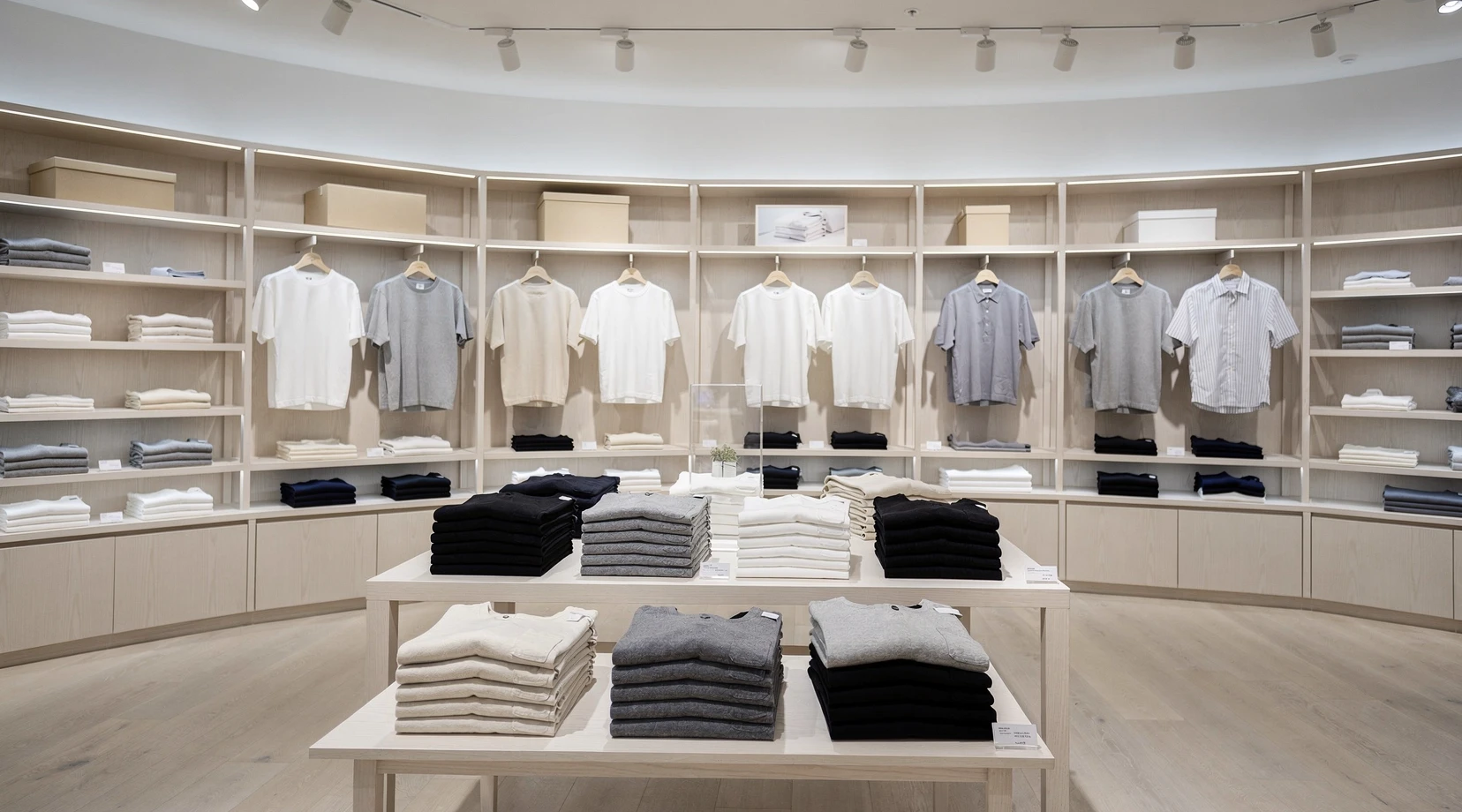
Fast Retailing, the Japanese company behind Uniqlo, delivered one of its strongest quarters on record and lifted its full-year profit forecast to an all-time high. The market’s response was to sell. Shares in the world’s third-largest apparel group fell as much as 5.1% in early Tokyo trading on Friday, July 10, unwinding part of a rally that had carried the stock up more than 40% since the start of 2026. The trigger was not the numbers, which beat expectations across the board, but a warning from the company’s finance chief about the yen, now languishing near a 40-year low against the dollar.
The reaction captures a growing tension inside Japan’s export-facing champions. A cheap currency flatters reported earnings and draws foreign shoppers into Uniqlo’s flagship stores, yet it also lifts the cost of imported materials and threatens domestic demand as households feel the squeeze. Fast Retailing’s message on July 10 was that the good news is largely in the price, and that the currency could turn from tailwind to headwind before the fiscal year closes in August.
In short
- Record quarter, record outlook: Fast Retailing’s operating profit for the three months to May rose 45.7% to 213.79 billion yen (about USD 1.32 billion), well above the 177.73 billion yen analysts had penciled in.
- Guidance raised again: The group now expects full-year operating profit of 730 billion yen (about USD 4.50 billion), up from a prior 700 billion yen, its third consecutive quarterly upgrade.
- The stock still fell: Shares slid as much as 5.1% at the Tokyo open on July 10, a classic sell-the-news move after a run that left the stock up roughly 42% year to date.
- The yen is the swing factor: CFO Takeshi Okazaki said the currency, near a four-decade low around 162 yen per dollar, could drag on sales and profit in Japan during the fourth quarter.
- Global growth is broad: North America, Europe, Southeast Asia and even Mainland China all contributed, with the United States singled out as a standout as Uniqlo pushes toward 200 stores in the region.
What Fast Retailing reported and why the stock still fell
After the close of trading on Thursday, July 9, Fast Retailing released results for the nine months to the end of May, the first three quarters of a fiscal year that runs to August. The headline was unambiguous strength. Third-quarter operating profit reached 213.79 billion yen, up 45.7% from 146.74 billion yen a year earlier, and comfortably ahead of the 177.73 billion yen average analyst estimate compiled ahead of the release.
Net profit for the quarter climbed 39% to 146.7 billion yen (about USD 0.90 billion), on revenue of 1.01 trillion yen (about USD 6.22 billion), a rise of 22%. Management then raised the bar for the full year, lifting the operating profit forecast to a record 730 billion yen and reiterating that the company is on course for a fifth straight year of record earnings.
None of that stopped the shares from falling when Tokyo opened on Friday. The stock dropped as much as 5.1% in early trade, according to Reuters. The move was less a verdict on the quarter than on the setup going into it: after a near-continuous climb, expectations had risen faster than the fundamentals, leaving little room for an upside surprise to move the price higher.
Jun Kitazawa, deputy manager at Miki Securities, framed the dynamic plainly. “The share price has risen over roughly the past three months, so a sense of the good news being priced in seems to have emerged,” he said, adding that bargain-hunting buyers could eventually step back in. In other words, the sell-off looked like profit-taking rather than a change in the underlying story.
Inside the numbers: a record quarter in detail
The quarter’s quality lay in its breadth. Growth did not depend on a single hero market or a one-off gain. Instead, Uniqlo International, the domestic Uniqlo business, and the GU value brand each pulled in the same direction, while cost discipline and a favorable currency translation amplified the reported figures.
Operating profit and the beat
The 45.7% jump in operating profit is the number that will anchor coverage, and it matters for two reasons. First, it beat the consensus by roughly 20%, a wide margin for a company this size and this closely followed. Second, it was driven by operating leverage: revenue rose 22% while profit rose far faster, a sign that Fast Retailing is converting each additional yen of sales into a larger slice of profit as stores mature and supply chains settle.
Revenue and margins
Quarterly revenue of 1.01 trillion yen crossed a symbolic line for a three-month period and reflected both new store openings and stronger productivity from existing locations. Uniqlo International revenue rose 8.3% to nearly 443 billion yen (about USD 2.7 billion), with North America reporting higher revenue and profit. The margin expansion behind the profit beat came partly from pricing discipline and partly from the mix shift toward higher-return overseas markets.
The raised full-year outlook
Fast Retailing now guides to full-year revenue of 3.97 trillion yen (about USD 24.5 billion), up 16.7%, and net profit of 500 billion yen (about USD 3.08 billion), up 15.5%. The operating profit upgrade to 730 billion yen from 700 billion yen is the third in as many quarters, a cadence that has helped fuel the stock’s 2026 rally and, paradoxically, set the stage for Friday’s pullback by raising the bar the company must clear each time it reports.
The yen problem: why a 40-year low cuts both ways
The single sentence that moved the stock came from CFO Takeshi Okazaki, who cautioned that a weakening yen was expected to weigh on sales and profit in Japan during the fourth quarter. “A sustained downward trend has recently emerged, and I must frankly admit that the situation is becoming increasingly difficult,” he said of the currency. He also warned that “the currency’s slide could potentially have a significant impact on our performance.”
At the time of the results, the dollar bought about 162.31 yen, close to levels not seen in four decades. For a company that reports in yen but sources heavily in dollars, that rate is a double-edged sword. It inflates the yen value of overseas sales when they are translated home, which flatters the group’s headline growth. It also raises the cost of imported fabric, labor priced in stronger currencies, and dollar-denominated shipping.
Translation gains versus sourcing costs
The near-term math has favored Fast Retailing because its overseas business is now large enough that translation gains outweigh input-cost inflation. The risk Okazaki flagged is that the balance tips at home, where Japanese consumers face rising import-driven prices without the offsetting benefit of foreign revenue. If domestic shoppers trade down or pull back, the currency stops being a reported-profit tailwind and starts eroding the group’s most mature market.
The domestic demand question
Japan remains Fast Retailing’s single largest market by store count, so any softening there carries weight even as international growth accelerates. The company has leaned on the GU brand to capture value-seeking shoppers and on Uniqlo’s core LifeWear basics to hold price-sensitive customers, but a prolonged yen slide would test how much price increase Japanese households will absorb before volumes suffer. For merchants managing multi-currency exposure, the episode is a reminder that moving money across borders and hedging translation risk have become core operating skills rather than back-office afterthoughts.
The regions: where the growth came from
Fast Retailing’s quarter was a study in geographic diversification, the payoff from years of building Uniqlo into a genuinely global brand rather than a Japanese exporter with overseas outposts. Each major region contributed, and the reasons differed enough to make the growth look durable rather than cyclical.
North America
The United States was the clear standout. Recently opened stores in New York, Chicago and Boston lifted regional sales, helping push revenue and profit gains into double digits. North America has become the growth engine that investors most want to see, because it is the market with the longest runway and the highest willingness to pay full price for Uniqlo’s basics.
Europe
Europe also posted double-digit gains, though management paired the optimism with caution about summer heatwaves that can distort seasonal buying patterns. Uniqlo’s European footprint is smaller than its Asian base, which leaves room for both new stores and deeper penetration in existing cities.
Mainland China
China, long a source of concern for foreign retailers, delivered a cleaner quarter. By shuttering unprofitable locations, Fast Retailing lifted margins in the market while still recording revenue growth and double-digit profit gains. The rationalization strategy stands in contrast to the aggressive store-count race that has strained rivals, and it signals a shift from expansion at any cost toward quality of earnings.
Southeast Asia, India and Australia
The Southeast Asia, India and Australia cluster reported double-digit revenue and profit growth, extending Uniqlo’s reach across emerging middle-class markets. These regions are where the brand is still building density, and where a value-led apparel proposition travels well as incomes rise.
The US expansion bet: 200 stores by 2027
Behind the quarterly headlines sits a longer-term wager. Uniqlo has told investors it aims to reach roughly 200 North American locations by 2027, a target that would transform a business once concentrated in a handful of coastal flagships into a national chain. The 2026 opening slate is the clearest evidence of that ambition.
The 2026 openings
Uniqlo has outlined 11 new US openings for 2026, spread well beyond its New York heartland. The list includes four additional New York City stores, in Williamsburg, Union Square, the World Trade Center and Bryant Park, alongside locations in Boston, Seattle, Maryland and Washington, D.C. The spread is deliberate, mixing dense urban cores with suburban catchments to test where the brand travels best.
Flagship strategy
The most symbolic moves are flagship stores in Chicago and San Francisco, Uniqlo’s first flagships outside New York City. Flagships are expensive and slow to pay back, but they function as brand billboards in markets where recognition is still building. The strategy echoes the playbook of European fast-fashion peers, and it puts Uniqlo in direct competition for prime retail space with names like Zara, whose owner Inditex recently reported a Q1 profit rise of 5.4% on a strong summer start.
How Fast Retailing stacks up against apparel peers
Fast Retailing’s results land in a reporting season that has been kinder to disciplined operators than to volume-chasers. The comparison with peers is instructive, both for the numbers and for how the market treated each stock.
| Company | Latest reported result | Signal | Market reaction |
|---|---|---|---|
| Fast Retailing (Uniqlo) | Q3 operating profit +45.7%; FY guidance raised to record 730bn yen | Broad-based global growth, US standout | Shares fell up to 5.1% on yen warning |
| Inditex (Zara) | Q1 profit +5.4%, summer start beat estimates | Steady margin-led growth | Beat welcomed |
| H&M | Q2 profit beat, operating margin near 12% | Margin recovery, flat sales | Beat welcomed |
| Trent (Zudio, Westside) | Q1 revenue miss | Store-productivity concerns | Shares crashed about 12% |
The pattern is clear. Investors have rewarded companies that grow profit faster than sales and punished those whose top-line momentum stalls. India’s Trent, owner of the fast-growing Zudio chain, saw its shares crash about 12% on a Q1 revenue miss, a reminder that in this environment a single soft number can erase months of gains. Fast Retailing sits at the opposite end of the spectrum operationally, yet its stock still fell, which tells you how much optimism was already embedded in the price.
Margin discipline as the dividing line
The through-line across the sector is margin. Inditex has defended profitability through tight inventory control, while H&M’s recovery has been built on lifting its operating margin back toward 12% even as sales stayed flat. Fast Retailing’s 45.7% profit jump on 22% revenue growth is the most extreme example of the same principle, and it is the reason the company can keep raising guidance while rivals merely stabilize.
The LifeWear model and why it keeps winning
Uniqlo’s commercial engine is a deliberately narrow one. Rather than chase trends across thousands of fast-turning styles, the brand sells a compact range of functional basics that it calls LifeWear: crew necks, oxford shirts, down jackets, and technical lines such as HeatTech thermals and AIRism breathable fabrics. The bet is that a smaller, better assortment sells more predictably and wastes less inventory than the fashion-forward churn favored by rivals.
That model has three financial advantages that showed up clearly in the latest quarter. It keeps markdowns low because fewer items go out of style, it lets the company buy fabric in bulk for staple products, and it builds repeat purchases as customers return to replace items they already trust. The result is the kind of margin resilience that let operating profit outrun revenue by more than two to one in the three months to May.
Product as marketing
Uniqlo spends comparatively little on conventional advertising, leaning instead on collaborations and on the products themselves to generate attention. Flagship stores in high-traffic districts act as showrooms that convert curiosity into habit, which is why the company is willing to absorb the high fixed cost of prime real estate in Chicago, San Francisco and central New York.
The GU counterweight
Sitting below Uniqlo in price is GU, the group’s faster, cheaper, more trend-driven brand. GU gives Fast Retailing a way to capture value-seeking shoppers, especially in Japan, without diluting the Uniqlo positioning. In a quarter where the CFO flagged pressure on Japanese household budgets, having a lower-priced sister brand is a useful hedge against consumers trading down.
Risks that could derail the record run
For all the strength in the numbers, management was careful to name the hazards, and investors clearly listened. The clearest near-term risk is the currency itself. A yen that keeps sliding would eventually squeeze Japanese purchasing power faster than overseas translation gains can compensate, which is precisely the scenario Okazaki described.
Weather is a second, more mundane risk. The company cautioned about summer heatwaves in Europe, which compress demand for the transitional and outerwear categories where Uniqlo earns much of its margin. A hot, short autumn can leave seasonal inventory unsold and force the discounting the LifeWear model is designed to avoid.
Supply chains are a third watch item. Fast Retailing said it weathered disruption to logistics linked to conflict in the Middle East, a reminder that a business sourcing across Asia and shipping worldwide remains exposed to freight shocks it cannot control. Longer routes and higher container costs would land on the same import bill the weak yen is already inflating.
Valuation as its own risk
The final risk is the one the market acted on July 10: price. A stock up more than 40% in half a year carries expectations that leave little cushion for disappointment. Even a small stumble on any of the operational risks could prompt a sharper correction than the fundamentals alone would justify, because so much good news is already reflected in the shares.
Why a profit beat can still trigger a sell-off
For readers outside equity markets, the disconnect between a record quarter and a falling stock can look irrational. It is not. Share prices reflect expectations, not levels, and by July a great deal of good news had already been bought.
Fast Retailing had climbed roughly 42% in 2026 before the results, with much of that gain arriving in the three months leading into the release. When a stock rises that far ahead of a report, the report has to be not just good but better than the elevated consensus to push the price higher. A beat that merely confirms the bull case, paired with a fresh risk like the yen warning, often prompts holders to lock in gains.
This is the same sell-the-news dynamic that has whipsawed retail and technology names throughout 2026, and it does not imply the business is weakening. If anything, the willingness of long-term investors to hold through a currency scare will be a truer test of conviction than any single day’s price action.
What it means for global retail and Japan Inc.
Fast Retailing’s quarter is a data point in two larger stories. The first is the health of global apparel demand, which looks resilient at the value end even as shoppers stay selective. Uniqlo’s basics-led model, priced below luxury but above fast-fashion churn, is proving well suited to a cautious consumer.
The second story is the strain a weak yen places on corporate Japan. Exporters have banked years of translation gains, but the currency’s slide is now testing domestic demand and import costs at the same time. The pressure is prompting some Japanese groups to rethink foreign holdings, with Starbucks, for instance, weighing a sale of its Japan stake as part of a broader asset-light pivot. Fast Retailing is on the opposite trajectory, doubling down on overseas growth, but both moves are responses to the same currency backdrop.
The read-across for retailers
There is also a competitive signal here for Western apparel chains. Uniqlo is no longer a curiosity in the United States but a scaling national player, and its willingness to open flagships in second cities raises the stakes for incumbents that have leaned on their home-market density. As the brand pushes toward 200 North American stores, it will compete directly for both prime leases and mid-market shoppers who might otherwise default to Gap, Old Navy or the fast-fashion chains.
For retail operators everywhere, the lesson is that operating discipline and geographic diversification are what markets now reward. Fast Retailing has spent a decade turning Uniqlo into a brand that earns full price on four continents, and that breadth is why a currency wobble in its home market did not derail the full-year story. The stock may have fallen on July 10, but the trajectory of the business points in one direction.
Key figures at a glance
| Metric | Value (yen) | Approx. USD | Change |
|---|---|---|---|
| Q3 operating profit | 213.79 billion | 1.32 billion | +45.7% YoY |
| Q3 net profit | 146.7 billion | 0.90 billion | +39% YoY |
| Q3 revenue | 1.01 trillion | 6.22 billion | +22% YoY |
| FY operating profit forecast | 730 billion | 4.50 billion | Raised from 700bn |
| FY revenue forecast | 3.97 trillion | 24.5 billion | +16.7% |
| FY net profit forecast | 500 billion | 3.08 billion | +15.5% |
Frequently asked questions
Why did Fast Retailing shares fall if profit beat expectations?
The shares fell as much as 5.1% because the stock had already risen about 42% in 2026, so a strong quarter was largely priced in. A fresh warning from the CFO about the weak yen dragging on fourth-quarter sales and profit in Japan gave holders a reason to take profits, a classic sell-the-news reaction rather than a judgment on the business.
How much did Fast Retailing’s operating profit rise?
Third-quarter operating profit rose 45.7% to 213.79 billion yen (about USD 1.32 billion) for the three months to May, well above the 177.73 billion yen average analyst estimate. Net profit rose 39% to 146.7 billion yen on revenue of 1.01 trillion yen.
What is the new full-year forecast?
Fast Retailing raised its full-year operating profit forecast to a record 730 billion yen (about USD 4.50 billion) from 700 billion yen. It guided to full-year revenue of 3.97 trillion yen, up 16.7%, and net profit of 500 billion yen, up 15.5%, its expected fifth consecutive year of record earnings.
Why is the weak yen a problem for a company with strong exports?
A weak yen flatters the yen value of overseas sales and draws foreign shoppers, which helps reported profit. It also raises the cost of imported materials and dollar-priced shipping, and it squeezes Japanese households through higher import prices. The CFO warned that this domestic pressure could weigh on sales and profit at home in the fourth quarter.
Which regions drove the quarter?
Growth was broad. North America was the standout, with new stores in New York, Chicago and Boston lifting sales. Europe posted double-digit gains, Mainland China improved margins by closing unprofitable stores while still growing, and the Southeast Asia, India and Australia cluster grew revenue and profit at double-digit rates.
How many US stores does Uniqlo plan to open?
Uniqlo has outlined 11 new US openings for 2026, including four in New York City plus Boston, Seattle, Maryland and Washington, D.C., and its first flagships outside New York in Chicago and San Francisco. The company aims to reach about 200 North American locations by 2027.
How does Fast Retailing compare with Zara and H&M?
Fast Retailing’s 45.7% operating-profit jump outpaced peers. Inditex, Zara’s owner, reported a Q1 profit rise of 5.4%, while H&M beat with an operating margin near 12% on flat sales. All three have leaned on margin discipline, but Fast Retailing combined that discipline with the fastest profit growth.
What does the sell-off mean for the outlook?
The one-day drop reflects positioning and profit-taking rather than a deterioration in the business. Analysts noted that bargain-hunting buyers could return. The main risk to watch is the yen and its effect on Japanese domestic demand, which the company itself flagged as the key swing factor for the fourth quarter.