
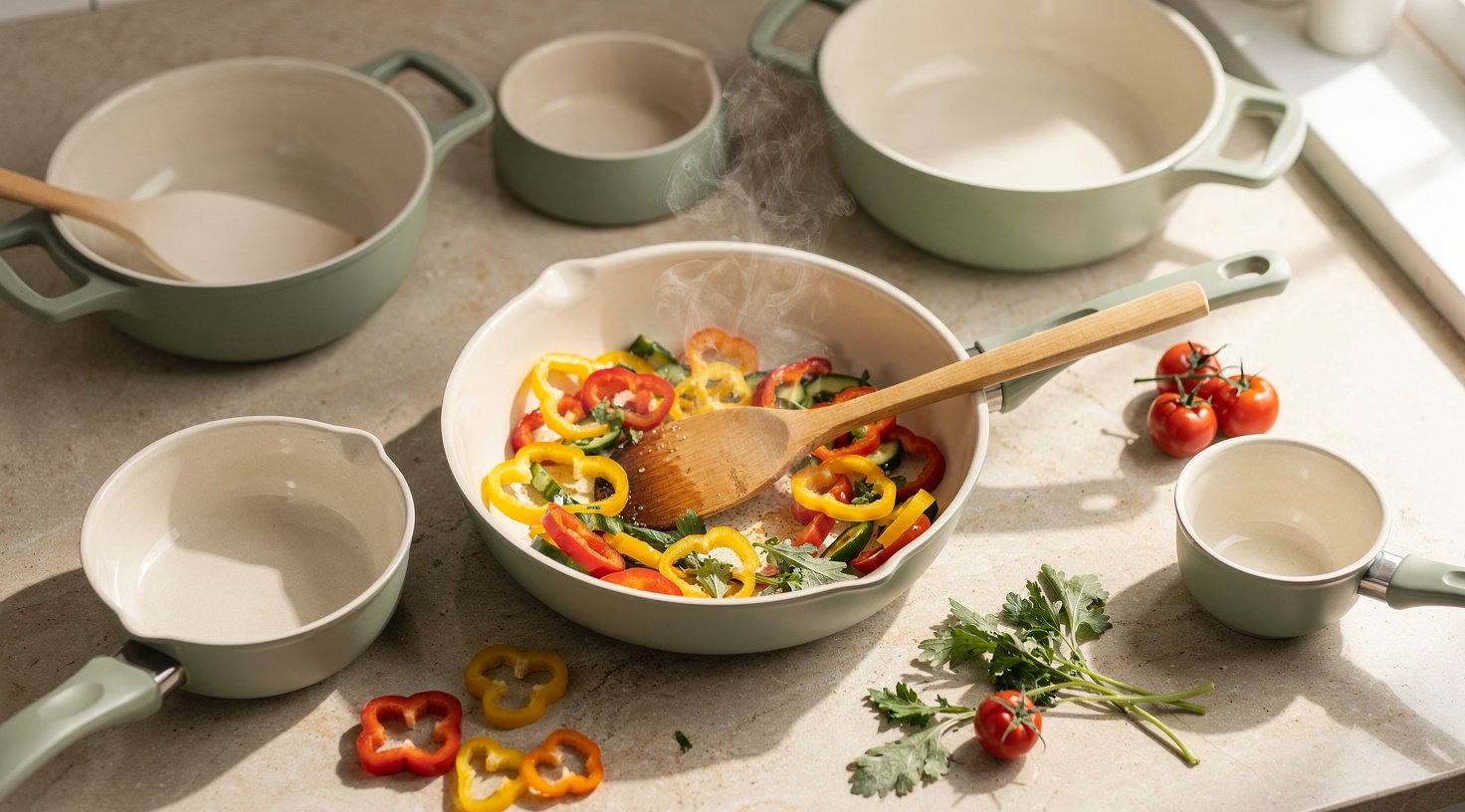
Caraway, the ceramic nonstick cookware brand that built its name selling directly to shoppers online, is now stocking more than 500 Walmart stores. The rollout, confirmed this week, is the largest retail expansion in the company’s history, and it drops a digitally native darling straight into one of the biggest store networks in the country.
The move matters beyond one cookware label. It is another loud signal that the pure direct-to-consumer model, the one that minted a wave of Instagram-era brands, is quietly being replaced by an everywhere-at-once approach. Caraway is not leaving the web. It is trying to be in your feed and in your local Walmart aisle at the same time.
The quick version:
- Caraway launched in 500+ Walmart stores this week, plus Walmart.com and Walmart Marketplace.
- The deal extends same-day delivery to roughly 50% of the US population.
- Caraway started as a DTC-only brand in 2019 and has now reached more than 2.5 million households.
- Leadership is steering toward a 50/50 split between DTC and wholesale revenue over the next 5 to 10 years.
What Caraway just put on Walmart shelves
Caraway’s bestselling cookware and kitchen essentials are now available in over 500 Walmart locations, alongside Walmart.com and the retailer’s third-party Marketplace. The company is calling it the biggest retail launch it has ever done.
Beyond its signature fry pans and cookware sets, Caraway has widened into bakeware, kitchen storage, knives and prep tools, and a curated slice of that range is what landed on Walmart shelves. The bet is about reach, not just shelf space. By plugging into Walmart’s logistics, Caraway says the partnership unlocks same-day delivery for about half of the US population, a level of speed and coverage that a standalone DTC brand cannot fund on its own.
“As we continue to evolve and elevate our assortment to meet the needs of our customers, we’re excited to bring Caraway to our cookware lineup,” said Danielle Lyman, VP of Cook and Dine at Walmart US. She added that Walmart shoppers “appreciate design and quality craftsmanship,” a nod to the retailer’s push to court higher-income households with premium labels.
Why a DTC brand chases a big-box deal
Caraway launched online in 2019 selling ceramic nonstick pans marketed as free of PFAS, the so-called forever chemicals found in many traditional nonstick coatings. That clean-materials angle plus heavy social marketing carried it to more than 2.5 million households.
Pure DTC has a ceiling, though. Paid acquisition keeps getting pricier, and plenty of customers want to touch a pan before buying it. Caraway’s answer has been steady wholesale expansion, and leadership has said it expects revenue to eventually settle around a 50/50 balance between its own site and retail partners.
Walmart is the largest piece of that strategy so far, but it is not the first. Here is how the brand’s wholesale footprint has grown:
| Partner | Year | Scale |
|---|---|---|
| Target | 2022 | ~350 locations |
| The Container Store | 2023 | 100+ locations |
| Walmart | 2026 | 500+ stores |
Caraway also raised a $35 million round back in 2022 to fund exactly this kind of omnichannel build-out, so the Walmart debut reads as the payoff of a multi-year plan rather than a sudden pivot.
The DTC-to-retail shift is now the whole playbook
Caraway is riding a trend, not starting one. Brands like Vuori, Rothy’s and Away, all born online, have spent the past few years opening physical stores and signing wholesale deals to keep growing after DTC growth flattened.
The maturity of the category showed up elsewhere this summer too. Sustainable fashion label Reformation filed for a New York Stock Exchange IPO with about $507 million in 2025 net revenue, roughly 90% of it from direct-to-consumer, and 20 straight quarters of double-digit growth. It was a rare proof point that disciplined DTC unit economics can actually support a public offering.
For Walmart, the pull runs the other way. Adding design-forward names like Caraway is part of a deliberate campaign to win over wealthier shoppers who might otherwise skip the big-box aisle entirely.
What it means for shoppers
For anyone who has eyed Caraway’s pastel pans online but balked at DTC pricing or shipping waits, the practical upside is simple: the cookware is now easier to find, faster to get, and sitting next to the rest of a weekly grocery run. Caraway sells full cookware sets rather than single pans, so placing them where families already shop for food removes one of the last frictions for a considered, higher-ticket kitchen purchase.
The PFAS-free pitch also lands in front of a much larger, more price-sensitive audience. Walmart’s scale means a clean-materials cookware line that used to live mostly in design-conscious online circles is now a mainstream shelf option.
What to watch next
The open question is margin. Wholesale deals trade fatter DTC margins and first-party customer data for volume and visibility, and getting that balance wrong has burned plenty of once-hot brands. Caraway is also expanding while navigating ongoing litigation with cookware group SEB, a reminder that scale invites scrutiny.
Still, the direction is clear. The brands winning in 2026 are not picking between their website and the store shelf. They are grabbing both, and Caraway’s Walmart debut is this week’s cleanest example.