
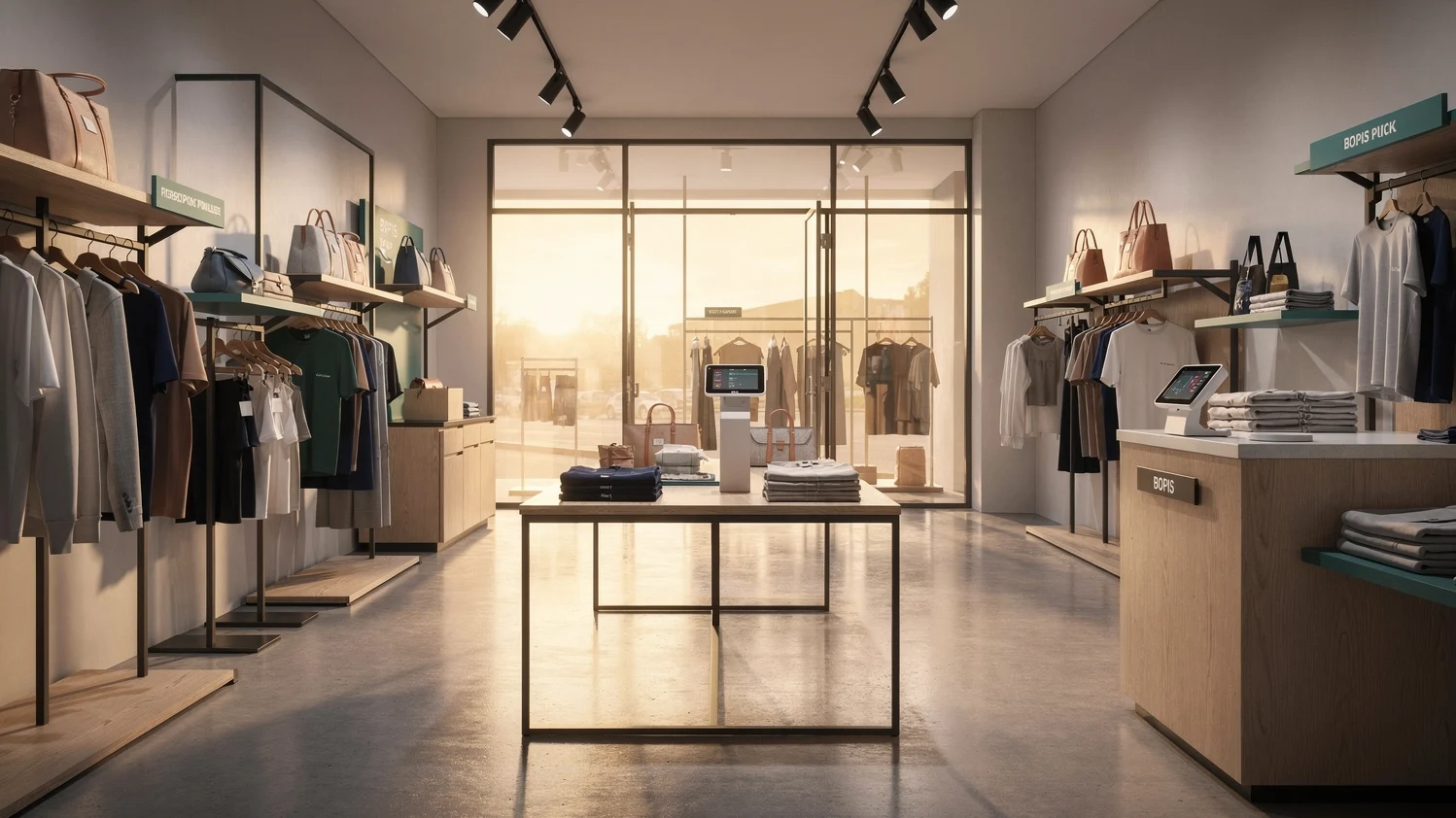
Walk into a well-run American store in 2026 and the first thing that strikes you is how little it resembles the mall anchor of 2015. The fixtures are lighter, the staff is doing things a 2015 associate would not recognize, and the math behind every square foot has been rewritten. Brick and mortar retail in 2026 is not the wheezing relic that obituary writers kept predicting through the pandemic years. It is leaner, smarter, and in many categories quietly outgrowing the digital-only competitors that were supposed to bury it.
This guide is a practical look at what changed, what stayed the same, and how operators are actually making physical stores work today. It sits inside the state of retail cluster on ShopAppy and is built for store leads, multi-unit operators, and e-commerce teams who are being asked to open or rethink their first physical footprint.
In short: the brick mortar 2026 picture
- Stores are growing, not shrinking. US net store openings have been positive for four straight years, led by off-price, grocery, dollar, and specialty.
- The job description changed. Half of what a 2026 store does is fulfill, return, or service a digital order rather than ring up a walk-in basket.
- Smaller boxes, denser networks. Average new store footprints are down roughly a third versus a decade ago, but the count is up.
- Labor is the bottleneck, not real estate. Rent matters; finding people who can run an omnichannel store matters more.
- Brand-first chains are using stores as media. The store is the cheapest customer acquisition channel a digitally native vertical brand has, once you measure halo correctly.
Why brick mortar 2026 matters more than the obituaries suggested
The headline number people forget is that roughly 80 percent of US retail spending still happens in a physical location. Even after a decade of e-commerce double-digit growth, the digital share of total retail sits in the high teens. That share keeps climbing, but the base is so large that physical stores absorbed about three of every four new dollars spent in 2025. Anyone planning a 2026 footprint needs to start from that ratio, not from a tech-conference slide.
Closures still happen, of course. Department stores have shed locations every year since 2019, and several mid-tier specialty chains entered restructuring during 2024 and 2025. What changed is that openings caught up. Off-price names like TJX and Ross, grocery and grocery-adjacent operators, dollar formats, beauty specialty, and a long tail of digitally native brands have been opening faster than legacy chains have been closing. The net for 2024 and 2025 was positive, and 2026 plans filed with REIT investors point to another positive year.
The other shift is qualitative. Stores that survived the 2020 to 2023 reset are, on average, more productive per square foot than they were going in. They carry less inventory, lean harder on data, and treat the store as a node in a fulfillment graph rather than a standalone P&L. That is the brick mortar 2026 playbook in one sentence, and it works whether you run 12 stores or 1,200.
Key terms before we go deeper
The vocabulary around physical retail has drifted, and a few terms now mean something different than they did even three years ago. A quick glossary keeps the rest of the article unambiguous.
| Term | What it meant pre-2020 | What it means in 2026 |
|---|---|---|
| BOPIS | Buy online, pick up in store; a nice-to-have | Baseline expectation; 30 to 50 percent of digital orders for many chains |
| Dark store | A closed location used for online fulfillment | A purpose-built micro fulfillment node, often inside a regular store |
| Store of the future | A flagship with smart mirrors and beacons | A small box where labor and fixtures are tuned to four-wall productivity, not gadgets |
| Endless aisle | A kiosk in the corner of the store | Native part of the POS that lets any associate order any SKU to any address |
| Halo effect | Vague brand lift from a new store | Measured uplift in same-zip e-commerce demand after a store opens, usually 20 to 80 percent |
If you internalize one of these, make it the halo line. It is the single number that has done the most to bring digitally native brands back to physical retail.
How a brick mortar 2026 store actually works
A typical specialty store in 2026 opens with a labor model that splits the day into three workstreams: selling, fulfilling, and servicing. Selling is the traditional floor coverage. Fulfilling is BOPIS picks, ship-from-store waves, and curbside handoffs. Servicing covers returns, exchanges, repairs, alterations, loyalty enrollment, and trade-in programs. In a well-tuned store these are not separate teams, they are tasks that the same associate moves between based on a workforce app on their phone.
Inventory is the second big change. Stores carry roughly 15 to 25 percent less unit depth than they did in 2019, because the network behind them can replenish faster and because shoppers have learned to trust ship-from-store for sizes and colors not on the floor. The visible assortment is sharper, which is also why visual merchandising rules that still work in every store have become more important, not less. With fewer SKUs on display, every facing has to earn its place.
The third change sits in the back office. Store managers in 2026 are reading dashboards that mix four-wall sales, BOPIS attach rate, fulfillment cost per order, shrink, and Net Promoter Score in one view. A good district manager can tell you the BOPIS pick accuracy of every store in their territory before they tell you yesterday’s comp. That is a major cultural shift from the comp-first world of 2018.
What is driving the new store math
Four forces are doing most of the work. Each one is observable in public filings from Target, Walmart, TJX, Ulta, Best Buy, Tractor Supply, and the larger digitally native brands.
- Fulfillment economics. Shipping a same-day order from a nearby store is materially cheaper than shipping from a regional distribution center, especially under 50 miles. The store becomes the lowest-cost last-mile node the chain owns.
- Return economics. Returning a digital order to a store costs roughly a third of what a mail return costs and converts the visit into an exchange about 25 to 40 percent of the time. That single mechanic has saved several apparel chains from the 2022 returns crisis.
- Customer acquisition cost. Paid social and search CPMs roughly doubled between 2020 and 2025. A new store in the right zip code now beats paid digital on cost per first-time buyer in most lifestyle categories.
- Experience moat. Categories where touch, fit, smell, or fitting room matter (beauty, intimates, eyewear, furniture, premium athletic) cannot be fully digitized. Stores in these categories have widening, not narrowing, advantages.
None of these is hypothetical. They show up in the same-zip lift numbers that Warby Parker, Allbirds, Glossier, Figs, and others have published since 2023, and in the steady cadence of new format announcements from Target small format, Walmart neighborhood, and the various grocery banners.
Common mistakes operators are still making in 2026
For all the progress, the same handful of unforced errors keep showing up in store P&Ls. If your physical footprint is underperforming, walk through this list before blaming the format.
Treating the store as a separate P&L from digital. When digital sales fulfilled by a store are credited to a regional warehouse, the store looks unprofitable and the chain underinvests in it. Modern omnichannel allocation gives the store credit for BOPIS, ship-from-store, and the measured halo on same-zip e-commerce. Fix the attribution and many supposedly weak stores turn green.
Hiring for 2018 labor models. Stores designed around fulfillment need different people than stores designed around the open-to-buy. They need associates who are comfortable with mobile apps, comfortable handling 80 picks an hour during a digital wave, and comfortable shifting between selling and servicing on the same shift. Staffing brick and mortar retail in a tight labor market covers the specific roles and pay bands that are working in 2026.
Overbuilding the box. Premium fixtures, oversized stockrooms, and elaborate experiential zones eat capex and rent without moving four-wall productivity. The 2026 winners are running boxes 30 to 40 percent smaller than their 2018 prototypes, with simpler fixtures and tighter assortments, and getting higher sales per square foot.
Ignoring the data layer. A store without real-time inventory accuracy, mobile POS, and a unified customer record cannot do any of the things that make brick mortar 2026 work. The technology is no longer expensive or exotic. The mistake is delaying it because the legacy POS still boots.
Examples from US retail and e-commerce
A few concrete cases make the pattern legible. Each is drawn from public filings, investor day decks, and trade press coverage between 2023 and 2026.
Warby Parker. Opened its first store in 2013 as an experiment and crossed 280 locations by the end of 2025, with management guiding to 45 net new stores in 2026. Stores generate measurable e-commerce lift in surrounding zip codes and carry mid-single-digit four-wall margins despite a high mix of digital fulfillment.
Ulta Beauty. Pushed past 1,400 stores by 2025 and continues to open in small towns and outer suburbs. The store is the discovery engine, but BOPIS and same-day delivery from store account for a growing share of digital revenue. The chain treats labor model design as a competitive moat and discusses it publicly at investor events.
Target small format. Opened roughly 30 stores per year between 2022 and 2025 in dense urban and college markets, with average footprints around 30,000 square feet versus 130,000 in the standard prototype. The small box is profitable on its own and lifts digital orders in the surrounding zip codes.
Tractor Supply. Quietly added more than 250 stores between 2020 and 2025 in rural and exurban markets that legacy big-box chains had abandoned or never entered. The format is intentionally low-tech on the front end and aggressive on labor productivity.
Figs. The medical apparel brand opened its first community store in 2023 and has been expanding cautiously since. Same-zip digital demand in opened markets has run well above the company average, which is the signature halo pattern.
Glossier. After pulling back from temporary activations during 2020, the beauty brand rebuilt a permanent footprint between 2022 and 2025 with a roughly 3,000 square foot box that doubles as fulfillment node and brand stage. Store visits routinely convert to first-time digital purchasers within 30 days, which is the kind of measurement that finally got the CFO comfortable with the rent line.
Best Buy. A legacy big-box that survived by shrinking. Average store size dropped through 2024 and 2025 as the chain converted backroom space into dedicated ship-from-store and BOPIS staging. The chain now reports BOPIS attach rates that look more like a digitally native brand than a 1990s electronics format.
None of these cases involved exotic technology or a “store of the future” press release. They involved patient site selection, disciplined labor models, and an honest accounting of digital halo. That is the entire brick mortar 2026 toolkit.
Real estate has gotten weirder, and that is mostly good news
The lease market in 2026 looks nothing like the 2018 landlord-driven world. Class A mall space in top-tier centers is still tight, but the secondary and tertiary mall layer continues to soften, and open-air centers in suburban growth markets have become the most contested category. Net effect: retailers with patience and data can negotiate terms that would have been unthinkable in 2018.
The terms themselves have shifted as well. Percent-rent clauses are back in negotiations for mid-tier retailers, especially in centers that need to attract foot traffic. Co-tenancy clauses have teeth again, because anchor closures genuinely change a center’s pull. And short initial terms with multiple renewal options have become the default for digitally native brands testing a market, which lets them exit if the halo math does not show up.
Landlords have adapted too. The smartest mall operators now publish anonymized trade area data, fast-track tenant build-outs, and offer percentage rent floors instead of straight minimums. Several REITs have built in-house leasing teams that look more like growth advisors than property managers. If you are negotiating today and your landlord is still operating on the 2018 playbook, you are likely talking to the wrong landlord rather than the wrong center.
Measurement: how the best teams prove their stores are working
One of the quiet revolutions of the last three years has been measurement. The brick mortar 2026 conversation only became serious once teams figured out how to credit stores for the work they do beyond the four walls. A short checklist describes what good looks like today.
- Same-zip lift. Compare e-commerce demand in the surrounding zip codes for 12 months before and 12 months after the store opens, against a matched control market. A clean 30 percent lift is now table stakes for a healthy specialty store.
- Omnichannel customer value. Track customers who shop in both channels separately. They typically spend two to three times more annually than digital-only or store-only customers. The store earns credit for moving people into that segment.
- Fulfillment cost avoidance. Calculate what each ship-from-store and BOPIS order would have cost if fulfilled from a distribution center. Credit the store with the delta. This single line item often turns a marginal store into a clearly profitable one.
- Return-driven exchange revenue. Track the percentage of returns that convert into exchanges or new purchases inside the store. Apparel chains routinely see 25 to 40 percent conversion, which is real revenue the digital channel would not have captured.
- Service revenue and attach. Repairs, alterations, customization, trade-in credit, and subscription pickup all show up as discrete lines once you stop hiding them inside merchandise sales. Surfacing them tends to surprise the CFO in a good way.
If your reporting still treats the store as a closed-system P&L, fix the reporting before you make any lease decisions. The honest version of the math is the entire reason brick mortar 2026 looks healthier than the 2019 version did.
One more nuance worth flagging: most of these measurements take 9 to 18 months to stabilize. Teams that judge a new store on its first two quarters tend to close winners too early and double down on losers that are about to plateau. The discipline to wait for the data is, in 2026, the single biggest soft skill separating the retail teams that compound from the ones that thrash.
Tools, partners, and vendors worth knowing
The technology stack behind a 2026 store has consolidated meaningfully. A short list of categories and credible vendors covers most operators.
| Layer | What it does | Vendors that come up most |
|---|---|---|
| POS and store ops | Mobile checkout, returns, BOPIS, endless aisle | Shopify POS, Square for Retail, Lightspeed, NewStore, Aptos |
| Order management | Routes digital orders to the optimal node | Manhattan Active, Fluent Commerce, Shopify Order Routing, NetSuite |
| Workforce management | Scheduling, task assignment, mobile comms | Legion, UKG, Workjam, Crunchtime |
| Inventory accuracy | RFID, cycle counts, computer vision shelf checks | Nedap, Impinj, Simbe Robotics |
| Customer data | Unified profile across digital and store | Klaviyo, Segment, mParticle, Yotpo |
| Site selection | Trade area, mobility, demographic modeling | Placer.ai, eSite Analytics, Buxton |
You do not need to buy something in every row to run a credible 2026 store, but most chains opening at any scale have at least mobile POS, real-time inventory, and unified customer data in place before unit one. The rest can come as the network grows.
How to think about a 2026 store opening decision
If you are running an e-commerce business and thinking about your first store, three questions cut through most of the noise. They mirror what the better-run retail teams ask before approving a new lease.
- What is the same-zip digital demand in the proposed trade area, and how does it compare to the chain average? A trade area at 1.5 times the chain average is a strong signal; below average is a warning.
- Can you achieve break-even four-wall economics ignoring the digital halo, even thinly? Stores that need the halo to justify themselves tend to disappoint when the halo proves smaller than the spreadsheet predicted.
- Do you have a labor model that can run BOPIS, ship-from-store, returns, and floor coverage with the same hourly headcount the spreadsheet assumes? If not, the labor model is the project, not the box.
For deeper modeling, the data underneath these questions is increasingly accessible to non-enterprise teams. The retail industry data sources analysts actually trust piece walks through the public and commercial datasets that the best site selection teams actually use, including the US Census Bureau monthly retail trade report and the mobility datasets from Placer.ai.
Where brick mortar 2026 is headed next
The next two years will be defined by three trends that are already visible in 2026 footprints and capex plans.
First, smaller-format urban stores will keep proliferating, especially in beauty, apparel, food, and home. The economics of a 4,000 to 12,000 square foot box in a dense neighborhood are hard to beat once labor and fulfillment costs are honestly allocated.
Second, the line between store and warehouse will blur further. Expect more dedicated picking aisles inside stores, more after-hours fulfillment shifts, and more chains operating one or two true dark stores per metro to absorb digital demand without crowding the customer-facing locations.
Third, service revenue will rise as a share of store P&L. Repairs, alterations, customization, trade-in, rental, and subscription pickup are all categories where the store has an unbeatable cost structure relative to mail. The chains that build service muscle now will widen their moat against pure-play e-commerce competitors over the rest of the decade.
If you want the wider context for these shifts, the state of retail pillar covers department stores, grocers, experiential formats, and the macro numbers behind the recovery. It is the place to start before committing to a 2026 store footprint.
Frequently asked questions
Is brick and mortar retail actually growing in 2026?
Net US store openings have been positive every year since 2022, with off-price, grocery, beauty, dollar formats, and digitally native specialty brands leading the way. Department stores and some mid-tier specialty are still shrinking, but they are now outweighed by openings elsewhere. Trade press tracking from Coresight Research and others has confirmed positive net counts for several consecutive years.
What is the average store size for new openings in 2026?
It varies by category, but the trend is clearly down. Specialty apparel and beauty openings now cluster between 2,500 and 6,000 square feet. Mid-tier general merchandise sits around 20,000 to 40,000 square feet. Even big-box operators are testing 25,000 to 35,000 square foot formats in dense markets, well below their legacy 100,000 plus prototypes.
How much of a store’s business is digital fulfillment now?
For omnichannel chains in apparel, beauty, and electronics, BOPIS and ship-from-store together typically account for 25 to 50 percent of store-touched units. For grocery, BOPIS share alone routinely exceeds 10 percent of total chain revenue. The number is still climbing, which is why labor model design matters so much.
Do stores still cannibalize a brand’s e-commerce sales?
Almost universally no, once measured properly. Recent investor disclosures from Warby Parker, Allbirds, Figs, Glossier, and others show same-zip e-commerce demand rising 20 to 80 percent after a store opens. The store and the site act as complements, not substitutes, in nearly every category where this has been measured.
What is the biggest reason new stores fail in 2026?
The two leading causes are bad site selection (overestimating same-zip digital demand) and a labor model that cannot absorb fulfillment volume without crushing the selling floor. Real estate failures are usually fixable on lease renewal; labor model failures often kill the store first.
How long does it take a new store to mature in 2026?
Most operators model a 12 to 24 month ramp to mature four-wall sales, with the digital halo showing up in the first 6 months and continuing to compound for two to three years. Service-heavy formats (beauty bars, eyewear, fitness apparel with alterations) sometimes ramp faster because the service revenue is sticky from week one.
Should a pure-play e-commerce brand open a store in 2026?
It depends on category and unit economics. Lifestyle, apparel, beauty, eyewear, intimates, and home brands with at least 8 to 12 million in annual revenue and a clear same-zip demand pattern almost always benefit. Brands selling purely commodity items or items that ship cheaply and rarely get returned often do not. The right answer is data-driven, not philosophical.
What technology should be on the shortlist for a first store?
Mobile POS, real-time inventory visibility, a unified customer profile, and basic BOPIS routing cover roughly 80 percent of the value. RFID, computer vision, advanced workforce management, and dedicated order management platforms can be added once the network has more than a handful of stores. Skipping the first four is a false economy.