
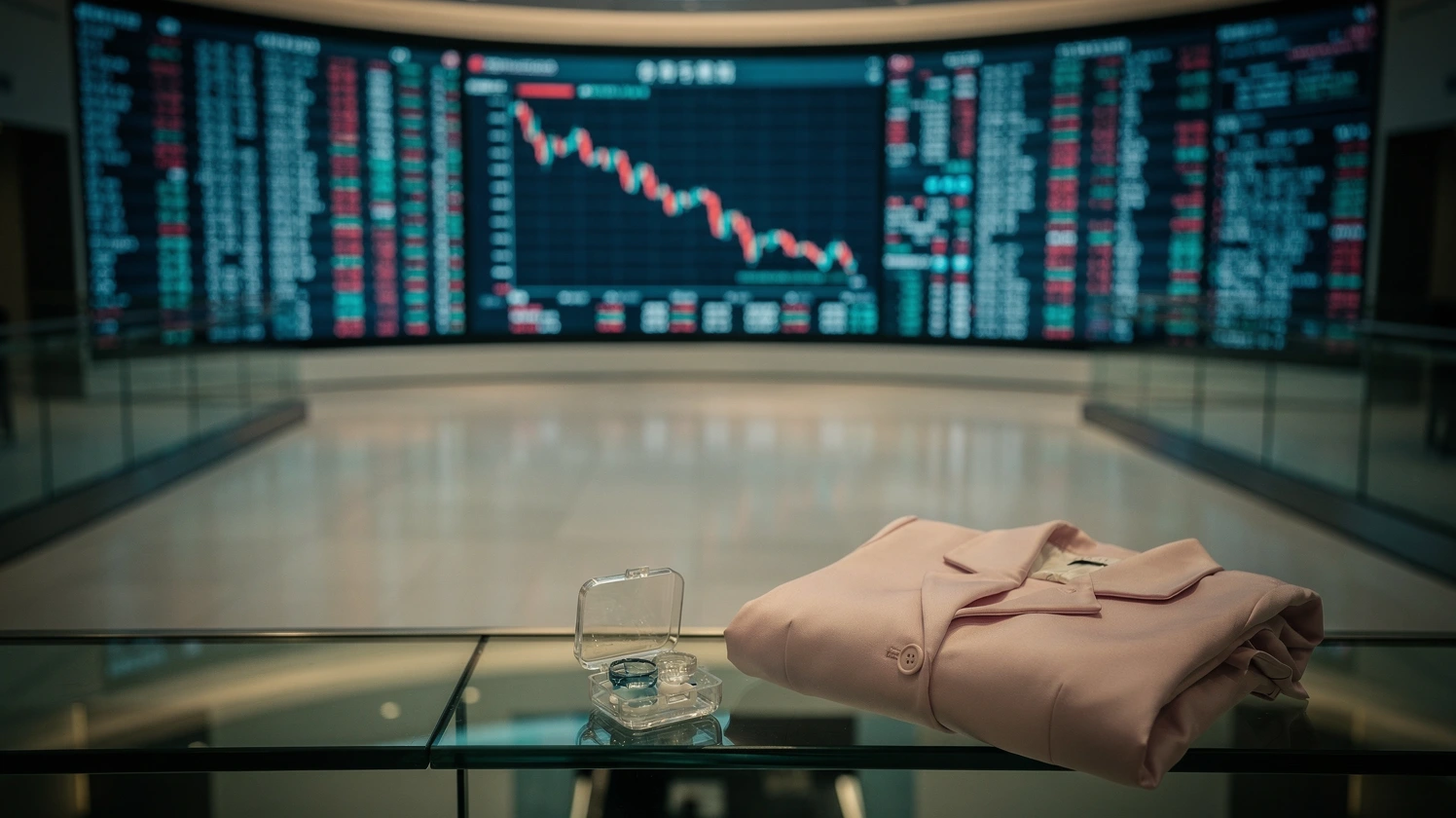
Shein Global Holdings fell as much as 10% in Hong Kong on Monday, September 14, dropping to a new post-listing low of HK$36.04 (about USD 4.62 at the pegged rate of roughly HK$7.80 per dollar) less than two weeks after its September 1 debut. Two separate pressures landed on the stock at once: an urgent product-safety recall of Shein-sold contact lenses in Australia and New Zealand, and a first-ever “underperform” rating from Jefferies with a HK$26 price target that implies a further slide of roughly a third. CNBC reported the intraday fall in the context of the recall, while Hong Kong financial press, including HKEJ and Zhitong Finance, framed the selling around the Jefferies initiation. Either way, the fast-fashion group is now trading around a quarter below its HK$48.56 offer price, and the listing that was meant to close a four-year IPO saga has become one of the worst-performing large Hong Kong flotations on record.
In short
- Shein shares fell as much as 10% to HK$36.04 on September 14, a record low since the September 1 listing, according to Futu and Zhitong Finance data cited by Hong Kong media; the stock was down about 8% at HK$36.78 by late morning.
- Two triggers, not one: Australia’s ACCC and Product Safety New Zealand issued a recall of Syliuwa white costume contact lenses sold on Shein after a sample tested positive for Burkholderia cepacia complex bacteria; separately, Jefferies initiated coverage at “underperform” with a HK$26 target.
- The IPO was already struggling: Shein priced at HK$48.56, raised HK$13.86 billion (about USD 1.77 billion) and lost roughly USD 5 billion of market value in its first week, per Bloomberg, the second-worst five-session start for a Hong Kong IPO of USD 1 billion or more.
- The recall is small in dollars but large in signal: it is the third Shein-related safety recall in a month, after a US CPSC recall of 12,461 children’s loungewear sets, and it lands as regulators in the EU, US and UK scrutinize marketplace product safety.
- What comes next: Shein joins the Hang Seng Composite Index on September 15, cornerstone investors remain locked up for six months, and the company’s first results as a listed entity will test whether Q1’s 1.1% revenue growth and USD 99 million net loss were a floor or a trend.
What happened to Shein shares on September 14?
Shein-W (HKEX: 625) opened weak on Monday morning in Hong Kong and extended its losses through the session. Futu market data reported the stock down more than 10% at HK$36.04, and Zhitong Finance recorded a fresh listing low of HK$36.68 with the shares at HK$36.78, down 8.19%, by 10:46 local time on turnover of HK$63.56 million. The previous Friday close was HK$40.06, so the intraday low represents a decline of roughly 10% in a single session and about 26% from the offer price.
CNBC reported the move at around 05:20 UTC (13:20 in Hong Kong), noting the shares “fell as much as 10%” amid news that one of the platform’s contact lens products had been recalled in Australia and New Zealand. Hong Kong outlets, including HKEJ, led instead with the Jefferies note, headlining that the stock had slumped nearly 10% to a listing low after Jefferies gave it an underperform rating. The two narratives are not in conflict: the recall notices had been public since September 11, but the Jefferies note gave institutional holders a fresh reason to sell into a market that already had little conviction in the name.
At HK$36, Shein’s market capitalization has fallen to roughly USD 19 billion to USD 20 billion, based on the approximately USD 26.3 billion valuation at the IPO price and the size of the decline since. That compares with the near USD 100 billion the company was valued at in a 2022 private funding round and the USD 64 billion mark it carried through 2023 and into early 2024, according to Reuters and Bloomberg reporting on the deal. Shopappy covered the road to the listing in its preview of Shein’s Hong Kong IPO and the 73% haircut tariffs imposed on its valuation.
The trading timeline since the September 1 debut
Shein’s listing has not had a comfortable session yet. Reuters reported the shares dropped 10% in early trading on the first day to HK$43.80 before stabilization buying pulled them back to close at HK$48.50, essentially flat against the HK$48.56 offer. Bloomberg then reported the stock finished its first week 19% below the offer price, even after a 3.2% gain on the following Monday, its first positive session. The Friday, September 11 close of HK$40.06 was roughly 17.5% below the offer, and Monday’s low took the cumulative fall past 25%.
| Date | Event | Price (HK$) | USD equivalent (at ~7.80) | Change vs offer price |
|---|---|---|---|---|
| Aug 31, 2026 | IPO priced | 48.56 | 6.23 | 0% |
| Sep 1, 2026 | Debut intraday low | 43.80 | 5.62 | -9.8% |
| Sep 1, 2026 | Debut close | 48.50 | 6.22 | -0.1% |
| Sep 7, 2026 | End of first five sessions | ~39.30 | ~5.04 | ~-19% |
| Sep 11, 2026 | Friday close | 40.06 | 5.14 | -17.5% |
| Sep 14, 2026 | Monday intraday low | 36.04 | 4.62 | -25.8% |
| n/a | Jefferies target | 26.00 | 3.33 | -46.5% |
Sources: Reuters, Bloomberg, Zhitong Finance, Futu; the September 7 figure is derived from Bloomberg’s reported 19% first-week decline. USD conversions use the Hong Kong dollar peg band midpoint of about HK$7.80 and are rounded.
What exactly was recalled, and by whom?
The recall concerns Syliuwa-branded zero-powered white contact lenses, a cosmetic product sold for costume, cosplay and makeup use through Shein’s Australian and New Zealand storefronts. Product Safety New Zealand published the notice on September 11 and it was reported the same day by 1News; the Australian recall was published on the ACCC’s Product Safety Australia database under SHEIN Distribution Australia Pty Ltd and was reported by Nine on September 12. Both notices cite the same product code, sb2408056243278800.
The hazard is bacterial. According to the New Zealand notice, a sample of the solution in which the lenses were packaged tested positive for Burkholderia cepacia complex, and an incident was reported in the United Kingdom in which a user developed an eye infection. Product Safety NZ’s wording is that “exposure to this bacterium may pose a risk of eye infection or irritation”. The ACCC notice says the packaging “may be contaminated with Burkholderia cepacia complex bacteria” and that use “could result in irritation or serious eye infection”.
The sale window is long. The New Zealand notice lists sales from August 7, 2024 to August 19, 2026, and the Australian notice from August 7, 2024 to August 15, 2026, which means the affected product was on sale for more than two years before the recall. Shein has said it will contact affected owners directly and provide a full refund to the original payment method, and has set up market-specific mailboxes (nzcsteam@shein.com and aucsteam@shein.com) for questions. Consumers are told to stop using the lenses immediately, dispose of them safely, and seek medical advice if they experience redness, pain, discharge or blurred vision.
Why a costume lens recall matters more than its size
Neither notice discloses unit volumes, and the product is a low-priced novelty item, so the direct financial hit is immaterial to a company with revenue in the tens of billions of dollars. The market reaction is about something else. Cosmetic contact lenses sit at the intersection of two regulatory categories, consumer goods and medical devices, and in most jurisdictions they require a level of quality control that a marketplace selling third-party goods struggles to guarantee. A bacterial contamination finding in the packaging solution is precisely the kind of evidence that regulators use to argue that platform-level product-safety obligations need teeth.
It also arrived in a cluster. The US Consumer Product Safety Commission announced a recall of 12,461 Sweet Cubby children’s loungewear sets sold on Shein.com between June 2025 and May 2026 for between USD 8 and USD 12 because they violated federal flammability standards for children’s sleepwear; no injuries were reported. That followed a February 2025 CPSC recall of about 17,300 SHEIN EVRYDAY kids’ pajama sets sold from August 2023 to November 2024 on the same grounds. Three safety recalls across three regulators in the space of a few weeks is a pattern, and investors read patterns.
| Recall | Regulator | Product | Sale period | Hazard | Remedy |
|---|---|---|---|---|---|
| Sep 11, 2026 | Product Safety New Zealand | Syliuwa zero-powered white contact lenses (sb2408056243278800) | Aug 7, 2024 to Aug 19, 2026 | Burkholderia cepacia complex in packaging solution; UK eye-infection incident | Stop use, full refund to original payment method |
| Sep 11, 2026 | ACCC Product Safety Australia (SHEIN Distribution Australia Pty Ltd) | Same white costume lenses | Aug 7, 2024 to Aug 15, 2026 | Possible bacterial contamination; irritation or serious eye infection | Stop use, respond to recall email for refund |
| Sep 2026 | US CPSC | 12,461 Sweet Cubby children’s loungewear sets | Jun 2025 to May 2026 | Flammability standard violation, burn risk | Stop use, refund |
| Feb 2025 | US CPSC | ~17,300 SHEIN EVRYDAY kids’ pajama sets | Aug 2023 to Nov 2024 | Flammability standard violation, burn risk | Stop use, refund |
Sources: Product Safety New Zealand via 1News, ACCC via Nine, US CPSC.
What did Jefferies say, and why did it hit so hard?
Jefferies initiated coverage of Shein with an “underperform” rating and a HK$26 price target, according to Zhitong Finance and HKEJ. Against Friday’s HK$40.06 close, that target implies about 35% downside; against the offer price, it implies the shares are worth a little over half what IPO investors paid two weeks ago. The bank’s 2026 and 2027 earnings-per-share estimates sit 3% and 20% below consensus respectively, per the Zhitong summary of the note.
The thesis is about cost, not demand. Jefferies argued that the three structural advantages behind Shein’s rise, low-cost cross-border parcels, the dense supplier network around Guangzhou in Guangdong province, and a model in which suppliers funded much of the design and inventory experimentation, are all becoming more expensive. As those edges erode, the bank expects returns on capital to weaken and the valuation multiple to compress. HKEJ’s headline summary was blunt: the cost advantages are getting ever more costly.
This is the first sell-side initiation with a sell-equivalent rating since the listing, and it matters because Shein’s free float is thin. Reuters reported that the IPO represented only 6.6% of enlarged share capital, cornerstone investors took roughly 20% of the deal and are locked up for six months, and only around 5% of shares are freely tradeable. In a stock with that little float, one large holder responding to a negative note can move the price by a high single-digit percentage on modest turnover, which is what Monday’s HK$63.56 million of morning volume suggests.
Why the timing was unfortunate
Monday was also the last trading day before Shein’s inclusion in the Hang Seng Composite Index, effective September 15 after the September 14 close, under the index compiler’s fast-entry provisions for large new listings. Index inclusion usually brings passive buying, but Shein’s weighted-voting-rights structure delays its eligibility for Stock Connect, the channel through which mainland Chinese investors buy Hong Kong shares, by roughly seven months according to Zhitong. The one structural buyer that has propped up several 2026 Hong Kong listings is therefore not available yet, and Jefferies chose the day before the index event to publish.
How weak was the IPO to begin with?
Shein’s flotation was priced on August 31 at HK$48.56, near the middle of a HK$47.60 to HK$49.50 range, selling about 280 million shares to raise HK$13.86 billion (about USD 1.77 billion), according to Reuters. The retail tranche was 5.63 times subscribed and the international tranche 2.59 times, healthy but not spectacular numbers for a deal of that size. Cornerstone investors, including Boyu Capital, Tiger Global, General Atlantic, Tencent, Greenwoods, Taikang Life and UBS Asset Management, committed about USD 383 million, or up to 22.5% of the funds raised.
The valuation was the headline. At roughly USD 26.3 billion, Shein went public at about a quarter of the near USD 100 billion it was worth in 2022 and well under half the USD 64 billion it was assigned in 2023. Reuters noted the company had originally pursued New York, then London, before settling on Hong Kong after regulatory objections in both Western venues, a sequence shopappy analyzed in why Hong Kong has become the default IPO venue for China’s cross-border retailers.
Bloomberg reported that Shein lost about USD 5 billion of market value in its first five sessions, closing that period 19% below the offer price. That ranked as the second-worst opening week among Hong Kong listings that raised at least USD 1 billion, behind only Baidu’s 19.9% slide. Bloomberg Intelligence analyst Catherine Lim said the decline “reflects the growing market concerns of tariffs, fulfillment costs and execution risks surrounding its marketplace transition”.
The financial trajectory investors are pricing
The numbers in the prospectus explain the reluctance. According to Reuters and Bloomberg reporting on the filing, revenue growth fell from 41.1% in 2023 to 21% in 2024 and 8% in 2025, missing the company’s own targets, and to just 1.1% in the first quarter of 2026. Net income declined 39% in 2025 and the first quarter of 2026 swung to a USD 99 million net loss from a USD 395 million profit a year earlier. US revenue fell 14.3% in the first quarter because of tariffs, and the company guided that first-half growth would be “broadly in line with” the first quarter, with operating margin slightly lower as customs duties and logistics costs weighed.
| Metric | 2023 | 2024 | 2025 | Q1 2026 |
|---|---|---|---|---|
| Revenue growth | 41.1% | 21% | 8% | 1.1% |
| Net income trend | n/a | n/a | -39% | USD 99m loss (vs USD 395m profit) |
| US revenue | n/a | n/a | n/a | -14.3% |
| Company valuation | USD 64bn (2023 round) | USD 64bn (to April 2024) | n/a | USD 26.3bn (Sep 2026 IPO) |
Sources: Reuters, Bloomberg, company prospectus as reported. The 2022 private valuation was approximately USD 100 billion.
Why are tariffs and de minimis at the center of this story?
Shein’s cost advantage was built on a customs rule. For most of its growth phase, parcels under USD 800 entered the United States duty-free under the de minimis exemption, and similar low-value thresholds applied in the European Union and elsewhere. The United States ended that exemption for e-commerce shipments in 2025, and a subsequent court challenge failed, as shopappy reported when the Court of International Trade upheld the de minimis repeal. Every parcel now carries duty, and the 14.3% first-quarter decline in US revenue is the direct measurement of what that cost.
Europe followed. The EU has imposed a handling fee on low-value packages and is moving to make platforms the importer of record under its customs reform, and Reuters reported that Shein’s daily active users in Europe fell about 45% after the removal of the duty exemption. Shopappy has argued that the fee structure is likely to push Temu and Shein toward local warehousing, a shift examined in how the EU handling fee pushes Temu and Shein to go local. That pivot is already visible in the United States, where Shein on September 10 opened a 737,000-square-foot automated fulfillment center in Lebanon, Indiana, its second major site in the state, using a goods-to-person system and taking its Indiana footprint above 2.5 million square feet, according to a company statement.
The strategic problem is that domestic fulfillment solves the customs cost by taking on the very warehouse, labor and inventory costs that cross-border shipping let Shein avoid. That is the substance of the Jefferies note: the model that produced 41% growth in 2023 was a customs arbitrage as much as a design or marketing edge, and once the arbitrage is gone the company has to compete on the same cost base as Amazon, Walmart and the department-store fashion chains it undercut. Saxo’s Charu Chanana made a similar point at the IPO, telling Reuters that Shein was being valued at 15 times forward earnings, “more than double the multiple for PDD” despite “weaker growth visibility and significant regulatory and trade risks”.
What eToro and Saxo said at the debut
Josh Gilbert of eToro summarized the debut for Reuters as “less a Shein problem, but more so the end of an era for cheap cross-border shipping”. The description is accurate but incomplete. PDD Holdings, Temu’s parent, faces the same customs regime, but it has a large domestic Chinese marketplace to fall back on and a much lower earnings multiple. Shein has neither, and its prospectus disclosed that about USD 80 million had been reserved for legal and regulatory matters, spanning an FTC consumer-protection investigation in the United States, a European Commission examination under the Digital Services Act of how it handles illegal products and platform design, data privacy cases in France and Ireland, and a CFIUS national-security review of its USD 80 million acquisition of Everlane in May 2026.
What does the recall mean for marketplace regulation?
The Australia and New Zealand notices are ordinary consumer-product recalls, but their timing is not. Regulators on three continents are in the middle of deciding how much responsibility a platform bears for the safety of third-party goods it sells, and each new contamination or flammability finding becomes an exhibit. The European Commission’s DSA proceedings against Shein and the earlier EUR 550 million fine imposed on AliExpress over illegal goods both rest on the argument that marketplaces cannot treat safety as the seller’s problem alone. Shopappy set out why enforcement is likely to route through customs data in its analysis of marketplace safety enforcement through customs channels.
Cosmetic lenses are a particularly awkward category. In Australia the recall sits with the ACCC’s consumer-product database rather than the Therapeutic Goods Administration, the usual treatment for zero-power costume lenses, but the medical risk is the same as for prescription lenses. The New Zealand notice explicitly refers to a UK infection incident, which suggests the same SKU was sold in Britain and that the UK’s Office for Product Safety and Standards may have its own file open. None of the three governments has announced enforcement beyond the recall itself.
For Shein, the practical exposure is procedural rather than punitive. Recalls of this kind typically require the seller to demonstrate that it notified every identifiable purchaser, processed refunds, and removed the listing across all markets where the product was sold. Because the lenses were on sale for more than two years, that notification list will be long, and the recall notices ask customers to confirm receipt so Shein can process refunds, an unusual step that signals the company does not have a complete purchaser record for the SKU.
How Shein compares with peers on safety recalls
Shein is not alone. Temu, AliExpress and Amazon’s third-party marketplace have all faced product-safety actions in 2025 and 2026, and the EU’s AliExpress fine remains the largest single penalty under the DSA. What distinguishes Shein is that it is now a listed company with a public share price, so each notice has an immediately measurable cost. Monday’s decline erased roughly USD 2 billion of market value on a recall whose direct cost is, by any reasonable estimate, a rounding error, a ratio that will not be lost on rival platforms deciding how much to invest in pre-listing product testing.
What happens on September 15 and after?
The next scheduled event is index inclusion. Shein joins the Hang Seng Composite Index effective September 15, which brings it into the universe tracked by a range of Hong Kong index funds and may generate some mechanical buying at Monday’s close. The Stock Connect eligibility that usually follows Composite inclusion is delayed for weighted-voting-rights companies until they have traded for six months and met additional liquidity tests, which Zhitong estimates puts mainland investor access around seven months away.
The bigger dates are further out. Cornerstone investors are locked up for six months from listing, which means their roughly USD 383 million of stock cannot be sold before March 2027; pre-IPO shareholders face their own lock-ups. Shein’s first interim results as a public company would cover the six months to June 30, 2026, and the company has already guided that growth will be broadly in line with the first quarter’s 1.1% and that operating margin will be slightly lower. A print in line with that guidance is priced in; a miss against it, with the shares already a quarter below the offer, would test whether the stabilization manager has any appetite left.
The stabilization period itself is short. Hong Kong rules allow price stabilization for 30 days from listing, so support buying of the kind that lifted the shares off HK$43.80 on the first day can continue only until about October 1. After that, the stock trades on its own merits, with a 5% free float, a fresh sell rating and a product-safety file that is growing rather than shrinking.
What should retailers and sellers take from this?
Three lessons travel beyond Shein. First, the cost of customs changes shows up in equity value with a lag of about a year: the US de minimis repeal in 2025 produced the 14.3% US revenue decline in the first quarter of 2026 and the IPO valuation in September. Sellers still relying on cross-border direct-to-consumer parcels into the US or EU should assume the same lag applies to their own margins. Second, product safety on third-party marketplaces is now a share-price variable, not a compliance footnote, and the cheapest categories, costume lenses and children’s sleepwear, generate the most recall risk per dollar of sales.
Third, the market has decided that domestic fulfillment is the answer, but it is not a free one. Shein’s Indiana expansion is the correct strategic response to the loss of de minimis, and it will raise fixed costs at exactly the moment growth has slowed to 1%. Jefferies’ HK$26 target is a bet that the transition costs more than the market has priced. The recall is a reminder that the transition also has to include the unglamorous work of testing what goes into the parcels.
Frequently asked questions
Why did Shein shares fall 10% on September 14, 2026?
Two things landed at once. Australian and New Zealand regulators published a recall of Shein-sold Syliuwa costume contact lenses after a sample tested positive for Burkholderia cepacia complex bacteria, and Jefferies initiated coverage with an underperform rating and a HK$26 price target. The stock fell to a listing low of HK$36.04 on thin float.
What is Shein’s IPO price and how far below it is the stock?
Shein priced its Hong Kong IPO at HK$48.56 on August 31, 2026 and listed on September 1. At Monday’s low of HK$36.04 the shares were about 26% below the offer price, and roughly 10% below Friday’s HK$40.06 close.
Which Shein product was recalled in Australia and New Zealand?
Syliuwa zero-powered white contact lenses for costume and cosplay use, product code sb2408056243278800, sold on Shein’s NZ site from August 7, 2024 to August 19, 2026 and on its Australian site from August 7, 2024 to August 15, 2026. The packaging solution may be contaminated with Burkholderia cepacia complex bacteria, and one eye-infection incident was reported in the United Kingdom.
What should customers who bought the lenses do?
Stop using them immediately and dispose of them safely. Shein says it will contact owners directly and refund the full purchase price to the original payment method; customers in New Zealand can email nzcsteam@shein.com and in Australia aucsteam@shein.com. Anyone with redness, pain, discharge or blurred vision should seek medical advice promptly.
What did Jefferies say about Shein?
Jefferies initiated at underperform with a HK$26 target, arguing that the low-cost parcel model, the dense Guangdong supplier base and supplier-funded experimentation are all becoming more expensive, which will weaken returns and compress the valuation. Its 2026 and 2027 EPS estimates are 3% and 20% below consensus, according to Zhitong Finance.
How much did Shein raise in its IPO and who were the cornerstone investors?
About HK$13.86 billion, or USD 1.77 billion, from roughly 280 million shares, according to Reuters. Cornerstone investors, including Boyu Capital, Tiger Global, General Atlantic, Tencent, Greenwoods, Taikang Life and UBS Asset Management, committed about USD 383 million and are locked up for six months.
How does Shein’s valuation compare with 2022?
Shein was valued at close to USD 100 billion in a 2022 private round and USD 64 billion in 2023. It listed at about USD 26.3 billion in September 2026 and, after Monday’s fall, trades at roughly USD 19 billion to USD 20 billion.
When does Shein join the Hang Seng Composite Index?
Inclusion takes effect on September 15, 2026, after the September 14 close. Stock Connect eligibility for mainland Chinese investors is delayed by roughly seven months because of Shein’s weighted-voting-rights share structure.
Is the recall connected to tariffs or de minimis?
Not directly. The recall is a product-safety matter. But both issues feed the same investor concern: that a marketplace model built on cheap cross-border parcels faces rising costs from customs duties on one side and platform-level safety obligations on the other, which is the core of the Jefferies thesis.