
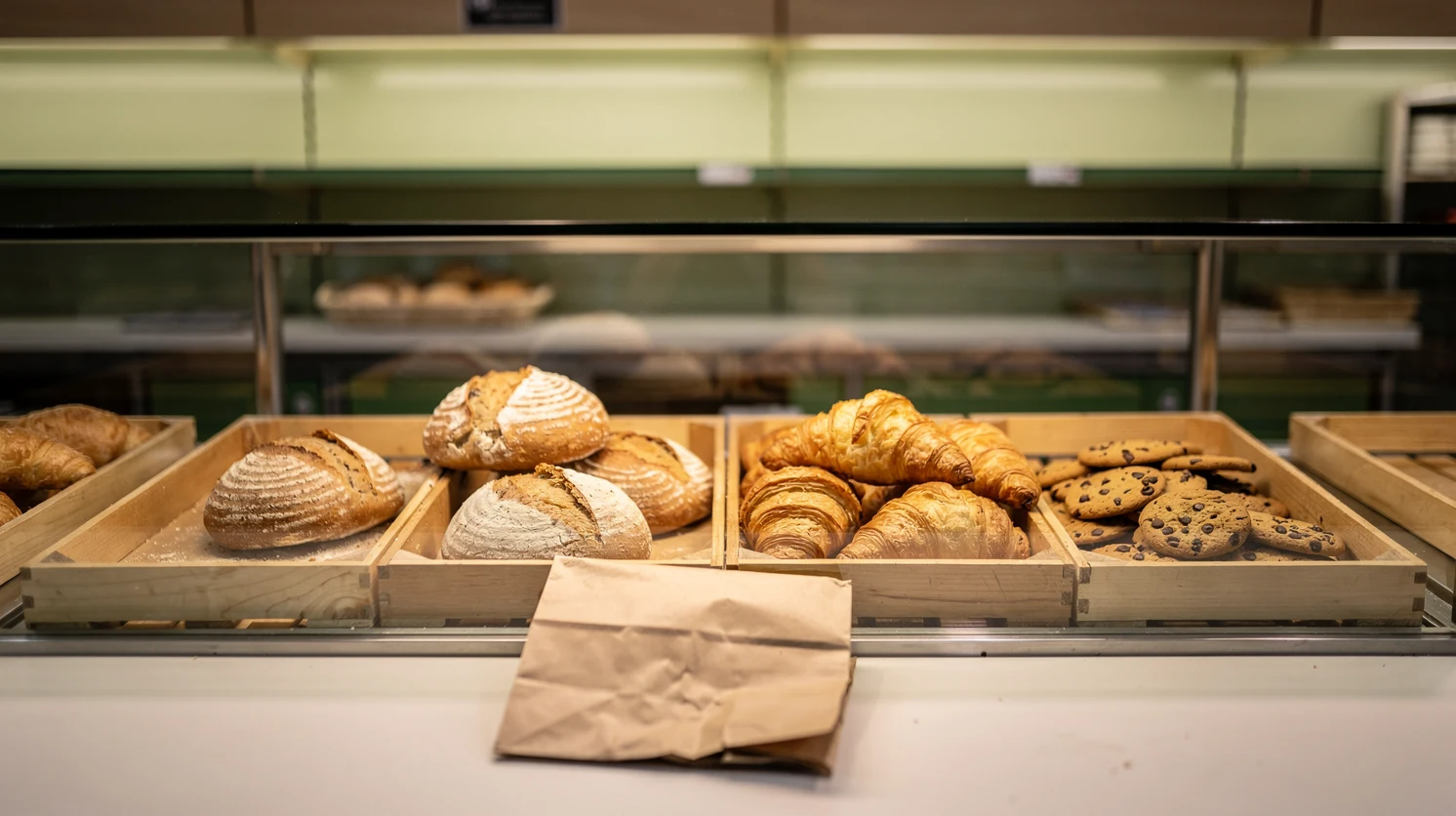
Marks & Spencer has switched on Too Good To Go across more than 350 M&S Food stores in the UK, selling surplus in-store bakery products as £3.80 surprise bags with a guaranteed minimum retail value of £10.20. The rollout, announced by the retailer on Monday 14 September 2026, follows a trial in a small number of stores and puts M&S alongside Asda, Morrisons, Aldi and Waitrose on the food-saving app. For shoppers it means a new end-of-day bargain in a chain that has historically been reluctant to discount; for M&S it is the most visible customer-facing step yet in a food-waste programme that came under sharp public scrutiny earlier this year.
In short
- What launched: Too Good To Go surprise bags of surplus bakery items in over 350 M&S Food stores, live from 14 September 2026 after a UK trial.
- The deal: £3.80 for three to four bakery products (pastries, cookies, bread baked in store) with a minimum retail value of £10.20, a discount of roughly 63%.
- When to collect: order in the app and pick up Monday to Saturday, one hour before your local store closes. No Sunday bags at launch.
- Why now: the launch sits inside M&S’s Plan A pledge to halve food waste by 2030, and comes seven months after a social-media “food waste inspector” filmed in-date food in M&S bins.
- How it compares: Morrisons charges £3.09, Aldi £3.30 and Greggs £2.99 for their bags; M&S is dearer but bakery-only and carries the highest stated minimum value.
What exactly has M&S launched with Too Good To Go?
According to the company statement, M&S Food stores are now listing Too Good To Go surprise bags made up of surplus bakery products that would otherwise be left unsold at the end of the day. Each bag contains three to four items from the in-store bakery, which M&S describes as pastries, cookies and bread baked on the premises. The contents are not chosen by the customer; that is the “surprise” mechanic the app is built around, and it is what lets stores clear whatever is actually left rather than what a shopper would prefer.
The price is £3.80 and M&S guarantees a minimum retail value of £10.20, so the discount is at least 62.7% against shelf prices. Customers reserve and pay in the Too Good To Go app, then collect from the store during a fixed window: Monday to Saturday, one hour before the store closes. The retailer says the national rollout follows a trial across a select number of UK stores, and The Grocer reports that M&S described the customer response in those trial shops as outstanding.
The launch is bakery-only for now. That is a narrower proposition than the general grocery bags sold by Aldi or Morrisons, which can include fresh produce, chilled goods and snacks. Retail Week and The Grocer both reported the move as M&S formally joining the app, after years in which its surplus went mainly to charity redistribution and in-store markdowns.
Which stores are included?
M&S has not published a store list. The “over 350” figure covers M&S Food stores with an in-store bakery, and the practical way to check is to open the Too Good To Go app, search for M&S and look for a listing near you. Reports from Cork suggest Irish M&S stores are also listing a surprise bag priced at €3.99, though M&S’s UK statement does not give an Ireland figure and shopappy has not verified the Irish store count.
Because bags depend on what is unsold, availability will vary day to day and store to store. Stores that bake heavily for the lunchtime trade are likely to list more consistently than smaller Simply Food units. The Monday-to-Saturday restriction also means Sunday trading hours, which are already shorter for large stores in England and Wales, do not generate a bag at launch.
Why is M&S doing this now?
The official framing is sustainability. Lucinda Langton, head of sustainability at M&S Food, said in the company statement that Too Good To Go “is a brilliant example of how we’re turning our commitment to reducing food waste into practical action”. Chelsea Kerr, managing director for Too Good To Go in the UK and Ireland, added that “food waste is a huge challenge, but partnerships like this show how simple it can be for businesses and consumers to take action together”.
The context matters as much as the quotes. In September 2025 a social-media account calling itself the Food Waste Inspector began posting videos of wheelie bins behind supermarkets, and M&S was its most frequent target. According to The Grocer, the account documented in-date sliced meat, whole chicken, potatoes, flowers and sacks of bakery items in bins at nine M&S stores, along with five Lidl and at least two Waitrose shops. M&S launched an investigation, invited the creator in for a coffee, and in February 2026 issued a new instruction to every store: only a duty manager may place food in the green wheelie bins, and each bin must carry a sticker reading “not fit for human consumption” with the reason written on it.
Bakery was the category that looked worst on camera, because loaves and pastries baked that morning cannot be redistributed as easily as ambient stock and are bulky in a bin. A paid, app-based outlet that clears three to four items per bag at a time is the most direct answer to that specific image problem. It also generates revenue, however small, where charity donation generates none.
What does Plan A actually commit M&S to?
M&S’s Plan A programme carries a target to halve food waste by 2030, and the company’s corporate reporting says food waste has already fallen by 46%, which it describes as on track. The retailer says none of its food goes to landfill: edible surplus is offered to local charities daily through the Neighbourly redistribution platform, and inedible waste goes to anaerobic digestion to make renewable energy. M&S said the week before the Too Good To Go announcement that the Neighbourly partnership has now delivered more than 130 million meals since 2015, up from the “over 100 million” figure it cited in February.
Other levers already in use include turning surplus bread into frozen garlic bread, selling extra-ripe bananas in discounted bags, and cutting prices on unsold items before closing. Too Good To Go slots in as a fourth outlet for edible surplus rather than a replacement for any of them. The pattern is consistent with how grocers attack shrink in fresh departments: multiple exits for the same product, ordered by margin recovered.
How does the M&S bag compare with other UK surprise bags?
M&S enters a crowded UK market. Too Good To Go says it has saved more than 40 million surprise bags in the UK since launching here in 2016, and has more than 40,000 UK partners out of 155,000 worldwide. Globally the company reports over 500 million meals saved and more than 180 million registered users. Supermarkets and bakery chains are the anchor partners, and their bags are the ones shoppers compare on price.
| Retailer | Bag price | Stated minimum value | Contents | Collection window |
|---|---|---|---|---|
| M&S Food | £3.80 | £10.20 | 3-4 bakery items (pastries, cookies, bread) | Mon-Sat, 1 hour before closing |
| Morrisons | £3.09 | £10 | Mixed grocery | Varies by store |
| Aldi | £3.30 | At least £10 | Fruit and veg, dairy, meat, snacks | Reserve from 8pm, collect from 9.25pm |
| Greggs | £2.99 | Not stated | Bakery and savouries | Late afternoon/evening, varies |
| Little Waitrose | £5 (reported) | Not stated | Mixed convenience | Varies by store |
Sources: M&S company statement, Morrisons and Aldi Too Good To Go pages, Grocery Gazette (Greggs). Little Waitrose price per app-tracking sites; unverified by shopappy.
On raw price M&S is the most expensive of the four big supermarket bags, and roughly 27% dearer than Greggs, the category’s volume leader. Two things soften that comparison. M&S guarantees the highest minimum value, £10.20 against £10 at Morrisons and Aldi, and its bakery shelf prices are higher, so the absolute saving of at least £6.40 is in line with peers. The bakery-only promise also removes the lottery element that makes some mixed grocery bags unpopular with shoppers who end up with items they cannot use.
How much waste have the incumbents saved?
The scale of the incumbents shows what M&S is joining. Greggs, on the app since 2021 across more than 2,000 shops, passed six million surprise bags saved in April 2026 according to Grocery Gazette, and has a public goal of cutting food waste by 25% against 2018 levels. Aldi’s own page says it has saved one million surprise bags of unsold food. Neither retailer publishes per-store numbers, but the arithmetic implies well under one bag per store per day at Greggs, which suggests supply, not demand, is the binding constraint.
That is the likely pattern at M&S too. With 350 stores listing one bakery bag type, and the app already reporting bags selling out quickly at popular Greggs and Aldi branches, shoppers should expect the M&S listing to disappear within minutes of going live in busy locations. The reservation window matters more than the price.
What does it mean for M&S shoppers in practice?
The mechanics are simple. Download the Too Good To Go app, set your location, search for M&S, and reserve a bag when the listing shows as available; payment is taken in the app. Collection is at the store’s bakery or customer service point, Monday to Saturday, during the hour before closing. A store that shuts at 8pm will expect you between 7pm and 8pm.
Bags cannot be picked up early because the store needs the trading day to finish before it knows what is surplus. Missing the window usually means forfeiting the bag, since the app treats uncollected reservations as sold.
What you get is genuinely random within the bakery range. Three to four items could be a sourdough loaf, two croissants and a cookie, or four bread rolls. Shoppers used to M&S’s yellow-sticker reductions at the bakery counter will notice that the surprise bag is a better headline discount than the typical 30% to 50% markdown, but with no choice over the product. The end-of-day markdown and the app bag will run in parallel; M&S says colleagues continue to reduce prices on unsold food before closing.
Is the £10.20 minimum a firm promise?
M&S states a minimum retail value of £10.20 in its announcement, and Too Good To Go’s model allows customers to rate bags and report ones that fall short. That is a stronger consumer protection than the vaguer “worth around £10” wording some partners use. Bakery prices at M&S are also high enough that three or four items reach the threshold easily: a single in-store loaf and two viennoiserie items typically clear it. Shoppers who receive fewer than three items, or a bag that is clearly below value, should use the app’s reporting function rather than the store.
One caveat: the bag is a bakery product with a same-day shelf life. Bread and pastries bought in the last hour of trading are meant to be eaten that evening or the next morning, or frozen. This is where the retailer’s own advice on storing food to prevent waste at home becomes relevant, and it is the reason M&S already turns surplus bread into frozen garlic bread rather than discounting it indefinitely.
What does the launch signal about M&S’s discounting strategy?
M&S has spent years building its food business on a premium, full-price positioning, with markdowns used tactically rather than as a traffic driver. Joining a discount app is a change of tone, even if the volumes are tiny relative to a chain whose bakery counters bake fresh every morning. The company appears to have concluded that visible action on waste is now a brand asset in its own right, particularly with younger shoppers for whom the Too Good To Go app is a habit rather than a novelty.
It is also a low-cost move. Too Good To Go’s partner model is fee-based rather than capital-intensive, and the app handles the payment, the marketing and the queueing. For a retailer already investing in electronic shelf labels and dynamic end-of-day markdowns, the app is a complementary channel that reaches shoppers who are not in the store at 7pm to see a yellow sticker.
The bakery-first scope keeps the risk contained. If a general grocery bag at M&S produced videos of £3.80 bags containing £10 of premium ready meals, it would cannibalise full-price sales and risk the brand’s pricing discipline. Bakery surplus has no such risk: an unsold croissant at 7.30pm has close to zero value by 8pm.
Why bakery rather than the whole food hall?
Three reasons stand out from the retailer’s own statements and from how peers operate. First, bakery is the category that was most visible in the bin videos and least suited to charity redistribution at the end of a trading day. Second, in-store bakery output is set in the morning, so the surplus is predictable enough to promise three to four items every day. Third, bakery items do not need the chilled-chain handling that a mixed bag with meat or dairy would require at the collection point.
M&S has not said whether the scheme will extend beyond bakery. If the bags sell through, a chilled or general food hall bag would be the natural next step, and it would put M&S in direct competition with the Aldi and Morrisons offers on the app.
How big is the UK food waste problem the scheme addresses?
M&S cites two external figures in its announcement. Globally, roughly 40% of all food produced is wasted every year, about 2.5 billion tonnes, according to WWF research from 2021. In the UK, WRAP’s 2026 figures put total food waste at about 10.7 million tonnes a year, of which 6.4 million tonnes comes from households. Retail waste is a small share of that total, but it is the most visible and, as the bin videos showed, the most reputationally dangerous.
The distinction between household and retail waste is why the surprise bag model appeals to grocers. A bag sold at the end of the day moves the waste risk from the store to the shopper, who has paid for it and is therefore more likely to eat or freeze it. That is a defensible outcome for the retailer even if some of the bread ends up in a home bin instead.
| M&S surplus food route | What it handles | Revenue to M&S | Reported scale |
|---|---|---|---|
| Neighbourly charity redistribution | Edible surplus, all categories, collected daily | None | 130 million+ meals since 2015 |
| End-of-day price reductions | Unsold items marked down before closing | Partial | Not disclosed |
| Too Good To Go surprise bags | Surplus in-store bakery, 3-4 items per bag | £3.80 per bag | 350+ stores from 14 Sep 2026 |
| Product repurposing | Surplus bread into frozen garlic bread; ripe bananas in discounted bags | Partial | Not disclosed |
| Anaerobic digestion | Inedible waste turned into renewable energy | None | All non-edible food; zero to landfill |
How do the economics of a £3.80 bag work for a store?
Surprise bags look like a giveaway, but the arithmetic for the store is straightforward. An in-store bakery prices its output in the morning on the assumption that a proportion will not sell. Anything left in the last hour of trading has already been marked down once, and whatever survives the markdown is either donated, repurposed or sent for anaerobic digestion, none of which returns cash to the till. Against that baseline, £3.80 for three or four items is pure recovery on product that was about to be written off.
The costs are modest. Too Good To Go takes its share of each bag, the store spends a few minutes of colleague time packing bags before closing, and there is a small risk that a shopper who would have paid full price for a loaf at 7pm waits for the app instead. M&S has limited that cannibalisation risk by restricting bags to the final hour, when full-price bakery sales are already thin, and by keeping the contents unpredictable so nobody can plan a weekly shop around them.
There is also a soft return. Too Good To Go users tend to be app-engaged, younger and price-conscious, a group M&S Food has worked to attract with its value ranges and store openings. A £3.80 bag brings some of those shoppers through the door at a time of day when footfall is falling, and the app’s own reviews function turns each collection into a small, public rating of the store. That is a marketing channel as much as a waste channel, which is why grocers that joined early have stayed.
| Outcome for an unsold M&S bakery item at 7pm | Cash recovered | Who benefits | Waste outcome |
|---|---|---|---|
| Sold at full price | 100% of shelf price | Store | None |
| Sold on yellow-sticker markdown | Typically 50-70% of shelf price | Store, shopper | None |
| Sold in a Too Good To Go bag | Around 37% of stated minimum value, less app fee | Store, shopper, app | None |
| Donated via Neighbourly | Nil | Charity partner | None |
| Sent to anaerobic digestion | Nil | Energy recovery | Counted as waste |
Markdown percentages are typical UK grocery practice rather than M&S disclosures; the Too Good To Go figure is £3.80 divided by £10.20.
Where does this sit against what rival UK grocers are doing?
The UK’s large grocers have taken different routes to the same target of halving food waste by 2030. Tesco, which last week announced it had banned or restricted 114 additives in its own-brand range, has focused on reformulation and supplier-side waste reporting rather than an app partnership. Morrisons and Aldi went early with Too Good To Go and now use it across their estates. Waitrose bags are reported mainly at its smaller Little Waitrose convenience formats.
What distinguishes M&S is that it has arrived late but with the most premium proposition on the app. A £10.20 minimum value from an M&S bakery is a different promise from £10 of assorted Aldi produce, and it is likely to attract shoppers who would not otherwise queue for a surprise bag. Aldi, which is opening a new UK store every week this September, has run the app across its estate for years as a routine part of store operations; M&S appears to be using it primarily as a reputational tool.
Does the timing connect to food inflation?
Indirectly. The Food and Drink Federation’s latest forecast puts UK food inflation at 3.9% by Christmas 2026 and rising to a peak of 6.4% in July 2027, with energy, diesel, wheat and cocoa costs all flagged. Bakery is exposed to wheat and energy, so shelf prices for bread and pastries are among the items most likely to rise. A £3.80 bag whose guaranteed value climbs as prices rise becomes relatively more attractive over the next year.
shopappy’s summary of the FDF food inflation forecast sets out the timeline and the drivers.
For M&S, the inflation backdrop also means the cost of throwing away a loaf is rising. Every unit that goes to anaerobic digestion is a rising input cost written off. Recovering £3.80 for three or four items, rather than zero, is a small but real margin gain at scale.
What should independent bakeries and local shops take from this?
Too Good To Go’s 40,000 UK partners are overwhelmingly independents: cafés, bakeries, delis and convenience stores. The arrival of M&S with a bakery-only bag at £3.80 sets a visible reference price in every town that has an M&S Food. Independent bakers already on the app should expect shoppers to compare bags, and those pricing above £4 for a similar quantity may see reservations drift. Those pricing below, or promising a larger or more specific selection, gain a talking point.
The bigger lesson is operational. M&S trialled the scheme before committing 350 stores, and restricted it to a single category with predictable surplus. Independents that list a mixed bag of whatever is left often get poor ratings because the contents are inconsistent. A tighter promise, “three pastries and a loaf”, is easier to fulfil and easier to sell.
That is the model M&S has copied from Greggs, whose bakery bags at £2.99 are arguably the app’s best-known UK product.
There is also a competitive opening. M&S bags are only available in the hour before closing, Monday to Saturday. A local bakery that lists earlier in the afternoon, or on Sundays, is offering something M&S does not.
What happens next?
Three things to watch. First, whether M&S widens the scheme beyond bakery. The trial-then-scale pattern it followed here suggests any chilled bag would go through the same process.
Second, whether the Sunday exclusion is lifted; the trading-hours debate, reignited this month by calls from Selfridges and Paul Smith to extend Sunday opening, could change the arithmetic. Third, whether the Food Waste Inspector account, which has continued to post bin footage into 2026, records any change in what it finds behind M&S stores.
The financial impact on M&S is negligible in the group context. The reputational impact is the point. M&S has spent 2026 answering a question it did not want to be asked, which is why edible food was in its bins. Putting 350 stores on the country’s most-used food-saving app, at a price that undercuts its own markdowns, is the clearest public answer it has given.
FAQ
How much is the M&S Too Good To Go bag?
£3.80. M&S guarantees a minimum retail value of £10.20, so the discount is at least 62.7% against shelf prices.
What is inside an M&S surprise bag?
Three to four surplus bakery products baked in store, which M&S describes as pastries, cookies and bread. You cannot choose the items; contents depend on what is unsold that day.
When can I collect an M&S Too Good To Go bag?
Monday to Saturday, during the hour before your local store closes. There are no Sunday bags at launch. Reserve and pay in the Too Good To Go app first.
Which M&S stores offer Too Good To Go?
More than 350 M&S Food stores with an in-store bakery. M&S has not published a list; search for M&S in the Too Good To Go app to see listings near you.
Is M&S cheaper than Aldi or Morrisons on Too Good To Go?
No. Morrisons bags are £3.09 and Aldi bags £3.30, both for around £10 of mixed groceries. M&S is £3.80 but bakery-only and carries a higher stated minimum value of £10.20.
Why did M&S join Too Good To Go now?
M&S says the move supports its Plan A target to halve food waste by 2030. It also follows months of scrutiny after a social-media account filmed in-date food, including bakery items, in M&S bins from September 2025 onwards.
Does M&S still do end-of-day yellow-sticker reductions?
Yes. M&S says colleagues continue to reduce prices on unsold food before closing. The Too Good To Go bag runs alongside markdowns, not instead of them.
Is the scheme available in Ireland?
Local reports from Cork indicate M&S stores in Ireland are listing a surprise bag at €3.99, but M&S’s announcement covers UK stores and shopappy has not verified the Irish store count.
What if my bag is worth less than £10.20?
Use the rating and reporting function in the Too Good To Go app. M&S states the £10.20 figure as a minimum, and the app’s model relies on partners meeting stated values.