
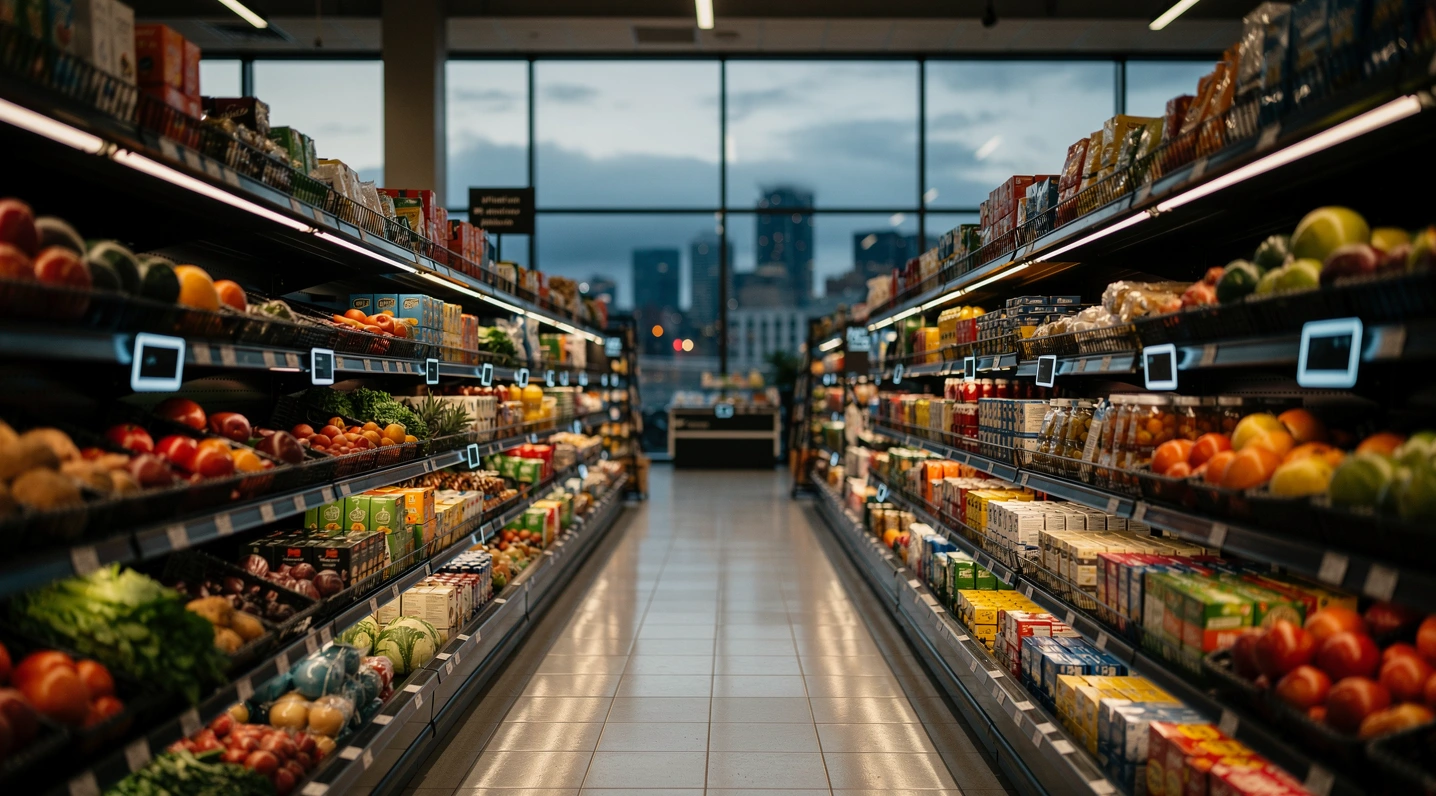
The Seattle City Council votes on Tuesday, September 22, 2026 on Council Bill 121267, the Fair Pricing and Transparency Ordinance, a measure that would make Seattle the first US city to ban large grocers and delivery platforms from using shoppers’ personal data to set individualized prices. The bill cleared the Human Services, Labor, and Economic Development Committee on September 11 with a recommendation to pass as amended, and it sits on the full council agenda for the 2:00 PM Pacific meeting. If adopted, the ordinance adds a new Chapter 7.35 to the Seattle Municipal Code, takes effect on September 1, 2027, and carries civil penalties of up to $3,000 per violation for a first offense, rising to $10,000 for each subsequent violation, alongside a private right of action capped at $1 million.
The vote matters well beyond Seattle. Three states (Connecticut, Maryland and New Jersey) have enacted surveillance pricing laws this year, New York’s bill awaits the governor, and the Federal Trade Commission is taking comments on a federal disclosure standard through September 25. Seattle’s bill goes further than most of those on one point that the grocery industry has lobbied hardest against: it treats a personalized discount as a form of personalized pricing. That is the line the council will draw or soften on Tuesday.
In short
- The vote: Seattle City Council takes up CB 121267 at its Tuesday, September 22, 2026 meeting, after the Human Services, Labor, and Economic Development Committee recommended passage as amended on September 11.
- Who is covered: grocery chains with 20 or more stores worldwide operating a Seattle store over 10,000 square feet, mixed-use retailers such as Target and Costco with 10,000 square feet or more of grocery floor, and delivery platforms with 100 or more employees, a group that includes Instacart and Amazon.
- What is banned: setting, altering or manipulating a price based on monitoring, tracking or automated analysis of a consumer’s behavior, location, demographics, biometrics or other personal information, including random price variations between customers and prices pushed to electronic shelf labels.
- What is allowed: posted store prices, manufacturer coupons not targeted with personal data, bulk and promotional discounts open to anyone, group discounts for seniors, veterans, students and employees, and loyalty discounts offered to all members or to purchase-history tiers.
- Enforcement and timing: the City Attorney’s Office gains subpoena and civil-action authority, individuals get a private right of action, and the rules apply from September 1, 2027, a delay written in partly to see whether Olympia passes a statewide law first.
What does CB 121267 actually prohibit?
The ordinance defines “algorithmic-based price discrimination” as the practice of setting, altering or manipulating the price of goods offered to a consumer, or a segment of consumers, based in whole or in part on monitoring, tracking or automated analysis of that consumer’s behavior, location, demographic characteristics, biometric data or other personal information. The definition explicitly captures personal information bought from third parties and data gathered through in-store electronic surveillance technology, according to the council’s central staff memo dated August 13, 2026.
Two features of that definition set Seattle apart. First, the bill states that algorithmic-based price discrimination “includes offering random variations in prices to different consumers.” That clause is aimed squarely at A/B price testing, the practice Instacart has acknowledged running in the past and says it has since ended. Second, the ordinance reaches physical shelves: a covered retailer may not use an electronic shelf label system to display a price that has been modified by algorithmic-based price discrimination. Committee Amendment 2, sponsored by Councilmember Alexis Mercedes Rinck and passed 4-0 on September 11, narrowed that shelf-label rule so it applies only to the goods for which the retailer is already barred from personalizing prices.
“Personal information” is drawn broadly. The bill’s definition covers anything that identifies, relates to or could reasonably be linked with a particular consumer, household or device, including derived data, unique identifiers and inferences used to build a profile of a shopper’s preferences, psychological trends, predispositions, behavior, attitudes, intelligence, abilities and aptitudes. Kerem Levitas, a senior policy advisor in Mayor Katie Wilson’s office, told the committee that the prohibition covers “information like race, gender, employment status, your activity online, your Google searches, and things like AI chatbot conversations.”
What stays legal under the bill
The ordinance lists the price differences that do not count as discrimination. Delivery costs and location-based pricing are allowed. So is a price set at a physical store and available to everyone who walks in. Manufacturer or third-party coupons are permitted as long as the retailer does not use or share personal information to decide their amount or targeting. Retention offers made to a customer cancelling a subscription or membership are fine if the same offer is available on equal terms to all similarly situated customers.
Discounts tied to eligibility criteria that any shopper could meet, such as buying in bulk, joining a mailing list or taking part in a promotion, remain lawful. Discounts for broadly defined groups, including teachers, students, veterans, employees and seniors, are protected. Loyalty and membership programs, including co-operative memberships, can keep offering discounts provided the discount goes to every member. The one carve-out for purchase history says a retailer may offer a discount to a subset of loyalty members based on what they bought before, but only in tiers (for example, shoppers who purchased last week, last month or two months ago) and only if the tiers use nothing but purchase history.
Which retailers and platforms fall under the Seattle ordinance?
Coverage runs on three tracks, each with its own threshold and its own list of covered goods. The central staff memo lays them out as follows.
| Retailer type | Definition | Size threshold | Goods covered |
|---|---|---|---|
| Grocery business | Seattle store over 10,000 sq ft primarily retailing groceries for offsite consumption; excludes convenience stores and farmers markets | 20 or more retail locations globally | Any goods |
| Mixed-use grocery business | Seattle store that is not a grocery business but devotes 10,000 sq ft or more of sales floor to groceries | Floor-area test only | Groceries, diapers, grooming and hygiene products, over-the-counter drugs |
| Delivery service provider | Organization facilitating delivery or online ordering from a grocery, mixed-use store or warehouse to a Seattle consumer, wherever the store sits | 100 or more employees worldwide | Any goods from a grocery business; groceries, diapers, hygiene and OTC drugs from a warehouse or mixed-use store |
In practice that list captures Kroger’s QFC and Fred Meyer banners, Albertsons’ Safeway stores, Whole Foods and Amazon Fresh, Walmart, Target and Costco on the store side, and, on the delivery side, Instacart and Amazon along with any other platform of 100 or more employees that takes grocery orders for Seattle addresses, a definition that would appear to reach DoorDash and Uber Eats grocery services as well. Smaller operators are out: The Stranger and FOX 13 both report that Uwajimaya, PCC Community Markets and Grocery Outlet fall below the 20-store global threshold, and Tammie Hetrick, president and CEO of the Washington Food Industry Association, told the committee her group was “very pleased that the ordinance under consideration today does not impact Seattle’s independent grocery stores.”
The delivery track deserves attention because it is the one with the clearest evidence behind it. A delivery platform is covered regardless of how many stores its retail partner operates, which means an Instacart order from a 12-store regional chain is regulated even though the chain itself is not. The 100-employee test is modest by platform standards.
Where the grocery evidence comes from
Seattle’s sponsors lean on one study more than any other. As part of a Consumer Reports investigation conducted with the Groundwork Collaborative, 39 volunteers built identical Instacart baskets from a Seattle Safeway store and were quoted totals ranging from $114 to $124 for the same goods, according to The Stranger. Consumer Reports estimated that a family of four could face cost differences as high as $1,200 a year if that spread held across a year of shopping, a figure Mayor Wilson’s office and UFCW 3000 have both repeated. The Urbanist reports that individual items in the study were priced up to 23% apart.
Instacart’s rebuttal is that the study captured randomized price testing, not personalization, and that the company has stopped the practice. “Instacart does not engage in surveillance pricing and, as we’ve repeatedly stated publicly, we never will,” the company said in a statement reported by FOX 13. The ordinance answers that argument by writing random variation into the definition of the prohibited conduct, so the distinction Instacart draws would not matter under Seattle law.
How would the city enforce it and what are the penalties?
Enforcement is two-pronged. The Seattle City Attorney’s Office, led by City Attorney Erika Evans, would receive subpoena authority to investigate suspected violations and could file civil actions in court. Penalties run up to $3,000 per violation and up to $10,000 for each subsequent violation per aggrieved party, plus liquidated damages of up to $10,000. The office can recover its enforcement costs after a successful action. Separately, any aggrieved consumer may sue under a private right of action carrying similar penalties, capped at $1 million, plus liquidated damages.
The private right of action has a threshold of its own. It may be pursued against a grocery business only if that business owns or controls more than 25 establishments in Washington State. There is no such threshold for mixed-use grocery businesses or delivery service providers, so a Target store or an Instacart order could be the subject of a consumer suit even where a mid-sized grocer could not.
“We all know it’s wrong to let an algorithm charge us more than our neighbor for food,” Evans said when the bill was announced. “Using somebody’s purchase history in your store to highlight deals is fair game, but surveillance pricing using scraped data about the rest of their life is out of bounds.”
Central staff flagged the workload risk
The council’s own analysts were more cautious. The central staff memo notes that affirmative civil litigation is “a somewhat novel enforcement approach for the City,” first used in Chapter 7.34, the 2025 ordinance banning algorithmic rent fixing, and that the pricing bill contemplates no agency involvement at intake. If complaints arrive in volume, the memo says, the City Attorney’s Office “may have to develop new systems and procedures to handle intakes directly and may not have capacity to conduct thorough investigations that would involve analyzing large volumes of data.” No fiscal impact to the office was identified in the bill’s summary and fiscal note. The Department of Finance and Administrative Services will write the implementing rules.
The record-keeping duty adds a compliance layer that will outlast any single complaint. Covered retailers must retain records showing how they meet Chapter 7.35, including the eligibility criteria for every allowable discount, how those criteria were disclosed, and how purchase-history tiers were built. They must also disclose, clearly and conspicuously on their website or at the point the discount is offered, the eligibility rules for bulk, promotional, group and loyalty-tier discounts.
What happened in committee and what changed?
Mayor Wilson transmitted the bill to the council on July 22, 2026 and announced it publicly on August 6 alongside Rinck and Councilmember Dionne Foster. The Human Services, Labor, and Economic Development Committee heard a presentation from the Mayor’s Office on August 7, discussed policy considerations on August 21 and took up amendments at a special meeting on September 11. Councilmember Rob Saka asked to be added as a co-sponsor during the process, so the bill now carries three council sponsors.
Three amendments were on the September 11 agenda, per the committee’s vote tally. Amendment 1, from Foster, would have struck “or intangible” from the definition of an aggrieved party, limiting damages to tangible harm; it was withdrawn without a vote. Amendment 2, Rinck’s shelf-label clarification, passed 4-0 with one member absent. Amendment 3, from Saka, added assurance that conduct satisfying every condition of an enumerated exception does not by itself violate the prohibition; it passed with three votes in favor, one abstention and one absence. The committee then recommended passage as amended.
| Date | Step | Outcome |
|---|---|---|
| July 22, 2026 | Mayor’s legislation transmitted to council | Assigned CB 121267 |
| August 6, 2026 | Public announcement by Mayor Wilson, Rinck and Foster | Billed as first city-level ban in the US |
| August 7, 2026 | Committee presentation by Mayor’s Office | Industry groups testify against personalized-discount limits |
| August 11, 2026 | Full council refers bill to committee | Referred |
| August 21, 2026 | Committee policy discussion | Central staff presents considerations |
| September 11, 2026 | Special committee meeting on amendments | Amendments 2 and 3 adopted; bill recommended as amended |
| September 22, 2026 | Full council vote, 2:00 PM PT | Floor amendments B and F pending |
| September 1, 2027 | Effective date | Rules from Finance and Administrative Services |
Two floor amendments arrive for Tuesday
Council President Hollingsworth has filed two amendments for the full council meeting, according to the legislative record. Amendment B would clarify that discounts on gasoline are permitted, subject to the loyalty-program rules, a change with obvious relevance to Fred Meyer and Safeway fuel centers and to Costco’s warehouses. Amendment F would add a new section 7.35.085 stating that nothing in the chapter prohibits technology used solely for security, loss prevention, safety, fraud prevention or detection, or legal compliance, provided that neither the technology nor the data it generates is used, directly or indirectly, for algorithmic-based price discrimination. That amendment answers a concern the grocery industry raised in committee about in-store cameras and sensors being swept into a pricing law.
Why is the grocery industry fighting the discount clause?
The industry’s position, stated repeatedly through August and September, is that it accepts a ban on using personal data to raise prices but objects to a ban on using personal data to lower them. “To be clear, my members support prohibiting the use of personal information to increase prices, but the ordinance should be carefully crafted so it does not unintentionally restrict the discounts and rewards programs that help families, renters, your neighbors, and constituents,” Amanda Dalton, president and CEO of the Northwest Grocery Retail Association, told the committee, per The Urbanist. On KUOW she put it more bluntly: “If a retailer uses your personal information to charge you a higher price, that should be illegal, full stop.”
The Washington Retail Association framed its objection around litigation risk. “WR has reached out to the mayor and council expressing our concerns with the cost of frivolous litigation and the regulatory burden that is included in the legislation,” the group said in a statement reported by FOX 13. “It’s this uncertainty that will disrupt the savings offers nearly every consumer relies on.” Representatives of TechNet, the Seattle Metropolitan Chamber of Commerce, Chamber of Progress, the Washington Technology Industry Association and the Seattle Latino Metropolitan Chamber of Commerce also spoke against the bill as written during public comment, according to The Urbanist.
Albertsons Companies, which owns Safeway, told FOX 13 it never uses customer data to inflate prices for individual shoppers. “We use customer data responsibly to provide data-driven discounts, personalized offers, digital coupons, and loyalty program benefits that help customers save money on groceries,” a spokesperson said. That is precisely the model the ordinance constrains. The bill would allow personalized discounts on a shopper’s commonly bought items only if the shopper is a loyalty member and the same discount goes to every member in the same purchase-history tier. Individual coupons keyed to search history, location or inferred income would be barred, a sharp contrast with the loyalty-gated personalized offers that large general merchandise chains are building their 2027 plans around.
The sponsors’ answer: a discount is a price
Rinck confronted the discount argument directly in committee. She asked Levitas whether a retailer using information about an individual to decide that one person receives a $1 discount while another receives none on the same item is “functionally a form of individualized pricing, even if the company calls it a discount.” Levitas said it was. Maya Morales, founder of Washington People’s Privacy, told The Stranger that individualized discounts sit on top of “a deceptive pricing model and a deceptive discount model” so that customers end up paying more even when the shelf price looks uniform, and that banning individualized pricing outright is the only workable way to stop discrimination against protected classes when the algorithms are proprietary and cannot be audited.
The industry campaign has not been confined to City Hall. The day before the first committee hearing, many Seattle residents received a mass text warning that “the Mayor & City Council could put our grocery rewards, coupons, and discounts at risk,” The Urbanist and the Mayor’s Office both reported, and the Northwest Grocery Retail Association used a texting service to generate form emails to councilmembers asking for a personalized-discount exemption. Rinck told The Stranger the “vast majority of real-life people who are showing up at public comment support the legislation.”
How does Seattle compare with the state laws already on the books?
Seattle is not writing on a blank slate. The central staff memo counts at least five state legislatures that passed surveillance pricing bills in 2026. Connecticut, Maryland and New Jersey have enacted theirs, New York’s awaits action by the governor, and Colorado’s governor vetoed one. Washington’s own attempt, House Bill 2481 with companion Senate Bill 6312, had committee hearings in the 2026 session but did not pass, which is why Rinck moved the idea to the city level. Retailers are already preparing for the Connecticut and Maryland bans that go live October 1, and Seattle’s drafters borrowed from both while going further on the discount question.
| Jurisdiction | Status | Core prohibition | Coverage | Enforcement |
|---|---|---|---|---|
| Seattle (CB 121267) | Full council vote September 22, 2026; effective September 1, 2027 if passed | Algorithmic-based price discrimination, including random price variation and ESL display of personalized prices | Grocers with 20+ stores worldwide, mixed-use grocery retailers, delivery platforms with 100+ employees | City Attorney civil actions; private right of action capped at $1m |
| Maryland (HB 895) | Enacted; effective October 1, 2026 | “Dynamic pricing” set for a specific consumer using personal data | Food retailers of 15,000 sq ft or larger; third-party delivery services | State Attorney General; private right of action explicitly disclaimed |
| New Jersey (Fair Price Protection Act) | Enacted | Surveillance pricing on groceries and other foodstuffs; one-year moratorium on electronic shelf labels pending a report | Sale of groceries and household staples, excluding food for immediate consumption | State Attorney General |
| Connecticut (SB 4) | Enacted; effective October 1, 2026 | Surveillance pricing by retail sellers and delivery services; online disclosure duty for non-discount uses | All retail sellers and third-party delivery services | State Attorney General; private right of action explicitly disclaimed |
| New York | Passed, pending governor | Personal data plus an algorithm to determine price | Goods and services generally, excluding insurance and credit pricing | State Attorney General |
Three differences stand out. Seattle’s private right of action is unusual; both Maryland and Connecticut expressly disclaim one, leaving enforcement to their attorneys general. Seattle’s random-variation clause has no counterpart in the state comparison. And Seattle alone regulates electronic shelf labels by tying them to the pricing prohibition rather than imposing a moratorium, as New Jersey did. New York’s approach to loyalty tiers based on prior purchase history is the closest match to Seattle’s, which is consistent with Levitas’s account of a bill drafted after extensive review of other jurisdictions.
The preemption question hangs over the effective date
The delayed start is deliberate. Central staff wrote that the possibility of a state bill passing in the 2027 session “is part of the reason why CB 121267 would have a delayed effective date of September 1, 2027.” If Olympia acts, the memo says, the city may need administrative rulemaking to reconcile the two, further council legislation to conform, or could see its regulations “preempt[ed] entirely.” The memo also raised the option of delaying final action until the city studies how the new chapter fits with existing law, including RCW 19.94.390 on price misrepresentation, the state Consumer Protection Act, and Seattle’s unit-pricing code in Chapter 7.12. The committee did not take that option.
What does this mean for Kroger, Albertsons, Amazon and Walmart?
For the two largest conventional grocers the exposure is concrete. Kroger operates QFC and Fred Meyer in Seattle, and its marketing arm boasted in 2019 of holding more than 2,000 data points per customer drawn from purchase history and data brokers, The Stranger reports. Consumer Reports reported in 2025 that Kroger’s “alternative profit” businesses, which include data monetization and retail media, account for more than 35% of net income, according to The Urbanist. An Uptown QFC cashier told The Stranger that Kroger began installing electronic shelf labels at her store in July. Those investments sit uneasily with a law that bars ESL display of any personalized price and demands records of every discount tier, and they arrive as Kroger’s second-quarter results showed identical sales up just 0.2% with profit defended through cost control, retail media and e-commerce economics.
Albertsons faces a second front. The Mayor’s Office notes that the Washington State Attorney General recently sued the chain over a related practice, raising shelf prices at the same moment discounts were offered so that the final price stayed flat. The ordinance does not adjudicate that case, but it explains why Seattle’s drafters were unwilling to take “discount” at face value. Albertsons has not said whether it would change its Safeway loyalty offers in Seattle if the bill passes.
Amazon and Walmart are covered on different legs. Amazon appears as both a mixed-use grocer (Amazon Fresh and Whole Foods) and a delivery service provider, so its Seattle grocery orders would be regulated whether they ship from a store or a warehouse. Walmart, which The Urbanist notes is switching to electronic shelf labels nationwide, would be a mixed-use grocery business for its Seattle-area supercenters, with the prohibition limited to groceries, diapers, hygiene products and OTC drugs rather than general merchandise. Costco’s warehouses fall in the same bucket, which is where Amendment B on fuel discounts comes in.
Compliance costs land in 2027, not now
Nothing changes at the register on Wednesday. The September 1, 2027 effective date gives covered companies roughly eleven months to separate purchase-history tiering from every other data feed in their promotion engines, to publish the eligibility criteria for each discount type, and to build records a city subpoena could test. The Federal Trade Commission’s parallel track pushes in the other direction: its proposed enforcement policy statement asks retailers to disclose personalized pricing rather than stop it, and the FTC personalized pricing comment deadline of September 25 falls three days after Seattle votes. A retailer operating nationally will therefore face a disclosure standard in Washington, D.C., prohibition standards in three or four states, and a stricter prohibition in one city, all with different definitions.
What are the possible outcomes on September 22?
The council has nine members, and the committee vote suggests the sponsors have the numbers. Three councilmembers sponsor the bill, a fourth (Hollingsworth) is filing clarifying rather than gutting amendments, and Rinck has said she “feels good” about the bill’s prospects, according to local reporting. The most likely path is adoption with Amendments B and F attached, which would leave the core prohibition, the random-variation clause and the discount rules intact while removing two of the industry’s more sympathetic objections, fuel rewards and security cameras.
A second scenario is a floor amendment reopening the personalized-discount question. The industry’s form emails ask for exactly that, and Foster’s withdrawn Amendment 1 shows that at least one sponsor was willing to trim the damages exposure. An amendment exempting individualized discounts would bring Seattle closer to Maryland’s model and would be a significant win for the grocery associations, but nothing on the published agenda points that way. A third scenario, deferral pending the regulatory-landscape study central staff floated, has no visible sponsor.
If the bill passes, it goes to Mayor Wilson, who proposed it. Her office has said Portland and New York City are working on similar city-level measures, and Seattle’s text, with its random-variation and shelf-label provisions, becomes the template those cities will be lobbied over. If the bill fails or is sent back, the surveillance pricing fight in Washington reverts to Olympia’s 2027 session, where central staff expects advocates to try again.
What should retailers and delivery platforms watch after the vote?
The first signal is the final text. Whether Amendment F’s security carve-out and Amendment B’s fuel exemption survive, and whether any discount exemption is added, will determine how much of the industry’s compliance work is genuinely new. The second is the rulemaking by Finance and Administrative Services, which will define how eligibility criteria must be disclosed and what records must be retained. The third is whether a state bill reappears in January 2027, since a Washington statute could reshape or preempt Chapter 7.35 before it takes effect.
The fourth signal is federal. The FTC is on course to settle on disclosure rather than prohibition as the national standard, which leaves the prohibition question to states and now cities. Seattle’s vote is the first test of whether a city council can ban the practice outright, apply it to physical shelves, and back it with private lawsuits. Retail pricing teams that have treated surveillance pricing law as a state-level compliance matter will find on Tuesday that the map has a new layer.
Frequently asked questions
When does the Seattle City Council vote on the surveillance pricing ban?
The full council takes up CB 121267 at its regular meeting on Tuesday, September 22, 2026, which begins at 2:00 PM Pacific time. The Human Services, Labor, and Economic Development Committee recommended passage as amended on September 11.
What is the Fair Pricing and Transparency Ordinance?
It is the title of Council Bill 121267, which would add Chapter 7.35 to the Seattle Municipal Code. The chapter prohibits covered retailers from using algorithmic-based price discrimination on groceries and certain other goods, bars electronic shelf labels from displaying such prices, and requires disclosure of discount eligibility criteria and related record-keeping.
Which stores would be covered in Seattle?
Grocery chains with 20 or more locations worldwide that operate a Seattle store over 10,000 square feet, mixed-use retailers with 10,000 square feet or more of grocery sales floor (such as Target, Walmart and Costco), and delivery or online-ordering platforms with 100 or more employees worldwide (such as Instacart and Amazon). Independent grocers with fewer than 20 stores, convenience stores and farmers markets are not covered.
Would loyalty card discounts and digital coupons still be allowed?
Yes, with conditions. A loyalty discount must be offered to every member, or to a tier of members defined only by prior purchase history. Manufacturer coupons remain legal if the retailer does not use personal data to target them. Discounts for seniors, veterans, students, teachers and employees, bulk discounts and promotional offers open to any shopper are all protected.
What are the penalties for violating the ordinance?
The City Attorney’s Office can seek civil penalties of up to $3,000 per violation and up to $10,000 for each subsequent violation per aggrieved party, plus liquidated damages of up to $10,000, and can recover enforcement costs. Consumers can also sue under a private right of action with similar penalties capped at $1 million, though suits against grocery businesses require the chain to control more than 25 establishments in Washington State.
When would the ban take effect?
September 1, 2027. The delay is intended to allow the Department of Finance and Administrative Services to write rules and conduct outreach, and to leave room for the Washington State Legislature to pass a statewide law that could require conforming changes.
How is Seattle’s bill different from the Maryland, Connecticut and New Jersey laws?
Seattle includes a private right of action, which Maryland and Connecticut expressly exclude. It treats random price variation between customers as prohibited conduct, which the state laws do not address. And it regulates electronic shelf labels by prohibiting their use for personalized prices rather than imposing a temporary moratorium as New Jersey did.
What is the evidence that surveillance pricing happens in grocery?
The sponsors cite a Consumer Reports investigation in which 39 volunteers were quoted between $114 and $124 for identical Instacart baskets from a Seattle Safeway, and the Federal Trade Commission’s January 2025 staff research on surveillance pricing. Instacart says the study reflected randomized price testing that it has since ended, and Albertsons says it uses data only to lower prices through discounts and loyalty benefits.
Does the ordinance stop grocers from using security cameras or loss-prevention technology?
Not if Amendment F is adopted on September 22. That amendment would add a section stating that technology used solely for security, loss prevention, safety, fraud prevention or legal compliance is permitted, provided the data it generates is not used for algorithmic-based price discrimination.