
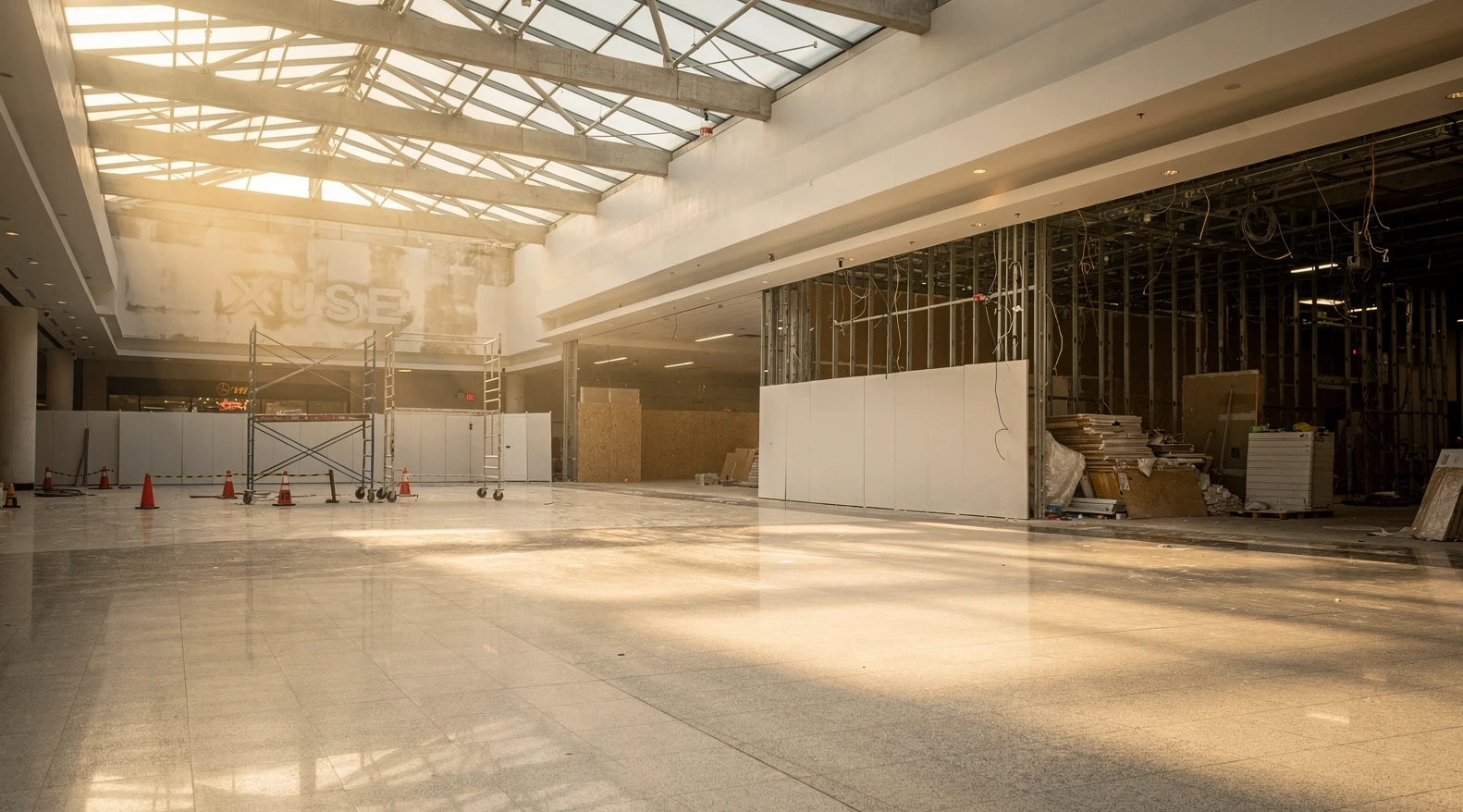
The shopping mall is not dead, but its anatomy has changed. The big box at the end of the corridor, the so-called anchor tenant that once pulled foot traffic through every smaller storefront in between, no longer behaves the way it did in 1995. Department stores have closed at a steady clip, theaters and gyms have stepped in, and several mall operators now treat the anchor pad as a redevelopment opportunity rather than a permanent fixture. For retailers, landlords, brand teams and even municipal planners, understanding what happens to mall anchor tenants post mall is no longer a niche real estate question. It shapes where Americans shop, how brands reach Gen Z and millennial households, and which suburbs keep their tax base intact.
This guide is written for retail operators, brand marketers, leasing teams and investors who want a working mental model of how the anchor concept is being rewritten right now. It is part of the ShopAppy Retail cluster and pairs with our broader analysis in The state of retail: department stores, grocers and experiences, which frames the industry shift in full.
In short
- Anchor tenants are the large stores (historically department stores) that act as the gravitational pull for an entire mall, and their economics underwrite the smaller in-line shops.
- Post mall does not mean malls are gone, it means the anchor format has fractured into off-mall, mixed-use, experiential and digitally native replacements.
- The fastest-growing replacement categories for vacated anchor boxes are off-price retail, grocery, medical, fitness and entertainment, not new department stores.
- Class A malls are still leasing anchor boxes successfully. Class B and C malls are converting them into industrial, residential or last-mile fulfillment.
- For brand and marketing teams, the question is no longer “which anchor are we next to,” it is “which experience are we adjacent to.”
Why mall anchor tenants matter in 2026
The US mall ecosystem was built on a covenant. A regional mall developer signed long, cheap leases with two or three department store chains (Sears, JCPenney, Macy’s, Nordstrom, Dillard’s) and used those signatures to underwrite the rest of the property. In exchange, the anchors got prominent corner positions, oversized footprints (often 100,000 to 200,000 square feet) and the right to draw customers through the in-line tenants who paid the real rent. Coresight Research has tracked more than 9,000 announced US store closures in some recent years, and a disproportionate share landed in that anchor footprint.
What changed is not consumer appetite for physical retail. Foot traffic at the top quartile of US shopping centers is back at or above 2019 levels in most months. What changed is the answer to a simple operational question: which format anchors a trip? In 2026 the honest answer is plural. A Costco run anchors a Saturday. A Target on the way home anchors a Wednesday. A movie premiere anchors a Friday night. The anchor is now a verb more than a tenant.
This matters because the way a household discovers a brand, tries a product and decides to buy now happens across that fragmented set of trips. When a story breaks online and demand spikes overnight, the brands that win are the ones whose physical footprint matches that new pattern. That dynamic plays out in real time in cases we covered in When a viral product story breaks: what retailers should do first, where the anchor question (which physical channel can absorb the surge) is now more important than the anchor tenant.
Key terms and definitions
Before going further it helps to define the vocabulary precisely, because the same words mean different things to a leasing broker, a brand director and a city planner.
| Term | What it means in 2026 |
|---|---|
| Anchor tenant | A large-format retailer (typically 50,000 sq ft and up) whose presence drives traffic for the wider center. Historically department stores, increasingly grocery, off-price and entertainment. |
| Junior anchor | A 20,000 to 50,000 sq ft tenant, often a category killer like Ulta, Five Below, Old Navy or HomeGoods. The junior anchor is the growth engine of 2026 leasing. |
| Box redevelopment | Converting a vacated anchor footprint to a different use: subdivided into 3 to 5 smaller boxes, knocked down for outdoor lifestyle space, or replaced with non-retail uses. |
| Post mall | The era after the dominance of the enclosed regional mall as the default suburban retail format. Often used to describe the shift toward open-air, mixed-use and hybrid town centers. |
| Class A, B, C mall | A simple grading based on sales per square foot. Class A clears about $700 and up, Class B sits in the $400 to $700 band, Class C below that. Class is the single best predictor of an anchor box’s next life. |
| Greyfield | An obsolete mall property awaiting redevelopment, usually with one or more dead anchors. The US has well over 200 of these today. |
The class grade matters more than any other variable. A vacant Sears at a Class A mall is leased within 18 months, often to Dick’s House of Sport, Primark, Round1 or a luxury fitness brand. A vacant Sears at a Class C mall sits empty for years or is knocked down for warehouses.
How the anchor model works today
Three structural forces explain the 2026 picture. They reinforce each other, which is why the change is not reversing.
Department store consolidation. The four-anchor mall is rare. Most regional centers now have one full-line department store and three slots filled with a mix of off-price (Ross, T.J. Maxx, Burlington), fast fashion (H&M, Primark, Uniqlo), entertainment (theaters, family entertainment centers) and experiential fitness. The Macy and Nordstrom strategic playbook is itself a study in this shift, and we go into the head-to-head detail in Macy and Nordstrom strategy compared for the next decade.
Owned versus leased anchor boxes. Department store anchors historically owned their pads outright or paid token rent. When they close, the landlord often does not control the parcel. That control gap is the single biggest friction in mall redevelopment. The wave of Sears closures created hundreds of these orphan parcels in the late 2010s and they are still being untangled.
The rise of the open-air format. New construction is overwhelmingly open-air lifestyle centers and town centers. The enclosed regional mall is not being built. According to the International Council of Shopping Centers, less than 1 percent of new US retail square footage in recent years has been enclosed mall. The anchor in an open-air center looks different, it is often a grocer, a movie theater, a wholesale club or a category-leading specialty box such as Dick’s House of Sport.
The replacement matrix
For asset managers and leasing teams, the practical question is what fills the box. The pattern across the past five years of US redevelopments is consistent enough to lay out as a numbered list.
- Off-price stack. Subdivide a 150,000 sq ft Sears into a T.J. Maxx, a Marshalls HomeGoods combo, a Five Below and a Ross. Four signatures, predictable traffic, lower rent per square foot than the old anchor but vastly higher per square foot than empty.
- Grocery anchor swap. Drop in a Whole Foods, Wegmans, Trader Joe’s, H Mart, Sprouts or Aldi. Grocery brings weekly trip frequency that the old department store never delivered.
- Experiential entertainment. Round1, Dave and Buster’s, Topgolf, Puttshack, Cinemark XD, Main Event. These tenants do not generate adjacent retail co-purchase the way a department store did, but they keep the property alive on evenings and weekends.
- Medical and wellness. Cleveland Clinic-style outpatient hubs, dialysis chains, urgent care, dental, vision, hearing and increasingly veterinary. Medical loves the parking, the visibility and the long lease term.
- Fitness footprint. Life Time, Equinox, Lifetime Athletic, Crunch, Planet Fitness, F45 clusters. Some of these are the new dominant anchor by trip count.
- Industrial conversion. At Class C properties, the anchor is leveled and replaced with last-mile distribution. Amazon, FedEx Ground and regional 3PLs are the new tenants. The lifestyle covenant gives way to truck courts.
- Mixed-use redevelopment. Tear down the anchor, build apartments, hotel rooms, office and a small streetscape of food and beverage. This is the most ambitious option and the slowest. Five years from concept to ribbon cutting is typical.
Common mistakes and how to avoid them
The decisions that go wrong are usually predictable. Landlords and tenants both make a small set of recurring errors when they try to handle a post-anchor property.
Mistake 1: Holding out for a like-for-like replacement. No one is opening a new 150,000 sq ft soft-goods department store. Waiting for that buyer means leaving the box dark for years, which kills the rest of the center. The right move is to subdivide quickly, accept lower per-square-foot rent and rebuild traffic.
Mistake 2: Ignoring the reciprocal easement agreement. Most US malls were built with a REA, a contract among the original anchors and the developer that restricts what can replace an anchor. REAs can block grocery, restaurants over a certain seat count, fitness or any non-retail use. Reading the REA is the first thing a redevelopment lawyer does. Skipping that step has scuttled deals at Class A and Class B properties alike.
Mistake 3: Underestimating parking ratios. Medical, fitness and entertainment tenants need very different parking from department stores. A 5 per 1,000 ratio that worked for Macy’s may be inadequate for a Life Time. Site plans need a real traffic study, not a back-of-the-envelope number.
Mistake 4: Treating the anchor pad as an isolated asset. The pad only has value as part of the whole property. A redeveloped anchor that contradicts the rest of the center (industrial truck court next to luxury apparel) destroys value on both sides. The leasing plan has to be holistic.
Mistake 5: Underinvesting in the gut renovation. A new tenant signing a 15-year lease wants to walk into a finished box that fits their brand standards. Trying to push tenant improvement costs back onto the operator usually pushes the deal to a competitor property.
Mistake 6: Forgetting that the anchor used to do free marketing. Department stores ran their own circulars and TV ads. The new anchors (a fitness club, a medical hub) do not. The landlord now has to fund property-level marketing in a way that was never necessary in 1995. Budgeting for that line item is part of the new economics.
Examples from US retail and e-commerce
The clearest way to understand the post-mall anchor era is to look at how specific properties handled the transition. The following cases are widely covered in the trade press and illustrate the menu of choices.
Westfield Garden State Plaza, Paramus, New Jersey. A flagship Class A center. When Sears closed its store, the operator (Unibail-Rodamco-Westfield) announced a mixed-use redevelopment with apartments, hotel and a streetscape of restaurants. The remaining anchors (Macy’s, Nordstrom, Neiman Marcus) stayed. The lesson: at Class A, the anchor pad’s highest value is sometimes not retail at all.
Tysons Corner Center, McLean, Virginia. One of the top-grossing malls in the United States. Tysons added Tesla, an Apple Store-led upper level renovation, and high-end food and beverage in place of traditional anchor uses. The result is a property that functions more like a town center than an enclosed mall, anchored by a transit station as much as by tenants.
Galleria at Pittsburgh Mills, Tarentum, Pennsylvania. Class C in a small market. The property has been in foreclosure proceedings, several anchors are dark, and the most realistic exit is industrial conversion or partial demolition. The lesson: at Class C, the post-mall future is often not a mall at all.
King of Prussia, Pennsylvania. A Class A super-regional that absorbed Lord and Taylor’s closure by replacing it with Primark and adding new full-line dining and entertainment. Steady traffic, lower per-foot rent but functioning property.
Burlington Mall, Burlington, Massachusetts. Replaced part of a closed Sears with a Wegmans grocery anchor. The grocery trip frequency lifted in-line tenant sales materially in the first 18 months.
Belden Village Mall, Canton, Ohio. A Class B center that turned a vacant anchor into a mix of off-price (Ross, HomeGoods) and family entertainment (Round1). A textbook subdivide and re-anchor playbook for the middle of the market.
These are not anecdotes. They are the same six or seven moves repeated across hundreds of properties, with the class grade dictating which move is feasible. A useful exercise for any operator is to map your target market’s regional centers against this menu, mark which boxes are dark, which are scheduled for backfill, and which property is functionally a Class C that the trade press still treats as Class B. The gap between the official press release and the on-the-ground reality is where most acquisition and leasing opportunities now sit, especially in secondary metros where institutional capital has lost interest and local operators are taking over the asset base parcel by parcel.
Tools, partners and vendors worth knowing
For practitioners, the operational layer behind anchor redevelopment runs through a relatively small set of consultants, brokers and data vendors. Knowing the names shortens every conversation by a half hour.
| Category | Names worth knowing | What they actually do |
|---|---|---|
| Major mall REITs | Simon Property Group, Brookfield Properties Retail, Macerich, Tanger, Unibail-Rodamco-Westfield, Washington Prime (legacy) | Own the Class A and B inventory. Their leasing teams shape what fills US anchor boxes. |
| Retail brokerage | JLL Retail, CBRE Retail, Cushman and Wakefield Retail, Newmark, RKF (now Newmark) | Match boxes to tenants. Most anchor backfill deals run through one of these shops. |
| Foot traffic data | Placer.ai, SafeGraph, Foursquare, Veraset | Provide the third-party visit data that drives lease-up decisions and rent setting. |
| Industry research | Coresight Research, Green Street, ICSC, NAIOP | Track closures, openings and sector-level shifts. Coresight closure data is the de facto benchmark. |
| Architecture and planning | Gensler, RDC, Stantec, HKS, MG2 | Lead the mixed-use master plans for post-mall conversions. |
| Public data | US Census Bureau retail trade | Free monthly retail sales by category, the macro backdrop for any leasing thesis. |
For brand teams thinking about which centers to enter, the practical first step is pulling a Placer.ai report on the target property, cross-referencing closure activity from Coresight, and asking the REIT’s leasing rep what the next two anchor decisions look like. That triangulates the trip pattern, the trajectory and the future format.
What this means for ShopAppy readers
The strategic takeaway is straightforward. The post-mall anchor era is not a death narrative, it is a reshuffling. Three implications matter most for retail and e-commerce teams:
First, location strategy needs to be anchor-aware in a granular way. Knowing the mall name is no longer enough. Knowing which boxes are dark, which are scheduled to be replaced, and what is replacing them, is the actual signal. A T.J. Maxx going into a former Sears tells you the trip pattern is going to change in 18 months.
Second, the anchor question and the private label question are connected. Department stores have leaned harder on their own brands as a margin defense and a foot-traffic hook. That story has implications for vendors, for shelf strategy and for category positioning across the rest of the box. We unpack the supplier and category fight in Private label as the department store survival strategy.
Third, the broader retail picture matters. Anchor decisions are downstream of a much larger shift in how Americans use physical and digital retail in combination. For the full industry frame, including grocery and experience-led formats alongside the department store story, see The state of retail: department stores, grocers and experiences.
FAQ
What is a mall anchor tenant in plain language?
It is the biggest store at a mall, the one with prominent corner placement and an oversized footprint, whose job is to pull customers into the property so that the smaller in-line shops get foot traffic. Historically these were department stores like Sears, JCPenney, Macy’s and Nordstrom. Today the role is increasingly played by grocery, off-price, fitness and entertainment.
Are malls actually dying in the United States?
Class A malls are thriving. Foot traffic at the top US centers is at or above 2019 levels. Class B malls are mixed and require active leasing work to stay healthy. Class C malls (sales below roughly $400 per square foot) are in real distress and many are being repositioned to non-retail uses. The blanket “malls are dying” headline misses the class split.
What replaces a closed department store anchor?
The most common replacements are a subdivided off-price stack (T.J. Maxx, Ross, Five Below, HomeGoods), a grocery anchor (Whole Foods, Wegmans, Trader Joe’s), experiential entertainment (Round1, Dave and Buster’s, Topgolf), fitness clubs (Life Time, Equinox) or medical hubs. At Class C properties, industrial conversion to last-mile distribution is common.
Why is the anchor pad ownership structure such a problem?
Department store anchors typically owned their pads outright or paid almost no rent under long historical leases. When they close, the landlord does not control the parcel and cannot simply re-lease it. Resolving that control through buyback, swap or restructuring is often the slowest step in any redevelopment and is one reason boxes can stay dark for years.
How long does it take to backfill a vacated anchor?
At a Class A property, 12 to 24 months is typical for the first new tenant to open. At Class B, 24 to 48 months is common. At Class C, indefinite, and the realistic outcome is often demolition or industrial conversion rather than retail backfill. A full mixed-use redevelopment from concept to opening day usually takes 5 to 7 years.
What is a reciprocal easement agreement and why does it matter?
A reciprocal easement agreement, or REA, is the contract among the original anchors and the developer of a mall that governs shared parking, access roads, signage and (critically) restrictions on the type of use that can occupy each anchor pad. REAs can block grocery, large restaurants, fitness or non-retail uses entirely. Any anchor backfill plan starts with reading the REA.
How do off-price retailers like T.J. Maxx and Ross fit into the post-mall picture?
Off-price retailers are the single largest source of anchor backfill demand in the United States. They take smaller boxes (20,000 to 40,000 sq ft) at lower rent per square foot than the old department store, but they open in volume, generate steady trip frequency and require very little tenant improvement work. They are the closest thing the leasing market has to a default answer.
Where can I track which malls are losing anchors?
Coresight Research publishes the most widely cited closure data, ICSC tracks industry trends, Green Street covers the REIT and property-level financial picture, and Placer.ai provides foot traffic data at the individual property level. For macro retail sales context, the US Census Bureau’s monthly retail trade report is the public-data baseline.
The mall anchor is not gone. It is being rewritten in real time, parcel by parcel, lease by lease, across the United States. For retail operators, brand strategists and investors, the practical task in 2026 is not to mourn the department store era but to understand which post-mall format is taking its place at each property that matters to your business. The clusters that get the answer right will set the next decade of US retail. For the full industry context, our pillar at The state of retail: department stores, grocers and experiences ties together anchor strategy, grocery, experiential retail and the digital overlay that now sits on top of all three.