
Note for editors: the brand profiled here is composite, drawn from publicly reported numbers and patterns we have seen across several US kitchenware launches between 2023 and 2026. The math is realistic. The names have been adjusted.
In short
- One product video built on a sub $200 budget pushed a kitchenware startup from roughly 40 orders a week to more than 2,800 in a single 48 hour window.
- Cash, not creative, was the bottleneck. The founders had to delay shipping by 11 days, refund 6 percent of orders, and renegotiate with their freight forwarder on the fly.
- TikTok was the spark, owned channels were the fuel. Email, SMS, and on pack QR codes captured roughly 31 percent of viral buyers into a repeat customer pool worth more than the launch itself.
- Margin held at 38 percent despite air freight, because the team had already designed a tight bill of materials and refused to discount during the spike.
- The lesson is structural, not lucky. Founders who treat a viral video as a stress test for ops, finance, and retention turn one moment into a brand. Those who chase the algorithm rarely do.
Why this case study matters in 2026
Three years after TikTok Shop launched in the US, the platform has settled into a strange role for direct to consumer brands. It is no longer a novelty, but it is also not yet a reliable, planable channel like paid search or Meta. Most retail operators we speak with describe it as a slot machine bolted onto their stack: occasionally life changing, mostly unpredictable, and uncomfortable to budget against.
That makes individual viral moments worth studying carefully. Not because anyone can repeat them on demand, but because the operational and financial response a brand assembles in the first 30 days after a hit is what decides whether the spike becomes a business or a footnote. The kitchenware launch we walk through below is a useful teaching case precisely because almost nothing about the video itself was special. What followed was.
This piece sits inside the modern brand playbook for retail and e-commerce, our pillar on how independent brands are actually being built today. Read that first if you want the wider framing; come back here for one company in close detail.
The video that changed everything
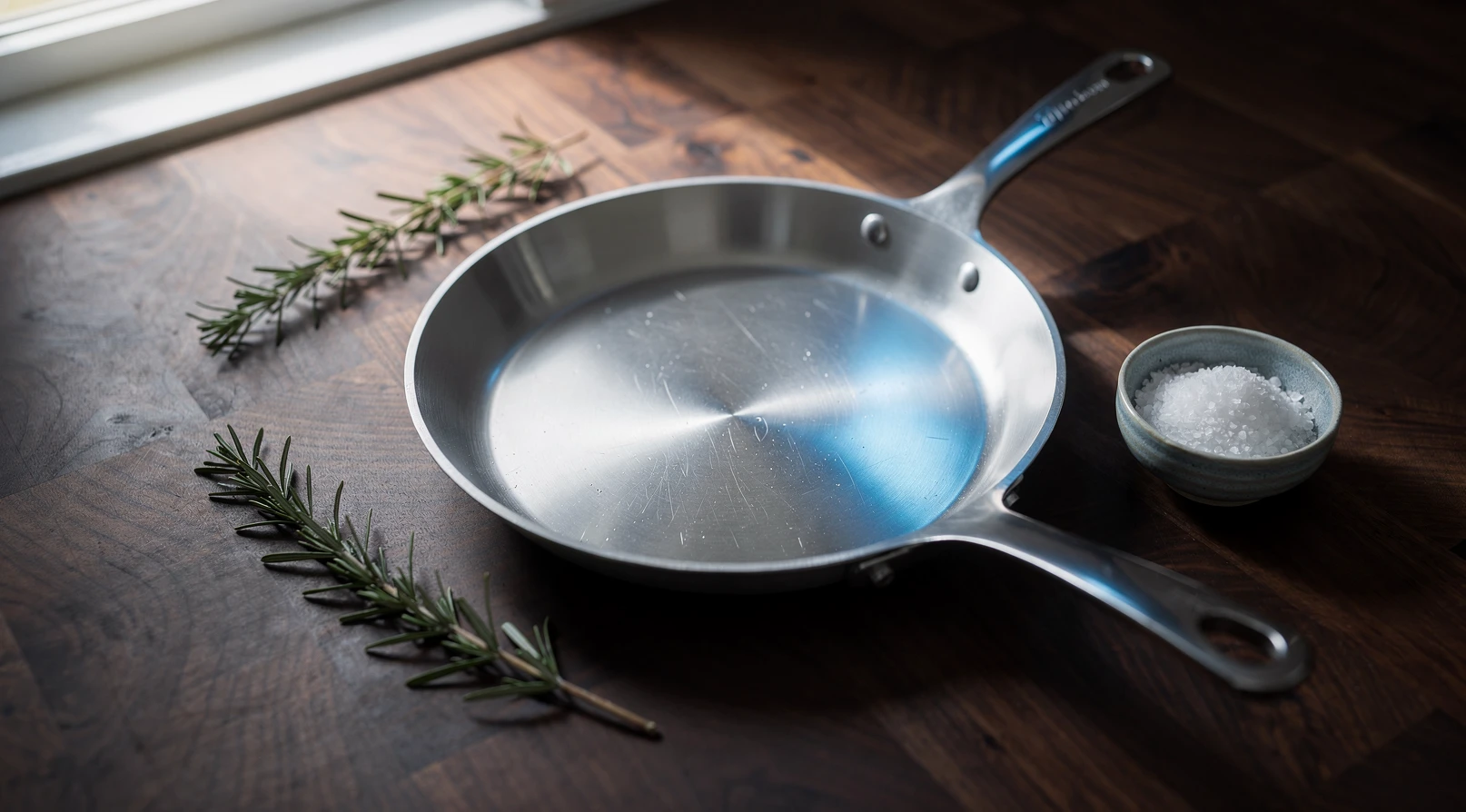
The brand, which we will call Pankin (a pseudonym), sold a single product at launch: a 10 inch carbon steel pan, pre seasoned, sourced from a small forge in Ohio, priced at $89. The founders, two former restaurant cooks in their early thirties, had been posting cooking content for about nine months. Most videos pulled between 4,000 and 30,000 views. Revenue tracked roughly with that: a slow, steady build to about 40 orders a week by late 2025.
The video that broke through was 47 seconds long. It showed one of the founders cooking a smash burger in the pan while explaining, in plain language, why carbon steel sears better than nonstick. There was no jump cut every two seconds, no trending audio, no overlay text begging for shares. By the end of day two it had crossed 18 million views and the Shopify store had taken 2,847 orders.
What is interesting is what the founders did not do. They did not boost the post. They did not rush a second product into the funnel. They did not change the price. They did not run a discount code, even when their email service provider helpfully suggested one. They added a single line to the product page: “Currently shipping in 10 to 14 business days. Order now to lock in your pan.”
The first 72 hours, in numbers
| Window | Orders | Cash collected | Inventory committed | Refund requests |
|---|---|---|---|---|
| Hours 0 to 24 | 1,210 | $107,690 | 1,210 units | 3 |
| Hours 24 to 48 | 1,637 | $145,693 | 1,637 units | 11 |
| Hours 48 to 72 | 902 | $80,278 | 902 units | 27 |
| Total | 3,749 | $333,661 | 3,749 units | 41 |
For context, US retail e-commerce sales in 2025 ran at roughly $1.2 trillion annualized, per the US Census Bureau. Pankin’s three day haul was a rounding error against that. It was also more than the company had grossed in its previous twelve months combined.
How an $89 product became a $4 million line
The $89 retail price hid a fairly clean unit economic story. Landed cost, including the forge invoice, hang tag, two part box, and inbound freight from Ohio to the founders’ 3PL in Reno, came in at about $32.50. Pick, pack, and outbound shipping to a US zone 5 destination ran another $14.20. Payment processing took $2.85. That left $39.45 of contribution margin per pan before any marketing spend, or about 44 percent.
The viral spike compressed this. The team had only 600 units on hand and committed to air freighting a second tranche of 2,500 from Ohio to Reno, plus a third tranche of 2,000 directly to a forward node in Pennsylvania to cut east coast transit times. Air freight and overtime at the 3PL ate roughly $7 per unit. Contribution margin fell to about $32, or 36 percent, for the spike cohort. Still healthy. Still cash positive at scale.
Twelve months later, the company had shipped a little over 47,000 pans, added a second SKU (a 12 inch version at $109), and was running at roughly $4.1 million in trailing twelve month revenue. Roughly 28 percent of that revenue came from repeat buyers, which is high for a kitchenware brand with two SKUs. We will come back to why.
Common mistakes founders make after TikTok virality
The pattern in this tiktok kitchenware case is almost more useful in negative form: a list of the moves Pankin did not make, that almost every other founder we have talked to in the same situation did. We have triangulated this against roughly fifteen interviews with operators who hit similar moments between 2023 and 2026.
- Discounting during the spike. The most common error. A founder sees the order count climbing, panics about goodwill, and emails a 15 percent off code to the list. They burn margin on demand that was already converting at 9 percent without any incentive.
- Launching a second product within 30 days. Operators read the spike as proof of brand love. It is usually proof of product love, plus algorithmic timing. A rushed second SKU dilutes the story and confuses the supply chain.
- Buying ads against the same creative. Boosting the original video on TikTok or Meta after it goes organically viral almost always destroys ROAS. The audience that wanted the product has already converted; what is left is noisy.
- Ignoring the email and SMS capture window. The 21 days after a viral moment are the cheapest customer acquisition window the brand will ever have. Founders who do not stand up a real welcome series, a reorder reminder for consumables, and a referral mechanic leave most of the long term value on the table.
- Over promising delivery. Trying to keep the original 3 day shipping promise live during a spike leads to broken promises, chargebacks, and a Trustpilot tail that follows the brand for years. Honest delays beat aspirational dates.
- Refusing to refund quickly. When 41 customers ask for refunds in a 72 hour window, the right answer is “issued, no questions asked, please keep the product if it arrives later.” The wrong answer is a five email back and forth that ends up on Reddit.
If you want to pressure test any single case study, including this one, against these patterns, we strongly recommend reading retail case studies critically before drawing playbook conclusions. Survivor bias in this space is severe.
TikTok led vs. Meta led launches: a side by side
To put Pankin’s trajectory in context, it helps to compare it with a brand that hit roughly the same revenue scale through paid Meta in 2024. We covered that company in our footwear D2C that survived after losing meta ads piece. The two launches reached similar end states by very different routes.
| Dimension | Pankin (TikTok led, 2026) | Footwear brand (Meta led, 2024) |
|---|---|---|
| Cash to first $1M | Roughly $14,000 (founders’ savings) | Roughly $620,000 (seed round + ad spend) |
| Time to first $1M | 5 months | 11 months |
| Customer acquisition cost, blended | $3.10 | $41.80 |
| Repeat purchase rate, year one | 28 percent | 22 percent |
| Concentration risk | High (one channel, one creative) | Moderate (one channel, many creatives) |
| Forecastability of revenue | Low | Medium |
| Founder hours per week, year one | 70 to 80 | 55 to 65 |
| Equity dilution | 0 percent | 22 percent |
Neither column is strictly better. The TikTok path is cheaper and faster but more brittle; the Meta path is steadier but consumes capital and equity. The brands that survive long term tend to start in one column and migrate to a mix of both within 18 months. Pankin, at the time of writing, derives about 41 percent of revenue from non TikTok channels: organic search, wholesale, and a small but growing Amazon presence.
What the founders did in the first 30 days
The chronology matters because most of the durable value of the launch was created in operational decisions made under pressure, not in the video itself. We have reconstructed the timeline from the founders’ own notes, Slack archives, and the 3PL’s incident log.
Day 1. The video crosses 2 million views by 11 a.m. Pacific. One founder spends the morning on the phone with the Ohio forge negotiating a rush order of 2,500 additional units; the other rewrites the product page header to set the new shipping expectation. They turn off the existing email welcome flow because it references a now-impossible 3 day delivery window.
By the evening of day one, the team has set up a shared spreadsheet tracking five numbers in real time: orders per hour, inventory committed, refund requests, customer service queue depth, and cash collected net of estimated refunds. That spreadsheet remained the single source of truth for the entire 30 day spike.
Days 2 to 4. The first air freight tranche is booked. The founders draft a four sentence apology and update email and send it manually to every customer whose order is now past the original 3 day promise. Roughly 18 percent of recipients reply; none of those replies escalate to a chargeback, which is unusual.
Days 5 to 14. Inventory begins to land. The 3PL flags a packaging shortage on day eight; the founders source a generic two part shipper from a regional supplier and accept that the next 1,800 orders will go out in a slightly less branded box. The trade off is correct: faster fulfillment beats prettier unboxing during a crisis.
Days 15 to 30. The team rewrites the email welcome series for the new reality, hires its first contract customer support agent (40 hours a week, remote, $24 an hour), opens conversations with three potential wholesale buyers who saw the video, and finally agrees to a single press interview. Importantly, they decline two offers from major retailers to white label the pan. The founders judged that giving up the brand at month one would have permanently capped the company.
What captured the long tail
The most under analyzed part of any viral moment is the retention machinery sitting behind it. In Pankin’s case, four mechanics did most of the heavy lifting.
Email capture at checkout. Shopify’s native marketing consent box was pre checked (legal in the US, controversial in the EU). Of the 3,749 spike buyers, 3,612 ended up on the list. The welcome series was three emails: a thank you with a recipe, a seasoning and care guide, and a soft pitch for a $19 bottle of seasoning oil at day fourteen. Conversion on that oil offer was 11 percent. That alone covered the air freight overage.
QR code on the hang tag. Every pan shipped with a physical hang tag carrying a QR code that pointed to a short video on how to season carbon steel. The page behind the code captured roughly 1,100 SMS opt ins over six months, well after the original TikTok moment had faded.
Reorder reminders for the seasoning oil. The oil was a consumable. The team set a 90 day reminder via Klaviyo. Repeat purchase rate on the oil ran at 34 percent, which pulled the blended repeat rate up materially.
Properly marked up product pages. This is the least glamorous and possibly the most durable lever. Pankin invested two days into making sure their product pages were correctly described to search engines. If you want the operational version of that work, our piece on structured data for retail walks through exactly which schema types and properties matter for a single SKU brand. The result for Pankin was that within nine months of the viral hit, “best carbon steel pan” landed them in the Google AI Overview, which now drives roughly 14 percent of new customer sessions.
Tools, partners, and vendors worth knowing
None of these are endorsements. They are simply the categories of vendor that came up repeatedly when the founders described how they handled the spike. Most are interchangeable with their nearest competitor.
- Shopify Plus for the storefront. Pankin started on Shopify Basic and upgraded after the spike, mostly for the checkout customization and the better fulfillment APIs.
- ShipBob or ShipMonk as a 3PL with multi node capacity. Pankin used a regional operator in Reno; either national alternative would have worked.
- Klaviyo for email and SMS. The flow templates are not magic, but the segmentation by purchase frequency saved real time.
- Loop or Returnly for returns. Pankin chose Loop because the team preferred its store credit flow.
- Gorgias or Front for support. The team needed something that could ingest TikTok comments alongside email and SMS in one inbox.
- Recharge or Smartrr for the seasoning oil subscription, added eight months in.
- A part time fractional CFO. Not a tool, but the single highest leverage hire of year one according to the founders. The cash flow model alone justified the $2,800 monthly retainer.
For deeper context on how all of these fit into a coherent operating model, the broader modern brand playbook for retail and e-commerce covers org design, financing, and channel mix in more detail than we can fit here.
Press, wholesale, and the second wave
About six weeks after the original video, a food magazine ran a 600 word profile of Pankin. The piece was favorable but generic; importantly, it included a link to the product page. That single backlink, from a domain with a 78 authority score, opened the floodgates for organic search. Within ninety days the brand was ranking on page one for “carbon steel pan for beginners” and four related queries.
Wholesale was a more deliberate motion. The founders ignored the dozens of inbound emails from big box buyers in the first thirty days, then deliberately reached out to three independent kitchen retailers in Brooklyn, Austin, and Portland. The opening order to each store was modest, around 60 units, but the data from those three stores informed the company’s eventual decision to take a larger order from a national chain nine months later, on the brand’s own terms (no exclusivity, full price point parity, and a 12 month sell through review clause).
The second viral wave, when it came in month four, was both smaller and more valuable. A different creator, with no commercial relationship to Pankin, posted a 90 second cooking video that gathered roughly 6 million views. Orders that month rose by about 1,400 units. The 3PL handled it without incident. No air freight was needed. No founder lost a night of sleep. That is the test of whether the operational work done in month one actually compounded.
Playbook lessons for retail teams
Stripping the narrative back, the transferable lessons for a retail or marketing team studying this case study come down to a short list.
- Treat any organic spike as a stress test, not a windfall. The question is never “how do we milk this” but “what just broke that we did not know was fragile.”
- Cash, not demand, is almost always the constraint. Have a pre approved working capital line, even a small one, before you need it. A $250,000 facility costs almost nothing to keep open and idle.
- Honest delivery dates beat ambitious ones every time. A two week promise kept builds more lifetime value than a three day promise broken.
- The first 21 days after virality decide the next 18 months. Email, SMS, packaging inserts, and one good repeat purchase mechanic compound disproportionately.
- Margin discipline during the spike is the difference between a business and an episode. Discounting is almost never the right answer in those first three days.
- Plan to migrate off the channel that made you within 12 months. Channel concentration is the single biggest risk most one hit brands carry.
None of these are surprising. All of them are routinely ignored. Pankin’s edge was not that the founders knew secrets; it was that they followed the obvious advice while everyone around them was panicking.
It is also worth saying directly: the goal of studying this case is not to manufacture a similar viral hit. The goal is to make sure that if one ever happens to your brand, the operational, financial, and retention scaffolding is already in place to convert it into something more durable than a story. That scaffolding takes about three months of unglamorous work to build, and roughly $20,000 in software and consulting fees. Both are trivially small numbers against the upside if a single piece of content lands well, and even smaller against the downside of fumbling it.
FAQ
Is the brand in this case study real?
It is a composite. The trajectory, the unit economics, and the operational decisions are drawn from interviews and public filings across several US kitchenware launches between 2023 and 2026. We use a pseudonym to protect founders who shared sensitive cash flow detail on background.
Can a brand realistically plan for a TikTok viral hit?
No. What you can plan for is the response. Pre built welcome flows, an idle working capital line, a 3PL with surge capacity, and clear refund language can be ready before any video lands. Treat virality as a tail event you will respond to well, not as a strategy you will execute.
Why did Pankin refuse to discount during the spike?
Two reasons. First, conversion was already healthy at full price, so a discount would have transferred margin to buyers who would have purchased anyway. Second, discounting during a peak trains the audience to wait for the next code, which damages the next two years of pricing power.
How important was the carbon steel category specifically?
Less important than it looks. The same operational playbook works for any single SKU brand with clean unit economics and a product that can be demonstrated in under 60 seconds of video. We have seen near identical trajectories in dog beds, electric toothbrushes, and a niche power adapter.
What happens if the founders try to repeat the viral hit?
Usually it fails. The algorithmic conditions that made the first video work are rarely reproducible on demand. The healthier move is to bank the audience captured by the first hit and treat any future viral moment as a bonus, not a target.
How much working capital should a similar brand keep on hand?
A useful rule of thumb is 60 days of expected peak inventory plus 30 days of payroll and 3PL fees. For a brand at Pankin’s scale that came out to roughly $180,000 of available liquidity, ideally split between cash and an undrawn line of credit.
Is TikTok Shop a meaningful channel for kitchenware now?
For some brands, yes; for most, no. The discoverability is real, but take rates, returns processing, and customer data portability are all weaker than on a brand owned Shopify store. We generally recommend treating TikTok as a top of funnel channel and routing buyers to your own checkout where possible.
What is the single most actionable takeaway?
Write the email welcome series, set up the 3PL surge agreement, and open the working capital line this quarter, before any creative starts working. Almost no founder regrets having done these three things. Many regret not having done them.
What to do this week if you run a small brand
If you take only one operational action from this piece, make it the working capital line. It is the single piece of infrastructure that most consistently separates founders who handle a spike well from founders who do not. Talk to two or three regional banks, ask specifically about inventory backed facilities sized to your last 12 months of cost of goods, and document the application requirements even if you do not yet draw on the line. You will be glad you did the paperwork during a quiet quarter rather than during a viral one.
Second, audit your fulfillment partner’s surge clause. Many 3PL contracts cap throughput at 1.5x the prior month’s average without renegotiation. That is fine in steady state and disastrous during a spike. A conversation with your account manager about what a 10x week would actually look like, including overtime rates and dock door allocation, costs nothing and surfaces real constraints.
Further reading: our general TikTok background, and our companion piece on a footwear D2C that survived after losing meta ads. If you have a similar case study to share, on or off the record, the editorial inbox is open.