
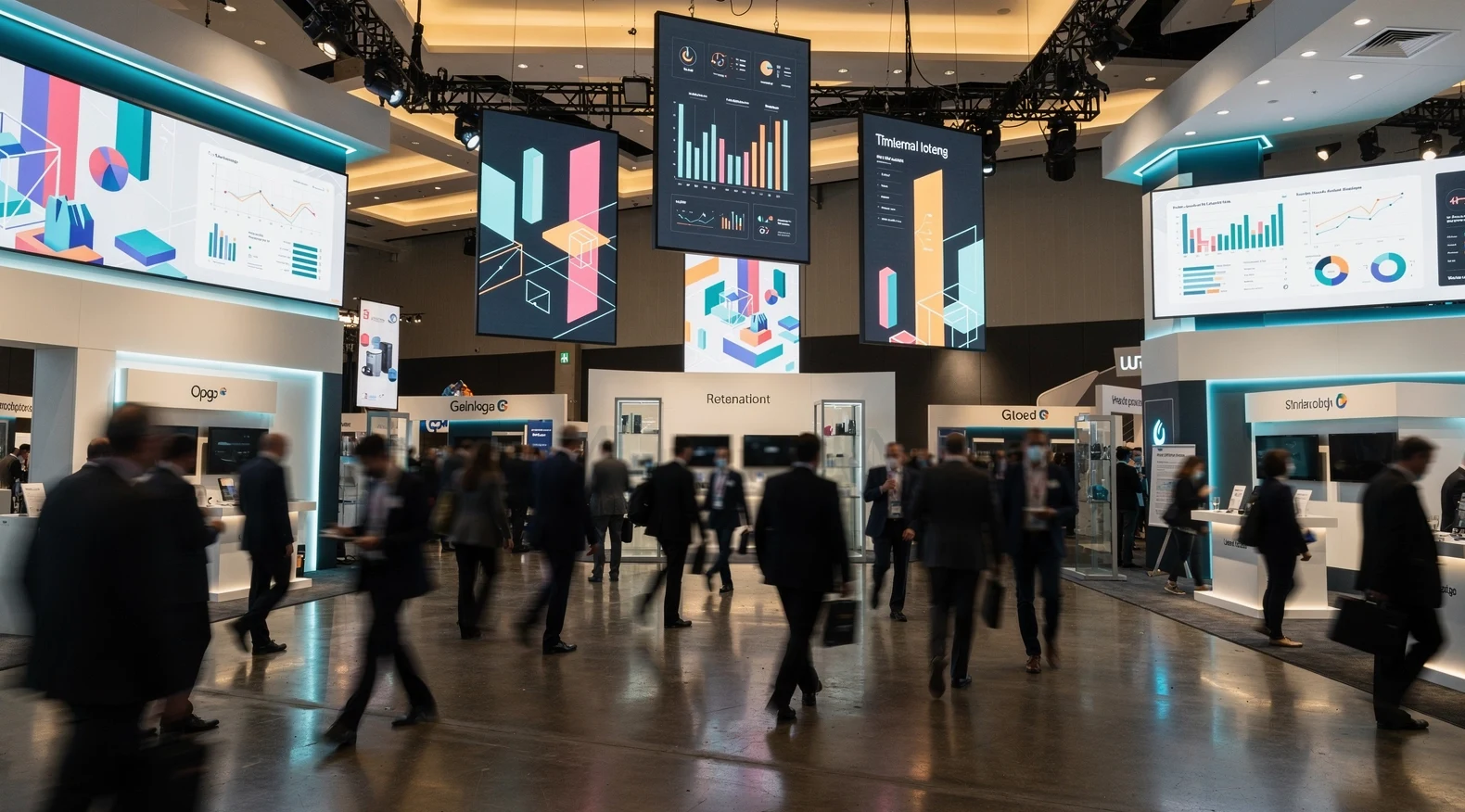
Retail industry conferences keep moving from glossy showcases to working meetings where buyers, brand operators, and platform vendors push real deals across the table. In 2026 they matter more than ever, because store fleets, marketplaces, and supply chains are all being rebuilt at the same time, and decision makers want to compare notes face to face before they sign a multi year contract.
This guide walks through which retail industry conferences actually deserve a flight, what to do on the show floor, and how to bring the right takeaways back to your team. The goal is simple: less swag, more pipeline. Before you commit a quarter of your travel budget to badges and hotel rooms, it helps to step back and read how retail news shapes the global e-commerce industry today, because conferences are where most of that news is first reported, debated, and quietly resold as paid analyst research six months later.
In short
- NRF Big Show, Shoptalk, and Groceryshop remain the three highest leverage US events for retail and e-commerce operators in 2026.
- Vertical events like NACS Show, RILA LINK, and eTail still drive more concrete vendor meetings than the giant generalist stages.
- Treat conferences as a sales and research tool, not a brand campaign, and pre-book at least 60% of meetings before you arrive.
- The best ROI usually comes from side dinners, hallway tracks, and analyst briefings, not keynotes that you can watch on YouTube the next morning.
- Bring a structured debrief template back to your team within five business days, or the spend was wasted.
Why retail conferences still matter in 2026
You can argue, fairly, that the era of mandatory in person events ended sometime in 2020. Webinars work. Slack groups work. Most product announcements leak before the keynote. So why is the calendar of retail industry conferences still expanding, with new regional spinoffs every quarter?
The short answer: high stakes commerce decisions still require trust, and trust is built faster in a hotel lobby than in a Zoom waiting room. A merchant evaluating a new order management system, a brand opening 200 doors at a national grocer, or a marketplace deciding which payments vendor to standardize on will almost always sit down with humans first. The conference circuit is where those introductions get compressed into a few days.
There is also a softer reason. The retail industry has spent three years rebuilding around omnichannel, AI assisted merchandising, and resilient supply chains. Practitioners want to compare scars with peers who survived the same projects. A panel can deliver that, but the hallway conversation afterward is what people fly for.
What counts as a retail industry conference
For this guide, we focus on events that meet three tests: at least 2,000 attendees, a working trade show floor, and a sponsor mix that reflects how money actually flows through the industry (platforms, payments, logistics, store technology, agencies). Smaller invite only summits are valuable too, and we mention a few, but the named tier below is where most operating teams should start.
The 2026 shortlist of US retail industry conferences
The list below is not exhaustive. It is what most US retail and e-commerce teams should consider before any other event, ranked roughly by the breadth of decision makers on site. Pricing is full conference pass at standard rates and rounds to the nearest hundred dollars.
| Conference | Window | City | Attendees | Best for | Pass (USD) |
|---|---|---|---|---|---|
| NRF Big Show | Mid January | New York | 40,000+ | Store ops, CIOs, board level strategy | $1,800 |
| Shoptalk Spring | Late March | Las Vegas | 10,000+ | Digital, brand, marketplaces, payments | $3,500 |
| Groceryshop | September | Las Vegas | 5,500+ | Grocery, CPG, supermarkets, retail media | $3,500 |
| eTail East / West | August / February | Boston / Palm Springs | 1,500 each | Mid market e-commerce leaders | $2,800 |
| NACS Show | Early October | Las Vegas (rotating) | 25,000+ | Convenience and fuel retail | $700 |
| RILA LINK | February | Dallas | 1,500 | Supply chain leaders in large retail | $2,400 |
| Money 20/20 US | Late October | Las Vegas | 11,000+ | Payments, fintech, BNPL, embedded finance | $3,400 |
| Manifest | February | Las Vegas | 5,000+ | Logistics, last mile, fulfillment | $2,200 |
Two notes on this list. First, prices have crept up roughly 8% per year since 2023 and now sit well above pre-pandemic levels. Second, several events sell separately priced “Meetup” or “Hosted Buyer” programs that bundle pre-booked vendor meetings; for many teams these are higher value than a regular pass.
National Retail Federation: the anchor event
The NRF Big Show is the closest thing to a state of the union for US retail. If you only attend one conference per year, this is usually the one to pick. The trade show floor at the Javits Center spans roughly 400,000 square feet and concentrates almost every vendor a retailer might evaluate over the next 18 months. The downside is scale: it is overwhelming, hard to navigate, and many of the best meetings happen at off site dinners booked weeks in advance.
Shoptalk: the e-commerce flagship
Shoptalk Spring in Las Vegas tilts more digital. Direct to consumer brands, marketplaces, payments providers, and agencies all show up in force. Its hosted Meetup program is the standout reason to attend; you fill out a profile and the algorithm pairs you with prospects, partners, or investors for 15 minute speed meetings. For a mid sized e-commerce team, three solid Meetup matches will often justify the trip.
Groceryshop and NACS Show: the grocery and convenience cluster
If your category touches food, beverage, or convenience retail, these two events together cover the channel. Groceryshop leans strategic and digital, with strong CPG presence and a growing retail media track. NACS Show is older, larger, and more operational, with everything from fuel pumps to roller grills on display. Plan your day around vendor meetings rather than keynotes here.
How to plan a high ROI conference trip
Most teams get conference ROI wrong because they treat the trip as a single event rather than a structured project with milestones. A simple sequence works better.
- Set 2 to 3 measurable goals. Pipeline created, vendor shortlists narrowed, hires identified, content collected. Vague goals like “build relationships” almost never survive an expense review.
- Pre-book 60% of your calendar. Use the official meeting platform and direct outreach. Walking the floor with no plan burns the first day.
- Split the team. One person covers keynotes and panels for content, one runs vendor meetings, one focuses on customers and prospects.
- Capture notes in one shared doc. Same template, same fields, same day. Memory decays within 48 hours.
- Schedule the debrief before you leave. Put a 90 minute meeting on the calendar for the week after you return. Without it, takeaways evaporate.
The pre-conference checklist
Two weeks out, you should have a target list of 25 to 40 people you want to see, broken into “must meet”, “would like to meet”, and “if time allows”. For each, send a short LinkedIn message that names the event and proposes a 15 minute slot. Conversion rates on these messages are surprisingly high, usually 30 to 45%, because everyone is suddenly in the same city with calendars half empty.
Block out evenings for dinners. Most conference cities have only 30 to 40 quality restaurants that can seat groups of six on short notice, and they fill up two months in advance. If you are hosting, book by November for January NRF.
Common mistakes operators make at retail conferences
The same patterns appear every year. They are easy to avoid once named.
- Sending too many people without role clarity. Five attendees with overlapping interests produce less coverage than three attendees with distinct beats.
- Optimizing for keynote attendance. Keynotes are recorded. Hallway conversations are not.
- Skipping vendor demos because “we already use a competitor”. Competitive intelligence is usually the second most valuable output of the trip.
- Booking flights that force early departure. The last morning is when senior decision makers finally have time for unscheduled chats.
- Letting business cards rot in a drawer. Without a structured follow up within 10 business days, 80% of conversations die.
It is worth reading our overview of what changed in industry for retail teams in 2026 before you go, because most conference agendas this year revolve around those exact themes, and you will save time skipping panels that simply restate what your peers already know.
Examples from US retail and e-commerce teams
A few patterns from operators who consistently get value out of the circuit.
A mid market apparel brand at Shoptalk
One US apparel brand with roughly $80M in annual e-commerce revenue treats Shoptalk as its annual marketplace selection event. The team books 22 Meetup slots, covers seven existing partners, evaluates three replacement vendors per category (search, recommendations, post purchase), and finalizes contracts within six weeks of returning. The trip pays for itself if even one switched vendor saves more than $15,000 annually, and it usually clears that bar twice over.
A regional grocery chain at NACS and Groceryshop
A 90 store grocery operator sends two teams. The merchandising leads attend Groceryshop to scout CPG innovation and retail media opportunities. The operations and fuel team attends NACS in the same year to evaluate store technology, fuel hardware, and food service refresh vendors. The internal rule is that no purchase over $250,000 is committed at the show; everything moves into a structured vendor evaluation within 30 days. That separation between excitement and procurement is what keeps the spending disciplined.
A logistics startup at Manifest
A Series B last mile delivery startup uses Manifest almost entirely for fundraising and recruiting. The CEO blocks 18 investor meetings across two days. The head of people interviews five candidates for senior operations roles. They skip the keynotes entirely. Cost per qualified investor conversation lands below $400, which is cheaper than most outbound channels.
Tools and partners worth knowing on the show floor
Vendor categories to watch in 2026, based on booth size, sponsorship spend, and analyst attention.
| Category | What to evaluate | Where to look |
|---|---|---|
| Unified commerce platforms | Headless front ends, OMS, POS integration, edge inventory | NRF, Shoptalk |
| Retail media networks | On site ads, off site DSPs, measurement, clean rooms | Groceryshop, Shoptalk |
| AI assisted merchandising | Pricing, assortment, demand forecasting, planogram | NRF, eTail |
| Payments and fraud | Tokenization, BNPL, account to account, dispute automation | Money 20/20, Shoptalk |
| Fulfillment and last mile | Micro fulfillment, robotics, same day delivery, returns | Manifest, NRF |
| Store technology | Computer vision, electronic shelf labels, mobile POS | NRF, NACS |
For grocery and supermarket operators specifically, our list of tools and vendors for supermarkets and grocers in 2026 tracks roughly the same vendor universe you will encounter at Groceryshop and NACS, with notes on where each fits in the stack.
Regional and invite only events worth knowing
Beyond the headline shows, several smaller events punch above their weight for specific audiences. ICR Conference in January draws nearly every public retail and consumer CFO and is the best one stop venue for understanding how Wall Street currently reads the sector. CommerceNext in New York focuses on growth marketing and customer acquisition for digital first brands. Future Stores attracts physical retail innovation teams. Path to Purchase Live is the place to be for shopper marketers and CPG sales leaders.
On the invite only side, the most useful gatherings are usually small dinners or off site CEO summits that vendors and analysts organize alongside the main events. Getting invited often comes down to one introduction. Ask a friendly analyst or partner what they are hosting that week and request a guest spot. Acceptance rates are higher than most people expect.
International events for US teams looking outward
If your brand is expanding internationally, two events deserve calendar space. World Retail Congress in April rotates between European capitals and concentrates retail CEOs from 60+ countries. NRF Retail’s Big Show APAC in Singapore each June covers Asia Pacific in depth. Both are smaller than the US flagships but unusually senior, with hosted programs that make it easier to meet country managers and regional partners in two days than in two months of cold outreach.
How to budget for the year
A realistic 2026 budget for a mid sized US retail team attending two major conferences and one vertical event looks like this, per person, before considering sponsorship or booth costs.
- Conference passes: $4,000 to $7,000
- Flights and ground transportation: $1,500 to $3,000
- Hotels at conference rates: $2,000 to $4,000
- Meals and client entertainment: $1,500 to $4,000
- Total per attendee: $9,000 to $18,000
Multiply by team size and add roughly 15% for last minute trips and ad hoc events. If the total feels uncomfortable, narrow the list, not the prep work.
How conferences connect to the broader news cycle
Every major retail industry conference doubles as a news event. Vendors time launches to the show. Analysts publish reports the morning a keynote starts. Trade publications send full teams. If you are tracking the industry, the conference calendar is also your editorial calendar. Reading post show roundups within 48 hours is one of the highest leverage research habits available.
That tight loop between event and reporting is also why we treat shows as an extension of the broader newsroom function. If you want a primer on the structure of the sector itself, our explainer on what the retail industry is today and how it really works covers the segmentation that conference programs are built around.
A useful background reference for the size of the channels these events serve is the US Census Bureau monthly Advance Monthly Sales for Retail and Food Services release, which most analyst keynotes will cite at some point.
Where keynote claims often outrun reality
One last word of caution. Stage presentations skew optimistic. Vendors share their best case study, not their average customer. Treat any single data point heard on stage as a hypothesis to verify, not a fact to act on. The conferences worth attending are the ones where you can find at least three independent operators willing to give you the unvarnished version of the same story in a quiet corner.
For a regular pulse on how vendor narratives at these shows hold up over time, the ongoing reporting in our retail news coverage keeps a running tally of which 2025 launch promises actually shipped in 2026 and which quietly disappeared.
FAQ
Which retail industry conference should a first time attendee pick?
For most US based operators, NRF Big Show in January is the right first conference. The breadth of vendors and attendees lets you sample most parts of the industry in three days. If you work primarily in digital commerce, swap to Shoptalk Spring instead.
Are virtual passes worth buying?
Rarely. Virtual passes give you keynote video and some session replays, both of which usually appear on YouTube or vendor blogs within two weeks. The reason to attend a conference is the in person interaction, and that does not stream.
How far in advance should we book?
Hotels and flights for NRF should be booked by early November. Shoptalk requires bookings by late January. Restaurant reservations for groups should be locked in roughly eight weeks before the event. Vendor meeting requests can wait until three weeks out.
What is the right team size to send?
For a company with under $50M in revenue, one or two attendees is usually enough. From $50M to $500M, three to five with clear role splits. Above $500M, six to eight with at least one executive sponsor. Sending more than 10 to a single event usually signals weak planning.
How do we measure the ROI of a conference?
Track three things for 90 days after each event: pipeline created or progressed, vendor decisions made or unblocked, and hires identified. If none of the three improved, the trip was probably wasted and the next attendance should be reconsidered.
Are paid speaker slots worth it?
Sometimes. Paid keynote slots at major events run $50,000 to $200,000 plus production. The math usually works only if you can convert stage time into a measurable demand generation lift over the following quarter. Most operators see better ROI from sponsored side events or hosted dinners at a fraction of the cost.
Which conferences are growing fastest in 2026?
Groceryshop, Manifest, and the various regional Shoptalk spinoffs (Europe, Asia, Middle East) are all expanding. NRF remains flat to slightly down on paid attendance but holds total foot traffic through expanded exhibitor passes. Money 20/20 has stabilized after a sharp dip in 2023.