
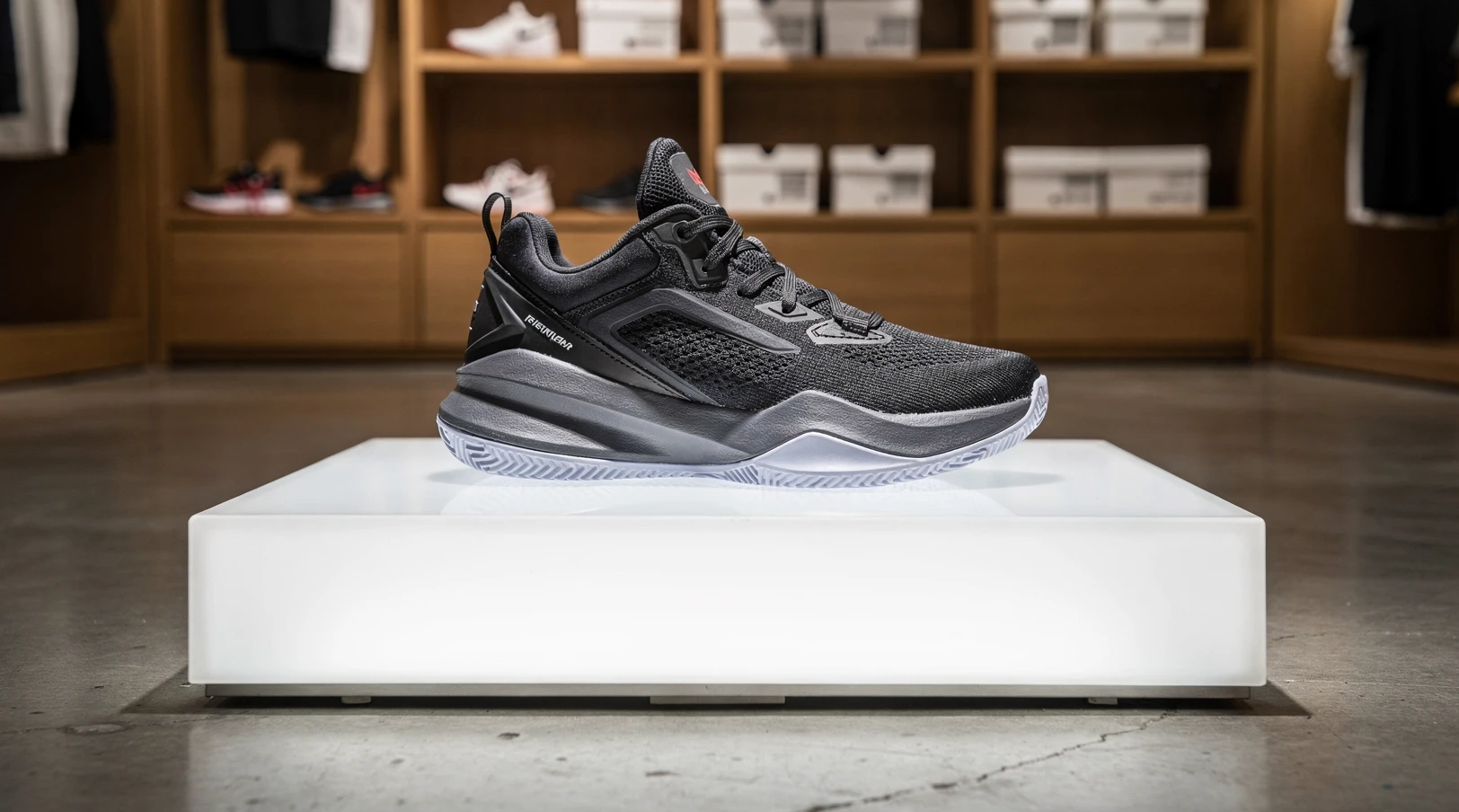
Stephen Curry has chosen China. The Golden State Warriors guard, one of the most marketable athletes in global sport, has signed a long-term endorsement deal with Chinese sportswear company Li-Ning, ending a seven-month search for a new partner after his split from Under Armour. ESPN and CNN reported the agreement runs for 10 years and is worth a reported $400 million, a figure that would make it one of the largest sneaker endorsements ever struck by a basketball player.
The move is far more than a shoe contract. According to a statement Curry posted to social media, the partnership brings his independently owned Curry Brand under the Li-Ning umbrella for basketball, golf and lifestyle product, and gives him the ability to sign other athletes. For Li-Ning, securing an active, generational American superstar is a milestone in its long campaign to be taken seriously outside China. For the wider retail industry, it signals how quickly the balance of power in sportswear is shifting east.
In short
- The deal: Stephen Curry has signed a reported 10-year, $400 million endorsement agreement with Li-Ning, China’s basketball market leader, according to ESPN and CNN.
- The scope: The agreement covers basketball footwear and apparel, a full golf line, athleisure and lifestyle product, plus the right for Curry to sign male and female athletes under Curry Brand.
- The backstory: Curry parted ways with Under Armour in November 2025 after 13 years, keeping sole ownership of Curry Brand and the freedom to find a new partner.
- The retail plan: Reports point to Curry Brand stores in both China and the United States, and to Li-Ning using Curry to push its innovation into the American market.
- Why it matters: A top-tier active NBA star anchoring a Chinese brand’s global ambitions is a landmark for China’s consumer brands and a fresh blow to Nike, Adidas and Under Armour.
What did Stephen Curry and Li-Ning actually announce?
The agreement was confirmed late on June 2, 2026, US time, and reported across ESPN, CNN, NBC News, the Japan Times, NBA.com and Inside Retail Asia. Curry, 38, described it on Instagram as “bigger than a shoe deal” and called it “the partnership of a lifetime.” He added that “the future of Curry Brand is with Li-Ning.”
The terms reported by ESPN put the deal at 10 years and a value north of $400 million, although neither side has formally disclosed the financials. That reticence is normal for endorsement contracts, where headline numbers usually include performance incentives, equity-style components and product royalties rather than guaranteed cash alone. Treat the $400 million figure as a reported estimate, not an audited number.
What is clear is the breadth. The partnership spans basketball product, a dedicated golf line, athleisure and broader lifestyle categories. Crucially, it preserves Curry Brand as a distinct label that Curry controls, rather than folding him into Li-Ning’s existing signature lines.
Curry also gains the right to recruit and sign other athletes under Curry Brand, both male and female. That detail matters: it positions Curry Brand as a house of talent rather than a single-athlete sneaker line, closer to the model Michael Jordan built at Nike than a conventional endorsement.
The announcement arrived through Curry’s own channels rather than a joint corporate press conference, an unusual choice that underscores who holds the brand. By breaking the news himself, Curry framed the deal as his decision and his platform, with Li-Ning as the chosen partner rather than the headline act. That framing will matter for how American consumers read the move.
Why did Curry leave Under Armour, and what changed?
Curry and Under Armour announced a mutual split in November 2025, ending a 13-year relationship that had defined both parties. Under Armour confirmed the separation as part of a broader restructuring, and Curry walked away with sole ownership of Curry Brand, the basketball footwear and apparel label the two had built together.
The financial backdrop helps explain the breakup. Under Armour’s basketball business, including Curry Brand, was generating an estimated $100 million to $120 million in annual revenue, a meaningful line but a fraction of Nike’s Jordan Brand. For a company in turnaround mode, the math no longer justified the signature-athlete economics.
For Curry, the split was an opening rather than a setback. By retaining the brand outright, he turned himself into a free agent who owned his own intellectual property, a rare position for an athlete. He then spent the season quietly testing rivals’ product, reportedly wearing several brands on court.
How the recruitment played out
The search ran roughly seven months and drew pitches from both American and foreign brands, according to ESPN. Curry has said his comfort while testing the signature shoes of two existing Li-Ning athletes, Warriors teammate Jimmy Butler and NBA legend Dwyane Wade, was a deciding factor.
In his own words, “the quality, comfort and performance of their shoes impressed me the most,” and Li-Ning “could be the right partner to deliver the innovation and design I want the Curry brand to stand for.” The reasoning frames the choice as product-led rather than purely financial, a useful narrative for a Western audience that may be skeptical of a China move.
How big is the deal, and what does Curry Brand get?
To understand the scale, it helps to compare Curry’s reported Li-Ning terms with the Under Armour arrangement he left behind. The contrast shows both the upside Curry is chasing and the autonomy he has gained.
| Element | Under Armour (2013, extended 2023) | Li-Ning (2026, reported) |
|---|---|---|
| Reported length | Multi-year, later described as lifetime | 10 years |
| Reported value | 2023 extension included about 8.8 million UA shares valued near $75 million plus incentives | More than $400 million |
| Brand ownership | Curry Brand built inside Under Armour | Curry retains sole ownership of Curry Brand |
| Product scope | Basketball footwear and apparel | Basketball, golf, athleisure and lifestyle |
| Athlete roster rights | Limited | Can sign male and female athletes under Curry Brand |
| Geographic focus | US-centric | Global, with explicit China and US retail plans |
The reported jump in value is striking, but the structural change matters more. Curry is no longer a sponsored athlete inside someone else’s company; he is a brand owner licensing a manufacturing and distribution partner. That shift in posture is what allows talk of Curry Brand stores and an athlete roster.
For brands weighing how to grow a label across borders, the structure echoes lessons from the wider direct-to-consumer playbook. Our guide to scaling a direct-to-consumer brand internationally without surrendering margin shows why ownership of the brand and the customer relationship, rather than the factory, is where durable value sits.
Who is Li-Ning, and why does this matter for the brand?
Li-Ning was founded in 1990 by the Olympic gymnast of the same name, who won three gold medals at the 1984 Los Angeles Games. Over three decades it grew into one of China’s largest sportswear companies and the clear domestic leader in basketball, the country’s most popular participation sport by some measures.
The company has spent years trying to convert domestic strength into international credibility, with mixed results. Its “China Li-Ning” streetwear push earned attention at international fashion weeks, but its performance footwear remained a niche outside Asia. Signing Curry is the most direct attempt yet to change that.
China market position and revenue
Li-Ning sits third in China’s sportswear market with an estimated 9.4 percent share as of the end of 2024, behind domestic champion Anta and ahead of Adidas, according to industry estimates. In the first half of 2025, the company reported revenue of about 14.82 billion yuan, up 3.3 percent year on year. At roughly 7.2 yuan to the dollar, that is close to $2.06 billion for the half.
Growth has cooled from the double-digit pace of earlier years, which makes a global headline signing strategically timely. A marquee Western athlete gives Li-Ning a story to tell investors and consumers beyond a maturing home market.
The signature athlete strategy
Li-Ning already fields a basketball roster built around recognizable NBA names, including Dwyane Wade, whose “Way of Wade” line has become a collector favorite, and Jimmy Butler. Adding Curry, a four-time champion and two-time MVP still active at the top level, is a different order of endorsement.
Wade and Butler validated Li-Ning’s product to Curry himself, by his own account. That peer-to-peer proof point is something Li-Ning can now market aggressively, turning its existing roster into a recruiting tool for future signings.
Retail footprint
Li-Ning operated about 7,534 branded retail points as of mid-2025, the bulk of them in China, after trimming its store count in an efficiency drive. Some reports put the broader Asian footprint above 7,600 outlets. That dense physical network is an asset Curry Brand can plug into immediately in China, a stark contrast to building distribution from scratch.
What does this mean for the global sportswear market?
The signing lands at a moment of visible strain for Western brands in China and rising confidence among domestic players. The competitive table below frames where the major brands stood in China at the end of 2024.
| Brand | Home market | Estimated China share (end 2024) | Notable position |
|---|---|---|---|
| Anta Sports | China | About 23% | Domestic leader, multi-brand group |
| Nike | United States | About 20.7% | Long-time premium leader, under pressure |
| Li-Ning | China | About 9.4% | Basketball leader, global ambitions |
| Adidas | Germany | About 8.7% | Recovering after inventory reset |
The numbers tell a clear story: Chinese brands now hold roughly a third of their home market between Anta and Li-Ning, and foreign incumbents are defending rather than expanding. Curry gives Li-Ning a way to press that advantage on Nike’s own turf.
Nike and Adidas under pressure
Nike and Adidas have both ceded ground in China to domestic brands that combine national pride, faster local design cycles and aggressive pricing. A Chinese brand recruiting an American icon inverts the usual flow of sports marketing, where US brands buy global stars to sell worldwide.
If Curry’s signature product gains traction with American consumers, it would mark the first time a Chinese sportswear label has built genuine demand in the United States on the back of a homegrown US star. That is the scenario Nike will watch most closely.
Anta’s long shadow
Li-Ning’s domestic rival Anta has pursued global scale chiefly through acquisitions, owning brands such as Arc’teryx and Salomon and holding interests in other Western labels. Li-Ning’s organic, athlete-led route with Curry is a different bet on the same goal, proving a Chinese brand can win abroad under its own name.
The shifting geography of sports marketing
For four decades the flow of athlete marketing ran one way. American brands signed global stars, then sold the resulting products into China and the rest of the world. The Curry deal reverses that current, sending a Chinese brand to recruit an American icon for distribution back into the United States.
That reversal is the real headline for the industry. It suggests Chinese consumer brands now have the balance sheets, the product credibility and the ambition to compete for the most expensive marketing assets in sport. Whether or not the Curry partnership succeeds commercially, it has already moved the negotiating table.
How does this compare with other athlete brand deals?
The most useful frame for the Li-Ning agreement is not the dollar figure but the ownership structure. Athlete endorsements sit on a spectrum, from simple sponsorship to full brand ownership, and Curry has pushed toward the ownership end in a way few active players have managed.
| Model | Illustrative example | Who owns the brand | Athlete leverage |
|---|---|---|---|
| Standard endorsement | Most signed athletes | The sportswear company | Low: paid to wear product |
| Signature line inside a brand | Jordan Brand within Nike | The sportswear company | Medium: royalties, strong identity, brand stays with the company |
| Athlete-owned brand, licensed partner | Curry Brand with Li-Ning | The athlete | High: owns the IP, chooses the partner, can sign others |
The template Nike built with Jordan Brand showed how powerful a signature label can be, but Air Jordan remains a Nike-owned property. Curry’s arrangement is different because he kept the brand when he left Under Armour, so Li-Ning is a licensee and distributor rather than the owner.
That distinction shapes the incentives. A licensed partner has to keep the athlete happy to retain the business, which hands Curry unusual leverage over product direction, marketing and the roster he builds. It also means the long-term value accrues to Curry’s holding company rather than to Li-Ning’s balance sheet, even as Li-Ning supplies the manufacturing and retail muscle.
For other athletes watching, the lesson is about timing and ownership. Curry’s decision to retain Curry Brand through the Under Armour split, rather than cash out, is what created the optionality he is now monetizing. Expect agents and athletes to study the structure closely.
How does Curry Brand fit into Curry’s wider business empire?
Curry has spent years building a portfolio that extends well beyond the court, and Curry Brand is now its most valuable asset. The Li-Ning deal should be read as a capital and distribution event for that empire, not just a personal endorsement.
Inside Thirty Ink
Curry’s holding company, Thirty Ink, reported revenue of about $173.5 million in 2024 with EBITDA near $144 million, according to figures cited in coverage of the deal. Forbes ranked Curry the second highest-paid athlete in the world in 2025, with roughly $100 million in off-court earnings alone.
The portfolio includes the production company Unanimous Media, the venture firm Penny Jar Capital, the bourbon label Gentleman’s Cut, the Underrated youth sports platform across golf and basketball, and the Eat.Learn.Play. foundation. Curry Brand is the engine that ties the athletic side of that empire together.
Owning the brand outright means the Li-Ning agreement flows value directly to Curry’s businesses rather than to a sponsor. It also gives him a manufacturing and retail partner large enough to scale product globally, something his own companies could not do alone.
What is the retail and e-commerce playbook from here?
The most concrete commercial signal is the plan, reported alongside the deal, to open Curry Brand stores in both China and the United States. That points to a direct-to-consumer strategy layered on top of Li-Ning’s wholesale and franchise network.
In China, Curry Brand can ride Li-Ning’s thousands of existing doors and its established e-commerce presence on platforms like Tmall and JD. Foreign brands often spend years and large sums learning these channels, as our analysis of how outside brands enter a major Asian retail market illustrates. Curry effectively buys that local fluency on day one.
China’s online retail environment is also unlike anything in the West. Livestream selling on platforms such as Taobao Live and Douyin, the domestic version of TikTok, can move enormous volumes of footwear and apparel in single sessions, and Li-Ning is already fluent in that format. A globally recognized athlete fronting those streams is a powerful conversion engine that Western brands struggle to replicate.
The reverse flow, selling Li-Ning-made Curry product into the United States, is the harder half of the plan. American buyers will judge the shoes on performance and price rather than provenance, and Curry’s personal credibility will carry the early launches. The success or failure of that US push is the single clearest test of whether the partnership is transformative or merely lucrative.
Content, golf and the athleisure bet
The deal explicitly includes content creation and consumer experiences aimed at younger athletes, not just product. Curry’s reach across social platforms is a distribution asset in its own right, and creator-led selling has become central to how brands convert attention into sales.
That logic mirrors the rise of social commerce documented in our coverage of how platforms are turning content into checkout across new markets. A full golf line, meanwhile, targets a high-margin category where Curry already has a credible personal brand through his Underrated golf platform.
Turning a brand into a platform
The right to sign other athletes is what could transform Curry Brand from a label into a platform. By recruiting rising NBA and WNBA talent, Curry can build a roster whose collective marketing value compounds, spreading risk beyond his own playing career.
That brand-as-platform thinking echoes how established retailers are converting their assets into recurring revenue streams, a shift we examined in our look at how legacy retailers are monetizing marketplace and media. For Curry, the athletes are the inventory and the brand is the platform.
What are the risks and open questions?
The strategic logic is strong, but the deal carries real execution and political risk. None of these caveats is hypothetical, and each could shape whether the partnership delivers on its reported value.
Geopolitics and consumer sentiment
US-China trade tension is a persistent backdrop, and a high-profile American athlete tying his brand to a Chinese company invites scrutiny from both sides. Curry could face questions at home, while in China nationalist sentiment can shift quickly and has hurt foreign-linked products before.
Execution and distribution in the US
Li-Ning’s US retail presence is thin, and building credible distribution for premium performance footwear in America is hard and expensive. The plan to open Curry Brand stores stateside is ambitious, and physical retail expansion has tripped up better-resourced brands.
The playing-career clock
At 38, Curry is closer to the end of his career than the start, and signature product sells hardest when the athlete is winning and visible. A 10-year deal stretches well beyond his likely playing days, so the partnership has to convert his current fame into a durable brand that outlives his time on court.
The right to sign other athletes is partly an answer to that risk, building a roster that can carry the brand once Curry retires. Execution on that roster, more than Curry’s own remaining seasons, may determine the deal’s value in its back half.
Unverified financials
Because neither party has disclosed terms, the reported $400 million headline should be treated with caution. Endorsement values are routinely inflated in early reporting, and the realized figure will depend on incentives, sell-through and how long Curry plays at an elite level.
What happens next?
Expect a phased rollout rather than an immediate flood of product. The first signals to watch are an on-court Li-Ning signature shoe for Curry, the timing of the first Curry Brand stores, and any early athlete signings that prove out the platform thesis.
Investors will read the deal through Li-Ning’s next earnings updates, watching for any lift in marketing spend, international revenue or basketball-category momentum. Curry’s camp, by contrast, will measure success in brand equity and store openings rather than quarterly numbers, since the upside sits with his privately held holding company. Those two scorecards may diverge in the early years.
There is also a competitive clock running for rivals. Nike, Adidas and Under Armour now know that a Chinese brand will pay top dollar for marquee talent, which raises the cost of retaining their own stars. The Curry deal could ripple through the next round of endorsement negotiations across the league.
The deeper test is commercial: can a Chinese brand, fronted by an American star, sell meaningfully in the United States and beyond. If it works, the Curry deal will be remembered as the moment China’s sportswear ambitions went truly global. If it stalls, it will still have reset the economics of athlete endorsements by showing that owning your brand outright changes who holds the leverage.
Either way, the signing puts pressure on Nike, Adidas and a recovering Under Armour to defend talent and territory they once took for granted. The retail map of global sport just shifted, and the next moves belong to the incumbents.
Frequently asked questions
How much is Stephen Curry’s Li-Ning deal worth?
ESPN reported the agreement is worth more than $400 million over 10 years, though neither Curry nor Li-Ning has officially disclosed the financial terms. As with most endorsement contracts, the headline figure likely blends guaranteed money, incentives and product economics, so it should be treated as a reported estimate rather than a confirmed number.
Why did Stephen Curry leave Under Armour?
Curry and Under Armour announced a mutual split in November 2025, ending a 13-year partnership as part of Under Armour’s restructuring. Curry kept sole ownership of Curry Brand, which freed him to negotiate with new partners and ultimately to sign with Li-Ning.
What does the Li-Ning agreement actually cover?
The deal spans basketball footwear and apparel, a full golf line, athleisure and lifestyle product, and content and consumer experiences. It also gives Curry the right to sign other male and female athletes under the Curry Brand label.
Who is Li-Ning?
Li-Ning is a Chinese sportswear company founded in 1990 by Olympic gymnast Li Ning. It is China’s basketball market leader and sits third overall in the Chinese sportswear market, behind Anta and Nike, with an estimated 9.4 percent share at the end of 2024.
Will there be Curry Brand stores?
Reports tied to the announcement indicate plans to open Curry Brand stores in both China and the United States. In China, Curry Brand can lean on Li-Ning’s network of roughly 7,500 retail points, while a US rollout would require building distribution largely from scratch.
How does this affect Nike and Adidas?
The signing intensifies pressure on Nike and Adidas, both of which have lost share in China to domestic brands. If Curry’s product sells well in the United States, it would be the first time a Chinese sportswear label built real American demand around a homegrown US star.
What other businesses does Stephen Curry own?
Through his holding company Thirty Ink, Curry owns or co-owns Unanimous Media, Penny Jar Capital, the Gentleman’s Cut bourbon brand and the Underrated youth sports platform, alongside the Eat.Learn.Play. foundation. Thirty Ink reported about $173.5 million in revenue in 2024.
Is the deal a risk for Curry given US-China tensions?
It carries political and reputational risk on both sides of the Pacific, and consumer sentiment in China can shift quickly. Execution risk is also high, since building premium footwear distribution in the United States is difficult and capital-intensive.
When will Curry’s Li-Ning product launch?
No firm launch dates have been confirmed. The first concrete signals to watch are an on-court Li-Ning signature shoe for Curry, the opening of the first Curry Brand stores, and any early athlete signings under the brand.