
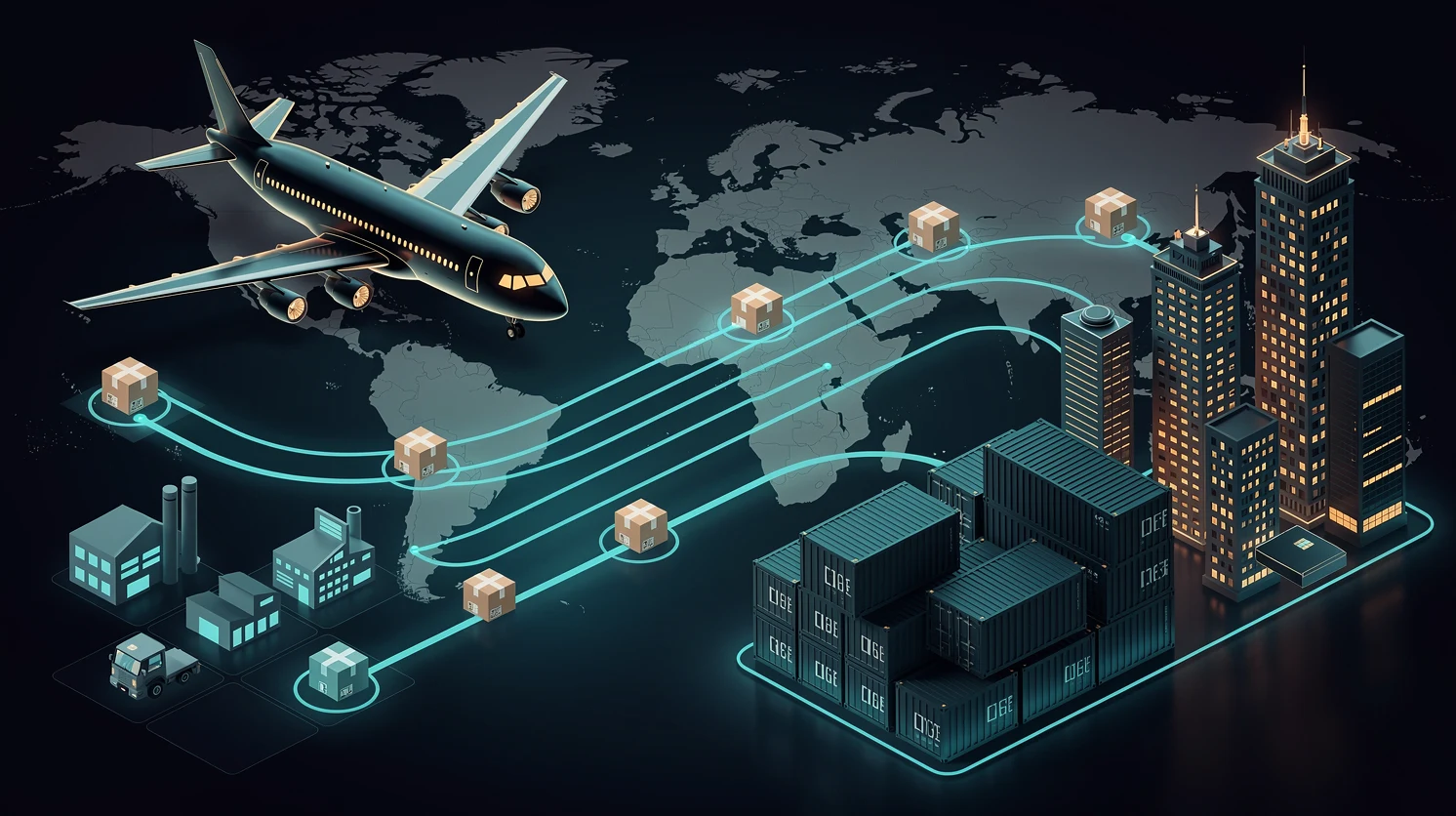
Few e-commerce stories invite as much suspicion as Temu. A shopper opens the app, finds a wireless earbud set for $4.99 or a kitchen gadget for $1.20, and the obvious question follows: how is any of this possible? Skeptics assume the answer must involve a catch, whether hidden fees, counterfeit goods, or a business model that cannot survive contact with reality.
The truth is less mysterious and more instructive. The Temu supply chain is a deliberate piece of industrial engineering built by PDD Holdings, the same parent company behind China’s Pinduoduo. It compresses the distance between a Chinese factory floor and a US doorstep by removing layers that traditional retail treats as permanent. Understanding it helps any retailer or e-commerce operator separate genuine structural advantage from marketing theater.
This guide walks through the mechanics for readers who start from doubt. It explains the fully managed model, the role of the de minimis customs rule, the air freight pipeline, and why the model had to change in 2025. It also flags where the skeptics are right, because some of their concerns hold up under scrutiny.
The framing matters because Temu is often discussed in extremes. One camp treats it as a logistics miracle that incumbents cannot answer, and the other dismisses it as a fragile scam destined to vanish. Both views are wrong in instructive ways. The accurate picture is a sophisticated, deliberately optimized supply chain that made specific trade-offs, some of which are now being tested in public.
In short
- Temu is a demand aggregator, not a warehouse empire. It pools millions of small orders and routes them directly from Chinese manufacturers, holding little inventory of its own under the original model.
- The fully managed model lets factories list goods while Temu controls pricing, marketing, cross-border shipping, and customer service, turning sellers into pure suppliers.
- The de minimis customs exemption allowed packages under $800 to enter the US duty free, and its rollback in 2025 forced Temu toward local US fulfillment.
- Air freight consolidation moved goods fast enough to feel acceptable while keeping per-parcel costs low through enormous volume.
- The skeptic case is half right: the prices are real and the logistics are real, but quality variance, return friction, and supplier margin pressure are genuine trade-offs.
Why this topic matters in 2026
Temu crossed from curiosity to structural force faster than almost any retail entrant in memory. Launched in the US in September 2022, it reached tens of millions of monthly active users within two years and pulled advertising spend, shopper attention, and supplier capacity away from incumbents. Any merchant who competes on price now competes, indirectly, with Temu’s cost structure.
The 2025 changes to US customs policy make the topic urgent rather than academic. When the duty free treatment of low value parcels from China ended, Temu’s headline model lost a core advantage overnight. Watching how the company adapted offers a live case study in supply chain resilience under regulatory shock.
For US retailers, the lesson is not that they should copy Temu. Most cannot and should not. The lesson is that the assumptions baked into Western retail, such as domestic warehousing, wholesale markups, and seasonal buying, are choices rather than laws of nature. Temu’s existence proves that some of those choices can be rebuilt from scratch. For a broader view of how these platforms fit together, our guide to selling on global e-commerce marketplaces maps the wider landscape.
Key terms and definitions
Skeptics often stumble because the vocabulary is unfamiliar. A few precise definitions clear most of the fog before the mechanics make sense.
- Fully managed model: the supplier ships goods to a Temu domestic warehouse in China and hands over pricing, marketing, logistics, and after sales entirely to Temu. The factory becomes a vendor, not a retailer.
- Semi managed model: introduced for sellers who hold inventory in overseas warehouses, including the US, giving them more control over fulfillment while Temu still owns the storefront and demand.
- C2M (consumer to manufacturer): a demand driven approach where aggregated buyer signals flow back to factories, which produce to expected demand rather than to a forecast set by middlemen.
- De minimis: the US customs threshold, historically $800 under Section 321, below which imported parcels entered duty free and with minimal paperwork.
- Consolidation: the practice of grouping thousands of individual parcels into bulk air or sea freight to cut per unit transport cost.
Hold these five terms in mind and the rest of the system reads like a sequence of logical steps rather than a magic trick.
How the Temu supply chain actually works
The core idea is brutally simple: shorten the chain and let scale absorb the cost. Where a traditional importer buys stock, ships it, warehouses it, and marks it up at each stage, Temu collapses several of those stages into one platform controlled flow.
The fully managed model
Under the original model, a Chinese manufacturer lists a product and ships units to a Temu consolidation warehouse, often in the Guangzhou region. Temu sets the retail price, runs the advertising, handles the international leg, and manages returns and support. The factory never speaks to the customer and never sets the price.
This arrangement strips out the importer, the wholesaler, the brand licensor, and the domestic retailer in one move. Each of those parties traditionally adds a margin, so removing them frees real money. The factory accepts a thinner per unit profit in exchange for volume and zero marketing or logistics burden.
Factory direct and the C2M loop
PDD Holdings refined consumer to manufacturer logistics for years through Pinduoduo before exporting the playbook to Temu. Aggregated demand signals tell factories which designs, colors, and sizes are selling, so production tracks real orders more tightly than a seasonal guess. This reduces the dead stock that crushes margins in conventional retail.
The result is a catalog that can pivot quickly. A product that sells gets reordered and promoted, and a product that stalls disappears from the feed. Skeptics who assume the low prices imply fraud often miss that demand matching, not deception, removes a large chunk of waste.
Cross border logistics and air freight
Speed is where many doubters expect the model to break. The answer is consolidation plus air freight. Temu groups enormous parcel volumes and books dedicated cargo capacity, which spreads the cost of fast shipping across millions of packages and keeps the per parcel air freight charge surprisingly low.
Industry analysts have noted that Temu and Shein together reshaped trans Pacific air cargo demand, booking so much capacity that they influenced freight rates. The packages still cross an ocean by plane, yet the buyer feels a delay measured in days rather than the weeks a naive sea freight assumption would predict. Faster last mile networks, covered in our analysis of why autonomous delivery is reaching everyday retail, are now compressing that final step further.
The de minimis advantage
The customs exemption was the quiet engine under the whole machine. Because individual parcels typically fell under the $800 de minimis threshold, they entered the US duty free and with light inspection, as documented by US Customs and Border Protection. That saved both tariff cost and the overhead of formal customs entry on hundreds of millions of shipments.
This is also why the model was vulnerable. A policy that lets shipments avoid duties can be changed by policy, and in 2025 it was. The same dynamic that lets the EU de minimis fee struggle to slow Temu and Shein in Europe played out differently in the United States, where the exemption was removed rather than merely taxed.
The 2025 customs shock and the pivot
If the de minimis exemption was the quiet engine, 2025 was the year the engine seized. The US administration moved to end duty free treatment for low value parcels originating in China and Hong Kong, closing the loophole that had carried hundreds of millions of Temu shipments. For a model built around small, individually imported packages, this was an existential challenge rather than a nuisance.
The immediate effects were visible to shoppers. Some prices rose, certain listings disappeared, and delivery promises were rewritten as the company recalculated which goods could still ship profitably from China. Skeptics who had predicted collapse felt briefly vindicated, but the more interesting story was how quickly the supply chain reorganized around the new constraint.
From parcels to bulk imports
The central pivot was conceptual as much as logistical. Instead of importing millions of tiny parcels that each had to clear customs, Temu leaned into pre importing goods in bulk commercial shipments and storing them in US warehouses. Bulk imports still pay duties, but they do so once, with predictable paperwork, rather than parcel by parcel at unpredictable scale.
This is the semi managed model moving from a side option to a strategic core. Sellers with US fulfillment capacity became more valuable, and Temu accelerated their recruitment. The shift traded the razor thin cost structure of the original model for something sturdier and harder for regulators to disrupt with a single policy change.
Why the model survived
The reason the pivot worked is that the underlying advantages were never solely about customs. Demand aggregation, factory direct sourcing, and the removal of wholesale and retail markups all survived the policy change intact. The de minimis exemption was a powerful accelerant, but the core machine could run without it at a somewhat higher price point.
That distinction matters for any skeptic forecasting the platform’s future. A business that depended entirely on a customs loophole would have folded in 2025. One that used the loophole to amplify a deeper structural edge could absorb the blow, raise some prices, and keep operating. The evidence so far points firmly to the second case.
Comparing the supply chain models
The clearest way to see the shift is to compare Temu’s two operating models side by side, then weigh the platform against a conventional import retailer.
| Dimension | Fully managed model | Semi managed model |
|---|---|---|
| Inventory location | China consolidation warehouse | Overseas warehouse, including US |
| Who sets price | Temu | Temu, with seller input |
| Shipping speed to buyer | Several days via air freight | Faster, domestic last mile |
| Customs exposure | High after de minimis rollback | Lower, goods pre imported in bulk |
| Seller control | Minimal, supplier role only | Moderate, manages fulfillment |
| Best fit | Factories chasing pure volume | Sellers with US logistics capacity |
The second comparison sets Temu against a traditional importer to show where the cost really disappears.
| Cost layer | Traditional import retailer | Temu fully managed |
|---|---|---|
| Manufacturer margin | Yes | Yes, thinner |
| Importer markup | Yes | Removed |
| Wholesaler markup | Yes | Removed |
| Retailer markup | Yes | Removed |
| Domestic warehousing | Always | Originally avoided |
| Tariff on small parcels | Varies | Avoided pre 2025 |
Common mistakes and misconceptions skeptics make
Doubt is healthy, but several common assumptions about Temu are simply wrong. Correcting them sharpens the genuine criticisms that remain.
Assuming the prices are fake
The most common reflex is to assume a $3 product must hide a fee or a scam. In most cases the price is real and reflects the removed middle layers plus a factory operating at thin margins on high volume. The catch, when there is one, tends to be quality variance rather than a phantom charge at checkout.
Believing Temu holds vast US inventory
Under the original model Temu held very little domestic stock, which is precisely why parcels shipped from China. Treating it like an Amazon style warehouse network misreads the design. That picture is only now changing as the company builds local fulfillment in response to customs policy.
Ignoring the regulatory dependency
Some observers credited Temu’s prices entirely to Chinese manufacturing cost and missed the customs exemption doing quiet heavy lifting. When the exemption ended, the naive view could not explain why prices and shipping models shifted. The supply chain was always partly a policy arbitrage.
Overlooking supplier pressure
A frequent blind spot is the human cost on the supply side. Temu’s bidding mechanisms push suppliers toward the lowest viable price, and that pressure is real. Skeptics worried about sustainability of the model are closer to the mark here than those fixated on checkout tricks.
Examples from US retail and e-commerce
The clearest evidence sits in how incumbents reacted. Amazon launched a low price storefront aimed squarely at the Temu and Shein price band, shipping inexpensive goods directly from China with longer delivery windows. That move was a tacit admission that the model worked well enough to demand a response.
US discount and dollar store chains also felt the pressure, since the impulse buy under $10 was exactly Temu’s sweet spot. Categories such as phone accessories, seasonal decor, craft supplies, and small kitchen tools migrated heavily toward the app. Merchants in those niches reported real demand erosion rather than a passing novelty effect.
The customs shift then reshaped the competitive picture again. After the de minimis rollback, Temu accelerated recruitment of US based sellers and local warehousing, which narrowed the shipping speed gap with domestic rivals. For merchants weighing whether to join, our practical look at selling on Temu as a US merchant covers what the seller experience actually involves.
Specialty retailers offer a sharper example still. A small US seller of phone cases or kitchen gadgets cannot match a factory direct price, so the survivors moved up the value chain. They added warranties, faster local shipping, curated assortments, and customer service that an aggregator struggles to replicate. The pattern repeats across categories: head to head price competition fails, while differentiation on trust and experience holds.
Advertising markets felt the shock too. Temu became one of the largest digital advertisers in the US almost overnight, bidding up ad inventory on social and search platforms. That spend raised customer acquisition costs for everyone in adjacent categories, an indirect supply chain effect that many merchants underestimated until their own ad bills climbed.
The broader Chinese platform contest matters too. Pressure on Temu does not exist in isolation, as seen when Alibaba landed on a US military blacklist and when TikTok Shop pushed to unify cross border commerce in Europe. The supply chain advantages overlap, and so do the regulatory risks.
Tools, partners and vendors worth knowing
No platform runs alone. Temu’s supply chain leans on a network of logistics providers, payment processors, and software systems that skeptics rarely see but should understand.
On the China side, parcel volume flows through express carriers and freight forwarders that specialize in cross border e-commerce consolidation. On the US side, the last mile typically rides established carrier networks rather than a proprietary fleet, which is why delivery feels conventional even when origin is not.
| Function | Typical providers | Why it matters |
|---|---|---|
| China express and forwarding | Specialist cross border carriers and forwarders | Aggregates parcels into bulk air freight |
| International air cargo | Dedicated and chartered cargo capacity | Delivers speed at scale |
| US last mile | National postal and parcel carriers | Familiar, reliable final delivery |
| Payments | Global card networks and wallets | Frictionless checkout across markets |
| Seller software | Listing, pricing, and inventory tools | Lets factories operate at platform scale |
For sellers building their own operations rather than relying on a marketplace, the supporting stack matters just as much. Platform choice, inventory systems, and fulfillment partners decide whether thin margins survive contact with real overhead.
The software layer deserves particular attention. Temu provides factories with listing, pricing, and inventory tooling that lets a manufacturer with no e-commerce background operate at platform scale. That tooling is part of the supply chain, not separate from it, because it converts production capacity into sellable catalog without a traditional merchandising team. Independent sellers replicating any part of this need comparable systems, whether they build, buy, or rent them.
Risks, scrutiny and the sustainability question
A supply chain optimized this aggressively does not come free of risk, and a serious analysis has to name the downsides rather than wave them away. Some risks fall on shoppers, some on suppliers, and some on the platform itself.
Quality and returns friction
Because listings span thousands of independent factories, quality control is uneven by design. A shopper might receive an excellent item and a disappointing one in the same order. Returns, while possible, can involve longer timelines and more friction than the instant refund culture of domestic retail, which is a genuine cost that the low price has to offset.
Supplier margin pressure
The bidding systems that keep prices low also squeeze the factories that supply them. Suppliers compete to win placement and volume, and that competition can drive margins toward the floor. Critics who question whether the model is sustainable for the manufacturers themselves are raising a substantive point, not a reflexive complaint.
Regulatory and data scrutiny
Temu has faced ongoing attention from regulators and journalists over data handling, product safety, and labor practices in its supply chain. These concerns shape the political environment in which the company operates and contributed to the appetite for the de minimis rollback. A skeptic tracking regulatory risk is watching the most volatile variable in the model.
Concentration risk
Finally, a supply chain rooted heavily in one country carries concentration risk. Tariff policy, geopolitical tension, and freight disruption all hit harder when sourcing is geographically narrow. The 2025 customs shock was one expression of this exposure, and it is unlikely to be the last test of the model’s flexibility.
What the skeptic case gets right and wrong
A fair verdict gives skeptics credit where it is due. The prices are real, the logistics genuinely function, and the engineering behind the model is sophisticated rather than fraudulent. On those points, reflexive doubt is misplaced.
Yet the model carries real costs that critics correctly flag. Quality varies widely across listings, returns can be slower and more cumbersome than domestic retail, and the pressure on suppliers raises sustainability questions. Data privacy and labor practice concerns have also drawn regulatory and journalistic scrutiny that the company continues to face.
The most useful posture for a retailer is neither admiration nor dismissal but study. Identify which of Temu’s advantages stem from structural choices that any operator could partially adopt, such as demand matching or layer removal, and which stem from scale and policy that almost no one can replicate. That separation turns a competitor into a source of practical lessons.
The honest conclusion is that Temu is neither a scam nor a miracle. It is a high efficiency supply chain that traded resilience for cost, then had to rebuild resilience when policy moved against it. Skeptics who update from doubt to informed skepticism end up with the most accurate picture of all. For the strategic context behind these moves, our guide to global e-commerce marketplaces ties the threads together.
Frequently asked questions
How does Temu sell products so cheaply?
Temu removes the importer, wholesaler, and domestic retailer layers by routing goods directly from factories, and it historically avoided import duties through the de minimis customs exemption. Thin factory margins on very high volume do the rest. The low price is structural, not a trick at checkout.
Where do Temu products ship from?
Under the original fully managed model, most parcels shipped directly from consolidation warehouses in China, often around Guangzhou, and moved by air freight. Since the 2025 customs changes, Temu has expanded US based warehousing and local sellers, so an increasing share now ships domestically.
What is the de minimis rule and why did it matter?
De minimis was a US customs threshold, historically $800, below which imported parcels entered duty free and with minimal paperwork. It let Temu avoid tariffs and customs overhead on huge parcel volumes. Its rollback in 2025 removed a core cost advantage and pushed the company toward local fulfillment.
Is Temu the same company as Shein?
No. Temu is owned by PDD Holdings, the parent of Pinduoduo, while Shein is a separate company. They are often grouped together because both use direct from China models and both reshaped trans Pacific air freight demand, but they are distinct businesses.
Why are Temu deliveries faster than expected for goods from China?
Temu consolidates millions of parcels into bulk air freight, which spreads the cost of fast shipping across enormous volume. The goods still cross an ocean by plane, but buyers feel a delay measured in days rather than weeks. Local US warehousing now shortens that further.
Is the quality of Temu products reliable?
Quality varies widely by listing and seller, which is the most legitimate concern skeptics raise. Some products perform well for the price while others fall short. Reading recent reviews and treating very low cost items as disposable rather than durable is the sensible approach.
How did Temu adapt after the de minimis exemption ended?
It accelerated the semi managed model, recruited US based sellers, and expanded domestic warehousing so goods could be pre imported in bulk and shipped locally. This shifted customs exposure from millions of small parcels to consolidated commercial imports, trading some cost advantage for resilience.
Should US retailers worry about Temu?
Merchants competing on impulse priced goods under $10 should take it seriously, since that is Temu’s strongest band. Retailers differentiating on service, speed, brand, or curation have more defensible ground. The strategic response is to compete where Temu is structurally weak rather than on raw price.