
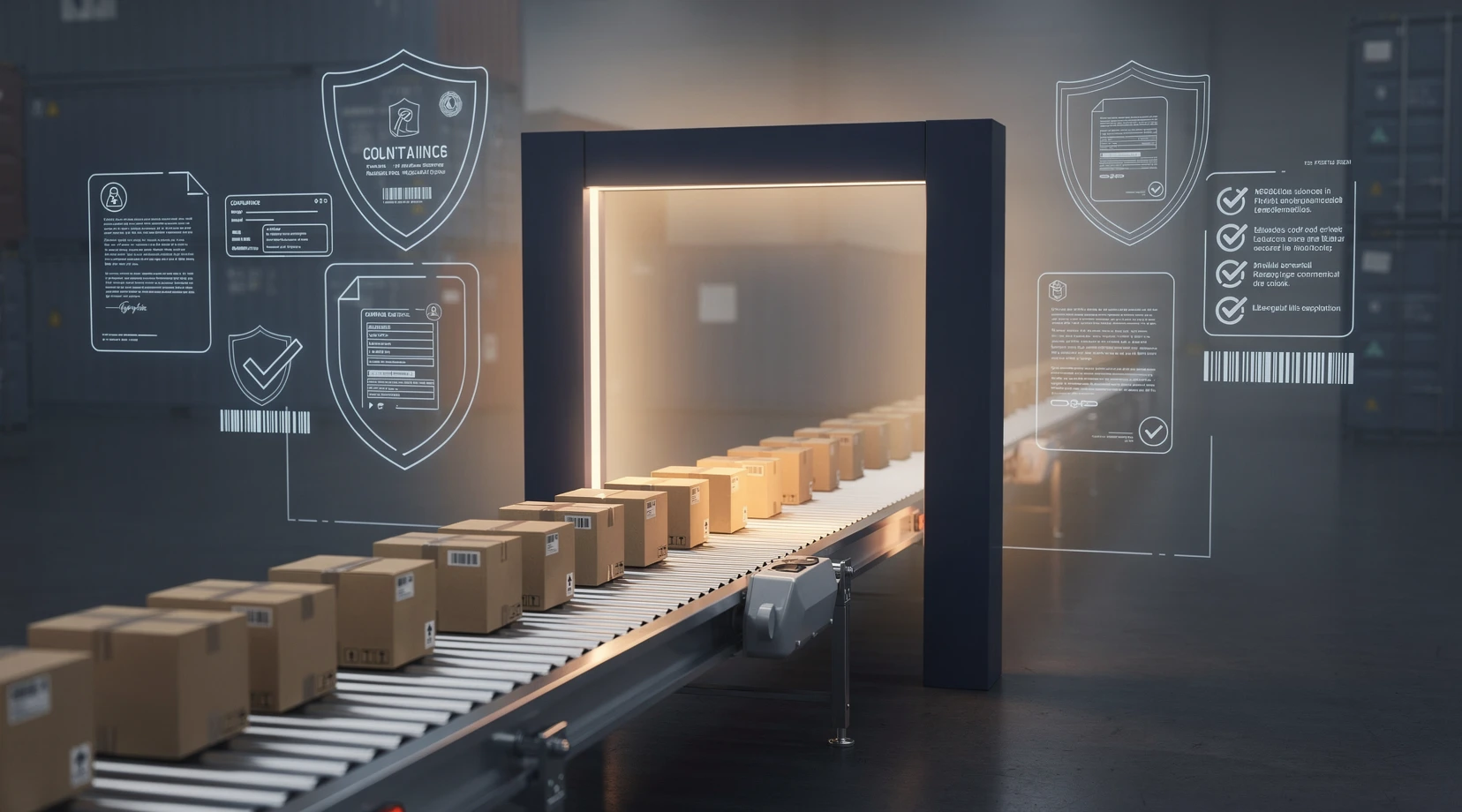
Temu spent its first two years in Western markets as the cheapest checkout on the internet, built on a simple structural advantage: parcels shipped directly from Chinese factories to Western doorsteps slipped under customs duty thresholds designed for a pre-platform era. In 2026 that advantage is under coordinated attack. The United States has closed the duty-free loophole that made the model work, the European Union is layering on per-parcel handling fees and platform-liability rules, and a wave of consumer-protection enforcement is reshaping how the app is allowed to market, price and deliver. For the millions of shoppers who treated Temu as a habit, the practical question is no longer whether regulation is coming but how much it changes what lands in the cart, what it costs, and how long it takes to arrive.
This guide walks through what temu regulation 2026 actually involves, how the major regulatory fronts differ, and what each change means for buyers in concrete terms. It is written for shoppers, but also for the retail and e-commerce teams who compete with Temu and need to read the same signals. The wider context sits inside our complete guide to selling on global e-commerce marketplaces, which maps how cross-border platforms are built and where the regulatory pressure points fall.
In short
- The duty-free era is ending. The US scrapped the de minimis exemption that let sub-$800 parcels enter without duties, and the EU is adding per-parcel fees, removing the single biggest reason Temu prices undercut domestic retail.
- Prices are rising unevenly. Buyers should expect higher landed costs on many imported items, new checkout-stage fees or duties, and a slow shift toward locally warehoused stock that narrows the gap with mainstream marketplaces.
- Delivery and accountability are changing. Platform-liability rules under the EU framework push Temu toward faster local fulfillment, clearer seller information and real product-safety recourse, which is good for buyers even as it raises costs.
- Marketing tactics are being curbed. Consumer-protection regulators are targeting fake countdown timers, manipulated scarcity and misleading discounts, so the high-pressure shopping experience is being toned down by law.
- The smart buyer adapts rather than abandons. Temu remains viable for many low-value categories, but the 2026 playbook is to compare landed prices, check the new duty and fee lines at checkout, and treat very cheap electronics and safety-sensitive goods with more caution.
Why regulatory pressure on Temu matters in 2026
Temu reached hundreds of millions of users in under three years by pairing factory-direct pricing with an aggressive, gamified shopping app. The economic engine underneath was less visible: most parcels were small, individually addressed, and valued below the customs thresholds that govern when import duties and formal inspections kick in. That meant a $12 phone case or a $30 jacket could cross a border with no duty, minimal paperwork and little inspection, a cost structure that domestic retailers holding inventory in bonded warehouses simply could not match.
2026 is the year that structure broke in the world’s two largest consumer markets at roughly the same time. Regulators concluded that the parcel-by-parcel model was distorting competition, eroding tariff revenue and creating a blind spot for product safety and counterfeit enforcement. The response was not a single law but a cluster of them: customs reform, new platform-liability obligations, consumer-protection actions and tax changes that together reset the terms on which cross-border discount commerce operates.
For buyers, this matters because it touches the three things that made Temu attractive in the first place. Price, because duties and fees raise the floor. Selection, because compliance costs push some sellers out and pull others toward local stock. And trust, because new accountability rules change what happens when an order arrives broken, unsafe or never arrives at all. Understanding the mechanics helps shoppers separate genuine bargains from items where the headline price no longer reflects the real cost.
It also matters because the timing is not random. The reforms cluster in 2026 because the volume of low-value parcels finally grew large enough to be politically and fiscally impossible to ignore. Customs agencies were processing billions of individual shipments a year, a workload that strained inspection capacity and starved tariff revenue at exactly the moment governments were under budget pressure. When a single business model accounts for a measurable share of a country’s incoming parcels, it stops being a niche question and becomes a mainstream policy target.
The key terms: de minimis, Section 321, the DSA and what they mean
Most of the 2026 changes hinge on a handful of technical terms that rarely surface in everyday shopping. Knowing what they mean makes the checkout screen far easier to read, because the new fees and duties usually trace back to one of these rules.
De minimis and Section 321
De minimis is the customs principle that very low-value shipments can enter a country without duties or formal entry procedures, because the cost of collecting the duty would exceed the revenue. In the US, this was implemented through what customs officials call Section 321, which had allowed shipments valued up to $800 per person per day to enter duty-free. For a fuller background on the concept, see the de minimis overview on Wikipedia. Removing or tightening this exemption is the single most consequential change for Temu’s US pricing.
Platform liability and the Digital Services Act
The EU’s Digital Services Act, or DSA, makes large online marketplaces responsible for what third-party sellers list and sell, including illegal, unsafe or counterfeit products. Under this framework a platform cannot simply act as a neutral pipe between a factory and a buyer. It must verify sellers, act on reported illegal listings, and provide traceable information about who is actually selling the item. For buyers, this is the rule that turns “the seller disappeared” into “the platform has to help.”
Per-parcel handling fees and VAT
Separate from duties, several jurisdictions are introducing flat handling fees on low-value parcels to cover the customs and inspection workload that the volume creates. The EU has moved toward a per-parcel charge on goods entering from outside the bloc, and value-added tax is increasingly collected at the point of sale rather than on delivery. These are smaller line items than duties, but they apply to almost every order and add up across a basket.
| Term | What it controls | Direct effect on buyers |
|---|---|---|
| De minimis / Section 321 | Whether low-value parcels pay import duty | Higher prices once the exemption is removed or lowered |
| Digital Services Act | Platform responsibility for seller conduct and product safety | Better recourse, more seller transparency |
| Per-parcel handling fee | A flat charge to process each low-value import | Small fixed cost added to most orders |
| VAT at point of sale | When and how sales tax is collected | Tax shown at checkout, fewer surprise delivery charges |
| Product-safety rules | Standards and recalls for imported goods | Fewer unsafe items, clearer recall paths |
How the regulatory squeeze actually works
The pressure on Temu is not coming from one regulator with one tool. It is a layered campaign across customs, competition, consumer protection and tax authorities, and the layers reinforce each other. A buyer trying to understand a price change is usually looking at the combined effect of two or three of these fronts at once.
The US front: closing the duty-free door
The US action centers on the de minimis exemption. By removing duty-free treatment for low-value commercial parcels, customs authorities force importers to pay tariffs that domestic competitors already build into their prices. This does not ban Temu or restrict what it sells. It simply removes the structural discount that let factory-direct parcels undercut everyone holding US inventory.
The mechanics are important. Duty is calculated on the declared value of the goods plus, in some cases, shipping, and the rate depends on the product category. A category that carries a high tariff, such as certain apparel and footwear, sees a larger price increase than a low-tariff category. The change also slows clearance, because parcels that once flowed through with no entry now require classification and duty assessment, which adds processing time.
There is a second-order effect that buyers feel indirectly. Once every parcel needs a customs entry, the per-shipment overhead favors consolidation, which nudges Temu toward shipping in bulk to domestic warehouses rather than mailing thousands of individual packages across the border. That shift changes the unit economics of the whole model, and it is the main reason the company’s US assortment is steadily tilting toward locally held inventory rather than pure factory-direct fulfillment.
The EU front: fees, VAT and platform duties
The EU approach is broader and more structural. Alongside a move to add a per-parcel handling charge on goods from outside the bloc, the DSA imposes ongoing obligations on large platforms to police their marketplaces. The combination raises both the per-order cost and the compliance overhead of operating the cross-border model at EU scale. We covered the limits of one of these measures in our analysis of why the EU’s de minimis fee is unlikely to slow Temu and Shein, which is a useful counterpoint to the assumption that fees alone change behavior.
The EU is also tightening enforcement of product-safety and consumer-protection rules. Coordinated actions across member-state authorities have targeted misleading pricing, fake urgency and unsafe goods, and the DSA gives regulators a mechanism to demand changes from the platform directly rather than chasing individual sellers. The practical result is a marketplace that has to look and behave more like a regulated European retailer.
Other markets and the spillover effect
The US and EU set the template, but they are not alone. The United Kingdom has signaled a review of its own low-value import relief, and several Asian and Latin American markets have moved to collect tax at the point of sale or tighten parcel inspection. Because Temu runs a global supply network, changes in one large market often propagate, since the company tends to standardize compliance rather than maintain wholly separate models per country. This wider geopolitical backdrop, including scrutiny that has touched rivals such as Alibaba over its addition to a US military blacklist, shows how cross-border commerce now sits inside a larger policy contest.
| Regulatory front | Primary tool | Main effect on Temu | Buyer-facing change |
|---|---|---|---|
| United States | End of de minimis duty exemption | Tariffs on low-value parcels | Higher prices, slower clearance |
| European Union | Per-parcel fee plus DSA duties | Higher per-order cost, compliance load | Fees at checkout, better recourse |
| United Kingdom | Review of low-value import relief | Potential future duty exposure | Possible price rises pending reform |
| Wider markets | Point-of-sale tax, parcel inspection | Standardized global compliance | Tax shown upfront, fewer grey-area items |
What changes for buyers in practice
The headline effect is that the cheapest option is no longer automatically Temu, and the gap that used to be obvious now requires a real comparison. Below the headline, three specific things change in ways that affect everyday purchases.
Prices and the landed-cost reality
The most direct change is price. Where a duty now applies, the item gets more expensive, and on high-tariff categories the increase can be significant. Buyers will increasingly see the true landed cost, meaning the product price plus shipping, duty, handling fee and tax, rather than a bare number that ignored import costs. The discipline that helps most is comparing that landed cost against a domestic marketplace, not comparing the bare Temu price against a domestic shelf price.
Not every category moves the same amount. Very low-value, low-tariff goods such as basic accessories may rise only modestly, while apparel, footwear and certain electronics can jump more sharply. Temu is responding by shifting popular items into local warehouses, which avoids the per-parcel duty drama but tends to raise the baseline price toward normal market levels.
Delivery times and fulfillment
Customs reform slows the parcels that still ship directly, because duty assessment adds a processing step that duty-free clearance skipped. To counter this, Temu is accelerating a move toward local fulfillment, holding stock in regional warehouses so popular orders ship domestically. For buyers, the result is a split experience: locally stocked items arrive faster and more predictably, while direct-from-factory orders can face longer and less certain timelines.
Returns, safety and recourse
This is where regulation arguably helps buyers most. Platform-liability rules mean the marketplace can no longer treat a faulty or unsafe product as purely the seller’s problem. Clearer seller identification, mandated recall handling and consumer-protection enforcement give buyers a real path when something goes wrong. The same accountability framework that raises Temu’s costs also raises the floor on the experience, which is part of why the changes are not uniformly bad news for shoppers.
Common mistakes buyers make and how to avoid them
The new environment punishes a few habits that worked fine when everything was duty-free. Avoiding them is the difference between still finding genuine bargains and overpaying for the illusion of one.
- Comparing the wrong numbers. The classic error is comparing the bare Temu price against a domestic price that already includes duty and tax. Always compare landed cost to landed cost, including any new fee and duty lines shown at checkout.
- Ignoring the duty line until the order arrives. In jurisdictions that collect duty on delivery rather than at checkout, an unexpected charge can land at the door. Check whether your market collects at sale or on delivery before assuming the checkout total is final.
- Trusting urgency cues. Fake countdown timers and inflated “original” prices are exactly what consumer-protection regulators are targeting. Treat a 90 percent discount and a two-minute timer as a prompt to slow down, not speed up.
- Buying safety-sensitive goods on price alone. Electronics with batteries, children’s products and items with electrical components carry real safety risk if they skip standards compliance. The new rules reduce but do not eliminate this exposure, so prioritize listings with clear safety information.
- Assuming the model is unchanged. Shoppers who keep buying on autopilot miss that some categories are now barely cheaper than a mainstream marketplace with faster delivery and easier returns.
Examples from US retail and e-commerce
The clearest way to see the impact is through the categories where the gap was widest. Fast fashion is the obvious case. A jacket that shipped duty-free for $25 now carries an apparel tariff plus a handling fee, narrowing the gap against a domestic fast-fashion retailer that already absorbed those costs. The bargain does not vanish, but it stops being automatic, and delivery speed often tips the decision toward the domestic option.
Low-cost electronics and accessories show a different pattern. Many of these carry low tariffs, so the duty effect is modest, but they are also the category where safety enforcement bites hardest. Buyers are seeing more listings pulled and more emphasis on compliance documentation, which is a direct consequence of platform-liability rules rather than customs reform. The cheapest charging cable is still cheap, but the marketplace now has more reason to police whether it meets basic standards.
The marketing side is changing too. The high-pressure interface that made Temu distinctive, including spinning-wheel discounts and constant countdowns, is being toned down where consumer-protection regulators have acted. That tactical retreat connects to a broader trend we tracked in how Temu built reach through paid social ads that dominate Meta feeds, and to the wider crackdown on checkout dark patterns heading into the 2026 holidays. For US retailers competing on the same channels, the leveling of marketing tactics matters as much as the leveling of prices.
What competitors are doing in response
Domestic marketplaces and retailers are using the moment to press their structural advantages: faster delivery, easier returns and trusted product safety. Some are matching Temu on price for hero items while emphasizing the experience gap on everything else. The strategic lesson for any retail team is that the regulatory shift converts Temu’s pure price story into a price-plus-experience comparison, which is far more contestable.
That contest is already visible in advertising. As Temu pulls back on the most aggressive discount messaging, rivals that previously could not compete on a 70 percent headline gap can now win on total value once duty and delivery are included. Marketing teams that spent two years losing the price line are reframing campaigns around landed cost, return ease and how quickly an order actually arrives, which are exactly the dimensions where a duty-burdened cross-border parcel struggles to keep up with locally stocked competition.
Tools, partners and vendors worth knowing
For shoppers, the most useful “tools” are habits and a few reference points rather than software. For retail and e-commerce teams competing with or selling alongside Temu, the relevant tooling is more concrete, and it overlaps heavily with the cross-border compliance stack described in our global marketplace guide.
- Landed-cost calculators. Tools that estimate duty, tax and fees by product category and destination turn a confusing checkout into a clear comparison. Several customs-brokerage and cross-border logistics providers expose these as free estimators.
- Official customs and safety sources. Government customs portals publish current duty thresholds and product-safety recalls. Buyers checking whether a category is high-tariff, and teams modeling cost changes, should anchor to primary sources rather than marketplace claims.
- Marketplace compliance and seller-verification services. For merchants, vendors that handle DSA seller verification, product-safety documentation and VAT registration are now essential infrastructure rather than optional add-ons.
- Price-tracking and comparison tools. Browser extensions and comparison sites that show landed price across marketplaces help buyers verify whether Temu still wins on a given item after the new lines are added.
- Returns and recourse channels. Knowing the platform’s regulated complaint path, and the consumer-protection authority in your market, is the practical backstop when a faulty or unsafe item arrives.
Frequently asked questions
Is Temu banned or being shut down in 2026?
No. None of the 2026 measures ban Temu or force it to stop operating. They remove tax and customs advantages, add platform-accountability rules, and curb certain marketing tactics. The app continues to operate, but the economics and the experience are changing.
Will everything on Temu get more expensive?
No, the effect is uneven. Items in high-tariff categories such as apparel and footwear see the largest increases, while low-tariff accessories rise modestly. Goods shipped from local warehouses avoid per-parcel duty but tend to sit closer to normal market prices.
What is the de minimis exemption and why does removing it matter?
De minimis let low-value parcels enter without import duty because collecting the duty was not worth the cost. Removing it means those parcels now pay tariffs, which erases the structural discount that let factory-direct shipping undercut domestic retail. It is the single biggest driver of Temu price changes in the US.
Will my deliveries take longer now?
Direct-from-factory orders can be slower because duty assessment adds a clearance step. To offset this, Temu is moving popular stock into local warehouses, so locally fulfilled items often arrive faster and more reliably than before. The experience increasingly splits by whether an item is local or cross-border.
Does regulation make Temu safer to buy from?
In several respects, yes. Platform-liability rules require seller verification, recall handling and real consumer recourse, so buyers have a clearer path when products are faulty or unsafe. Safety-sensitive categories still warrant caution, but the floor on accountability has risen.
Are the fake countdown timers and giant discounts going away?
They are being curbed where consumer-protection regulators have acted against manipulated urgency and misleading “original” prices. Expect a calmer, less high-pressure interface over time. As a buyer, treat aggressive urgency cues as a reason to pause rather than rush.
How do I tell if a Temu item is still a genuine bargain?
Compare landed cost to landed cost. Add up the product price, shipping, any duty, handling fee and tax shown at checkout, then compare that total against a domestic marketplace including delivery. If the gap is small, the faster delivery and easier returns elsewhere may be worth more than the saving.
Do these rules apply the same way everywhere?
No. The US focuses on ending duty-free treatment, the EU layers per-parcel fees with platform-liability duties, and other markets are tightening tax collection and inspection. Because Temu tends to standardize compliance globally, changes in large markets often spill into others over time.
Should I stop using Temu altogether?
Not necessarily. For many low-value, low-tariff items it remains competitive, especially as local fulfillment improves delivery. The smarter response is to shop selectively, verify landed prices, and be more cautious with safety-sensitive and high-tariff goods rather than abandoning the platform outright.
The throughline of temu regulation 2026 is that the platform is being normalized rather than dismantled. Customs reform, platform-liability rules and consumer-protection enforcement are converting a model built on regulatory gaps into one that competes on something closer to the same terms as everyone else. For buyers, that means fewer automatic bargains, more transparency, and better recourse, which on balance is a healthier marketplace even if some prices go up. For the retail and e-commerce teams reading the same shift, the opening is clear, and the strategic context for capturing it runs through the broader playbook in our guide to selling on global e-commerce marketplaces.