
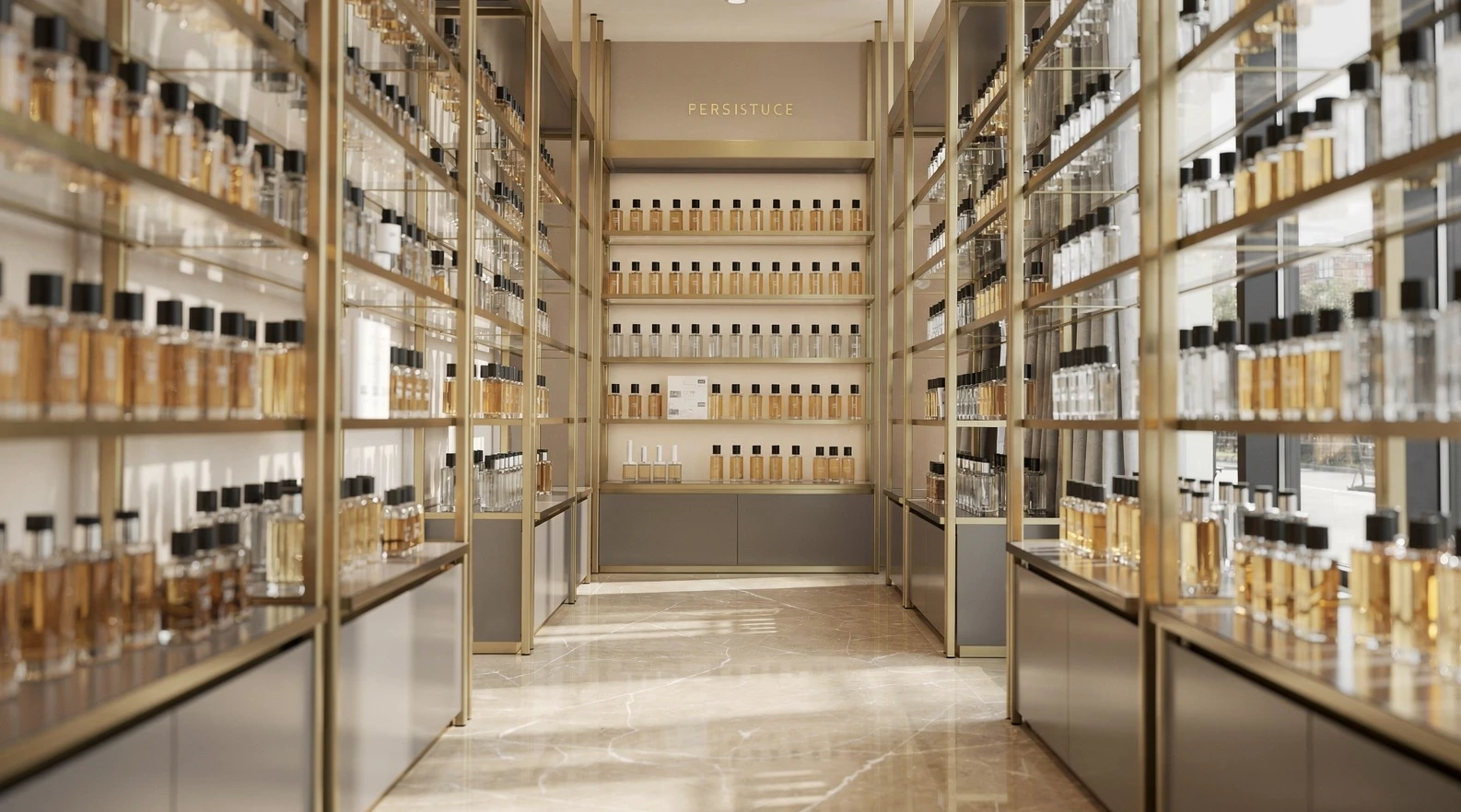
CK Hutchison Holdings, the Hong Kong-listed conglomerate behind the world’s largest health-and-beauty retailer, has confirmed that it is in talks to sell Marionnaud, the pan-European prestige perfumery chain it has owned for more than two decades. The prospective buyer is BEHN, an investment company established by David Konckier, chief executive and principal shareholder of the French fragrance-and-retail group Bogart. Reuters first reported the discussions, which were subsequently carried by trade outlets across Europe and Asia.
If completed, the transaction would remove roughly 700 stores and eight national markets from the AS Watson portfolio and place one of continental Europe’s best-known perfumery banners inside a fast-consolidating French roll-up. It would also mark another step in CK Hutchison’s steady reshaping of a sprawling global empire that spans ports, telecoms, energy, and retail. No price or timeline has been disclosed by either side.
What CK Hutchison confirmed
CK Hutchison said it had entered discussions over the potential sale of Marionnaud, the perfumeries and cosmetics business it acquired in 2005. In a statement carried by Reuters, the group said it remained “confident in the strength of the Marionnaud brand and its future potential,” language that frames the process as a strategic reallocation rather than a distressed disposal. The company added that Marionnaud would continue to operate as usual throughout the period of discussions.
The talks are described as being in an exclusive information and consultation phase. In France, that phrasing points to the formal employee-consultation process that must run before a change of control can be finalised, a step that typically adds weeks to any deal involving French workforces. It also signals that the two sides have moved past a first exploratory handshake and into structured negotiation.
Bogart, for its part, framed the target in heritage terms. “With more than 700 stores across France, Austria, the Czech Republic, Hungary, Italy, Romania and Switzerland, Marionnaud has been a benchmark in the beauty industry for decades,” the group said in a statement. The buyer named BEHN, rather than the listed Bogart entity, as the acquisition vehicle, a common structure that keeps a large retail purchase off the operating company’s balance sheet during due diligence.
Who is buying: BEHN, David Konckier and Groupe Bogart
David Konckier is the connective figure in this deal. He controls Groupe Bogart, a French company with two arms: a fragrances-and-cosmetics division that owns and licenses brands, and Bogart Beauty Retail, which runs perfumery and drugstore chains. The retail arm operates around 450 perfumeries and drugstores across Europe and the Middle East, giving Konckier an existing distribution spine into which Marionnaud’s stores could be folded.
The brand stable behind the bid
Groupe Bogart’s owned-brand portfolio includes Jacques Bogart Paris, the fashion label Carven, and the heritage house Ted Lapidus, alongside a stable of licensed and proprietary fragrances. That vertical position matters: a buyer that both makes fragrance and sells it at retail can capture margin across the chain and can privilege its own labels on prime shelf space. It is a different ownership logic from a pure retailer such as AS Watson, which sells third-party brands and increasingly its own private-label lines.
Why BEHN, not the listed company
Using BEHN as the buyer keeps the acquisition financing and integration risk ring-fenced from Groupe Bogart’s operating results while talks proceed. It is a familiar move in mid-market European retail M&A, where founders and family principals often warehouse acquisitions in dedicated vehicles. The structure also gives Konckier flexibility on how a Marionnaud purchase would eventually sit alongside Bogart’s existing retail estate.
Why AS Watson is letting go of a prestige perfumery chain
On paper, Marionnaud looks like a natural fit for AS Watson, whose entire business is health and beauty. The group has said it runs roughly 16,000 stores across around 30 markets, with banners that include Watsons in Asia, Superdrug and Savers in the United Kingdom, Kruidvat and Trekpleister in the Benelux, and Rossmann through a joint venture in parts of Europe. Marionnaud has sat inside that stable since 2005.
The tension is that AS Watson already owns another prestige perfumery format in Europe. ICI Paris XL, its Benelux-centred luxury fragrance chain, competes in the same premium niche as Marionnaud, which creates internal overlap in buying, brand relationships, and store strategy. Selling Marionnaud lets the group concentrate its European premium-beauty bet rather than run two overlapping banners against a strengthening field of rivals.
There is a demand backdrop, too. European discretionary spending has been uneven, and mass-market grocers and health-and-beauty operators have leaned on value and loyalty to hold traffic, a pattern visible in soft print like the deepening UK retail sales slump reported earlier in the summer. Against that, prestige perfumery is a capital-intensive, promotion-heavy segment where scale and brand access decide who wins. A focused specialist owner can arguably run Marionnaud harder than a diversified group juggling thousands of drugstores.
Marionnaud by the numbers
Marionnaud is a large business by store count, even if its financial disclosure is thin because it sits inside a private, diversified parent. In France, its home and largest market, the chain generated revenue of roughly EUR 536 million in 2024, about USD 610 million at current exchange rates of around EUR 1 to USD 1.14. It runs approximately 377 stores in France and around 700 in total once its other European markets are counted.
A shrinking share in a Sephora-led home market
The competitive reality in France is stark. Marionnaud’s domestic market share has slipped to roughly 12 percent, against about 40 percent for LVMH-owned Sephora, according to figures cited in trade coverage of the talks. That gap explains part of the strategic logic: as the clear number two or three in its own backyard, Marionnaud needs an owner willing to invest in store experience, digital, and exclusive brand access to close the distance, or at least defend its position.
The international footprint
Outside France, Marionnaud operates in Austria, the Czech Republic, Hungary, Italy, Romania, and Switzerland, with an online presence layered across those markets. That Central European and Alpine spread is strategically interesting to a consolidator, because it offers density in markets where prestige-beauty specialists are more fragmented than in France. The table below sets the chain against its main European peers.
| Retailer | Owner | Base | Approx. stores | Footprint note |
|---|---|---|---|---|
| Sephora | LVMH | France | Several thousand globally | Clear French leader, about 40% share |
| Douglas | Listed (CVC legacy stake) | Germany | Around 1,800 | Largest premium beauty network in Europe |
| Marionnaud | CK Hutchison / AS Watson (in sale talks) | France | Around 700 | About 12% French share, eight markets |
| Notino | Private (Czech founders) | Czechia | Online-led, few stores | Fast-growing online prestige player |
| Nocibe | Douglas | France | Around 600 | Douglas-owned French banner |
Store counts for peers are approximate and drawn from recent public disclosures and trade estimates; they move with each reporting period. The point is not precision to the single store but the shape of the map: a French market anchored by Sephora, a German-led premium network in Douglas, and a cluster of national specialists and online challengers into which Marionnaud fits as a mid-sized, multi-market prize.
The buyer’s roll-up strategy
Konckier is not making an isolated bet. The Konckier family recently signalled its retail ambitions by agreeing to buy Stadtparfumerie Pieper, a German family-owned perfumery chain with about 110 stores, in a transaction that completed on 1 July 2026. Adding Marionnaud on top would turn a series of national moves into a genuine pan-European perfumery platform in a matter of months.
The logic is classic buy-and-build. A vertically integrated owner that already makes fragrance, and that is assembling a multi-country retail estate, can drive purchasing scale, share back-office and logistics costs, and steer shoppers toward higher-margin lines. Marionnaud’s Central European footprint would slot alongside Pieper’s German base and Bogart’s existing 450-store perfumery-and-drugstore network with limited direct overlap.
Consolidation is the theme of the year
European beauty retail is consolidating from several directions at once, and the pattern rhymes with wider deal activity across the continent’s consumer sector. It echoes the return of scaled grocery M&A, seen when Kroger agreed to acquire Giant Eagle for USD 1.65 billion, and the pressure toward fewer, larger platforms visible in the expected wave of European consolidation in adjacent sectors such as BNPL. In each case the driver is the same: fixed costs in technology, compliance, and supply chains reward scale, and sub-scale national players increasingly look for a bigger home.
The recent consolidation trail in prestige beauty is worth laying out, because it shows how quickly the map is being redrawn. The table summarises the moves most relevant to the Marionnaud process.
| Move | Buyer | Target | Status | Significance |
|---|---|---|---|---|
| Pieper acquisition | Konckier family | Stadtparfumerie Pieper (about 110 stores) | Completed 1 July 2026 | German entry point for the buyer |
| Marionnaud talks | BEHN (David Konckier) | Marionnaud (about 700 stores) | In discussion | Would create a pan-European platform |
| Nocibe under Douglas | Douglas | Nocibe (France) | Long held | Douglas anchors its French position |
| Douglas public listing | Public markets | Douglas AG | Listed 2024 | Capital for network investment |
How the deal fits CK Hutchison’s portfolio reshaping
For CK Hutchison, the Marionnaud process reads less like a beauty story and more like capital discipline. The group reported revenue of roughly USD 65 billion in 2025 across ports, retail, infrastructure, telecoms, and energy, and it has spent the past year reviewing where its capital earns the best return. A single perfumery banner with slipping domestic share is exactly the kind of non-core asset a conglomerate prunes when it wants to sharpen focus and free up cash.
That instinct has been visible elsewhere in the group. Over the past year CK Hutchison has pursued a high-profile reshaping of its global ports business, a process that drew intense political scrutiny and underlined how actively the conglomerate is willing to reallocate around its portfolio. Set against a multi-billion-dollar ports realignment, a mid-market perfumery disposal is a smaller, cleaner transaction, but it fits the same playbook of rotating out of assets where the group is not the natural best owner.
The AS Watson retail arm is not being dismantled by this move. The group retains its mass-market health-and-beauty engine in Watsons, Superdrug, Kruidvat, and its European prestige position through ICI Paris XL. Selling Marionnaud narrows rather than exits its beauty exposure, and it hands the chain to an owner whose entire strategy is built around perfumery. For an overview of how ownership transitions ripple through European retail groups, the recent founder-era handover at Ocado offers a parallel in how long-held control changes hands.
What it means for suppliers, staff and shoppers
A change of control at a 700-store chain touches a wide set of stakeholders, and the near-term message from both parties is continuity. Marionnaud has said it will trade as normal through the talks, which means shoppers, loyalty members, and store teams should see no immediate change to opening hours, ranges, or gift-card terms while negotiations run.
For beauty brands and suppliers
Fragrance houses and cosmetics brands that sell through Marionnaud will watch the buyer’s vertical position closely. A retailer owned by a group that also markets its own labels can, in principle, favour in-house lines on prime shelf space and in promotions. Suppliers will want early clarity on ranging, marketing support, and payment terms, since those are the levers a buy-and-build owner typically pulls to fund a roll-up.
For staff and store networks
The exclusive information and consultation phase exists precisely to give employee representatives a formal say before control changes. In France, that process can shape commitments on jobs, store networks, and conditions, and it is often where the real negotiation over social terms happens. Any acquirer pursuing synergies will face scrutiny over how it treats overlapping head-office functions across France, Germany, and Central Europe.
For shoppers and loyalty
For consumers, the questions are practical: will the Marionnaud name survive, will loyalty points and stored value carry over, and will the store experience change. Bogart’s public emphasis on Marionnaud as a decades-old “benchmark” suggests an intent to preserve the banner rather than rebrand it, though nothing about pricing, ranges, or app integration has been confirmed. Ownership changes in retail typically keep the customer-facing brand stable in year one while back-office integration proceeds quietly.
How this connects to the wider retail cycle
The Marionnaud talks sit inside a broader rotation in global retail, where diversified owners are shedding assets that no longer fit and specialists are buying scale in their core niche. That is the same current pulling grocery, quick commerce, and payments toward fewer, larger platforms, and it shows up in demand data too. Soft consumer signals, from Europe to Asia, have pushed operators toward efficiency and consolidation rather than land-grab growth, a shift also visible in stories such as Domino’s Pizza China outrunning a soft consumer through disciplined expansion.
Prestige beauty has held up better than many categories through the recent slowdown, which is part of why it attracts consolidators. Shoppers who trade down on groceries often keep buying fragrance and skincare as affordable luxuries, giving perfumery retailers a resilient demand base. That resilience is precisely what makes a multi-market chain like Marionnaud worth assembling into a platform now, even as broader European retail demand stays patchy.
For AS Watson, the sale would also read as a signal about where the group sees future growth. Its center of gravity remains Asia, where Watsons is the dominant health-and-beauty brand, and where the demographic and digital tailwinds are stronger than in a mature, Sephora-led European prestige market. Reallocating capital away from a sub-scale European banner and toward higher-growth theaters is a coherent strategic read, even before any headline number is attached.
From 2005 to now: how Marionnaud’s position shifted
When AS Watson bought Marionnaud in 2005 through a cash offer of about EUR 534 million, the chain was the largest perfumery network in France and a marquee prize in European prestige beauty. The acquisition slotted a premium banner into a group that was building the world’s biggest health-and-beauty retail platform. At the time, Sephora was a strong rival but had not yet cemented the commanding French lead it holds today.
Two decades later the map looks different. Sephora, backed by LVMH’s brand access and marketing muscle, has pulled clear at the top of the French market, while Douglas has scaled a listed, pan-European premium network and online specialists such as Notino have taken share in fragrance at aggressive prices. Marionnaud, meanwhile, has been one banner inside a diversified retail conglomerate whose strategic attention and capital have many competing claims.
Why a specialist owner could run it harder
The case for selling rests on ownership fit as much as on financials. A focused perfumery operator can move faster on store refits, exclusive brand launches, and loyalty investment than a group balancing thousands of drugstores across Asia and Europe. It can also negotiate with fragrance houses as a dedicated prestige buyer rather than as one line item in a mass-market portfolio.
That is the pitch behind Konckier’s interest. By combining Marionnaud with the newly acquired Pieper network in Germany and Bogart’s existing 450-store estate, a buyer can build purchasing scale in fragrance and spread technology and logistics costs across a larger base. The prize is a European perfumery platform with the density to negotiate hard and the focus to invest where it counts.
The risks in a buy-and-build
Roll-ups are not free of danger. Integrating several national chains means reconciling different store formats, loyalty systems, and supplier contracts, and the synergies that justify the price can prove slower to arrive than the debt used to fund the deal. A vertically integrated owner also risks friction with third-party brands wary of a landlord that competes with them on the shelf.
Execution will therefore matter more than the headline logic. The buyer’s ability to keep Marionnaud’s brand relationships intact, retain store teams through the transition, and avoid over-promoting its own labels will shape whether the platform strengthens the chain or slowly erodes its prestige positioning. Those are the questions suppliers and analysts will press once terms are known.
What to watch next
Several markers will show whether these talks turn into a deal. The first is price: neither side has put a number on Marionnaud, and the eventual multiple will reveal how the market values a mid-share prestige chain with a strong Central European footprint. The 2005 acquisition, done through an AS Watson cash offer of about EUR 534 million, is a historical anchor rather than a guide to today’s value.
The second marker is the consultation timeline. French employee-consultation processes have a rhythm of their own, and completion will depend on how quickly representatives sign off and whether any competition authority takes an interest given the buyer’s growing perfumery estate. The third is integration signalling: whether Konckier keeps the Marionnaud brand, how he sequences it with Pieper and Bogart’s existing network, and what he says to suppliers about ranging.
For now, the confirmed facts are narrow but meaningful. CK Hutchison is a willing seller, David Konckier’s BEHN is the named buyer, Marionnaud keeps trading, and the process is far enough along to be in formal consultation. Whether it closes on the terms either side wants is the open question, and it will be answered over the coming weeks rather than days.
In short
- CK Hutchison is in talks to sell Marionnaud, the roughly 700-store European perfumery chain it has owned through AS Watson since 2005.
- The buyer is BEHN, the investment vehicle of David Konckier, chief executive and principal shareholder of French fragrance-and-retail group Bogart.
- The strategic logic is focus: AS Watson already owns overlapping prestige perfumery in ICI Paris XL, while Marionnaud’s French share has slipped to about 12 percent against Sephora’s 40 percent.
- It extends a European roll-up: Konckier’s family completed the purchase of Germany’s Pieper chain on 1 July 2026 and would gain a pan-European platform by adding Marionnaud.
- No price or timeline is set: talks are in an exclusive information and consultation phase, and Marionnaud continues to trade as usual.
Frequently asked questions
Is the Marionnaud sale confirmed?
Not yet. CK Hutchison has confirmed it is in discussions over a potential sale of Marionnaud to BEHN, the investment company of David Konckier, but no binding agreement, price, or completion date has been announced. The talks are in an exclusive information and consultation phase, which means they are structured and advanced but not finalised.
Who is David Konckier and what is Groupe Bogart?
David Konckier is the chief executive and principal shareholder of Groupe Bogart, a French company that both owns fragrance and cosmetics brands and runs beauty retail. Its brands include Jacques Bogart Paris, Carven, and Ted Lapidus, and its retail arm operates around 450 perfumeries and drugstores across Europe and the Middle East. BEHN is the investment vehicle he is using to pursue Marionnaud.
How big is Marionnaud?
Marionnaud runs about 700 stores across France, Austria, the Czech Republic, Hungary, Italy, Romania, and Switzerland, plus an online presence. In France, its largest market, it operates roughly 377 stores and generated about EUR 536 million in revenue in 2024, equivalent to around USD 610 million at current exchange rates.
Why is AS Watson selling a beauty chain?
AS Watson already owns another European prestige perfumery format, ICI Paris XL, so Marionnaud creates internal overlap. Selling it lets AS Watson and its parent CK Hutchison focus their premium-beauty strategy, reallocate capital toward higher-growth markets in Asia, and hand Marionnaud to a specialist owner whose entire business is built around perfumery.
What would the deal mean for Marionnaud shoppers?
In the near term, nothing changes. Marionnaud has said it will operate as usual during the talks, so opening hours, ranges, loyalty schemes, and gift cards should be unaffected while negotiations proceed. Longer term, a new owner could adjust ranging or promotions, though Bogart’s emphasis on the brand’s heritage suggests it intends to keep the Marionnaud name.
How does Marionnaud compare with Sephora and Douglas?
Sephora, owned by LVMH, is the clear leader in France with about 40 percent market share, while Marionnaud holds roughly 12 percent. Douglas, the German-listed group, runs the largest premium beauty network in Europe with around 1,800 stores and also owns the French banner Nocibe. Marionnaud sits as a mid-sized, multi-market specialist between these larger players.
How does this fit CK Hutchison’s wider strategy?
CK Hutchison, which reported roughly USD 65 billion in revenue in 2025, has spent the past year reviewing its global portfolio and reallocating capital, including a high-profile reshaping of its ports business. Selling a sub-scale European perfumery banner fits the same discipline of rotating out of assets where the group is not the natural best owner.
Could regulators block the deal?
Any transaction would need to clear the standard employee-consultation process in France and could attract competition review given the buyer’s growing perfumery footprint across France, Germany, and Central Europe. There is no indication of a specific regulatory obstacle at this stage, but the review path is part of why no completion date has been set.
When will we know if the sale goes through?
There is no confirmed timeline. French information and consultation processes typically run for weeks, and the parties will need to agree on price and terms before any binding deal is signed. Watch for a disclosed valuation, the outcome of employee consultation, and any statement on whether the Marionnaud brand will be retained.
This article is based on public statements from CK Hutchison and Groupe Bogart and on reporting by international news agencies. Figures are approximate and drawn from company disclosures and trade coverage; currency conversions use exchange rates current at the time of writing. For official corporate detail on the retailer, see the AS Watson brand page for Marionnaud.