
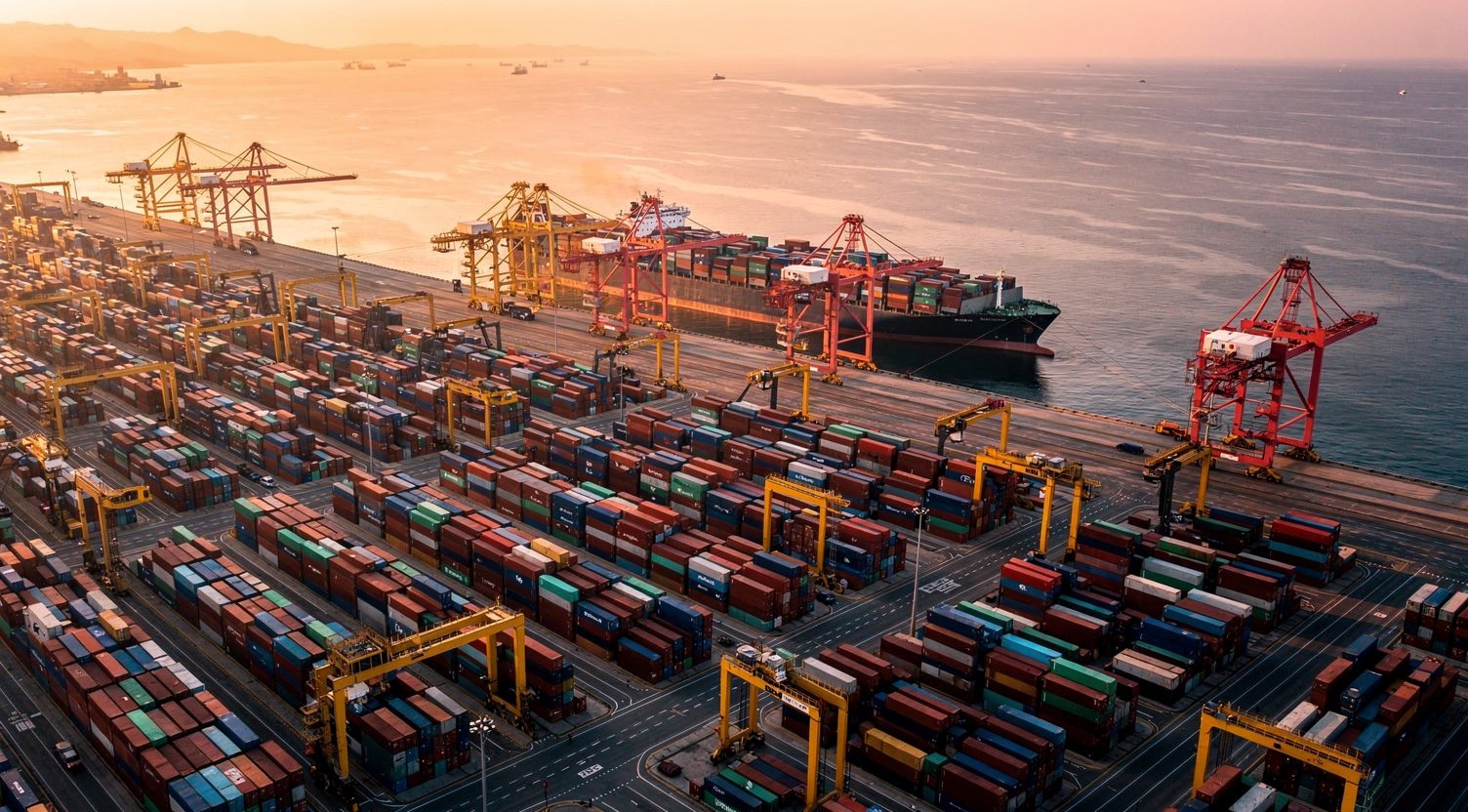
U.S. retailers are on track to move a record 2.47 million containers through the nation’s ports this month, even as ocean freight rates finally start to cool, a split that sets up a tense final week before a July 24 tariff deadline. The July forecast, published by the National Retail Federation and Hackett Associates in their Global Port Tracker, would edge past the previous monthly record of 2.40 million TEU set back in May 2022.
The rush is not really about strong consumer demand. It is about beating the clock. Importers are front-loading goods to get ahead of higher costs tied to expected changes in U.S. trade policy, and that scramble is now colliding with a freight market that has started to soften.
The fast version
- July U.S. container imports are forecast at 2.47 million TEU, a new monthly record and up 3.3% from a year ago.
- Ocean spot rates are cooling. Shanghai to Los Angeles slipped 3% to $6,272 per 40ft container on July 17.
- A July 24 tariff deadline is driving the front-loading, with fresh duties expected in August.
- Imports are projected to fall to 2.22 million TEU in August, down 4.5% year over year.
- For retailers, the harder cost to dodge is the last mile, now 53% of total shipping spend.
Why freight rates are cooling while volume climbs
Ocean freight rates retreated this week as tariff uncertainty froze fresh import bookings, according to market trackers. Rates from Shanghai to Los Angeles fell 3% to $6,272 per 40ft container, while Shanghai to New York held steady at $7,879.
The pullback follows a huge run. Asia to U.S. West Coast spot rates have climbed roughly 120% since mid-May, and East Coast rates are up about 85% over the same stretch. With the front-loading rush easing, carriers are actively managing capacity so rates don’t slide too far. Nine blank sailings are scheduled on the Transpacific next week, a deliberate move to pull ships out of service and hold pricing up.
Drewry expects rates to hold roughly steady through next week. On the Asia to Europe leg, Shanghai to Genoa slipped 3% to $6,300 per 40ft box, and Shanghai to Rotterdam edged down 1% to $4,873. European ports are also loosening up, with Genoa cutting average vessel waiting time by 33 hours week over week.
The import curve, month by month
The Global Port Tracker numbers show a market pulling demand forward, then bracing for a drop once the tariff picture clears. A TEU, or twenty-foot equivalent unit, is the standard container-count measure that ports report (see the TEU definition).
| Month | U.S. container imports | Year over year |
|---|---|---|
| June 2026 | 2.40 million TEU | up 8.2% |
| July 2026 (forecast) | 2.47 million TEU | up 3.3% |
| August 2026 (forecast) | 2.22 million TEU | down 4.5% |
China is still the engine of the surge. June imports from China hit 814,474 TEU, up 27.4% from a year earlier, as suppliers and buyers moved cargo before the deadline.
What happens after July 24
The July 24 date matters because a set of temporary Section 122 tariffs is due to expire, and importers expect new duties to land in August. That is why the calendar, not the shelves, is driving shipping decisions right now.
The Port Tracker forecast already prices in the hangover. August volume is expected to slip to 2.22 million TEU, and the softness could stretch into fall if the new tariff structure raises landed costs. Retailers that pulled inventory forward now carry the storage bill, while those that waited face whatever rate and duty environment shows up in August.
The cost retailers cannot front-load
Ships and containers can be booked early. The last mile cannot. And that final leg keeps getting pricier.
Final delivery now accounts for 53% of total shipping cost, up from 41% in 2018. UPS and FedEx residential delivery surcharges run between $5.30 and $5.65 per package in 2026, and parcel rates keep climbing after hitting record levels late last year.
For an online seller, that means a container booked at a decent ocean rate can still land in an order that loses money at the doorstep. The retailers holding up best are the ones investing in micro-fulfillment closer to customers, cutting the last-mile distance rather than trying to time the ocean market.
Quick questions
Why are imports hitting a record if demand is soft?
The record is driven by front-loading, not by shoppers buying more. Importers are rushing cargo through ports before the July 24 tariff deadline to avoid higher landed costs later. Once the deadline passes, the Port Tracker expects volume to drop to 2.22 million TEU in August.
Are ocean freight rates going up or down right now?
Down, at least this week. Shanghai to Los Angeles fell 3% to $6,272 per 40ft container on July 17, and Asia to Europe lanes also eased. But rates remain far above spring levels, with West Coast spot pricing still up around 120% since mid-May, and carriers are cutting sailings to keep them from falling further.
What should retailers watch after July 24?
Watch the August tariff details and the last-mile line on your cost sheet. New duties could raise landed costs, and the final delivery leg is now 53% of total shipping spend. A cheap ocean rate does not help if parcel surcharges and returns eat the margin at the door.
The next week is the tell. If bookings stay frozen through July 24 and blank sailings keep pulling capacity, expect rates to hold rather than crash, and expect August port volumes to come off the boil as the front-loading window closes.