
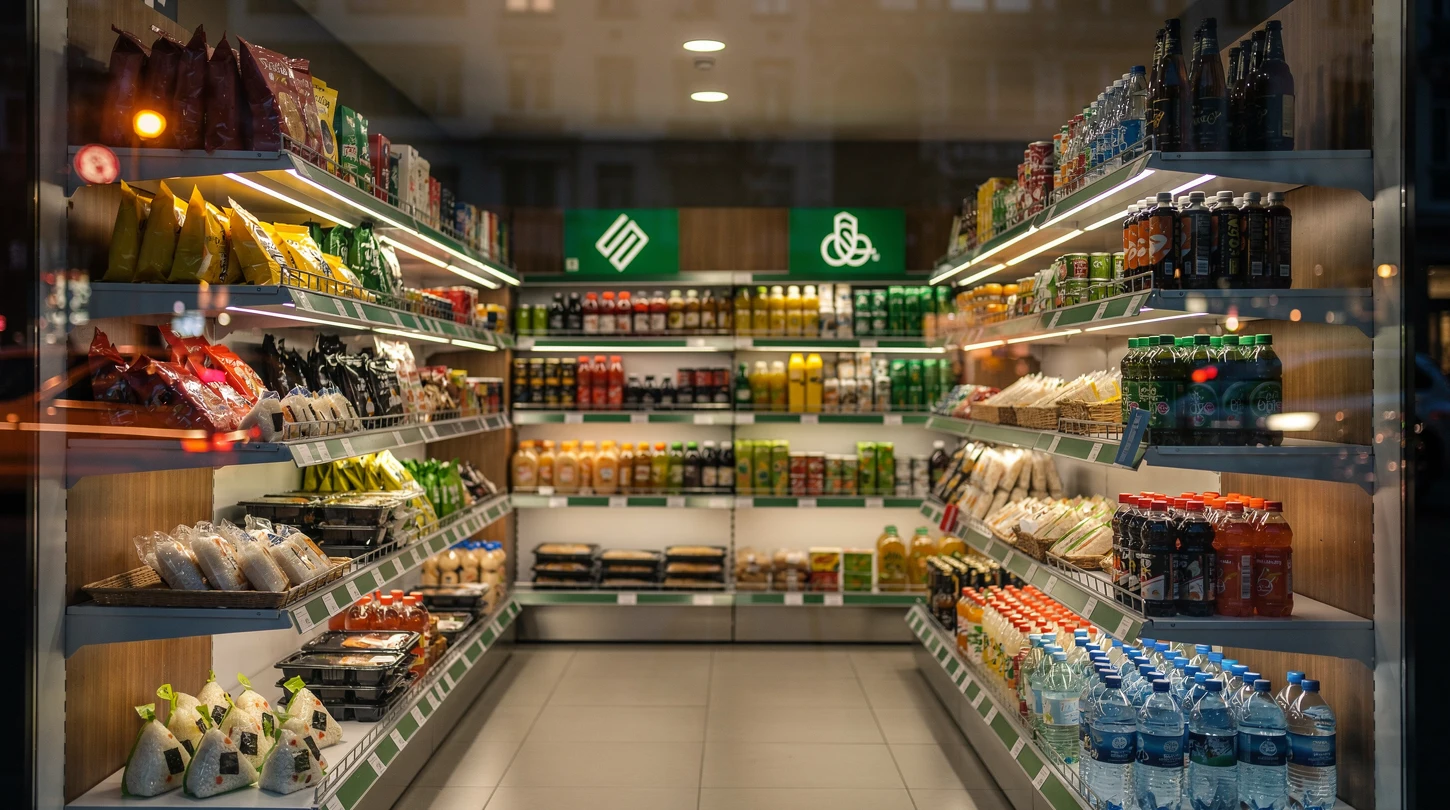
Seven & i Holdings, the Japanese group behind the 7-Eleven chain, is in advanced talks to buy a stake in Poland’s Zabka Group, the largest convenience-store operator in Europe by outlet count. The disclosure, first reported by the Japanese business daily Nikkei and then confirmed in outline by Seven & i, sent Zabka shares to a record high in Warsaw and lifted Seven & i’s own stock in Tokyo.
Two things make the move stand out. The first is direction of travel: a company that spent much of the past two years defending itself from a foreign takeover is now the one writing a cheque abroad. The second is geography, because Europe is precisely the region where Seven & i has struggled to keep pace with its scale in Japan and North America.
According to Nikkei, the Japanese group is weighing an investment of several hundred billion yen, equivalent to several billion dollars at about 148 yen to the dollar, for a double-digit percentage holding. Seven & i confirmed it is in negotiations with a large convenience operator in Poland while stressing that nothing has been decided.
This article sets out what has been reported, what remains unconfirmed, and why a Polish shop format that most Western shoppers have never seen has become a strategic prize for the world’s biggest convenience retailer.
In short
- The deal on the table: Seven & i is in talks to take a double-digit stake in Poland’s Zabka Group, per Nikkei, with the confirmed detail limited to the existence of negotiations.
- The seller: the shares would most plausibly come from investment funds, chiefly a CVC-controlled vehicle that remains Zabka’s largest shareholder after the 2024 float.
- The market reaction: Zabka jumped close to 16 percent in Warsaw to a record, and Seven & i rose as much as 4 to 5 percent in early Friday trading in Tokyo.
- The strategic logic: Europe is Seven & i’s weakest region, and the group has a stated goal of reaching 100,000 stores worldwide by 2030 from about 87,000 today.
- The backdrop: the talks land almost a year to the day after Alimentation Couche-Tard abandoned its roughly USD 46 billion bid for Seven & i, a reminder of how far the Japanese group’s position has shifted.
Update, July 2026: Seven & i walked away, and Zabka is not becoming a 7-Eleven
The short answer: the deal is off. Seven & i Holdings, the Japanese company that owns 7-Eleven, said on 25 July 2026 that it had ended the talks over a Zabka stake. Zabka is not turning into a 7-Eleven, 7-Eleven does not own Zabka, and 7-Eleven still has no stores in Poland. Its European network runs through Denmark, Norway and Sweden.
The stated reason was terms. Seven & i said it could not reach an agreement it considered to be in the best interests of its shareholders, and Tokyo marked the news down when the market reopened: the shares fell as much as 2.3 percent. Polish and Japanese coverage pointed at the same sticking point, which was price. Zabka has been trading on a far richer multiple than its would-be investor, around 12 times EV/EBITDA against roughly 7.5 times for Seven & i, so every percent of Zabka on the table was expensive money for a group still rebuilding its own rating.
Two things from the original story survive intact. Europe is still Seven & i’s weakest region and the company repeated that it will keep evaluating options there, so this reads as a failed price negotiation rather than a change of strategy. And Zabka’s ownership question is unchanged: the CVC-controlled vehicle remains the largest shareholder after the 2024 Warsaw float, so any exit for those funds now has to come from the market or from a different buyer.
Worth watching from here: whether the private equity holders start selling down into the market instead, and whether Seven & i turns to another European convenience operator to keep its 100,000 store target for 2030 on track.
What exactly did Seven & i confirm about the Zabka talks?
The starting point is a Nikkei report published this week, which said Seven & i was in the final stages of talks to invest in Zabka. Reuters and Bloomberg followed, and Seven & i then acknowledged that it was in negotiations with a large convenience-store operator in Poland. The company added that no decision had been reached.
That careful wording matters. A confirmation of talks is not a confirmation of terms, and Japanese disclosure rules push companies to respond to press reports without committing to an outcome. Zabka, for its part, said it does not comment on rumours regarding potential secondary transactions.
So the confirmed core is narrow: talks exist, they involve a stake rather than a full takeover, and both sides are declining to detail price or size. Everything beyond that rests on reporting from Nikkei and follow-up coverage, and should be read as such.
The size of the stake on the table
Nikkei put the likely investment at several hundred billion yen for a double-digit percentage stake. Poland’s finance minister, Andrzej Domanski, also referred publicly to a double-digit holding, a rare instance of a government official weighing in on a live corporate transaction.
A double-digit stake is a deliberately wide range, spanning anything from roughly 10 percent to just under 50 percent. Where the final number lands will decide whether Seven & i becomes a passive financial holder, an influential anchor investor, or something close to a controlling partner.
At Zabka’s current market value, a stake in the teens would still run to well over a billion dollars, consistent with the several-billion-dollar figure being reported. The precise arithmetic will depend on both the percentage and the price agreed with the sellers.
What Seven & i said, and what it did not say
Seven & i confirmed the fact of talks but withheld the identity of the seller, the target percentage, and the price. It did not describe the investment as a step toward outright control, nor did it rule that out.
Analysts reading the confirmation leaned toward a minority position. Janusz Pieta, an analyst quoted in the coverage, argued that a stake would alleviate investor concern about a supply overhang in Zabka’s shares while stopping short of turning Seven & i into a direct European competitor to the businesses it is buying into.
In other words, the market’s early interpretation is that this is an alliance dressed as an equity stake rather than a takeover in disguise. That reading could change quickly if a controlling percentage emerges.
Who is Zabka, and why does it matter to a Japanese retailer?
Zabka, whose name means little frog in Polish, is the dominant convenience format in one of Europe’s fastest-growing consumer markets. The group operated 13,063 stores across Poland and Romania at its most recent count, run largely through a franchise model that keeps capital requirements light and expansion fast.
For a Japanese buyer, the appeal is not just the store count. It is the operating system underneath it: a franchise engine, a growing base of unmanned autonomous stores, a direct-to-consumer meal business, and an eGrocery arm. That blend of physical density and digital reach is close to what Seven & i prizes in its home market.
From CVC buyout to Warsaw’s biggest float
Zabka’s current shape owes much to private equity. CVC Capital Partners led a buyout of the chain and then took it public on the Warsaw Stock Exchange in October 2024, in what was the largest Polish initial public offering since 2020 and one of the biggest in Europe that year.
The listing priced at 21.5 zloty a share and raised about 6.45 billion zloty, roughly USD 1.6 billion at prevailing rates, valuing the company near 5 billion euros. Shares opened around 7 percent above the offer price and climbed as much as 9 percent on debut, a strong reception for a European consumer float in a cautious market.
Crucially, CVC did not walk away at the IPO. The firm remained Zabka’s largest shareholder, holding close to 40 percent through a vehicle that later shows up in filings at about 38 percent. That retained stake is the pool from which Seven & i’s shares would most naturally come. Investors have followed similar private-market-to-public transitions closely, much as they tracked the way one UK savings platform used a secondary share sale to give early backers liquidity without a full exit.
A convenience model built for franchising and automation
Zabka’s franchise structure lets it add outlets quickly while pushing day-to-day operating risk onto independent operators. That is a familiar recipe to 7-Eleven, which built its own global scale on franchising and licensing rather than owning every store outright.
The chain has also leaned into technology, from checkout-free autonomous stores to app-based ordering and meal subscriptions. For Seven & i, which talks constantly about turning stores into data-rich retail networks, that roadmap is more than a nice-to-have; it is a template it could study and export.
Why is Seven & i buying into Europe now?
Seven & i runs one of the largest store networks on earth, but that network is heavily weighted toward Japan and North America. Europe has long been the gap in the map, served through franchise and licensing arrangements rather than a large owned or anchored presence.
The group has set a public ambition to grow from about 87,000 stores worldwide to 100,000 by 2030. Reaching that figure organically in mature Asian and North American markets is hard, which pushes management toward bolt-on deals in regions where convenience retail is still expanding. Poland, with rising incomes and a young, format-friendly shopper base, fits that description well.
A stake in Zabka offers a way to plant a flag in European convenience without the cost, complexity, and integration risk of a full acquisition. It buys exposure to a proven operator and a management team that already knows how to open thousands of stores, while leaving that team in place.
The economics of a stake versus a takeover
Buying a minority position is cheaper and faster than acquiring a company outright, and it sidesteps much of the antitrust and political friction a full takeover would attract. It also lets Seven & i test a partnership before committing to control.
The trade-off is influence. A minority holder shapes strategy through board seats and commercial agreements rather than direct command. For a group still rebuilding investor trust in its capital discipline, that measured approach may be the point rather than a limitation.
How does this fit Seven & i’s life after Couche-Tard?
The timing is hard to ignore. Almost exactly one year ago, Alimentation Couche-Tard withdrew its roughly USD 46 billion offer for Seven & i, accusing the Japanese group’s management and founding Ito family of a lack of constructive engagement. That failed pursuit reshaped how Seven & i is judged.
Having argued that it could create more value alone than under Couche-Tard, Seven & i now has to prove it. Management responded with a restructuring that sold off its superstore unit, launched a share buyback of about 2 trillion yen, close to USD 13.5 billion at about 148 yen to the dollar, running through 2030, and committed to a public listing of its North American business in the second half of 2026.
From defense to offense
A Zabka stake would sit neatly inside that narrative. It signals that the company can play offense, pursuing selective international growth, rather than merely shrinking to placate critics. Chief Executive Stephen Dacus has framed the planned North American listing as a way to fund faster store rollouts and additional bolt-on deals, and a European stake is exactly the kind of move that logic invites.
The risk is that investors read any outbound spending as a distraction from the promised discipline. Seven & i will need to show that a Polish stake advances the strategy rather than diluting it. The muted, careful confirmation suggests management is mindful of that scrutiny.
Why a minority deal reassures rather than alarms
Because the reported structure is a stake, not a buyout, it consumes far less capital than a transformational acquisition would. That keeps the buyback and the North American listing intact while still adding a European growth option.
It is a very different posture from the megadeals that have defined recent retail and payments headlines, where buyers have pursued outright control. The contrast with an all-out consolidation attempt, such as the multibillion-dollar payments megamerger that dominated fintech coverage this summer, underscores how conservative the Zabka approach looks by design.
What does the deal mean for CVC and Zabka’s other backers?
For CVC and the other funds still holding Zabka stock, an incoming strategic investor solves a specific problem. Private equity owners of a newly listed company face a supply overhang: the market knows large blocks of shares must eventually be sold, and that expectation can weigh on the price.
Selling a chunk to a long-term industrial partner like Seven & i removes some of that overhang in one move, and does so to a holder unlikely to dump the stock. That is why Zabka shares rose rather than fell on the news; a disciplined exit path is good for remaining shareholders too.
A cleaner path to a private-equity exit
Private equity firms measure success by exits, and public listings rarely deliver a full one on day one. Placing shares with a strategic buyer over time, rather than drip-feeding them into the open market, tends to protect valuation and signal confidence.
It also reframes Zabka’s shareholder register from a temporary post-IPO arrangement into a more durable structure anchored by an operator with global reach. That shift is often what turns a recent float into a stable public company, and it echoes the way European consumer listings, from apparel names to fintech platforms, have sought anchor investors to steady their shares after debut.
How did markets react in Warsaw and Tokyo?
The immediate scoreboard was clear. Zabka jumped almost 16 percent in Warsaw to a record high, with reporting putting the intraday move at 15.9 percent as of midday London time on the day the story broke. Bloomberg valued the company at about 32.7 billion zloty, roughly USD 8.7 billion at about 3.76 zloty to the dollar, at that level.
In Tokyo, Seven & i rose as much as 4 to 5 percent in early Friday trading, described in coverage as the biggest intraday gain since April 2025. An earlier read in Reuters had put the move nearer 2.2 percent, a reminder that intraday figures shift as sessions progress.
The dual rally is telling. Markets rarely reward both sides of a deal at once; when they do, it usually signals that investors see the terms as fair to buyer and seller alike, rather than one overpaying.
| Company | Listing | Reported market reaction | Reference valuation |
|---|---|---|---|
| Zabka Group | Warsaw Stock Exchange | Up about 15.9 percent to a record | About 32.7bn zloty (about USD 8.7bn) |
| Seven & i Holdings | Tokyo Stock Exchange | Up as much as 4 to 5 percent intraday | Large-cap Japanese retailer |
Figures reflect intraday moves around the time the talks were reported and confirmed, and should be treated as snapshots rather than closing levels.
How does Zabka compare with Seven & i’s global footprint?
The scale gap between the two companies frames the whole deal. Seven & i is a global network measured in the tens of thousands of stores across dozens of markets, while Zabka is a regional champion concentrated in Poland with a foothold in Romania.
That is exactly why a stake, rather than a merger of equals, is the sensible structure. Seven & i does not need Zabka’s size; it needs Zabka’s position in a market it has struggled to crack, plus the operating know-how that comes with it.
Store networks and geographies at a glance
The table below sets the two side by side, along with a European convenience benchmark, using publicly reported figures. It is meant to illustrate relative scale and focus rather than to serve as a precise financial comparison.
| Operator | Approx. store count | Core geographies | Model |
|---|---|---|---|
| Seven & i (7-Eleven) | About 87,000, targeting 100,000 by 2030 | Japan, North America, Asia, licensing worldwide | Franchise and license led |
| Zabka Group | 13,063 across Poland and Romania | Poland (core), Romania | Franchise led, plus autonomous stores and eGrocery |
| Typical Western European chain | Varies by market, often forecourt led | Fragmented, national operators | Mixed owned and franchise |
The contrast highlights why Poland is attractive. Western European convenience is fragmented and often tied to fuel forecourts, whereas Zabka has built dense, standalone, tech-enabled coverage in a single fast-growing market, a pattern closer to the Asian convenience model Seven & i knows best.
Convenience is also colliding with faster delivery formats across the region, and any European push has to reckon with the way quick commerce has reshaped how shoppers buy top-up groceries. Owning a stake in a franchise network with an eGrocery arm is one way to stay on the right side of that shift.
What are the risks and regulatory hurdles?
No deal is done, and several things could still reshape or derail it. The first is price. A stake bought after a 16 percent share-price jump is more expensive than one negotiated before the news leaked, which can complicate final terms.
The second is structure. If the talks move toward a controlling stake rather than a minority one, antitrust regulators and Polish authorities would scrutinize the deal more heavily, and the political temperature would rise. The finance minister’s public comment already shows the transaction is on the government’s radar.
Political and national sensitivities
Zabka is a household name in Poland, woven into daily life in a way few retailers are. Foreign ownership of a national champion, especially by a large overseas group, can attract political attention regardless of the commercial merits.
A minority stake is far easier to accept on this front than a takeover, which is another reason the reported structure looks deliberate. Seven & i has watched how cross-border retail and technology deals can stall on national-interest grounds, and a measured stake avoids the sharpest version of that risk.
Execution and integration questions
Even a friendly stake carries execution risk. Governance rights, board representation, and the commercial agreements that come with the investment all have to be negotiated, and each can become a sticking point.
There is also the question of what Seven & i actually gains operationally. A passive holding delivers financial exposure but little strategic transfer, while a more active partnership requires alignment between two very different corporate cultures. Turning a stake into genuine value is harder than announcing one.
What should retail investors watch next?
The near-term signals are straightforward. Watch for a formal announcement confirming the size and price of the stake, the identity of the selling shareholders, and whether CVC is trimming or holding firm. Any of those details will sharpen the picture considerably.
Beyond the deal itself, the read-through matters for the wider sector. If Seven & i is willing to pay up for European convenience, other global operators and financial buyers may revisit the region, where listed, scaled convenience assets are scarce.
Signals that would confirm the thesis
A minority stake with board seats and a multi-year commercial agreement would confirm the alliance reading, and would likely be welcomed by both share registers. A creeping move toward control, by contrast, would reopen the antitrust and political questions and could unsettle Zabka’s minority holders.
Investors will also weigh the deal against Seven & i’s other commitments, chiefly the North American listing and the buyback. A Polish stake that fits within that framework reinforces the standalone-growth story; one that strains it would test the patience management has asked for since the Couche-Tard episode. The way cross-border retail valuations are being set this year, from Asian e-commerce floats to European brand listings, will shape how generously any Zabka stake is priced.
What does this mean for the convenience-retail landscape?
Step back, and the Zabka talks capture a broader shift. Convenience retail, once a sleepy, local business, has become a globally contested category where scale, technology, and franchising combine into a defensible model. Seven & i’s interest in a Polish operator is a vote of confidence in that thesis.
It also shows how the balance of power in retail M&A can flip. A year after fending off a takeover, Seven & i is shopping for growth abroad, using a stake rather than a buyout to keep its options open and its balance sheet disciplined.
Whether the talks produce a deal or not, they have already done something useful for the market: they have put a price on European convenience, and reminded investors that the format still commands a premium. For a sector long dismissed as low-margin and unglamorous, that is a notable turn.
Frequently asked questions
Is Seven & i buying Zabka outright?
No. The reporting describes talks over a stake, most likely a double-digit percentage holding rather than a full takeover. Seven & i has confirmed only that negotiations are under way with a large Polish convenience operator and that nothing has been decided.
How big is the stake Seven & i is reportedly seeking?
Nikkei reported a double-digit percentage stake, and Poland’s finance minister referred to a similar range. That spans roughly 10 percent to just under 50 percent, so the exact size, and therefore the degree of influence, remains open until a formal announcement.
Who would sell the shares to Seven & i?
The most likely sellers are the investment funds that still own large blocks of Zabka after its 2024 listing, chiefly a CVC-controlled vehicle that remained the company’s biggest shareholder. Zabka has said it does not comment on rumours about potential secondary transactions.
Why does Seven & i want a Polish convenience chain?
Europe is Seven & i’s weakest region, and the group aims to grow from about 87,000 stores to 100,000 by 2030. Zabka offers a fast-growing, tech-enabled, franchise-led network in a single expanding market, giving Seven & i European exposure without a costly full acquisition.
How did the stock market react?
Zabka jumped close to 16 percent in Warsaw to a record high, while Seven & i rose as much as 4 to 5 percent in early Friday trading in Tokyo. A rally in both buyer and seller usually signals that investors view the reported terms as fair to each side.
How is this connected to the Couche-Tard saga?
Almost a year earlier, Alimentation Couche-Tard withdrew its roughly USD 46 billion bid for Seven & i. Having argued it could grow better independently, Seven & i is now pursuing selective international expansion, and a Zabka stake fits that standalone-growth narrative.
What are the main risks to the deal?
Price is one, since Zabka shares have already jumped. Structure is another: a controlling stake would draw heavier antitrust and political scrutiny than a minority one. Execution risk around governance, board seats, and commercial terms could also complicate or delay any agreement.
What is Zabka, exactly?
Zabka Group is Poland’s largest convenience-store operator and one of the biggest in Europe by store count, running 13,063 outlets across Poland and Romania through a franchise model, alongside autonomous stores, meal solutions, and an eGrocery business. It listed in Warsaw in October 2024.
When will we know if a deal is agreed?
There is no fixed timeline. The next confirmation would be a formal statement on the stake’s size, price, and sellers. Until then, only the existence of talks is confirmed, and both companies are declining to discuss terms.