
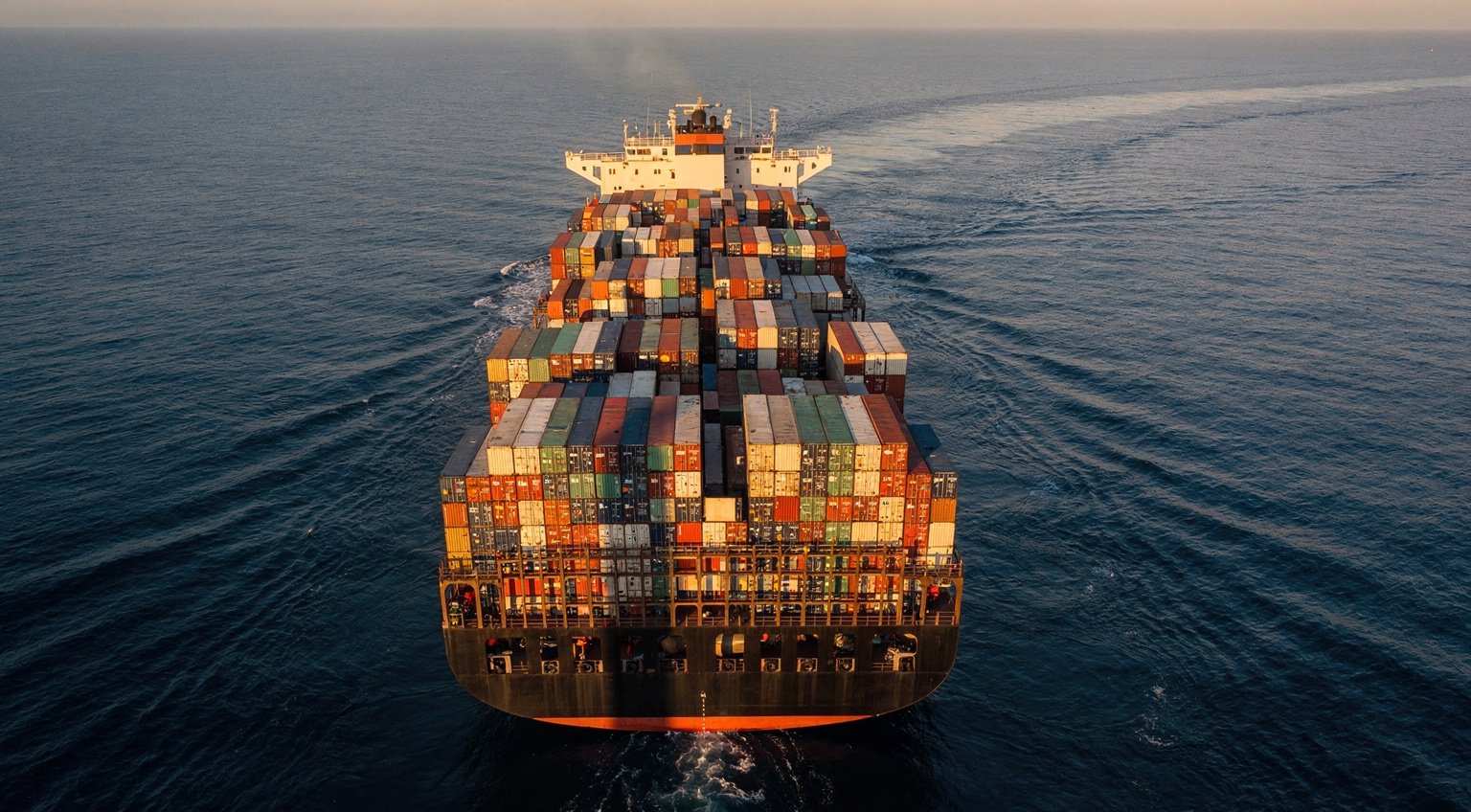
The price of moving a single 40ft container from China to Northern Europe has swung from roughly 1,500 US dollars before the pandemic to more than 14,000 dollars at the 2021 to 2022 peak, and back to about 4,873 dollars in mid-July 2026. Few numbers feed more directly into the shelf price of imported goods, and few large markets are shaped by so few companies. This guide explains what actually sets the cost of shipping from China to Europe, who holds the power on that trade lane, and the long-running debate over whether a highly concentrated industry uses that power fairly.
Two things are true at the same time, and holding both is the key to understanding this market. Ocean container shipping is unusually concentrated, and the biggest carriers hold real pricing power. Yet the largest rate swings of the past six years line up closely with genuine external shocks, from a pandemic demand surge to the diversion of ships away from the Red Sea. Sorting the structural power from the shock is where most of the argument lives.
What a China to Europe container costs in mid-2026
According to Drewry’s World Container Index for the week of 16 July 2026, the composite reading across eight major routes sat at about 4,639 dollars per 40ft container, its highest level since September 2024. On the headline Asia to Europe legs, Drewry put Shanghai to Rotterdam at 4,873 dollars and Shanghai to Genoa at 6,300 dollars per 40ft box. Drewry also noted that congestion at European ports was easing, with average vessel waiting times at Genoa falling by 33 hours week on week.
Those numbers only make sense against the rollercoaster of the past few years. The table below shows approximate spot rates for a 40ft container on the Shanghai to North Europe corridor, drawn from published index data. Treat the older figures as rounded reference points rather than exact quotes, because spot rates move weekly and vary by index and by carrier.
| Period | Approx. Shanghai to North Europe spot (per 40ft) | What was happening |
|---|---|---|
| 2019, pre-pandemic | around 1,500 dollars | Stable overcapacity, thin carrier margins |
| Late 2021 peak | above 14,000 dollars | Demand surge, port congestion, equipment shortages |
| Late 2023 trough | around 1,500 dollars | Demand normalised, new ships arriving |
| Early 2024 onward | roughly 4,000 to 8,000 dollars | Red Sea diversions around Africa |
| 16 July 2026 | 4,873 dollars | Elevated by rerouting, easing port congestion |
The pattern matters more than any single week. A market that can move by a factor of ten in eighteen months is one where the cost of a sofa, a television, or a pallet of homeware can be decided as much by shipping conditions as by the factory gate price. That is why importers, retailers, and competition regulators all watch this lane so closely.
Who controls the ships: an oligopoly, not a monopoly
It is worth being precise, because precision here is also accuracy. No single company has a monopoly on shipping from China to Europe. What exists is an oligopoly, a market where a small number of large players account for most of the capacity. According to Alphaliner data reported in mid-2026, the ranking looked like this.
| Carrier | Approx. share of global container capacity (2026) |
|---|---|
| MSC (Switzerland) | about 21.5 percent |
| Maersk (Denmark) | about 13.8 percent |
| CMA CGM (France) | about 12.7 percent |
| COSCO (China) | about 10.8 percent |
| Hapag-Lloyd (Germany) | about 7.0 percent |
On those figures the top three carriers control more than 45 percent of global container capacity, and the top five control roughly two thirds. MSC has pulled clearly ahead of the field. Industry reports in 2026 described the company operating more than 1,000 vessels with total capacity near 7.34 million twenty-foot equivalent units, a lead of more than 2.6 million units over second-placed Maersk. Looking ahead, the largest orderbooks belong to CMA CGM with 159 ships reported under construction, COSCO with 138, and MSC with 134, much of it fuel-efficient and dual-fuel tonnage.
Concentration on its own is not proof of wrongdoing. Airlines, telecoms, and search engines are all concentrated. But concentration does shape the range of outcomes that are possible, and it is the starting point for every serious concern about pricing power on this route.
How the market became this concentrated
The oligopoly did not appear overnight. It was built through a wave of mergers and one dramatic failure between roughly 2014 and 2018, a period when weak rates and heavy losses pushed carriers to combine or disappear.
- Maersk and Hamburg Sud. Maersk agreed to buy Germany’s Hamburg Sud in 2016 and completed the deal in 2017, absorbing one of the larger independent lines.
- CMA CGM and APL. France’s CMA CGM acquired Singapore-based Neptune Orient Lines, owner of APL, in 2016, adding significant transpacific strength.
- COSCO, China Shipping and OOCL. China’s two state-linked lines, COSCO and China Shipping, merged in 2016, and COSCO went on to acquire Hong Kong’s OOCL in a deal completed in 2018.
- Hapag-Lloyd, CSAV and UASC. Hapag-Lloyd merged with the container arm of Chile’s CSAV in 2014 and with United Arab Shipping Company in 2017.
- Ocean Network Express. Japan’s three carriers, NYK, MOL, and K Line, folded their container businesses into a single company, ONE, which began operating in 2018.
The turning point that concentrated minds was the collapse of South Korea’s Hanjin Shipping in 2016, then one of the world’s larger lines. Its bankruptcy stranded cargo worldwide and showed that even a top-ten carrier could fail. Survivors concluded that scale and cooperation were the way to avoid the same fate. Within a few years, a field of more than twenty meaningful global lines had thinned to the handful that dominate today. Understanding that history matters, because much of the market’s structure is the legacy of survival-driven consolidation, not a single grand design.
How alliances stitch the market together
The picture becomes tighter once you add alliances. For operational efficiency, most large carriers share vessels and slots so that a single ship can carry boxes booked with several different lines. As of 2026 the landscape looks like this.
- Gemini Cooperation: Maersk and Hapag-Lloyd, running since early 2025. The joint pool was reported at around 290 ships and 3.4 million units of capacity, with Maersk contributing about 60 percent and Hapag-Lloyd about 40 percent. Its stated focus is a hub-and-spoke network built for schedule reliability.
- Ocean Alliance: CMA CGM, COSCO, Evergreen, and OOCL, generally described as the largest alliance by scale and network breadth.
- Premier Alliance: ONE, Yang Ming, and HMM, strongest on transpacific and intra-Asia trades.
- MSC: operating independently, but with more than a fifth of world capacity it now competes at alliance scale on its own.
Here is the distinction that the whole legal debate turns on. Alliances are agreements to share operations, vessels, and slots. They are not, on their face, agreements to set prices together. In principle the members of an alliance still quote rates and compete for cargo separately. Whether that separation holds in practice, in a market this concentrated, is exactly the question that regulators have returned to over the years.
The levers that move the price
Three commercial tools do most of the work in setting rates on the China to Europe lane. None of them is unlawful in itself. Each of them, used at scale, can influence price.
Capacity discipline and idle ships
Freight rates are ultimately a function of how much cargo wants to move versus how many slots are on the water. Carriers can slow steaming, lay up vessels, or delay deploying new tonnage, all of which tightens effective supply. When capacity is held back and demand holds up, rates rise.
Blank sailings
A blank sailing is a scheduled departure that a carrier cancels. It is a fast, powerful lever. Industry analysts note that cancelling a single fixed sailing can cut capacity on a given trade by roughly 20 percent for that week, while pushing bookings onto fewer ships and saving fuel and port costs. During the demand swings of 2022, carriers planned to withdraw between 24 and 29 percent of capacity on some Asia to North America lanes around China’s Golden Week. Carriers describe blank sailings as ordinary supply management. Shippers often experience them as sudden, rate-supporting squeezes on available space.
General rate increase announcements
A general rate increase, or GRI, is a publicly announced intention to raise rates on a route by a set amount from a set date. GRIs are a normal feature of the trade, but they also sit at the centre of the most important regulatory episode this industry has faced in Europe, which the next section covers directly.
What you are actually paying for: inside a freight quote
Part of what makes this market hard to read from the outside is that the headline rate is rarely the whole price. A quote for a container on the China to Europe lane is usually built from several stacked components, and the mix is one reason two shippers can pay very different amounts for what looks like the same box.
| Component | What it covers |
|---|---|
| Base ocean rate | The core price for moving the container port to port |
| Bunker adjustment | A fuel surcharge that rises and falls with oil prices and cleaner-fuel rules |
| Terminal handling charges | Loading and unloading at origin and destination ports |
| Security and documentation | Mandated security fees and paperwork |
| Peak season surcharge | An extra charge applied when demand is high, such as before Golden Week |
| Detention and demurrage | Penalty fees when containers or equipment are held beyond free time |
This structure is not a side detail. It is precisely the area where European regulators pressed for change. The commitments carriers gave in 2016 required future price announcements to spell out the main elements of the total price, base rate, fuel, security, terminal handling, and any peak season surcharge, and to make them binding as maximum rates. The logic was that a customer cannot judge whether a rate is fair, or shop around, if the quoted number is only a fraction of what they will actually be billed. Detention and demurrage in particular became a flashpoint in the United States, which is why the 2022 reform law singled those charges out for tighter oversight. For any importer, reading a freight quote line by line, rather than reacting to the headline number, is the first practical defence against surprise costs.
Is the market manipulated? What regulators have actually found
This is the heart of the question, and it deserves a careful answer rather than a slogan. The short version is that the structural power is real and documented, but a legal finding of price manipulation against these carriers is not. Both halves of that sentence matter.
What critics and shippers allege
The strongest criticism came during and after the pandemic. Between 2021 and 2022 the industry earned extraordinary money, with independent researcher Drewry estimating combined pre-tax profits for the two years at as much as 300 billion dollars. Against that backdrop, US importers and freight forwarders filed complaints with the Federal Maritime Commission alleging that carriers exploited congestion, restricted capacity, refused to compete for volume, skipped or failed to honour service contracts, and charged excessive late fees. These are allegations made by shippers in complaints. They reflect the grievances of the buyers of shipping, not established findings against named carriers.
What European regulators did on price signalling
In November 2013 the European Commission opened proceedings into the way carriers published GRI announcements, typically three to five weeks before the increases were due. The Commission’s concern, as it described it, was that announcing intended increases so far in advance could let each carrier see and align with the others, while giving customers only partial, non-binding information. In July 2016 the case closed with legally binding commitments from fourteen carriers, including MSC, Maersk, CMA CGM, COSCO, Hapag-Lloyd, and others. The carriers agreed to stop publishing standalone GRIs, to include the main elements of the total price, to make announced prices binding as maximum rates, and not to announce more than 31 days ahead.
The crucial legal point is often lost in the retelling. This was a commitments decision. The Commission did not establish any infringement of competition law, and the carriers did not admit one. They offered changes to how they announce prices in order to address the Commission’s concerns and close the case. Reporting at the time was explicit that no breach was found.
What changed in 2024
For decades, liner shipping enjoyed a special antitrust safe harbour in Europe called the Consortia Block Exemption Regulation, which let carriers form vessel-sharing consortia without individual clearance. The European Commission decided not to renew it, and it expired on 25 April 2024. The Commission’s stated reasons were that the exemption no longer helped smaller carriers compete, that cargo owners, forwarders, and terminal operators had called for closer supervision, and that there were concerns the regime allowed the exchange of commercially sensitive information. Importantly, expiry did not make cooperation illegal. It removed the automatic shelter, so carriers must now assess their agreements against ordinary EU competition rules. In the United States, the Ocean Shipping Reform Act of 2022 gave the Federal Maritime Commission stronger tools over detention and demurrage charges and unreasonable practices.
What carriers say in their defence
Carriers and many independent analysts point to forces that have little to do with coordination. Rates track supply and demand, and both were violently disrupted. The pandemic produced a spending boom in physical goods at the same time as ports clogged and containers sat in the wrong places. More recently, the diversion of ships away from the Red Sea has added thousands of nautical miles and days to the main Asia to Europe voyage, tying up capacity and raising costs. Fuel and the transition to lower-emission vessels add further expense. The United Nations trade body UNCTAD, in its analysis of the 2021 to 2022 spike, attributed much of the surge to these external shocks and their knock-on effect on consumer prices, rather than to a simple story of collusion.
A fair reading
Put together, the evidence supports a measured conclusion rather than a headline. The China to Europe shipping market is genuinely concentrated, and its leading carriers have tools, from capacity discipline to blank sailings, that give them real influence over price. That is not in serious dispute. At the same time, regulators who have looked hard at the sector have secured commitments on transparency and removed a safe harbour, but they have not established illegal price-fixing by these carriers, and the biggest rate swings coincide with real world shocks. Whether concentration plus alliances could enable tacit coordination is a live question that competition authorities continue to monitor. Calling the outcome unfair is a legitimate opinion held by many shippers. Calling it proven manipulation, as a matter of law, goes beyond what regulators have found.
The Red Sea premium behind today’s rates
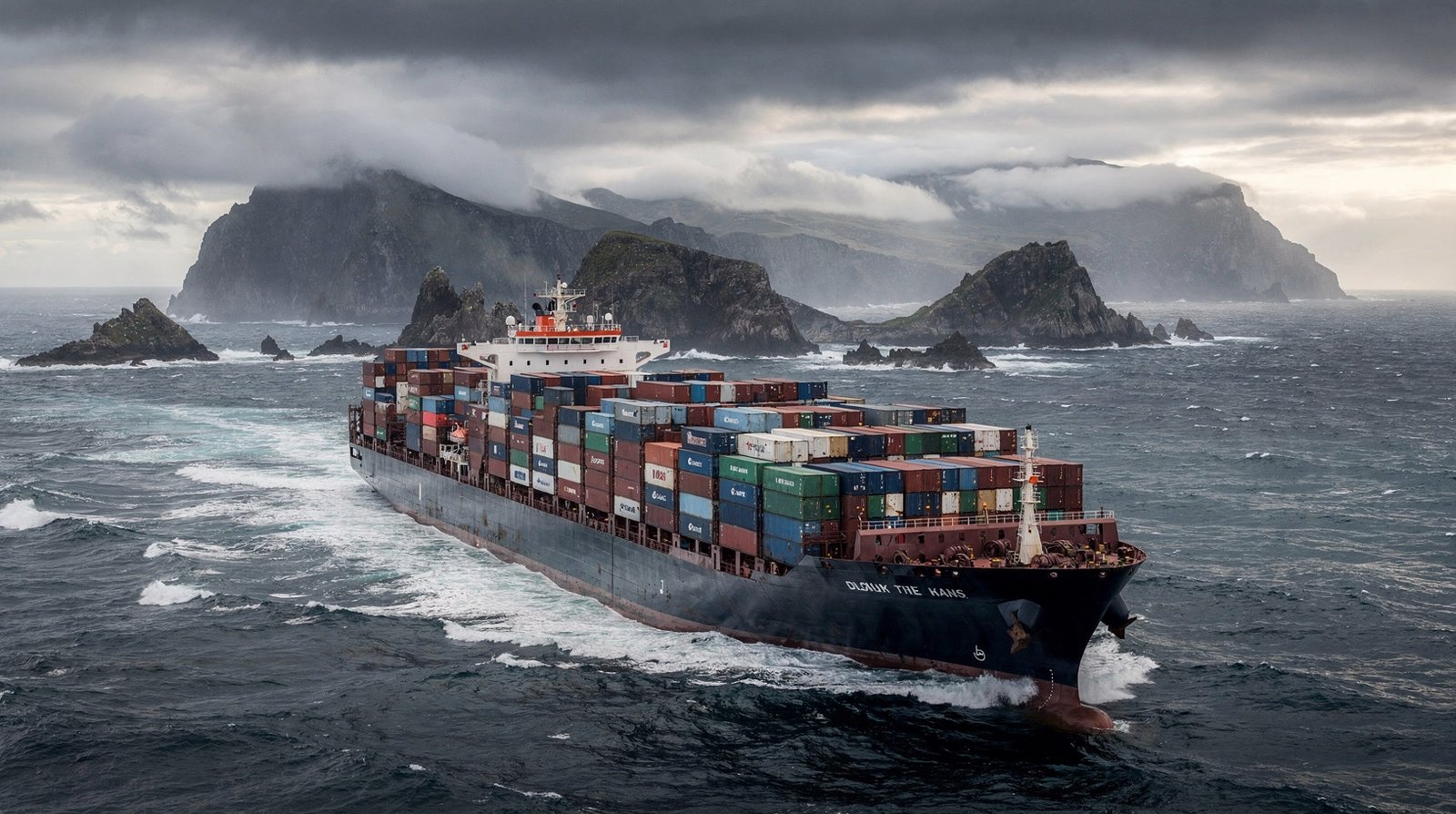
If you want to understand why rates in 2026 are well above their 2023 lows without reaching for a conspiracy, start with geography. The Suez Canal remains open, but Suez Canal Authority data shows transit volumes down by 50 to 60 percent year on year since 2024, as carriers divert around the Cape of Good Hope to avoid attacks on shipping in the Red Sea. That detour adds close to 11,000 nautical miles and as much as 10 to 14 days to an Asia to Europe voyage. Industry estimates put Asia to Europe rates 25 to 40 percent higher than they would be without the crisis, because longer voyages absorb ships and effectively shrink available capacity.
The situation remained unsettled through 2026. On 8 June 2026 the Houthi movement restated a broad ban on shipping it deemed linked to Israel. CMA CGM resumed limited Red Sea transits with naval escort, while Maersk, Hapag-Lloyd, and MSC largely kept their main loops on the Cape route. On 6 July 2026, Maersk and Hapag-Lloyd agreed to resume the Suez Canal for one service within their Gemini Cooperation. Most analysts expect diversions to continue in some form into 2027. For anyone budgeting the cost of shipping from China to Europe, the Red Sea premium is the single largest reason today’s number is not back at pre-crisis levels. Our report on how ocean freight rates have been cooling ahead of the July tariff deadline covers the near-term swings in more detail.
What it means for retailers and shoppers
Ocean freight is a real input into the landed cost of almost every imported product, so this volatility is not an abstract shipping story. When a container that cost 1,500 dollars to move suddenly costs 8,000, that difference has to go somewhere, into thinner margins, higher shelf prices, or both. UNCTAD explicitly linked the 2021 to 2022 freight surge to higher consumer prices worldwide. For smaller importers with less buying power, the swings are hardest to absorb.
There is no way for an individual retailer to change the structure of the shipping market, but there are practical ways to reduce exposure to it.
- Blend contract and spot. Long-term contracts smooth out spikes, while some spot exposure captures the lows. Relying wholly on either is riskier.
- Use index-linked rates where possible. Tying part of a contract to a public index reduces the chance of paying far above or below the market for months.
- Diversify sourcing. Strategies described as China plus one, nearshoring, or dual sourcing shorten some supply lines and cut dependence on a single long ocean lane.
- Book early and watch the calendar. Capacity tightens predictably around events such as Golden Week, so early booking protects space and price.
- Track trade policy alongside freight. Duties and low-value parcel rules can move landed cost as much as the ocean rate. Our coverage of the EU crackdown on low-value imports shows how quickly the rules are shifting.
The bottom line
The cost of shipping from China to Europe is set by a small group of very large carriers operating in a concentrated, alliance-woven market, on top of a base of supply, demand, and disruption. That structure gives the leading lines meaningful pricing power, and shippers are right to scrutinise how it is used. But the public record from regulators, on both sides of the Atlantic, is about transparency, oversight, and removing old exemptions, not about proven price-fixing by these carriers. The honest summary is that this is a market with real power imbalances and real external shocks, watched closely by competition authorities, where the loudest word, manipulation, is easier to allege than to prove.
Is shipping from China to Europe a monopoly?
No. It is an oligopoly. The largest carrier, MSC, held around 21.5 percent of global capacity in 2026, and the top three carriers together controlled more than 45 percent. No single company sets the price alone, but a small group of large carriers accounts for most of the market.
Why did shipping rates rise again in 2024 to 2026?
The main reason is the diversion of ships away from the Red Sea. With most carriers routing around the Cape of Good Hope, voyages between Asia and Europe grew by close to 11,000 nautical miles and up to 10 to 14 days, which ties up capacity and pushes rates 25 to 40 percent above where they would otherwise sit.
Has price-fixing been proven against the big carriers?
No such finding is on the public record for these carriers. The European Commission’s 2016 case on price announcements ended with binding commitments and no established breach of competition law. Complaints filed with the US Federal Maritime Commission during the pandemic were allegations by shippers. Regulators have focused on transparency and oversight rather than proven collusion.
What can a small importer do about volatile freight costs?
Blend long-term contracts with some spot exposure, use index-linked rates where possible, diversify sourcing to shorten some supply lines, book early around known peaks, and track duties and parcel rules alongside the ocean rate, since trade policy can move landed cost as much as freight.