
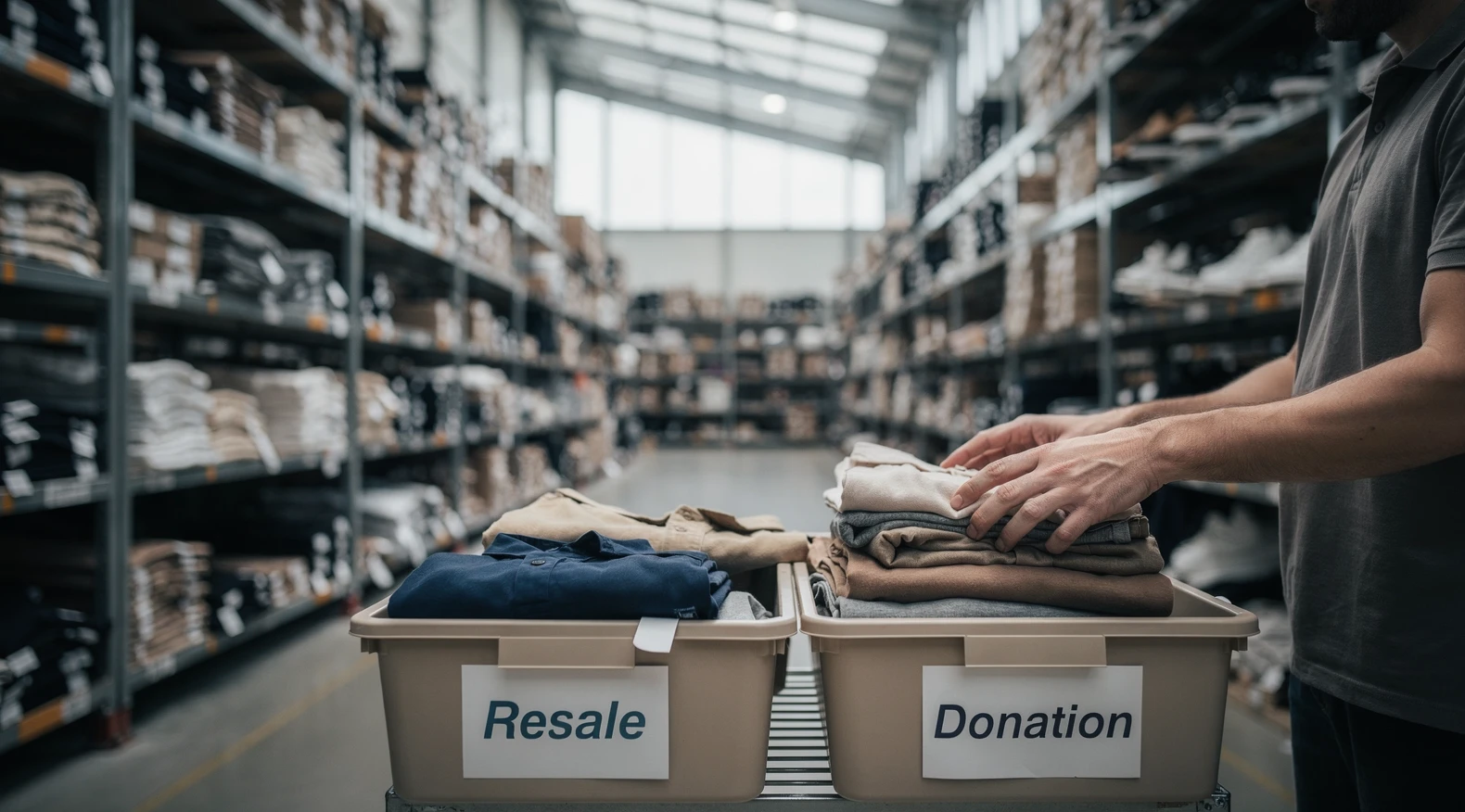
A rule that fashion executives have watched approach for two years became binding law across the European Union on July 19, 2026. From that date, large companies operating in the bloc are prohibited from destroying unsold clothes, clothing accessories and footwear, a practice that quietly consumed hundreds of thousands of tonnes of new product every year. The measure lands under the Ecodesign for Sustainable Products Regulation (ESPR), the framework the EU adopted in 2024 to reshape how goods are made, sold and disposed of.
The ban is narrow in its immediate reach and sweeping in its symbolism. It targets only large firms for now, leaving medium-sized companies until 2030 and exempting the smallest businesses entirely. Yet it marks the first time a single product category has been carved out of ESPR for hard prohibition, and it puts the entire apparel supply chain, from ultra-fast-fashion marketplaces to luxury houses, on notice that overproduction now carries a legal cost.
In short
- What changed: From July 19, 2026, large EU companies may no longer destroy unsold clothes, accessories and footwear, and must resell, donate, repair or recycle them instead.
- Who is covered: Large firms comply now, medium-sized companies from 2030, and small and micro-businesses are exempt from the ban and its reporting duties.
- The scale: An estimated 4% to 9% of textiles placed on the EU market are destroyed before use, between 264,000 and 594,000 tonnes a year, tied to roughly 5.6 million tonnes of CO2.
- The catch: Destruction is still allowed for unsafe, damaged, counterfeit or IP-infringing goods, and the annual disclosure rule may prove harder to game than the ban itself.
- Why now: France banned the practice in 2022, Burberry’s 2018 incineration scandal forced the issue, and the EU is using textiles as the test case for its wider circular-economy push.
What the EU actually changed on July 19
The prohibition is direct: a large company can no longer send unsold apparel, clothing accessories or footwear to landfill or incineration as a routine inventory decision. The European Commission frames the rule as a duty to keep products in use, ranked in a strict order of preference. Selling the goods, including through discounts or secondary markets, comes first, followed by donation to charities or social enterprises, then preparation for reuse through repair, refurbishment or remanufacturing.
Only when none of those routes is available may a product be destroyed, and even then the disposal must follow the EU waste hierarchy that prioritises recycling over incineration or landfill. In practice this reverses the default that has governed unsold stock for decades. For years, quietly writing off surplus was often the cheapest and most brand-safe option, particularly for premium labels wary of discounting. The regulation removes that option as a first resort and forces companies to build a paper trail proving they tried the alternatives.
According to the European Commission’s environment directorate, the measure is one of the first concrete obligations to flow from ESPR, and textiles were chosen deliberately as the opening category. The sector combines high volumes, short product cycles and visible environmental harm, which makes it both an obvious target and a proof of concept for rules the EU intends to extend to other goods.
Who must comply now, and who gets more time
The timeline is staggered by company size, and that structure is central to how the ban will bite. Large companies, defined under EU thresholds as those with more than 250 employees and turnover above the set ceilings, are covered from July 19, 2026. Medium-sized enterprises get a four-year grace period and fall under the same prohibition from 2030. Small and micro-businesses are exempt from both the destruction ban and the associated reporting obligations.
That phasing has a clear logic and an obvious gap. It concentrates the immediate burden on the groups with the deepest compliance resources, the large retailers and brand owners that can absorb new processes. It also means a large share of the fast-fashion and marketplace ecosystem, built on networks of smaller third-party sellers, sits outside the rule for now. Regulators are betting that pressure on the largest players will pull the rest of the supply chain along, but the exemption leaves room for volume to migrate toward entities the ban does not yet reach.
How the thresholds map to real businesses
For a global apparel group with EU operations, there is no ambiguity: the ban applies today. The harder cases are the mid-tier brands and the platform sellers whose corporate structures blur the line between medium and large. Legal advisers have spent 2026 helping clients classify their EU entities, because the size test determines whether a company faces obligations now or in 2030. The classification also shapes procurement decisions, since a brand near the threshold may restructure sourcing to stay under it.
The exceptions: when destruction is still allowed
The ban is not absolute, and the exceptions are where compliance teams will focus. A company may still destroy unsold clothing or footwear when the items are unsafe or damaged beyond repair, when they are counterfeit or infringe intellectual property rights, or when they have been offered to charities or reuse schemes and rejected. Health and safety grounds, such as contamination, also permit disposal.
Each exemption carries an evidentiary condition. A firm cannot simply assert that goods were damaged or unwanted. It must be able to produce documentation, and in some cases test results, to justify the decision if a national authority asks. This is the mechanism the EU is relying on to stop the exceptions from swallowing the rule. The concern among campaigners is familiar from other waste laws: a broad category like “damaged” or “rejected by charities” can become a convenient label for stock a company simply overproduced.
The counterfeit and IP exemption is particularly relevant to marketplaces and luxury brands alike. Platforms routinely seize and dispose of infringing goods, and rights holders destroy counterfeits to protect brand integrity. Those flows remain lawful, but the reporting duty means even permitted destruction now leaves a record.
The reporting rule that may matter more than the ban
Beneath the headline prohibition sits a disclosure regime that several analysts consider the more consequential change. Companies that rely on an exemption must document it, publish annual information on the volume and type of goods they discard and the reasons for disposal, and retain records for five years for inspection. National authorities carry out compliance checks and can impose fines for breaches. Under the timeline reported by Irish outlet The Journal, the transparency reporting element begins in February 2027. For how mandatory disclosure duties fit the wider reporting framework, see our guide to retail sustainability reporting.
Transparency is the lever because destruction has always thrived on opacity. Burberry’s incineration only became a scandal because it surfaced in an annual report; most write-offs never reach public view. Forcing large firms to publish what they discard, and why, hands regulators, competitors, investors and journalists a dataset that did not previously exist. Over time that visibility could pressure overproduction more effectively than the ban’s direct prohibition, because it turns waste into a reputational and comparative metric rather than a hidden line item.
The reporting also uses existing customs and logistics codes rather than a bespoke system, which lowers the administrative barrier and makes cross-border comparison feasible. For retailers already navigating a thickening stack of EU compliance duties, from packaging rules to digital labelling, the textile disclosure slots into a broader trend. Our overview of the retail compliance stack taking shape in 2026 traces how these individual mandates are converging into a single operational burden.
Why textiles were chosen first
The EU did not pick apparel at random. The sector’s waste profile is unusually stark, and the numbers give the regulation its justification. According to the European Environment Agency, between 4% and 9% of all textile products placed on the European market are destroyed before ever being used. That translates to an estimated 264,000 to 594,000 tonnes of textiles discarded each year across the bloc.
The climate arithmetic is what elevated the issue from waste management to policy priority. The destruction of unsold textiles is associated with roughly 5.6 million tonnes of CO2 emissions annually, a figure campaigners have compared to the total net emissions of an entire small country. Every incinerated garment represents not only wasted material but the water, energy and labour embedded in producing something that was never worn.
The overproduction engine behind the numbers
Those volumes are a symptom of a business model built on speed and surplus. Fast-fashion cycles depend on flooding the market with options, accepting that a meaningful share will not sell. Returns compound the problem, since a returned garment is often cheaper to destroy than to inspect, repackage and relist. The economics of newness, in which last season’s stock threatens the pricing of this season’s, gave brands a quiet incentive to make surplus disappear. The EU’s wager is that removing the disposal exit forces a rethink of how much gets produced in the first place.
| Metric | Estimate | Source basis |
|---|---|---|
| Share of EU textiles destroyed before use | 4% to 9% | European Environment Agency |
| Annual tonnage destroyed | 264,000 to 594,000 tonnes | EU market estimates |
| Associated CO2 emissions | ~5.6 million tonnes/year | EU environment analysis |
| Large-company compliance date | 19 July 2026 | ESPR delegated act |
| Medium-company compliance date | 2030 | ESPR delegated act |
| Record-keeping period | 5 years | ESPR reporting rules |
The Burberry moment and how France got here first
The road to July 19 runs through a 2018 disclosure that embarrassed the luxury industry. Burberry’s annual report that year revealed the company had destroyed roughly £28.6 million (about USD 38 million at the time) of finished products, including ready-to-wear and accessories, to protect its brand from discounting and counterfeiting. The revelation crystallised a practice the sector had long treated as routine and turned it into a public liability. Burberry pledged to stop soon after, but the reputational damage lingered across luxury.
France moved first to legislate. Under its Anti-Waste and Circular Economy law, known by the French acronym AGEC, the country banned the destruction of unsold non-food goods, with the rules for products already covered by extended producer responsibility schemes, including clothing and shoes, taking effect on January 1, 2022. Other categories followed by the end of 2023. AGEC made France the first country in the world to prohibit the practice outright, and it became the template European regulators pointed to when building the EU-wide version.
From national experiment to bloc-wide rule
The EU measure generalises the French approach across 27 member states, closing the gap that let brands shift disposal to jurisdictions without a ban. That harmonisation matters for companies that operate warehouses and returns hubs in multiple countries, because it removes the option of routing surplus to the most permissive location. It also reflects a pattern in EU retail policy, where a national law proves a concept before the bloc adopts a common standard.
Why luxury felt the heat earliest
Luxury houses face a specific tension the ban sharpens. Their business depends on scarcity and price integrity, which historically made destruction preferable to letting pristine goods leak into discount channels. The rules now force those brands to find reuse or donation routes that do not undercut their positioning, a genuinely hard problem for labels whose value rests on exclusivity. The scrutiny that followed Burberry has since touched other premium names, and the sector enters the new regime with the most to lose reputationally if its disclosures reveal large write-offs.
Fast fashion versus luxury: two different pressures
The ban applies uniformly, but its impact splits along the fault line between volume and value. For fast fashion and marketplace-driven retail, the pressure is about scale. These businesses generate surplus by design, and the rule attacks the disposal end of a model built on overproduction and high return rates. The challenge is logistical and financial: what does a company do with millions of unsold or returned units when incineration is off the table and resale risks cannibalising full-price sales.
The regulatory squeeze on fast fashion is not arriving in isolation. Cross-border platforms already face a tightening web of EU rules on customs, product safety and environmental disclosure, pressure visible in how Shein’s valuation has come under strain as the EU crackdown bites. A destruction ban adds a further cost to a business model that European regulators have made a clear target. The same forces have created an opening for domestic sustainable brands, with players like the made-in-France label profiled in our coverage of Le Slip Francais listing on Euronext positioning circularity as a competitive advantage rather than a compliance chore.
For mass-market incumbents, the operational reset is real. Zara owner Inditex and its fast-fashion peers run some of the largest inventory pipelines in the world, and even modest destruction rates translate into significant volumes under the new disclosure lens. Groups already investing in tighter inventory control for margin reasons now find that discipline has become a regulatory necessity as well.
The resale and recommerce opening
The clearest beneficiary of the ban is the reuse economy. By forcing resale and donation ahead of disposal, the rule channels volume toward secondary markets, repair services and recycling infrastructure. That aligns with a market already consolidating, a trend we examine in our analysis of recommerce consolidation accelerating through 2026. Off-price retailers, resale platforms and textile recyclers stand to absorb inventory that brands can no longer quietly destroy, though the infrastructure to process these volumes at scale remains uneven across Europe.
The luxury balancing act
Premium brands must square the ban with their reluctance to discount. Options include controlled reuse, employee sales, structured donation to social enterprises, and material recycling that dismantles a product beyond recognition so it cannot resurface as grey-market stock. Burberry’s own recovery from the 2018 episode, alongside its more recent trading updates covered in our report on Burberry’s quarterly sales returning to growth, illustrates how a house can rebuild after a waste scandal while still protecting price positioning.
Will the ban actually change behaviour?
Skepticism is widespread, and it centres on enforcement. Because each member state polices compliance and sets its own penalty levels, the regime risks uneven application across the bloc. Some national authorities have not yet clarified how large fines will be, which leaves companies guessing at the real cost of non-compliance in the near term.
Critics argue that fines alone will not shift a profitable model. Theo Dillon of the Environmental Forum told The Journal that penalties are unlikely to deter large firms, warning that a company “will just pay the fines and put the price back on the consumer.” His view is that only structural consequences, closer to how food-safety violations can shut a business down, would force genuine change. That is a high bar, and few expect regulators to wield it against major employers.
Sustainability consultant Pat Kane of Antaris offered a more measured read, questioning whether authorities would realistically move to “take down” a major fast-fashion retailer over disposal breaches. Kane suggested reputational damage may matter more than fines, while cautioning that consumers display an “attitude-values gap” in which stated ethics rarely override price at the point of purchase. His conclusion is that lasting change requires making waste expensive for companies first, rather than relying on shopper conscience to do the work.
The loophole watchers are watching
The specific fear is displacement rather than reduction. If destruction is banned but demand discipline does not follow, surplus could move through less visible channels, exported to markets outside the EU, funnelled through liberal readings of the exemptions, or pushed onto smaller entities the rule does not yet cover. Campaigners argue that without a cap on overproduction itself, the ban treats the symptom rather than the cause. The reporting requirement is the main safeguard against quiet workarounds, which is why its February 2027 start and its enforcement will be watched closely.
What retailers should do now
For compliance teams, the ban converts a discretionary inventory practice into a documented process. The immediate priorities are clear. Companies need to map their unsold and returned goods flows, establish resale, donation and recycling partners before surplus accumulates, and build the record-keeping systems that will support the annual disclosures due from 2027. Firms relying on any exemption must be able to evidence it, which means capturing the reason for disposal at the moment the decision is made rather than reconstructing it later.
The strategic response runs deeper than paperwork. Because destruction is no longer a cheap release valve, the pressure shifts upstream to how much a brand produces and how it manages returns. Tighter demand forecasting, smaller initial production runs, more responsive replenishment and better returns triage all reduce the surplus that would otherwise trigger the ban’s obligations. In that sense the rule rewards the operational discipline that leading retailers have pursued for margin reasons anyway.
| Disposal route | Status under the ban | Condition |
|---|---|---|
| Resale (including discount, off-price, secondary markets) | Preferred | First option in the hierarchy |
| Donation to charities or social enterprises | Preferred | Second option |
| Repair, refurbishment, remanufacture for reuse | Preferred | Third option |
| Recycling | Allowed | Only if reuse routes exhausted |
| Incineration or landfill of saleable goods | Banned | Not permitted for large firms |
| Destruction of unsafe, damaged, counterfeit or rejected goods | Permitted | Requires documented justification |
What comes next for ESPR and the wider agenda
July 19 is a milestone, not an endpoint. The textile destruction ban is an early delegated act under ESPR, and the Commission has signalled that other product categories could face similar prohibitions as the framework matures. The regulation also underpins the forthcoming Digital Product Passport, a system that will attach detailed sustainability and material data to individual products, giving regulators and consumers a granular view of what they buy and how it can be reused or recycled.
The next inflection points are already visible on the calendar. The transparency reporting obligation begins in February 2027, medium-sized companies enter the ban in 2030, and the Digital Product Passport rollout will layer further data duties on top. For retailers, the direction of travel is unmistakable: overproduction, opacity and disposable inventory are becoming liabilities the EU intends to price into the cost of doing business. The companies that treat July 19 as the start of a structural shift, rather than a single compliance date, will be better placed as the rest of the framework arrives.
Enforcement will ultimately decide whether the ban reshapes the industry or joins the list of well-intentioned rules that changed reporting more than behaviour. The regulation’s design, pairing a prohibition with a disclosure trail, is a deliberate attempt to avoid that fate. Whether it succeeds depends on national authorities applying real penalties and on whether the newfound visibility into fashion’s waste finally makes overproduction a cost that boards can no longer ignore. Readers can consult the European Commission’s official notice for the primary text.
Frequently asked questions
What exactly does the EU ban prohibit from July 19, 2026?
It bars large companies operating in the EU from destroying unsold clothes, clothing accessories and footwear. Instead, those goods must be kept in use through resale, donation, repair, refurbishment, remanufacture or, as a last resort, recycling. Straightforward disposal of saleable stock by incineration or landfill is no longer permitted for large firms.
Which companies have to comply, and which are exempt?
Large companies are covered from July 19, 2026. Medium-sized enterprises fall under the same rules from 2030, giving them a four-year transition. Small and micro-businesses are exempt from both the destruction ban and the associated reporting requirements.
Can companies still destroy any unsold goods?
Yes, but only in defined cases. Destruction remains permitted for items that are unsafe or damaged beyond repair, counterfeit or infringing intellectual property rights, or that have been offered to charities or reuse schemes and rejected. Firms relying on these exemptions must document and justify each decision.
How much textile waste is involved?
The European Environment Agency estimates that between 4% and 9% of textile products placed on the EU market are destroyed before use. That equates to roughly 264,000 to 594,000 tonnes a year, associated with around 5.6 million tonnes of CO2 emissions.
What are the reporting requirements?
Companies must publish annual information on the goods they discard and the reasons for disposal, and keep supporting records for five years for inspection by national authorities. According to reporting by The Journal, the transparency reporting element begins in February 2027. Many analysts see this disclosure duty as more consequential than the ban itself.
What penalties apply for breaking the rules?
Enforcement is handled by each EU member state, which conducts compliance checks and can impose fines. Penalty levels vary by country, and some national authorities have not yet finalised how large those fines will be. Critics argue that fines alone may not deter large firms without stronger structural consequences.
How does this relate to France’s existing law?
France was the first country to ban the destruction of unsold non-food goods under its Anti-Waste and Circular Economy law, with clothing and shoes covered from January 1, 2022. The EU measure generalises that national approach across all 27 member states, closing the gap that let brands route surplus to jurisdictions without a ban.
Which parts of the industry are most affected?
Fast fashion and marketplace retail face pressure on the scale of surplus their models generate, while luxury houses must find reuse routes that do not undercut brand exclusivity. The luxury sector has been under scrutiny since Burberry disclosed in 2018 that it had destroyed about £28.6 million (roughly USD 38 million) of stock.
What is coming next under ESPR?
The textile ban is an early act under the Ecodesign for Sustainable Products Regulation. The Commission may extend similar prohibitions to other product categories, the transparency reporting starts in 2027, medium-sized firms join in 2030, and the Digital Product Passport will add detailed product-level sustainability data over the coming years.