
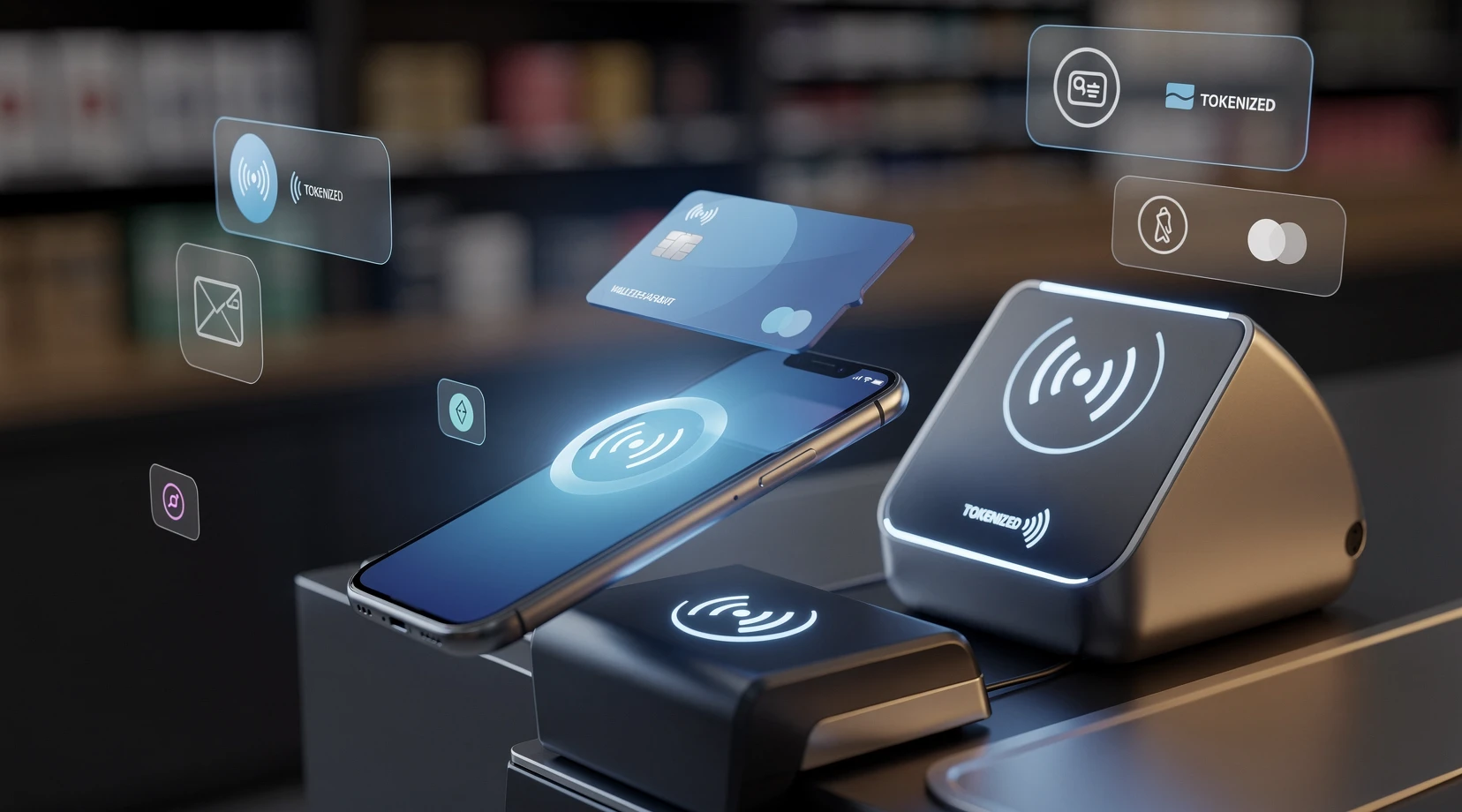
Digital wallets have quietly become the default payment surface for a large share of US retail and e-commerce checkouts, and the gap between merchants who treat them as a first-class option and those who bolt them on as an afterthought now shows up directly in conversion rate. A wallet is not just a faster way to type a card number. It removes the single most fragile moment in the funnel, the manual entry of payment and shipping details on a small screen, and replaces it with a biometric tap. For retailers chasing every basis point of checkout conversion in 2026, wallets are no longer a nice extra. They are the part of the stack where small configuration choices produce outsized revenue swings.
This guide is written for retail and e-commerce teams who own the checkout experience: heads of payments, conversion rate optimization leads, product managers and the founders who still read their own funnel reports. It explains what digital wallets actually do to conversion, how to measure the lift honestly, where teams lose money through avoidable mistakes, and what a realistic 90-day improvement plan looks like.
In short
- Digital wallets lift conversion mainly by removing friction, not by adding a payment method. The biggest gains come from express buttons that skip manual data entry on mobile, where abandonment is highest.
- Mobile is where the money is. Phone checkout converts far below desktop for most retailers, and a well-placed wallet button on the product and cart pages is the single highest-leverage fix for that gap.
- Placement beats presence. Offering Apple Pay or Google Pay only on the final payment step captures a fraction of the available lift. Express checkout entry points on product, cart and mini-cart pages drive the real numbers.
- Measure with a clean test. Wallet impact is easy to overstate. Use a controlled experiment or a stable cohort baseline, segment by device, and watch refund and dispute rates alongside conversion.
- The 90-day play is concrete: enable two or three wallets, add express buttons upstream, fix the data that wallets pass back, and instrument every step so you can prove the lift to finance.
Why digital wallets and conversion are inseparable in 2026
Checkout is where intent meets friction. A shopper who has decided to buy can still abandon a cart because the form is long, the keyboard keeps covering the field, or the card is in another room. Digital wallets attack exactly that gap. They store payment credentials, shipping addresses and contact details behind a device-level authentication, so the buyer confirms with a fingerprint or face scan instead of typing sixteen digits plus an expiry and a security code.
The structural shift in 2026 is that wallet usage is now the expectation rather than the exception for a meaningful slice of shoppers, especially on phones. When a returning customer sees a familiar express button, the decision to buy and the act of paying collapse into a single tap. That compression is the entire conversion story. Every extra field, redirect or moment of doubt between the add-to-cart and the confirmation screen is a place where revenue leaks, and wallets seal several of those leaks at once.
There is also a trust dimension. A recognizable wallet brand signals that the payment will be handled by a system the shopper already uses elsewhere, which lowers the perceived risk of entering a brand-new merchant relationship. For a first-time buyer who has never heard of your store, the presence of a trusted wallet can be the difference between completing and bouncing. The conversion gain is part mechanical, part psychological, and both parts compound on mobile.
Key terms and definitions
Before measuring anything, teams need a shared vocabulary, because the word wallet covers several different products that behave differently at checkout. A digital wallet in the broadest sense is any software that stores payment and identity credentials, but the conversion impact depends entirely on which type you mean.
A pass-through wallet stores card credentials and presents them at checkout. Apple Pay, Google Pay and Click to Pay fall here. The underlying money still moves over the card networks, so economics and chargeback rules look like a normal card transaction. These are the wallets most directly tied to conversion lift because they remove data entry without changing how funds settle.
A staged or stored-value wallet holds a balance or links to a funding source and acts as an intermediary. PayPal is the familiar example, often combining a stored balance, linked cards and bank funding. Buyers may treat it as a payment method and a trust mark at once.
An account-to-account wallet moves money directly between bank accounts rather than over card rails. Pay-by-bank options sit here, and they matter for cost more than for raw conversion today. We cover the trade-offs in our deeper look at whether account-to-account payments will reach retail, because the conversion case differs sharply from the card-backed wallets.
An express checkout button is the entry point that launches a wallet flow from outside the standard checkout, for example a black Apple Pay button on a product page. The button is not the wallet itself, it is the placement, and placement is where most conversion gains are won or lost.
Conversion metrics that actually matter
Checkout conversion rate is the share of sessions that reach a completed order, but that headline number hides the detail teams need. Track checkout start rate, the share of carts that begin checkout, and checkout completion rate, the share of started checkouts that finish. Wallets move both, but in different ways: express buttons raise checkout starts, while wallet authentication raises completion.
Segment everything by device. A blended conversion number that mixes desktop and mobile will mask the exact place where wallets help most. The whole argument for wallets rests on the mobile gap, so a measurement model that cannot see device is measuring blind.
One more metric deserves a permanent place on the dashboard: time to purchase. Wallets compress the gap between add-to-cart and confirmation, and a falling median time to purchase on mobile is an early signal that the wallet flow is working even before the conversion number stabilizes. Treat it as a leading indicator while the slower conversion figure accumulates enough orders to read with confidence.
How digital wallets lift conversion in practice
The practical mechanism is friction removal across four checkout moments. First, identity: the wallet already knows who the shopper is, so there is no account creation hurdle. Second, address: shipping and billing details auto-populate, eliminating the longest form on mobile. Third, payment: card data is tokenized and presented without typing. Fourth, authentication: a biometric confirms intent in under a second, replacing the awkward dance of finding a card and copying a code.
Each removed step recovers a slice of would-be abandoners. The effect is non-linear because friction compounds. A shopper who would tolerate one annoying field may abandon at the third, so removing several at once recovers more than the sum of removing each alone. This is why wallets outperform incremental form optimization on mobile: they delete the form rather than shorten it.
Why placement decides the outcome
The most common and most expensive mistake is treating wallets as a payment option that appears only on the final step. By then the shopper has already navigated the cart, started checkout and possibly typed an email. The express button belongs upstream: on the product page for high-intent single-item buys, on the cart and mini-cart for multi-item baskets, and on the checkout page as a top-of-form shortcut.
Upstream placement converts impulse into purchase before doubt creeps in. A product-page Apple Pay button lets a returning customer buy in two taps without ever seeing a form. That is the flow that produces the headline lift numbers vendors quote, and it is impossible to capture if the wallet only appears at the end. The same logic underpins our guidance on fixing mobile commerce conversion at the retail checkout, where button placement and form removal carry most of the gain.
What wallets do not fix
Wallets accelerate a decision the shopper has already made. They do not repair a weak value proposition, a confusing product page, surprise shipping costs revealed late, or an out-of-stock surprise. If the abandonment is caused by price or trust rather than friction, a wallet will not save the sale. Diagnose the reason before assuming a wallet button is the answer, because installing express checkout on a funnel that leaks for other reasons produces a disappointing result and a wrong conclusion about wallets.
The numbers: measuring wallet impact honestly
Wallet conversion claims are easy to inflate. The buyers who tap an express button are often your most loyal, highest-intent customers, so a naive before-and-after comparison credits the wallet with sales that would have closed anyway. Clean measurement separates the genuine lift from selection bias.
The gold standard is a controlled experiment: randomly assign sessions to a variant with the express button placed upstream and a control without it, then compare completed-order rates over a window long enough to clear weekly seasonality. Where a true split is impractical, use a stable cohort baseline, hold other checkout changes constant, and segment tightly by device and new-versus-returning status.
| Metric | What it tells you | Trap to avoid |
|---|---|---|
| Mobile checkout completion rate | Whether wallets close the device gap | Reading a blended number that hides mobile |
| Express button tap rate | Demand for the upstream shortcut | Counting taps as conversions |
| Wallet share of completed orders | Adoption and reliance | Assuming share equals incremental lift |
| Incremental lift versus control | The true causal effect | Crediting loyal buyers’ baseline purchases |
| Refund and dispute rate by method | Whether speed invites bad orders | Watching conversion alone |
Always pair conversion with downstream quality. A wallet that lifts completion but raises refunds or disputes can erode margin faster than it adds revenue. Track refund rate and dispute rate by payment method, and read the conversion gain net of those costs. A faster checkout that also imports more buyer’s remorse is a different decision than a clean lift, and only the net figure should reach finance.
Sample size discipline matters as much as method. Mobile checkout volume can look large in aggregate while the per-variant cell that actually matters stays thin, especially once you slice by new versus returning. Resist calling a winner after a few good days. A lift that looks dramatic on a small sample often regresses toward a modest, still-worthwhile number once the test runs long enough, and the modest number is the one to plan budgets around.
Wallets, fees and the margin trade-off
Conversion is only half the equation. Every payment method carries an acceptance cost, and the wallet that converts best is not always the cheapest to run. Card-backed wallets settle over the same networks as a typed card, so their headline cost resembles a standard card transaction, while account-to-account rails can undercut that cost on large baskets but convert less reliably today.
The right frame is contribution per checkout, not conversion rate in isolation. A method that lifts completion by a few points while costing slightly more per order can still win on total contribution, because the extra completed orders outweigh the higher unit fee. The opposite can also be true for thin-margin categories, where a small fee difference swings the decision. Model both effects together rather than optimizing conversion and cost on separate spreadsheets.
Fraud and disputes belong in the same model. Tokenized wallets generally carry lower fraud than manually keyed cards because the credential is device-bound, which can reduce dispute losses and, on card-backed wallets, may improve authorization rates. That quieter benefit rarely shows up in the conversion headline, yet it lands directly on the bottom line, so include authorization rate and fraud cost when you compare methods.
Common mistakes and how to avoid them
Most underwhelming wallet rollouts fail for predictable reasons. The first is the placement error already described: wallets confined to the final step. The fix is to add express entry points on product, cart and mini-cart, then measure the start-rate change separately from completion.
The second mistake is ignoring the data the wallet returns. Wallets pass back a name, address and email chosen by the shopper, which may differ from what your systems expect. If your order, tax or shipping logic cannot accept that payload cleanly, the wallet flow fails silently and the shopper falls back to the long form, erasing the gain. Test every wallet end to end with a real device and a real card, not just in a sandbox.
The third mistake is offering too many wallets. A wall of payment buttons creates choice paralysis and dilutes the visual priority of the methods your audience actually uses. Pick the two or three that match your customer base, usually Apple Pay and Google Pay for a US mobile-heavy audience plus PayPal where trust matters, and present them with clear hierarchy.
Authentication and abandonment
A fourth mistake is mishandling authentication. If a wallet triggers an extra verification step that the shopper does not expect, completion can drop rather than rise. Configure step-up authentication to fire only where risk genuinely warrants it, and monitor the completion rate of authenticated versus non-authenticated wallet sessions so you can see if security settings are quietly costing sales.
Treating wallets as set-and-forget
The final mistake is installing wallets once and never revisiting them. Wallet SDKs update, button guidelines change, and new methods reach critical mass. A quarterly review of wallet share, completion by method and any new options your customers are asking for keeps the checkout aligned with how people actually want to pay.
Examples from US retail and e-commerce
Across US e-commerce the pattern repeats: merchants who move express buttons upstream and trim their wallet set to the few their customers use report the cleanest conversion gains, concentrated on mobile. The exact figures vary by category and basket size, but the direction is consistent enough to plan around. National retail e-commerce continues to take a rising share of total sales, a trend the US Census Bureau e-commerce data tracks each quarter, and that share is increasingly mobile.
High-consideration categories such as electronics and furniture see smaller wallet lifts, because buyers research longer and a tap does not shorten the deliberation. Impulse and replenishment categories, beauty, supplements, apparel basics and consumables, see the largest gains, because the decision is fast and the only thing standing between intent and purchase is the form. Match your expectations to your category before judging the result.
Subscription and repeat-purchase businesses benefit twice. The first wallet purchase is faster, and the stored credential reduces involuntary churn from expired cards when the wallet keeps the underlying card current. For a D2C brand built on repeat orders, that retention effect can outweigh the first-order conversion lift over a customer’s lifetime.
New-customer acquisition is a quieter beneficiary. Paid traffic that lands on a product page from social or search arrives with shallow intent and little patience for a signup form. A product-page express button lets that cold visitor buy in two taps, which improves the return on ad spend that funded the click in the first place. When wallet rollouts are judged only on overall conversion, this acquisition effect often goes uncredited, even though it is where the marketing team feels the gain most directly.
Wallets also intersect with newer payment narratives. Some merchants are testing crypto and stablecoin rails at checkout, though the consumer-facing conversion case there remains thin today, as we explain in our analysis of crypto payments in retail and real adoption versus hype and our look at why stablecoin checkout stays a merchant story rather than a consumer one. For conversion in 2026, card-backed wallets remain the workhorse, and the experimental rails are a cost and treasury play more than a funnel play.
Tools, partners and vendors worth knowing
The wallet you offer and the way you offer it usually depend on your payment service provider and commerce platform. Most modern processors expose Apple Pay, Google Pay and PayPal through a single integration, and most major commerce platforms ship express buttons you can place upstream with configuration rather than custom code.
| Wallet type | Examples | Best conversion use | Watch-out |
|---|---|---|---|
| Pass-through (card-backed) | Apple Pay, Google Pay, Click to Pay | Upstream express buttons on mobile | Needs correct domain and device setup to appear |
| Staged or stored-value | PayPal | Trust mark for new-customer checkout | Redirect flows can add a step on mobile |
| Account-to-account | Pay-by-bank options | Cost reduction on large baskets | Lower familiarity can dampen conversion today |
| Platform-native express | Shop Pay and similar | One-tap repeat purchase within an ecosystem | Ties checkout to a specific platform |
When choosing, weigh four factors: which wallets your customers already use, how cleanly your platform supports upstream placement, the total cost of acceptance per method, and the quality of the test tooling so you can prove the lift. A processor that makes express placement and clean A/B testing easy is worth more to conversion than one with a longer wallet menu. The detailed mechanics of card-backed wallets at the point of sale are covered in our piece on Apple Pay, Google Pay and PayPal at retail checkout.
A 90-day playbook to raise wallet conversion
Turning the theory into measured revenue fits a single quarter. The structure matters: instrument first, then change, then prove.
Days 1 to 30, baseline and enable. Instrument the funnel so you can see checkout start, completion and wallet share by device and customer type. Enable two or three wallets that match your audience. Confirm each one appears correctly on real devices, since misconfiguration often hides Apple Pay or Google Pay entirely.
Days 31 to 60, place and test. Add express buttons on product, cart and mini-cart, then run a controlled test against the previous placement. Hold all other checkout changes constant so the experiment stays clean, and read results by device.
Days 61 to 90, fix and harden. Resolve any data mismatches in what wallets pass back to your order and tax logic. Tune authentication so step-up fires only on genuine risk. Then write up the net lift, conversion minus any refund and dispute cost, in the language finance uses, so the win is funded and repeated rather than forgotten.
Throughout, keep the abandonment diagnosis honest. If the funnel leaks for price or trust reasons, address those in parallel, because a wallet improves the mechanical steps and cannot rescue a checkout that fails on substance.
The discipline that separates a one-off bump from a durable gain is documentation. Record the exact placement, the wallet set, the test design and the net result, so the next person who touches checkout inherits evidence rather than folklore. Wallets are not a single project with a finish line. They are a recurring optimization surface, and the teams that win treat each quarter’s review as another chance to move conversion a few points closer to its ceiling.
Frequently asked questions
Do digital wallets really increase conversion, or is it selection bias?
Both effects are real. Wallets genuinely remove friction on mobile, which lifts completion, but the buyers who use them also skew loyal and high-intent. A controlled test or a clean device-segmented baseline is the only way to separate the true incremental lift from sales that would have closed anyway.
Which wallets should a US retailer offer first?
For a mobile-heavy US audience, start with Apple Pay and Google Pay because they remove the most friction on phones, and add PayPal where new-customer trust matters. Offering more than three usually dilutes hierarchy and creates choice paralysis without adding conversion.
Where should the express checkout button go?
Upstream. Put it on the product page for high-intent single-item buys, on the cart and mini-cart for multi-item baskets, and at the top of the checkout form. Confining wallets to the final payment step captures only a fraction of the available lift.
Can wallets hurt conversion?
Yes, in two ways. A cluttered wall of buttons can cause choice paralysis, and an unexpected step-up authentication can interrupt the flow. Limit the wallet set and configure authentication to trigger only on genuine risk.
How do wallets affect refunds and disputes?
Faster checkout can slightly raise impulse purchases and therefore refunds in some categories. Always read conversion lift net of refund and dispute rate by payment method, so the figure that reaches finance reflects real margin rather than gross orders.
Do account-to-account or pay-by-bank wallets help conversion?
Today they help cost more than conversion, because familiarity is still building. They can lower acceptance fees on large baskets, but the card-backed wallets remain the conversion workhorse for most US retailers in 2026.
How long should a wallet conversion test run?
Long enough to clear weekly seasonality, typically several full weeks, with enough completed orders per variant to reach statistical confidence. Avoid stacking other checkout changes during the test, or you will not know what moved the number.
Will adding wallets fix a high abandonment rate on its own?
Only if the abandonment is caused by checkout friction. Wallets cannot repair surprise shipping costs, a weak value proposition or late stock-outs. Diagnose the real reason first, then apply wallets to the friction they actually solve.
How often should the wallet setup be reviewed?
Quarterly. SDKs update, button guidelines change, and new methods reach critical mass. A short recurring review of wallet share, completion by method and customer requests keeps the checkout aligned with how people want to pay.