
US Customs and Border Protection has started voiding importer of record numbers whose identifying data on CBP Form 5106 does not check out, ending a 30-day countdown that began with a Federal Register notice on August 19, 2026. Enforcement commenced on Friday, September 18, and by Monday the trade press was reporting the first operational consequences: entries that cannot be filed, cargo that cannot clear, and brokers combing client files for addresses, phone numbers and email accounts that never belonged to the importer in the first place.
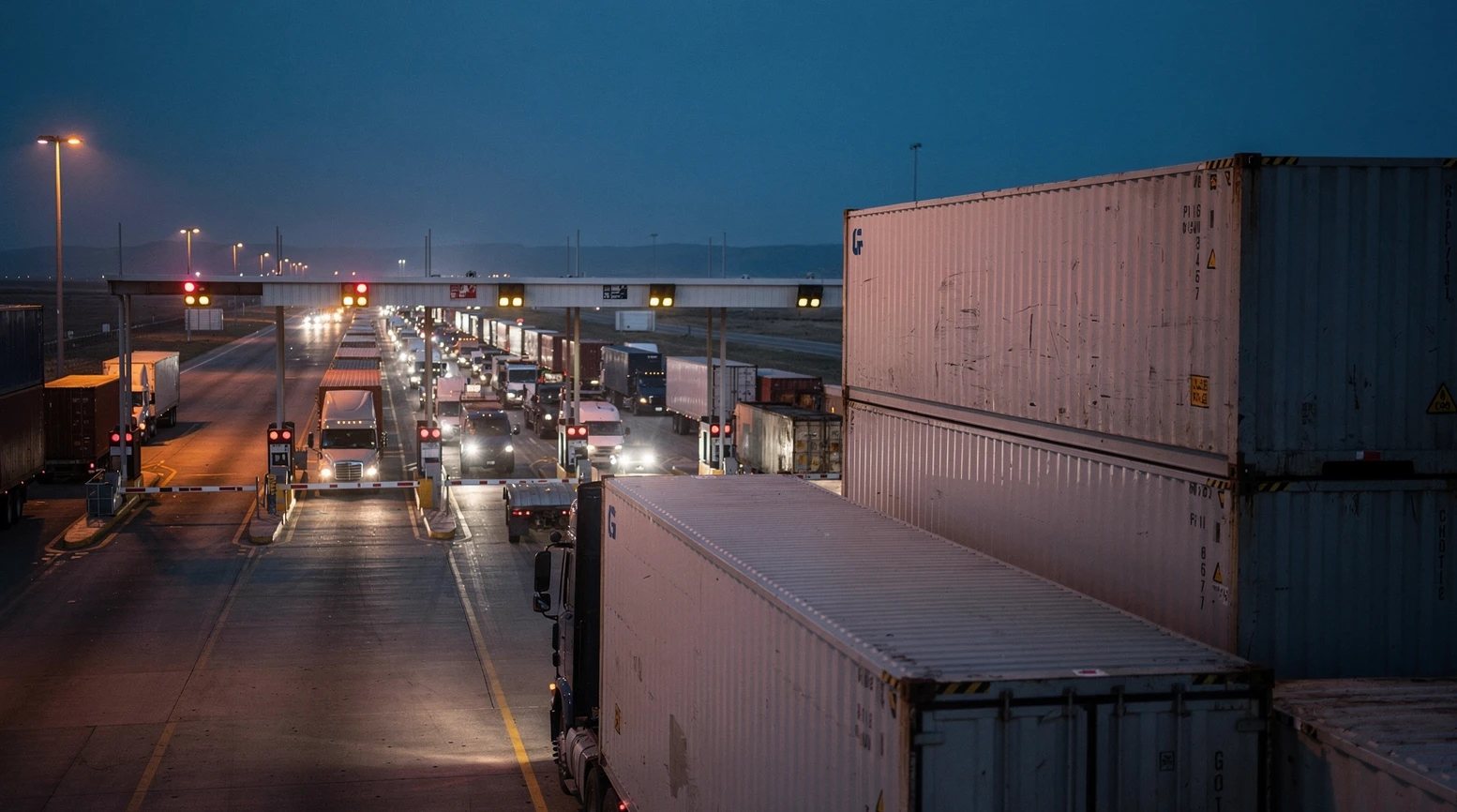
The Journal of Commerce reported on September 18 that CBP had begun purging importers of record under the new policy. FreightWaves followed on September 21 with a warning that thousands of cross-border freight shipments are at risk, with the sharpest exposure on truck lanes from Mexico and Canada where foreign companies routinely act as nonresident importers. CBP has not said how many numbers it has voided so far, and the agency’s notice does not provide for a warning letter or a correction window before a number is cancelled.
For retailers and e-commerce sellers, this is the first enforcement action under Executive Order 14411 that reaches into day-to-day operations rather than the penalty schedule. A voided number is invalid for every purpose, including entry, and the only route back is a written request to CBP with proof of identity. This article sets out what has changed since Friday, who is most exposed, what a voided number does to a shipment already on the water or at the border, and the practical order of operations for getting a number reinstated.
In short
- Enforcement is live. CBP began voiding importer of record (IOR) numbers with inaccurate or incomplete Form 5106 data on September 18, 2026, per the agency’s Federal Register notice of August 19. The Journal of Commerce and FreightWaves both report that the purge has started.
- No grace period. CBP notifies the importer by email after the number is voided, copying the broker that last filed an entry. There is no advance warning and no published timeline for reestablishment.
- Cross-border trucking is the pressure point. FreightWaves reports that nonresident importers on Mexico and Canada lanes, foreign sellers on delivered duty paid terms, and e-commerce sellers using a fulfillment center address are the most exposed groups.
- Voided is not the same as inactive. A separate CBP sweep earlier in 2026 deactivated roughly 4.8 million dormant importer accounts, according to Diaz Trade Law. Inactive numbers can be switched back on through a broker’s ABI message; voided numbers require corroboration of identity and a case with CBP’s IOR program.
- Two CBP changes in one week. The Form 5106 purge began September 18 and CBP’s Entry Type 13 test for mailed low-value goods opens September 22, so importers of small parcels face a new filer and a new identity check at the same time.
What did CBP actually start doing on September 18?
The legal basis has not changed since August. CBP published a general notice at 91 FR 53627 (document 2026-16911) stating that, beginning September 18, 2026, it would void any importer of record number where the information on CBP Form 5106 is inaccurate or incomplete. The notice describes the action as an initial step to implement Executive Order 14411, “Strengthening Customs Enforcement,” which President Trump signed on June 3, 2026. Section 2(e) of that order directs the Department of Homeland Security to confirm that active importers of record comply with all applicable regulations and disclosures.
What changed on Friday is that the consequence attached to a defective record moved from theory to practice. According to the Journal of Commerce, CBP began purging importer of record numbers on the first day of enforcement. FreightWaves reported on Monday that the agency is voiding numbers “immediately” once it determines the identifying data is wrong, and that once voided the number “cannot be used for any purpose,” including clearing goods into the United States.
The review population is the entire registry. CBP said in the notice that it is “comprehensively reviewing” the Form 5106 information on file for importers of record, which places accounts created years or decades ago inside the same net as new applications. The notice is signed by Susan S. Thomas, Executive Assistant Commissioner in the Office of Trade, and names Anita Rivera, Branch Chief of the Revenue Enforcement Branch, as the contact. Questions and reestablishment requests go to IORProgram@cbp.dhs.gov under the subject line “Enforcing IOR Accuracy.”
The six data elements under review
Form 5106 requires six mandatory data elements: the importer’s name; an IRS employer identification number, Social Security number or CBP-assigned number; a mailing address; a physical location address if different from the mailing address; a phone number; and an email address. The notice states that each of these must be accurate and complete, and that each “belongs directly to the IOR.” Optional fields covering business structure, beneficial ownership and company officers are not the trigger, although they are expected to matter under the eligibility rulemaking the executive order still requires.
Three of the six elements carry the specific prohibitions that are now driving the purge. The physical address must be the actual location of the business or individual and “cannot be a registered agent, customs broker, freight forwarder, P.O. box, a business service center, or an address of another person or entity.” The email address and phone number must belong to the importer, and brokers or third parties “may not supply their own” in place of the importer’s. That language is what turns a decade of convenient filing practice into a compliance defect.
Who has been caught in the first wave?
CBP has not published a count, and neither trade outlet cites one. What the reporting does establish is where the voided numbers are concentrated. FreightWaves identifies the exposure as heaviest on cross-border freight moving from Mexico and Canada, “where foreign companies may serve as nonresident importers of record.” A Mexican manufacturer shipping delivered duty paid to a US retailer, or a Canadian brand selling into US distribution, is very often the importer of record on paper while having no US premises of its own. The address on file is the broker’s, the forwarder’s, or a registered agent’s, and all three are now expressly disqualified.
Diaz Trade Law, whose analysis both FreightWaves and the broader trade bar have cited, set out four exposed profiles before enforcement began: “Non-resident importers that listed a U.S. broker’s address because they have no U.S. premises. Delivered duty paid arrangements where the foreign seller is the IOR and the forwarder’s contact details populate the record. E-commerce sellers using a third-party fulfillment center address. Small importers whose accountant or registered agent completed the form years ago and never revisited it.” Each profile maps directly onto a retail supply chain: the DDP supplier, the marketplace seller with inventory in a US 3PL, and the long-tail importer who set up an account once and forgot it.
The scale problem sits with the brokers. As Diaz Trade Law put it, “a brokerage that populated its own address, email, or phone across hundreds of client records has hundreds of potential defects, each of which CBP now treats as unverified information transmitted to the agency.” That framing matters because the notice places a due diligence duty on the broker as well as the importer, and warns that brokers who transmit information they “know or should know is false or misleading, including unverified information” face broker penalties under 19 U.S.C. 1641.
The exposure runs in both directions, which is why brokerages have been contacting clients in bulk since late August, as advisories from C.H. Robinson, Livingston International and others show. The distinction between a freight forwarder and a customs broker is also now a compliance question, since a broker may only act on a power of attorney executed directly with the importer, not one passed through a forwarder.
| Importer profile | Typical Form 5106 defect | Exposure under the September 18 policy | Fix available now |
|---|---|---|---|
| Nonresident importer (Mexico, Canada, Asia) with no US premises | Broker or registered agent address as physical location | High: address is expressly disqualified; no compliant substitute if the company has no US site | Update to actual foreign business address; confirm broker POA is direct |
| Foreign seller on delivered duty paid terms | Forwarder’s phone and email on the record | High: contact data must belong to the IOR | Replace with company-owned contacts; review whether DDP should continue |
| Marketplace or D2C seller using a US 3PL | Fulfillment center listed as physical address | High: a 3PL is a business service address, not the importer’s location | File the seller’s own headquarters address; keep 3PL as ship-to only |
| Small domestic importer with a stale record | Accountant or agent completed the form years ago | Medium: data may be outdated rather than third-party | Broker files corrected 5106 via ABI |
| Large domestic retailer with in-house compliance | Usually none; risk is subsidiaries and acquired entities | Low to medium: check every IOR number in the group, not just the parent | Portfolio audit; consolidate dormant numbers |
What happens to a shipment when the number is voided?
The mechanics are simple and unforgiving. A customs broker files an entry against an importer of record number. If CBP has voided that number, the entry cannot be filed, and the goods remain in customs custody at the port, rail ramp, airport or land border crossing. Nothing in the notice pauses or diverts the cargo; the importer simply loses the ability to make entry until the number is reestablished.
FreightWaves lays out the chain of parties affected: “importers, customs brokers, freight forwarders, trucking companies and warehouses.” A truck held at Laredo or Detroit ties up equipment and a driver; an ocean container that cannot be released begins accruing demurrage at the terminal and per diem on the box; air cargo begins running up storage. Diaz Trade Law warned that importers who did nothing before September 18 would discover the problem “when a broker cannot file an entry, and they will then be negotiating reestablishment with CBP from a position of operational emergency, with cargo accruing costs at the port and no published timeline for resolution.”
The notification process compounds the timing problem. CBP sends written notice of the voiding to the email address most recently submitted on Form 5106. If that address belongs to a broker, a forwarder or a former employee, the importer may never see it. CBP does copy the customs broker that last filed an entry for that importer, which is the one reliable channel, but a nonresident importer that changed brokers or files only occasionally may learn of the voiding from a held shipment rather than from the agency.
Why in-transit cargo is the immediate risk
Neither the notice nor the trade reporting describes a transition rule for goods already moving when the number is voided. Cargo loaded in Asia in late August that arrives in October will be entered against whatever number the broker holds at the time of filing. If that number was voided in September, the entry fails on arrival.
For retailers running peak-season inventory through DDP suppliers or through marketplace sellers with their own IOR numbers, the practical exposure is a container that cannot be cleared in the busiest four weeks of the year. This is the operational risk the agency’s own guidance on importer of record status and customs bonds never had to address, because until September 18 a defective record did not stop entry.
How is a voided number different from an inactive one?
Two separate CBP actions in 2026 are now colliding in broker inboxes, and they have different cures. The first is the deactivation of dormant accounts. Under the same executive order, CBP has been deactivating importer of record numbers that have not been used to file an entry for one or more years and that have no outstanding post-entry transactions.
Diaz Trade Law puts the scale of that sweep at approximately 4.8 million accounts earlier in 2026, and CBP’s own trade notice from July 2026 describes a new ACE status, “Inactive for Entry Purposes,” that blocks entry filings against those numbers. Buckland Customs and other brokers have flagged the status as a filing blocker in its own right.
The second action is the September 18 voiding, which targets accuracy rather than dormancy. An active, frequently used number can be voided if the address, phone or email on file is a third party’s. A dormant number can be inactive without any data defect at all.
The reactivation path for an inactive number is documented in CBP’s CSMS message 69056621: an ABI broker submits a Transaction Processing message with Action Code A to move the status from “20-Inactive” to “10-Active,” transmitting all required Form 5106 data elements with it. Importers who cannot use ABI can email a revised Form 5106 to a Center Entry Specialist Team with “IOR reactivation request” in the subject line, and CBP says reactivation then depends on the Center’s workload.
A voided number has no equivalent automated route. The notice says CBP’s written notice “will include information on how to request reestablishment of the IOR number, including what information must be submitted to CBP to corroborate the identity of the requesting IOR.” In other words, the importer must prove who it is, not just correct a field. That is a materially heavier lift for a foreign company with no US footprint, and it is why the trade bar has been steering clients toward pre-emptive correction rather than reactive reestablishment.
| Status | Trigger | Effect on entry | How to restore | Who acts |
|---|---|---|---|---|
| Inactive (ACE status 20) | No entries filed for one or more years, no open post-entry transactions | Entry filings blocked until reactivated | ABI TP message, Action Code A, with full Form 5106 data; or emailed 5106 to a Center Entry Specialist Team | Customs broker, or importer by email |
| Voided (September 18 policy) | Inaccurate or incomplete Form 5106 data, including third-party address, phone or email | Number invalid for any purpose, including entry | Written request to CBP with corroborating identity information, per the voiding notice; contact IORProgram@cbp.dhs.gov | Importer, or broker with a direct POA |
| Active with defective data (not yet voided) | Third-party contact data still on file | Entries still accepted until CBP reaches the record | Corrected Form 5106 via ABI or by email to the assigned Center of Excellence and Expertise | Customs broker with direct POA |
What does the executive order add beyond the address check?
The Form 5106 purge is the cheapest lever in a much larger program. Executive Order 14411 frames accurate importer identification as a national security and revenue matter, tying it to enforcement of forced labor rules, rules of origin, marking, intellectual property and product safety. The notice states that CBP “is currently taking steps to revise importer eligibility regulations, guidance, and policies” under Section 2 of the order, with further announcements to follow on cbp.gov and in the Federal Register. Livingston International’s summary of the order notes a separate penalty provision setting a floor of at least 50 percent of the assessed penalty, with no mitigation for repeat offenders, which took effect in September, as shopappy covered when CBP’s seizure powers widened on September 1.
The liability language in the August notice is broader than a filing rule. It reminds the certifying party that intentional false statements on Form 5106 carry exposure under 18 U.S.C. 1001, and adds that because importer data “is an important identifier for liability for payment of duties,” inaccurate information “is material to an obligation to pay money to CBP” and could trigger False Claims Act liability under 31 U.S.C. 3729. Clark Hill’s client alert of August 20, authored by Mark Ludwikowski, Kelsey Christensen and R. Kevin Williams, reads the notice the same way: a data hygiene requirement backed by fraud statutes.
The next steps CBP has already signalled
Three further pieces are visible. The first is the importer eligibility rulemaking the order requires, which is expected to address bonding, beneficial ownership and the treatment of foreign importers of record, and which the notice describes as in preparation. The second is the heightened import disclosure proposal CBP published in early September, with a comment period that runs to December 1.
The third is the shift in who files low-value mail entries, which starts this week. Together they describe a registry that CBP intends to know, verify and hold accountable, and the September 18 purge is the sorting mechanism that clears out the records the agency cannot verify before the heavier rules land.
Why does September 22 make this week harder for e-commerce importers?
The timing overlap is not accidental from a compliance point of view, even if the two projects sit in different CBP offices. On September 22, CBP opens its test of Entry Type 13, an electronic informal entry for merchandise valued at $2,500 or less arriving through international mail, which moves the filing from postal operators to customs brokers. shopappy set out the mechanics when CBP scheduled the Entry Type 13 mail test for September 22. The relevant point here is that every one of those entries will be filed against an importer of record number, and a broker filing thousands of small entries for foreign sellers will be doing so against exactly the records the September 18 policy targets.
For a cross-border seller shipping small parcels into the United States by post, the combination is a double change: a new filer that must hold a direct power of attorney, and an identity record that must show the seller’s own address rather than the broker’s or a fulfillment partner’s. Sellers that relied on postal entry never needed a fully verified Form 5106 in practice. From this week, they need one that survives scrutiny, or their broker cannot file Entry Type 13 at all.
The end of the de minimis exemption in 2025 had already pushed many overseas sellers into the formal importer of record system for the first time, often through arrangements set up quickly by forwarders and marketplaces. Those are the records most likely to carry a borrowed address, and the least likely to have been reviewed in the 30 days since the August notice.
What should a retailer or seller do in the next 72 hours?
The order of operations matters because the purge is already running. The first task is to establish which importer of record numbers the business and its suppliers actually depend on. For a retailer, that means every subsidiary and acquired entity that imports in its own name, plus every supplier that ships DDP and therefore acts as importer of record on the retailer’s inbound flow. For a marketplace seller, it means the number the broker uses for the seller’s US entries, and whether that number is the seller’s or one the forwarder set up.
- Pull the current Form 5106 record for each number. The broker can retrieve what is on file. Check the physical address, phone and email against the company’s own records. Any broker, forwarder, registered agent, P.O. box or 3PL address is a defect.
- Confirm the power of attorney runs directly from importer to broker. A POA executed with a forwarder that then engages the broker does not satisfy the notice. Re-execute where necessary.
- File corrections through ABI, or email the assigned Center. Updates go through ABI or by email to the Center of Excellence and Expertise assigned to the importer. If no Center has been assigned, use the Center aligned to the tariff classification of the importer’s highest-value commodity.
- Check for inactive status separately. A number that has not filed in a year may be in “20-Inactive” status and needs the ABI Action Code A message before it can be used, even if the data is clean.
- Prepare a reestablishment file for the numbers most at risk. Corporate registration documents, proof of the physical address and evidence of who controls the phone and email will be needed if a number is voided. Assemble them before a container is held, not after.
- Re-route in-transit cargo where a number is already voided. Where a shipment is on the water against a voided number, the practical options are to reestablish the number before arrival or to enter the goods under a different, valid importer of record with its own bond, which requires a commercial agreement with the consignee.
Domestic retailers with in-house customs teams are less exposed on their own numbers but should not assume the same of their supply base. A supplier whose number is voided mid-shipment cannot deliver on DDP terms, and the retailer becomes the party with inventory it cannot receive.
What brokers are being told
The broker side of the notice is specific. Brokers must exercise due diligence on the data they transmit, must not submit information they know or should know is unverified, and must hold a valid POA executed directly with the importer.
C.H. Robinson’s client advisory of August 25 and Livingston International’s guidance of August 19 both instructed clients to review records ahead of the deadline. The reporting on Monday suggests that not all clients did. As Diaz Trade Law noted before enforcement began, the agency is “working through the IOR registry systematically, not case by case,” which means a broker’s entire client book is in scope, not just the accounts CBP has questioned.
How does this compare with what shopappy expected in August?
When shopappy first reported that CBP would begin voiding importer numbers on September 18, the open questions were whether the agency would in practice void numbers immediately, how it would notify importers, and how quickly reestablishment would work. Two of those questions now have partial answers. CBP is voiding numbers on the schedule it announced, with the Journal of Commerce reporting purges from the first day. Notification is by email to the address on file with a copy to the last-filing broker, which is the process the notice described, with no added warning step.
The third question, the reestablishment timeline, remains open: neither CBP nor the trade press has reported how long the first reinstatements have taken.
What has changed is the scale of the operational concern. The August reporting focused on the compliance obligation. The September 21 reporting from FreightWaves focuses on freight in motion, and specifically on the Mexico and Canada truck lanes where nonresident importers are common and where a held trailer has an immediate cost. That shift, from a filing problem to a supply chain problem, is the news of the week.
What comes next for importers of record?
Three developments are worth tracking. The first is any CBP statement of how many numbers have been voided, which would give the trade a sense of whether the agency is working through the registry alphabetically, by risk profile, or by broker. The second is the eligibility rulemaking under Section 2 of the executive order, which will determine whether a foreign company with no US premises can hold an importer of record number at all, and on what bond and disclosure terms. The third is the first reported reinstatement, which will set the expectation for how long a voided number keeps cargo at the port.
For the retail sector, the direction is clear even if the pace is not. CBP is building a registry in which every importer of record is a verified, contactable entity that can be held liable for duties and for the accuracy of what it declares. Business models that depended on an anonymous or borrowed identity at the border, including some of the arrangements that grew up after de minimis ended, are the ones the September 18 policy is designed to squeeze. Importers who own their records, and whose brokers can prove it, are not the target and will clear as before.
FAQ: CBP voiding importer of record numbers
When did CBP start voiding importer of record numbers?
Enforcement began on September 18, 2026, the date set in CBP’s Federal Register notice of August 19, 2026 (91 FR 53627). The Journal of Commerce reported on September 18 that the purge had started, and FreightWaves reported on September 21 that it was affecting cross-border freight.
What information on Form 5106 triggers a voiding?
Any inaccurate or incomplete mandatory data element. The most common defects are a physical address that belongs to a broker, forwarder, registered agent, P.O. box or business service center, and a phone number or email address that belongs to a third party rather than the importer.
Does CBP warn an importer before voiding the number?
No. The notice describes immediate voiding once CBP determines the data is inaccurate, followed by a written notice to the email address on file with a copy to the customs broker that last filed an entry. FreightWaves notes that the notice contains no warning or correction period.
Can a voided number be reinstated?
Yes. CBP’s voiding notice includes instructions for requesting reestablishment and lists the information needed to corroborate the importer’s identity. Requests go to IORProgram@cbp.dhs.gov with the subject line “Enforcing IOR Accuracy.” CBP has not published a processing timeline.
What is the difference between a voided and an inactive importer number?
Inactive status applies to numbers that have not filed an entry for a year or more and can be reversed by a broker’s ABI transaction with Action Code A, or by emailing a revised Form 5106 to a Center Entry Specialist Team. Voided status applies to numbers with inaccurate data and requires a reestablishment request with proof of identity.
Can a nonresident importer use its customs broker’s US address?
No. The notice states the physical address cannot be a broker’s, forwarder’s or registered agent’s address. A foreign company should file its actual foreign business address. Whether nonresident importers will face further eligibility conditions is expected to be addressed in later rulemaking under Executive Order 14411.
What happens to cargo in transit if the importer number is voided?
The broker cannot file the entry, so the goods stay in customs custody at the port or border while storage, demurrage or per diem charges accrue. The importer must reestablish the number or arrange for entry under a different valid importer of record with its own bond.
Are customs brokers liable if the data they filed is wrong?
The notice says brokers must exercise due diligence, must not transmit information they know or should know is false or unverified, and may face broker penalties under 19 U.S.C. 1641. Brokers must also hold a power of attorney executed directly with the importer rather than through a forwarder.
How do I update Form 5106?
A customs broker can file the update through the Automated Broker Interface. Alternatively, the corrected form can be emailed to the importer’s assigned Center of Excellence and Expertise. If no Center has been assigned, use the Center that aligns with the tariff classification of the importer’s highest-value commodity. The official notice is available on the Federal Register.