The value of cheap parcels arriving in Britain from China has roughly quadrupled in two years, from £1.3bn in 2023/24 to £5.3bn in 2025/26, according to figures the Financial Times obtained through a Freedom of Information request and which Retail Gazette reported on Monday 23 November. Every one of those parcels was worth £135 or less, the line below which goods still enter the UK without customs duty.
The figures land at an awkward point in the calendar. The government has already legislated to abolish the £135 relief, but not until October 2028 at the latest, which leaves almost two more years in which Shein, Temu, AliExpress and thousands of marketplace sellers can keep shipping single items direct from Chinese factories to British doorsteps duty-free. For UK shoppers, the question is what happens to the price of a £12 top or a £9 phone case when the window closes. For British retailers and marketplace sellers, the question is whether two more peak seasons on the current rules are survivable.
In short
- £5.3bn of Chinese parcels entered the UK under the low-value customs relief in 2025/26, up from £1.3bn in 2023/24, per FT Freedom of Information figures reported by Retail Gazette.
- The £135 duty relief ends by October 2028 at the latest, after ministers pulled the date forward six months from March 2029 in June 2026.
- Full UK Global Tariff rates will apply: the government has ruled out a simplified flat rate, so a T-shirt would carry 12% duty and women’s shoes up to 16%, while many electronics and cosmetics stay at 0%.
- Sellers and marketplaces will pay, quarterly, with overseas platforms required to appoint a UK fiscal representative; an extra per-parcel fee is confirmed but not yet priced.
- Nothing changes for shoppers yet: VAT is already charged at checkout on these orders, and the £39 gift relief between private individuals stays.
What do the new figures actually show?
The headline number is a value, not a parcel count. It measures goods from China that claimed the UK’s low-value import relief, the customs rule that waives import duty on consignments worth £135 or less. In 2023/24 that came to £1.3bn. By 2025/26 it had reached £5.3bn, an increase of about £4bn in two financial years.
The FT, which first published the figures on the evening of Saturday 21 November, described the value of small imported packages as having risen fourfold as purchases from Asian online retail groups and platforms boomed. Retail Gazette followed on Monday morning, putting the growth alongside the rapid expansion of Shein and Temu in Britain. Neither report suggests the parcels broke any rule: duty-free entry under £135 is exactly what the current law allows.
How fast is that growth in plain terms?
A fourfold rise over two years is equivalent to the value roughly doubling every year. For comparison, ONS data has shown total UK online retail growing in low single digits in recent years, which means China-direct parcels are taking a rapidly larger slice of a market that is not itself expanding quickly. The two-year window also matters because it straddles the moment the United States shut its own duty-free route for Chinese goods in August 2025, a change that pushed sellers to look harder at markets where the door was still open.
What about the number of parcels?
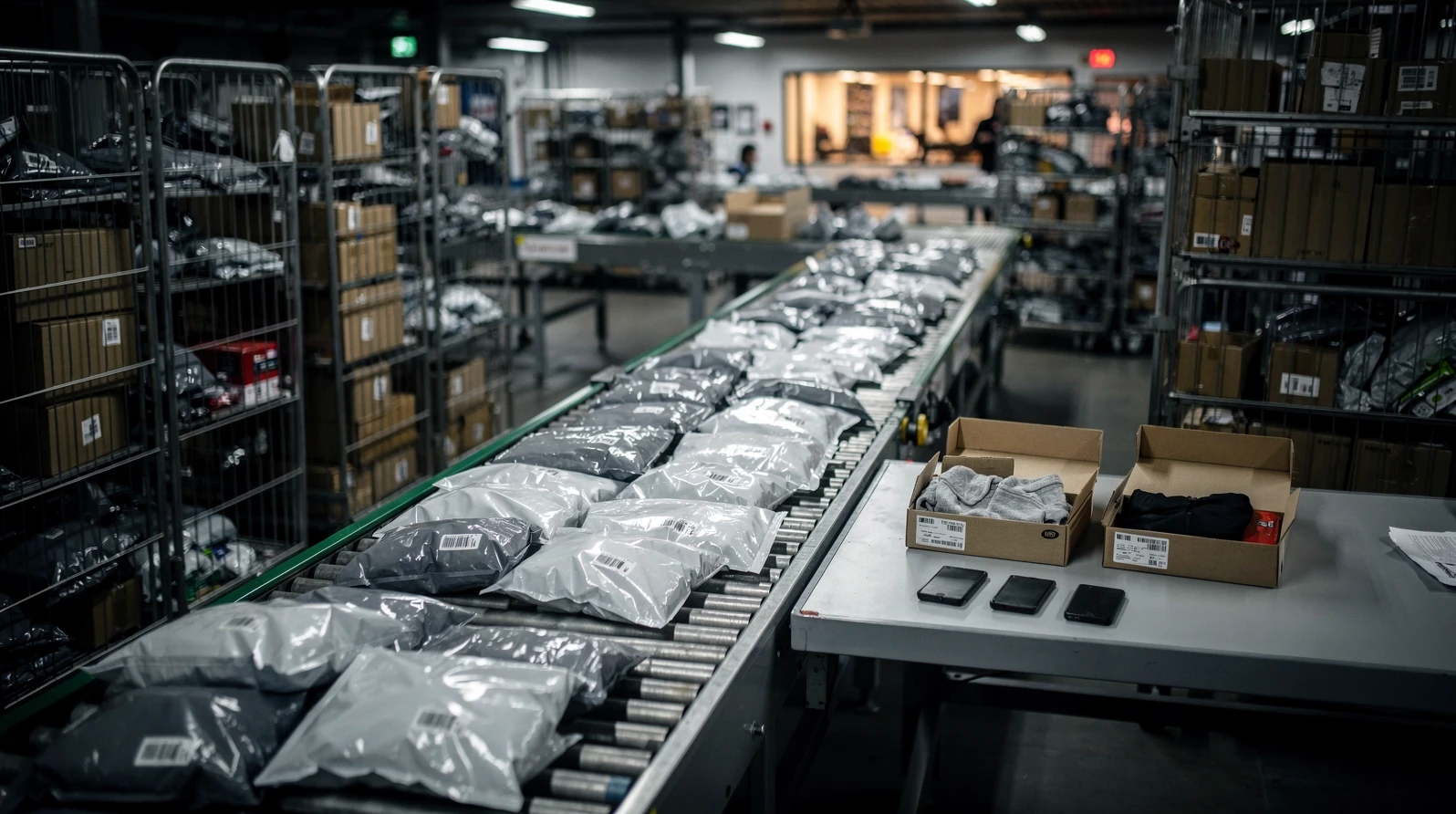
The FOI figures reported so far cover value rather than volume. Retail Gazette cites government estimates that around 600 million low-value parcels entered the UK through simplified customs arrangements in 2024 alone, roughly 1.6 million a day. That figure covers all origins, not just China, and an earlier calendar year, so it cannot be divided into the £5.3bn to produce a meaningful average parcel value. What it does show is the scale of the administrative problem HMRC and Border Force describe in the policy papers: hundreds of millions of tiny consignments, most of them cleared on minimal data.
| Measure | Figure | Source |
|---|---|---|
| China-origin low-value imports, 2023/24 | £1.3bn | FT FOI, via Retail Gazette |
| China-origin low-value imports, 2025/26 | £5.3bn | FT FOI, via Retail Gazette |
| Change over two years | About +£4.0bn (roughly 4x) | shopappy calculation |
| All low-value parcels entering the UK, 2024 | About 600 million (1.6 million a day) | Government estimates, via Retail Gazette |
| Shein’s main UK company revenue, 2025 | £2.58bn (+25.9%) | Companies House accounts |
| Temu’s UK operating company revenue, 2025 | About USD 171m (about £130m at current rates) | Companies House accounts, via FT |
Why can these parcels still enter the UK duty-free?
Under current rules, any consignment with a customs value of £135 or less can claim full relief from import duty. The relief predates the platform era; it was designed for a world of occasional mail-order purchases, where the cost of collecting a few pounds of duty on each small package would exceed the revenue raised.
VAT is a different matter. Since 1 January 2021, VAT on goods of £135 or less sold to UK consumers has been charged at the point of sale rather than at the border. Where an online marketplace facilitates the sale, the marketplace is responsible for collecting and paying that VAT. That is why a Shein or Temu basket already shows a VAT-inclusive price at checkout, and why most shoppers never see a customs bill on these orders.
Where exactly is the advantage?
The advantage British businesses complain about is the duty, not the VAT. A UK clothing retailer that imports a container of T-shirts from China as freight pays the UK Global Tariff rate of 12% on the value of that consignment at the border. An overseas seller that ships the same T-shirts one at a time, each in its own parcel under £135, pays nothing in duty. On fashion and footwear, where duty rates are among the highest in the tariff, that gap can be larger than the retailer’s entire profit margin on the item.
Retail Gazette summarised the long-running complaint: overseas competitors benefit from lower import costs while domestic firms face tariffs when bringing goods into the country in bulk. Our earlier reporting on Temu’s 171% jump in UK sales and the £135 duty relief set out how the same arithmetic underpins the single-item, China-direct model that Temu in particular has built across Europe.
When does the £135 relief end, and how did the date move?
The timetable has shifted twice in a year. At Budget 2025, the government announced that the relief would be removed by March 2029 at the latest and opened a consultation on the replacement system. That consultation ran from 26 November 2025 to 6 March 2026.
In June 2026, at what the government called Tax Update Day, ministers accelerated the reform by six months, to October 2028 at the latest. The summary of consultation responses, published on 13 July 2026, confirmed the decision, saying the government had sought to move at pace to address concerns about the current arrangements while giving businesses time to prepare. At Budget 2026 on 28 October, HMRC published draft legislation and an updated policy paper setting out how the measure will work.
Is October 2028 a fixed date?
No. The legislation provides that the measure will come into force on a day appointed by the Treasury in regulations made by October 2028 at the latest. That wording leaves room for an earlier start if systems are ready, but it is a backstop rather than a commitment. The British Retail Consortium said in June that the six-month acceleration did not go far enough, arguing that UK businesses could not afford to keep competing against imports that avoided tariffs, according to Retail Gazette.
| Date | Step |
|---|---|
| 26 November 2025 | Budget 2025 announces removal of the £135 relief by March 2029; consultation opens |
| 6 March 2026 | Consultation closes |
| 23 June 2026 | Tax Update Day: deadline brought forward to October 2028 |
| 13 July 2026 | Summary of responses published; no simplified tariff, extra fee confirmed in principle |
| 28 October 2026 | Budget 2026: draft legislation and certified revenue costings published |
| 23 November 2026 | FT FOI figures show China low-value imports at £5.3bn for 2025/26 |
| By October 2028 | Relief removed on a date set by Treasury regulations |
What will replace the £135 relief?
The new system is not simply “charge duty at the border”. HMRC’s policy paper describes a separate set of customs arrangements for low-value imports, designed so that the hundreds of millions of small parcels can be processed without each one needing a full customs declaration. Several design decisions have now been made.
- Who pays: sellers, or the online marketplace where it facilitates the sale, will be responsible for paying customs duty on these goods, mirroring the way VAT already works.
- When they pay: duty will be paid to HMRC quarterly, with the option to stagger payments to line up with VAT return cycles.
- UK presence: sellers and marketplaces without a UK presence will have to appoint a fiscal representative, a UK-based business that is jointly and severally liable for any customs debt.
- Data: sellers and marketplaces will provide item-level data to HMRC, and each consignment will carry a unique reference number used to clear it on arrival at temporary storage facilities or through the Goods Vehicle Movement Service at roll-on, roll-off ports.
- Definition: low-value imports will be defined by consignment value, with the Treasury given power to change that definition later through secondary legislation.
What rate of duty will apply?
Full UK Global Tariff rates. The consultation floated a simplified tariff schedule, with “bucket” rates per chapter of the tariff or a single flat rate, to spare sellers the work of classifying every item. The government rejected that option in July. Its response says it does not consider it appropriate to set rates below those that apply to freight imports, and that a simplified schedule would risk uneven treatment across goods and create incentives for misclassification.
That decision matters more than the date. It means a low-value parcel will pay exactly the same percentage as the same goods arriving in a shipping container, which is the parity UK retailers have asked for. It also means the impact on prices will vary sharply by product category.
Is there an extra fee as well?
Yes, in principle. The government has confirmed it will introduce an additional fee in relation to low-value imports, to reflect the administrative cost of processing them. It has not set the level. The consultation used illustrative figures of £0.50, £2 or £5 per consignment and asked whether the fee should be charged per consignment, per item or per product type; most respondents favoured per consignment, according to the response document. The government says the fee will reflect the cost of services rendered, will be set at an affordable level, and will be aligned with the UK’s international obligations.
Readers who want to check the measure in full can find it in HMRC’s policy paper on reforming customs rules for low value imports, which was updated alongside the Budget on 28 October.
How much would duty add to a typical basket?
Because the government has chosen full tariff rates, the answer depends on what is in the parcel. The table below uses headline third-country rates from the UK Trade Tariff for a set of products typical of China-direct marketplaces. The example prices are illustrative, and the duty shown is simply the rate applied to that value; how VAT will interact with the new duty element is one of the details the government has yet to finalise.
| Product (commodity heading) | UK Global Tariff rate | Example price | Duty at that rate |
|---|---|---|---|
| T-shirt (6109) | 12% | £10 | £1.20 |
| Women’s shoes, rubber or plastic (6402) | 16% | £25 | £4.00 |
| Toy sets (9503) | 4% | £15 | £0.60 |
| Ceramic tableware and kitchenware (6912) | 4% | £20 | £0.80 |
| Make-up and skincare (3304) | 0% | £8 | £0.00 |
| Smartphones (8517) | 0% | £120 | £0.00 |
Two things follow. First, fashion and footwear, the categories where Shein is strongest and where British high street chains compete most directly, carry the highest rates. A basket of clothes and shoes could face duty in the range of 12% to 16% of its value, before any fee. Second, a large share of electronics, beauty and accessories pays little or no duty under the UK tariff, so for those goods the per-parcel fee, once set, could matter more than the tariff itself.
Will platforms pass the cost on?
Nobody knows yet, and the companies have not said. Platforms could absorb part of the cost, raise prices, shift stock into UK or European warehouses so that goods arrive as bulk freight, or some mix of all three. Retail Gazette noted that Shein is investing EUR 500m (about £419m at current rates) in its European logistics operations to cut delivery costs and adapt to changing customs rules, which points towards the warehousing route. Any parcel that arrives in Britain as part of a bulk freight shipment and is then sold from UK stock pays normal duty at import and sits outside the low-value regime altogether.
How does the UK compare with the EU and the US?
Britain is now the last of the large Western consumer markets to keep a duty-free window for small parcels, and the FT figures suggest that position is showing up in the trade data. The United States suspended its USD 800 de minimis exemption in August 2025. The European Union removed its EUR 150 customs duty relief on 1 July 2026, replacing it with a flat EUR 3 duty per item type, and added a EUR 2 handling fee per tariff line from 1 November. Our coverage of the EU’s €2 parcel handling fee from 1 November sets out how the two charges stack.
| Market | Duty-free threshold today | What replaced it | Status |
|---|---|---|---|
| United Kingdom | £135 (customs duty only; VAT charged at sale) | Full UK Global Tariff rates, paid quarterly by sellers or marketplaces, plus a fee still to be set | Legislated; in force by October 2028 at the latest |
| European Union | None since 1 July 2026 | Flat EUR 3 duty per item type (about £2.51), plus EUR 2 handling fee per tariff line (about £1.67) from 1 November 2026 | In force |
| United States | None for most imports since August 2025 | Normal duty on all imports; postal shipments prepay | In force |
The EU and UK designs differ in an important way. The EU chose a flat duty per item type, which is simple to administer and bites hardest on very cheap goods. The UK has chosen full tariff rates, which are more complicated for sellers but protect the parity principle that a parcel pays the same as freight. That means the UK change will hit a £25 pair of trainers much harder than a £3 phone charger, whereas the EU charge is broadly the same for both.
Is trade being diverted to the UK?
The figures are consistent with that, though they do not prove it on their own. Earlier reporting covered on this site showed that the EU’s EUR 3 duty roughly halved China parcel flows into Belgium and the Netherlands within weeks, and Shein reported a 13.9% fall in European revenue in the quarter after the EU change. Retail Gazette notes the UK is facing questions over whether its timetable is moving quickly enough compared with other markets. When neighbouring markets close and one stays open, logistics planners route volume accordingly; the 2025/26 UK figure covers the period immediately after the US closed its door.
What does this mean for British retailers and high streets?
For UK fashion and homewares chains, the figures confirm the scale of the competition they have been describing for two years. In May 2026, Next and Marks and Spencer were among retailers calling for an immediate flat levy of £2.60 per parcel, which they said would raise £1.7bn a year for the Treasury, according to RTÉ and FashionNetwork. The government did not adopt the idea, preferring to keep the October 2028 structural fix.
The commercial picture is visible in company filings. Shein’s main British trading company reported revenue of £2.58bn for 2025, up 25.9%, which put it ahead of Asos in reported revenue, as covered in our report on Shein’s UK revenue of £2.58bn. Temu’s UK operating company booked about USD 171m (about £130m at current rates), a figure that reflects the income of its British service business rather than the total value of goods UK shoppers buy through the app.
Why the wait matters for smaller sellers
The pressure is not only on big chains. Independent UK sellers on Amazon, eBay, Etsy and Vinted compete in the same search results as China-direct listings, and they generally hold stock that was imported as freight with duty already paid. Retail Gazette’s conclusion was blunt: with the value of Chinese parcels rising so quickly, British businesses face almost another two years of competing under the existing rules. That spans two more Black Friday and Christmas peaks, the periods when low-price parcel volumes are highest.
The tax debate around marketplaces is wider than customs. In June 2026 the government also consulted on extending online marketplace VAT liability so that platforms collect VAT on sales by UK-based businesses, not only overseas sellers, and it has since published a summary of responses. For UK sellers the practical issue would be cash flow, because VAT would be taken at source rather than held until the quarterly return.
What does it mean for UK shoppers right now?
For this Black Friday and Christmas, nothing changes. The relief is still in place, VAT is already included in checkout prices on low-value orders from the big platforms, and there is no new fee at the door. A shopper ordering a £20 jacket from a China-based seller this week should not receive a customs bill, provided the seller or marketplace has handled VAT correctly at checkout.
The picture changes for orders above £135. Those are outside the low-value system now and will remain so. Goods worth more than £135 are subject to import VAT and any customs duty at the border, and carriers typically charge the recipient a handling fee to process the payment. Shoppers who split a large order into several smaller parcels to stay under the threshold should be aware that the new system defines low-value imports by consignment value and gives the Treasury powers to tighten that definition.
Gifts from family abroad
Private individuals sending presents are treated separately. The government has confirmed it will keep the relief for genuine non-commercial consignments worth £39 or less sent between private individuals, and has said it believes the current threshold remains appropriate. Gifts above £39 already follow standard import rules.
Safety and quality questions
Price is not the only issue with China-direct parcels. A BBC investigation earlier this month found cadmium in several silver-labelled jewellery items bought online, covered in our report on fake sterling silver from Amazon and Temu. Ministers have cited compliance as one reason for the reform: HMRC’s policy paper says there is evidence that some goods are not compliant with the existing arrangements, and that item-level data will help HMRC and Border Force target checks. The customs change does not, on its own, change product safety law, but better data on what is in each parcel is meant to make enforcement easier.
What are your rights when buying from Shein, Temu or overseas sellers?
The customs debate does not alter shoppers’ existing protections, but those protections are easier to use with some sellers than others. When you buy online from a business that sells to UK consumers, distance-selling rules generally give you 14 days to cancel after delivery, and goods must be as described, of satisfactory quality and fit for purpose. In practice, enforcing those rights against a seller based outside the UK can be harder than against a British retailer.
- Use the platform’s own process first. Shein, Temu, AliExpress and Amazon all run returns and refund schemes, and their published policies are often more generous than the legal minimum.
- Pay by credit card for larger items. Under section 75 of the Consumer Credit Act, purchases of a single item between £100 and £30,000 on a credit card make the card provider jointly liable if the seller fails to deliver or the item is faulty.
- Ask for a chargeback on debit cards. Chargeback is a card scheme rule rather than a legal right, but banks can use it to reclaim money for goods that never arrived or were not as described.
- Report unsafe products. Trading Standards, via the Citizens Advice consumer helpline, handles reports of dangerous goods bought online, including from overseas sellers.
What happens next?
Several dated and undated steps are still to come, and each will shape what the change costs.
- The fee level. The government has committed to an extra fee but has not priced it. A per-consignment fee in the £0.50 to £5 range used in the consultation would weigh very differently on a £3 accessory and a £100 coat.
- The appointed day. The Treasury must set the start date by regulations made by October 2028 at the latest. Retailers will press for an earlier date; platforms and parcel operators will want enough time to build systems.
- Secondary legislation. Detailed rules on data, compliance, enforcement and fiscal representatives will come through regulations and HMRC notices. The policy paper says the administrative burden depends on that detail.
- Revenue. HMRC’s costings, certified by the Office for Budget Responsibility, show the measure raising about £225m in 2028/29, rising to £535m in 2029/30, £540m in 2030/31 and £550m in 2031/32.
Those revenue figures are worth setting against the trade data. If roughly £5.3bn of goods from China alone is now entering under the relief each year, an eventual yield of around £550m a year would equal about 10% of the China figure alone. Because parcels from other countries add to the base, the true average charge across all low-value imports would be lower than that. It is a rough cross-check rather than an official estimate, and it ignores the fall in volumes that the EU’s experience suggests will follow once duty applies.
The questions still open
The FOI figures reported so far do not break the £5.3bn down by platform, product type or parcel count, and the government has not said whether it will publish quarterly data on low-value import volumes as the reform approaches. Those numbers would show whether the growth continues through 2026/27 or whether platforms have already begun moving stock into European and UK warehouses ahead of the change. The next obvious markers are any HMRC update on the fee, the first secondary legislation, and the platforms’ own full-year UK filings next autumn.
Frequently asked questions
How much did Chinese parcel imports to the UK grow?
The value of China-origin goods entering the UK under the £135 low-value customs relief rose from £1.3bn in 2023/24 to £5.3bn in 2025/26, roughly a fourfold increase, according to Freedom of Information figures obtained by the Financial Times and reported by Retail Gazette on 23 November 2026.
Do I pay customs duty on Shein or Temu orders?
Not at the moment for orders of £135 or less. Those consignments are exempt from customs duty, although VAT is already charged at checkout and collected by the marketplace or seller. Orders above £135 can attract import VAT, duty and a carrier handling fee on delivery.
When does the £135 duty relief end?
By October 2028 at the latest. The government originally set a March 2029 backstop at Budget 2025 and brought it forward by six months in June 2026. The exact start date will be set by Treasury regulations.
Will Shein and Temu prices go up in the UK?
Possibly, but not before the relief ends, and the effect will vary by product. Clothing and footwear carry UK tariff rates of 12% to 16%, while many electronics and cosmetics carry 0%. Platforms may absorb some costs or move stock to UK and European warehouses rather than raise prices. Neither company has said how it will respond.
Who will pay the new customs duty?
The seller, or the online marketplace where it facilitates the sale. Duty will be paid to HMRC quarterly, and sellers or marketplaces without a UK presence will need a UK fiscal representative that shares liability for any customs debt.
Will there be a flat fee on every parcel?
The government has confirmed it will introduce an additional fee on low-value imports but has not set the amount or basis. The consultation used illustrative figures of £0.50, £2 or £5 per consignment, and most respondents preferred a per-consignment charge.
Does the change affect presents sent from family abroad?
No. The relief for genuine non-commercial gifts worth £39 or less sent between private individuals will stay, and the government has said it considers that threshold appropriate. Gifts above £39 already follow standard import rules.
How does the UK compare with the EU?
The EU ended its EUR 150 duty relief on 1 July 2026 and now charges a flat EUR 3 per item type, plus a EUR 2 handling fee per tariff line since 1 November. The UK will instead apply full UK Global Tariff rates, so the cost will depend on the product rather than being a flat charge.
Why are UK retailers unhappy with the timetable?
British retailers pay duty when they import goods in bulk, while overseas sellers shipping single parcels under £135 do not. The British Retail Consortium said the six-month acceleration to October 2028 did not go far enough, and Next and Marks and Spencer were among retailers that called for an immediate £2.60 levy in May 2026.