
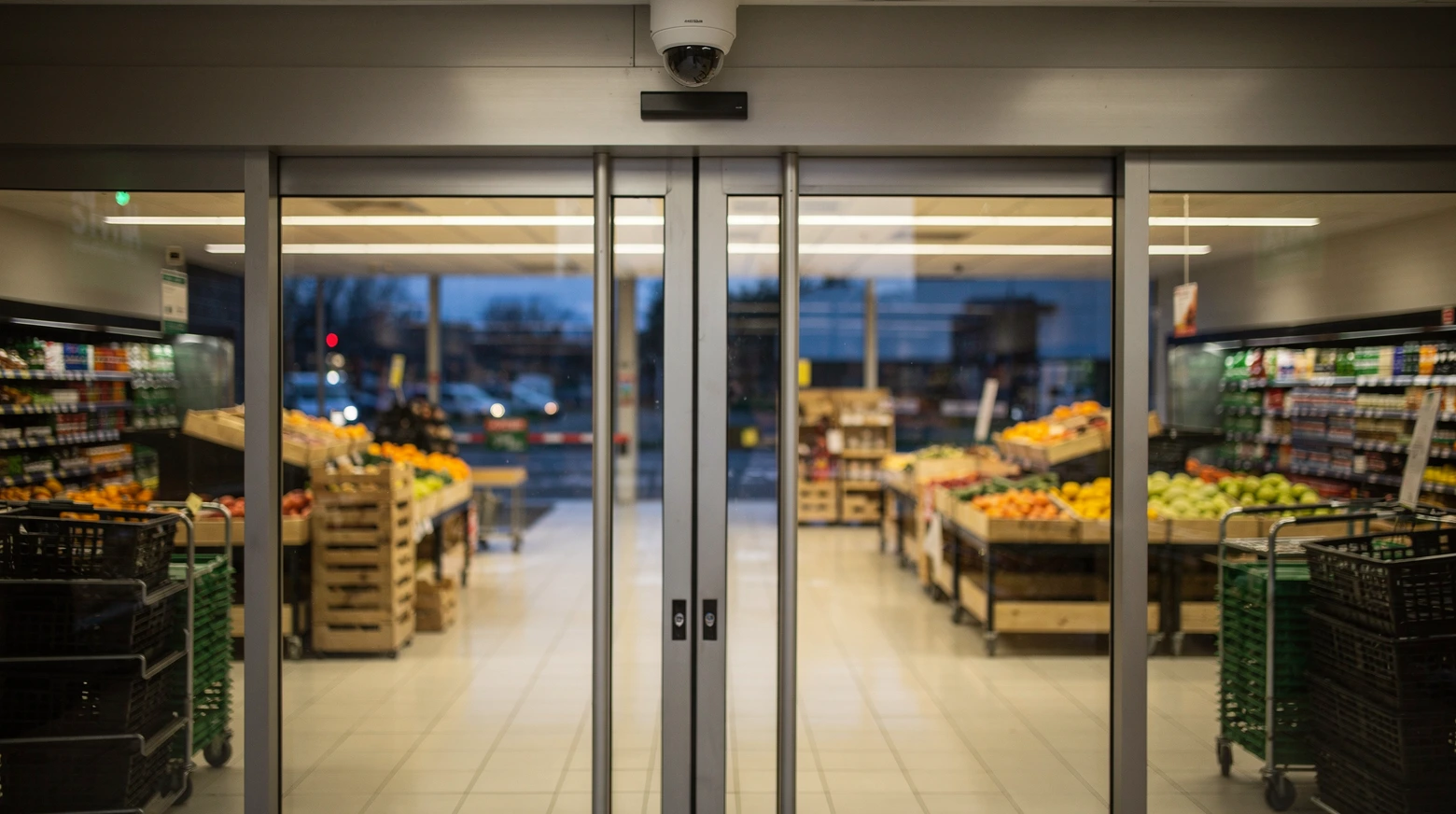
A former teacher with terminal cancer was told she was “banned for life” from Sainsbury’s and escorted out of a south-east London branch by security guards after staff misread an alert from the supermarket’s live facial recognition system, the Guardian reported on Saturday 28 November 2026. She is the second Sainsbury’s shopper in five weeks to receive an identical apology email and a £150 voucher after being wrongly removed.
The cases land as Sainsbury’s pushes Facewatch cameras towards about 200 of its stores before Christmas, and as the Home Office prepares a separate legal code for shops that use the technology. For anyone who does a weekly shop at Sainsbury’s, B&M, Sports Direct or Home Bargains, the question is no longer abstract: what happens if a camera, or the person reading its alert, gets you wrong?
In short
- Two wrongful bans: Monia Indge, 58, was removed from Sainsbury’s Walters Yard store in Bromley on 7 November; Oleh Sinkevych, 44, was asked to leave Sainsbury’s Canada Water on 24 October. Both were mistaken for someone else flagged by Facewatch.
- Same apology, same voucher: Sainsbury’s blamed staff error in both cases and offered each shopper a £150 voucher in what the Guardian describes as identical emails.
- Rollout continues: Facewatch was live in 55 Sainsbury’s stores in July, with up to 150 more due before Christmas, taking the total towards 200 stores.
- Regulation is coming, slowly: the Home Office said on 4 November it will draw up a separate legal code for the private sector, including shops, but no draft or date has been published.
- Your rights now: under UK GDPR you can ask Facewatch and the retailer what data they hold on you, demand correction or deletion, and complain to the ICO for free.
What happened at Sainsbury’s in Bromley and Canada Water?
According to the Guardian, Monia Indge was shopping with her husband at the Walters Yard branch of Sainsbury’s in Bromley on 7 November when a member of staff told her to leave and that she was banned for life from the store. She said several security guards escorted her out and that nobody would tell her what she was supposed to have done.
Indge, who used to teach, told the newspaper that being surrounded by guards was “scary” and that she feared former pupils or parents might have seen her. She was directed to scan a QR code on a poster in the shop window, which took her to the Facewatch website. She then spent several days trying to get answers from Facewatch and from Sainsbury’s.
Ten days after the incident, the Guardian reports, Sainsbury’s apologised, said the episode had been caused by human error and offered her a £150 voucher. “My life is short as it is. To have to spend this time trying to clear my name, it’s horrendous,” she told the paper. “They view this as a glitch. I am not a glitch, I am a human being.”
The Canada Water case a month earlier
The Guardian also spoke to Oleh Sinkevych, 44, who says two members of staff asked him to leave his local Sainsbury’s at Canada Water on 24 October as he went in to buy groceries. He says they refused to explain why. The apology email he later received blamed a manager’s mistake and offered a £150 voucher; the paper says it was identical to the one Indge received a month later.
Sinkevych turned down the voucher. He has complained to the Information Commissioner’s Office (ICO), arguing that whether or not the software itself failed, the system is “fundamentally broken” because it leads staff to “switch off their own judgement”. The Guardian’s account is, at the time of writing, the only published report of both incidents; the details above are attributed to it and to the statements Sainsbury’s, Facewatch and the ICO gave the paper.
What did Sainsbury’s, Facewatch and the ICO say?
All three organisations responded to the Guardian, and their statements set out the positions each will be held to as complaints progress. None disputes that the two shoppers were wrongly removed.
Sainsbury’s: “hugely successful” despite rare errors
A Sainsbury’s spokesperson said the retailer had “sincerely apologised” to both shoppers and understood “the significant upset these situations have caused, especially at such a difficult time for Mrs Indge and her family”. The company said facial recognition had been introduced “amid unacceptably high levels of retail crime” and had been “hugely successful, with eight in ten people added to the system not returning to reoffend”.
It added that “on the rare occasions we do see an error we provide training and support to prevent further incidents”. Sainsbury’s has not said how many misidentifications it has logged across its estate, and it did not announce any pause to the wider rollout.
Facewatch: the alert was right, the human check failed
A Facewatch spokesperson said the company was “very sorry for any distress” and “particularly saddened” by Indge’s experience. Crucially, it said: “In both cases the system correctly flagged the individuals it was looking for, but the human check before anyone acts on an alert is an important safeguard in the process, and we share responsibility for making sure it works every time.”
In other words, Facewatch’s position is that a genuine suspect was in each store and that staff approached the wrong person. The company says it is working with Sainsbury’s to support the managers who use the system and to identify further training needs.
The ICO: benefits, but the law still applies
The regulator told the Guardian that facial recognition “can help retailers detect and prevent crime and has clear benefits in the public interest”, but that “its use must comply with data protection law”. Retailers, it said, “should carefully consider the risks of misidentification and have robust procedures in place to ensure the accuracy and integrity of the personal information they collect and process”. The ICO did not say whether it would open an investigation into either case.
How does Facewatch work in a UK supermarket?
Facewatch is a London-based company whose system is, according to the Guardian, used by more than 125 retailers across the UK. Cameras near the entrance capture the faces of people walking in. Those images are compared against a watchlist of people who have previously been reported for theft, violence or aggression in participating stores.
As TechTimes and Retail Gazette have described it, the matching is done by two separate algorithms, and a human reviewer at Facewatch checks the match before an alert is sent to the store. Staff in store then receive the alert, typically on a handheld device, and decide whether to act. Sainsbury’s says images of shoppers who are not matched are deleted immediately, and that the system is not used to monitor everyday customers or colleagues.
Where the process breaks down
Facewatch advertises a 99.98% accuracy rate. TechTimes has pointed out that this figure describes the algorithmic stage only, not the final step in which a store worker looks at an alert and picks out a person on the shop floor. Every publicly reported wrongful ejection from a Facewatch store has, by the company’s own account, happened at that final human step.
There is also confusion about how long staff can see the alert image. Comedy promoter Matt Arnold, wrongly removed from Sainsbury’s East Dulwich in August, told Cybernews that a store manager explained the image disappears from the staff phone a few seconds after being viewed, for data protection reasons, so nobody could later check whether staff had picked the wrong person. IBTimes, by contrast, reported that Sainsbury’s says alerts can remain visible on staff devices for up to an hour. That gap matters: if staff cannot compare the alert photo with the person in front of them, the “human safeguard” Facewatch relies on is weaker than it sounds.
Retailers are not the only ones leaning on automation to fill staffing gaps. Morrisons recently scrapped its AI smart trolleys after a trial, a reminder that in-store technology often looks different on a busy Saturday than it does in a pilot report.
How many wrongful bans have been reported so far?
The Guardian describes Indge as “the latest in a string of people” misidentified in shops using Facewatch. Pulling together the publicly reported cases shows a consistent pattern: a correct or claimed-correct alert, a staff member approaching the wrong shopper, no explanation at the time, and a voucher afterwards.
| Shopper | Store | Date | What happened | Response reported |
|---|---|---|---|---|
| Warren Rajah | Sainsbury’s, Elephant and Castle | February 2026 | Asked to leave and to abandon his shopping; had to send his passport and a photo to Facewatch to confirm he was not on its database | Sainsbury’s apologised; Facewatch said he was not on its database and blamed staff error |
| Matt Arnold | Sainsbury’s, East Dulwich | 6 August 2026 | Refused service at a self-checkout and told to leave; saw his face circled in red on an overhead monitor | Apology and £150 voucher (donated to a food bank); system paused at that store for retraining |
| Byron Long | B&M, Cardiff | Reported in 2026 (TechTimes) | Accused of stealing about £75 of goods that store footage showed he had paid for | Facewatch said the system “worked as designed”; Big Brother Watch took the case to the ICO |
| Oleh Sinkevych | Sainsbury’s, Canada Water | 24 October 2026 | Asked to leave by two staff, no reason given | Apology blaming a manager’s mistake and £150 voucher (declined); complaint to ICO |
| Monia Indge | Sainsbury’s, Walters Yard, Bromley | 7 November 2026 | Told she was banned for life and escorted out by several guards | Apology after ten days blaming human error and £150 voucher |
Five cases is a small number against the volume of alerts. TechTimes reported that Facewatch sent 297,433 alerts to UK retailers in the first six months of 2026 alone. But these are only the cases where the shopper went public; neither Sainsbury’s nor Facewatch publishes a count of reported misidentifications.
Why is Sainsbury’s rolling facial recognition out so fast?
Sainsbury’s frames the technology as a staff safety measure first. On its corporate website the retailer cites Usdaw’s Freedom From Fear survey, in which 78% of shop workers reported verbal abuse, 54% had been threatened and 11% assaulted, and British Retail Consortium figures showing around 1,600 incidents of violence and abuse every day across UK retail.
The trial began in September 2025 at two stores, Sydenham in south-east London and Oldfield Park in Bath, before being extended to five more London stores, IBTimes reported. Sainsbury’s said reported theft, harm, aggression and antisocial behaviour fell by 46% at the first two trial stores.
| Stage | Stores using Facewatch | Source |
|---|---|---|
| Trial start, September 2025 | 2 (Sydenham, Bath Oldfield Park) | IBTimes, Retail Gazette |
| Trial extension | 7 (five more London stores) | IBTimes |
| Spring 2026 company update | 40, with plans for up to 200 by year end | Sainsbury’s corporate website |
| Early July 2026 | 55, with up to 150 more before Christmas | Retail Gazette, Sainsbury’s Q1 update |
| Target, end of 2026 | About 200 | Sainsbury’s; the Guardian |
The deterrence numbers do not quite agree
Sainsbury’s has described the effect on repeat offenders in several ways. Retail Gazette reported in July that 92% of identified offenders did not return. The retailer’s own corporate page says “more than 90% of banned offenders” have not come back. The statement given to the Guardian on Saturday says “eight in ten people added to the system” have not returned to reoffend. These may measure different groups over different periods, but Sainsbury’s has not published the underlying data, so the claims cannot be independently checked.
The wider crime picture is mixed. The ONS figures for the year to March 2026 showed police-recorded shop theft falling 4% to about 507,000 offences, according to TechTimes, after a record the year before. Retailers argue that much shop theft is never reported. In Scotland, where shoplifting reached 56,920 recorded crimes in the latest figures, the debate has shifted to organised gangs stealing to order, which is exactly the kind of repeat offending watchlists are designed to target.
Is live facial recognition in shops legal in the UK?
Yes, under current law. There is no UK statute that specifically licenses or bans live facial recognition in shops. Private use is governed by the UK GDPR and the Data Protection Act 2018, which treat biometric data used to identify someone as “special category” data. That means a retailer needs both a lawful basis and an additional condition, usually the substantial public interest condition for preventing or detecting unlawful acts.
Retailers must also be transparent, which is why participating stores display signs and QR codes. But as both the Indge and Sinkevych cases show, a sign at the door does not give shoppers any way to refuse being scanned short of not going in, and there is no right to an explanation on the spot when a ban is issued.
What the Home Office announced on 4 November
On 4 November 2026 the Home Office published its response to a consultation that ran from December 2025 to February 2026. It promised a specific law for police use of facial recognition, an independent watchdog that could seek court injunctions against non-compliant forces, and independent bias testing. For shops, the key line was that “a separate legal code for the private sector will be developed to make sure that businesses using facial recognition to tackle crime, including shops, are using it responsibly”.
No draft of that private-sector code, no consultation date and no timetable have been published. Facewatch has said publicly that it supports tighter rules and has held discussions with the Home Office, TechTimes reported in October, while critics argue that standards shaped by the market leader could entrench its position.
| Issue | Police use (England and Wales) | Shops and other private use |
|---|---|---|
| Dedicated law | Promised in the 4 November response | None; a “separate legal code” promised, no draft |
| Independent oversight | New watchdog with power to seek injunctions | ICO enforces general data protection law only |
| Bias testing | Must be independently tested | No legal requirement; Facewatch cites its own accuracy figure and an ISO/IEC 42001 certificate |
| Who decides to act on a match | A police officer | Store staff or security guards |
| Right of appeal at the time | Normal police procedure applies | None; shoppers are pointed to a QR code |
The contrast with the EU is also sharp. The EU AI Act classifies remote biometric identification as high risk and sharply restricts real-time use in publicly accessible spaces. The UK chose not to adopt an equivalent regime after Brexit, which is one reason British retailers have been able to scale the technology quickly.
Who is responsible when a shop gets it wrong?
This is the question MPs and campaigners keep returning to. Last month Big Brother Watch held a summit in Parliament for people wrongly identified by facial recognition. According to the Guardian, Sainsbury’s and Facewatch were invited but neither attended. Allison Gardner, the Labour MP for Stoke-on-Trent South who chaired the event, told the paper: “Nobody really understands where liability lies.”
On paper, responsibility is split. TechTimes reported that Facewatch positions itself as the data controller for the watchlist across its retail network, which means it carries legal duties for the biometric data it holds and shares. The decision to approach a shopper, refuse service and impose a ban is taken by the retailer’s staff. Facewatch’s statement on Saturday that it “shares responsibility” for the human check working every time is the closest the company has come to accepting a role in the outcome.
Big Brother Watch wants the ICO to step in
Jack Coulson, head of advocacy at Big Brother Watch, told the Guardian that live facial recognition had turned shop workers into “untrained police officers” and urged the ICO to act. The group’s petition calling on the government to halt in-store facial recognition had passed 42,000 signatures by October, according to TechTimes.
The ICO is advising the government on the new biometrics laws and has published guidance on how organisations should use facial recognition. Campaigners argue it should go further and examine individual deployments. Whether it does so in response to Sinkevych’s complaint, or the earlier Big Brother Watch complaint on behalf of Byron Long, is the next thing to watch.
What should you do if you are wrongly banned from a shop?
Being escorted out of a supermarket is humiliating, and the instinct is often to walk away and avoid the store. But if you have been misidentified, your face may still be linked to an alert, and acting quickly gives you the best chance of clearing it. These steps apply to Sainsbury’s and to any other retailer using Facewatch or a similar system.
- Write down the details straight away: the store, date, time, names or descriptions of staff, what was said and any witnesses. Ask the store, politely, for the name of the manager on duty.
- Complain to the retailer in writing: state that you were wrongly identified and ask for an explanation, an apology and confirmation that any ban has been lifted.
- Make a subject access request: ask both the retailer and Facewatch for all personal data they hold about you, including any images, alert records and notes. They normally have one month to respond and cannot usually charge.
- Ask for correction and deletion: if any record wrongly links you to an offence, ask for it to be corrected or erased, and for confirmation that you are not on the watchlist.
- Ask for CCTV promptly: footage is often overwritten within weeks, so include a request to preserve it in your first letter.
- Complain to the ICO if you are not satisfied: the ICO expects you to raise the matter with the organisation first, but a complaint is free.
| What you can ask for | Legal basis | Who to ask | Typical deadline |
|---|---|---|---|
| A copy of your data, including alert images and records | UK GDPR right of access | Retailer and Facewatch | One month, extendable by two months for complex requests |
| Correction of inaccurate records | Right to rectification | Whoever holds the record | One month |
| Deletion of your data | Right to erasure | Retailer and Facewatch | One month |
| Stop processing your data | Right to object | Retailer and Facewatch | One month |
| Independent review | Complaint to the regulator | Information Commissioner’s Office | Usually within three months of the organisation’s final response |
| Compensation for distress | UK GDPR and Data Protection Act 2018 | The courts (legal advice recommended) | Generally six years in England and Wales |
Should you accept the £150 voucher?
Accepting a goodwill voucher does not normally sign away your data protection rights, but read any message carefully for wording about “full and final settlement” before you use it. If you believe you have suffered real distress or reputational harm, take advice from Citizens Advice or a solicitor first. Sinkevych declined his voucher and went to the ICO; Arnold accepted his and gave it to a food bank. Both routes are open to you.
Data incidents in retail are not limited to cameras. If you shop online, the steps for protecting yourself after a breach overlap: when Next disclosed a cyber incident at a third-party supplier last week, the same principles of asking what data is held, and by whom, applied.
Which other UK shops use facial recognition?
The Guardian names Sainsbury’s, B&M, Sports Direct and Home Bargains as large high-street chains using Facewatch. TechTimes lists Facewatch’s network at more than 125 UK retail businesses. Shops using the system are required to display signs, usually at the entrance, and the signs typically carry a QR code linking to Facewatch’s privacy information.
Other retailers rely on different technology. Some use body-worn cameras for staff, which Sainsbury’s says it was the first UK retailer to introduce in 2018. Others use AI-assisted CCTV that looks for behaviour rather than faces. The SAI and Retail Trust “Safer Stores” initiative, reported by TechTimes, takes that behavioural approach and frames it around worker welfare.
The policing context
Retail facial recognition is also becoming more closely tied to police work. TechTimes reported that in July 2026 Facewatch added a feature that can alert police within four seconds when a flagged “high-risk repeat offender” enters a participating store, and linked the launch to the Crime and Policing Act 2026, which removed the £200 threshold that had effectively treated low-value shoplifting as a summary-only offence. Police forces have separately been targeting 500 prolific shoplifters in a national crackdown, and retailers argue that better identification of repeat offenders is part of making that work.
What happens next?
Several decisions will shape whether wrongful bans become rarer or more common as the Sainsbury’s rollout reaches its Christmas target.
- The ICO’s response to complaints: Sinkevych’s complaint and Big Brother Watch’s earlier referral give the regulator live cases. Any formal investigation, reprimand or published guidance on staff verification would be the first real test of how data protection law applies to in-store bans.
- The Home Office private-sector code: the 4 November response committed to a code for shops but gave no timetable. The questions to watch are whether it will be statutory, who will enforce it and whether it will require an appeal route for shoppers at the point of ejection.
- Sainsbury’s own data: the retailer has not published how many misidentifications it has recorded or how its “eight in ten” deterrence figure is calculated. Pressure from MPs who attended last month’s summit may force more disclosure.
- Staff training and process changes: both Sainsbury’s and Facewatch point to training. A visible change, such as requiring two staff to verify an alert or allowing the shopper to see why they were flagged, would signal that the human step is being tightened rather than simply repeated.
For now, the practical position for shoppers is simple. Facial recognition will be operating in more supermarkets this Christmas than at any point before, the law that will eventually govern it has not been written, and if a mistake happens the burden of clearing your name falls on you. Knowing your data rights is the best protection available.
Supermarkets are also wiring AI into how people shop online. Sainsbury’s was among the first UK grocers to sign up when Meta Muse launched in the UK last week, which brings its own questions about personal data and consent for anyone using AI agents to fill a basket.
Frequently asked questions
Does Sainsbury’s use facial recognition in every store?
No. Facewatch was live in 55 Sainsbury’s stores in early July 2026, with up to 150 more due before Christmas, taking the total to about 200. Sainsbury’s runs around 1,400 supermarkets and convenience stores, so most branches do not use it. Stores that do must display signs, usually at the entrance.
How do I know if a shop is scanning my face?
Shops using live facial recognition must tell you, which in practice means a sign at or near the entrance. Facewatch signs usually carry a QR code linking to its privacy information. If you cannot see a sign, you can ask staff whether the store uses facial recognition.
Can I refuse to be scanned?
Not in a meaningful way. There is no national opt-out, and the scan happens as you walk in. The only way to avoid it is not to enter a participating store. Sainsbury’s and Facewatch say images of people who are not matched against the watchlist are deleted immediately.
What should I do if Sainsbury’s wrongly bans me?
Note the details, complain to Sainsbury’s in writing, and make a subject access request to both Sainsbury’s and Facewatch asking for all data they hold on you. Ask for any incorrect record to be corrected or deleted and for CCTV to be preserved. If you are not satisfied with the response, complain to the ICO, which is free.
Is a £150 voucher fair compensation?
It is a goodwill gesture, not a legal settlement, unless the wording says otherwise. If you have suffered distress or harm to your reputation, you may be able to claim compensation under data protection law. Citizens Advice or a solicitor can advise before you accept anything described as a final settlement.
Who is to blame: the software or the staff?
In both new cases Facewatch says the system correctly flagged the person it was looking for and staff approached the wrong shopper. Sainsbury’s also blamed human error. Campaigners argue the system design, which asks busy staff to act quickly on an alert, makes such errors predictable. Legal liability has not been tested in court.
Is facial recognition in shops being regulated?
Only through general data protection law for now. On 4 November 2026 the Home Office said it would develop a separate legal code for private-sector use, including shops, alongside a new law and watchdog for police use. No draft or timetable for the private-sector code has been published.
Which other shops use Facewatch?
The Guardian names B&M, Sports Direct and Home Bargains alongside Sainsbury’s, and Facewatch’s network covers more than 125 UK retailers. Independent shops and smaller chains also use it, so the sign at the door is the most reliable guide.