
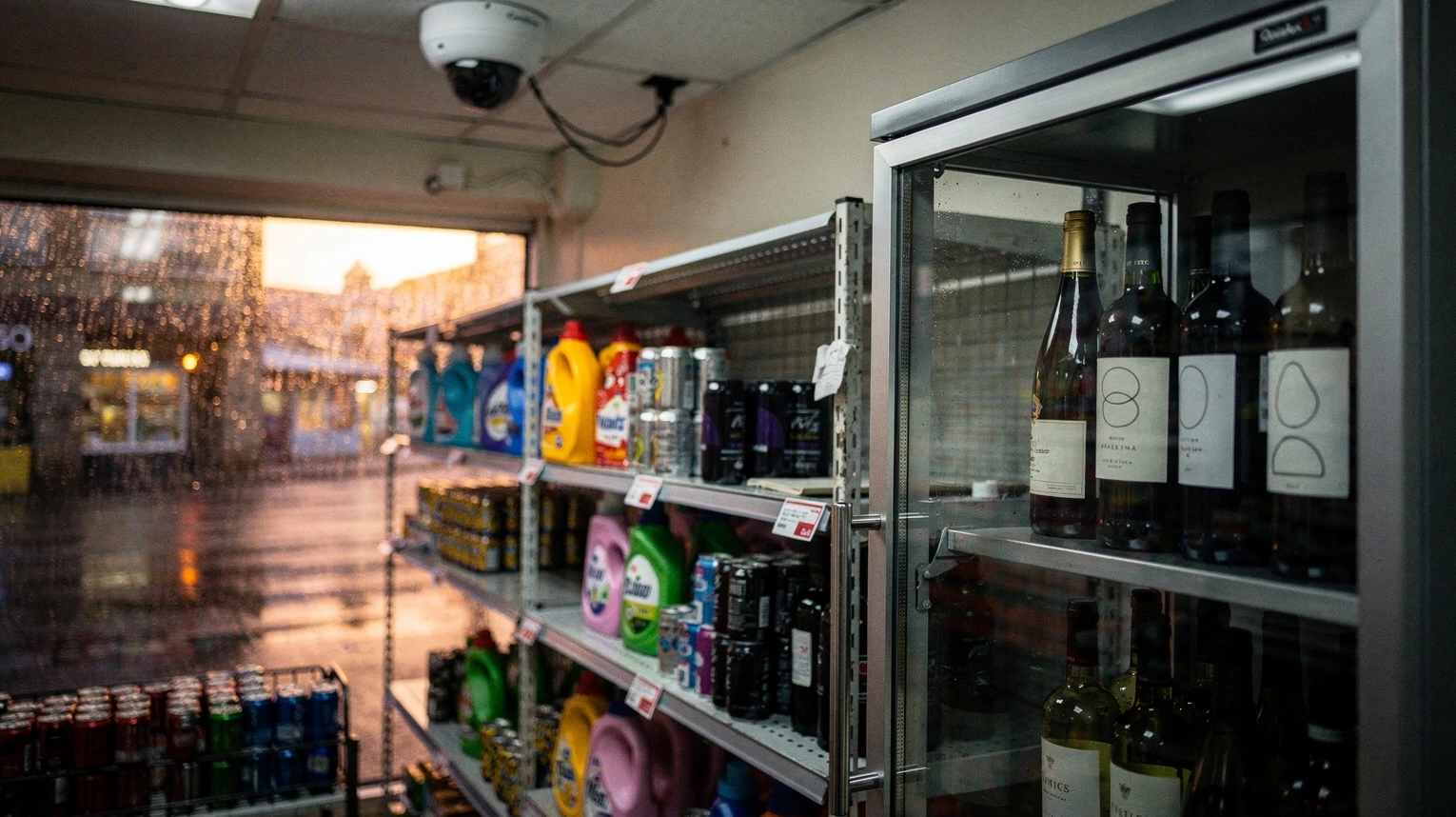
Shoplifting in Scotland has reached a level not seen in more than half a century. Police recorded 56,920 shoplifting crimes in the year to June 2026, up from 24,877 four years earlier, a rise of 129% according to Scottish Government statistics. On Friday 13 November, BBC Scotland News reported that shop staff now face organised gangs who arrive with sacks, backpacks and even wheelie bins to clear whole shelves, and that some attackers have carried machetes and, in one case, a harpoon gun.
The same day, Edinburgh Southern MSP Daniel Johnson chaired the capital’s first retail crime summit at Holyrood, bringing together police, unions, trade bodies, retailers and ministers. This article sets out what the official figures actually say, why two different totals are circulating, what “stealing to order” means in practice, how Scotland’s approach differs from England and Wales, and what shoppers, shop owners and staff can expect before Christmas.
In short
- Record level: Police Scotland recorded 56,920 shoplifting crimes in the year to June 2026, up 20% in a year and 129% since the year to June 2022.
- Two totals, one trend: the 2025-26 financial-year figure is 53,369, the highest level since 1971; the June figure is a later rolling year.
- Stealing to order: Co-op says gangs target resaleable goods such as energy drinks, detergent and baby powder, sometimes armed; one worker was hospitalised after being hit with a fire extinguisher.
- Policy response: a Holyrood summit on 13 November, a police Retail Crime Taskforce funded at £3 million a year to 2028-29, and a Scottish law protecting shopworkers since August 2021.
- What shoppers see: more locked cabinets, tagged products and staff checks, and, according to the Scottish Retail Consortium, prevention costs that ultimately land on prices.
What did BBC Scotland report about shoplifting gangs?
The BBC Scotland News report by Chris Foote, published on 13 November 2026, gathered accounts from a national retailer, an independent shopkeeper, a retail crime charity and Police Scotland. The common thread was that a growing share of theft is now planned and repeated rather than opportunistic, and that the people doing it are increasingly willing to threaten staff.
Kate McCrae, retail operations director at Co-op, told the BBC that targeted shoplifting, often with the threat of violence, was becoming “more and more prolific”. She described thieves walking in with a specific product in mind: “It’s not like ‘I’m in this aisle by chance, I’m going to take all these biscuits’. It’s like, ‘I’m in for energy drinks or I’m here to get detergent’. It’s stealing to order.”
Weapons and violence in stores
According to the BBC, McCrae said many shoplifters were armed. “We’ve seen weapons: guns, machetes, knives,” she said, adding that there had been “some extremes where we’ve had a harpoon gun”. She also said one Co-op staff member had been taken to hospital after being hit in the face with a fire extinguisher during a theft.
The BBC also spoke to Amjid Bashir, who owns the Newsbox convenience store on Queen Street in Glasgow. He said his staff had been abused and attacked by gangs of children aged as young as nine, describing groups of “10, 15, sometimes 20” schoolchildren arriving “mob-handed” and masked.
What the police say is driving the numbers
Inspector Emma Wright, of Police Scotland’s Retail Crime Taskforce, told the BBC the force was now seeing “shoplifting on a much more organised scale”, including groups that exploit vulnerable and young people to steal goods that are then sold on at a profit. She also said part of the rise reflects more reporting: retailers have “more confidence to report to the police” and reporting has been made easier.
Stephanie Karté, chief executive of Stirling-based Retailers Against Crime, told the BBC that verbal and physical abuse was now a constant threat for shopworkers and that “retail crime is no longer solely a business issue”.
How fast is shoplifting rising in Scotland?
The official picture comes from two Scottish Government publications. The annual Recorded Crime in Scotland, 2025-26 bulletin, published on 23 June 2026, covers the financial year to March. A rolling update for the year ending June 2026, published on 25 August 2026, is the source of the figures the BBC used.
In the financial year 2025-26, recorded shoplifting rose 19%, from 44,730 to 53,369 crimes. The bulletin says shoplifting has now risen for five consecutive years since the pandemic dip of 2020-21 and “is now at the highest level since 1971”. Over ten years, from 2016-17, the increase is 86%.
In the rolling year to June 2026, shoplifting rose 20% to 56,920, from 47,381 a year earlier. Compared with the year to June 2022, when 24,877 crimes were recorded, that is the 129% increase the BBC reported. On a simple average, 56,920 crimes a year is about 156 a day (a shopappy calculation).
Why two different totals are being quoted
Daniel Johnson, in comments reported by the Herald before the summit, put shoplifting at “53,000 incidents during the 2025/26 financial year”. The BBC used 56,920. Both are correct; they cover different twelve-month windows. The table below reconciles the main numbers in circulation.
| Measure | Period | Figure | Source |
|---|---|---|---|
| Recorded shoplifting | Year ending June 2026 | 56,920 (+20% on year) | Scottish Government, published 25 Aug 2026 |
| Recorded shoplifting | Year ending June 2022 | 24,877 | Scottish Government, same release |
| Recorded shoplifting | Financial year 2025-26 | 53,369 (+19% on year) | Recorded Crime in Scotland 2025-26, 23 Jun 2026 |
| Recorded shoplifting | Financial year 2024-25 | 44,730 | Same bulletin |
| Recorded shoplifting | Financial year 2016-17 | 28,650 | Same bulletin (ten-year rise 86%) |
| Shoplifting clear-up rate | 2025-26 | 50.6% (49.0% in 2024-25) | Same bulletin |
| Threatening or abusive behaviour to a retail worker | 2025-26 | 3,836 offences | Same bulletin |
| Serious assault of a retail worker | 2025-26 | 18 crimes (11 in 2024-25) | Same bulletin |
Shoplifting is now the single largest component of what Scottish statistics call crimes of dishonesty. Of the 118,040 dishonesty crimes recorded in 2025-26, shoplifting accounted for about 45% (a shopappy calculation from the bulletin’s figures). Other theft, housebreaking and theft from vehicles, by contrast, are at or near their lowest levels in decades.
Is the rise real, or is it better reporting?
Both, according to the people closest to the data. Police Scotland’s Inspector Wright told the BBC that easier reporting is part of the story. A column in the Herald in early October, setting out the Scottish Retail Consortium’s position, made the same point: new online crime-reporting systems for stores “help explain some of this year’s increase” while giving a more accurate reflection of the problem.
The same column argued that the true level is “far worse” than the recorded figures. It noted that Scotland has about 22,500 shops; on recorded numbers, that works out at roughly two to three thefts per shop per year, which retailers consider implausibly low. Retailers say many low-value thefts are still never reported, particularly in small independent shops where staff are busy and the owner sees little point in waiting for a response.
What does “stealing to order” actually mean?
“Stealing to order” describes theft driven by demand from a buyer rather than by the thief’s own needs. A gang, or someone directing it, knows which products can be resold quickly for cash, and sends people into stores to collect them in volume. That is different from the traditional picture of shoplifting as a person taking a single item they cannot afford.
The products named in the BBC report share three features: they are high value relative to their size, they are branded and therefore easy to sell on without questions, and they are bought regularly by households. Energy drinks, laundry detergent, baby powder, steak and wine all fit that pattern.
A local example from Ayrshire
The Daily Record reported on 13 November that a police report prepared for South Ayrshire Council describes a group of “travelling shoplifters from Glasgow” who stole toiletry and laundry products worth more than £1,000 from Tesco in Ayr. Officers traced and arrested the suspects nearby and seized their vehicle; they were awaiting trial when the report was written.
The same report shows acquisitive crime in South Ayrshire up 47.8% between April and September 2026, from 862 to 1,274 crimes, with shoplifting up 49.9%, above the national trend. It attributes the rise to “repeat offenders and easier reporting methods”, and notes summer spikes linked to beach visitors stealing alcohol. Councillors on the council’s Service and Partnerships Performance Panel are due to examine the figures on Tuesday 17 November.
Children recruited by adult offenders
Concern about children being used in organised theft predates this week’s coverage. The Herald reported in October that, according to analysis of Police Scotland stop-and-search data by 1919 Magazine, the number of children caught with stolen goods rose from 104 in 2023-24 to 172 in 2025-26, with 48 caught between April and June 2026 alone. The Scottish Police Federation said children were being “routinely exploited for the purposes of criminality”.
Retailers Against Crime told the Herald that its members describe groups “entering stores with clear intent to steal, often using distraction techniques, intimidation and co-ordinated actions”. That pattern matches Bashir’s account of masked groups of schoolchildren in Glasgow.
Where do stolen goods end up?
Police Scotland’s description of goods being “sold on at profit” points to the resale market, which is where theft meets online shopping. Stolen consumer goods tend to move through a small number of channels: informal sales in pubs, on doorsteps and in workplaces; small shops or market stalls that buy stock without paperwork; and online listings on social media groups and general marketplaces, often described as “unwanted gift” or “surplus stock”.
For shoppers, the practical issue is that a price that looks too good can be a sign of a stolen product. Large quantities of the same branded item, multipacks broken up for sale, security tags still attached, and sellers who will only meet in person and take cash are all warning signs. In Scots law, knowingly receiving or keeping stolen goods is the separate crime of reset, so a bargain bought in the knowledge that it was stolen can carry legal risk for the buyer as well as the thief.
Why online resale matters to retailers
For retailers, resale markets make some product categories worth targeting in the first place. If a box of laundry capsules or a crate of energy drinks can be sold online the same day, the incentive to steal it in bulk rises. That is why retailers have pushed for marketplaces to act faster on suspicious bulk listings, and why police taskforces increasingly focus on the people organising and buying, rather than only on the individuals caught in store.
For a wider look at how shops manage these losses without turning stores hostile to ordinary customers, see our guide to theft, shrink and loss prevention, which covers tagging, layout and staff training.
What is the Holyrood retail crime summit trying to achieve?
The summit on 13 November was called by Daniel Johnson, the Labour MSP for Edinburgh Southern and a former retailer. According to the Herald, it brought together police, trade unions, trade organisations, retailers and the Scottish Government, with a focus on shoplifting and abuse of workers in Edinburgh. It was the city’s first such summit.
“No one should go to work afraid, yet too many Edinburgh shopworkers do,” Johnson said, as reported by the Herald. “My Protection of Workers Act made abusing retail staff a crime in its own right, but a law alone isn’t enough. After the election I promised to bring everyone together. Today we’re doing that, and discussing what more can be done to make our shops safer for staff and customers alike.”
Timed for Respect for Shopworkers Week
The summit coincided with the shopworkers’ union Usdaw’s Respect for Shopworkers Week, which runs from 9 to 15 November. Usdaw general secretary Joanne Thomas said the joint campaign would “help highlight the scourge of retail crime and attacks on staff”. Chris Brook-Carter, chief executive of the Retail Trust, said shoppers would be asked to treat retail workers “with courtesy and respect”.
Ed Woodall, chief executive of the Association of Convenience Stores, said stopping violence and abuse was a top priority for retailers, “with almost a million incidents of abuse recorded in the last year alone”. That figure is a UK-wide estimate from the convenience sector, not a Scottish police count, and should not be compared directly with the recorded crime statistics above.
No formal outcome from the summit had been published at the time of writing. The most likely results, based on the asks that retailers have made publicly, are commitments on local policing priorities in Edinburgh, information sharing between stores and police, and pressure for faster court handling of repeat offenders.
How does Scotland’s approach differ from England and Wales?
Scotland has its own criminal law, its own police force and its own courts, so the response to retail crime has developed differently on each side of the border. The most important difference is timing. Scotland created a specific offence of assaulting, threatening or abusing a retail worker in 2021, through Daniel Johnson’s member’s bill, the Protection of Workers (Retail and Age-restricted Goods and Services) (Scotland) Act 2021, which came into force on 24 August 2021.
In England and Wales, a comparable offence of assaulting a retail worker was included in the Crime and Policing Act 2026, but, as we reported when covering the Home Office’s new pilot targeting 500 prolific shoplifters, the relevant sections had not been brought into force by the latest commencement regulations available at that time. The Home Office pilot itself applies to forces in England and Wales, not to Police Scotland.
| Area | Scotland | England and Wales |
|---|---|---|
| Specific offence protecting shopworkers | Yes, in force since 24 August 2021 (Protection of Workers Act 2021) | Legislated in the Crime and Policing Act 2026; commencement still pending at our last check |
| Low-value shoplifting rule | Scots law has no equivalent of the £200 summary-only rule | The £200 rule (s22A) is being repealed under the 2026 Act, on commencement |
| Dedicated police unit | Police Scotland Retail Crime Taskforce since April 2025 | National and local operations; Home Office pilot across 16 to 18 forces (reports differ), announced 11 Nov 2026 |
| Dedicated funding | £3 million a year, confirmed to 2028-29 | £2.5 million for the prolific offender pilot, as reported |
| Latest recorded shoplifting | 56,920 (year to June 2026) | 519,516 (year to June 2026, ONS) |
| Approximate rate per 1,000 people | About 10 | About 8 |
| One-year change | +20% | About -2% |
The per-1,000 rates are shopappy calculations using approximate population estimates of about 5.5 million for Scotland and 61.8 million for England and Wales. They should be read with caution: the two systems use different crime recording rules, and Scotland’s recent push to make reporting easier will raise its recorded figures independently of any change in actual offending.
What the direction of travel tells us
The more striking contrast is the trend. In the year to June 2026, recorded shoplifting in England and Wales fell slightly, while in Scotland it rose by a fifth. Part of that gap is likely to be reporting, since Scotland introduced dedicated reporting tools during the period. But retailers argue that organised theft has also spread, and the South Ayrshire report suggests that some local areas are rising faster than the national figure.
Is Scotland’s Retail Crime Taskforce working?
The Retail Crime Taskforce was set up by Police Scotland in April 2025 after the Scottish Government provided £3 million. In January 2026 the government confirmed a further £3 million in each of the next three years, and a government spokesperson told the Herald in October that the additional funding runs “until 2028/29”.
According to the Scottish Government’s announcement of 29 January 2026, the taskforce’s results to 23 January 2026 were 3,671 shoplifting charges and detections, 508 charges under the Protection of Workers Act, 807 arrests, 2,100 suspects identified, 39 organised crime groups identified and 82 disruptions against those groups. A government spokesperson later told the Herald that the taskforce’s first year “resulted in over 6,400 charges”; that figure covers a longer period and possibly a wider set of charges, and the two numbers are not directly comparable.
Clear-up rates are improving, slowly
The official bulletin shows the clear-up rate for shoplifting rising from 49.0% in 2024-25 to 50.6% in 2025-26, the largest improvement of any dishonesty category. That still means roughly half of recorded shoplifting crimes were not solved; applied to 53,369 crimes, it implies something over 26,000 unsolved cases in a year (a shopappy calculation).
What retailers want next
The Scottish Retail Consortium column in the Herald set out three asks. First, an explicit and enduring commitment to retail crime in the Scottish Government’s refreshed strategic policing priorities, “not just a temporary taskforce”. Second, more taskforce funding, maintained until theft falls consistently; the column noted that reported thefts had “leapt 40% since funding was first unveiled”. Third, action across the justice system, including fast-track court proceedings for prolific offenders.
The column also warned that new duties on shop staff, including forthcoming in-store rules on vapes and Scottish ministers’ plans to legislate for price caps on some food products, could create new flashpoints with frustrated customers. Age-restricted sales are a common flashpoint across the UK, as our report on the ban on vape and nicotine pouch sales to under-18s sets out.
What are retailers doing in store, and what will shoppers notice?
Co-op told the BBC that it now puts wine in locked cabinets and uses GPS tags on steaks, and that these measures, together with closer work with the police, have cut retail crime in its stores by 20%. Other measures in use across Scottish and UK stores include body-worn cameras for staff, more security guards, upgraded CCTV, product tags and new reporting systems.
For shoppers, that means more friction on certain products. Expect more items behind glass or in locked cases, more dummy packs on shelves with the real product at the till, more staff asking to help, and more stores asking customers not to bring large bags into some aisles. In small convenience stores, it can also mean reduced opening hours or doors that are locked at quieter times.
Who pays for it
The Scottish Retail Consortium has said the “enormous cost” of crime prevention is borne by retailers “and by customers through higher prices”. Neither the SRC nor the government has published a per-household figure for Scotland. What is clear is that crime prevention spending competes with other costs at a time when retailers are already absorbing higher wage and tax bills.
The effect on high streets
Retailers also argue that crime affects where people choose to shop. An SRC-Opinium survey cited in the Herald column found that one in five Scots had witnessed theft or abuse of shop staff over the past year. That matters for town centres already fighting for footfall: our analysis of the 4.7% fall in UK footfall in October showed high streets taking the heaviest hit, and visible disorder is one more reason for shoppers to stay away.
Scotland’s town centres are already under pressure. Greenock’s Oak Mall, for example, came bottom of a recent ranking of 530 UK shopping centres by Google review scores, as we reported in our story on the UK’s worst-rated shopping centres. Crime is only one factor in such ratings, but shopper perception of safety is one of the things reviewers mention most often.
What should independent shop owners in Scotland do now?
Small shops are the most exposed. They rarely have security staff, often operate with one or two people on shift, and lose a larger share of their margin to each theft. Bashir’s account of groups of up to 20 children entering at once shows how quickly a small team can be overwhelmed.
- Report every incident. Police and trade bodies are clear that recorded numbers drive where resources go. Use Police Scotland’s online reporting for non-urgent thefts, 101 for non-emergencies and 999 if anyone is in danger.
- Record evidence the way police need it. Keep CCTV footage at a resolution where faces are identifiable, note times precisely, and keep a simple log of repeat visitors. Make it easy for officers to collect footage without delay.
- Join local networks. Retailers Against Crime and business crime partnerships share intelligence on travelling groups and prolific offenders, which is exactly the pattern described in the South Ayrshire report.
- Protect staff first. Staff should not physically confront thieves. Training on de-escalation, panic alarms and clear rules on when to step back are cheaper than an injury or a resignation.
- Review what you stock and where. Moving the most targeted lines (energy drinks, detergent, baby products, alcohol, meat) closer to the till or behind the counter can cut losses without affecting the wider store.
- Know the law that protects your team. Under the Protection of Workers Act 2021, assaulting, threatening or abusing a retail worker is a specific offence in Scotland, with aggravation where it happens while enforcing age restrictions.
What happens next?
Several dated events will show whether the picture is changing. The next rolling recorded crime update from the Scottish Government will show whether the rise in shoplifting is continuing into the second half of 2026. South Ayrshire councillors examine their local police report on 17 November. The Scottish Budget for 2027-28 will show whether ministers increase the taskforce funding, as retailers have asked.
The Christmas trading period is the next real test. Retailers stock more high-value goods in December, stores are busier, and staff are stretched, all of which tends to increase both opportunistic and organised theft. Whatever is agreed at Holyrood will have to show results quickly to make a difference this season.
For shoppers, the advice is simple. Expect more security in stores, be patient with staff who have to unlock cabinets or check bags, report what you see rather than intervening, and be wary of online bargains on everyday branded goods that look too cheap to be genuine.
Frequently asked questions
How many shoplifting crimes were recorded in Scotland in 2026?
Police Scotland recorded 56,920 shoplifting crimes in the year ending June 2026, according to Scottish Government statistics published on 25 August 2026. In the financial year 2025-26 the total was 53,369, the highest since 1971.
Why is the BBC figure different from the one MSPs quote?
They cover different periods. The BBC used the rolling year to June 2026 (56,920). Daniel Johnson MSP referred to the financial year 2025-26 (53,369, rounded to 53,000). Both come from official statistics.
What does “stealing to order” mean?
It means theft driven by resale demand. Gangs target specific, easily resold products such as energy drinks, detergent, baby powder, steak and wine, often taking them in bulk, rather than individuals taking an item for their own use.
Is it a crime to assault a shopworker in Scotland?
Yes. The Protection of Workers (Retail and Age-restricted Goods and Services) (Scotland) Act 2021, in force since 24 August 2021, created a specific offence of assaulting, threatening or abusing a retail worker. Police recorded 3,836 threatening or abusive behaviour offences against retail workers in 2025-26.
What is Police Scotland’s Retail Crime Taskforce?
It is a police unit set up in April 2025 to target retail crime hotspots, repeat offenders and organised groups. The Scottish Government funds it with £3 million a year until 2028-29. To January 2026 it reported 3,671 shoplifting charges and detections and 807 arrests.
Does the Home Office prolific shoplifter pilot apply in Scotland?
No. The pilot announced on 11 November 2026 covers police forces in England and Wales. Policing and criminal justice are devolved in Scotland, where the Retail Crime Taskforce is the main dedicated response.
What should I do if I see someone shoplifting?
Do not intervene physically. Tell a member of staff, and if anyone is threatened or hurt call 999. Otherwise, staff can report to Police Scotland on 101 or online. Information can also be passed anonymously to Crimestoppers on 0800 555 111.
Is it illegal to buy goods I suspect are stolen?
In Scotland, knowingly receiving or keeping stolen goods is the crime of reset. If an online or doorstep offer for branded everyday goods looks far below normal prices, comes in bulk or with tags attached, it is safer not to buy and to report the listing to the platform.
Will shoplifting push up prices in Scottish shops?
The Scottish Retail Consortium says the cost of theft and crime prevention is borne by retailers and by customers through higher prices. No official per-household figure has been published for Scotland.