
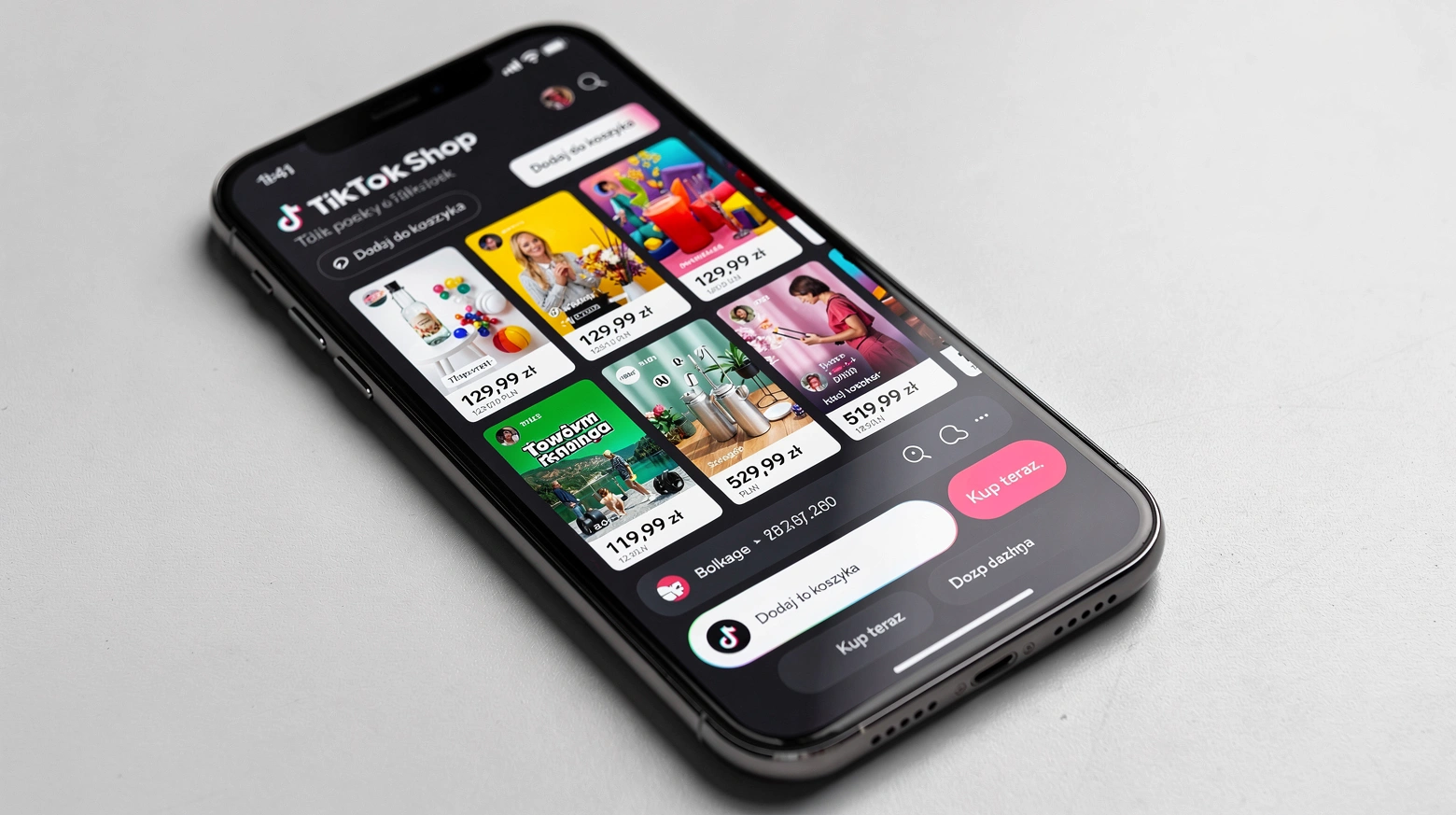
TikTok Shop is opening in Poland, marking the first commerce-platform launch by ByteDance in the Central European market and one of the most consequential e-commerce moves in the region in 2026. The launch turns a creator-driven entertainment app into a full in-feed marketplace for one of the largest digital consumer bases in the European Union, with implications for D2C brands, established marketplaces, traditional retailers, payments providers and the wider logistics network. Poland becomes the company’s eighth European market after the United Kingdom, Ireland, Spain, Italy, Germany, France and the Netherlands, and the first outside the Western Europe core.
In short
- TikTok Shop launched in Poland in 2026, adding the country to its eight-market European footprint and bringing native in-feed shopping, live shopping and creator affiliate tools to roughly 13 million local active users.
- Polish consumers gain a native checkout experience without leaving the app, while merchants get a new acquisition channel that bypasses Google Search and the established Polish marketplace stack.
- The launch lands in a market already shaped by Allegro, Empik, Shopee Poland and Temu, where price sensitivity, free returns expectations and high BLIK adoption define what works at checkout.
- Categories most likely to move first: beauty, fashion, home accessories, food supplements and consumer electronics under PLN 500, mirroring the early Shop UK and Shop Italy launch profile.
- For brands and retailers already operating in Poland, the practical question in the first 90 days is which products to seed onto Shop, which creators to brief, and how to balance Shop visibility against Allegro and existing D2C channels without cannibalising margin.
What is TikTok Shop and how does it actually work?
TikTok Shop is the native commerce surface inside the TikTok app (see TikTok’s official Shop overview for the platform’s own description of the feature set). Instead of redirecting users to an external website or a separate marketplace, products are listed, browsed, purchased and paid for inside the app itself. The shop sits on top of three primary feeds: short video, livestream and a dedicated Shop tab that increasingly resembles a vertical-video marketplace home page. For consumers the experience is closer to discovery commerce than to traditional search: products are surfaced through algorithmic recommendation, creator affiliate posts and live shopping events rather than through query intent.
From a merchant point of view Shop combines three operational layers: a seller dashboard for catalog and orders, an affiliate network that connects products to creators on a commission basis, and a paid promotion layer where brands or sellers can boost specific videos to broader audiences. Sellers can fulfill themselves, use TikTok’s local fulfillment partners, or rely on the cross-border programme for select categories. Payments are processed inside the app through TikTok’s payments stack, integrated locally with the dominant payment rails of each market.
The model is closer to the Chinese Douyin commerce playbook than to Western marketplaces. The defining shift is that purchase intent is generated and captured inside the same content session, often within minutes of first product exposure. That short loop reshapes everything downstream: catalog choice, content production, ad budget allocation, returns policy and even how merchants forecast demand.
Why the launch matters now
Poland is the largest e-commerce market in Central Europe and one of the fastest growing in the EU on a per-capita basis. TikTok has reported that its Polish audience consistently ranks among the most engaged in Europe on time spent per session and creator content production. Combined with a domestic e-commerce stack that is already digital first, with high adoption of mobile commerce and digital wallets, the country represents one of the most prepared markets in the region for a Shop launch. The timing also tracks with TikTok’s stated ambition to be the third major commerce platform in Europe by 2027, behind Amazon and the combined CEE marketplace ecosystem.
Why Poland specifically, and why now?
The decision to add Poland in 2026 rather than earlier reflects a combination of regulatory clarity, operational readiness and competitive context. The Digital Services Act framework that came into full effect across the EU in 2024 created a more predictable compliance environment for in-app commerce. The Polish payments stack matured enough to make BLIK integration straightforward, and the local logistics network, dominated by InPost parcel locker density, gives TikTok an operational partner profile that is rare in other launch markets.
Competitive pressure also accelerated the decision. Temu entered Poland aggressively in 2023, Shein has been operating since 2022, and Allegro has continued to defend share through pricing, the Smart subscription, and platform improvements. Without TikTok Shop, the discovery commerce share of Polish e-commerce was flowing to Meta-driven D2C funnels and to TikTok-driven affiliate links pointing to Allegro or directly to D2C sites. Bringing checkout inside the app captures the value that was previously routed elsewhere.
The wider Central European context matters as well. Poland is the natural launch market for a broader CEE rollout, with the Czech Republic, Romania and Hungary likely following within 12 to 24 months. From a logistics perspective, Polish fulfillment can serve the surrounding markets through cross-border programmes long before each country gets a native Shop. Brands that win on Polish Shop now build a base for the rest of CEE next year.
| Market | Launch year | Population | Smart-phone users | Primary payment rail |
|---|---|---|---|---|
| United Kingdom | 2021 | 67 million | 56 million | Cards, Apple Pay, Klarna |
| Spain, Italy, Ireland | 2024 | ~123 million combined | ~98 million combined | Cards, SEPA, Bizum, Satispay |
| Germany, France, Netherlands | 2025 | ~218 million combined | ~180 million combined | SEPA, PayPal, Klarna, iDEAL |
| Poland | 2026 | 38 million | 32 million | BLIK, cards, SEPA |
What changed between Western Europe and Poland
The 2024 and 2025 launches in Western Europe gave TikTok the operational template that is now being applied to Poland. The Spanish and Italian rollouts in particular surfaced lessons about creator earning thresholds, return rates by category, and the role of livestream commerce in markets where livestream culture is less mature than in China or the UK. Spain’s beauty and fashion success and Italy’s strong food and home categories shaped the playbook that ByteDance is now adapting to Polish consumer behaviour.
Polish consumers differ from Western European peers in three operationally relevant ways. First, free returns are not just expected but legally protected for a longer window than in many comparable markets. Second, parcel locker delivery dominates the last mile in a way that has no Western European parallel at the same density. Third, BLIK is the default payment method for around three quarters of digital natives, ahead of cards and Apple Pay. Each of these factors requires specific Shop configuration that did not exist at launch in earlier markets.
What does the Polish launch mean for D2C brands already operating in the market?
For brands that have built D2C operations in Poland over the past five years, TikTok Shop is both opportunity and risk in the same product. The opportunity sits in the new acquisition channel: brands that were paying Meta or Google for traffic that converted on their own websites can now run product seeding and affiliate campaigns on Shop, potentially at lower customer acquisition cost. The risk sits in catalog cannibalisation and margin compression: Shop’s commission structure plus the affiliate commission paid to creators can compress unit economics if brands do not adjust pricing, bundle strategy and promotion mix.
The cleanest mental model for brands in the first 90 days is to treat Shop as a parallel channel rather than a substitute. Continue running the D2C website with its higher-margin direct customer relationship, and use Shop as the discovery channel for new customers who would not have found the brand otherwise. Many brands in the UK and Spain that experienced the highest returns in the first year used Shop primarily for hero product launches and limited-time drops, while keeping the long tail of catalog on the D2C site.
The practical question is which products to seed onto Shop. Three category profiles consistently outperform across Shop launches. First, beauty and personal care under PLN 200, where visual storytelling on short video naturally pairs with product demonstration. Second, fashion and accessories under PLN 350, particularly items with clear visual identity that translate to creator content. Third, food, snacks and supplements under PLN 100, where impulse-driven discovery matches the in-feed purchase moment. Categories that historically underperform include heavy electronics, large home goods and any product with extended decision cycles.
How brands should think about Shop versus Allegro
Allegro remains the largest e-commerce platform in Poland and the default destination for intent-based product search. Shop is the opposite: it captures demand that did not yet exist in a search query. The two channels are complementary rather than competitive in the first year. Brands that already sell on Allegro should treat Shop as an addition to their channel mix, not a replacement, and should expect different customer profiles, return patterns and basket compositions on each platform.
Pricing strategy across the two channels requires specific attention. Allegro buyers compare prices across sellers on identical SKUs, and the platform’s Smart subscription rewards consistent below-market pricing. Shop buyers rarely comparison shop within the platform, but they do screenshot prices and surface them on other channels including TikTok itself. The cleanest pricing approach is consistent MSRP across both platforms, with promotional intensity varying by channel rather than baseline price varying. Brands that price aggressively lower on Shop to drive trial often face backlash from Allegro customers within weeks.
Inventory allocation is another decision point. Shop demand can spike sharply for hero products tied to viral creator content, with sold-out cycles within hours of a video reaching algorithmic distribution. Allegro demand is comparatively predictable, scaling with intent traffic. Brands should reserve a meaningful share of inventory for Shop hero products and accept that traditional sales-and-operations planning models will undershoot on viral cycles. The pattern observed in UK and Spain Shop operations is that the top five Shop SKUs by month frequently represent 40 percent of monthly Shop revenue.
What does this mean for Allegro and the rest of the Polish marketplace stack?
Allegro’s response strategy in the first 90 days will define how the Polish marketplace landscape evolves over the next two years. The platform has roughly 25 million monthly active users in Poland, against TikTok’s roughly 13 million monthly active users locally. In raw reach Allegro retains a significant advantage. The strategic concern is not headline reach but specific demographic segments and category share, particularly among consumers under 30 and in beauty, fashion and snacks.
Allegro’s likely defensive moves cluster around three vectors. Pricing and Smart subscription enhancements to retain existing buyers, expanded advertising and creator partnership programmes to capture content-driven demand inside the Allegro app, and aggressive category investment in beauty and fashion where Shop is most likely to take share. The Smart subscription has been the platform’s most effective retention tool against Temu and Shein, and similar logic is likely to apply against Shop. The question is whether Allegro can match the discovery moment that Shop owns inside short video and livestream.
Temu and Shein face a more direct competitive threat than Allegro. Both platforms rely on discovery commerce mechanics that are conceptually similar to Shop, with low-priced impulse purchases driven by algorithmic recommendation and aggressive marketing. Shop arrives with structural advantages: it is the algorithm itself, with no need to acquire users through paid ads on someone else’s platform. The likely outcome over 12 to 24 months is share consolidation among discovery commerce platforms, with Shop taking a meaningful slice of what Temu and Shein currently hold in Poland.
| Platform | Monthly Active Users (Poland) | Primary commerce mode | Strongest categories |
|---|---|---|---|
| Allegro | ~25 million | Intent-based marketplace search | Electronics, home, fashion, books |
| TikTok (Shop) | ~13 million | Discovery-driven in-feed commerce | Beauty, fashion, food, accessories |
| Temu | ~12 million | Discount-driven impulse commerce | Home goods, accessories, novelty |
| Shein | ~9 million | Fashion fast cycles | Fashion, accessories, beauty |
| Empik | ~6 million | Cultural products marketplace | Books, media, gifts |
What changes for traditional Polish retailers
Traditional Polish retailers, including the major grocers and department store chains, face a different question than D2C brands. The Shop launch directly affects two parts of their operations: customer acquisition for the categories that overlap with Shop’s strengths, and customer retention for the demographics that are most engaged on TikTok. For Biedronka, Lidl, Empik and the cosmetics retailers like Hebe and Rossmann, the next 90 days require a clear position on whether to operate a Shop presence as a complementary channel or to defend customer traffic to existing apps and physical stores.
Cosmetics and personal care retailers face the most immediate impact. Beauty is consistently the largest Shop category in every launch market, and the Polish cosmetics retail market is highly competitive. Both Hebe and Rossmann have strong own-brand programmes and could use Shop to launch limited-edition products with creator partnerships. The risk is that Shop pulls discovery away from the retailers’ own apps, where the customer relationship and data are owned. The opportunity is reaching demographics that the retailers’ apps under-index on, particularly consumers under 25.
How should retailers prepare in the first 90 days?
For any retailer or brand operating in Poland that wants to participate in the launch, the first 90 days require a specific operating plan rather than a generic store-up exercise. The pattern observed across UK, Spain and Italy launches is that brands that established clear Shop operations in the first quarter consistently outperformed brands that waited until the second quarter, with first mover advantage in creator partnerships and algorithmic surfacing being the largest single factor.
- Decide which products to seed. Pick 5 to 15 SKUs that match the discovery commerce profile: visually distinctive, priced under PLN 350, with strong unit margin to absorb commission. Avoid seeding the full catalog. The Shop algorithm rewards focused stores with consistent content rather than broad catalogs with diluted attention.
- Establish creator relationships now. The top 100 to 200 Polish creators in beauty, fashion and lifestyle will be approached by every brand entering Shop in the first quarter. Brands that establish relationships in the first 30 days, before the launch noise saturates the market, secure the highest-performing partnerships at the lowest commission rates.
- Configure logistics for parcel locker delivery. InPost remains the default last mile in Poland. Brands that configure Shop fulfillment to default to parcel locker delivery, with 24 to 48 hour delivery times, see meaningfully higher conversion rates than brands that ship to home address only.
- Set up BLIK as primary payment method. Shop’s payment integration with BLIK is critical for conversion. Brands that confirm BLIK is configured and visible at checkout see lower cart abandonment than brands with card-only checkout.
- Plan for return cycles. Polish consumer protection law gives 14 days for distance selling returns, and discovery commerce categories like beauty and fashion typically see 12 to 18 percent return rates. Brands should configure returns logistics through parcel lockers, accept the cost as a category baseline, and price products to absorb it.
Beyond these five operational decisions, the broader strategic question for the first 90 days is how to measure success. Headline GMV is the easy metric but not the most useful one. The cleanest leading indicators are creator partnership conversion rate, repeat purchase rate from Shop-acquired customers, and customer acquisition cost relative to Meta or Google paid channels. Brands that track these three metrics weekly in the first quarter consistently make better budget allocation decisions than brands that report only on GMV and revenue.
What are the risks and what should brands watch?
The Polish Shop launch carries three categories of risk that brands should plan for explicitly. The first is regulatory: the DSA framework requires platform-level moderation and transparency that affects how Shop operates in Poland, with the Polish telecommunications regulator (UKE) and the consumer protection authority (UOKiK) both having stated interest in monitoring discovery commerce more closely than traditional marketplace activity. Brands operating on Shop should expect compliance requirements similar to what already applies on Allegro and additional requirements specific to creator-driven commerce.
The second risk is brand safety. Discovery commerce on TikTok lives next to user-generated content that brands do not control. Creators promoting a product can also post videos that brands would not associate with. The standard playbook for managing this risk involves contractual content guidelines for affiliate creators, regular audit of creator content, and reserve takedown procedures for content that violates brand standards. The risk is harder to manage at scale and requires dedicated brand safety operations as creator partnerships grow beyond 20 to 30 active creators.
The third risk is operational concentration. The pattern in UK and Spain Shop operations is that one or two viral SKUs can represent 30 to 50 percent of Shop revenue in a given month. That concentration creates exposure: if the viral SKU sells out, returns spike, or the algorithmic distribution shifts, the entire month’s Shop performance can compress. The risk is best mitigated by maintaining a portfolio of 5 to 10 hero products with overlapping demand drivers rather than relying on one breakout SKU.
The categories most likely to move first
Beauty and personal care will lead the Polish Shop launch by a wide margin, based on the launch profile of every prior market. Within beauty, the early winners typically cluster in three sub-segments: indie skincare brands with strong product hero stories, mass-market makeup brands that pair well with creator demos, and emerging fragrance brands with distinctive visual identity. The Polish beauty market is large enough and price-sensitive enough that creator-driven discovery can outperform traditional brand spending in the first year.
Fashion follows beauty in launch trajectory, with fast fashion under PLN 200 leading initial sales. The pattern in UK and Italy launches was that local fast fashion brands, not international names, captured the largest share of early Shop fashion revenue. For Poland this suggests that homegrown brands like Reserved, House and CCC’s own-brand lines have a structural advantage in the launch period, provided they configure Shop operations correctly.
Food and snacks under PLN 100 represent the third major category. Polish food retail has a strong tradition of local brands and specialty products that translate well to short video content. Health-oriented snacks, ready-to-drink coffee, and specialty chocolate brands fit the discovery commerce profile particularly well. The constraint in this category is logistics: food items require careful packaging and short shelf-life management, which limits which brands can participate effectively.
What is the outlook for TikTok Shop in Poland over 12 to 24 months?
The most likely trajectory for Shop in Poland over the next two years sits between the UK case, where Shop scaled to roughly five percent of UK e-commerce GMV in three years, and the Italian case, where slower adoption brought it to under two percent in the same timeframe. Three factors specific to Poland push the likely outcome toward the UK end of that range: high mobile commerce penetration, mature digital payments infrastructure, and the absence of a large existing creator commerce ecosystem on competing platforms that could absorb attention.
Three factors push toward the Italian end of the range: Allegro’s strong defensive position, lower average disposable income than the UK average, and the relative concentration of Polish e-commerce among a smaller number of established platforms. The realistic baseline for the first 12 months is two to three percent of Polish e-commerce GMV flowing through Shop, with concentration in beauty, fashion and food categories where the platform’s structural strengths align with consumer behaviour.
The two-year outlook depends on factors that are harder to predict. Whether Allegro responds aggressively or treats Shop as a parallel channel rather than direct competitor will shape category-level share. Whether Polish creators monetize Shop affiliate revenue at scale will determine whether discovery commerce becomes a primary commerce mode for under-30 consumers. Whether TikTok rolls out additional formats, particularly livestream commerce, will determine the rate at which Shop attention compounds over time. The cleanest view sits between five and eight percent of Polish e-commerce GMV by end of 2027, with significant concentration in specific categories.
What this means for the wider CEE region
Poland is the natural anchor market for a broader Central European rollout. The Czech Republic, Romania, Hungary and Slovakia each have meaningful TikTok audiences, but none has the combination of audience size, e-commerce maturity and logistics infrastructure that makes Poland the appropriate launch market for the region. The pattern that will most likely play out over the next 24 months is Polish fulfillment serving cross-border demand from neighbouring markets through the first 12 months, followed by selective native launches in 2027 for the largest of those markets.
For brands that operate across the region, the practical implication is that Shop presence in Poland should be built with cross-border fulfillment configured from day one. Brands that build Shop operations focused only on the Polish market miss the opportunity to capture demand from adjacent markets where Shop will not be native for another 12 to 24 months. The configuration of cross-border programmes is the single highest-leverage operational decision for region-wide brands entering Shop Poland.
FAQ: TikTok Shop Poland questions worth answering
When did TikTok Shop officially launch in Poland?
TikTok Shop opened in Poland in 2026, making the country the eighth European market with native Shop functionality. The launch followed the operational template established in Germany, France and the Netherlands in 2025, with adaptations for local payment rails, parcel locker logistics and consumer protection requirements specific to Poland. The launch covered the full Shop functionality including in-feed shopping, live commerce, creator affiliate tools and seller dashboards from day one.
How is TikTok Shop different from selling on TikTok with external links?
TikTok Shop is a native commerce surface inside the app, with the full purchase journey completed without leaving TikTok. Traditional TikTok marketing relied on linking from videos or profile bios to external websites, with the conversion happening on the brand’s own site. Shop captures the discovery moment and the purchase moment in the same session, typically within minutes of first product exposure. The economic model also differs: Shop charges sellers commission per transaction and pays creator affiliates a share, while traditional TikTok marketing relied on paid ads with no direct platform commission on resulting sales.
Which categories work best on TikTok Shop in similar European markets?
Across UK, Spanish and Italian Shop launches, three categories consistently lead in early adoption. Beauty and personal care under €30, particularly indie skincare and mass-market makeup that pairs well with creator product demonstrations. Fashion and accessories under €60, with local brands frequently outperforming international names. Food, snacks and supplements under €15, where discovery aligns with impulse buying patterns. Heavy electronics, large home goods and products with extended decision cycles consistently underperform. The Polish launch is likely to follow the same pattern with category-specific timing variations based on local consumer preferences.
How does Shop affect existing Allegro sellers?
Shop and Allegro serve different commerce modes and address different customer journeys, which makes them complementary rather than substitute platforms in the first year. Allegro is intent-based: consumers search for a specific product and compare options. Shop is discovery-based: products are surfaced through algorithmic recommendation and creator content, with purchase decisions made in the same session as first exposure. Most sellers will benefit from operating both platforms with different SKU mixes and content strategies. The risk for Allegro sellers is concentrated in beauty and fashion categories where Shop is likely to take meaningful share over 12 to 24 months, particularly among consumers under 30.
What does TikTok Shop charge sellers and creators in Poland?
TikTok Shop’s commission structure typically combines a base platform fee with category-specific transaction fees and optional creator affiliate commissions. In other European markets the base commission for sellers has been five to eight percent of transaction value, with category variations. Creator affiliate commissions are negotiated by brands and typically range from 10 to 20 percent of the affiliate-driven sales. Poland-specific rates were announced at launch and align with the European structure. Brands should model unit economics with the full commission stack, including the creator affiliate share for the portion of Shop revenue driven by affiliate content.
How do returns work on TikTok Shop in Poland?
Polish consumer protection law gives 14 days for distance selling returns, which applies to Shop purchases as it does to any other e-commerce platform operating in Poland. Sellers are required to accept returns within this window and to provide the return logistics. Shop’s returns infrastructure integrates with parcel locker networks for the return shipping leg, which significantly reduces friction for both consumers and sellers compared to home pickup. The typical return rate for discovery commerce categories is 12 to 18 percent of orders, with higher rates in fashion than in beauty or food. Sellers should price products to absorb expected return rates rather than treating returns as a margin-positive event.
Is TikTok Shop available to non-Polish brands selling into Poland?
Yes, through the cross-border seller programme. Brands based in other European markets can sell to Polish consumers through Shop Poland with cross-border fulfillment, though specific category restrictions apply. The trade-off is delivery speed: cross-border delivery typically takes five to ten days, compared to one to three days for local Polish fulfillment. For products in the high-velocity discovery commerce profile, this delivery speed difference materially affects conversion rate. Brands serious about Polish Shop operations typically transition from cross-border to local fulfillment within the first six months if volumes justify the operational investment.
How should retailers measure Shop performance in the first 90 days?
Headline GMV is the easy metric but not the most useful one in the first quarter. The three most informative leading indicators are creator partnership conversion rate, customer acquisition cost relative to Meta and Google paid channels, and repeat purchase rate from Shop-acquired customers measured at 30 and 60 days. Brands that track these three metrics weekly in the first 90 days consistently make better budget allocation decisions than brands that report only on revenue and order count. The second-tier metrics worth tracking include category-level return rate, average time from first video exposure to purchase, and the share of revenue concentrated in the top five SKUs by month.
What to read next
The Polish Shop launch sits inside a wider transformation of European e-commerce that touches creator economies, marketplace consolidation, payment infrastructure and consumer behaviour. Brands and retailers participating in the launch should treat the first 90 days as an operational sprint to establish the basics, the second 90 days as a refinement period to optimize creator and SKU mix, and the second half of the first year as a strategic positioning window for the broader CEE rollout. The brands that win in Poland Shop over the next 24 months will be the ones that built operational depth in the first quarter and used that base to compound through the rest of the launch year.