
Ocado Group told the market on Monday that Tim Steiner, the co-founder who has run the online grocery pioneer for more than a quarter of a century, will step down as chief executive. In a regulatory filing released at 07:00 in London, the company said Steiner would hand over the top job by the start of its 2028 financial year and move into a newly created founder role that runs through 2029.
The statement stops well short of naming a replacement. Instead, it formalises a transition that had been the subject of intense press speculation since late June, when reports first suggested that the board had begun lining up a successor. For a company whose identity has been fused with its founder for 26 years, the announcement marks the clearest signal yet that the Steiner era is drawing to a close.
The timing is not incidental. Ocado has spent the past two years trying to convince investors that it can turn a decade of heavy losses and capital-hungry expansion into durable cash generation. A planned, multi-year handover lets the board manage that message on its own terms rather than under the pressure of a sudden departure.
In short
- Steiner steps down as CEO: Ocado confirmed that co-founder Tim Steiner will leave the chief executive role by the start of its 2028 financial year, then serve in a founder capacity through 2029.
- No successor named yet: the board has opened a formal succession process. Press reports have linked the role to Niklas Heuveldop, chief executive of Ericsson-owned Vonage, but Ocado has not confirmed any candidate.
- A strategic pivot underpins the move: the group is shifting away from giant, capital-intensive warehouses toward lighter automation, and is targeting cash generation as the next chief inherits a leaner mandate.
- Two businesses, one transition: Ocado sells warehouse technology to grocers worldwide and owns half of a UK retail joint venture with Marks and Spencer, so the leadership change touches partners on several continents.
- Investors want proof, not promises: the shares trade far below their pandemic-era peak, and the market reaction will hinge on who takes over and how fast profitability arrives.
What did Ocado actually announce on 6 July?
Ocado issued the update through the London Stock Exchange’s Regulatory News Service, the channel listed companies use for price-sensitive disclosures. The filing was headed a leadership transition update, and its core message was procedural rather than dramatic: an orderly, pre-planned handover rather than an abrupt exit.
According to the statement, Steiner will continue as chief executive in the near term, “driving the Company’s strategy, operations and growth initiatives,” before stepping down by the start of the 2028 financial year. He will then take on a founder role through 2029, providing what the company described as strategic guidance, deep market expertise and support to the board, management team and customers.
The formal wording
The board framed the change as a continuity exercise. It said the process was designed to support Ocado’s long-term success while maintaining continuity for colleagues, clients and shareholders. The only attributable sentiment came from the board itself: “The Board is grateful for Tim’s continued leadership and looks forward to working alongside him throughout this next chapter of Ocado’s development.”
That phrasing matters. By keeping Steiner attached to the company in a founder capacity, Ocado is trying to reassure the grocers that license its technology that the person most associated with the platform will not simply walk out the door.
What the announcement did not say
Three omissions stand out. First, the filing named no successor and gave no shortlist, leaving the market to fill the gap with speculation. Second, it attached no precise calendar date to the handover, tying it instead to the start of a financial year and, implicitly, to the pace of the search. Third, it offered no fresh financial guidance, so the announcement should be read as a governance statement, not a trading update.
The absence of a named replacement is the single biggest open question. Until the board confirms a candidate, investors cannot judge whether the next phase represents continuity or a genuine change of direction.
Who is Tim Steiner, and why does his exit matter?
Steiner co-founded Ocado in 2000 alongside two fellow former Goldman Sachs bankers, betting that British shoppers would buy groceries online years before the idea became mainstream. He has been chief executive throughout, steering the company from a delivery start-up into a business that sells its warehouse robotics and software to some of the world’s largest supermarket chains.
That longevity cuts both ways. Founders who stay for decades accumulate deep institutional knowledge and credibility with partners, but they can also become synonymous with a strategy that markets eventually want to see tested by fresh leadership. Ocado’s share-price journey, from a pandemic-era high to a fraction of that value, has sharpened the second argument.
His departure also resets the company’s relationship with its own history. Ocado has always sold itself as a technology business that happens to have started in groceries. The next chief executive will have to decide how hard to lean into that identity, and whether the founder’s vision of automated, centralised fulfilment still fits a market that increasingly prizes flexibility.
Who could replace him?
Ocado did not name a candidate, but the vacancy has already produced a frontrunner in the press. Reports in late June, led by Sky News, linked the role to Niklas Heuveldop, chief executive of Vonage, the communications-platform business owned by Sweden’s Ericsson. The company has not confirmed that Heuveldop is in the running, and the board has said only that it engages regularly with potential candidates as part of routine succession planning.
The search is being led by chair Adam Warby, who took the role in late 2024. His task is delicate: find a leader credible enough to reassure global grocery clients, commercial enough to satisfy investors demanding profitability, and independent enough to move beyond the founder’s shadow while Steiner remains on the scene.
Internal candidate or outside hire?
The choice between promoting from within and recruiting externally will send its own signal. An internal appointment would emphasise continuity of the technology roadmap and reassure engineering-heavy partners. An external hire, particularly one from telecoms or enterprise software rather than grocery, would suggest the board wants a sharper focus on commercial execution and cost discipline than on retail instinct.
The reported interest in a telecoms executive fits a wider pattern. Boards at capital-intensive technology businesses often reach for leaders who have scaled recurring-revenue platforms, precisely the model Ocado wants its software licensing to become.
Why now? The pivot from giant warehouses to lighter automation
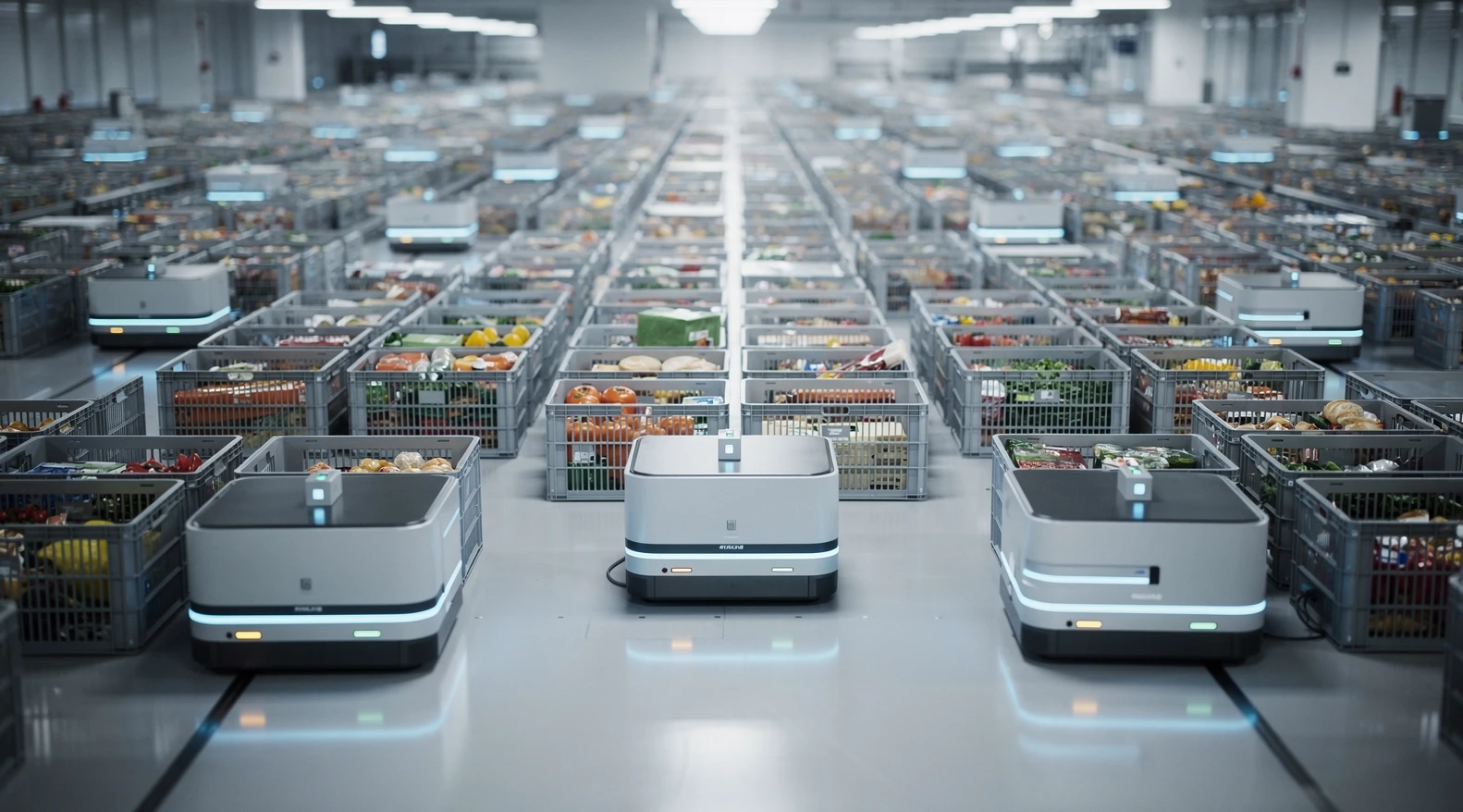
The leadership change lands in the middle of a strategic reset. For years, Ocado’s pitch centred on the Customer Fulfilment Centre, a vast automated warehouse in which thousands of robots pick grocery orders. Those sites are technologically impressive but expensive and slow to build, and they concentrate a partner’s investment in a handful of huge facilities.
More recently, the group has emphasised lighter, more flexible options: smaller automated sites, in-store fulfilment technology and micro-fulfilment closer to customers. The direction of travel mirrors a broader industry shift toward store-based grocery fulfillment that spreads cost and speeds delivery, rather than betting everything on centralised megasites.
The centralised-warehouse problem
The centralised model created a structural tension. Building fulfilment centres required large upfront capital from Ocado and its partners, and returns arrived only once each site reached high utilisation. When consumer demand cooled after the pandemic surge, some partners slowed or reconsidered expansion, and the pace of new site openings became a recurring worry for investors.
That is why cash generation, not just revenue growth, has become the yardstick. The next chief executive inherits a business that has spent heavily to prove its technology works and now has to prove it pays.
The shift to flexibility
Lighter automation is intended to lower the barrier to entry for grocers and shorten the payback period. It also aligns Ocado with the wider grocery-delivery market, where the emphasis has moved from grabbing share at any cost to protecting margins. That mirrors how India’s quick-commerce operators have pivoted from land grab to margin as investors lost patience with growth funded by losses.
For Ocado, the risk is that flexibility dilutes the moat. The company’s original advantage was that its megawarehouses were hard to replicate. Smaller, simpler systems may be easier for rivals to match.
What are the numbers behind the transition?
Ocado’s Monday statement contained no new financials, so the relevant figures come from the group’s recent disclosures and market history. The picture is one of a company that has grown revenue and expanded its client base while struggling to convert that into statutory profit, a gap that has weighed on the shares and made the founder’s pay a lightning rod.
The table below sets out the key markers investors are watching as the handover approaches. Figures are approximate and drawn from company reporting and press coverage; sterling amounts are converted at roughly 1.35 US dollars to the pound.
| Marker | Detail | Why it matters |
|---|---|---|
| Founder tenure | Co-founded 2000, CEO for about 26 years | Rare founder longevity; deep partner relationships |
| Handover timing | CEO exit by start of 2028 financial year | Planned, multi-year transition rather than a shock departure |
| Founder role | Advisory founder capacity through 2029 | Keeps founder knowledge attached to global partners |
| Profitability target | Focus on turning cash generative | The core test the next CEO must pass |
| Share price | Well below the 2020 pandemic-era peak | Sets a low bar and a high burden of proof |
The sector context is unforgiving. Even established grocery suppliers have shown how quickly margins can swing, as when General Mills posted a heavy quarterly loss on impairments while insisting the underlying business was improving. Ocado’s next leader will have to separate genuine progress from accounting noise in the same way.
How does Ocado’s model actually work?
To understand the stakes of the transition, it helps to separate the two very different businesses that sit inside Ocado Group. They serve different customers, carry different economics and will respond differently to a change at the top.
The technology solutions business
The first business licenses the Ocado Smart Platform, the software and robotics that run automated grocery warehouses, to supermarket chains around the world. Ocado earns fees as partners build and scale their sites, which makes this a long-cycle, capital-intensive but potentially high-margin operation once volumes mature. It is the part of the company that justifies the technology label and the part most exposed to a leadership change, because partners sign multi-decade commitments.
The Ocado Retail joint venture
The second business is Ocado Retail, the UK online supermarket most British consumers picture when they hear the name. It is a joint venture in which Marks and Spencer owns half, and it sells groceries directly to households. This arm generates consumer revenue and brand visibility, and it doubles as a live showcase for the technology Ocado wants to sell abroad.
The two halves are meant to reinforce each other: the retail arm proves the platform at scale, and the platform sales monetise that proof globally. A new chief executive will have to keep both narratives credible at once.
What does the change mean for Ocado’s global grocery partners?
Ocado’s technology customers span several continents, and each has committed significant capital on the assumption of long-term stability. A founder stepping back, even gradually, prompts every partner to reassess the relationship, which is precisely why the board built a multi-year runway and kept Steiner attached in a founder role.
The table below summarises the type of exposure at stake, using widely reported partner relationships. Specific commercial terms are confidential, so the entries describe the nature of the tie rather than contract values.
| Region | Partner type | Transition sensitivity |
|---|---|---|
| United States | Large national grocery chain | High: major automated-site commitments |
| United Kingdom | Retail joint venture with a leading retailer | High: brand and platform showcase |
| Continental Europe | National grocery operators | Medium: scaling automated fulfilment |
| Asia-Pacific | Regional grocery leaders | Medium: newer, growth-stage deployments |
| Canada | National grocery operator | Medium: established automated sites |
Grocery is also consolidating, which raises the stakes for continuity. Recent deals such as Kroger’s move to acquire Giant Eagle show how quickly the customer landscape can shift. A partner that merges or is acquired may rethink its automation roadmap, and Ocado wants a stable leadership story when those conversations happen.
How did investors react, and what about the pay backdrop?
When the succession reports first surfaced in late June, Ocado shares slipped by around 4 percent, a reminder that the market treats founder-dependence as both an asset and a risk. A formal, orderly transition can steady sentiment, but only if it comes with a credible successor and a clear profitability path.
Steiner’s remuneration has long been a flashpoint. He was the beneficiary of one of the most contentious long-term incentive awards in recent London market history, reported at around 59 million pounds (about 80 million US dollars at current rates) in a period when the company was deep in the red. That history means the terms of his founder role, and any payments attached to it, will draw scrutiny from governance-focused investors.
The broader question is capital allocation. Investors have grown sceptical of retail and retail-technology businesses that spend heavily without clear returns, and some management teams have responded with buybacks to signal confidence, as when MINISO launched a large buyback to argue its stock was undervalued. Ocado’s next leader will face pressure to show similar discipline, whether through cost control, cash generation or clearer capital returns.
How does this compare with other founder handovers?
Founder-led companies face a recurring dilemma when the founder is also the operational chief. The person who built the culture and the strategy is often the hardest to replace, yet the market frequently rewards a credible succession plan because it reduces so-called key-person risk. Ocado’s approach, a long runway plus a continuing founder role, is a common template for managing that tension.
The comparison is not only about governance optics. It shapes how partners, staff and investors price the future. A messy or contested exit can trigger client defections and talent flight, while a planned handover with the founder still involved tends to preserve relationships during the most fragile phase.
The gradual-handover model
Some technology and consumer companies keep their founders on as executive chairs, advisers or board members after they leave the chief executive seat. The logic is continuity: the founder remains available for the deepest strategic questions and the most important client relationships, while a new leader takes over daily execution. Ocado’s founder role, running through 2029, sits squarely in this tradition.
The trade-off is that a lingering founder can crowd the incoming chief executive. If partners still call the founder first, or if the board defers to the old leader on strategy, the new boss can struggle to establish authority. The success of Ocado’s design will depend on how cleanly the two roles are separated in practice.
The clean-break model
The alternative is a decisive exit, in which the founder leaves the board entirely and the new chief executive owns the strategy outright. This model gives the successor maximum freedom and sends a strong signal of change, but it sacrifices continuity and can unsettle long-term partners who valued the founder’s involvement. Ocado clearly chose continuity over a clean break, a decision that fits a business built on multi-decade client contracts.
What are the risks to a smooth transition?
A planned handover reduces risk but does not remove it. The gap between announcement and appointment is itself a period of uncertainty, and several things can go wrong before a new chief executive is in place and delivering. Understanding those risks helps explain why the shares are likely to stay volatile until the picture clears.
Execution risk during the search
Long searches can drift. If the board takes many months to name a successor, rivals and recruiters may unsettle Ocado’s own senior team, and partners may delay decisions until they know who is in charge. A drawn-out process also keeps the founder-dependence narrative alive, which is the very perception the board is trying to retire.
There is also the question of internal morale. Ambitious executives who hoped to win the top job may leave if an outsider is appointed, while an internal promotion could disappoint investors looking for a clean change of direction. The board has to weigh both audiences at once.
Strategy risk after the appointment
A new chief executive may reinterpret the strategy. That is often the point of bringing in fresh leadership, but it introduces the risk of costly reversals, whether in the pace of the pivot to lighter automation or in how aggressively the company chases new technology deals. Partners who signed up for one roadmap will watch closely for signs that the plan is changing under them.
Capital allocation is the sharpest version of this risk. If the incoming leader accelerates investment to win share, the profitability timeline could slip again; if they cut too hard, growth could stall. Threading that needle is the central challenge of the job.
Market-perception risk
Finally, perception can move faster than fundamentals. If the market decides the chosen successor is underpowered for the task, the discount to peers could widen regardless of operational progress. Conversely, a marquee hire could re-rate the shares before any numbers change. The board’s choice therefore carries a signalling weight that goes well beyond the individual’s resume.
Where does Ocado sit in the grocery-technology market?
Ocado occupies an unusual niche. It is neither a pure grocer nor a pure software vendor, but a hybrid that builds physical robotics and writes the software that runs them, then sells the whole system as a service. That combination is rare, and it is the source of both the company’s appeal and its cost problem.
The competitive set is widening. Traditional automation suppliers, in-house teams at large grocers, and a new generation of micro-fulfilment specialists all compete for slices of the same budget. As the market moves toward flexible, distributed fulfilment, Ocado’s challenge is to prove that its integrated approach still beats piecing together cheaper components.
The demand backdrop is genuine. Online grocery penetration has kept rising in most developed markets, and grocers know they need automation to serve it profitably. The open question is whether they will keep choosing large, bespoke systems or migrate to lighter, modular ones, and how quickly Ocado can adapt its economics to whichever way that choice breaks.
What happens next?
The immediate catalyst is the successor announcement. Until the board names a chief executive, the market will treat every leak and report as tradable, and the share price will stay sensitive to speculation. A widely respected external hire could lift sentiment; an unconvincing choice could deepen the discount.
After that, attention shifts to execution. Investors will watch whether the pace of new technology deals holds up, whether lighter automation genuinely shortens payback periods, and whether the group hits its cash-generation goals. The founder role gives Ocado a bridge, but the market will judge the next chapter on numbers, not narrative.
For now, the key facts are settled: Steiner is on his way out of the chief executive chair, the clock on a successor has started, and a company that spent 26 years defined by one leader is preparing, carefully, to be defined by someone else.
Frequently asked questions
Is Tim Steiner leaving Ocado entirely?
No. Ocado said Steiner will step down as chief executive by the start of its 2028 financial year, then move into a founder role through 2029, providing strategic guidance and support to the board, management and customers. He is stepping back from day-to-day leadership rather than cutting all ties.
When exactly will Steiner hand over the CEO role?
The company tied the handover to the start of its 2028 financial year rather than a fixed calendar date. The precise timing will depend in part on how quickly the board appoints a successor, so the exact handover date has not been confirmed.
Who will be the next Ocado CEO?
Ocado has not named a successor and says a formal process is underway. Press reports in late June, led by Sky News, linked the role to Niklas Heuveldop, chief executive of Ericsson-owned Vonage, but the company has not confirmed any candidate.
Why is Ocado changing leadership now?
The move coincides with a strategic shift from large, capital-intensive warehouses toward lighter, more flexible automation, and a sharper focus on cash generation after years of losses. A planned, multi-year transition lets the board manage that shift and reassure partners and investors.
What does Ocado actually sell?
Ocado Group has two arms. One licenses its warehouse robotics and software to supermarket chains worldwide. The other is Ocado Retail, a UK online supermarket run as a joint venture in which Marks and Spencer owns half. The retail arm doubles as a live showcase for the technology.
How did Ocado’s share price react?
When succession reports first emerged in late June, the shares fell by around 4 percent. Ocado stock trades well below its 2020 pandemic-era peak, which raises the burden of proof on any new leader to deliver profitability.
Does the change affect Ocado’s international partners?
Potentially, because partners commit large sums over long periods and value stability. Ocado tried to limit disruption by planning a multi-year handover and keeping Steiner attached in a founder capacity, signalling continuity to grocers that license its platform.
Was Steiner’s pay controversial?
Yes. He received one of the most contested long-term incentive awards in recent London market history, reported at around 59 million pounds (about 80 million US dollars), during a loss-making period. The terms of his founder role are likely to attract governance scrutiny.
What should investors watch next?
The successor announcement is the main near-term catalyst, followed by evidence on new technology deals, faster payback from lighter automation, and progress toward cash generation. The market will judge the transition on results rather than on the founder-role bridge.