
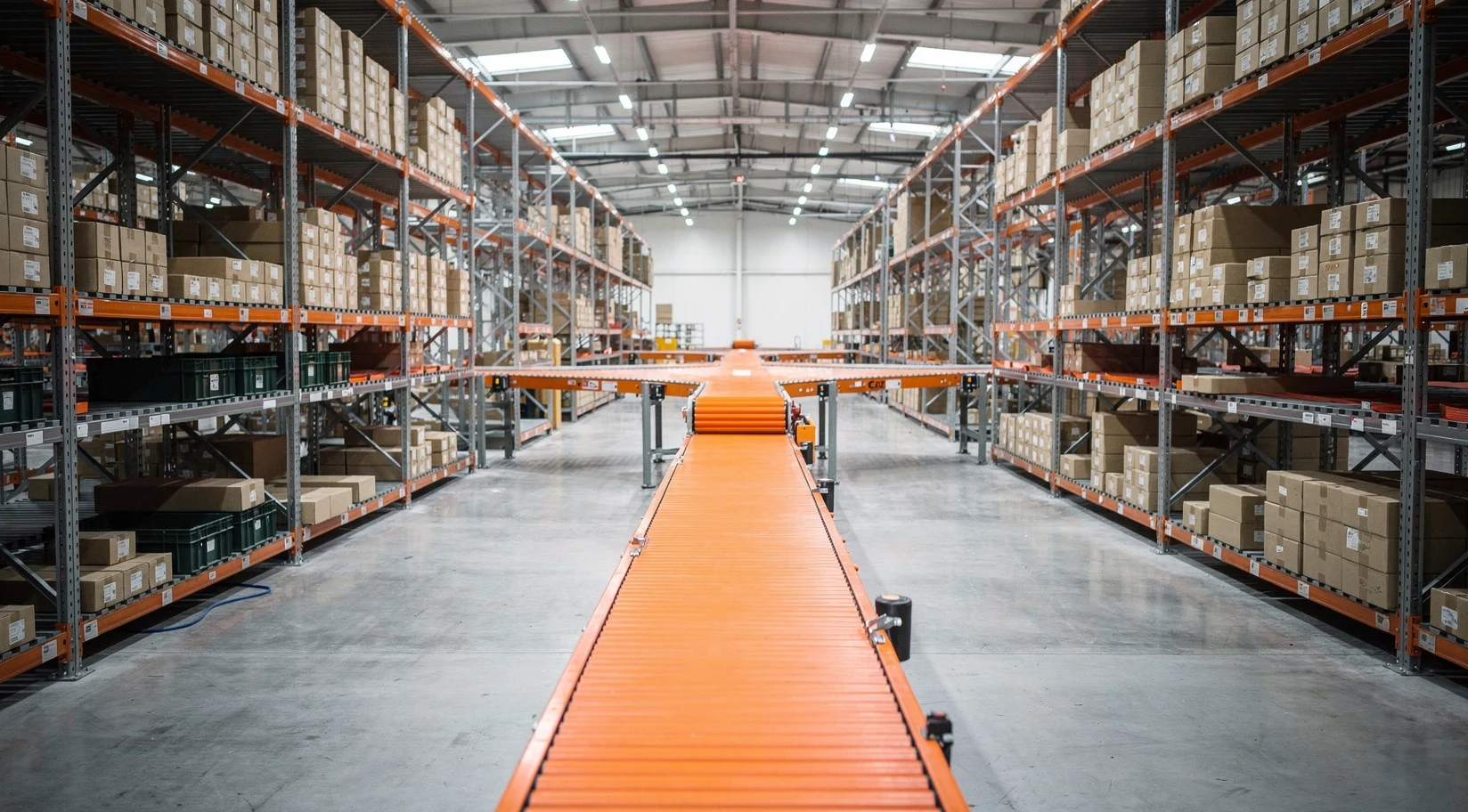
Ukraine carried its long-range drone campaign into the heart of Russian consumer commerce overnight into Saturday, July 18, 2026, striking two large distribution centers operated by Wildberries, the country’s biggest online marketplace. The attacks killed warehouse workers on the night shift, set a vast fulfillment hall ablaze, and knocked out a meaningful slice of the platform’s storage capacity at the start of the summer selling window. For a marketplace that stores billions of dollars of third-party inventory on behalf of small sellers, the strikes opened a second, quieter crisis: who absorbs the loss when the goods that burn belong to merchants, not to the platform.
The military dimension of the raid drew immediate global coverage, with Reuters, the BBC, CBS News, CNN, and Al Jazeera all reporting the casualties within hours. The commercial dimension is the one that will shape Russian e-commerce for months. This report focuses on what the strikes mean for Wildberries as a business, for the sellers who depend on its warehouses, and for a domestic online retail market that has spent five years learning to route around Western sanctions.
In short
- Two Wildberries warehouses hit. Ukrainian drones struck distribution centers in Kotovsk (Tambov region) and Elektrostal (Moscow region) in the early hours of July 18, according to Reuters and regional officials.
- At least eight dead. Regional governor Andrey Vorobiev and multiple outlets reported seven night-shift workers killed in Kotovsk and further deaths and injuries in the Moscow region, the deadliest Ukrainian strike inside Russia in about two years, per CNN.
- Up to 15% of capacity gone. A source cited by The Bell and relayed by Meduza estimated Wildberries may have lost the use of 10–15% of its total warehouse space.
- Sellers may not be paid. Wildberries reportedly reclassified drone and debris damage as force majeure, and chief executive Tatyana Kim said the marketplace is not obligated to compensate vendors for lost inventory.
- Damage in the hundreds of millions. Early estimates ranged from about 50 billion rubles (roughly USD 600 million) to Ukrainian figures near USD 1.3 billion, all preliminary and unverified.
What happened at the Wildberries warehouses
The strikes were part of one of the largest Ukrainian drone operations of the year. Russia’s Defence Ministry said its air defenses intercepted 379 Ukrainian drones over 19 regions and annexed Crimea during the night, according to figures carried by CBS News. Ukrainian President Volodymyr Zelensky said his forces had hit two logistics facilities in the Moscow and Tambov regions that he described as supplying sanctioned components for drone production and navigation equipment, along with an oil facility.
Russian accounts framed the same sites differently, as civilian commercial warehouses belonging to a consumer marketplace. Both descriptions can be true at once, and the gap between them is now part of the story. What is not in dispute is that the buildings hit were Wildberries fulfillment centers holding retail goods bound for households across Russia.
The dual-use framing is not a minor rhetorical point. If a country’s largest e-commerce operator can be characterized as a legitimate military target because its logistics network moves components as well as consumer parcels, then the line between civilian retail infrastructure and wartime supply chain becomes blurred. That ambiguity is now baked into how both sides describe the raid, and it will shape the legal and insurance arguments that follow. Independent verification of what the warehouses actually held is not currently possible.
The Kotovsk and Elektrostal strikes
The most severe damage was in Kotovsk, a town in the Tambov region roughly 220 miles from the Ukrainian border, where a Wildberries distribution center caught fire after being hit. Business Today reported the Kotovsk facility spanned about 188,000 square meters, a footprint larger than 30 soccer pitches. Founder and chief executive Tatyana Kim said the Kotovsk blaze had later been extinguished.
A second Wildberries center in Elektrostal, about 30 miles east of Moscow, was also struck, sending plumes of smoke over the capital region that several Russian outlets compared to a scene from fiction. A separate drone hit an oil depot in nearby Noginsk, prompting the evacuation of a maternity hospital and a residential building, according to CBS News.
Casualties and the human toll
Governor Vorobiev said seven night-shift workers died at the Kotovsk warehouse with around 25 wounded, and that 37 people were injured in the Moscow region, including one who later died in hospital. CBS News put the combined toll at least nine killed and more than 60 wounded across the night’s strikes. CNN described the raid as the deadliest Ukrainian attack inside Russia in about two years.
The victims were logistics staff working overnight to pick, pack, and stage orders, the invisible labor behind next-day delivery promises. Their deaths turned a supply-chain disruption into a mass-casualty event and guaranteed the strikes would dominate coverage far beyond trade and retail media.
Why Wildberries matters to global e-commerce
Wildberries is routinely described, including by the outlets covering the strikes, as Russia’s largest online marketplace and the closest domestic equivalent to Amazon. Founded in 2004 by Tatyana Bakalchuk, who now goes by Tatyana Kim, the platform grew from a clothing reseller into a general marketplace spanning apparel, electronics, groceries, and household goods. It sits at the center of how tens of millions of Russians shop online.
In 2024 Wildberries merged with Russ, an outdoor-advertising group, in a controversial deal that created a combined entity often referred to as RVB or Wildberries and Russ. The merger was accompanied by a high-profile corporate and personal dispute that spilled into Russian courts and politics, keeping the founder in the national spotlight well before this weekend.
The platform also occupies a strategic role in a sanctioned economy. Since 2022, when many Western retailers and brands exited Russia, domestic marketplaces absorbed the demand those departures left behind. Wildberries and its main rival Ozon became the default channels through which imported goods, parallel imports, and domestic production reach consumers, which raised their national importance beyond ordinary retail.
That systemic role cuts both ways. It gave Wildberries pricing power and reach that few marketplaces anywhere can match within a single country, but it also made the platform a piece of critical civilian infrastructure. Infrastructure that important is precisely the kind that becomes contested in wartime, as this weekend demonstrated.
The platform’s scale is what makes a single night’s damage consequential. When one operator handles a large share of a country’s parcels, the concentration that makes fulfillment cheap in normal times becomes a single point of failure under attack. That concentration risk is the same dynamic Western retailers debate when they weigh automation and capacity, a theme explored in our analysis of why retail logistics capex stays flat while automation’s share climbs.
How much fulfillment capacity Russia’s biggest marketplace lost
The clearest business figure to emerge came from The Bell, whose source estimated Wildberries may have lost the use of 10–15% of its total warehouse space, as relayed by Meduza. For a marketplace built on fulfillment-by-platform, warehouse space is not a back-office detail. It is the product. Sellers pay Wildberries to store, handle, and ship their goods, so square meters translate directly into how many orders the platform can move.
Losing a tenth or more of that footprint at once cannot be replaced overnight. Large automated fulfillment centers take one to two years to design, build, fit out, and staff, and Russia’s access to imported warehouse robotics and racking has been constrained by sanctions since 2022. The company said operations at the affected facilities were suspended while damage was assessed.
| Facility | Location | Reported impact | Source |
|---|---|---|---|
| Kotovsk distribution center | Tambov region, ~220 miles from border | ~188,000 sqm hit, major fire (later extinguished), 7 killed | Business Today, Governor Vorobiev |
| Elektrostal distribution center | Moscow region, ~30 miles east of Moscow | Struck and set alight, dozens injured | Reuters, CBS News |
| Total network capacity | Nationwide | Estimated 10–15% of warehouse space lost | The Bell via Meduza |
| Noginsk oil depot (nearby) | Moscow region | Fire, maternity hospital evacuated | CBS News |
Rerouting orders through the surviving network is possible, but it raises handling costs, lengthens delivery times, and pushes some inventory beyond reach until it can be physically relocated. Shoppers in affected regions may see slower shipping and thinner stock on popular items in the coming weeks. The company has not published a recovery timeline.
The seller-liability question that sets this apart
The detail that separates this from an ordinary warehouse fire is who owns the goods that burned. On a marketplace, much of the inventory in a fulfillment center belongs to third-party merchants, not to the platform itself. When that stock is destroyed, the question of compensation becomes a contract question, and the contract has recently changed in the platform’s favor.
According to reporting relayed by United24 Media, Wildberries updated its seller terms to classify damage caused by drone attacks or falling debris as force majeure, a category that typically excludes compensation. Meduza, citing The Bell, reported that a clause in the marketplace’s terms effectively shifts the loss onto small vendors. Chief executive Tatyana Kim said the company was working through the question of payments to affected sellers, while reiterating that the marketplace is not obligated to reimburse them for lost goods.
How marketplace fulfillment shifts inventory risk
Under a fulfillment-by-marketplace model, a seller ships inventory into the platform’s warehouses and pays storage and handling fees in exchange for faster delivery and better search placement. The trade-off is control: once the goods are inside, the seller depends entirely on the platform’s operations and its terms of service. A force-majeure clause that excludes wartime damage means the merchant carries the risk of events it cannot see or influence.
That is a sharp contrast with how large Western platforms have historically handled destroyed inventory, where lost or damaged units stored by the platform are often reimbursed at a set value. The comparison is imperfect, since policies vary and war is an extreme case, but it explains why Russian seller communities reacted with alarm. Merchants who thought they had outsourced logistics risk discovered they had also retained catastrophe risk.
Why the force-majeure clause is contentious
Force majeure is a standard contract concept that excuses a party from obligations when extraordinary events beyond its control intervene. The controversy is in the direction of the excuse. A clause that frees the platform from liability while the seller’s goods are physically inside the platform’s building places the entire loss on the party with the least control over the outcome.
Sellers will argue that they paid Wildberries specifically to safeguard and ship their inventory, and that storage is the core service they bought. The platform will argue that no operator can insure against military strikes and that spreading such losses across the business would be ruinous. Both positions are defensible, which is why the dispute is unlikely to resolve quickly or cleanly.
What the damage estimates say
Financial estimates circulated quickly and varied widely, a normal feature of the first hours after any disaster. Meduza reported a figure around 50 billion rubles, which converts to roughly USD 600 million at prevailing exchange rates, though the ruble’s value has been volatile and any conversion is approximate. Ukrainian outlet UA.NEWS cited preliminary losses near USD 1.3 billion, while the Ukrainian outlet Tsensor reported the company could lose up to 100 billion rubles across the two destroyed warehouses.
These numbers should be read as early, unaudited, and partly incompatible, since some count only the buildings and equipment while others fold in destroyed inventory and lost sales. What they agree on is order of magnitude: this is a loss measured in hundreds of millions of dollars, not tens of millions. The final figure will depend on how much stock was in the buildings and how the seller-liability dispute is resolved.
| Estimate | Local currency | Approx. USD | Source | What it appears to cover |
|---|---|---|---|---|
| Lower bound | ~50 billion rubles | ~USD 600 million | Meduza | Facilities and core damage |
| Upper Russian estimate | Up to 100 billion rubles | ~USD 1.1–1.2 billion | Tsensor (Ukraine) | Two warehouses, broader loss |
| Ukrainian estimate | Not stated in rubles | ~USD 1.3 billion | UA.NEWS | Preliminary total losses |
Currency notes matter here. The ruble has traded in a wide band through 2025 and 2026, so the same ruble figure can imply very different dollar totals depending on the day. Readers should treat all conversions in this report as indicative, not precise.
The sanctions and rebuild challenge
Replacing lost fulfillment capacity is harder in Russia in 2026 than it would be almost anywhere else. Modern high-throughput warehouses depend on imported technology: automated storage and retrieval systems, conveyor and sortation hardware, industrial robotics, and the software that runs them. Much of that supply chain runs through Western and allied vendors whose products are now restricted or unavailable to Russian buyers.
That leaves the company with slower options. It can lease existing warehouse space, which is cheaper to acquire but harder to automate to the same standard, or it can build new sites using domestic and gray-market equipment, which takes longer and can cost more per unit of throughput. Either path stretches the recovery timeline and squeezes the margins that made the marketplace model attractive in the first place.
There is also a labor dimension. Fulfillment centers run on large night-shift workforces, and an attack that killed workers on the floor will complicate hiring and retention at a moment when the company needs to staff up, not down. Insurance and hazard pay questions that were once theoretical are now operational.
The peak-season timing problem
The strikes landed at an awkward moment in the retail calendar. Late July and August are when marketplaces stage inventory for back-to-school demand and begin the long build toward year-end peak. Losing storage capacity now compresses the runway to restock and repositions goods just as order volumes typically start to climb.
Capacity shocks also ripple into shipping economics. When a network runs hotter because part of it is offline, per-order handling costs rise and delivery windows stretch, the same pressures Western retailers felt when freight and tariffs collided this month, as we covered in retailers racing a July 24 tariff cliff as ocean freight rates cool. For Wildberries, the added constraint is that it cannot simply import replacement automation quickly under sanctions.
Speed is now a competitive battleground everywhere, with rivals pushing sub-hour windows, a race detailed in our report on Amazon turning on 30-minute delivery for millions. A marketplace forced to lengthen delivery times while competitors shorten theirs risks losing frequency, the daily and weekly orders that make a platform sticky. That is the strategic cost hiding behind the physical damage.
How this compares to other warehouse and logistics shocks
Warehouse fires and outages happen in every large logistics network, usually from electrical faults, lithium batteries, or accidents. What makes the Wildberries case unusual is the cause, a deliberate military strike, and the scale, a double-digit share of national capacity in one night. Most commercial incidents take out a single building, not a slice of an entire country’s fulfillment base.
The event also differs from the slow-burn consolidation reshaping delivery elsewhere, where players merge or exit by choice rather than by force, a trend we track in our piece on why another scaled delivery player is likely to exit independence before year-end. Here the shock is sudden and external, which makes planning harder and recovery slower.
| Dimension | Typical warehouse fire | Wildberries drone strikes |
|---|---|---|
| Cause | Accidental (electrical, battery, human error) | Deliberate military strike |
| Scale of loss | Usually one building | Two centers, est. 10–15% of national capacity |
| Human toll | Often low with safety systems | At least eight killed, dozens injured |
| Insurance and liability | Commercial cover common | Reportedly excluded as force majeure for sellers |
| Rebuild constraints | Standard procurement | Sanctions limit imported automation |
What it means for sellers, shoppers, and rivals
The fallout will land differently across the three groups that make a marketplace work. Each faces a distinct version of the same shock.
Sellers
Merchants with stock in the destroyed warehouses face immediate, possibly uncompensated losses, plus lost sales while they wait for the platform to reroute or rebuild. Larger sellers may have insurance or the cash to reorder, while small vendors, the bulk of any marketplace, may not. The force-majeure clause turns a physical event into a financial one that falls hardest on those least able to absorb it.
Shoppers
Customers in affected regions may see slower delivery, out-of-stock listings, and fewer promotions as the network absorbs the loss. The effect should be regional and temporary rather than national and permanent, assuming the surviving warehouses can flex. Trust is the softer risk: repeated disruption teaches shoppers to keep a second app installed.
Rivals
Competitors such as Ozon and Yandex Market stand to gain share if Wildberries stumbles on delivery, the way any outage sends demand to the next-fastest option. The same cross-border pressures squeezing marketplaces worldwide, including the regulatory scrutiny detailed in our coverage of Shein’s sinking IPO price tag as the EU crackdown bites, show how quickly a marketplace’s fortunes can turn on external events it does not control. In Russia, the external event is now literally arriving by air.
What global retailers should take from this
The specifics of a Russian marketplace in wartime do not transfer directly to retailers in calmer markets, but the underlying lesson does. Centralized fulfillment concentrates efficiency and risk in the same buildings, and the terms that govern stored inventory decide who pays when those buildings fail. Most sellers read storage fees and delivery-time promises closely, and skim the liability clauses. This weekend is a reminder that the clauses matter most exactly when everything else has gone wrong.
For operators, the takeaway is resilience planning. Geographic dispersion of inventory, clear and fair damage policies, and transparent communication with sellers are cheap in normal times and priceless in a crisis. Platforms that treat their merchant base as a partner rather than a risk sink tend to keep that base when conditions turn. Trust, once lost across a seller community, is expensive to rebuild.
For sellers everywhere, the practical response is diligence: understand where your goods physically sit, what happens if a facility is lost, and whether your own insurance covers inventory held by a third party. Diversifying across more than one fulfillment channel adds cost but buys optionality. The merchants best positioned after a shock are usually the ones who asked these questions before it arrived.
What to watch next
Three questions will define the aftermath. First, whether Wildberries pays sellers anything despite the force-majeure stance, since a hard refusal risks an exodus of merchants and a softer gesture risks setting a costly precedent. Second, how fast the company can restore or replace the lost capacity under sanctions, which will determine whether the disruption is measured in weeks or quarters.
Third, whether more consumer-logistics sites are targeted, which would force every Russian marketplace to rethink where it concentrates inventory. If warehouses that once looked like neutral commercial infrastructure are now treated as strategic targets, the economics of centralized fulfillment in Russia change. For a market that built efficiency on scale and concentration, that would be a structural shift, not a one-night setback.
For now, the immediate facts are settled and grim: workers dead, warehouses burned, capacity cut, and a compensation fight beginning. The longer-term question is whether a marketplace can keep promising fast, cheap delivery when the buildings that deliver it are no longer safe.
Frequently asked questions
What is Wildberries?
Wildberries is Russia’s largest online marketplace, often described as the country’s closest equivalent to Amazon. Founded in 2004 by Tatyana Bakalchuk, now Tatyana Kim, it sells apparel, electronics, groceries, and household goods, and in 2024 merged with the advertising group Russ to form a combined entity sometimes called RVB.
What happened on July 18, 2026?
Ukrainian drones struck two Wildberries distribution centers, one in Kotovsk in the Tambov region and one in Elektrostal in the Moscow region, in the early hours of July 18. The strikes killed warehouse workers, set a large facility on fire, and damaged part of the marketplace’s storage network, according to Reuters, CBS News, and regional officials.
How many people were killed?
Reports put the toll at least eight, and by some counts nine, with more than 60 injured across the night’s strikes. Regional governor Andrey Vorobiev said seven night-shift workers died at the Kotovsk warehouse, with further deaths and injuries in the Moscow region. CNN described it as the deadliest Ukrainian attack inside Russia in about two years.
How much warehouse capacity did Wildberries lose?
A source cited by The Bell and relayed by Meduza estimated the company may have lost the use of 10 to 15 percent of its total warehouse space. That is a significant share for a marketplace that relies on storing and shipping goods on behalf of third-party sellers, and it cannot be replaced quickly.
Will sellers be compensated for lost goods?
It is unclear and disputed. Wildberries reportedly reclassified drone and debris damage as force majeure, which typically excludes compensation, and chief executive Tatyana Kim said the marketplace is not obligated to reimburse vendors. The company said it was working through the question of payments, so the outcome remains open.
How large was the financial damage?
Estimates are preliminary and vary. Meduza reported a figure around 50 billion rubles, roughly USD 600 million at prevailing rates, while Ukrainian outlets cited losses near USD 1.3 billion and up to 100 billion rubles. All figures are early, unaudited, and depend on how much inventory was destroyed.
Why did Ukraine target these warehouses?
President Volodymyr Zelensky said the strikes hit logistics facilities that supplied sanctioned components for Russian drone production and navigation equipment, along with an oil facility. Russian accounts described the same sites as civilian commercial warehouses. Both framings have circulated, and the buildings held retail goods for a consumer marketplace.
What does this mean for shoppers in Russia?
Customers in affected regions may face slower deliveries, out-of-stock listings, and fewer promotions while the network absorbs the loss and reroutes orders. The impact is expected to be regional and temporary rather than nationwide and permanent, provided the surviving warehouses can handle the extra volume.
Which competitors could benefit?
Rivals such as Ozon and Yandex Market could gain orders if Wildberries struggles with delivery times or stock availability. Shoppers tend to shift to the next-fastest option during disruptions, so any prolonged capacity shortfall could hand share to competing platforms.