
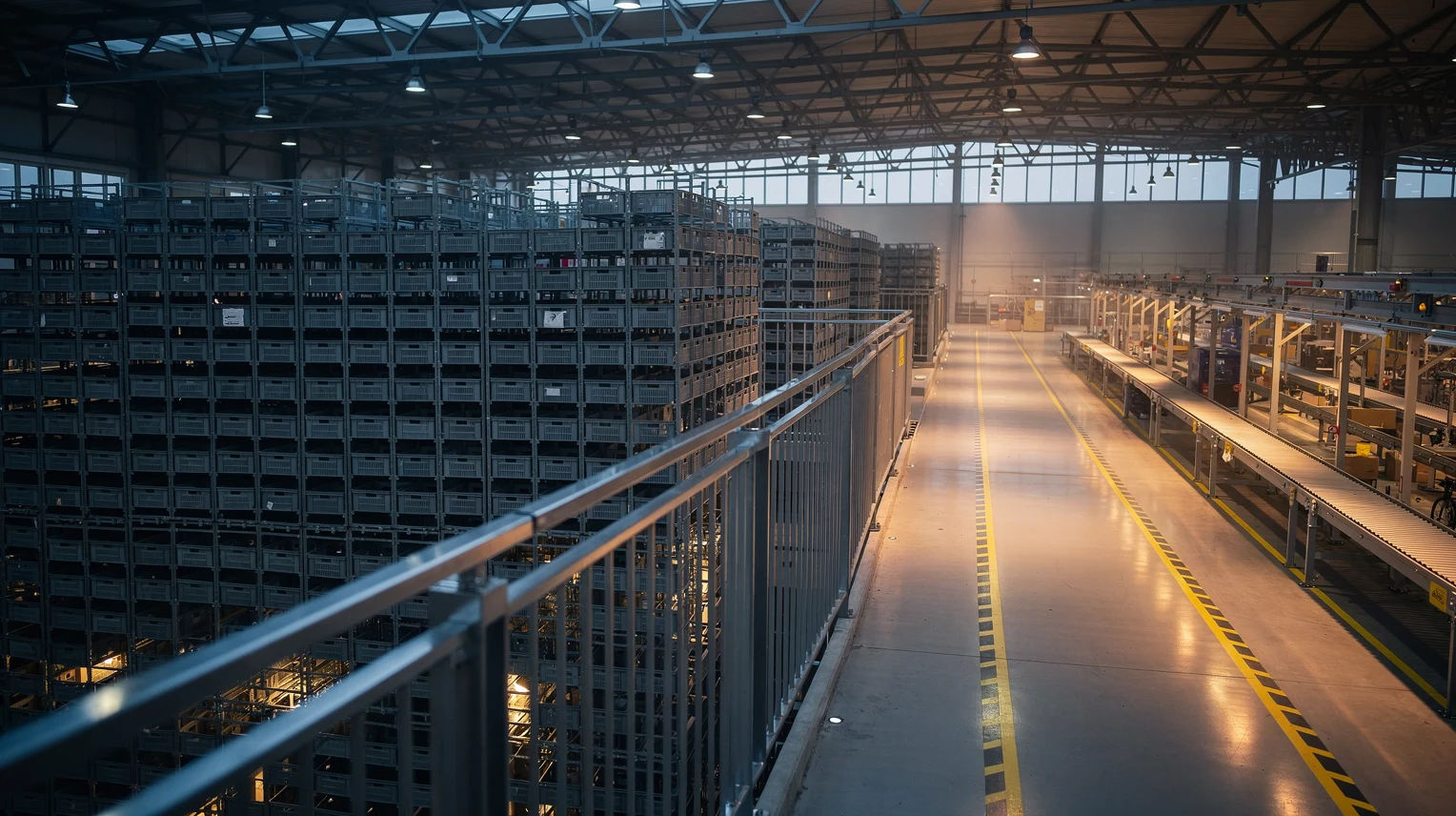
US holiday hiring in 2026 is likely to split rather than simply shrink. The prediction here is narrow and checkable: between mid-September and 31 October 2026, transportation, warehousing and parcel employers are likely to announce seasonal intakes at or above their 2025 levels, while store-based seasonal hiring falls again and absorbs effectively all of the headline decline. Three disclosures from the past four weeks point that way, and the newest of them is only a day old.
This is a refinement of a call this desk made on 12 August, not a reversal of it. The headline number still looks likely to set a new post-2009 low. What the August data changes is where the cut lands, and the answer increasingly looks like the sales floor rather than the fulfilment centre.
In short
- The prediction: holiday 2026 seasonal hiring likely splits by function, with warehouse, fulfilment and parcel intakes flat to higher versus 2025 and store-based intakes down enough to carry the entire headline decline.
- The timeframe: first checkpoint at the seasonal outlooks in mid-to-late September 2026, second across company announcements through 31 October 2026, definitive read in the fourth-quarter payroll data published January 2027.
- Signal 1: Indeed Hiring Lab’s 24 August snapshot puts Loading and Stocking postings up about 11% year over year at roughly 108 on its index, against an overall postings index of 101.8 that is down 2.9% year over year.
- Signal 2: the Association for Advancing Automation reported 17,995 North American robot units ordered in the first half of 2026 worth $1.166bn, units up only 2.0% while order value rose 6.6%, a mix shift toward larger systems with longer commissioning windows.
- Signal 3: the Amazon and AutoStore agreement announced on 13 August set commercial terms with no volume commitment, no disclosed financials, no named sites and no timeline, which reads as procurement optionality for 2027 and beyond rather than capacity for this peak.
Why this matters now
Peak-season hiring has been one of the cleanest forced disclosures in retail. To staff a holiday, a company has to commit to headcount in August and September, months before it knows what November looks like. That made the seasonal number a genuine leading indicator of retail confidence for roughly two decades.
That relationship has been degrading, and the degradation is the interesting part. This desk argued on 12 August that holiday 2026 retail hiring is likely to set a new low, on the reasoning that the capacity retailers need for this peak had already been bought as capital equipment rather than as temporary staff. Three data releases since then complicate the timing of that substitution without undermining its direction.
The complication is a lead-time problem. Automation ordered in the first half of 2026 does not run parcels in November 2026. Large goods-to-person systems, cube storage grids and high-throughput sortation typically need 12–24 months from order to steady-state throughput, and the newest order data suggests the mix has tilted toward exactly those longer-cycle systems.
If that is right, holiday 2026 is the last peak before the current automation wave is meaningfully live. The labour it displaces is 2027 and 2028 labour. The labour it needs this year is human, and it needs it in warehouses.
Signal 1: warehouse job postings are outrunning the market
Indeed Hiring Lab published its US labour market snapshot on 24 August 2026. The headline is unremarkable: the overall Job Postings Index sat at 101.8 as of 14 August, roughly 1.8% above its 1 February 2020 baseline, up 0.2% on the month for a second consecutive monthly gain, and down 2.9% year over year. The framing in the release is that labour demand is still declining but decelerating.
The occupational detail is where the useful information sits. Loading and Stocking postings were up about 11% year over year at roughly 108 on the same index, and Production and Manufacturing was up about 8% at roughly 121. For contrast, Software Development sat at 74.4, far below its pre-pandemic level.
The spread is the point. A category running 11% higher year over year inside an aggregate that is 2.9% lower is outperforming the market by roughly 14 percentage points of growth. That is not noise in a monthly print, and it is the single most direct read available on what warehouse operators are actually doing with headcount in the run-up to peak.
Two caveats belong here rather than in the caveats section, because they bear on how much weight the signal carries. Loading and Stocking is broader than e-commerce fulfilment and includes manufacturing, food distribution and general third-party logistics, so the category is not a clean proxy for retail peak prep. Postings also measure intent to hire rather than hires, and in a loose labour market a posting can sit open longer without producing a body.
| Indeed measure (as of 14 Aug 2026) | Index level | Year-over-year change |
|---|---|---|
| Overall Job Postings Index | 101.8 | -2.9% |
| Loading and Stocking | ~108 | +11% |
| Production and Manufacturing | ~121 | +8% |
| Healthcare | ~113 | Declining |
| Software Development | 74.4 | Well below baseline |
Timing gives the print extra weight. The 14 August reference date sits inside the window when peak staffing plans convert from forecast to requisition, so the postings series is capturing decisions already made rather than intentions still forming. A category accelerating at that point in the calendar is a harder signal to dismiss than the same move in April.
Read against the automation thesis, this is awkward for the strong version of it. If robots were absorbing peak volume this year, the posting series that covers the affected work should be flat or falling. It is doing the opposite, and it is doing so in the exact eight-week window when peak staffing decisions get made.
Signal 2: robot orders rose in value, not in units
The Association for Advancing Automation reported North American robot orders for the first half of 2026 in the third week of August. Companies ordered 17,995 units worth $1.166bn, with unit orders up 2.0% and order value up 6.6% against the first half of 2025. Several trade outlets rendered this as a warehouse robot number; it is in fact the association’s total North American figure across industries, which matters for how far the data can be pushed.
The composition tells a clearer story than the headline. Non-automotive customers accounted for 56% of unit orders. Semiconductors and electronics led at about 35% year-over-year growth, followed by pharmaceuticals at about 32%, automotive components at about 24%, food and consumer goods at about 17%, and plastics and rubber at about 6%. Collaborative robots came in at 2,774 units and $114m, or 15.4% of units and 9.8% of order revenue.
The gap between 2.0% unit growth and 6.6% value growth is the load-bearing detail. Average order value rose roughly 4.5% on a like-for-like basis, which is consistent with buyers shifting toward larger, more integrated and more expensive systems rather than adding more of the same cheap arms. That pattern is what a goods-to-person or dense-storage buildout looks like in the order book.
It is also what a long lead time looks like. A standalone arm can be racked and productive in weeks. An integrated storage and retrieval grid or a high-throughput sorter involves site works, controls integration, warehouse execution system rework and a ramp curve, and those projects are typically quoted in quarters rather than weeks. Orders placed between January and June 2026 that skew toward the second category are unlikely to be carrying meaningful volume by Black Friday 2026.
This is consistent with what this desk observed in July, when retail logistics capex looked set to stay flat while automation’s share of it climbed. Flat units with rising value is the same phenomenon seen from the vendor side of the invoice. The spend is rotating, not expanding, and rotating spend takes longer to show up as throughput.
The association publishes its statistics openly, and the underlying series is worth checking directly rather than through trade summaries, several of which mislabelled the segment this quarter. The A3 robotics statistics vault carries the quarterly and half-year order data.
Signal 3: Amazon bought optionality, not peak capacity
AutoStore announced on 13 August 2026 that it had signed a global strategic supply agreement with Amazon. The agreement sets commercial terms under which Amazon can procure AutoStore products and automation solutions globally. What it does not contain is the part that would matter for this peak.
Per the announcement, there were no specific purchasing commitments, no disclosed financial terms, no identified Amazon facilities and no timeline for potential orders. AutoStore has installed roughly 2,000 systems across 68 countries, and its technology is built around dense cube-based storage grids where robots travel across the top of the structure to retrieve bins and deliver them to picking stations.
A framework agreement with no volume commitment is a procurement instrument, not a deployment. Its function is to fix pricing and terms so that individual site decisions can move faster later. This desk read the same deal on 15 August as pointing toward modular automation landing around Q1 2027, and nothing in the disclosure argues for anything sooner.
Set that against what Amazon told investors three weeks earlier. On the 30 July Q2 call, the company reported revenue of $200.6bn, up about 20%, and operating income of $27.5bn, up about 43%, and raised 2026 cash capital expenditure guidance to roughly $220bn. On fulfilment specifically, management described optimising inventory placement, shortening shipping distances, reducing touches per package and improving consolidation, and said it expects to more than double its fleet of robotic arms during 2026.
Doubling a robotic arm fleet is real and it is happening this year. But arms handle picking and stowing tasks inside a network whose total throughput still scales with staffed shifts, receive docks, trailer turns and last-mile capacity. Amazon’s own framing was efficiency per package rather than elimination of peak labour, and the capex line that grew fastest is widely understood to be serving AI and data centre demand rather than fulfilment.
| Signal | Date | What it measures | Read for holiday 2026 |
|---|---|---|---|
| Indeed Hiring Lab snapshot | 24 Aug 2026 | Job postings by occupation | Warehouse-adjacent demand up 11% YoY against a market down 2.9% |
| A3 H1 2026 robot orders | Third week Aug 2026 | North American order units and value | Units +2.0%, value +6.6%: bigger systems, longer commissioning |
| Amazon and AutoStore agreement | 13 Aug 2026 | Procurement framework terms | No commitments or timeline: 2027-plus optionality, not peak capacity |
| Amazon Q2 2026 call | 30 Jul 2026 | Capex guidance and fulfilment commentary | Robotic arm fleet doubling, framed as efficiency per package |
What the pattern suggests
Put the three signals in sequence and a coherent timing story emerges. Warehouse operators are buying automation aggressively, they are buying the expensive long-cycle kind, and in the meantime they are posting more warehouse jobs than they did a year ago. Those facts are only contradictory if you assume the substitution is instantaneous, and the order-mix data says it is not.
The likely mechanism is straightforward. Peak 2026 volume has to be moved by whatever capacity exists in October 2026, which is last year’s automation plus this year’s people. Capacity ordered in the first half of 2026 lands as usable throughput somewhere between mid-2027 and 2028, which is when the labour substitution should start showing up in seasonal announcements.
Stores are a different case entirely, and that is why the split matters. Store-based seasonal hiring is exposed to foot traffic, square footage and discretionary demand, none of which needs an automation story to fall. It has been declining for several years on those grounds alone, and tariff-driven cost pressure gives retailers a further reason to hold store payroll flat and let hours absorb the variability.
So the base case is a headline seasonal number that falls again while its composition inverts. The fulfilment and parcel side holds or grows modestly. The store side takes the full cut, and the aggregate still prints as another post-2009 low, which is what makes the headline read misleading.
| Scenario | What the announcements show by 31 Oct 2026 | What would have to be true |
|---|---|---|
| Base case: the split | Warehouse and parcel intakes flat to up on 2025; store intakes down; headline still a new low | Long-cycle automation not yet live; peak volume growth positive; postings data translated into hires |
| Strong substitution | Both warehouse and store intakes fall; operators cite automation explicitly | Automation ramped faster than order mix implies, or peak parcel volume flat to down |
| Demand shock | Warehouse intakes fall on volume, not on robots; announcements are late and vague | Consumer demand deteriorates through September; retailers defer commitments into October |
| Measurement failure | Headline numbers look flat but hours and gig shifts do the work | Operators shift to flex pools and third-party drivers that never appear in seasonal counts |
Prior precedents: automation waves lag their order books
The lag argued for here is not a novel claim, and prior cycles give it a rough shape. In each case the order book moved first, deployment followed by several quarters, and the labour effect showed up later still, usually as slower hiring growth rather than as outright reductions.
The clearest precedent is the mobile-robot wave that followed the 2012 acquisition of Kiva Systems. Amazon’s warehouse headcount continued to grow for years afterward, because the technology raised throughput per site rather than removing the need for staffed shifts, and because parcel volume grew faster than the automation was deployed. Peak-season hiring rose across most of that decade despite the robots.
The 2020 to 2022 period ran the same pattern under compressed conditions. Capacity was bought at emergency speed, much of it arrived late, and the labour it was meant to replace had to be hired anyway while installations were commissioned. Operators ended that period carrying both the depreciation and the payroll, which is the overlap problem described earlier in this piece.
The current wave differs in one respect that supports the timing argument rather than weakening it. The systems being ordered now skew larger and more integrated, per the value-over-unit mix in the first-half order data, which lengthens rather than shortens the interval between purchase order and productive throughput. A wave of cheap standalone arms would deploy faster; a wave of storage grids and sortation will not.
| Wave | Order phase | Typical deployment lag | Observed labour effect |
|---|---|---|---|
| Mobile robots after Kiva | 2012 onward | Several years across the network | Headcount kept growing; throughput per site rose |
| Pandemic capacity build | 2020–2022 | Commissioning ran behind demand | Payroll and depreciation carried together |
| Current integrated-systems wave | 2025–2026 | 12–24 months, skewed longer by mix | Not yet visible; likely 2027–2028 |
None of this says automation fails to displace peak labour. It says the displacement is dated later than the order announcements imply, and that reading a September 2026 hiring number as evidence of robots doing the work would be premature. The order book and the payroll are measuring different years.
There is one way the precedent could mislead. Each prior wave coincided with e-commerce volume growth strong enough to absorb the efficiency gains, so headcount grew despite automation. If parcel volume growth has genuinely flattened, the same automation intensity produces a very different labour outcome, and the historical analogy stops holding.
How to score this call
A prediction that cannot be marked wrong is not worth publishing, so the checkpoints are worth stating precisely. There are three, and they arrive in sequence between mid-September 2026 and January 2027.
- Mid-to-late September 2026: the annual seasonal hiring outlooks publish. The relevant test is not the headline total but whether transportation and warehousing is projected flat to up while retail trade is projected down.
- September through 31 October 2026: individual company announcements land. The test is whether the parcel and fulfilment tier announces seasonal intakes at or above their 2025 figures. As of 25 August 2026 none of the major 2026 announcements had been made, which is normal for the calendar.
- January 2027: fourth-quarter payroll data publishes. The test is whether warehousing and storage employment gains through the quarter hold up against the prior year while retail trade declines.
For reference on the baselines, retailers added 543,100 jobs in the fourth quarter of 2024, itself down nearly 4% on 2023. The 2025 outlook projected a fourth-quarter retail gain under 500,000, described at the time as the weakest since 2009, with trade surveys citing a 265,000–365,000 band for store hiring between 1 November and 31 December. Those figures are the bar this year’s announcements get measured against.
The call fails if the fulfilment and parcel tier announces materially below its 2025 intake while citing automation, or if both sides fall together on demand. It succeeds if the decline is concentrated in stores and the warehouse side holds. A mixed outcome, where announcements are simply vaguer and later than usual, should be scored as a partial miss rather than talked into a win.
Wider context: peak economics are being repriced elsewhere too
The labour question sits inside a broader repricing of peak season. Carrier surcharge policy, parcel mix and the cost of the last mile all shape how much staffed capacity a retailer needs to buy, and those inputs have been moving. This desk argued on 24 August that USPS likely skips an October peak surcharge in 2026, which would leave one meaningful cost lever unpulled this year.
A softer surcharge environment cuts in the direction of this call. If shipping the incremental parcel is not getting more expensive, the incentive to suppress peak volume through pricing weakens, and operators plan for the volume rather than against it. Volume planned for is volume staffed for.
Tariffs pull the other way on merchandise but not obviously on parcels. Import cost pressure compresses store margins and discretionary units, which is bad for store hours, while cross-border shifts toward domestic fulfilment tend to add domestic warehouse touches. The net effect on warehouse labour demand is plausibly positive even where total unit demand is flat.
There is also a structural change in how peak labour is bought that the headline numbers handle badly. Flexible pools, gig delivery, agency staffing and converted part-time roles all move work without producing a clean seasonal hiring announcement. That measurement gap is the single largest threat to scoring this prediction cleanly, and it is treated as a scenario above rather than dismissed.
Implications for retailers, operators and investors
For retailers running their own fulfilment, the practical read is that this peak still has to be staffed and that the labour market for it is tighter than the aggregate suggests. An 11% year-over-year rise in postings for the relevant occupational category implies competition for the same regional pools that Amazon, the parcel carriers and the third-party logistics tier are drawing from. Waiting for October to commit is likely to cost more per hire than committing in September.
For third-party logistics providers, the order-mix data is a margin warning as much as a capability story. Buying larger systems means more capital tied up during a commissioning period in which the site still runs on people, so the cost lines overlap rather than substitute for a period of several quarters. That overlap is one of the mechanisms behind the depreciation headwind this desk expects to become a named retail margin item by spring 2027.
For investors, the useful distinction is between automation as an order book and automation as throughput. Vendor order books are visibly healthy, with value growing faster than units and non-automotive demand now the majority. Operator throughput benefits arrive later, which means the labour cost line in fulfilment is unlikely to inflect downward in the fourth quarter of 2026.
For anyone reading the September headlines, the composition is where the information is. A single aggregate seasonal number that mixes store cashiers with parcel handlers will keep printing lower for reasons that have little to do with robots. Splitting it is the difference between a demand signal and a technology signal, and this year they point in opposite directions.
Caveats: what could go wrong
The strongest counter-argument is that the Indeed category is too broad to carry the weight placed on it. Loading and Stocking spans manufacturing, grocery distribution and general warehousing, and Production and Manufacturing rose 8% in the same print, which is consistent with an industrial rather than a retail-fulfilment story. If the 11% is mostly manufacturing-adjacent, the retail peak read weakens considerably.
The second risk is the postings-to-hires gap. Postings measure intent, and in a market where the aggregate index is falling year over year, roles can stay open longer without producing employment. A rise in postings can reflect churn, higher attrition or harder-to-fill shifts as easily as it reflects expansion.
The third risk is demand. If consumer spending deteriorates through September, warehouse intakes fall for volume reasons and the split does not appear, even though the automation timing argument was correct. The prediction would still be wrong in that case, and it should be scored that way rather than rescued on mechanism.
The fourth risk is measurement. Operators increasingly staff peak through flexible pools, agency labour and gig delivery that never surface as seasonal hiring announcements. Headline intakes could fall while actual hours worked rise, which would make the call unfalsifiable on the announcement data and push the real test out to the January payroll figures.
Finally, the A3 inference is genuinely an inference. The order data is North America-wide and cross-industry, and reading a retail-fulfilment commissioning lead time out of it requires assuming that the value-over-unit mix shift applies to warehouse buyers specifically. That assumption is reasonable given the food and consumer goods growth rate, but it is not established by the data alone.
Frequently asked questions
What exactly is being predicted?
That holiday 2026 seasonal hiring splits by function rather than falling uniformly. Warehouse, fulfilment and parcel employers are expected to announce intakes at or above 2025 levels, while store-based seasonal hiring falls enough to carry the entire headline decline, with announcements landing between mid-September and 31 October 2026.
Does this contradict the earlier call that hiring sets a new post-2009 low?
No, it refines it. The headline total is still expected to set a new low, and the earlier piece was explicit that the automation substitution had been bought as capital equipment. What the August data adds is that the purchased capacity is unlikely to be operating in time for this peak, which moves the labour effect into 2027 and 2028.
Why treat job postings as a leading indicator at all?
Because peak staffing is decided in an eight-week window in August and September, and postings are the earliest observable trace of that decision. They are imperfect, since intent is not employment, but they precede both the announcements and the payroll data by several weeks.
Could the Amazon and AutoStore agreement still affect this peak?
It is unlikely on the disclosed terms. The 13 August announcement set commercial terms without purchasing commitments, financial detail, named facilities or a timeline, and cube-storage installations require site works and integration measured in quarters. A framework signed in August 2026 realistically supports deployments from 2027 onward.
Is the robot order data actually bearish for warehouse labour?
Directionally yes, but not on this timescale. Units grew only 2.0% while value grew 6.6%, which points to fewer, larger and slower-to-commission systems. That combination delays the point at which automation displaces peak headcount rather than accelerating it.
What would prove this prediction wrong fastest?
A major parcel or fulfilment operator announcing a seasonal intake materially below its 2025 figure and attributing the reduction to automation. That single announcement, landing in September or early October, would undercut both the composition claim and the timing argument behind it.
How much of the store-side decline is really about automation?
Probably very little. Store seasonal hiring has been falling on foot traffic, square footage and discretionary demand for several years, and tariff-driven cost pressure gives retailers further reason to hold store payroll flat. Attributing that decline to robots conflates two separate trends.
Where does the definitive answer come from?
The fourth-quarter payroll data published in January 2027. Announcements are noisy and increasingly gamed by flexible staffing arrangements, whereas the payroll series shows what warehousing and storage employment actually did against retail trade over the quarter.
What should an operator do with this now?
Commit peak headcount earlier than usual rather than waiting for October pricing to soften. If warehouse-adjacent postings are running 11% above last year while the overall market is down, the competitive pool is tighter than aggregate labour-market commentary implies, and late commitments are likely to clear at a higher cost per hire.