
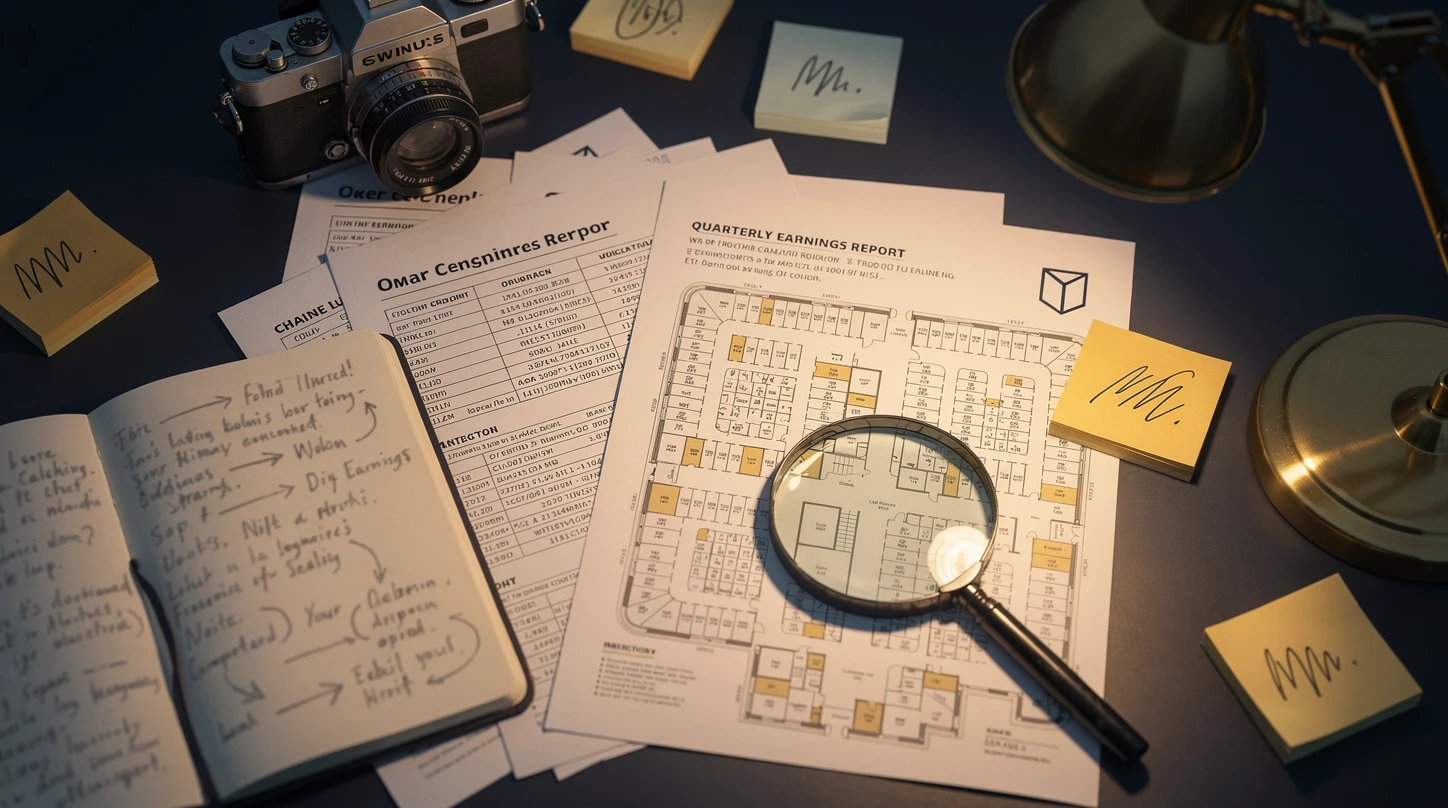
Brand profile reporting is the journalism craft of taking a retailer apart, layer by layer, and putting the pieces back together so readers can see how the business actually works. It is the difference between a press release and a portrait. Done well, it tells you why a brand wins or loses before the quarterly numbers ever land.
In short
- Brand profile reporting dissects a retailer across product, operations, channel mix, leadership, finance, and culture, not just marketing.
- The strongest profiles combine SEC filings, store visits, supplier interviews, and primary sourced numbers, never a single PR transcript.
- A reporter typically spends 40 to 120 hours per profile and uses a 10 layer framework to avoid being charmed by the founder.
- The most common failure is mistaking a brand story for a brand profile; a story sells, a profile audits.
- For the wider context, see our modern brand playbook for retail and e-commerce, which sits above this method guide as the pillar reference.
Why brand profile reporting matters in 2026
Retail moved from quarterly storytelling to real time accountability. Consumers, investors, and category buyers all want to know whether the brand they are reading about is actually solvent, ethical, and growing. A polished founder interview no longer answers that question on its own.
At the same time, the cost of building a retail brand has climbed. Customer acquisition through paid social rose roughly 60 percent between 2021 and 2025, according to data tracked by industry analysts, which means brands need durable operating advantages, not just clever launches. Reporters who write brand profiles in 2026 are effectively underwriters of attention; readers trust the profile to flag whether the business behind the brand is real.
That is why brand profile reporting has shifted into something closer to investigative journalism. The reporter is not there to flatter, and not there to ambush. The job is to render the retailer accurately enough that a smart reader could decide whether to invest, partner, or stock the product, and our wider modern brand playbook for retail and e-commerce argues that this kind of public scrutiny is now part of what makes a brand defensible.
Key terms and definitions
Before going into the method, it helps to be precise about a few overloaded words. Newsrooms, agencies, and brand teams use them differently, which is one reason brand profile coverage is uneven across publications.
- Brand profile: a long form journalistic piece that examines a retailer across multiple dimensions, with sourced evidence for each claim.
- Brand story: a narrative produced or shaped by the brand itself, intended to communicate identity and emotion to customers.
- Company profile: typically a corporate document or analyst sheet covering structure, finances, and leadership; less concerned with consumer perception.
- Founder profile: a portrait of a single person, often the CEO; it can be a chapter inside a brand profile, but it is not a substitute for one.
- Category report: a sector wide analysis (for example, US athletic apparel) that compares multiple brands rather than dissecting one.
When an editor commissions a brand profile, they are asking for the first item, not the others. Confusing the categories is the single most common mistake among new retail reporters.
How it works in practice
A typical brand profile begins with a question the reporter cannot answer from the outside. Something like: how does a 12 store outdoor chain in Colorado generate the same revenue per square foot as a national specialty retailer? Or, why has a digitally native skincare brand survived three consecutive funding winters while peers have folded?
The reporter then runs through a fairly standard sequence. It usually looks like this, even when the topic is wildly different.
- Pre brief: read every prior article, podcast, and SEC filing about the company. Build a timeline of major events.
- Source mapping: identify 15 to 25 people who can speak to the brand, including current and former employees, suppliers, landlords, and customers.
- Document pull: gather public filings, trademark records, court cases, and (for franchises) FDD documents from the US Federal Trade Commission disclosure rules.
- Site visit: spend at least one full day in stores, distribution centers, or office space. Watch staff, count traffic, note pricing and signage.
- Interviews: conduct 20 to 40 conversations, on background and on the record. The leadership interview comes last, never first.
- Number reconciliation: compare what management says with what filings, suppliers, and ex employees say. Flag every gap.
- Drafting: structure the piece around the original question, not the founder biography. Founder material lives inside the structure, not above it.
- Fact check: independently verify each numeric claim, ideally with two sources per number. Most outlets require this before publication.
The 40 to 120 hour range varies with company size and the reporter’s existing knowledge. A specialty grocer with seven stores might take a week; a publicly traded department store can take a month.
The reporter’s framework: 10 layers of a brand profile
Most working brand reporters use some version of a layered framework. It exists to stop the reporter from being seduced by a single dramatic angle, usually the founder. Each layer has its own evidence requirement.
| Layer | What it examines | Typical evidence |
|---|---|---|
| 1. Product | Quality, range, pricing ladder, return rates | Store audits, customer reviews, competitive teardown |
| 2. Operations | Supply chain, fulfillment, store productivity | Supplier interviews, ops manager conversations |
| 3. Channel mix | DTC, wholesale, marketplace, physical | Channel disclosures, partner buyers |
| 4. Customer base | Demographics, repeat rate, NPS | Loyalty data, third party panel data |
| 5. Brand identity | Visual system, voice, positioning | Creative assets, agency briefs, ad spend |
| 6. Leadership | Bench depth, board, succession | LinkedIn analysis, board minutes if public |
| 7. Financial health | Revenue, margin, burn or cash flow | Filings, lender sources, vendor payment terms |
| 8. Culture | Retention, internal disputes, lawsuits | Glassdoor patterns, employment lawsuits |
| 9. External pressure | Regulators, competitors, tariffs | Trade press, FTC and state AG filings |
| 10. Trajectory | Where the brand is going next | Capex signals, hiring patterns, M and A chatter |
A long form profile does not need a paragraph for every layer, but the reporter should have notes on each. Gaps in the notes usually show up later as soft spots in the published piece.
Surface story versus deep brand profile
One of the clearest ways to see why brand profile reporting takes so long is to compare it directly with the shorter formats it replaces. The table below uses a hypothetical mid sized US footwear retailer for the contrast.
| Dimension | Surface brand story (1,200 words) | Deep brand profile (3,500+ words) |
|---|---|---|
| Time invested | 4 to 8 hours | 40 to 120 hours |
| Sources interviewed | 1 to 3 (usually founder) | 20 to 40 across stakeholder groups |
| Documents reviewed | Press kit, website | Filings, trademarks, court records, FDD |
| Numbers verified | Company supplied | Independently corroborated |
| Founder voice | Drives the piece | One source among many |
| Editorial risk | Low; rarely contested | Higher; legal review common |
| Reader use case | Inspiration, brand awareness | Investment, partnership, sourcing decisions |
Both formats can live in the same publication, but they answer different questions. A reader who needs to decide whether to wholesale a brand into a national chain cannot do it with the surface story alone.
Common mistakes and how to avoid them
Reporters new to retail tend to repeat a handful of errors. Editors see them often enough to keep an internal checklist. The mistakes below are the ones most likely to invalidate a profile after publication.
1. Letting the founder set the framing
Founders are good storytellers; that is often how they raised money in the first place. If the profile starts with the founder’s preferred origin myth, the rest of the piece tends to be calibrated to defend it. Strong reporters write the framing question before the founder interview, and refuse to renegotiate it during the conversation.
2. Confusing brand equity with business health
A retailer can have a beloved brand and a broken business at the same time. Several DTC darlings between 2020 and 2024 illustrated this clearly; press coverage stayed flattering until receivership filings revealed structural losses. Reporters protect themselves by reconciling brand sentiment with vendor payment behavior, hiring patterns, and inventory aging.
3. Skipping the store
You cannot profile a retailer you have not stood inside. Store visits surface staffing patterns, sell through, and customer behavior that no executive describes accurately. For online only brands, the equivalent is a multi week purchase test across SKUs and channels.
4. Treating one quarter as a trend
Retail is seasonal and noisy. A single strong holiday or weak spring rarely tells the long term story. Profiles that anchor on one quarter age badly, especially when the next quarter reverses.
5. Forgetting the labor lens
US retail employs around 15 million workers, according to the Bureau of Labor Statistics, and labor disputes increasingly shape brand reputation. Profiles that ignore wages, scheduling software, and unionization attempts miss a layer that customers now read about elsewhere.
Examples from US retail and e-commerce
It helps to ground the method in real examples readers can recognize. The cases below are widely covered in trade press; the lesson in each case is about how the reporting itself revealed the underlying business.
Costco: profiles that priced membership math
For years, surface stories on Costco focused on free samples and the rotisserie chicken. Deeper profiles in outlets like The Wall Street Journal and Fortune reframed the company around membership economics, showing that membership fees, not retail margin, drive the bulk of operating profit. That single reframing changed how analysts modeled the stock and how competitors discussed loyalty programs.
Allbirds: profiles that caught the gap early
Between 2018 and 2021, Allbirds enjoyed glowing brand coverage as a sustainable footwear pioneer. The harder profiles, published roughly a year before the post IPO decline, asked operational questions about product expansion, store productivity, and gross margin. The pieces that asked those questions stood up well after the stock fell more than 90 percent from its debut.
Trader Joe’s: profiles that respected the operating model
Trader Joe’s notoriously declines most media requests. Strong profiles built around supplier interviews, ex crew member conversations, and store level observation managed to explain the chain’s private label, hiring, and real estate strategies without leadership cooperation. These profiles became required reading for grocery operators across the country.
Shein: profiles that pushed back on PR access
Shein’s profile arc shows the opposite problem. Early coverage relied heavily on company supplied figures. Later investigations, particularly those drawing on supplier interviews and labor research, painted a much more contested picture. The contrast is a useful teaching case in journalism schools about why brand profile reporting must be source independent. For background on how consumer trust is shifting under social commerce pressure, see our piece on micro influencers versus mega influencers for retail brands, which intersects with how Shein style brands acquire customers.
Tools, partners or vendors worth knowing
The toolkit for a US retail reporter in 2026 is broader than it was even five years ago. The list below is not exhaustive; it covers the categories most working reporters draw on, including the ones useful for verification rather than discovery. A more detailed inventory lives in our companion piece on tools and vendors for brand profiles in 2026.
- Filings and corporate records: the US Securities and Exchange Commission EDGAR system, state secretary of state portals, and federal court PACER for litigation.
- Franchise records: Franchise Disclosure Documents (FDDs) filed with state regulators; FRANdata and similar aggregators help track multi state disclosures.
- Trademark and IP: the US Patent and Trademark Office (USPTO) for trademark history, oppositions, and ownership chains.
- Panel and traffic data: Placer.ai, Earnest Analytics, Bloomberg Second Measure, and similar firms that estimate store traffic, share of wallet, and category trends.
- Consumer sentiment: Trustpilot, Reddit communities, App Store reviews, and YouGov surveys for triangulating customer perception.
- Employment signals: Glassdoor, Indeed reviews, and LinkedIn for tracking leadership churn and hiring posture.
- Compliance and safety: the US Federal Trade Commission, US Consumer Product Safety Commission, and state attorneys general for active investigations.
- Background reading: the official Wikipedia overview of retail remains a useful entry point for definitions and historical context when briefing a new reporter.
Most reporters subscribe to two or three paid sources and lean on public filings for the rest. The combination has changed faster than the workflow; the 10 layer framework still holds. Recent shifts in source availability are tracked in what changed in brand profiles for retail teams in 2026.
How to read a brand profile as a retail operator
Operators, buyers, and investors read brand profiles differently than casual readers. They are looking for what the reporter could verify and where the reporter had to settle for company supplied claims. A short reading checklist helps.
- Count the named sources. Fewer than five typically means an access dependent piece.
- Look for at least one ex employee perspective. Its absence is a signal, not a coincidence.
- Track the numeric claims. Each one should either be linked to a filing or qualified with a phrase like “according to people familiar with the matter”.
- Check whether store or warehouse visits are mentioned. Reporting that never leaves the desk reads differently from reporting that does.
- Notice how the founder is introduced. If they appear in the lead paragraph in a heroic frame, the profile may lean closer to a brand story than a brand profile.
This reading discipline is itself part of the modern brand playbook for retail and e-commerce: operators who can decode brand journalism make better partnership and category decisions, because they know which signals are evidence and which are decoration.
A working playbook you can adapt
For teams that want to apply brand profile reporting to their own competitive intelligence work (not for publication, but for internal decisions), the journalist’s method translates well. The version below is a compressed playbook that brand managers, buyers, and analysts can run in roughly two working weeks per target.
- Week one, days 1 to 2: pull every filing, FDD, and trademark for the target. Build the timeline.
- Week one, days 3 to 4: map the source set (15 to 25 people) and start outreach on background.
- Week one, day 5: complete at least one physical site visit or a structured online purchase test.
- Week two, days 1 to 3: run interviews across operators, ex employees, suppliers, and one or two large customers.
- Week two, day 4: reconcile numbers across sources; flag anything that does not match.
- Week two, day 5: write a 10 layer memo, not a narrative. Include disagreements explicitly.
This memo is what good editors quietly do before commissioning the published piece. Inside a retail organization, the same memo supports merchandising, M and A, and partnership decisions. The discipline is identical even when the audience is not.
What changes when AI enters the workflow
Generative AI tools have arrived in newsroom workflows faster than most reporters expected. Document summarization, transcript clean up, and timeline drafting now take a fraction of the hours they used to. The hours saved tend to be reinvested in reporting depth rather than turnaround time, which is part of why deep brand profiles are getting longer in 2026, not shorter.
The risk is treating AI generated summaries as evidence. They are useful as a first pass over a 200 page FDD or a 10K filing, but they need to be checked against the source document before anything goes into a paragraph. Editors at major US retail publications have started writing AI use disclosures into their style guides for exactly this reason, and reporters increasingly note in their workflow logs which sections were AI summarized before human verification.
FAQ
What is brand profile reporting in plain English?
It is long form journalism that takes a single retailer apart across product, operations, finance, culture, and customer base, then puts the pieces back together with sourced evidence. It is different from a feature story, which is shorter and usually built around a founder.
How is a brand profile different from a brand story?
A brand story is shaped by the brand and intended to communicate identity to customers. A brand profile is shaped by an independent reporter and intended to audit the brand for readers who need to act on the information.
How long does a strong brand profile take to produce?
Between 40 and 120 hours of reporter time, depending on company size and complexity. Publicly traded retailers usually take longer because filings and lawsuits multiply the document load.
Who reads brand profiles in retail?
Investors, category buyers at large retailers, brand managers at competitors, M and A teams, and increasingly, senior consumers researching values driven brands before buying. Trade press readership has broadened well beyond Wall Street.
What is the single most common mistake in brand profile reporting?
Letting the founder set the framing. Once that happens, the reporter is no longer producing a profile; they are producing a flattering portrait inside a profile shaped container.
Can a brand profile be done without founder cooperation?
Yes, and some of the best ones are. The Trader Joe’s and Shein examples both show that access denial does not prevent rigorous coverage; it just changes the source mix toward ex employees, suppliers, and observable evidence.
What tools do retail reporters use that retail operators usually do not?
Reporters lean heavily on PACER for litigation, EDGAR for filings, FDD aggregators for franchise data, and panel data from Placer.ai or Bloomberg Second Measure. Operators often have category data but skip the legal and filings layer, which is where most surprises live.
Where does brand profile reporting go from here?
The trend in 2026 is toward more numeric verification and more labor reporting. AI tools are accelerating document review, but the source mapping, site visits, and reconciliation work still takes human hours. The profiles that hold up are still the ones written by reporters who left the desk.