
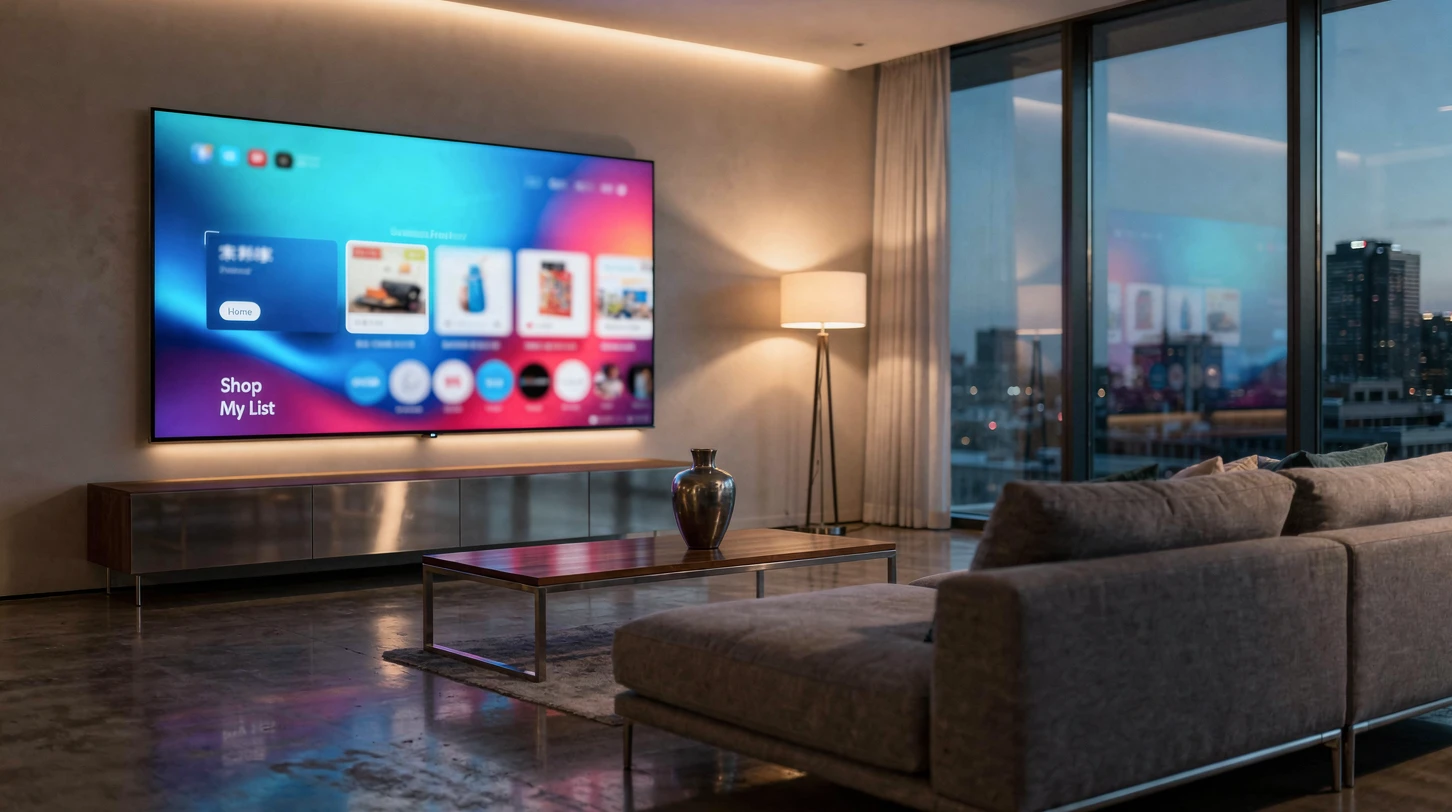
Fox Corporation has agreed to acquire Roku in a cash-and-stock deal worth about $22 billion, the two companies confirmed on Monday, in the largest media and streaming combination of the year and one with unusually deep implications for retail. Roku is not just a connected-TV platform that puts content on screens in more than 100 million households. Over the past three years it has quietly assembled one of the most advanced shoppable-advertising and retail-media operations in streaming, complete with its own payments layer and a roster of commerce partners that includes Walmart, Instacart, Kroger and Shopify.
For Fox, the headline rationale is content distribution and the pivot to streaming. For retailers, brands and the wider commerce industry, the more important story is what happens to Roku’s shoppable-TV machine once it sits inside a company that owns live sports rights, a fast-growing free streaming service in Tubi, and a national advertising sales force. According to the official announcement, the boards of both companies have unanimously approved the transaction, which is expected to close in the first half of 2027.
In short
- The deal: Fox will pay $160.00 per Roku share, split between $96.00 in cash and 0.9693 Fox Class A shares, valuing Roku at roughly $22 billion in enterprise value.
- The ownership: Existing Fox shareholders are expected to hold about 73% of the combined company and Roku shareholders about 27% once the deal closes.
- The commerce angle: Roku runs Roku Pay and a shoppable-ad business with partners including Walmart, Instacart, Kroger Precision Marketing, Shopify, Fandango and Best Buy, putting one-click purchasing inside the TV.
- The market context: Connected-TV advertising and retail media are two of the fastest-growing pools in marketing, and shoppable streaming sits at their intersection.
- The watch items: Antitrust review, the fate of Roku’s open-platform promise, and whether Fox accelerates or starves the commerce roadmap will decide how much the deal reshapes retail media.
What Fox agreed to pay for Roku
Under the definitive agreement, Fox will acquire each Roku Class A and Class B share for $160.00, made up of $96.00 in cash and 0.9693 Fox Class A common shares. That structure puts the equity component at roughly $64.00 per share at the prices cited in the announcement. The blended figure values Roku at about $22 billion in enterprise value, a number both companies repeated in their statements.
The cash portion alone runs to roughly $14 billion, according to figures reported by Variety. To fund it, Fox has secured $12.0 billion in bridge financing arranged by Morgan Stanley, with the balance covered by existing resources. Fox said it expects a pro-forma net leverage ratio of about 2.8 times after the deal, a level that leaves the enlarged group investment-grade but more indebted than the lean balance sheet Fox has carried since its 2019 split from the assets sold to Disney.
The companies guided to roughly $400 million in annual cost synergies and said the transaction would be accretive to free cash flow per share by 2029. Those are the standard reassurances for a deal of this size, and they signal that Fox is selling the combination to investors on cash generation rather than near-term earnings. The deal is expected to close in the first half of calendar 2027, subject to regulatory approvals and a Roku shareholder vote.
The terms at a glance
| Term | Detail |
|---|---|
| Price per share | $160.00 |
| Cash component | $96.00 per share (about $14bn total) |
| Stock component | 0.9693 Fox Class A shares per Roku share |
| Enterprise value | About $22 billion |
| Ownership after closing | Fox holders about 73%, Roku holders about 27% |
| Bridge financing | $12.0 billion, arranged by Morgan Stanley |
| Targeted cost synergies | About $400 million a year |
| Expected close | First half of 2027 |
Why a content company is buying a streaming platform
The strategic logic Fox put forward is about owning the screen as well as the content that fills it. Lachlan Murdoch, Fox’s chief executive, called the agreement “a defining moment for Fox, and a natural extension of the deliberate and focused strategy we have been executing for nearly a decade.” The deal pairs Fox’s live rights portfolio, which spans the NFL, MLB, NASCAR, the Big Ten, the FIFA World Cup and Fox News, with Roku’s home-screen real estate and The Roku Channel.
Fox said the combined business would become the third-largest television player in the United States by viewing share. That framing matters because it repositions Fox from a content licensor dependent on third-party distributors into a vertically integrated operator that controls discovery, the operating system and a direct relationship with viewers. Anthony Wood, Roku’s founder and chief executive, described the tie-up as “an extraordinary opportunity to accelerate our vision, scale faster and innovate more aggressively for viewers, partners and advertisers.”
There is history here. Fox acquired the free, ad-supported streaming service Tubi in 2020 and has grown it into a meaningful viewing destination. To help pay for Tubi at the time, Fox sold roughly 6 million Roku shares at about $58 each, a detail noted by LightShed Partners analyst Rich Greenfield. Buying the whole company back six years later at $160 a share is an expensive reversal, but it reflects how central the connected-TV layer has become to any streaming strategy.
The streaming-future narrative
Greenfield argued the acquisition would help Fox “meaningfully reposition its narrative with investors toward a streaming future,” a recurring theme for legacy media groups trying to convince markets they can grow as linear television declines. Owning a platform with first-party data and a direct billing relationship gives Fox a hedge against the structural erosion of cable bundles and the rising cost of sports rights.
Roku’s quiet build into a commerce and retail-media business
The part of this deal that should interest retailers most is the one Fox spent the least time on in its announcement. Roku is no longer just a hardware and content-distribution business. It has spent the past three years turning the television into a point of sale, and that work is what gives the acquisition its commerce weight.
Shoppable ads on the biggest screen in the house
Roku began rolling out shoppable television ads in 2023, letting viewers press “OK” on the remote during an ad and move straight to checkout. The format converts at rates that standard video cannot match. Industry estimates suggest shoppable connected-TV ads convert at several times the rate of conventional video spots, and analysts expect interactive and shoppable formats to make up around a tenth of all connected-TV ads by the end of 2026.
Roku Pay, the payments layer most people overlook
The mechanism that makes one-click TV purchasing work is Roku Pay, the company’s purpose-built payments platform. When a viewer responds to a shoppable ad, their payment details are pre-populated from Roku Pay, removing the friction that normally kills impulse purchases on a living-room screen. That stored-payment relationship across more than 100 million households is a genuine commerce asset, not a marketing slide, and it is one of the quieter prizes in the transaction. It also raises a strategic question retailers have been debating elsewhere, namely whether card-network rails or closed-loop checkout will win the next phase of digital commerce, a tension explored in our analysis of whether card-network rails or closed-loop checkout will win agentic commerce.
A commerce partner roster that reads like a retail-media who’s who
Roku has assembled full-funnel partnerships with Walmart, Instacart, Kroger Precision Marketing, Shopify, Fandango and Best Buy, alongside a shoppable-ads tie-up with DoorDash. Walmart and Roku publicly debuted commerce in TV ads, allowing purchases with a click of the remote. Instacart’s partnership combines Roku viewership data with Instacart purchase data to measure whether streaming ads drive real sales, the kind of closed-loop measurement that consumer-goods advertisers have wanted for years.
The Instacart relationship is especially relevant given how the grocery-delivery company has repositioned itself around advertising and data. We examined that shift in our piece on Instacart’s re-rating as grocery-tech infrastructure, and the same logic applies to Roku: the value increasingly sits in the data and the ad stack, not the underlying transaction margin.
What the deal means for retail media and shoppable TV
Retail media has become the third great wave of digital advertising, after search and social, and connected TV is where it is heading next. Industry estimates put US retail-media ad spend at roughly $69.3 billion in 2026, up from about $58.8 billion in 2025, with the bulk of incremental dollars flowing to Amazon Ads and Walmart Connect. The slice of retail media delivered on connected TV is small today but growing fast, projected to roughly double from about $5 billion in 2025 toward $10 billion by 2028.
Roku sits precisely at the junction of those two pools. It is a connected-TV advertising platform that has bolted on retail-media-style commerce and measurement. Folding it into Fox creates a company that can sell live-sports inventory and shoppable formats from the same desk, with Roku Pay handling the transaction and partner data closing the loop. For brands, that promises fewer intermediaries between an ad impression and a sale.
How the major ad and commerce platforms compare
| Platform | Core strength | Commerce or retail-media hook |
|---|---|---|
| Roku (with Fox) | Connected-TV scale, home screen, first-party data | Roku Pay, shoppable ads, partner data with Walmart and Instacart |
| Amazon | Retail data and Prime Video inventory | Amazon Ads, Amazon DSP, direct purchase from owned marketplace |
| Walmart | Store and online sales data, Vizio platform | Walmart Connect retail-media network, Vizio connected-TV inventory |
| The Trade Desk | Independent demand-side buying across the open web | OpenPath and retail-data partnerships, no owned inventory |
The competitive read is that Fox-Roku will not match Amazon or Walmart on the depth of first-party purchase data, because neither Fox nor Roku owns a general-merchandise retail operation. What it will have is reach, premium live content and a neutral platform that brands can use without handing budget to a direct retail rival. That neutrality could prove valuable to retailers wary of advertising inside Amazon’s or Walmart’s walled gardens.
How the combined ad stack stacks up against Amazon and Walmart
Roku’s advertising business was already performing strongly before the deal. According to figures the company disclosed for the first quarter of its 2026 fiscal year, platform advertising revenue grew 27% year over year to about $613 million, at a gross margin above 60%. Video advertising on Roku outpaced both the broader US over-the-top and digital advertising markets, which the company attributed to its scale, first-party data and ad technology.
Roku has also leaned into programmatic buying. Ad spend through third-party programmatic partners rose more than 40% year over year, and advertisers can now reach Roku inventory through nearly every major buying platform, including Amazon DSP, The Trade Desk, Yahoo and FreeWheel. Roku Ads Manager, the self-service tool aimed at performance and smaller advertisers, more than doubled its advertiser base year over year. Those metrics describe a business that already behaves like a retail-media network even before Fox’s content is layered on top.
The walled-garden problem, and Roku’s pitch around it
The strategic gap between Fox-Roku and the retail giants is data ownership. Amazon and Walmart can tie an ad impression to a logged purchase inside their own stores. Fox-Roku cannot, which is why Roku has built partnerships with Instacart, Kroger and others to import that purchase signal. The combined company’s pitch will be that it offers comparable measurement without forcing brands to fund a retailer that competes with them, an argument that resonates with consumer-goods companies in particular.
The free, ad-supported streaming land grab
One reason the deal makes sense beyond commerce is the rise of free, ad-supported streaming television, the segment known in the industry as FAST. Tubi, which Fox acquired in 2020, is one of the largest free streaming services in the United States, and The Roku Channel is among the most-watched apps on Roku devices. Both monetize through advertising rather than subscriptions, which aligns them tightly with Roku’s ad-tech and shoppable formats.
Combining Tubi and The Roku Channel under one roof concentrates a large pool of ad-supported viewing inside a single sales operation. For advertisers, that means more inventory bought through the same platform, with the same measurement and the same path to shoppable formats. For Fox, it reduces reliance on the declining linear bundle and on the expensive subscription streaming race that Netflix and Disney dominate.
Why ad-supported viewing favors commerce
Ad-supported streaming is structurally friendlier to retail media than subscription streaming, because the business model already depends on advertising rather than monthly fees. A viewer watching free content is, by definition, exposed to ads, and shoppable formats turn that exposure into a potential transaction. The more ad-supported viewing Fox-Roku controls, the larger the canvas for commerce becomes, which is part of why a content owner is willing to pay a premium for a platform with this profile.
That dynamic also reframes the competitive set. The combined company will compete less with pure subscription services and more with the advertising and retail-media operations of Amazon, Walmart and Google, all of which are chasing the same connected-TV ad dollars. In that contest, owning both the content and the home screen, plus a payments layer, is a meaningful structural advantage that few rivals can match outside the largest technology platforms.
The numbers behind the deal
Beyond the headline price, the financial engineering tells its own story. The $12.0 billion bridge facility from Morgan Stanley underlines how much cash Fox is putting up front, and the projected 2.8 times pro-forma net leverage marks a clear step up from Fox’s historically conservative balance sheet. Management’s promise of free-cash-flow-per-share accretion by 2029 implies the heavier debt load and integration costs weigh on the early years before synergies and streaming growth catch up.
The roughly $400 million in targeted annual cost synergies is modest relative to a $22 billion price tag, which suggests Fox is justifying the deal mainly on revenue and strategic grounds rather than cost-cutting. That is consistent with a bet on connected-TV advertising and commerce growth rather than a defensive consolidation play. It also raises the bar for execution, because the thesis depends on the combined company growing faster together than apart.
For context on the wider dealmaking environment, this transaction lands during an unusually active period for media and commerce M&A. We have tracked related activity in coverage of a fresh wave of fintech and commerce IPOs expected to price through the third quarter of 2026, a sign that capital markets have reopened for scaled commerce and platform assets after a quiet stretch.
Market and analyst reaction
Roku shareholders had already been rewarded before the formal announcement. The stock surged about 22% to a four-year high on reports that Roku was exploring a sale, including a possible media partnership, as investors priced in a premium bid. The $160 confirmation validated that speculation and handed long-suffering Roku holders a clean exit near the top of its post-2021 range.
Fox’s own shares took the opposite path. Past Fox acquisitions tended to draw mild positive reactions of roughly half a percentage point to a point, but the scale and debt of the Roku deal prompted a negative move, a divergence that reflects investor caution about the price and the integration risk. That split reaction, a buyer marked down and a target marked up, is typical when the market suspects the acquirer is paying a full price for strategic optionality.
Was this the expected buyer?
Not entirely. In March 2026, media analyst Julia Alexander had identified Netflix, Comcast and Paramount as the most likely synergistic buyers for Roku, with a deal potentially in the $18 billion range. Greenfield of LightShed had separately floated Fox as a credible acquirer. The final $22 billion enterprise value came in above the $18 billion figure that had circulated, indicating the eventual auction, or the strategic premium Fox was willing to pay, ran hotter than the consensus going in.
Regulatory and antitrust considerations
A deal of this size will draw scrutiny, although the antitrust profile is less obviously problematic than a horizontal merger of two direct competitors. Fox is primarily a content company and Roku primarily a distribution platform, so the combination is largely vertical. Vertical mergers can still attract challenges where regulators worry about foreclosure, in this case the risk that a Fox-owned Roku could disadvantage rival content owners or advertising platforms on its home screen.
The companies appear to have anticipated that concern. They publicly pledged to keep Roku an “open, partner-friendly platform” and to maintain broad distribution of Fox content. Those commitments are partly a message to regulators and partly a reassurance to the streaming services and advertisers that depend on Roku’s neutrality. Whether enforcers in the United States accept them at face value, or seek behavioral conditions, will shape the timeline to a first-half-2027 close.
This is also a period of heightened regulatory attention to large platform deals across commerce and payments. Recent enforcement actions and proposed rules have made dealmakers more cautious about how they structure data-sharing and exclusivity, themes that surface repeatedly in the current environment for scaled retail and platform transactions, including the wave of large takeover offers exemplified by Frasers Group’s takeover offer for Hugo Boss.
What retailers and brands should watch next
For the retail and commerce industry, the immediate questions are practical. Will Fox invest in Roku’s commerce roadmap, or treat shoppable advertising as a secondary feature behind content and subscriptions? The answer determines whether retail media on connected TV accelerates or stalls at one of its most important platforms.
Three signals to track
- Commerce investment: Watch whether Fox expands Roku Pay and the shoppable-ad partner roster, or quietly deprioritizes them in favor of subscription and content goals.
- Partner neutrality: Brands and competing retailers will scrutinize whether the open-platform pledge holds, particularly for advertisers who compete with Fox’s own commerce ambitions.
- Measurement and data: The value of the combined business hinges on closed-loop measurement, so expanded data deals with the likes of Instacart, Kroger and Shopify would signal commitment.
There is a broader strategic backdrop. Retailers are racing to embed buying into every surface, from social feeds to checkout flows, a trend visible in the push to launch agentic checkout ahead of the 2026 holidays. Connected-TV commerce is another front in that same war for frictionless purchasing, and a Fox-owned Roku with national content and a payments layer could become one of its most visible battlegrounds. For now, the deal is signed, the strategy is set, and the harder work of proving the commerce thesis lies ahead.
Frequently asked questions
How much is Fox paying for Roku?
Fox agreed to pay $160.00 per Roku share, made up of $96.00 in cash and 0.9693 Fox Class A common shares. That values Roku at about $22 billion in enterprise value, according to the companies’ joint announcement.
When is the Fox-Roku deal expected to close?
The companies expect the transaction to close in the first half of calendar 2027, subject to regulatory approvals and a vote by Roku shareholders. The boards of both companies have unanimously approved the agreement.
Why does this media deal matter for retail and e-commerce?
Roku is not only a streaming platform. It runs Roku Pay and a shoppable-advertising business with partners including Walmart, Instacart, Kroger and Shopify, putting one-click purchasing inside the television. The deal places one of the most advanced connected-TV commerce operations inside a major content owner.
What is Roku Pay?
Roku Pay is Roku’s purpose-built payments platform. It stores a viewer’s payment details so that when they respond to a shoppable ad by pressing “OK” on the remote, checkout details are pre-populated and the purchase can be completed quickly. It underpins Roku’s shoppable-TV format across more than 100 million households.
How big is Roku’s advertising business?
According to figures Roku disclosed for the first quarter of its 2026 fiscal year, platform advertising revenue grew 27% year over year to about $613 million, at a gross margin above 60%. Spend through third-party programmatic partners rose more than 40% year over year.
How does Fox-Roku compare with Amazon and Walmart in retail media?
Amazon and Walmart can connect ads directly to purchases inside their own retail operations, an advantage Fox-Roku lacks. Fox-Roku instead offers premium content, large connected-TV reach and a neutral platform, using partnerships with Instacart, Kroger and others to import purchase data for measurement.
Will the deal face antitrust scrutiny?
It will draw regulatory review given its size, but the combination is largely vertical, pairing a content company with a distribution platform rather than two direct competitors. The companies have pledged to keep Roku an open, partner-friendly platform, a commitment aimed partly at regulators.
How did the stock market react?
Roku shares surged about 22% to a four-year high on reports of a potential sale before the deal was confirmed. Fox shares moved lower on the announcement, a divergence reflecting investor caution about the price and integration risk.
Had analysts expected Fox to be the buyer?
Not as the consensus pick. In March 2026 some analysts had named Netflix, Comcast and Paramount as the most likely buyers, with a deal potentially around $18 billion, though others had floated Fox as a credible acquirer. The final $22 billion value came in above those earlier estimates.