
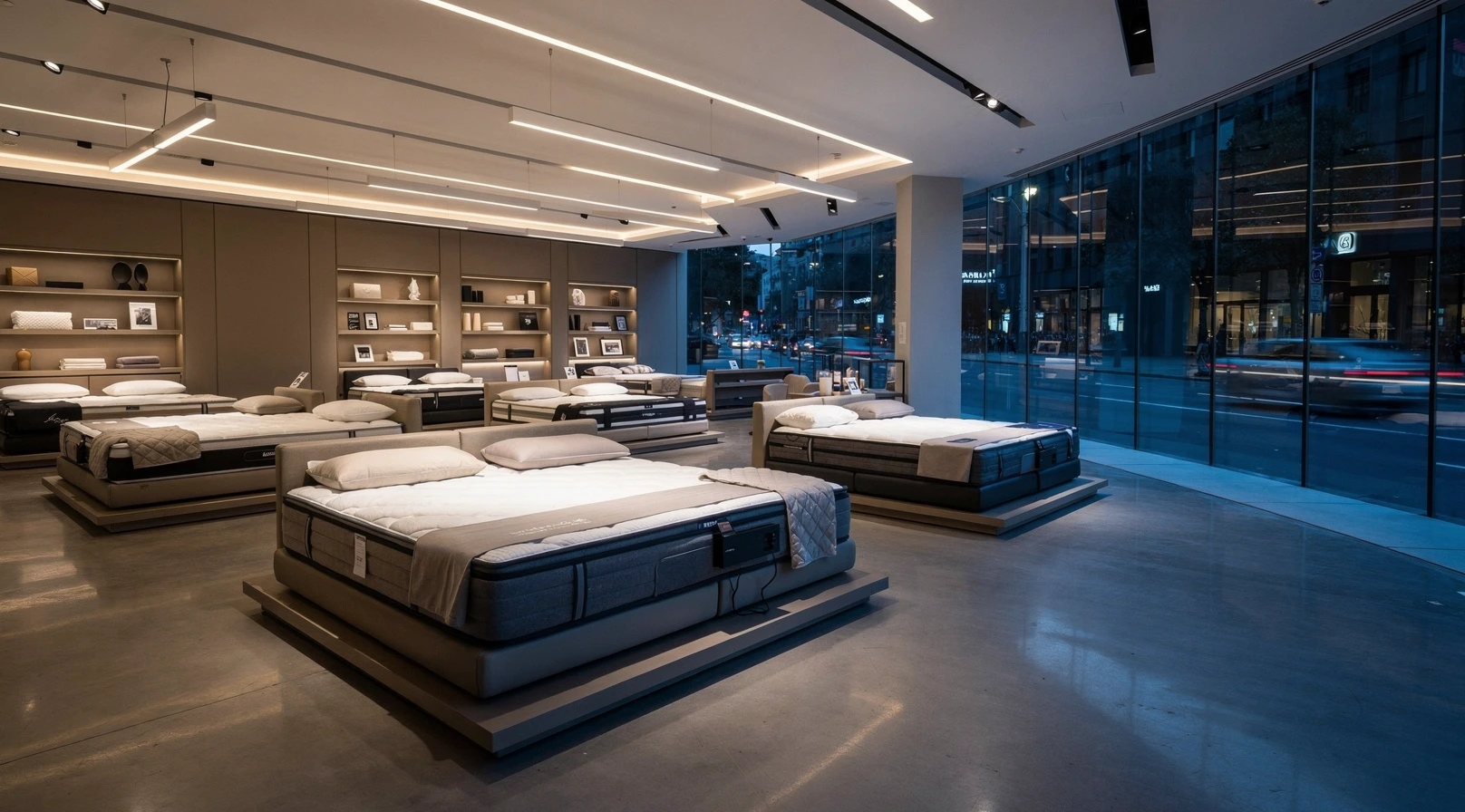
A US bankruptcy judge has cleared the sale of Sleep Number, the Minneapolis maker of adjustable smart beds, to Canada’s largest mattress retailer for about USD 702 million, ending a court-supervised auction that began when the company filed for Chapter 11 protection in June. The US Bankruptcy Court for the Southern District of New York approved the transaction on Monday, and Sleep Country Canada expects to close within roughly 10 days, according to court documents and company statements reported by Reuters and Retail Dive.
The outcome is notable for two reasons. It hands a struggling American brand, once a fixture of late-night infomercials and mall showrooms, to a foreign buyer that had never operated a store in the United States. And it caps a bidding process that pushed the final price to nearly double the roughly USD 415 million that Sleep Country first agreed to pay before the filing. For a mattress industry squeezed by soft demand, tariffs and elongated replacement cycles, the deal is one of the clearest signs yet that consolidation, not organic growth, is now the dominant strategy.
In short
- Deal value: Sleep Country Canada will pay about USD 702 million for Sleep Number’s assets, including roughly USD 530 million in cash, per court filings.
- Court approval: The US Bankruptcy Court for the Southern District of New York approved the sale on Monday; closing is expected within about 10 days.
- Auction premium: The price climbed from an initial USD 415 million agreement to USD 702 million during the bankruptcy auction, a sign of contested interest in the assets.
- Scale: The combined company will operate more than 800 stores and become the second-largest sleep retailer in the world, behind Somnigroup International.
- Why it matters: A first-quarter sales drop of 19% and roughly USD 672.5 million of debt pushed Sleep Number into a distressed sale, underscoring how tariffs and weak big-ticket demand are reshaping US retail.
Update, 31 July 2026: the sale has closed
The deal is no longer pending. Sleep Country confirmed on 31 July 2026 that its acquisition of Sleep Number had completed, roughly ten days after the bankruptcy court signed off. Ownership of the US business transferred on that date, which means Sleep Number is now part of Sleep Country’s family of brands rather than a company working its way through Chapter 11.
The final numbers landed where the court filings pointed. Total consideration came to about USD 702 million, of which close to USD 530 million was cash, funded by additional borrowings at Sleep Country rather than by issuing equity.
Sleep Country presented the close as a starting line rather than a finish line. “Today isn’t about the completion of a transaction. It’s about the beginning of a new future,” said chief executive Stewart Schaefer. The company described the combined business as the world’s second-largest sleep retailer, operating across Canada and the United States on revenue above USD 3 billion.
For shoppers, 31 July changed nothing on the sales floor. Sleep Country said customers would keep getting the brands, products and experiences they already know, and Sleep Number’s US stores carried on trading under the Sleep Number name. What happens to the 570-plus American locations is now the new owner’s call, and that is the thing worth watching over the next few quarters.
What the bankruptcy court actually approved
The order signed on Monday authorizes Sleep Country Canada Holdings to buy substantially all of Sleep Number’s assets through a Section 363 sale, the mechanism that lets a Chapter 11 debtor sell assets free and clear of most liabilities. According to court documents cited by Reuters and Retail Dive, the total consideration is about USD 702 million, of which close to USD 530 million is cash. The remainder covers assumed obligations and other components typical of a distressed transaction.
A Section 363 sale is attractive to buyers because it strips away the legacy claims that make an ordinary acquisition risky. The purchaser takes the brand, the stores and the intellectual property, while creditors are left to divide the proceeds under court supervision. That structure is why so many recognizable retail names have changed hands through bankruptcy rather than on the open market in recent years.
Speed is a feature of the pre-negotiated model. Because the debtor lines up a buyer and the outline of a deal before filing, the court process becomes a confirmation and price-discovery exercise rather than an open-ended search. That compresses the timeline, limits the operational damage a drawn-out bankruptcy inflicts on a retailer’s brand and supplier relationships, and preserves value that a slow liquidation would erode. For employees and vendors, a faster close also reduces the uncertainty that can trigger staff departures and tighter supplier terms.
The court set an expected closing window of roughly 10 days, an unusually fast timeline that reflects how far along the process already was. Sleep Number entered Chapter 11 in June with a sale agreement already in hand, a so-called pre-negotiated or stalking-horse deal that gave the auction a floor price and a committed buyer from day one. For readers tracking how distressed retail assets move through the courts, the pattern mirrors other 2026 cases such as the way QVC Group erased more than USD 5 billion in debt on its path out of bankruptcy.
The stalking-horse mechanics
Sleep Number’s original agreement, valued at about USD 415 million, functioned as the stalking-horse bid. That opening offer is designed to attract competing bids while protecting the initial buyer with break-up fees if it is outbid. In this case the incumbent buyer prevailed but had to raise its price substantially, a sign that at least one rival saw value in the assets.
The near-doubling of the price during the auction is the most striking financial detail. It suggests the market judged Sleep Number’s brand, patent library and store network as worth considerably more than the distressed opening bid implied. For creditors owed against roughly USD 672.5 million of debt, the higher clearing price improves recoveries, though unsecured claimants in retail bankruptcies rarely recover in full.
What the higher price means for creditors
In a Chapter 11 asset sale, proceeds flow through a strict priority waterfall. Secured lenders are paid first, followed by administrative and priority claims, with unsecured creditors and any residual value to equity holders at the back of the line. The jump from a USD 415 million floor to about USD 702 million therefore matters most to the classes closest to the money.
Because Sleep Number carried roughly USD 672.5 million of principal debt into the case, the improved clearing price narrows the shortfall those lenders face and raises the odds that at least some junior creditors see a partial recovery. The exact split will be governed by the plan of distribution and the intercreditor agreements, details that typically surface only as the case winds down. What is clear is that a contested auction served creditors better than a single-bidder sale would have.
How Sleep Number ended up in Chapter 11
Sleep Number filed voluntary petitions under Chapter 11 on June 12, 2026, in the Southern District of New York. The company reported approximately USD 672.5 million in aggregate principal debt as of the petition date, a burden that became unsustainable as revenue fell and losses widened. ShopAppy covered the moment the company sought court protection in its report on how Sleep Number filed for Chapter 11 with Sleep Country leading a USD 415 million sale.
The proximate cause was a sharp deterioration in trading. First-quarter sales fell 19% to about USD 319 million, and the company posted a loss of roughly USD 50 million, according to filings summarized in press coverage of the case. Management pointed to tariffs and inflation as primary pressures, a refrain echoed across big-ticket home categories where consumers have delayed purchases.
Sleep Number had not been idle before the filing. The company completed what it described as its largest product redesign in nearly a decade and launched an integrated marketing campaign, while pruning underperforming stores from its footprint. Those moves were not enough to offset the demand shock, and the balance sheet left little room for a slower turnaround. The situation fits a broader pattern that ShopAppy flagged earlier this year in its guide to the retail bankruptcy warning signs to read early.
A category under pressure
The mattress industry is a case study in how macro forces hit durable-goods retail. Unlike groceries or apparel, mattresses are replaced infrequently, so demand is highly sensitive to consumer confidence and the cost of financing a several-thousand-dollar purchase. When households feel squeezed, a new bed is among the easiest expenses to defer.
Industry data illustrates the squeeze. The US mattress market is projected to grow only modestly, from about USD 18.11 billion in 2025 to roughly USD 18.77 billion in 2026, according to Mordor Intelligence estimates, with unit shipments slowing even as dollar values inch up. Consumers are extending replacement cycles and redirecting discretionary spending toward travel and experiences, a shift that leaves less room for premium bedding.
From infomercial icon to smart-bed pivot
Sleep Number spent decades as one of the most recognizable names in American bedding, built on adjustable air-chamber mattresses marketed through television and mall showrooms. Its signature pitch, letting each sleeper dial in a firmness setting, gave it a distinct identity in a category where most products look interchangeable to shoppers.
Over the past decade the company leaned harder into technology, adding sleep-tracking sensors and app-connected features in a push to reposition the mattress as a health and wellness device rather than a commodity. That strategy produced the patent portfolio Sleep Country now prizes, but it also raised prices and complexity at a moment when value-conscious consumers were trading down. The redesign completed before the filing was meant to reset that equation, and it arrived too late to change the balance sheet math.
The lesson other specialty retailers are drawing is cautionary. Investing heavily in premium innovation can build a defensible brand, but it does not insulate a company from a demand shock if the cost base and debt load are too high to absorb a downturn. Sleep Number had a differentiated product and still could not outrun its liabilities.
Who is buying: Sleep Country Canada
Sleep Country Canada is the largest mattress retailer in Canada, operating more than 300 stores across a portfolio of banners. Beyond its namesake chain and the Quebec-focused Dormez-vous stores, the company owns a cluster of direct-to-consumer brands it acquired over the past decade, including Endy, Silk & Snow, Hush, Casper Canada and the UK-born Simba. Annual revenue runs near CAD 960 million, roughly USD 700 million at current exchange rates.
The company was taken private by Fairfax Financial Holdings in a 2024 transaction, giving it a deep-pocketed parent and the balance-sheet flexibility to pursue a large cross-border deal. That backing matters: financing a USD 530 million cash outlay for distressed US assets is easier with an insurance and investment conglomerate behind you than as a standalone public retailer answerable to quarterly shareholders.
Chief executive Stewart Schaefer, who has spent close to three decades in sleep retail and founded Dormez-vous in 1994, framed the purchase as transformational. “This is a game-changing acquisition,” Schaefer said in a company statement, highlighting Sleep Number’s portfolio of more than 1,000 patents and pending patents as a core reason for the deal. The emphasis on intellectual property, rather than store count alone, signals where Sleep Country sees the long-term value.
A serial acquirer’s biggest bet
Sleep Country has grown by acquisition before, absorbing Endy in 2018, Hush in 2021 and both Silk & Snow and Casper’s Canadian operations in 2023. Each of those was a domestic or brand tuck-in. The Sleep Number deal is an order of magnitude larger and marks the company’s first operating presence in the United States, a market roughly ten times the size of Canada’s.
Buying a US brand out of bankruptcy is a lower-risk way to enter than building from scratch. Sleep Country inherits an established name, a national store network and a manufacturing and technology base, without paying the premium a healthy target would command. The trade-off is that it also inherits the operational problems that pushed Sleep Number into court in the first place.
What Sleep Country gets for USD 702 million
The headline asset is scale. Sleep Number operates more than 570 stores across the United States, and folding them into Sleep Country’s 300-plus locations creates a combined network of over 800 stores. That footprint vaults the merged company into second place globally among sleep-focused retailers, trailing only Somnigroup International.
The second asset is technology. Sleep Number built its brand on adjustable air-chamber beds and a growing suite of sleep-tracking features, backed by the patent library Schaefer singled out. For a retailer whose portfolio skews toward foam and hybrid mattresses, that proprietary smart-bed platform is a differentiator that would be expensive and slow to replicate.
| Company | Home market | Approx. stores | Notable brands |
|---|---|---|---|
| Sleep Country Canada | Canada | 300+ | Sleep Country, Dormez-vous, Endy, Silk & Snow, Hush, Casper Canada, Simba |
| Sleep Number | United States | 570+ | Sleep Number smart beds |
| Combined entity | North America and UK | 800+ | All of the above under one owner |
The third asset is optionality. A US platform gives Sleep Country a base to cross-sell its direct-to-consumer brands south of the border, test its Canadian merchandising in a larger market, and spread fixed costs in areas like technology and supply chain across a bigger revenue base. Whether it can execute on that potential is the open question the next few years will answer.
The competitive backdrop: a consolidating industry
The deal lands in a mattress market already reshaped by consolidation. In February 2025, Tempur Sealy completed its merger with Mattress Firm, combining the largest US manufacturer with the largest specialty retailer to form Somnigroup International, a group that commands more than 32% of the US market. That vertical combination set the tone: control both the making and the selling of beds, and defend margins as demand softens.
Against that backdrop, Sleep Country’s purchase reads as a defensive and offensive move at once. Buying Sleep Number gives it manufacturing and retail scale in the world’s largest mattress market, narrowing the gap with Somnigroup even if it does not close it. The register of the deal echoes the broader wave of transactions ShopAppy has tracked, from IPOs to buyouts, including Reformation’s USD 1 billion NYSE listing as investors reprice consumer brands.
| Player | 2024 revenue (approx.) | Position |
|---|---|---|
| Somnigroup (Tempur Sealy + Mattress Firm) | USD 4.89 billion | Market leader, 32%+ US share |
| Sleep Number | USD 1.73 billion | No. 2 US public mattress maker, now sold in bankruptcy |
| Purple | USD 0.50 billion (2026 est.) | Fourth straight year of declining revenue |
Distress is spreading, not isolated
Sleep Number is not alone in its troubles. Purple, another once-buzzy bed-in-a-box brand, has seen revenue fall for four consecutive years and is on track for roughly USD 500 million in 2026, down from a 2021 peak near USD 787 million. The pattern suggests the problem is structural for mid-tier specialty mattress players caught between discount competitors and a dominant, vertically integrated leader.
That structural squeeze is why analysts have warned of a wider shakeout. ShopAppy examined the leading indicators in its analysis of why a retail restructuring wave is likely by early 2027, and mattresses are shaping up as an early testing ground for that thesis.
Cross-border retail: the deal’s wider significance
Foreign acquisitions of US retail brands are not new, but a Canadian mattress chain buying a national American competitor out of bankruptcy is an unusual reversal of the more common flow, in which US retailers expand north. It reflects both the depth of Fairfax’s balance sheet and the discounted valuations distressed US assets now carry.
For US shoppers, the near-term impact should be limited. Sleep Number stores are expected to keep operating under their existing brand, and a new owner with retail expertise is generally better for continuity than a liquidation would be. The bigger changes, if they come, will be behind the scenes in sourcing, technology and store rationalization.
The transaction also underscores how tariffs ripple through retail ownership, not just pricing. Sleep Number cited tariffs among the pressures that pushed it into Chapter 11, and those same duties raise input costs for any buyer. Sleep Country will inherit that exposure, a reminder that trade policy increasingly shapes which companies survive and who ends up owning them.
Why a Canadian buyer, and why now
Currency and timing both favored a northern acquirer. A weaker set of distressed US valuations, combined with Fairfax’s capital base, made a large dollar-denominated purchase digestible in a way it would not have been for a leveraged private-equity bidder facing higher financing costs. Buying at the bottom of a category’s cycle is a classic strategy, and Sleep Country is betting the mattress market is closer to a trough than a peak.
Timing also matters competitively. With Somnigroup consolidating its lead and mid-tier brands weakening, waiting risked letting a rival scoop up Sleep Number’s US footprint. Acting now, through a court process that caps liabilities, let Sleep Country secure a national platform before the window closed.
What it means for shoppers and prices
For the average US mattress buyer, the change of ownership is unlikely to be visible on the sales floor in the near term. Sleep Number stores are expected to keep trading under the same brand, with the same core products, while the new owner works through integration. Warranties, financing offers and store staff generally carry over in a going-concern sale of this kind, which is one reason a court favors an operating buyer over a liquidator.
Over a longer horizon, ownership by a disciplined operator could cut both ways for prices. Greater purchasing scale and shared sourcing might let the combined group hold or lower some price points, an advantage in a value-driven market. At the same time, tariffs on imported components continue to push costs up across the industry, limiting how aggressive any retailer can be on price without squeezing margins.
The competitive squeeze on independents
Consolidation at the top tends to pressure the middle. As Somnigroup and a larger Sleep Country command more shelf space, advertising budgets and supplier leverage, smaller regional chains and single-brand direct-to-consumer players face a tougher fight for attention. Some will find niches in premium or budget segments; others may become acquisition targets themselves.
That dynamic is not unique to mattresses. It echoes across categories where a durable-goods slowdown collides with high fixed costs, from furniture to appliances. The mattress sector is simply further along the consolidation curve, which makes it a useful bellwether for where other big-ticket retail segments may be heading.
What happens next
The immediate milestone is closing, expected within about 10 days of Monday’s approval. Once the sale completes, Sleep Country takes ownership of Sleep Number’s stores, manufacturing and intellectual property, and the integration work begins. Retailers typically move first on back-office consolidation and supply-chain sourcing, where savings are quickest to realize.
The harder questions are strategic. Sleep Country must decide how many of Sleep Number’s 570-plus stores to keep, whether to introduce its direct-to-consumer brands into the US market, and how aggressively to invest in the smart-bed technology it paid a premium to acquire. Executing a turnaround of a business that was losing money is a different challenge from running a healthy Canadian chain.
Signals to watch
Three indicators will show whether the deal is working. The first is store count: sizable closures would signal a focus on profitability over footprint, while stability would suggest confidence in the network. The second is product strategy, specifically whether Sleep Country pushes Sleep Number’s smart beds harder or lets the brand drift. The third is financial disclosure from Fairfax, which will eventually reveal how the US operation performs under new ownership.
For the wider industry, the read-through is that scale and vertical integration are now the price of survival in mattresses. With Somnigroup dominant and mid-tier brands under pressure, expect further consolidation as weaker players seek buyers or, like Sleep Number, end up finding one in bankruptcy court.
Frequently asked questions
How much is Sleep Country paying for Sleep Number?
About USD 702 million in total consideration, including roughly USD 530 million in cash, according to court documents. The price rose from an initial agreement of about USD 415 million during the bankruptcy auction.
Why did Sleep Number file for bankruptcy?
The company filed for Chapter 11 on June 12, 2026, carrying roughly USD 672.5 million in debt. First-quarter sales fell 19% to about USD 319 million and it posted a loss of around USD 50 million, with management citing tariffs and inflation as key pressures.
Who is Sleep Country Canada?
It is Canada’s largest mattress retailer, with more than 300 stores and brands including Endy, Silk & Snow, Hush, Casper Canada and Simba. It was taken private by Fairfax Financial Holdings in 2024 and generates annual revenue near CAD 960 million.
What did the bankruptcy court approve, and when does the deal close?
The US Bankruptcy Court for the Southern District of New York approved the sale on Monday, July 21, 2026, through a Section 363 process. Sleep Country expects to close within about 10 days.
How big will the combined company be?
Together the two chains will operate more than 800 stores, making the merged business the second-largest sleep retailer in the world, behind Somnigroup International.
What happens to Sleep Number stores and customers?
Stores are expected to continue operating under the Sleep Number brand after the sale closes. A new owner with retail experience generally means more continuity than a liquidation, though store rationalization is possible over time.
Is the mattress industry shrinking?
Not in dollar terms, but growth is weak. The US mattress market is projected to rise only modestly from about USD 18.11 billion in 2025 to roughly USD 18.77 billion in 2026, with unit shipments slowing as consumers stretch replacement cycles.
Who leads the US mattress market now?
Somnigroup International, formed by the 2025 merger of Tempur Sealy and Mattress Firm, leads with more than 32% US market share and about USD 4.89 billion in 2024 revenue.
Why did the price nearly double during the auction?
The initial USD 415 million offer acted as a stalking-horse bid that set a floor. Competing interest during the court-supervised auction pushed the winning price to about USD 702 million, which improves recoveries for creditors.