Friendly fraud: telling customer regret apart from card theft
Friendly fraud comes from real customers, so fraud tools rarely catch it. These are the signals and the fixes that actually reduce it.
Card network news from Visa, Mastercard, American Express, Discover, and JCB.
Friendly fraud comes from real customers, so fraud tools rarely catch it. These are the signals and the fixes that actually reduce it.
How to assemble a representment case a bank will accept, and how to tell quickly which disputes you should simply write off.
3DS2 moves fraud liability to the issuer, but only if you use it correctly. Here is how to apply it without adding checkout friction.

Three signals from June and July 2026 (a live payments rail, a platform at general availability, and an agentic hiring wave) point to agentic checkout becoming a named sales channel before year-end. Expect at least one major US retailer to cite agent-referred or proxy sales in Q3 or Q4 investor commentary.

Visa will let banks embed an AI Financial Assistant inside their own apps, offering conversational money guidance grounded in cardholder data and about 257 billion annual transactions. The US pilot opens in August 2026 as card networks race to turn AI into a value-added revenue engine.

The Financial Times reported that Mastercard is exploring a sale of Vocalink, its UK payments-infrastructure arm, with a majority stake said to be worth about 400 million pounds. UK banks are seen as the most likely buyers, potentially reversing the 2016 deal.

Three adoption signals from Adyen, Mastercard, Worldpay and PayPal point to cross-protocol abstraction layers, not a single standard, winning agentic commerce. The call: a second major processor ships a translate-everything suite before year-end 2026.
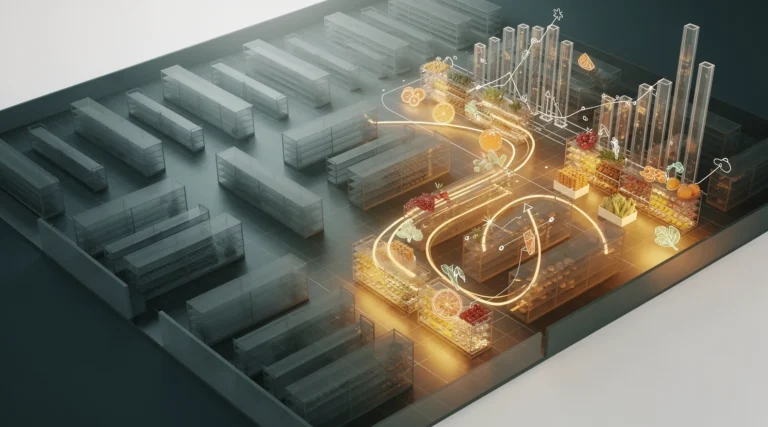
The biggest US grocers are handing their top jobs to Amazon- and Walmart-bred operators, a pattern that points to a 2026-2027 reset around price, own-brand and fulfillment. The shift should show up in guidance by the first half of 2027, with mid-tier regional chains most exposed.

Three converging federal moves point to nonbank and stablecoin firms winning direct access to Fed payment rails by early 2027. That access, plus interchange preemption, likely begins a structural repricing of US merchant checkout costs.

Signals point to agentic commerce settling on merchant-controlled checkout plus tokenized card-network agent credentials by the 2026 holiday season, not autonomous in-chat buying. The likely timeframe is Q4 2026, observable by January 2027.