
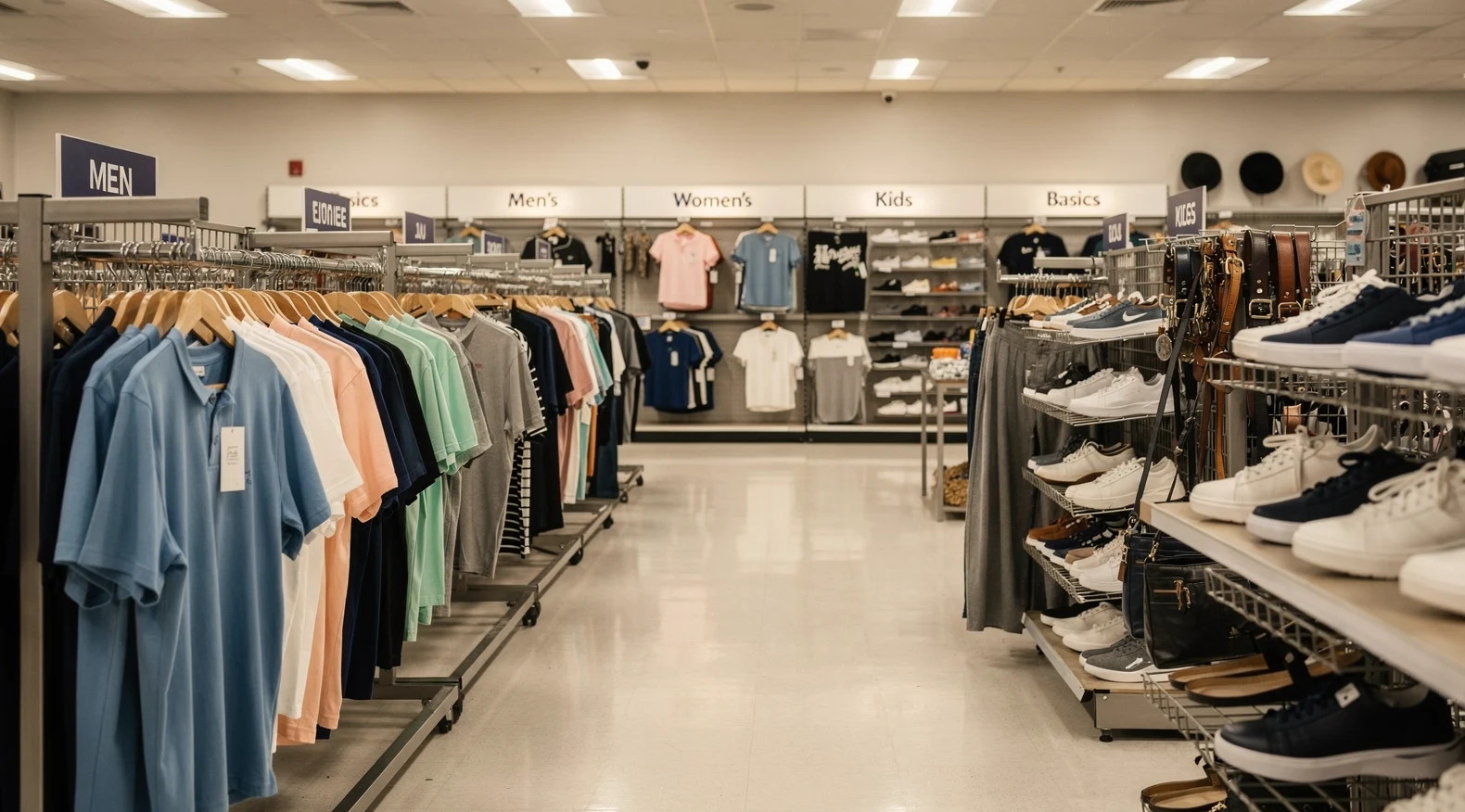
Citi Trends, the small-cap value apparel chain that serves predominantly Black and Latino neighborhoods, reported first-quarter fiscal 2026 results on June 2 that landed well ahead of its own recent guidance and stood out against a cautious read on the American consumer. Total sales rose 14.4 percent to $230.9 million, comparable store sales climbed 13.9 percent, and adjusted EBITDA more than doubled year over year. Management used the print to raise its full-year outlook for the second time in two weeks.
The headline matters for reasons beyond one micro-cap retailer. Off-price and deep-discount chains have posted a strong reporting season, yet much of Wall Street has framed the strength as a sugar high built on heavy tax refunds and a surge in buy now, pay later borrowing. Citi Trends is now arguing that its own results reflect a structural turnaround rather than a seasonal bounce, and the distinction will shape how investors price the entire value-retail cohort into the second half of 2026.
In short
- Comparable sales jumped 13.9 percent in the first quarter, with total sales up 14.4 percent to $230.9 million, marking what the company says is its 21st consecutive month of comp growth.
- Adjusted EBITDA roughly doubled to $13.9 million from $6.4 million a year earlier, lifting the margin by about 280 basis points to 6 percent of sales.
- Full-year 2026 guidance was raised: comparable sales growth now seen at 8 to 10 percent (up from 5 to 7 percent) and adjusted EBITDA at $35 million to $40 million.
- The balance sheet is debt-free, with $81.1 million in cash and nothing drawn on a $75 million revolver, giving the chain room to fund roughly 25 store openings and 50 remodels this year.
- The bigger debate is durability: off-price peers leaned on tax refunds and BNPL, while Citi Trends insists traffic and execution, not stimulus, drove the bulk of its gains.
What Citi Trends reported in the first quarter
For the quarter ended in early May, Citi Trends posted net sales of $230.9 million, a 14.4 percent increase over the prior-year period, according to the company’s results and earnings call. Comparable store sales rose 13.9 percent, which stacks to 23.8 percent on a two-year basis. The company reported net income of $7.8 million, a sharp swing from the thin profitability that defined its recent past.
Adjusted EBITDA reached $13.9 million, up from $6.4 million a year earlier, and represented about 6 percent of sales. That is an improvement of roughly 280 basis points in EBITDA margin. Gross margin came in near 40 percent, an expansion of about 40 basis points, while adjusted selling, general and administrative expense was $78.3 million, or 33.9 percent of sales, a 250-basis-point improvement in expense leverage.
Chief Executive Ken Seipel framed the quarter as proof that the chain’s multi-year repair effort is converting into financial results. Chief Financial Officer Heather Plutino attributed the margin gains to a mix of fuller-price selling, lower markdowns and reduced shrink, partly offset by higher freight costs. The company said it had now strung together 21 straight months of comparable sales increases.
The balance sheet and inventory position
Citi Trends ended the quarter with $81.1 million in cash and no debt, with zero drawn on its $75 million revolving credit facility. Inventory was up about 4.8 percent versus the prior year-end, which management characterized as a controlled build to support traffic rather than a sign of overstock. That liquidity cushion is central to the investment case, because it lets the retailer self-fund store growth without leaning on capital markets.
The company operated 591 stores across 33 states at quarter-end, having opened two and closed one during the period. It also completed 25 store remodels in the first quarter, with 26 more slated for early in the second quarter. The retailer typically opens stores in three cycles, in February, July and October, to align with peak shopping seasons.
Why a 13.9 percent comp stands out right now
Context is what makes the number notable. The first-quarter reporting season has been broadly positive for off-price and value retailers, but the strength has come with an asterisk. Several large chains and the analysts who cover them have flagged that unusually large tax refunds and rising buy now, pay later usage propped up discretionary spending in a way that may not repeat.
Against that backdrop, a double-digit comp from a chain whose core shopper sits at the lower end of the income distribution is striking. Citi Trends customers are among the most exposed to high gas prices, sticky grocery inflation and the gradual tightening of household budgets. A 13.9 percent comparable sales gain from that demographic cuts against the narrative that lower-income spending is rolling over.
The pattern is consistent with a broader theme covered in our analysis of why off-price retail keeps winning in a soft economy: when budgets tighten, shoppers trade down rather than stop buying, and chains that offer brands at extreme value capture that traffic. Citi Trends is positioning itself as a clear beneficiary of that trade-down behavior.
Traffic, not just ticket
Management said nearly half of the sales increase came from higher transaction counts rather than larger baskets. That detail matters, because traffic-led growth is generally read as healthier and more durable than growth driven only by price or basket inflation. More customers walking through the door suggests the assortment is pulling people in, not just selling more to the same shoppers.
The company also reported gains in average basket size, which it tied to stronger merchandising across footwear, men’s apparel, children’s categories and women’s accessories. The combination of more visits and bigger baskets is the textbook signature of a retailer winning share, and it is what gives the leadership team confidence to raise guidance.
A counter-signal to consumer gloom
Economists and retail executives have spent much of 2026 debating how strained the low-income consumer really is. Citi Trends does not resolve that debate, but it complicates the most bearish version of it. If the most budget-conscious shoppers were truly retreating, a chain built almost entirely around them would be among the first to feel it.
Instead, the retailer is guiding to high single-digit comps for the balance of the year. That implies management expects the trend to hold even after the tax-refund window closes, a bet that hinges on execution rather than macro tailwinds.
Inside the turnaround: how Citi Trends got here
The strong quarter did not appear from nowhere. Seipel took over as chief executive in November 2024 and became chairman in April 2025, and he has described the recovery as a deliberate, multi-phase transformation. The first phase, which he calls repair, focused on restoring foundational retail disciplines: clarifying who the customer is, fixing the assortment architecture and rebuilding in-stock reliability.
Seipel has repeatedly stressed a differentiated market position, describing Citi Trends as the only off-price retailer specifically focused on African-American customers. That clarity, he argues, lets the buying team curate brands, styles and trends for an underserved demographic rather than chasing a generic mass-market shopper. The strategy also leaves room to serve middle and higher-income customers who come for the value.
The three-tier assortment
A central plank of the repair work was a good, better, best assortment structure. The good tier, with price points roughly in the $7 to $12 range, is meant to deliver trend-right basics that drive consistency and repeat visits. The best tier leans into branded extreme value, with some items marked as much as 75 percent below manufacturer suggested retail price to create what management calls treasure-hunt excitement.
That tiering mirrors the playbook that has worked for larger off-price names, where a reliable opening price point anchors the trip and branded markdowns supply the discovery thrill. The approach also helps protect gross margin, because the value perception is built on deep discounts off list price rather than on the chain’s own cost base being squeezed.
AI in allocation and site selection
Citi Trends has also leaned on data tools to sharpen operations. The company says it uses AI-based allocation to improve in-stock rates, reduce markdowns and speed inventory turns, which feeds directly into the margin gains reported this quarter. Better allocation means the right product reaches the right store, lowering the clearance markdowns that erode profitability.
On real estate, Seipel said the chain uses artificial intelligence and three years of transaction data to guide store site selection, with the model demonstrating roughly 90 percent accuracy in predicting sales. That kind of predictive screening lowers the risk in an accelerating store-opening program, an important safeguard for a company planning to add dozens of locations a year. The shift toward data-led merchandising echoes how value shoppers themselves have reshaped demand, a dynamic we explored in our look at how dupe culture moved value shoppers in 2026.
The raised guidance and what it signals
The most concrete output of a strong quarter is usually a guidance change, and Citi Trends delivered one. The company lifted its full-year comparable sales outlook to a range of 8 to 10 percent, up from the prior 5 to 7 percent. It now expects total sales to rise 9 to 11 percent for the year.
On profitability, the chain raised its adjusted EBITDA target to a band of $35 million to $40 million, above the earlier $34 million to $38 million range. Management guided to adjusted SG&A leverage of 140 to 160 basis points and gross margin expansion of 50 to 70 basis points over fiscal 2025’s 39.6 percent, with the gross-margin range trimmed slightly because of higher fuel surcharges in freight.
| Metric | Prior FY2026 outlook | Updated FY2026 outlook |
|---|---|---|
| Comparable store sales | 5% to 7% | 8% to 10% |
| Total sales growth | Not specified | 9% to 11% |
| Gross margin expansion | Higher | +50 to 70 bps vs 39.6% |
| Adjusted SG&A leverage | Not specified | 140 to 160 bps |
| Adjusted EBITDA | $34M to $38M | $35M to $40M |
| Capital expenditure | Not specified | $35M to $40M |
Guidance raises of this size carry signal value because they commit management to a higher bar after the easiest comparisons are already behind. By implying high single-digit comps for the rest of the year, the company is effectively telling investors the momentum is not purely a first-quarter, refund-driven event. That is the crux of the bull case, and also where the most risk sits if spending cools.
How Citi Trends compares with off-price peers
Citi Trends is a minnow next to the off-price giants, but the quarter invites comparison because the whole group reported within a tight window. The three dominant off-price chains, TJX, Ross Stores and Burlington, are orders of magnitude larger, yet their first-quarter comps offer a useful benchmark for what a strong value-retail quarter looks like in 2026.
| Company | Q1 comparable sales | Relative scale | Tax-refund framing |
|---|---|---|---|
| Citi Trends | +13.9% | ~591 stores, micro-cap | Says traffic and execution led; refunds a partial lift |
| Ross Stores | About +17% (per reported coverage) | Large-cap, >2,000 stores | Credited part of growth to extra stimulus |
| TJX Companies | +6% | Largest off-price globally | Biggest EPS beat since August 2021 |
| Burlington Stores | +6% | Third-largest US off-price | Estimated refunds worth 1.5 to 2 points of comp |
The figures for Ross, TJX and Burlington reflect coverage of their respective quarters and each company’s own commentary. What unites them is a candid acknowledgment that elevated tax refunds and BNPL usage flattered the period. Burlington went as far as quantifying the refund tailwind at roughly 1.5 to 2 percentage points of its comp.
Citi Trends struck a different tone. Management acknowledged a tax-refund benefit concentrated in the roughly six to seven weeks from mid-February through Easter but insisted underlying trends held both before and after that window. Whether that distinction proves real or is simply a smaller company telling a more optimistic story is the question the next two quarters will answer. For a fuller picture of how the cohort fared, see our coverage of how off-price retailers beat Q1 estimates as tax refunds and BNPL masked strain.
Where Citi Trends differs structurally
Beyond size, the chains diverge on customer and format. TJX, Ross and Burlington chase a broad value shopper across apparel and home, often in suburban strip centers. Citi Trends concentrates on urban and community locations, a narrower demographic and a smaller average store, which gives it a different cost structure and a tighter merchandising focus.
That focus is both a strength and a constraint. It lets the buying team move quickly on trends relevant to its core customer, but it also ties the company’s fortunes tightly to the financial health of one demographic. The peer giants can absorb a soft patch in one segment far more easily than a 591-store specialist can.
The tax-refund question: signal or noise?
The defining macro debate of this earnings season is whether value-retail strength is structural or stimulus-driven. Tax refunds in early 2026 ran heavy, and BNPL volumes rose, both of which inflated discretionary purchasing power for lower-income households during the exact window when off-price chains report their first quarter. The concern is that the second quarter, without those props, will expose weaker underlying demand.
Citi Trends sits at the center of this question because its customer is precisely the one most likely to spend a refund and most likely to use pay-in-four financing. If any retailer’s first quarter were artificially boosted, the bears would argue it should be this one. Management’s counter is that traffic growth, not ticket inflation, drove most of the gain, which is harder to explain through a one-time cash windfall alone.
The honest answer is that both can be true at once. Refunds likely added a few points of comp, while genuine execution improvements added the rest. Disentangling the two will require watching the second-quarter comp, when the refund tailwind is gone and the company’s guidance of high single-digit growth faces its first clean test. The same refund-and-financing dynamic showed up in jewelry, where Signet Jewelers beat first-quarter estimates and lifted its full-year guidance, underscoring how broad the first-quarter consumer lift was.
Margins, freight and the cost picture
The profit story this quarter was as important as the sales story. Adjusted EBITDA margin expanded about 280 basis points to 6 percent of sales, driven by gross-margin gains and meaningful expense leverage as fixed costs spread across a larger sales base. SG&A as a percentage of sales fell 250 basis points, a direct benefit of the higher comp.
Not everything moved in the company’s favor. Plutino flagged that higher fuel surcharges on freight were a real headwind, enough that the company trimmed its gross-margin expansion guidance even as it raised the rest of the outlook. The offsetting tailwinds, lower markdowns and reduced shrink achieved through AI-led systems, were strong enough to keep overall margin guidance positive.
Incentive compensation as a tell
One revealing detail: the company raised its incentive-compensation accrual from 100 percent to 128 percent of target during the quarter, earlier than its usual timing, because performance had outpaced plan. That is an internal vote of confidence, since management only books higher bonus accruals when it expects to hit elevated targets. It also modestly pressures near-term SG&A, a cost the company appears happy to bear given the results.
Freight and tariff exposure
Freight inflation is an industry-wide issue, and off-price chains have flagged that tariffs are squeezing margins more than expected across the sector. Citi Trends sources branded closeout merchandise rather than placing large direct import orders, which can insulate it somewhat from tariff timing, but it is not immune to higher transportation costs. Fuel surcharges are the clearest example of how macro cost pressure can blunt an otherwise strong margin trajectory.
Store growth, real estate and the 2027 target
With the balance sheet healthy and comps accelerating, Citi Trends is shifting from repair to expansion. The company plans to open about 25 stores in fiscal 2026, close four and remodel roughly 50, with capital expenditure of $35 million to $40 million. The remodel program is significant, because refreshed stores typically generate a sales lift that feeds back into the comp.
Looking further out, Seipel said the chain expects to accelerate to at least 40 new stores a year beginning in 2027, targeting roughly 650 stores by the end of that year. Management has separately pointed to an adjusted EBITDA target near $45 million as part of that growth phase. By year-end 2026, the company expects about $65 million in cash, no revolver borrowings and roughly $140 million in total liquidity.
Disciplined store growth is where the AI site-selection model earns its keep, since each new location carries fixed build-out costs that only pay off if the unit performs. The economics of focused, smaller-format value stores can be attractive, a theme we examined in our piece on why outlet and off-price chains outperform full-line stores. For Citi Trends, the question is whether it can replicate its turnaround playbook across a larger, faster-growing fleet without diluting execution.
What it means for the value-retail sector and investors
For the sector, Citi Trends adds a data point to the argument that value retail remains the structurally advantaged corner of discretionary spending. When budgets tighten, trade-down behavior funnels traffic toward chains that sell brands at deep discounts, and the first quarter of 2026 reinforced that pattern across the off-price group. The Citi Trends print extends the story to the lowest-income end of the market.
For investors, the stock has already moved sharply, trading up more than 20 percent in the week around the preliminary announcement to roughly $46.60, at a price-to-earnings multiple in the seventies. That rich multiple bakes in a lot of the turnaround, leaving little margin for a stumble. A clean second quarter that holds the line after refunds fade would validate the guidance raise; a soft one would revive the stimulus-bounce thesis quickly.
The wider read-through is that execution can still differentiate even small players in a crowded value segment. Citi Trends did not invent a new format; it sharpened customer focus, rebuilt its assortment and applied data tools to allocation and real estate. Those are repeatable levers, which is why the company is now comfortable guiding to growth that does not depend on a generous tax season.
Risks and what to watch next
The clearest risk is the durability question. If second-quarter comps decelerate sharply once refunds clear the system, the market will treat the first quarter as a stimulus artifact and the elevated multiple will be hard to defend. The company’s own guidance of high single-digit comps for the balance of the year is the benchmark to measure against.
Cost pressure is the second watch item. Fuel surcharges and broader freight inflation already forced a small trim to gross-margin guidance, and any escalation in transportation or tariff costs would eat into the margin expansion the story depends on. The third risk is execution risk in the accelerating store program, where moving from roughly 25 openings to 40-plus a year raises the stakes on site selection and staffing.
The near-term catalysts are straightforward: the second-quarter report, which will offer the first refund-free read on demand, and any update on the 2027 store-growth and EBITDA targets. Investors will also watch traffic trends closely, since management has staked its durability case on transaction growth rather than basket inflation. For now, Citi Trends has delivered the rare combination of a beat, a raise and a credible story about why it should last.
Frequently asked questions
What did Citi Trends report for the first quarter of fiscal 2026?
Citi Trends reported total sales of $230.9 million, up 14.4 percent year over year, with comparable store sales up 13.9 percent and net income of $7.8 million. Adjusted EBITDA roughly doubled to $13.9 million, and the company raised its full-year 2026 guidance.
Why is a 13.9 percent comparable sales gain considered notable?
Because it came from a chain whose core customers are lower-income shoppers widely thought to be under financial strain. A double-digit comp from that demographic challenges the view that low-income discretionary spending is weakening, especially when management says traffic, not just bigger baskets, drove most of the gain.
How does Citi Trends compare with TJX, Ross and Burlington?
Citi Trends is far smaller, with about 591 stores against the thousands operated by the off-price giants. Its 13.9 percent comp outpaced TJX and Burlington, both near 6 percent, though Ross reported a stronger figure, around 17 percent per coverage of its quarter. All of the larger chains credited tax refunds for part of their strength.
Did tax refunds and buy now, pay later drive the results?
They helped. Management acknowledged a refund benefit concentrated in roughly six to seven weeks from mid-February through Easter, but argued that underlying trends held before and after that window. The honest interpretation is that refunds added some points of comp while execution improvements added the rest, a split the second quarter will clarify.
What changed in the company’s full-year guidance?
Citi Trends raised its comparable sales outlook to 8 to 10 percent from 5 to 7 percent, guided to total sales growth of 9 to 11 percent, and lifted adjusted EBITDA guidance to $35 million to $40 million. It trimmed gross-margin expansion slightly because of higher fuel surcharges in freight.
Who runs Citi Trends and what is the turnaround strategy?
Ken Seipel became chief executive in November 2024 and chairman in April 2025. His strategy centers on a clear focus on African-American customers, a good, better, best three-tier assortment, and AI tools for inventory allocation and store site selection, framed as a multi-phase repair-to-growth transformation.
How financially healthy is the company?
The balance sheet is debt-free, with $81.1 million in cash at quarter-end and nothing drawn on a $75 million revolver. Management expects about $65 million in cash and roughly $140 million in total liquidity by year-end 2026, enough to self-fund store openings and remodels.
What are Citi Trends’ store growth plans?
The company plans about 25 new stores, four closures and roughly 50 remodels in fiscal 2026, then aims to accelerate to at least 40 openings a year from 2027, targeting around 650 stores by the end of 2027. It uses an AI model with about 90 percent accuracy to guide site selection.
What should investors watch next?
The key catalyst is the second-quarter report, the first clean read on demand once tax refunds fade. Investors should also watch freight and fuel costs, the pace of store openings, and whether traffic growth continues, since management has staked its durability case on transactions rather than basket size.