
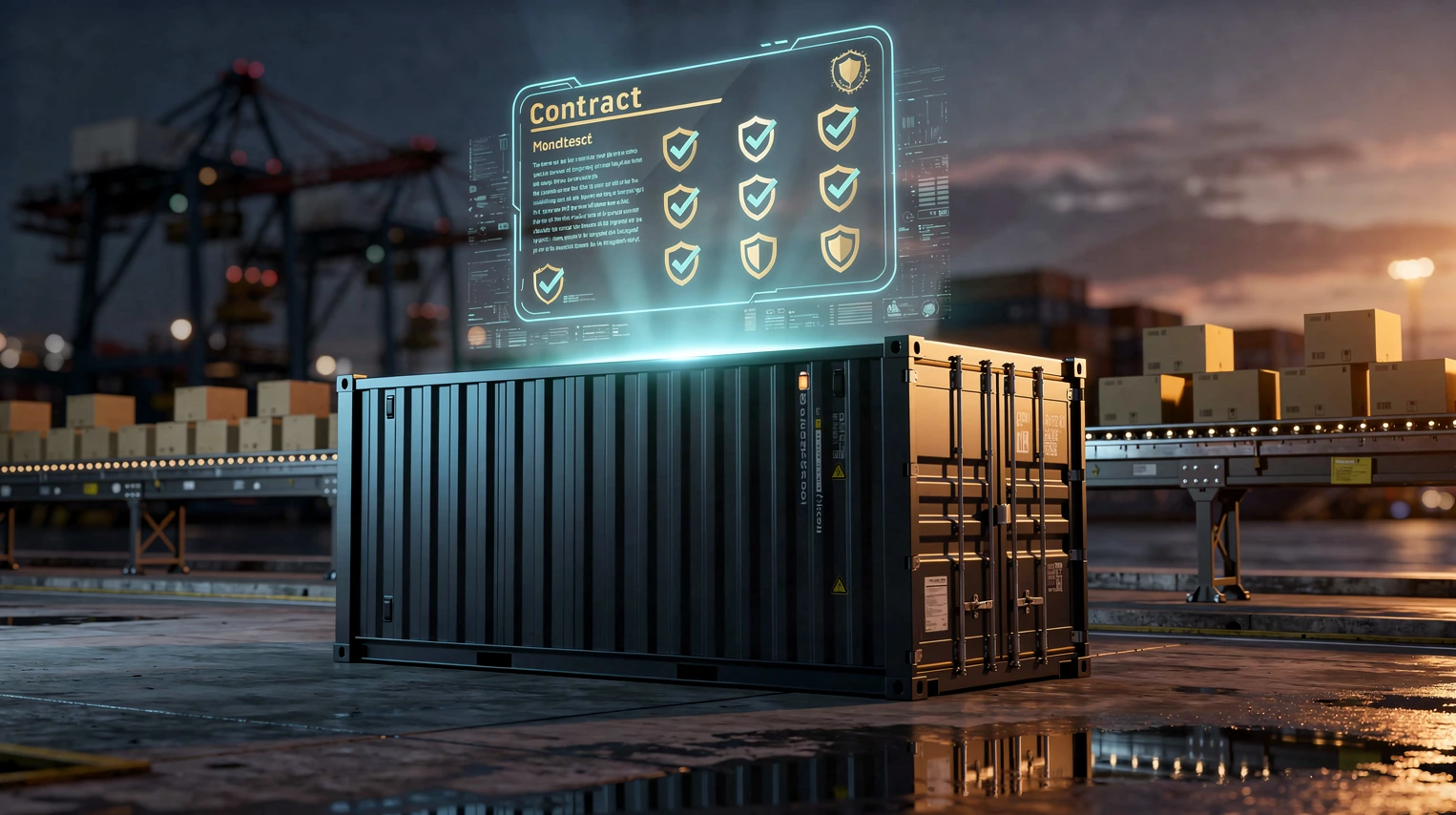
If you are about to wire your first five-figure payment to a factory you have never met, sitting on the other side of the world, “Alibaba Trade Assurance” is the phrase that decides whether you sleep at night. The program is Alibaba’s built-in buyer protection layer, and for first-time importers it is the single most important checkbox on the entire platform. Yet most new buyers either skip it, misunderstand it, or assume it works like PayPal. It does not.
This guide walks through how alibaba trade assurance actually works in 2026, what it covers, where the loopholes are, and the exact playbook US-based retail and e-commerce teams use to keep deposits safe on first orders. It is part of our broader resource on selling on global e-commerce marketplaces, where the wider sourcing picture lives.
In short
- Trade Assurance is an escrow-style protection built into Alibaba.com that covers on-time shipment and product quality on qualified orders.
- It only works if you pay through Alibaba: wires sent off-platform are not covered, no matter what the supplier says.
- Coverage limits are per supplier, set in USD, and visible on every storefront before you place the order.
- Disputes are decided by Alibaba, not the supplier, but you must file within 30 days of the final delivery deadline.
- Trade Assurance is not insurance. It does not cover shipping damage, customs seizures, or buyer’s remorse.
What Trade Assurance actually is
Trade Assurance is a free service that Alibaba.com layers on top of qualified supplier orders. When you click “Start Order” on a product page and the supplier is verified, Alibaba generates a contract template that lists the SKU, quantity, unit price, total, shipping terms, latest shipment date, and a quality clause. You pay through Alibaba’s checkout (bank transfer, credit card, or Boleto in some regions), and the funds are held by an Alibaba-controlled account, not the supplier’s.
The supplier only sees the money released after either of two things happens: you confirm receipt and quality, or the dispute window closes without a claim. If something goes wrong, you open a dispute inside Alibaba, upload evidence, and a case manager from Alibaba mediates. If mediation fails, Alibaba can refund you directly from the held funds, up to the stated coverage amount.
For a first-time importer, this is structurally similar to escrow, but it is not legally identical. Alibaba operates the funds through partner banks and its own treasury, and the contract is between you and the supplier, not Alibaba. The platform’s role is mediator and paymaster. Understanding that distinction matters when you read the fine print, especially on the difference between platform refunds and legal claims you might pursue separately.
How Trade Assurance works step by step
The mechanics are easier to follow as a numbered flow. Here is the path a typical first order takes, from supplier shortlist to released payment.
- You shortlist a supplier who shows the green “Trade Assurance” badge on their storefront. The badge also displays a USD coverage cap.
- You agree on specs and pricing through Alibaba’s messaging, ideally with a Pro Forma Invoice (PI) attached. Keep negotiation inside the chat, since dispute case managers can read it.
- You click “Start Order” on the product page or convert a quote into a Trade Assurance order. Alibaba auto-fills a contract template.
- You review the contract: SKU description, quantity, unit price, Incoterms (usually FOB or EXW for first orders), latest shipment date, and quality terms. Edit before signing.
- Supplier counter-signs the contract. Both signatures are recorded in the order page.
- You pay through Alibaba checkout. Credit card adds about 2.95% in fees and clears instantly. Telegraphic Transfer (T/T) is fee-free but takes 1–3 business days to land.
- Supplier produces and ships by the latest shipment date written into the contract. They upload the Bill of Lading (B/L) or Air Waybill (AWB) to the order page as proof.
- Goods arrive at your forwarder or warehouse. You inspect, ideally with a third-party QC report taken before shipment.
- You confirm receipt or, if there is a problem, open a dispute inside the order page before the 30-day window closes.
- Funds release to supplier automatically if no dispute is filed, or stay held until the dispute is resolved.
Two notes for first-time importers. The “latest shipment date” is the on-time clock that Trade Assurance enforces, so push back if a supplier wants 90 days when 60 is normal for the product. And the 30-day dispute window starts from the agreed delivery date, not the day the container actually arrives at your warehouse, so if your forwarder is slow you can run out of clock.
What Trade Assurance covers and what it does not
The single biggest mistake first-time buyers make is treating Trade Assurance as a blanket warranty. It is not. The official scope is two things: on-time shipment and pre-shipment product quality matching the contract. Everything else is out of scope, even if Alibaba’s marketing copy implies otherwise.
| Scenario | Covered by Trade Assurance? | Notes for first-time importers |
|---|---|---|
| Supplier ships late past the contract date | Yes | Refund proportional to delay, capped at order value |
| Goods arrive different from contract spec | Yes | Need third-party inspection or photos as evidence |
| Supplier never ships at all | Yes | Full refund of held funds, usually fastest dispute |
| Damage during ocean or air freight | No | File with the freight forwarder’s cargo insurance instead |
| Customs seizes or destroys the shipment | No | Compliance is the importer’s responsibility |
| Product does not sell well in your market | No | Buyer’s remorse is never covered, anywhere |
| Supplier ships off-platform (wire to factory bank) | No | Money paid outside Alibaba checkout is invisible to the system |
| Intellectual property dispute (counterfeits) | Partial | Refund possible but Alibaba may also delist the supplier |
| Order placed but contract not signed before payment | No | Unsigned contracts have no enforceable terms |
The off-platform payment trap is by far the most common way US importers lose money on Alibaba. A supplier will offer a 3% discount if you wire directly to their bank account in Hong Kong or Shenzhen, “to save on Alibaba fees”. The discount is real, the protection is gone. According to the FBI’s Internet Crime Complaint Center (IC3), business email compromise (BEC) scams targeting international wire transfers cost US companies billions every year, and offshore supplier payments are a common attack surface. Stay on the platform.
Coverage limits and how they are set
Every Trade Assurance supplier has a coverage cap, displayed in USD on their storefront. The cap is set by Alibaba based on the supplier’s transaction history, factory verification level, and dispute record. Brand-new suppliers might start at $5,000. Mature gold suppliers can carry caps of $500,000 or more.
The cap is per-supplier, not per-order, and it resets as completed orders age out of the rolling window. A few practical implications for first-time buyers.
- Split large first orders across two or three Trade Assurance suppliers in your shortlist. If one fails, you have parallel inventory paths.
- If your order exceeds the cap, only the covered portion is protected, even if you pay the full amount through Alibaba. You will see a warning at checkout.
- Caps do not roll over: paying for a $30,000 order with a $25,000 cap leaves $5,000 exposed, and any dispute will only refund up to $25,000.
- Verified Supplier status matters. Suppliers who completed an on-site verification (via SGS, TUV, or Bureau Veritas) tend to carry higher caps and have lower dispute rates.
One subtlety: the coverage figure assumes the dispute resolution finds entirely in your favor. Partial refunds are common when the issue is “minor quality deviation” rather than “wrong product”. Going into your first order assuming you might recover 60% to 80% in a worst-case dispute is more realistic than expecting 100%.
Common mistakes first-time importers make
Most disasters on a first Alibaba order trace back to a handful of mistakes, all of which are avoidable if you know what to look for. The list below comes from disputes US buyers have filed in the last 24 months, in rough order of frequency.
- Paying off-platform. The supplier “offers a discount” or claims their Alibaba checkout is broken. Walk away or pay through the platform. There is no exception worth your deposit.
- Signing a vague contract. The SKU description on the contract is one line (“phone case, black, 5000 pcs”). When the wrong material arrives, there is nothing concrete to dispute. Write specifications into the contract: material, weight, dimensions, packaging, color reference (Pantone if relevant).
- Accepting a 90-day shipment window. Default to 45 to 60 days for off-the-shelf goods, 75 to 90 only for genuinely custom tooling. A long window gives a struggling supplier room to drag the order past dispute relevance.
- Skipping pre-shipment inspection. A $200 to $400 third-party inspection (AsiaInspection, QIMA, V-Trust, or SGS) before the container is sealed is the single highest-ROI line item on your first order. Trade Assurance disputes without an inspection report are dramatically harder to win.
- Confirming receipt too early. Once you click “Confirm Order Received and Satisfied”, funds release and Trade Assurance closes. Inspect first, confirm second. If you need to confirm to satisfy a customs broker, ask Alibaba support whether it can be done without releasing funds.
- Missing the dispute window. Thirty days from the agreed delivery date, not from arrival. If a container is in transit or stuck at port, file the dispute first and resolve it later. You can always withdraw a dispute. You cannot reopen a closed window.
- Trusting “Gold Supplier” as a quality signal. Gold is a paid status, not a verification. The signals that matter are Verified Supplier (on-site audit), transaction volume in the last 6 months, response rate, and dispute rate. Read them on the supplier’s storefront.
If you want a deeper breakdown of supplier vetting, our companion piece on how to verify an Alibaba supplier before sending payment walks through the full pre-payment checklist, including how to read a business license and check factory registration through the Chinese government database.
Examples from US retail and e-commerce
The pattern shows up across every category US buyers source from Alibaba. Here are three composite scenarios drawn from real Trade Assurance disputes, sanitized for privacy.
Pet accessories brand, $18,000 order, full refund. A Texas-based pet brand ordered 12,000 silicone dog bowls from a Guangdong supplier. The contract specified food-grade silicone with FDA test reports. Goods arrived as TPE plastic, no FDA paperwork. Buyer commissioned a $350 lab test, opened a dispute with the test report and contract attached, and Alibaba refunded the full $18,000 within 28 days. The supplier was downgraded and lost Verified status.
The deciding factor was the lab test. The buyer did not argue subjective quality, they showed a quantitative material mismatch against a written contract. Trade Assurance disputes are won on evidence, not narrative.
Beauty startup, $42,000 order, partial refund of $9,500. A direct-to-consumer beauty brand in California ordered 30,000 lipstick tubes. Tubes arrived with a slightly different shade of metallic finish than the approved sample. The supplier argued production tolerance. Alibaba mediated, both sides shared photos, and the case settled at roughly 23% refund. The buyer accepted because the goods were still sellable, just slightly off-spec.
The lesson here is that minor cosmetic deviations rarely produce full refunds, even with a clear contract. The Trade Assurance system is designed to push both parties toward partial settlements when goods are usable, which keeps it functioning at scale.
Electronics importer, $65,000 order, lost off-platform. A Florida-based importer paid a $32,500 deposit through Alibaba, then was talked into wiring the remaining $32,500 directly to the supplier’s Hong Kong bank account “to avoid Trade Assurance fees on the balance”. Goods never shipped. Alibaba refunded the deposit but refused to cover the wire. The importer pursued the supplier through an attorney in Shenzhen at a cost of roughly $8,000 in fees and recovered nothing.
This is the single most common loss pattern. If a supplier asks for any payment outside the Alibaba checkout, especially on the balance after the deposit, it is a structural red flag regardless of how legitimate the rest of the relationship looks.
Tools and partners worth knowing
Trade Assurance gives you the financial protection layer. To make it actually work in practice, pair it with three other tools. None are expensive on the scale of a $20,000 to $100,000 first order.
| Tool category | Examples | Typical cost | What it adds |
|---|---|---|---|
| Pre-shipment inspection | QIMA, AsiaInspection, V-Trust, SGS | $250–$450 per inspection day | Independent evidence that closes 80% of dispute ambiguity |
| Freight forwarder | Flexport, Freightos, Shipa, local FF | Quoted per shipment | Customs clearance, cargo insurance, B/L handling |
| Cargo insurance | Marsh, Lloyd’s brokers, freight forwarder add-on | 0.3%–0.6% of cargo value | Covers the freight-damage gap that Trade Assurance excludes |
| Sourcing agent (optional) | Independent agents, larger ones like Dragon Sourcing | 3%–8% commission | Translation, factory visits, sample handling |
If your e-commerce store runs on a hosted platform, the choice of front end also matters for how cleanly imported inventory flows through to product pages. Our walkthrough of when Wix is enough and when you should switch to Shopify covers how inventory volume and SKU complexity should drive that decision, which becomes very real once a 20-foot container of new product hits your warehouse.
For US buyers specifically, the US Customs and Border Protection site is the canonical reference for HTS codes, duty rates, and Section 301 tariff impacts on China-origin goods. Trade Assurance does not, and cannot, protect you from a tariff or compliance miscalculation, so this homework happens outside the platform.
Where Trade Assurance fits in your sourcing stack
Step back from the mechanics for a moment. Trade Assurance is the payment-protection layer of a four-layer sourcing stack:
- Supplier vetting (business license, Verified Supplier status, factory visits or video tours, reference checks)
- Contract clarity (detailed SKU spec, Incoterms, shipment date, quality clause, packaging spec)
- Financial protection (Trade Assurance, paid through Alibaba checkout, with cap visible)
- Physical verification (pre-shipment inspection, sample retention, lab tests where applicable)
If any one of those layers is missing, the others compensate less than you would hope. A perfect contract with a dodgy supplier still leads to disputes. A great supplier with a vague contract still produces wrong goods. A solid Trade Assurance order without a pre-shipment inspection still loses partial refunds on subjective quality calls. For first-time importers, the discipline is treating all four as non-negotiable on the first three to five orders, even when the supplier seems patient and helpful.
The broader sourcing landscape, including Alibaba alternatives like 1688, Made-in-China, and Global Sources, is something we cover in detail in Alibaba versus 1688 versus Made-in-China for serious buyers. The short version is that Trade Assurance is genuinely a differentiator for Alibaba.com versus those alternatives, particularly for first-time buyers who are not yet equipped to navigate a Chinese-language platform.
How disputes actually play out
If you do need to open a dispute, the process is more structured than most first-time buyers expect. Knowing the shape of it removes a lot of stress in the moment.
The first 7 days after you file are buyer-supplier negotiation, mediated through the order page. About 60% of disputes resolve in this window because suppliers do not want a case manager involved. If you cannot agree, Alibaba assigns a case manager (typically based in Hangzhou or Hong Kong) who reviews evidence from both sides. You upload photos, videos, inspection reports, lab tests, chat logs, and the contract. The supplier does the same.
The case manager then proposes a settlement, usually within 10 to 15 business days. You can accept, counter-propose, or escalate. Escalation triggers a final review with a senior case manager, whose decision is binding within the platform. The whole process tends to wrap in 30 to 45 calendar days from filing.
The two pieces of evidence that consistently move case managers are written contract specs and third-party inspection reports. Subjective claims (“the quality felt cheap”) do not move the needle. Quantitative claims backed by documents (“contract specified 100gsm cotton, lab test shows 72gsm polyester blend”) almost always do.
Bottom line for first-time importers
Trade Assurance does what it says on the tin, with three honest qualifications. It only protects orders paid through the Alibaba platform, only against on-time shipment and contract-spec quality, and only up to the supplier’s posted USD cap. Inside those boundaries, it is the most buyer-friendly system any major international sourcing marketplace currently offers.
For your first order, the playbook is simple: shortlist Verified Suppliers with caps above your order value, write a detailed contract, pay through Alibaba checkout, schedule a pre-shipment inspection, and file disputes inside the 30-day window with documented evidence. Do those five things and the system genuinely works. Skip any of them and Trade Assurance becomes the safety net you wish you had configured properly. The pillar-level guide to selling on global e-commerce marketplaces places this Alibaba workflow inside the wider picture of where US retailers source, sell, and scale in 2026.
FAQ
Is Alibaba Trade Assurance free to use?
Yes. Trade Assurance itself costs nothing on top of your order. You only pay payment processing fees, which depend on the method: credit card adds about 2.95%, while T/T bank transfer is fee-free. The protection layer is bundled with qualifying orders at no extra cost.
Does Trade Assurance cover shipping damage?
No. Trade Assurance covers on-time shipment and pre-shipment product quality. Damage that occurs in transit (in the ocean container, on the truck, or in air freight) is covered by cargo insurance, which is sold separately by your freight forwarder or a marine insurance broker. Expect to pay 0.3% to 0.6% of cargo value for proper coverage.
What is the dispute window for Trade Assurance?
You have 30 days from the agreed delivery date written into the contract, not from the date the goods arrive at your warehouse. If your freight is delayed, file the dispute provisionally to preserve your rights and withdraw it later if everything resolves. Missing the window forfeits coverage entirely.
Can I pay part of an order through Alibaba and part by direct wire?
You can, but the portion paid by direct wire is not covered by Trade Assurance. The protection only applies to funds that pass through the Alibaba checkout. This split-payment arrangement is the single most common way US importers lose money. Pay everything through Alibaba or nothing.
How long does an Alibaba dispute take to resolve?
Most disputes resolve in 30 to 45 calendar days from filing. The first 7 days are buyer-supplier negotiation, then 10 to 15 business days for case manager review, plus a few days for proposed settlement and acceptance. Escalation to senior review adds another 5 to 10 days.
Does Trade Assurance work for samples?
Technically yes, but small sample orders ($50 to $200) are usually not worth the friction of formal Trade Assurance contracts. Most first-time buyers pay for samples with a credit card outside the Trade Assurance flow, then move to full Trade Assurance protection on the production order. Sample disputes are rare and rarely worth the platform’s attention.
What happens if my supplier loses Verified Supplier status mid-order?
Existing Trade Assurance orders remain protected through to completion. New orders with that supplier may no longer qualify or may have a lower coverage cap. If a supplier loses Verified status while you have a live order, Alibaba typically notifies you and you can choose to accept the goods, dispute, or cancel depending on the production stage.