
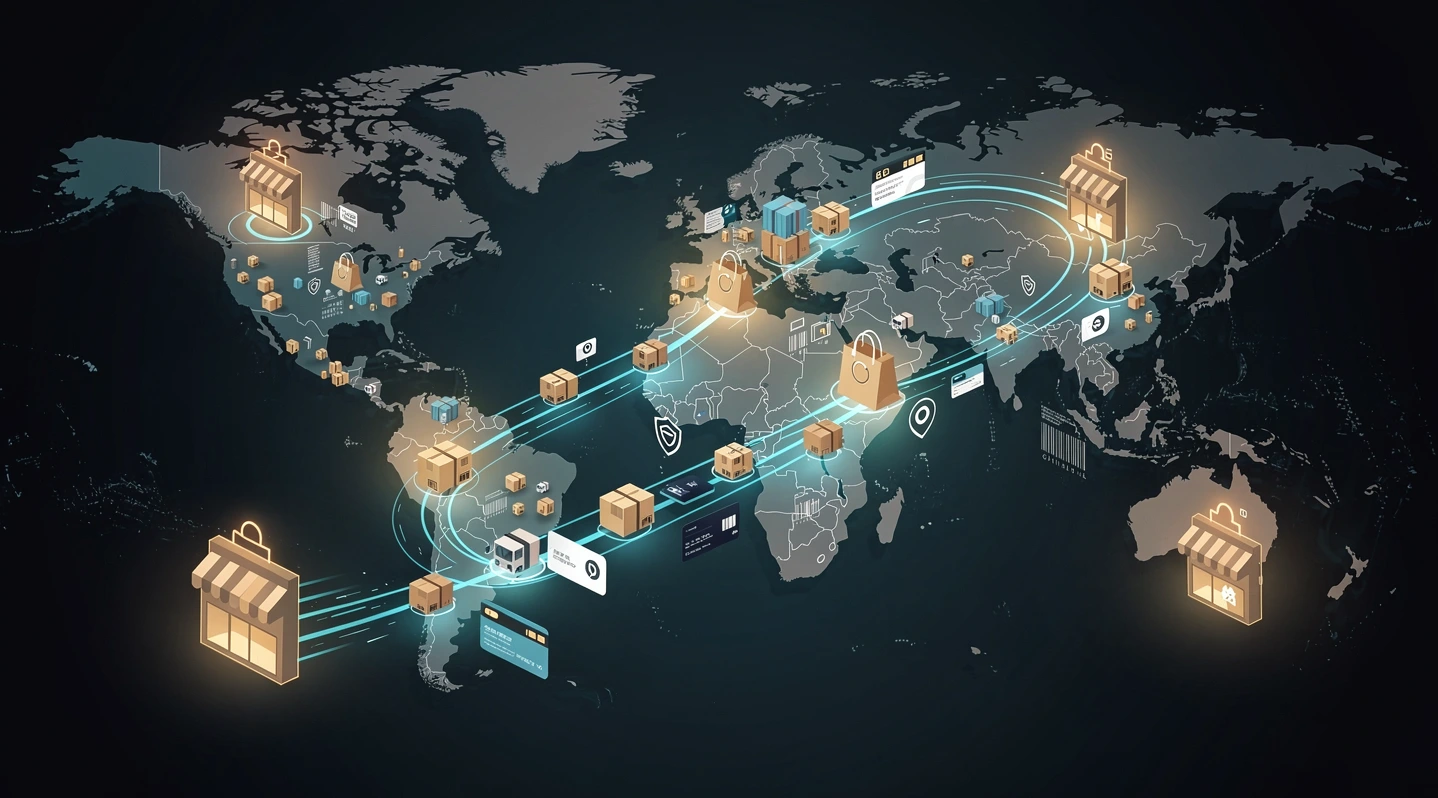
AliExpress dropshipping built a generation of first-time store owners. The pitch was simple: find a cheap product on a Chinese marketplace, list it on your own storefront at a markup, and let the supplier ship it directly to your customer. For a stretch of the late 2010s and early 2020s, that model minted side incomes and a few genuine fortunes. In 2026 the same playbook still works, but the margins, the shipping math, and the customer expectations have all shifted under it.
This is a candid update rather than a hype piece. If you are a US-based seller weighing whether to start, scale, or quit an AliExpress dropshipping operation, the honest answer is that the model is now harder, slower to profit, and far less forgiving of sloppy execution. It is not dead. It is professionalizing, and the sellers who treat it like a real retail business rather than a lottery ticket are the ones still standing.
In short
- The easy-money era is over. Rising ad costs, longer shipping expectations, and de minimis policy changes have compressed the margins that made classic AliExpress dropshipping attractive.
- Speed is the new battleground. Customers conditioned by Amazon Prime and Temu no longer tolerate 20-day to 40-day delivery windows, so fast-shipping suppliers and US warehousing matter more than raw product cost.
- Policy risk is real. Changes to low-value import duty rules in the US and EU have raised landed costs and paperwork for cross-border parcels.
- Branding beats arbitrage. Generic “trending product” stores burn out fast, while sellers who build a niche brand, own the customer relationship, and negotiate private supply survive.
- It is a real business now. Sustainable AliExpress dropshipping in 2026 looks like disciplined retail: unit economics, retention, customer service, and supplier vetting, not a viral clip and a Shopify theme.
Why this topic matters in 2026
The phrase “AliExpress dropshipping” still pulls enormous search volume, which tells you the interest has not gone away. What has changed is the gap between the beginner fantasy and the operating reality. New sellers arrive expecting the conditions of 2019 and find a market reshaped by advertising inflation, faster logistics competitors, and shifting trade policy.
AliExpress is the retail export arm of Alibaba, the same group that runs the wholesale platform 1688 and the B2B site Alibaba.com. It functions as a giant catalog of manufacturers and trading companies selling directly to consumers and resellers worldwide. For a dropshipper, it is less a store and more a sourcing layer that happens to ship single units. That structural role has not changed, but everything wrapped around it has.
The reason a candid update matters is that a lot of published advice is stale or conflicted. Course sellers and app affiliates have an incentive to keep the dream alive. A grounded view helps you decide where the model still fits, and where it has been quietly replaced by better options. For the wider context of selling across international platforms, our complete guide to selling on global e-commerce marketplaces maps how AliExpress sourcing sits alongside Amazon, eBay, and regional marketplaces.
What actually got harder
Three forces did most of the damage to the classic model. Advertising on Meta and TikTok grew more expensive and less predictable as targeting signals degraded and competition intensified. Delivery expectations tightened as Amazon, Temu, and Shein normalized fast or ultra-cheap fulfillment. And trade policy on low-value parcels moved against the frictionless cross-border shipment that dropshipping depends on.
None of these is fatal on its own. Stacked together, they turn a thin-margin arbitrage into a business that needs real operating skill. That is the core of the candid update: the model did not collapse, but the difficulty curve got much steeper.
There is a fourth, quieter force worth naming: payment-processor scrutiny. As dispute rates rose across the category, processors grew stricter about long shipping times, vague store policies, and sudden spikes in volume. A store that would have sailed through onboarding in 2019 can now find its funds held while a risk team reviews delivery complaints. That single change punishes exactly the slow, opaque, spray-and-pray stores the old model produced.
Key terms and definitions
Before going deeper it helps to fix the vocabulary, because loose terminology causes most beginner confusion. Dropshipping is a fulfillment method, not a marketing channel or a platform. You can dropship from AliExpress while selling on Shopify, WooCommerce, eBay, or your own headless storefront.
| Term | What it means | Why it matters in 2026 |
|---|---|---|
| Dropshipping | Selling a product you do not stock; the supplier ships directly to your buyer | Low upfront risk, but you inherit the supplier’s speed and quality problems |
| De minimis | The value threshold below which imports enter duty-free | Changes to this threshold raise landed cost on cheap cross-border parcels |
| Fulfillment lead time | Total time from order to delivery | The single biggest driver of refunds and chargebacks in this model |
| Private supplier or agent | A sourcing partner who negotiates stock, branding, and faster shipping | The step that separates hobby stores from durable brands |
| ePacket and successors | Subsidized cross-border parcel services for light packages | Cheaper shipping tiers that shaped the original economics |
| AOV | Average order value across your store | Higher AOV absorbs rising ad costs that kill low-ticket stores |
The most important concept for newcomers is that you are not buying a product, you are buying a promise about delivery and quality that you then resell. When the supplier fails, your brand takes the hit, your card processor sees the disputes, and your ad account absorbs the poor reviews. Every definition above eventually points back to that transfer of risk.
Dropshipping versus reselling versus private label
People conflate these three, and the differences decide your margin and your workload. Dropshipping holds no inventory and ships per order. Reselling buys stock in bulk and fulfills it yourself, trading capital for control. Private label puts your brand on a manufactured product, usually with an inventory commitment.
Each is a valid path, and many mature stores blend them. A common 2026 progression is to validate demand with dropshipping, then move winners to a stocked or private-label model once volume justifies it. If you want the reseller angle specifically, our practical guide to AliExpress for resellers in 2026 covers the buy-in-bulk variant in detail.
How it works in practice
The mechanical workflow has barely changed, which is part of why the model still attracts beginners. You choose a niche, build a storefront, connect a supplier app that imports products and pushes orders to AliExpress, run traffic, and handle customer service. The tools are mature and cheap. The hard part is everything the tools do not do for you.
In practice a healthy operation in 2026 runs on tighter unit economics than the old model tolerated. You need a product with enough margin to survive paid acquisition, a shipping option that lands within a window customers accept, and a customer experience that generates repeat purchases or at least neutral reviews. Miss any one of those and the store bleeds money quietly until the ad account or the payment processor shuts it down.
A realistic order lifecycle
Walk one order through the system to see where friction lives. A customer buys from your store and pays your retail price. Your app forwards the order to the AliExpress supplier and pays the wholesale price. The supplier packs and hands off to a carrier, and the parcel crosses a border, clears customs, and enters domestic last-mile delivery.
Each handoff adds days and a chance of failure. The customs step in particular has grown more consequential as duty rules tightened. A parcel that once slipped through duty-free may now carry a fee or a delay, and the customer who did not expect it becomes a support ticket. Understanding those final handoffs matters, and our comparison of last-mile carriers from USPS to gig fleets shows where the final delivery step can help or hurt.
Customer service is now part of the product
In the old model support was an afterthought, a shared inbox checked when disputes piled up. In 2026 it is a core operating function, because slow cross-border shipping generates a steady stream of “where is my order” tickets that determine whether a buyer leaves a refund request or a repeat purchase. Fast, honest communication turns a delayed parcel into a tolerable experience.
The practical implication is that you cannot run a serious store on autopilot. You need proactive shipping notifications, a clear returns policy, and a human who responds within a day. Sellers who automate everything except the moment a customer feels ignored are the ones who watch their dispute rate climb until a processor flags the account.
The economics that actually decide survival
Strip away the marketing and dropshipping is an arbitrage between your ad-driven retail price and your delivered wholesale cost. The spread must cover product cost, shipping, payment fees, refunds, and advertising, and still leave profit. In 2026 the advertising line is the one that most often eats the whole spread.
| Cost line | Classic model (circa 2019) | Reality in 2026 |
|---|---|---|
| Product plus shipping | Low, ePacket-subsidized | Higher, plus possible import duty |
| Ad cost per order | Modest, loose targeting worked | High and volatile, signal loss raised CPMs |
| Delivery time | Tolerated at 2 to 5 weeks | Refund risk beyond roughly 10 days |
| Refund and dispute rate | Manageable | Elevated where shipping lags expectations |
| Viable price point | Low-ticket impulse buys worked | Mid-ticket and branded goods survive better |
| Path to profit | Fast, sometimes first month | Slower, needs retention and higher AOV |
The table captures the whole thesis. Every column moved against the low-ticket, fast-flip store and toward the higher-ticket, branded, retention-focused operation. If your plan is to sell a five-dollar gadget with a fifteen-dollar markup and three-week shipping, the math no longer clears in most niches. The stores that still work start from a defensible price point and build the rest of the operation to protect it, rather than hoping cheap sourcing alone will carry a thin margin through rising ad costs and slow delivery.
Common mistakes and how to avoid them
The failure patterns in 2026 are remarkably consistent, and almost all of them trace back to treating dropshipping as a shortcut rather than a business. Avoiding these does not guarantee success, but committing them almost guarantees failure.
Chasing trending products with no moat
The most common mistake is building a general store around whatever product is trending this week. These stores compete on the same creative, the same supplier, and the same audience as hundreds of others, so ad costs spike and margins vanish. The fix is to pick a defensible niche where you can build an audience, an email list, and repeat purchases rather than one-shot impulse sales.
Ignoring shipping time until refunds hit
Beginners obsess over product cost and ignore delivery time until the disputes arrive. In 2026 delivery speed is the dominant driver of refunds, chargebacks, and negative reviews. Vet suppliers for their fastest realistic shipping option, prefer those with US or regional warehousing, and set clear delivery expectations at checkout so buyers are not surprised.
Underpricing to chase volume
Selling cheap feels safe but leaves no room to absorb rising ad costs. Low-ticket stores are the first to die when acquisition costs climb. Aim for a price point and average order value that can carry paid traffic, then use bundles, upsells, and post-purchase offers to lift AOV further.
Skipping supplier vetting and sampling
Ordering test units yourself is non-negotiable, yet many sellers never do it. You cannot vouch for quality you have never touched, and photos on a listing are not reality. Order samples, measure the actual delivery time to your market, and inspect the product before you spend a dollar on ads.
Treating policy as someone else’s problem
Trade and platform policy now materially affect landed cost and account survival. Sellers who ignore duty threshold changes or payment-processor rules get blindsided. Track the rules that touch cross-border parcels and keep a compliant, transparent store so your processor does not freeze your funds.
Examples from US retail and e-commerce
The clearest way to understand the 2026 landscape is to look at what reshaped it. The rise of Temu and Shein is the defining example. Both took the cross-border-from-China model and industrialized it, offering prices and, increasingly, delivery speeds that an individual dropshipper cannot match on the same products.
That competition pushed independent sellers away from generic commodity goods and toward niches those giants ignore or serve poorly. A US seller cannot out-price Temu on a phone case, but can win on a specialized hobby product, a curated bundle, or a brand with genuine community and content. The lesson is positioning, not price.
Consider a concrete pattern that still works. A seller identifies an enthusiast niche, say a specific outdoor or crafting hobby, builds a content presence around it, and sources a small line of related products through AliExpress to validate demand. Because the audience is engaged rather than cold, advertising is cheaper and reviews are more forgiving of imperfect shipping. Once a product proves out, the seller negotiates faster private supply and moves to stock, lifting delivery speed and margin together.
The failed pattern is the mirror image. A seller with no audience buys a spy tool, copies a trending product and its creative, and runs cold traffic against the same audience as fifty competitors. The ad auction punishes the sameness, delivery drags, reviews sour, and the store dies within weeks. The difference between the two is not the sourcing channel, which is identical, but the strategy wrapped around it.
The de minimis story
Policy is the other big example. The de minimis rule, the threshold below which imports enter without duty, underpinned the economics of cheap cross-border parcels for years. Moves in both the US and the EU to tighten or remove that exemption raised the landed cost and paperwork on exactly the low-value parcels dropshippers rely on.
The EU formally ended its duty-free treatment for low-value imports, a change we covered in our report on the EU ending its duty-free threshold and in the follow-up on why the fee will not slow Temu and Shein. For a small dropshipper the same forces bite harder, because you lack the scale to absorb or offset new fees. You can read the neutral background on the concept itself at Wikipedia’s de minimis entry.
The survivors look like brands
The sellers who kept going through these shifts share a profile. They narrowed to a niche, invested in content and community, negotiated private supply for faster shipping, and moved winning products into stock or private label. In other words they stopped being arbitrageurs and became retailers who happen to use AliExpress as one sourcing channel among several.
Tools, partners or vendors worth knowing
The tooling around AliExpress dropshipping is mature, and choosing well saves time rather than creating an edge. The category splits into product-import and order-automation apps, sourcing agents, and analytics or research tools. None of them fixes bad unit economics, so treat them as plumbing, not strategy.
| Tool category | What it does | What to watch for |
|---|---|---|
| Import and automation apps | Push products to your store and route orders to suppliers | Fee stacking and reliance on a single fragile integration |
| Sourcing agents | Negotiate stock, branding, and faster fulfillment on your behalf | Vet them like a partner; quality varies enormously |
| Product research tools | Surface trending items and competitor stores | Everyone sees the same trends, so an edge here is temporary |
| Warehousing and 3PL | Hold winning stock closer to customers for fast shipping | The step that unlocks acceptable delivery times |
| Storefront platforms | Shopify, WooCommerce, or headless builds host your brand | Own the customer data and the relationship, not just the cart |
The most consequential partner is a good sourcing agent, because that relationship is what lets you graduate from slow marketplace shipping to a faster, semi-private supply chain. The most overrated tools are the product research apps, since any product they surface is visible to every competitor at the same moment.
When to move off pure dropshipping
A recurring decision is when to stop dropshipping a winner and start stocking it. The trigger is usually consistent daily volume plus a shipping-time problem that only local inventory can solve. At that point a 3PL or private warehouse turns a three-week delivery into a two-day one, which lifts conversion and cuts refunds enough to justify the capital.
For sellers building more sophisticated storefronts, the infrastructure question extends to how the store itself is built. Our analysis of when headless commerce actually pays for a retailer is worth reading before you over-invest in platform complexity you do not yet need.
How this connects to sourcing decisions
AliExpress is one door into Alibaba’s supply universe, and the right door depends on your stage. Early on, single-unit AliExpress orders make sense. As you scale, wholesale sourcing through 1688 or Alibaba.com with an agent almost always beats per-order marketplace pricing. Our overview of tools and vendors for Alibaba in 2026 covers that transition from retail marketplace to genuine wholesale sourcing.
The broader point is that AliExpress dropshipping should be a starting method, not a permanent identity. The sellers who thrive use it to test and validate, then evolve their supply chain as volume grows. Anchoring back to the fundamentals, our guide to selling on global e-commerce marketplaces lays out how these sourcing and selling channels fit together across the wider market.
So is AliExpress dropshipping still worth it in 2026?
The honest verdict is conditional. If you expect fast, passive income from a general store selling trending gadgets, the answer is no, and pursuing it will likely cost you money and time. That version of the model is genuinely over, killed by ad inflation, delivery expectations, and policy.
If you are willing to treat it as a real retail business, pick a defensible niche, obsess over shipping speed, price for healthy margins, and build a brand you own, then it remains a legitimate low-capital way to enter e-commerce. The model rewards operators and punishes gamblers, which is a healthier equilibrium than the frenzy that preceded it. For a deeper look at what still works mechanically, see our companion piece on AliExpress dropshipping in 2026: what works and what does not.
Frequently asked questions
Is AliExpress dropshipping dead in 2026?
No, but the easy version is. The low-effort general store selling trending products with three-week shipping no longer clears the math in most niches. A disciplined, niche-focused, brand-building operation with fast shipping can still work, so the model is professionalizing rather than dying.
How long does AliExpress shipping take now?
It varies widely by supplier and route, from roughly a week with premium or warehoused options to several weeks with standard cross-border parcels. Because customers now expect fast delivery, you should choose suppliers by their realistic fastest option and set clear expectations at checkout to avoid refunds.
How did de minimis changes affect dropshipping?
Tightening or removing the duty-free threshold on low-value imports raised landed costs and added customs friction on exactly the cheap parcels dropshippers rely on. Small sellers feel it more than giants like Temu because they lack scale to absorb or offset the new fees.
Can I still compete with Temu and Shein?
Not on price for commodity goods, so do not try. You compete by choosing niches those platforms serve poorly, building a brand and community, curating bundles, and owning the customer relationship. Positioning and retention are your edge, not undercutting their prices.
How much money do I need to start?
You can technically start cheaply with a storefront subscription and a supplier app, but realistic testing requires an advertising budget plus funds for sample orders. Undercapitalized sellers who cannot afford to test products or absorb early losses tend to quit before finding a winner.
Is dropshipping or reselling better in 2026?
They serve different stages. Dropshipping is best for low-risk validation of demand with no inventory commitment. Reselling or private label wins once a product proves out, because holding stock closer to customers enables fast shipping and better margins. Many mature stores use dropshipping to test and reselling to scale.
What is the biggest reason dropshipping stores fail?
Unit economics that cannot survive paid advertising. Sellers underprice, ignore rising ad costs, and never build repeat purchases, so acquisition eats the whole margin. The second biggest killer is slow shipping that drives refunds and chargebacks until the payment processor intervenes.
Should I use a sourcing agent?
Once you have a consistent seller, yes. A good agent negotiates stock, branding, and faster fulfillment that pure marketplace ordering cannot match, which is the step that turns a fragile store into a durable brand. Vet agents carefully, because quality and reliability vary widely.
When should I stop dropshipping a product and stock it?
When daily volume is consistent and shipping time is your main complaint. At that point moving inventory to a 3PL or private warehouse turns weeks of delivery into days, which lifts conversion and cuts refunds enough to justify tying up capital in stock.