
Best Buy will open a storefront on TikTok Shop in late October 2026, putting nearly 10,000 products inside a short-video app for the first time in the chain’s history. The retailer confirmed the plan in a corporate announcement on September 22, and the move was picked up across the retail trade press on September 29 as the holiday calendar came into focus.
The launch makes Best Buy the most prominent American big-box chain to run a native storefront on TikTok’s commerce layer. Until now, the platform’s retailer roster has skewed to beauty and apparel specialists rather than national general-merchandise chains.
In short
- What is launching: a native Best Buy storefront on TikTok Shop in late October 2026, with checkout completed inside the TikTok app.
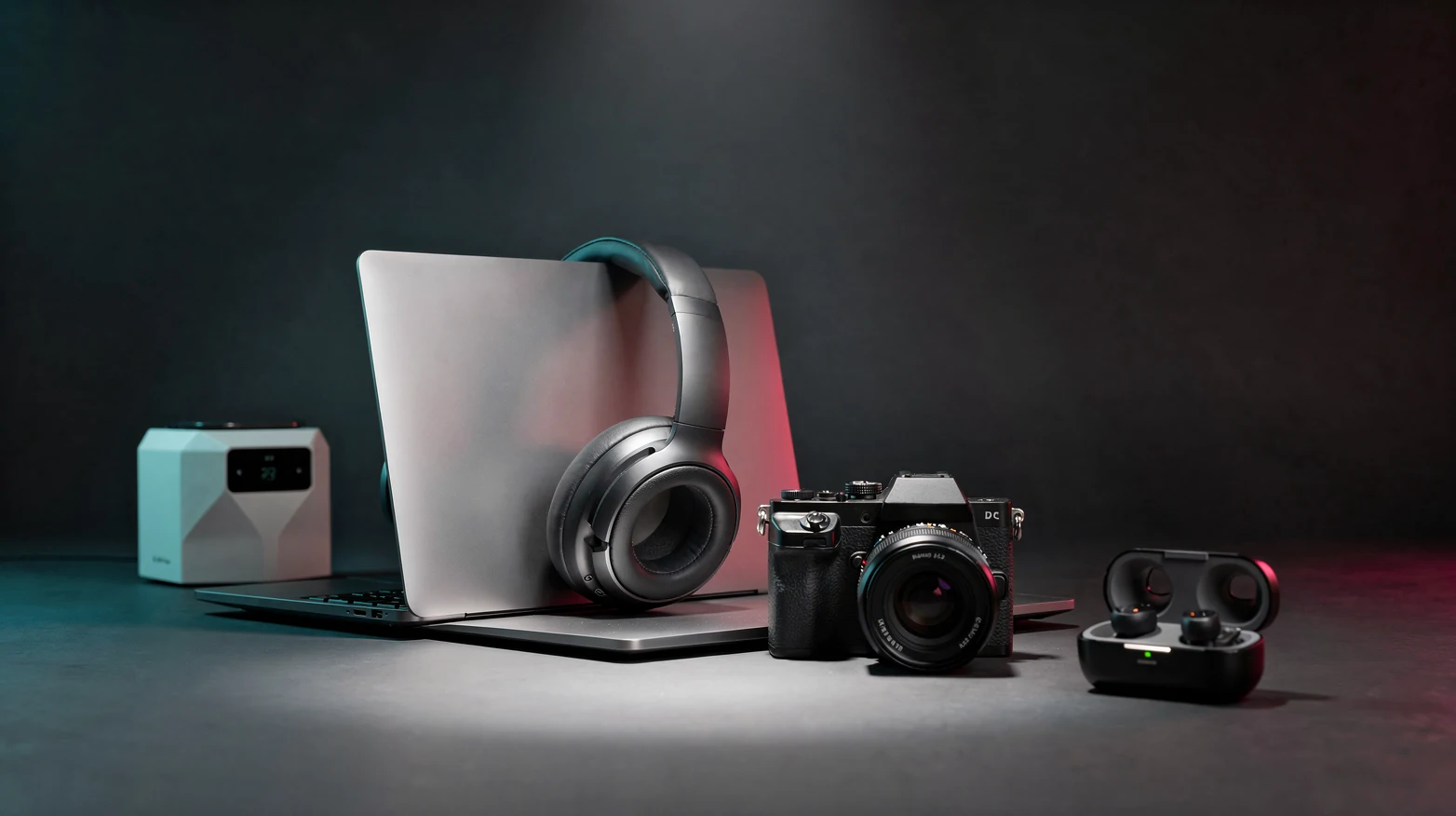
- How big: nearly 10,000 products, spanning headphones, cameras, laptops, small appliances and accessories, from brands including Microsoft, Dyson, Bose and Oura.
- The differentiator: orders are fulfilled by Best Buy, and eligible purchases can be returned in a physical store or mailed back, a capability pure-play sellers on the platform cannot match.
- The commercial layer: creators in the Best Buy Creator program can tag products, while Best Buy Ads partners get shoppable content, affiliate links and access to the retailer’s first-party measurement.
- Why now: TikTok Shop took roughly one-fifth of US social commerce in 2025 and the channel is entering its first holiday season under settled American ownership.
What exactly did Best Buy announce?
Best Buy said it will debut on TikTok Shop in late October with a curated assortment of close to 10,000 items. The company framed the selection as products “well suited to social discovery,” a category it defined as headphones, cameras, small appliances, laptops and accessories rather than the full 1.5 million-SKU catalogue that sits behind BestBuy.com.
Named brands in the launch assortment include Microsoft, Dyson, Bose and Oura. That list is a deliberate signal: each of those vendors already has an active organic presence on TikTok, and three of the four sell products in the $150 to $400 band where impulse conversion on social video is most plausible.
Shoppers will be able to buy without leaving TikTok. Orders route to Best Buy for fulfilment, and returns can be handled either through the mail or at one of the retailer’s roughly 1,000 North American stores, according to the company’s statement.
Jonathan Greer, Best Buy’s vice president of e-commerce, said in the announcement that “social media isn’t just influencing what people buy anymore. It’s shaping how they discover products, with creators playing an increasingly important role.” The framing positions the storefront as a discovery channel rather than a pure incremental sales line.
The announcement stopped short of several things analysts will want. Best Buy did not disclose the commercial terms it agreed with TikTok, did not name a revenue target, and did not say whether the assortment will expand after the holiday period. It also did not confirm whether prices on the storefront will match BestBuy.com.
Those omissions are normal for a channel launch and unhelpful for modelling it. What the company did commit to is operational: its own fulfilment, its own returns, and its own creator roster, which together imply a build rather than a syndication deal.
The surfaces Best Buy gets
The retailer will appear across four distinct placements: shoppable creator videos, a dedicated Best Buy shop page, the TikTok Shop tab, and in-app product detail pages. That combination matters because it spans both the algorithmic feed and the deliberate, search-like browsing that happens inside the Shop tab.
Feed placements capture demand that does not yet exist. Shop tab placements capture demand that has already formed. A retailer running only one of the two ends up either buying impressions with no conversion path or sitting in a catalogue nobody scrolls.
What the creator program actually does
Best Buy already operates a content creator program. Under the TikTok Shop arrangement, participants in that program can tag products directly in their videos and route viewers to the retailer’s storefront, with attribution flowing back through affiliate links.
This is the part that distinguishes a storefront from an advertising buy. Creators are paid on conversion rather than on reach, which shifts inventory risk away from the retailer’s media budget and onto the performance of the content itself.
Best Buy Ads partners, meaning the brand vendors that buy through the retailer’s media network, can also use creator content inside their own campaigns. That closes a loop the retail media industry has been circling for two years: creator-generated video as paid inventory, measured against the retailer’s logged-in purchase data.
Why is a big-box electronics chain joining TikTok Shop now?
Consumer electronics has a structural discovery problem. Most categories in the store are replacement purchases with long repurchase cycles, which means the customer arrives with intent already formed and the retailer competes on price and availability rather than on inspiration.
Social video inverts that. A creator demonstrating a smart ring or a cordless vacuum manufactures intent in people who were not shopping, which is precisely the demand pool a chain with flat unit volumes needs to reach.
The timing also reflects a platform that has stopped being an existential risk. Through 2024 and much of 2025, a national retailer committing merchandising and fulfilment resources to TikTok faced a genuine possibility that the app would be removed from US distribution. That question is now settled.
There is a defensive reading as well. Third-party sellers on TikTok Shop already move consumer-electronics accessories in volume, frequently in the same brands Best Buy carries, and often without brand authorisation. A first-party storefront lets the retailer compete for that demand under its own name rather than watch it clear at unpoliced prices.
The demographic argument
Best Buy’s core customer base skews older and more affluent than TikTok’s, which is exactly why the channel is interesting rather than redundant. A storefront on the platform is a customer-acquisition instrument aimed at households that do not currently start an electronics search at Best Buy.
The categories chosen support that reading. Headphones, cameras and small appliances are gift-heavy, visually demonstrable and comparatively low in specification anxiety. Nobody buys a refrigerator from a 30-second video, but a great many people buy earbuds that way.
How do the economics work for a retailer of Best Buy’s size?
TikTok Shop’s US seller economics are published rather than negotiated in public, and the headline numbers are modest by marketplace standards. Industry fee guides put the standard US referral fee at around 8% for most non-food categories following a schedule change in early August 2026, with lower rates in a handful of categories such as jewelry.
That referral fee covers both the marketplace commission and payment processing, which makes the comparison with a conventional third-party marketplace less unfavourable than the raw percentage suggests. Affiliate commissions sit on top and are set by the seller, typically in a 5–25% band.
For a retailer operating on consumer-electronics gross margins, those two layers stack uncomfortably. Electronics hardware is a thin-margin business, and an 8% referral plus a 10% creator commission consumes most of the contribution on a mid-priced accessory.
| Cost layer | Typical rate | Who sets it | Applies to |
|---|---|---|---|
| Referral fee (most US non-food categories) | About 8% | TikTok Shop | Every completed order |
| Payment processing | Bundled into the referral fee | TikTok Shop | Every completed order |
| Affiliate commission | 5–25%, seller-defined | The seller | Creator-attributed orders only |
| New-seller introductory rate | Reportedly 3% for an initial window | TikTok Shop | First orders after onboarding |
| Fulfilment and returns | Retailer’s own cost base | Best Buy | All orders in this arrangement |
Price parity is the constraint nobody has answered publicly. If the storefront prices match BestBuy.com, the fee stack erodes margin on every social order. If they do not match, the retailer invites the accusation of running two price books and undermines the price-match guarantee that anchors its own proposition.
The most likely resolution is selective promotion: a curated set of platform-exclusive bundles and creator-timed offers that are hard to compare line-for-line against the main site. That is how most retailers have handled the same tension on third-party marketplaces.
Why the vendor-funded model changes the maths
The Best Buy Ads angle is what makes the arithmetic work. If brand vendors fund the creator commissions and the paid amplification out of co-operative marketing budgets, the retailer carries the referral fee and the fulfilment cost but not the media cost.
That is the same structural trick retail media networks used to convert merchandising leverage into high-margin advertising revenue. Applying it to social commerce means the storefront can be gross-margin neutral at the product level while still generating advertising income.
Whether vendors actually pay is the open question. Microsoft, Dyson, Bose and Oura all have the budget and the creator infrastructure, which may explain why they appear in the launch list rather than lower-profile suppliers.
What do in-store returns change about social commerce?
Returns are the quiet structural advantage in this announcement. The dominant complaint about buying from social-video sellers is that the return path is opaque, slow, or effectively nonexistent for low-value items.
Best Buy can accept an eligible TikTok Shop return across its store estate. That converts a physical footprint that has been treated as a cost liability for a decade into a trust instrument on a platform where trust is the binding constraint on average order value.
The effect should be visible in basket composition. If in-store returns materially reduce perceived purchase risk, Best Buy ought to sell higher-priced items on TikTok than the platform average, where sub-$40 impulse goods dominate.
It also creates a footfall mechanism. A customer who bought a $200 pair of headphones through a creator video and walks into a store to exchange them is standing in a building full of attachment sales, which is a conversion opportunity no pure-play seller on the platform can engineer.
There is a second-order risk in the returns policy itself. A generous, store-backed return path on a platform optimised for impulse buying can produce return rates well above the retailer’s e-commerce average, and consumer electronics already carries some of the highest return rates in retail.
Best Buy has more experience absorbing that than most. Its Geek Squad and open-box operations exist precisely to recover value from returned merchandise, and an open-box channel gives returned TikTok Shop inventory a second sale rather than a writedown.
Who else is already selling on TikTok Shop?
The retailer roster on TikTok Shop has been built by specialists rather than generalists. Ulta Beauty launched a storefront earlier in 2026 and was reported as the first American specialty beauty retailer to do so, and Sephora began running monthly exclusive product releases on the platform this month under a “Drop Shop” format.
Brand-side adoption has run further ahead. Crocs chief executive Andrew Rees said in February that the company had become the top shoe brand on TikTok Shop among US customers, and PacSun and Tarte Cosmetics both presented their platform results at the National Retail Federation’s Big Show in January.
Beauty has been the proving ground. Sales in the category on TikTok Shop exceeded $980 million in the second quarter of 2026, according to platform data cited in the trade press, which is why the retailers with beauty assortments moved first.
| Retailer or brand | Category | Status on TikTok Shop | Distinguishing feature |
|---|---|---|---|
| Best Buy | Consumer electronics | Launching late October 2026 | Nearly 10,000 SKUs, in-store returns, own fulfilment |
| Ulta Beauty | Specialty beauty | Live since earlier in 2026 | Reported first US specialty beauty retailer storefront |
| Sephora | Specialty beauty | Live, monthly drop format | Exclusive monthly releases rather than full catalogue |
| Crocs | Footwear brand | Live, scaled | Described by its CEO as the top US shoe brand on the platform |
| PacSun | Apparel | Live, livestream-led | Presented results publicly at NRF in January 2026 |
| Tarte Cosmetics | Beauty brand | Live, creator-led | Early affiliate-program adopter |
The pattern is clear enough. Every previous entrant has been a category specialist with high visual demonstrability and gross margins wide enough to absorb creator commissions. Best Buy breaks both halves of that pattern, which is what makes the launch a genuine test rather than a follow-on.
Live commerce has followed a similar arc in adjacent venues, and the valuations attached to the format have moved with it. The market’s willingness to price live shopping platforms aggressively was on display when Whatnot reached a $20 billion valuation on the strength of auction-style video selling.
How big is TikTok Shop in the US market?
TikTok Shop captured 18.2% of total US social commerce in 2025 on sales of $15.82 billion, growth of 108.0% year over year, according to eMarketer estimates. That share is projected to keep climbing toward roughly 24% by 2027 at the expense of Facebook Marketplace and Instagram Shopping.
Forecasts for 2026 diverge meaningfully depending on methodology. eMarketer’s published figure for TikTok Shop’s US e-commerce sales this year is about $23.4 billion, while more aggressive estimates that count expanded seller onboarding and livestream growth put the number above $27 billion.
Either figure would place the platform ahead of the US e-commerce operations of several national chains, which is the comparison that should concern Best Buy’s board. A channel that now rivals the online arm of a top-20 US retailer is not one a category leader can sit out.
| Metric | 2025 actual | 2026 estimate | Source basis |
|---|---|---|---|
| TikTok Shop US sales | $15.82bn | About $23.4bn (higher estimates above $27bn) | eMarketer and industry forecasts |
| TikTok Shop share of US social commerce | 18.2% | Rising toward 24% by 2027 | eMarketer |
| Total US social commerce | Under $100bn | Passes $100bn, up 18.0% | eMarketer |
| TikTok Shop year-over-year growth | 108.0% | Slowing from a larger base | eMarketer |
| Beauty category on TikTok Shop | Not disclosed | Over $980m in Q2 2026 alone | Platform data cited in trade press |
Growth is also decelerating from a very large base, which is the normal shape of a channel moving from novelty to infrastructure. A platform compounding at 108% cannot keep doing so, and the useful question for 2027 is not the growth rate but whether repeat purchase rates on the platform start to resemble a marketplace rather than a discovery feed.
The livestream question
TikTok has pushed livestream selling hard in the US, with mixed absorption. Reporting on the platform’s own data indicates that American shoppers still convert better on short-form video than on long livestreams, even as livestream session counts grow rapidly.
That distinction matters for Best Buy. Staffing a livestream schedule requires a studio operation and on-camera talent; tagging products in creator-made short video requires an affiliate program and a product feed. The second is far cheaper to start and far easier to abandon.
The retailer’s announcement emphasised shoppable creator videos rather than a livestream commitment, which suggests it has read the same data. The platform’s international expansion has shown similar sequencing, and our analysis of the TikTok Shop three-market launch plan for early 2027 found the same preference for lower-overhead formats in new territories.
Does the TikTok US ownership settlement matter to retailers?
It matters more than the operational continuity suggests. The US joint venture, TikTok USDS Joint Venture LLC, was finalised on January 22, with ByteDance retaining 19.9% and Oracle, Silver Lake and Abu Dhabi’s MGX each holding roughly 15%.
The remaining stake, around 30%, sits with a group of investors reported to include Susquehanna, Dragoneer and Michael Dell’s family office. Oracle serves as the trusted security partner responsible for auditing national-security compliance, and the US recommendation algorithm is operated independently of ByteDance.
For advertisers and sellers, almost nothing changed operationally. Ad accounts, campaign structures and TikTok Shop itself continued running through the transition without disruption, which is precisely the point.
Data access is the less-discussed consequence. Under the joint-venture structure, US user data sits inside an American-governed entity with Oracle auditing compliance, which simplifies the privacy and vendor-risk review that a retailer of Best Buy’s size must complete before integrating a product feed and a customer-order flow.
Why continuity was the prerequisite
A national retailer cannot commit merchandising, fulfilment integration and a creator payout infrastructure to a platform that might disappear. The cost of the integration is fixed and front-loaded; the return accrues over multiple seasons.
The settlement converted a binary regulatory risk into an ordinary commercial one. Best Buy’s decision to build now, rather than in 2025, is best read as a response to that change rather than to any shift in consumer behaviour.
Residual risk has not vanished. Governance of the joint venture, the terms of the algorithm licence and any future congressional interest all remain live variables, and a retailer with 10,000 SKUs on the platform now carries exposure to them.
Where does this land in the 2026 holiday calendar?
The timing is not incidental. A late-October launch puts the storefront live after the early-October promotional wave and before the Black Friday window, giving the operation three to four weeks to debug fulfilment and returns before peak volume arrives.
That sequencing follows a now-standard US pattern in which the season effectively opens in the first week of October. Amazon’s Prime Big Deal Days on October 6 and 7 anchor the calendar, and the major chains schedule their own events around it.
Social commerce has been the fastest-growing holiday channel by share. Adobe reported that social media’s contribution to US online holiday revenue grew 40.3% year over year in the 2025 season, outpacing every other channel it tracked.
TikTok Shop’s own 2025 peak provides the benchmark. US gross merchandise value on the platform exceeded $500 million between Black Friday and Cyber Monday, on a near-50% increase in the number of shoppers, with livestream-selling brands reporting 84% sales growth across more than 760,000 sessions.
There is also a promotional-calendar collision to manage. Late October is when electronics discounting begins in earnest, and a new channel launching into a discounting window will generate volume that flatters the pilot without proving that social discovery works at full price.
Reading the results will therefore require separating promotional lift from genuine incrementality. The cleanest read will come in January and February 2027, once the season’s markdowns have cleared and the storefront is selling at everyday prices.
The labour and fulfilment constraint
Adding a channel in late October means adding pick-and-pack volume at the worst possible moment. Best Buy is absorbing that through its existing fulfilment network rather than a platform logistics program, which concentrates the risk in its own operations.
Store-based fulfilment gives it flexibility that a pure distribution-centre model would not. It also compounds the staffing pressure that already defines the season, a pressure quantified in our look at US holiday sales per retail worker this season.
What does it mean for Best Buy’s own numbers?
Best Buy enters the launch from a position of unusual strength. In the second quarter of fiscal 2027, reported on August 27, enterprise comparable sales rose 4.1% against a prior outlook of roughly 1%, and domestic comparable sales advanced 4.5% versus 1.1% in the year-ago quarter.
Domestic segment revenue reached $9.07 billion, up from $8.70 billion a year earlier. Diluted earnings per share increased 70% to $1.48, while adjusted diluted earnings per share rose 15% to $1.47.
The company raised full-year guidance on the back of that quarter, lifting the fiscal 2027 comparable sales range to 1.9%–3.0% and adjusted diluted EPS to $6.70–$6.90. A retailer guiding up into the holiday has more room to fund a channel experiment than one managing a miss.
| Best Buy metric | Q2 FY2027 | Prior-year comparison | Direction |
|---|---|---|---|
| Enterprise comparable sales | +4.1% | Outlook was about +1% | Materially ahead |
| Domestic comparable sales | +4.5% | +1.1% a year earlier | Accelerating |
| Domestic segment revenue | $9.07bn | $8.70bn | Up |
| Diluted EPS | $1.48 | Up 70% | Up sharply |
| Adjusted diluted EPS | $1.47 | Up 15% | Up |
| FY2027 comparable sales guidance | 1.9%–3.0% | Raised | Up |
| FY2027 adjusted diluted EPS guidance | $6.70–$6.90 | Raised | Up |
Set against those figures, the TikTok Shop contribution will be immaterial to fiscal 2027 revenue. Nearly 10,000 SKUs sold at social-commerce basket sizes for roughly two months cannot move a business of this scale.
The number that will matter is incrementality: what share of TikTok Shop orders come from customers with no prior Best Buy purchase history. That is a metric the company can measure precisely through its own first-party data and one it is unlikely to disclose in detail.
What should sellers and rival retailers watch next?
Four things will determine whether this becomes a template or a footnote. The first is assortment drift: if the storefront grows well beyond 10,000 SKUs by the first quarter of calendar 2027, the pilot has worked.
The second is whether other national chains follow. Target, Walmart and Lowe’s all have creator programs and retail media networks of a comparable maturity, and none has yet committed a general-merchandise storefront to the platform.
The third is the vendor-funding model. If Best Buy Ads begins packaging TikTok Shop creator inventory as a purchasable product for brand partners, the economics shift decisively in the retailer’s favour and the format becomes copyable.
The fourth is the broader migration of shoppable formats into video surfaces that retailers do not own. The same logic is playing out on connected television, where our reporting on Walmart and Vizio building catalogue-wide shoppable TV shows a chain that chose to buy the screen rather than rent it.
The strategic fork
Retailers now face a genuine choice between owning the surface and renting it. Walmart bought a television operating system; Best Buy is renting shelf space inside somebody else’s feed.
Renting is cheaper, faster and reversible. Owning is expensive, slow and defensible. Both are rational, and the next 18 months of holiday data will show which produced more incremental demand per dollar committed.
For now, the practical takeaway for sellers is narrower. A national electronics retailer validating TikTok Shop with its own fulfilment and its own returns policy raises the credibility floor for the entire channel, and that benefits every merchant already on it.
Frequently asked questions
When exactly does Best Buy’s TikTok Shop open?
Best Buy has said the storefront launches in late October 2026. The company announced the plan on September 22 and has not published a specific calendar date, so the most precise guidance available is the late-October window.
How many products will be available?
Nearly 10,000 items at launch, according to Best Buy’s announcement. That is a curated subset chosen for social discovery rather than the retailer’s full catalogue, covering headphones, cameras, small appliances, laptops and accessories.
Can you return a TikTok Shop order to a Best Buy store?
Yes. The company has stated that eligible purchases made through its TikTok Shop storefront can be returned in-store or mailed back. That in-store option is the main operational difference between Best Buy and most other sellers on the platform.
Who fulfils the orders?
Best Buy handles fulfilment itself rather than routing orders through a platform logistics program. That means the retailer’s existing distribution and store-fulfilment network carries the volume, and it also carries the associated cost and peak-season risk.
Which brands are included at launch?
Best Buy named Microsoft, Dyson, Bose and Oura among the brands in the launch assortment. The company has not published the full vendor list, so additional brands may appear when the storefront goes live.
What does TikTok Shop charge sellers in the US?
Industry fee guides put the standard US referral fee at roughly 8% for most non-food categories following a schedule change in early August 2026, with that fee covering payment processing. Sellers separately set affiliate commissions for creators, commonly in a 5–25% range. Best Buy has not disclosed its specific terms.
Is TikTok Shop large enough to matter to a chain this size?
On the channel level, yes. eMarketer put TikTok Shop’s US sales at $15.82 billion in 2025 with 18.2% of social commerce, and 2026 estimates range from about $23.4 billion to above $27 billion, which is comparable to the online arms of several national chains. On Best Buy’s own profit and loss, the contribution this fiscal year will be small.
Does TikTok’s US ownership change affect shoppers?
Not in any visible way. The US joint venture closed on January 22 with ByteDance holding 19.9% and Oracle, Silver Lake and MGX each holding about 15%, and ad accounts, campaigns and TikTok Shop continued operating through the transition. The significance is that it removed the risk that made national retailers hesitate to build on the platform.
Are other big-box retailers expected to follow?
None has announced a comparable storefront. Target, Walmart and Lowe’s all operate creator programs and mature retail media networks, which are the two prerequisites, so a follow-on launch is plausible if Best Buy’s holiday results support it. Until then Best Buy is the only US general-merchandise chain of its scale with a native TikTok Shop presence.
Best Buy’s full announcement is available on the company’s corporate newsroom.