
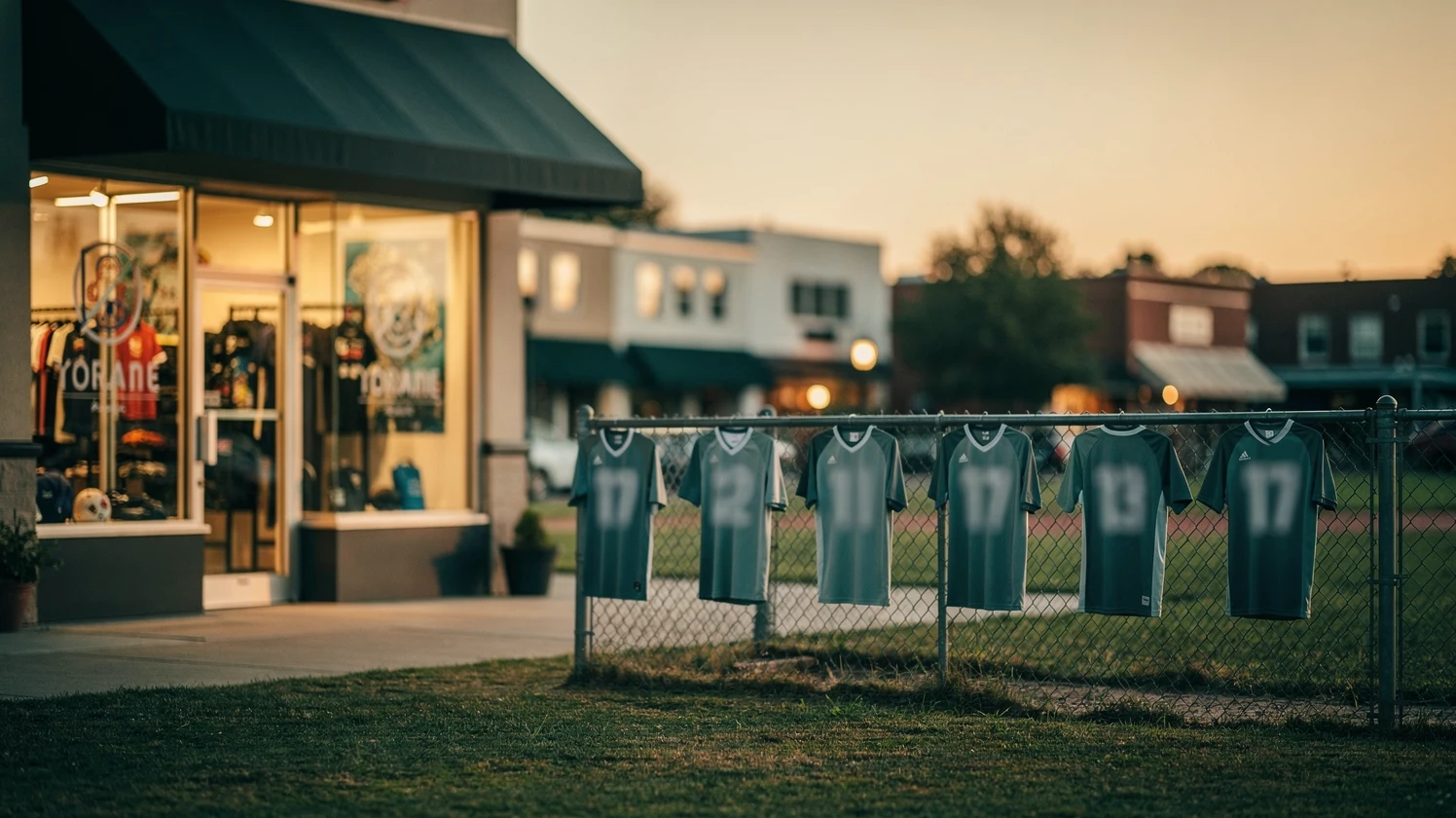
Sponsorship is one of the oldest ways a local retailer connects with the community it serves, yet it is also one of the easiest to get wrong. A banner on a chain-link fence, a logo on a youth soccer jersey, or a name printed under the scoreboard can read as genuine community support or as a clumsy marketing grab, and shoppers can tell the difference within seconds. In 2026, with social feeds amplifying every gesture and parents quick to flag anything that feels exploitative, the gap between authentic sponsorship and performative spending has never mattered more. This guide explains how a retailer can sponsor schools and youth sports in a way that builds real goodwill, drives measurable foot traffic, and avoids the cringe that turns a well-meant check into a reputational liability.
In short
- School and sports sponsorship works when it solves a concrete problem for the team or program, not when it simply buys logo placement, because communities reward usefulness and punish opportunism.
- Authenticity is structural, not cosmetic: the test is whether the sponsorship would still make sense if your logo were removed, and whether a parent would describe it as help rather than advertising.
- Small, consistent, multi-year commitments outperform large one-off splashes, because trust in local retail is built through repetition and follow-through rather than a single grand gesture.
- The cheapest authentic formats often beat the expensive visible ones: covering a registration fee for families who cannot pay, hosting a free clinic in-store, or donating gear usually generates more genuine word of mouth than a stadium banner.
- Measurement is possible even when the goal is goodwill: track redemption codes, in-store mentions, repeat visits from sponsored families, and earned social reach, then renew what works and quietly retire what does not.
Why sponsoring schools and sports matters for retailers in 2026
Local sponsorship sits at the intersection of two trends that are reshaping independent retail. The first is the long, slow erosion of paid digital reach, where rising ad costs on Meta and Google have pushed smaller merchants to look for cheaper, more durable ways to stay visible in their own towns. The second is a measurable consumer preference for businesses that demonstrably support the community, a preference that has hardened as shoppers grow more skeptical of corporate messaging. A school sponsorship answers both pressures at once, putting a retailer in front of hundreds of local families at a cost that often undercuts a month of social advertising.
The economics are more favorable than many owners assume. A typical youth sports team sponsorship in the United States runs from roughly $250 to $1,500 per season depending on the league and the visibility offered, and a school program package can range higher. Against the lifetime value of even a handful of new regular households, those numbers compare well to digital acquisition costs that have climbed steadily since 2023. The difference is that a sponsorship also delivers something an ad cannot, which is the implicit endorsement of being woven into the fabric of local life.
None of this works on autopilot, and that is the central tension of the topic. Sponsorship money is necessary but not sufficient, because the same dollars can produce warmth or eye-rolling depending entirely on how the gesture is framed and delivered. The rest of this guide is about closing that gap, and it fits within a broader picture of where local retail is heading that we explore in our overview of the future of local retail and main street commerce.
The trust dividend of local sponsorship
Trust compounds in ways that paid media does not. When a family sees a retailer’s name on their child’s jersey for three consecutive seasons, the brand stops reading as an advertiser and starts reading as a neighbor. That shift is the entire point, because neighbors get the benefit of the doubt on price, they forgive the occasional stockout, and they recommend you without being asked. The dividend is not the impression count on the banner; it is the changed relationship with the people standing nearest the banner.
This is why the most effective sponsoring retailers think in years rather than seasons. A consistent presence signals stability and commitment, two qualities that independent stores can offer more credibly than national chains. The families notice who shows up again, and they notice who appears once for a photo and is never seen again.
Key terms: what counts as a sponsorship and what does not
Before designing a program it helps to separate three things that often get blurred together, because the differences shape both tax treatment and how the gesture is perceived. A sponsorship is a paid association with a team, program, or event, usually in exchange for visibility such as a logo, a banner, or a public thank-you. A donation is a gift with no expectation of promotional return, often eligible for different tax treatment when the recipient is a qualifying nonprofit. Advertising is the purchase of defined promotional space or placement, measured and priced as media rather than as community support.
The reason this matters is that shoppers instinctively grade a gesture by which category it really belongs to. A sponsorship that behaves like advertising, all logo and no substance, feels transactional. A sponsorship that behaves like a donation, generous and low-key, tends to feel authentic even when the retailer’s name is clearly attached. The art is to pay like a sponsor while behaving like a donor, capturing reasonable visibility without making the visibility the obvious goal.
Sponsorship versus donation versus advertising
Each format carries different expectations and different risks, and choosing the wrong one for your goal is a common source of awkwardness. The table below lays out the practical distinctions a store owner needs before committing budget.
| Dimension | Sponsorship | Donation | Advertising |
|---|---|---|---|
| Primary goal | Goodwill plus visibility | Goodwill only | Measurable response |
| Typical return | Logo, thank-you, presence | Acknowledgement, optional | Defined placement, metrics |
| Perceived authenticity | Depends on execution | High | Low by default |
| US tax treatment | Often a business expense | Charitable if recipient qualifies | Business expense |
| Best for | Ongoing community presence | One-off causes, emergencies | Time-bound promotions |
Note that the tax categories here are general and vary by entity and state, so a retailer should confirm treatment with an accountant rather than relying on a rule of thumb. The point of the table is strategic clarity, not tax advice: decide which column you are really in before you cut the check.
How retailer school and sports sponsorship works in practice
In practice a sponsorship is a small project with a beginning, a middle, and a renewal decision, not a single payment. It starts with choosing a recipient whose audience overlaps with your customer base, continues through the season with whatever activation you committed to, and ends with an honest assessment of whether it earned its keep. The retailers who do this well treat each sponsorship as a relationship to be maintained rather than a line item to be approved and forgotten.
The choice of recipient deserves more thought than it usually gets. A hardware store and a youth baseball league are a natural fit because the parents are homeowners; a children’s bookshop and a school reading program align even more tightly. Mismatched pairings, such as a vape shop sponsoring an elementary team, are not just ineffective but actively damaging, and the misalignment is exactly what makes a sponsorship feel fake. Start by asking which local programs your existing best customers already care about, then go there first.
The five common sponsorship formats
Most retail sponsorships fall into a handful of recognizable shapes, each with a different cost profile and a different authenticity ceiling. Team kit sponsorship places your name on jerseys or warm-ups and is the most visible but also the most obviously commercial. Facility or scoreboard sponsorship buys signage at the venue, high in impressions and low in warmth. Event sponsorship funds a tournament, a fun run, or an end-of-season party, which tends to feel generous because it is tied to an occasion families enjoy.
The remaining two formats are where authenticity is easiest to earn. Need-based sponsorship covers registration fees, equipment, or travel for families who cannot otherwise participate, and it consistently produces the strongest goodwill because it removes a real barrier. In-kind sponsorship donates products or services instead of cash, such as a sporting-goods store outfitting a team or a cafe providing post-game snacks, which reads as natural because it uses what you already have.
Budgeting: what local sponsorships actually cost
Budgets should match the size of the store and the depth of the relationship rather than the visibility on offer. A useful rule is to start small enough that you can comfortably renew for at least three seasons, because the renewal is where the trust dividend accrues. A first-year commitment of a few hundred dollars that you keep is worth far more than a thousand-dollar splash you cannot repeat.
It also helps to separate the cash outlay from the activation effort, since the cheapest formats often demand the most staff time. Covering registration fees costs money but little labor; hosting an in-store clinic costs little money but real hours from your team. Plan both lines deliberately, and do not let an under-resourced activation undercut an otherwise generous check. The table further down comparing formats lays out where each one lands on cost, visibility, and authenticity risk.
The authenticity test: how to sponsor without it feeling fake
Authenticity is not a vibe to be added in the marketing copy; it is a property of the structure of the deal. The reliable way to design for it is to run any proposed sponsorship through a simple stress test before committing, and to walk away or redesign if it fails. The test is not about how the sponsorship looks but about what it actually does for the people on the receiving end.
The three questions every sponsorship should pass
First, would this still make sense if our logo were removed entirely? If the answer is no, you are buying advertising and calling it support, and shoppers will sense the substitution. A sponsorship that only exists for the logo is the textbook definition of feeling fake.
Second, does it solve a real problem for the team, the school, or the families? Covering a shortfall, removing a cost barrier, or filling a genuine need passes easily; adding another banner to a fence that already has ten does not. Usefulness is the single strongest signal of sincerity.
Third, would a parent describe this to another parent as help rather than as advertising? This is the word-of-mouth test, and it is the one that ultimately determines whether the sponsorship pays off. If the natural sentence is “the store down the road paid for the kids who couldn’t afford registration,” you have built something durable. If the natural sentence is “that store put its name on everything,” you have not.
| Format | Typical annual cost | Visibility | Authenticity ceiling | Best for |
|---|---|---|---|---|
| Need-based fees | $300 to $1,500 | Low | Very high | Stores wanting deep goodwill |
| In-kind product | Cost of goods | Medium | High | Sporting goods, cafes, hardware |
| Event funding | $500 to $3,000 | High | High | Stores tied to occasions |
| Team kit | $250 to $1,200 | High | Medium | Broad local awareness |
| Scoreboard signage | $500 to $2,500 | Very high | Low | Pure impression reach |
The pattern in the table is worth internalizing: visibility and authenticity tend to trade off against each other, and the formats that feel most genuine are often the quietest. The strongest programs blend a high-authenticity core, such as need-based support, with a modest visible element, rather than leading with the banner and hoping warmth follows.
Common mistakes and how to avoid them
Most sponsorship failures are not failures of generosity but failures of judgment, and they repeat across stores and seasons in predictable ways. Recognizing the patterns is most of the cure, because each mistake has a straightforward structural fix. The errors below are the ones that most reliably turn a goodwill gesture into a source of quiet resentment.
Leading with the logo
The most common mistake is treating placement as the product. When every interaction foregrounds the store name, the sponsorship reads as a billboard the team was paid to carry, and the warmth evaporates. The fix is to lead with the help and let the recognition follow naturally, accepting a thank-you rather than demanding a logo on everything.
The one-and-done splash
A single large gesture timed for maximum publicity, then never repeated, is worse than a smaller consistent commitment. Families remember who came back, and the store that appears once for a photo opportunity earns a reputation for using the team rather than supporting it. The fix is to size the commitment so you can sustain it, then actually sustain it.
Overclaiming on social media
Posting heavily about a modest sponsorship invites exactly the cynicism you were trying to avoid, because the volume of self-promotion exposes the thinness of the underlying gesture. A retailer that donates two hundred dollars and posts about it ten times has inverted the ratio that signals sincerity. The fix is to let others tell the story: encourage the league or school to acknowledge you, and keep your own posting proportionate and infrequent.
Ignoring the follow-through
Committing to an activation and then under-delivering, such as promising an in-store clinic and staffing it poorly, does more damage than not committing at all. The gap between the promise and the delivery is precisely what parents read as inauthentic. The fix is to promise only what you can resource well, and to treat every commitment as a debt to the community.
Examples from US retail and e-commerce
The most instructive examples are not the famous national campaigns but the quiet local ones that compound over years. A neighborhood hardware store that quietly covers the registration gap for a Little League each spring, never publicizing the amount, becomes the store those families default to for paint and fasteners without ever being sold to. The mechanism is simple and durable: a real problem removed, no strings attached, repeated annually until it is part of the town’s expectation.
Independent grocers and cafes have built similar equity through in-kind support, supplying post-game snacks or hosting team fundraisers where a share of sales goes back to the program. Because the contribution uses what the business already produces, it never feels like a stretch, and the families experience it as the store simply being part of their week. Retailers thinking about this category will find the operational tooling overlap useful in our rundown of tools and vendors for supermarkets and grocers in 2026.
E-commerce and omnichannel retailers face a harder version of the same problem because they lack a physical storefront the community walks past. The ones that succeed lean on local fulfillment and pickup as the bridge, sponsoring teams in the towns where they already deliver and tying the sponsorship to a real local service. The same instincts that make community delivery work apply here, as we cover in our look at local delivery and curbside for independent retailers.
The digital storytelling angle
Sponsorship and content can reinforce each other when the storytelling is genuine rather than promotional. A retailer that documents the program it supports, with the program’s permission and in the program’s voice, can extend the goodwill beyond the families directly involved. The example of a hardware store that built a YouTube channel into revenue shows how local content earns reach when it serves the audience first, and the same discipline applies to sponsorship content: useful and human, not a highlight reel of your own logo.
Community channels matter as much as your own. A sponsorship that is acknowledged in the league newsletter, the school’s social account, or a town group reaches the people who trust those sources, which is worth more than the same message from your own page. The practice of meeting customers where they already gather is the same one we examine in running a retail business through a town Facebook group.
Measuring return: what to track when the goal is goodwill
The objection that sponsorship returns cannot be measured is mostly an excuse for not measuring them, because several reliable signals are available to any store willing to look. The trick is to accept proxy metrics rather than demanding a clean attribution line, since goodwill by nature resists single-click tracking. The metrics below give a workable picture of whether a sponsorship is earning its place in the budget.
| Metric | How to capture it | What it tells you |
|---|---|---|
| Sponsored-family visits | Quiet code or list at checkout | Direct foot traffic from the program |
| Redemption rate | Offer tied to the sponsorship | Whether the gesture converts |
| In-store mentions | Staff log unprompted references | Awareness and warmth |
| Earned social reach | League and school posts, tags | Third-party amplification |
| Renewal sentiment | Conversation with organizers | Relationship health for next year |
The most honest of these is the renewal sentiment, because the organizers will tell you plainly whether the partnership felt one-sided. Pair the soft signals with whatever hard numbers you can gather, and let the combination drive the renew-or-retire decision rather than gut feeling alone. A sponsorship that generates warm mentions but no traffic may still be worth keeping; one that generates neither should be redirected.
Setting realistic expectations
Sponsorship is a slow medium, and judging it on a single season is a category error. The returns accumulate over years as the relationship deepens and the store becomes a fixture, so the right evaluation horizon is multi-season rather than quarterly. Expecting an immediate sales bump is the surest way to abandon a program just before it would have started paying off.
Tools, partners and vendors worth knowing
A retailer does not need specialized software to run a sponsorship, but a few categories of partner make the work smoother and the measurement cleaner. League and school administrators are the first and most important, because they control the placements, the calendar, and the channels through which acknowledgement flows. Building a direct relationship with a booster club treasurer or an athletic director is worth more than any platform.
For multi-team or multi-school programs, sponsorship-management and youth-sports platforms such as the major league registration systems can centralize agreements and provide the digital placements that increasingly accompany physical ones. In-kind and product sponsorships benefit from your existing point-of-sale and inventory tools, since the donation can be tracked as cost of goods rather than as an opaque expense. For the storytelling side, the same lightweight content and social tools a small store already uses are sufficient, provided the content stays useful rather than self-congratulatory.
One practical note on compliance: when sponsorship blends into endorsement, especially if you ask coaches or parents to promote the store, the United States Federal Trade Commission expects clear disclosure of the material connection. The guidance is published on the FTC business guidance pages, and following it protects both the retailer and the program. A sponsorship that hides its commercial nature is the opposite of authentic, and disclosure is part of doing it honestly.
Working with booster clubs and PTAs
Booster clubs and parent-teacher associations are the connective tissue of school sponsorship, and they reward retailers who treat them as partners rather than billboards for rent. These groups understand their own communities far better than any outside marketer, so asking them how best to help, and then listening, both improves the program and signals respect. For a fuller picture of how these volunteer-run organizations operate, the overview of the booster club model is a useful primer.
The relationship with these organizers is also your best early-warning system. Because they sit between the store and the families, they will tell you when a gesture is landing well and when it is reading as opportunistic, often before the wider community forms an opinion. Treat that feedback as the most valuable metric you have, and the program will steer itself toward authenticity.
A 90-day plan to start without it feeling forced
The cleanest way to begin is to move deliberately over a single season rather than launching everything at once. In the first month, identify one program with a clear overlap with your customers, meet the organizer, and ask what they actually need rather than offering what is easy to brand. In the second month, commit to a modest, sustainable format, weighted toward genuine help, and agree on how the program will acknowledge you so the recognition comes from them rather than from you.
In the third month, deliver the activation well, capture the soft and hard metrics described above, and have an honest conversation with the organizer about renewing. The discipline of this sequence is what keeps the sponsorship from feeling fake, because every step is anchored in a real need and a real relationship rather than in a visibility target. Sustained over a few seasons, that approach turns a single check into the kind of standing in the community that no advertising budget can buy, and it is a cornerstone of the broader shift toward community-rooted retail we trace in our analysis of main street commerce and the future of local retail.
Frequently asked questions
How much should a small retailer spend on a school or sports sponsorship?
Spend an amount you can comfortably renew for at least three seasons, which for most independent stores means a few hundred to around fifteen hundred dollars per program per year. Consistency matters more than size, because the goodwill compounds when families see you return. A sustainable small commitment beats an unrepeatable large one.
What makes a sponsorship feel fake to parents and the community?
It feels fake when the placement is the point, when the gesture is publicized far more than its actual size warrants, or when the sponsor appears once and disappears. Authenticity comes from solving a real problem for the program, keeping your own promotion proportionate, and showing up again the next season. The reliable test is whether a parent would describe it as help rather than as advertising.
Is a sponsorship tax-deductible for a retail business in the United States?
Sponsorship costs are often deductible as a business expense rather than as a charitable donation, while a true gift to a qualifying nonprofit may be treated differently. The exact treatment depends on your business structure, your state, and how the arrangement is documented. Confirm the specifics with an accountant before assuming any particular outcome.
What is the difference between a sponsorship and a donation?
A sponsorship is a paid association that usually includes some visibility such as a logo or a public thank-you, while a donation is a gift with no expectation of promotional return. Shoppers tend to perceive donations as more authentic, so the most effective sponsorships pay like a sponsor while behaving like a donor. The goal is reasonable recognition without making recognition the obvious motive.
Which sponsorship format generates the most goodwill?
Need-based support, such as covering registration fees or equipment for families who cannot otherwise afford to participate, consistently produces the strongest goodwill. It removes a real barrier, asks for nothing visible in return, and gives parents a story to tell. In-kind product donations are a close second for stores whose goods fit the program naturally.
How can an online or e-commerce retailer sponsor local schools without a storefront?
Tie the sponsorship to the places you already serve, such as the towns where you deliver or offer pickup, so the support has a genuine local anchor. Lean on local fulfillment, curbside, and community channels to make the connection real rather than abstract. The same instincts that make community delivery work also make a remote retailer’s sponsorship feel grounded.
Should we post about our sponsorship on social media?
Keep your own posting proportionate and infrequent, and let the league, school, or booster club do most of the acknowledging. Over-posting about a modest sponsorship invites the cynicism you are trying to avoid, while third-party recognition carries more credibility. If you ask coaches or parents to promote the store, disclose the connection clearly in line with FTC guidance.
How do we measure the return on a sponsorship when the goal is goodwill?
Use proxy metrics such as visits from sponsored families, redemption of any tied offer, unprompted in-store mentions logged by staff, and earned reach from league or school posts. Pair those with an honest renewal conversation with the organizers, who will tell you whether the partnership felt balanced. Judge the program over multiple seasons rather than a single one, since the returns accumulate slowly.
How long before a sponsorship starts paying off?
Expect the meaningful returns to appear over years rather than within a single season, as the store becomes a recognized fixture and families default to it out of loyalty. The first season builds awareness, the second builds trust, and the third tends to convert that trust into habitual business. Abandoning a program after one season usually means quitting just before it would have started to work.