
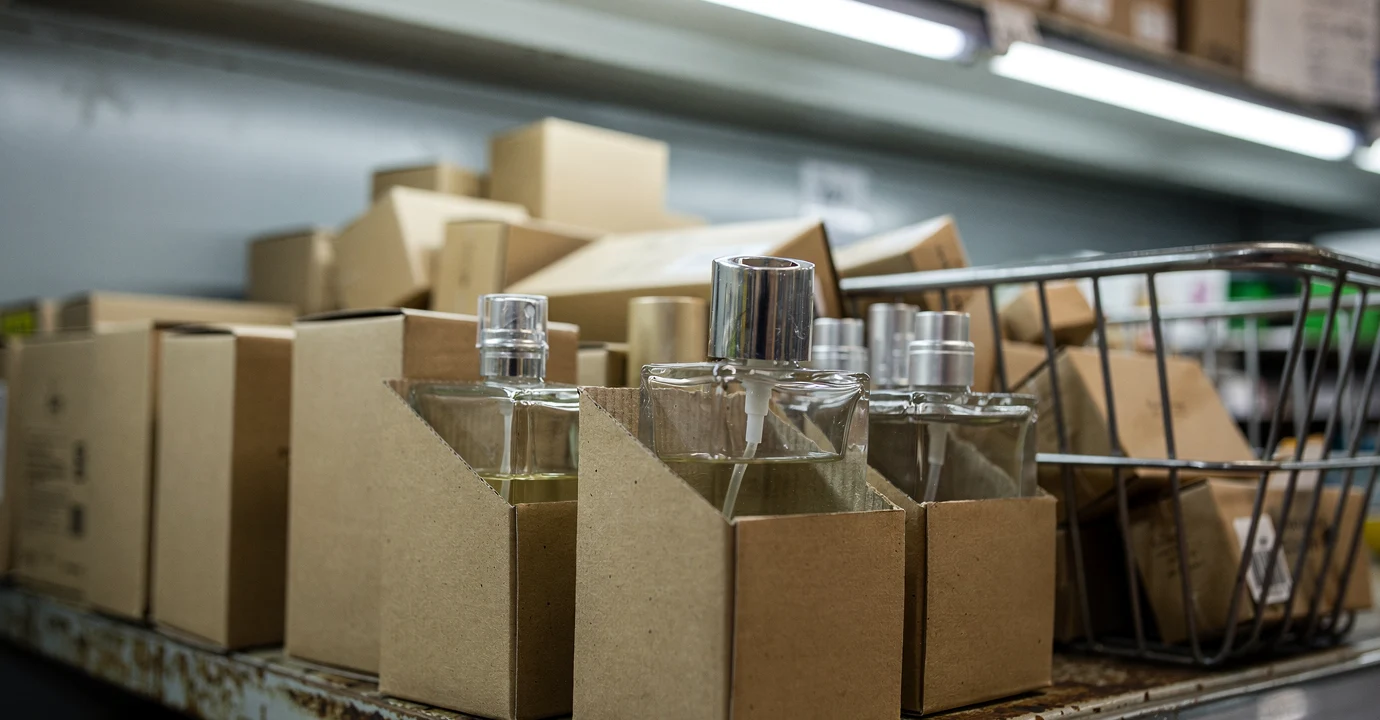
David Beckham’s brand company has gone to court in New York claiming that his fragrance licensee, Coty, let Beckham-branded scents reach Poundland and a petrol station “bargain bin”, cheapening a brand built on a premium image. The detail surfaced on Monday 16 November 2026, when court papers first reported by the Daily Mail were picked up by the Guardian, the Mirror, Newsquest titles including the Oxford Mail and trade titles such as Forecourt Trader. Coty denies that the fragrances were ever sold through Poundland and has asked the court to dismiss the case.
For UK shoppers the headline is easy to misread. Beckham is not suing Poundland, and nothing in the reported filings suggests the bottles in question were fake. This is a contract dispute between a brand owner and its manufacturer about where genuine stock ends up, and it lands as Poundland itself fights for survival under a court-sanctioned moratorium. Here is what the papers allege, what Coty says, how branded perfume reaches discount shelves in Britain, and what it means if you have one of these bottles in your Christmas basket.
In short
- The claim: DB Ventures, the company that manages Beckham’s commercial rights, alleges Coty sold at least $24m (about £18m) of Beckham products through “unapproved distribution channels”, including Poundland, and seeks $41m (about £31m) in compensation and damages.
- The denial: Coty has filed its defence at the New York Supreme Court, denies ever selling the fragrances in Poundland and says it has the right to decide where its Beckham range is sold.
- The backdrop: the Beckham fragrance licence moves from Coty to rival Interparfums on 1 April 2028, and Coty’s lawyers argue the case is really about engineering an early exit.
- For shoppers: branded perfume in a discounter is often genuine surplus or diverted stock, which is legal to resell in the UK; your rights under the Consumer Rights Act 2015 are the same as anywhere else.
- Poundland’s position: the chain is not a party to the lawsuit and, as of Monday evening, had not commented publicly; its own rescue deadline falls on 26 November.
What exactly is David Beckham’s company claiming?
The claim was brought by DB Ventures, the licensor of the David Beckham brand and the largest of three divisions inside Beckham’s holding company, DRJB Holdings, according to the Guardian. Reuters reported in May that the complaint was filed in New York on 23 April 2026, alleging “flagrant material breaches” of the licence agreement. What is new this week is the British detail now circulating from the court papers: that Beckham fragrances turned up in Poundland.
The filings, as quoted by the Guardian and the Mirror, describe the company’s “shock and dismay” on discovering that David Beckham fragrances were “being offered for sale in a gas station”. They then ask: “How could this possibly have happened? Desperation and greed.” The papers also state that Coty “distributed David Beckham fragrances through the budget retailer Poundland, allowing the product to be sold for dollar store prices and associating the David Beckham brand with cheap, discount products.”
The money in the claim
According to the Guardian, DB Ventures alleges that Coty sold at least $24m of Beckham products through unapproved channels. It seeks compensation and damages totalling $41m. It also claims Coty under-reported net sales by $123m, which on its case left DB Ventures short of about $6m in royalties.
Those figures are allegations in a civil claim and have not been tested by a court. UK reports converted the headline sums at slightly different rates; at Monday’s European Central Bank reference rate of about £0.758 to the dollar, the numbers convert as follows.
| Figure in the claim (as reported) | US dollars | Approx. pounds (at £0.758/$) | What it refers to |
|---|---|---|---|
| Sales through “unapproved distribution channels” | $24m | £18.2m | Beckham products allegedly sold outside agreed outlets |
| Compensation and damages sought | $41m | £31.1m | Total sum DB Ventures asks the court to award |
| Alleged under-reported net sales | $123m | £93.2m | Sales DB Ventures says Coty did not fully declare |
| Alleged unpaid royalties | $6m | £4.5m | Royalty shortfall DB Ventures attributes to under-reporting |
Who is behind the lawsuit
DRJB Holdings, the group around Beckham’s commercial empire, contains DB Ventures, the Seven Global licensing division and Studio 99, the production company behind the family’s Netflix documentaries, the Guardian reports. Beckham still owns 45 per cent of DRJB Holdings, according to the Mirror and the Oxford Mail, with the US brand owner Authentic Brands Group the controlling shareholder since it bought into the business in 2022.
Accounts filed in September showed DRJB’s profits rose by nearly 50 per cent to £50m last year on World Cup-related deals, the Mirror reports. The Guardian puts the dividend paid to Beckham this year at $51m. That context matters because DB Ventures’ argument rests on brand value: a business earning money from Beckham’s image says the image was damaged by where the perfume ended up.
What does Coty say in its defence?
Coty, the fragrance and cosmetics group that has made Beckham scents for more than a decade, has filed its defence and asked for the case to be dismissed. Both the Guardian and the Mirror report that it denies the fragrances were ever sold in Poundland. It also argues, in the alternative, that it had the right to decide where it wanted to sell the David Beckham range.
Coty’s lawyers go further on motive. According to the Mirror, they told the court: “This is not about protecting the David Beckham brand.” They argue the dispute is driven by a wish to hand the licence to Interparfums “years before the agreement expires in 2028”, in order “to manufacture its early exit”.
When the original complaint emerged in May, a Coty spokesperson told Reuters that the company did not comment on pending litigation, that the allegations were without merit and that it would defend itself vigorously. Reuters also quoted an unnamed industry source who said the brands’ performance under Coty contradicted the claims, and who suggested the suits were a tactic by Authentic Brands to push Coty into handing back licences early.
| Issue | DB Ventures’ case (per court papers as reported) | Coty’s position (per its defence and statements) |
|---|---|---|
| Poundland | Coty distributed Beckham fragrances through Poundland at “dollar store prices” | Denies the fragrances were ever sold in Poundland |
| Petrol station | Fragrances found in a “bargain bin inside a gas station”, location unspecified | No specific response reported |
| Distribution rights | Sales went through “unapproved distribution channels” | Says it has the right to decide where the range is sold |
| Motive | Protecting the “lifestyle and luxury image” of the brand | Says the real aim is moving the licence to Interparfums before 2028 |
| Outcome sought | $41m in compensation and damages | Dismissal of the case |
Is David Beckham suing Poundland?
No. This is the point most likely to confuse shoppers searching for the story. Poundland is not a party to the case. The defendant is Coty, and the Poundland reference is an allegation about where Coty’s stock ended up, which Coty denies.
The filings, as reported, do not say when or where in Poundland’s estate the bottles were found, how many there were, or what price they carried. Nor do they say how the stock reached the chain: directly from Coty, through a wholesaler, or via a third party that had bought surplus. Those are exactly the facts a court would examine, and none of them has yet been tested.
Poundland has not, as far as reported, commented on the claim. It is a retailer, not a fragrance licensee, and buying branded goods from wholesalers and clearance traders is a normal part of how discount and off-price chains stock their shelves. Nothing reported so far suggests Poundland broke any law or any agreement to which it was a party.
Why the timing is awkward for Poundland
The story lands in the most fragile fortnight of Poundland’s recent history. As we reported when the chain began restocking 16 million grocery items under Operation Gloria, Poundland’s directors filed a second notice of intention to appoint administrators on 12 November, giving it legal protection from creditors until 26 November while its owner, Gordon Brothers, looks for a rescue deal. Several bidders have been named in press reports.
A celebrity lawsuit that describes the chain as a byword for “cheap, discount products” is not the publicity any retailer wants in that window. But the reputational hit, if any, falls mainly on the brand owner’s argument, not on the shopper’s purchase. For a customer, a genuine bottle bought cheaply is still a genuine bottle.
Why does a brand care where its perfume is sold?
Fragrance is one of the clearest examples of a “selective distribution” business. Brands and their licensees typically sign up authorised retailers, set rules about how products are displayed and sold, and in many cases try to keep the goods out of discount channels. The theory is that price and setting shape how a shopper values the name on the bottle.
DB Ventures’ filing puts this plainly. It says the company “ensures that all of its brand licensing partnerships maintain the lifestyle and luxury image of the brand that Sir David has carefully cultivated for decades”, according to the Guardian. In the UK, Beckham fragrances typically sell for about £20 a bottle, the Guardian and Mirror report, which places them in the accessible, mass-market end of the fragrance aisle rather than among the luxury houses.
That price point is part of what makes the case interesting. A £20 celebrity scent is already sold widely through high street chemists and supermarkets, which is why our explainer on how premium brands sell on marketplaces without cheapening the brand argues that distribution controls matter most when the price gap between channels becomes visible to shoppers.
How European and UK courts have treated this before
The Beckham case is being heard in New York and will turn on the wording of a private licence contract. But British and European case law has long recognised the same tension. In Copad v Christian Dior (2009), the EU Court of Justice held that a trade mark owner could act against a licensee that sold goods to a discount store in breach of the licence, where the sale damaged the “allure and prestige” of a luxury brand. In Coty Germany v Parfümerie Akzente (2017), the same court accepted that a luxury supplier could stop authorised retailers selling through third-party online platforms to protect a brand’s image.
Both rulings predate Brexit and were carried into UK law as retained, now “assimilated”, case law, although UK courts can depart from them in some circumstances. They are relevant context rather than precedent for the New York court. Coincidentally, one of them carries Coty’s own name, from a dispute in which Coty was on the other side of the argument, defending its right to control where its products were sold.
How does branded perfume end up in UK discount shops?
Branded fragrance turns up at discounters, off-price chains and market stalls through a handful of well-established routes. Most of them are legal. Understanding them helps explain why both sides in the Beckham case can tell plausible stories about the same bottles.
- Surplus and end-of-line stock: manufacturers clear old packaging, discontinued scents and overstock through clearance buyers, who sell on to discounters.
- Diverted stock: goods sold to one authorised distributor or market are resold into another channel, sometimes in breach of a contract between the supplier and that distributor.
- Parallel imports: genuine goods placed on the market in one country are bought there more cheaply and shipped to another.
- Liquidation stock: inventory from failed retailers or wholesalers sold by insolvency practitioners.
A breach of contract by somebody in that chain does not make the goods counterfeit, and it does not usually make it unlawful for a shop further down the chain to sell them. That distinction is central to the Beckham case: DB Ventures’ complaint is about Coty’s conduct as licensee, not about the legality of a shop selling a genuine bottle.
| Where you buy branded fragrance in the UK | Typical stock route | Price position | What to check |
|---|---|---|---|
| Department stores and specialist perfume chains | Authorised distribution direct from brand or licensee | Full price, frequent promotions and gift sets | Little risk; check returns policy for opened testers |
| High street chemists and supermarkets | Authorised distribution for mass-market brands | Near full price, loyalty-card offers | Compare member and non-member prices |
| Discount and off-price chains | Surplus, end-of-line, diverted or parallel stock | Often well below the usual price | Batch code on box and bottle match; sealed cellophane; older packaging |
| Online marketplaces | Mix of authorised sellers, resellers and private sellers | Wide range, very low prices common | Seller identity, trader status, reviews, a UK returns address |
| Markets, car boots and social media sellers | Unknown; highest counterfeit risk | Very low | Avoid unless you trust the seller; rights are weaker from private sellers |
The legal rule that lets genuine goods be resold
Under the Trade Marks Act 1994, once genuine branded goods have been put on the market in the UK, or in the European Economic Area, by or with the consent of the trade mark owner, the owner generally cannot use its trade mark to stop them being resold. This is known as “exhaustion of rights”. The government’s guidance on exhaustion of IP rights and parallel trade explains how the regime has applied since Brexit, with the UK continuing to recognise goods first placed on the EEA market.
There are exceptions where the owner has “legitimate reasons” to oppose further dealings, notably where the condition of the goods has been changed or impaired. Damage to a luxury reputation can, in some circumstances, count. But that is a narrow route, and it is aimed at the trader, not the shopper who bought a bottle.
Is a cheap Beckham fragrance in a discount shop genuine?
Nothing in the reported court papers suggests the Beckham bottles found in Poundland or the petrol station were counterfeit. The whole complaint rests on the opposite premise: that they were genuine Coty products that reached shops DB Ventures had not approved. Coty’s defence does not argue they were fakes either; it denies the Poundland sales and asserts its right to choose outlets.
That does not mean every cheap bottle is the real thing. Trading Standards teams regularly seize counterfeit fragrance, and our report on counterfeit beauty products found to contain mercury and lead set out what tests on seized fakes have turned up. Fake perfume is a particular risk around Christmas and Black Friday, when shoppers are hunting for gift bargains.
Quick checks before you buy
- Batch code: genuine fragrance usually carries a printed or embossed batch code on the bottom of the box and a matching code on the bottle. A missing or mismatched code is a warning sign.
- Packaging quality: look for tight cellophane, clean printing, correct spelling and a proper ingredients list, with the manufacturer’s name and an address.
- The bottle and cap: fakes often have heavier, cloudier glass, loose caps or poorly fitted spray mechanisms.
- The seller: a named high street or online retailer gives you statutory rights and somewhere to complain. A stranger on social media may not.
- The price: discounters can legitimately sell below the usual price, but a bottle at a tiny fraction of the going rate from an unknown seller deserves suspicion.
If you think you have been sold a fake, you can report it to Trading Standards through the Citizens Advice consumer helpline on 0808 223 1133. The difference between a legitimate cheaper version and a copy is also covered in our guide to Christmas dupes and where the legal line sits.
What are your rights if you bought Beckham fragrance at a discounter?
Your statutory rights do not depend on whether the brand owner approved the shop. Under the Consumer Rights Act 2015, goods you buy from a trader must be of satisfactory quality, fit for purpose and as described. If they are not, you have a short-term right to reject them for a full refund within 30 days.
If a product sold as a branded fragrance turned out to be counterfeit, it would not be “as described”, and you would be entitled to a remedy from the retailer. A genuine bottle in older packaging, sold at a low price, is not faulty simply because the brand would rather it had been sold elsewhere.
Rights at a retailer under insolvency protection
Poundland’s situation adds a wrinkle. While a notice of intention to appoint administrators is in force, the business keeps trading and existing refund and returns policies continue to apply in practice. If a company does enter administration, administrators decide whether to honour refunds, exchanges and gift cards, and some retailers have suspended them in the past.
The practical advice is simple: if you have a reason to return something to Poundland, do it sooner rather than later, keep your receipt, and if you paid by card, remember that card-scheme chargeback may help where a retailer fails. For purchases over £100 paid on a credit card, section 75 of the Consumer Credit Act 1974 gives an additional claim against the card provider, though a £20 fragrance falls below that threshold.
Why is Beckham fragrance moving from Coty to Interparfums?
The lawsuit sits inside a bigger commercial shift. In January 2026, Interparfums Inc, the US parent of the Paris-listed Interparfums SA, announced that it had acquired 20-year worldwide licences for David Beckham fragrances and for the clothing brand Nautica from Authentic Brands Group, Agefi-Dow Jones reported. Interparfums takes over full worldwide responsibility for Beckham fragrances from 1 April 2028, and expects them to bring in more than $50m (about £38m) a year in revenue in the early years.
That date is the hinge of Coty’s argument. Its lawyers say DB Ventures wants to move the licence “years before the agreement expires in 2028”. Reuters reported in May that Coty faces a similar claim from Nautica, also ultimately owned by Authentic Brands, and that both suits allege Coty used unauthorised distributors.
| Date | Event | Source |
|---|---|---|
| 2022 | Authentic Brands Group takes a controlling stake in Beckham’s DRJB Holdings | Widely reported at the time |
| 28–29 January 2026 | Interparfums announces 20-year Beckham and Nautica fragrance licences | Agefi-Dow Jones |
| 23 April 2026 | DB Ventures files complaint against Coty in New York | Reuters |
| 1 May 2026 | Lawsuit first reported; Coty calls allegations without merit | Reuters |
| 15–16 November 2026 | Poundland and petrol station details from the court papers reported in the UK | Daily Mail, Guardian, Mirror |
| 26 November 2026 | Poundland’s current protection from creditors expires | Court filing, as reported by Sky News and PA |
| 1 April 2028 | Interparfums takes over Beckham fragrance licence worldwide | Interparfums announcement |
How big is the Beckham fragrance business?
Annual sales of David Beckham fragrances rose 71.9 per cent between 2023 and 2025 to $22.9m (about £17.4m), Reuters reported in May, citing Nielsen’s Global Fusion market data platform. Those figures are retail sales data and do not measure the same thing as the “net sales” Coty reports to the licensor, so they cannot simply be set against the $123m DB Ventures says was under-reported.
The gap between the Nielsen figure and Interparfums’ expectation of more than $50m a year also reflects different measures and markets. What the numbers do show is that Beckham fragrance is a meaningful mass-market business, and that both sides have a commercial stake in who controls it, and how it is sold, over the next two years.
What does this mean for Coty and the wider fragrance market?
Coty is a far bigger player in UK shops than the Beckham name alone. Its portfolio includes licensed prestige fragrances and consumer beauty brands sold through British chemists and supermarkets. Reuters noted in May that fragrance was Coty’s largest revenue source, that its shares had fallen sharply over the previous year, and that it faces losing the Gucci beauty licence to L’Oréal, which analysts expect in 2028.
Coty has also been reviewing its consumer cosmetics arm, which includes Rimmel and Max Factor, according to Reuters, and has been restructuring under interim chief executive Markus Strobel, who replaced Sue Nabi in January. A licensor publicly accusing it of dumping stock through discount outlets is unhelpful in that context, whatever the court eventually decides.
Why discount channels are a pressure point
When sales targets are tight, the temptation for any manufacturer or distributor is to clear inventory through whatever channel will take it. Brand owners, in turn, watch for signs that their products are appearing in places that undermine full-price sales. This tension is not unique to fragrance; it runs through branded clothing, electricals and toys sold through UK discounters and off-price chains every Christmas.
For British shoppers, the upshot is often good value: genuine branded products at lower prices. For brand owners, it is a constant fight over control. The legal tools they use differ by country, which is why disputes like this one are often fought in contract courts rather than as trade mark cases against the shops themselves. Our recent coverage of Gymshark’s attempt to cancel a small gym’s trade mark showed how differently UK brand disputes can play out when they reach the Intellectual Property Office.
What happens next in the case?
Coty has asked the New York Supreme Court, which despite its name is a first-instance trial court in that state, to dismiss the claim. If the motion fails, the case would move into disclosure, where documents about Coty’s distributors, sales records and the alleged Poundland stock could come to light. Civil cases of this kind frequently settle before trial, particularly where the parties are already heading for a commercial separation.
Several things are worth watching:
- A ruling on Coty’s request to dismiss, and whether the court allows the Poundland allegation to proceed.
- Any statement from Poundland or Gordon Brothers about the claim or the source of any Beckham stock.
- Whether DB Ventures or Authentic Brands seeks an early transfer of the licence to Interparfums before April 2028.
- The progress of the parallel Nautica claim against Coty.
- Any settlement announcement, which would likely end the public detail about distribution channels.
What it means for Christmas shoppers
Nothing in the dispute affects whether you can buy, gift or return a Beckham fragrance this Christmas. The products remain on sale through high street chemists, supermarkets and online. If you see one in a discount shop at a lower price, the same checks apply as to any branded fragrance, and your rights against the seller are the same.
The bigger lesson is about price signals. Brands spend heavily to make a £20 bottle feel aspirational; discount channels expose how much of that value sits in the setting rather than the scent. Whether that is a problem depends on whether you are the brand owner or the shopper at the till.
Frequently asked questions
Is David Beckham suing Poundland?
No. The lawsuit was brought by DB Ventures, the company that manages Beckham’s brand licences, against Coty, the manufacturer of his fragrances. Poundland is mentioned in the court papers as one of the places where DB Ventures says the products were found, but it is not a defendant.
Were the Beckham fragrances in Poundland fake?
Nothing reported from the court papers suggests they were counterfeit. DB Ventures’ complaint is that genuine Coty-made fragrances reached unapproved shops. Coty denies the fragrances were ever sold in Poundland.
How much is Beckham’s company claiming from Coty?
DB Ventures seeks $41m, about £31m, in compensation and damages. It alleges Coty sold at least $24m (about £18m) of Beckham products through unapproved channels and under-reported net sales by $123m, leaving about $6m in unpaid royalties. None of these claims has been tested in court.
What has Coty said?
Coty has filed a defence at the New York Supreme Court asking for the case to be dismissed. It denies selling the fragrances in Poundland, says it has the right to decide where its Beckham range is sold, and argues the case is really about moving the licence to Interparfums before the agreement expires in 2028.
Is it legal for UK shops to sell branded perfume cheaply?
Generally, yes. Once genuine goods have been put on the UK or EEA market by or with the consent of the trade mark owner, the owner usually cannot use trade mark law to stop them being resold. Breaches of distribution contracts are a matter between the brand and its partners, not normally the shop or the shopper.
Can I return a Beckham fragrance bought at Poundland?
Your rights under the Consumer Rights Act 2015 apply as with any trader: you can reject faulty, misdescribed or unfit goods for a refund within 30 days. Poundland is currently trading under a notice of intention to appoint administrators, so if you need to return something it is sensible to do so promptly and keep your receipt.
How can I tell if a perfume is genuine?
Check that the batch code on the box matches the one on the bottle, that the packaging is well printed and sealed, and that the box lists ingredients and the manufacturer’s details. Buy from identifiable retailers, and be wary of very low prices from unknown sellers. Suspected fakes can be reported to Trading Standards through the Citizens Advice consumer helpline.
Who will make Beckham fragrances in future?
Interparfums Inc announced in January 2026 that it had acquired a 20-year worldwide licence for David Beckham fragrances. It takes full responsibility from 1 April 2028, when Coty’s licence is due to end.
Does the lawsuit affect Poundland’s rescue?
Not directly. Poundland is not a party to the case. Its rescue depends on talks led by its owner, Gordon Brothers, before its current protection from creditors expires on 26 November 2026.