
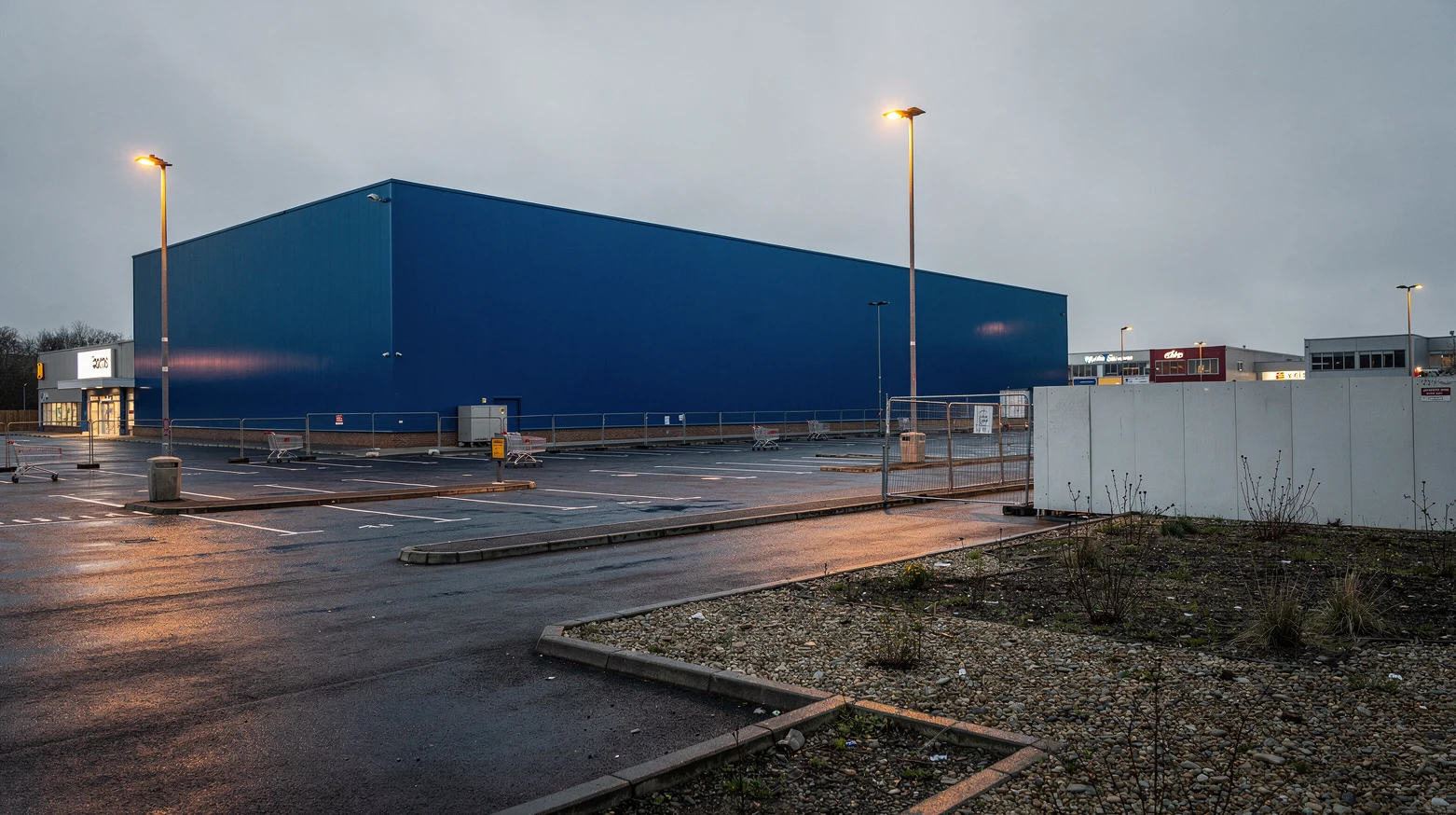
IKEA has abandoned plans to open some new stores in the UK, blaming a business rates bill that its British boss says is the heaviest of any IKEA market in Europe. David McCabe, chief executive of IKEA UK and Ireland, made the admission on Tuesday 17 November 2026 as the Swedish furniture retailer reported that its UK sales barely grew in the year to the end of August. The cancelled projects were smaller stores of the kind IKEA has been opening on high streets and retail parks, and the company would not say where they were.
The announcement lands three weeks after Chancellor John Healey’s first Budget, which McCabe called “a missed opportunity to back retailers under real pressure”. It also comes as shoppers are cutting back on big furniture purchases: IKEA says sales grew 4.7% in the first four months of its financial year, then fell in the second half. This article sets out what IKEA said, how the business rates system it is complaining about actually works, what the decision means for towns hoping for a new IKEA, and what changes for people who shop there.
In short
- Stores abandoned: IKEA says some planned UK openings have been dropped because of costs and complexity, and that the money could go to other European countries instead. It has not named the locations.
- Flat sales: UK retail sales rose 0.5% to £2.26 billion in the year to August 2026, from £2.25 billion, after a strong start faded in the second half.
- Business rates: McCabe says the UK has the highest business rates burden of any IKEA market in Europe and the third highest worldwide. Big stores in England pay the 50.8p high-value multiplier.
- Price cuts continue: IKEA spent £54 million cutting prices by an average of 20% on 425 products in August and is running more than 1,000 in-store-only offers up to December.
- Online is 43%: online and remote sales made up 43.3% of IKEA UK’s home furnishing sales, so most customers will feel the store decision far less than the price decisions.
What exactly did IKEA announce?
IKEA UK published its results for the 2026 financial year, which ran from September 2025 to the end of August 2026, early on Tuesday morning. The company statement, carried in full by Retail Times, reported retail sales of £2.26 billion, a rise of 0.5% on the previous year’s £2.25 billion. It said the expanded store estate delivered “a strong start to the year”, with sales up 4.7% in the first four months, before “weakened consumer confidence and sustained pressure on household budgets” pushed revenue down in the second half.
The written statement itself did not mention abandoned stores. That detail came from interviews McCabe gave to the Press Association, City AM and the Guardian. “There are locations where we were planning to open a new unit, and those plans have been abandoned due to the cost that we experience and the complexity within the market,” he told the Guardian, adding that he hoped to “bring those projects back to life”.
What McCabe told each outlet
The wording differs slightly between interviews, but the message is consistent. To the Press Association, as reported by the Telegraph and Business Live, McCabe said IKEA had “recently invested in eight new units in the UK” but that “higher costs and complexities” meant “we have had investment projects in the UK that we have had to abandon, and that is a shame”.
He went further with City AM, which reported him as saying that if IKEA could not make the case for sustainable investment in the UK, “Ikea as a company, we will invest in other European countries. That is the reality.” He told the paper he would work with his team to be “as creative as we can” to keep investing, but that “it is becoming harder, of that there is no doubt”.
Several details are missing. IKEA declined to tell the Guardian which locations had been dropped, and the Telegraph reported that the company did not disclose how many projects were scrapped or how much they would have been worth. The Guardian reported that the planned investments were smaller UK stores, rather than the large blue-box warehouses IKEA is best known for.
No timetable has been given for reviving the projects. McCabe told City AM that IKEA would revisit them only if the government provides “a sustainable cost picture and an incentive to continue to grow in the UK”. Until IKEA names sites, any local claim that a specific town has lost its IKEA should be treated as speculation.
How did IKEA UK actually trade in FY26?
On the headline numbers, IKEA UK had a flat year in a difficult market. Sales rose by roughly £10 million on a base of £2.25 billion, a gain of half a percent. The second half was weak enough to wipe out most of the 4.7% growth recorded between September and December 2025.
McCabe described a change in how people shop for their homes. He told the Guardian he had spoken to customers in stores who had planned to replace an entire bedroom, then decided to buy one or two smaller pieces and refresh the room with new textiles instead. “We don’t think that there’s going to be a sudden, miraculous turnaround in confidence,” he said.
| Measure | FY26 (year to August 2026) | Comparison or context |
|---|---|---|
| UK retail sales | £2.26 billion | £2.25 billion in FY25, up 0.5% |
| Sales growth, first four months | +4.7% | Sales then dipped in the second half |
| Online and remote sales share | 43.3% of home furnishing sales | Online and remote sales up 0.7% on FY25 |
| Store visits | Up 7% | Across a UK network of 31 stores |
| IKEA Kitchens sales | Up 14% | Year-long focus on cooking and eating |
| Spare parts sales | Up 13% | Part of IKEA’s circular business |
| Second-hand sales | Up 17% | Includes Buy Back and resale |
| Price investment | £54 million | 425 products, average cut of 20%, August 2026 |
| Distribution investment | £31.5 million | Peterborough and Doncaster customer distribution centres |
| Deliveries by electric vehicle | 86% | Share of UK deliveries in FY26 |
Source: IKEA UK FY26 statement as published by Retail Times on 17 November 2026; Guardian and City AM interviews. IKEA did not publish a profit figure for the UK alongside the sales numbers.
The most telling pair of numbers is the 7% rise in store visits against a 0.5% rise in sales. City AM highlighted the same contrast. People came through the doors more often, helped by new city-centre and retail park stores, but they spent less per visit, which matches McCabe’s description of customers trading down from a full room to a few items.
Kitchens were the exception. IKEA says kitchen sales jumped 14%, which it puts down to shorter waits for planning appointments, better installation offers and a company-wide focus on cooking and eating. The Telegraph linked this to households choosing to improve the homes they already have rather than move, a theme IKEA says will shape its 2027 focus on storage and organisation.
Why does IKEA blame business rates?
Business rates are a tax on non-domestic property in the UK. In England, a property’s bill is broadly its rateable value, set by the Valuation Office Agency to reflect the rent it could command, multiplied by a figure set by the government, known as the multiplier. Large out-of-town furniture stores have very high rateable values, so they pay some of the largest bills on any retail park.
McCabe’s specific claim, in the company statement, is that “the UK has the highest business rates burden of any IKEA market in Europe and the third highest globally”. The Guardian reported that IKEA’s UK arm pays the most business taxes of its operations in Europe, and the third highest in the world after the US and China. IKEA has not published the figures behind that ranking, so it cannot be independently checked.
The April 2026 shake-up
From 1 April 2026, England moved to a new set of multipliers that coincided with a revaluation of every commercial property. According to the government’s published analysis of the change, qualifying retail, hospitality and leisure (RHL) properties with a rateable value below £500,000 now pay permanently lower multipliers, set 5p below the national rates. To pay for that cut, every property with a rateable value of £500,000 or more pays a high-value multiplier set 2.8p above the national standard rate.
That split is the heart of IKEA’s complaint. A large IKEA store is almost certain to sit above the £500,000 line, so it pays the highest rate in the system while smaller shops on the same retail park pay less. The Telegraph reported that these larger premises now face a tax rate of 50.8% of their rateable value, compared with 43% for smaller retail properties.
| Multiplier (England) | 2025–26 | 2026–27 | Which properties pay it |
|---|---|---|---|
| Small business RHL multiplier | Did not exist | 38.2p | Qualifying shops, pubs and leisure with RV under £51,000 |
| Standard RHL multiplier | Did not exist | 43p | Qualifying shops, pubs and leisure with RV £51,000 to £499,999 |
| National small business multiplier | 49.9p | 43.2p | Other properties with RV under £51,000 |
| National standard multiplier | 55.5p | 48p | Other properties with RV £51,000 to £499,999 |
| High-value multiplier | Did not exist | 50.8p | All properties with RV of £500,000 or more, including large stores |
Source: GOV.UK, “Effects of the business rates retail, hospitality and leisure multipliers and high-value multiplier”. In 2025–26, qualifying RHL properties also received 40% relief, capped at £110,000 per business, which did little for large chains.
The £500,000 cliff edge
The high-value multiplier applies to the whole bill once a property crosses £500,000 of rateable value; there is no taper. Using the published multipliers, a qualifying shop with a rateable value of £499,999 would face a bill of about £215,000 before any transitional relief, while one valued at exactly £500,000 would face about £254,000. That is a jump of roughly £39,000 for £1 of extra rateable value.
This is shopappy’s own illustration, not IKEA’s, and it ignores transitional relief, which caps how quickly bills can rise after a revaluation. But it shows why a retailer weighing a new mid-sized store in a prime location would look hard at where the property’s rateable value is likely to land. IKEA has said its newer small stores range from 1,000 to 2,000 square metres, and on a busy city-centre street a unit of that size can easily approach the threshold.
Did IKEA’s rate actually go up?
Strictly, no. The high-value multiplier of 50.8p is lower than the 55.5p national standard multiplier that large stores paid in 2025–26, and the government says every property is paying a lower tax rate in 2026–27 than the year before. What changed is that rateable values were revalued upwards in many places, and that smaller rivals now pay 7.8p less in the pound than IKEA’s big stores.
So IKEA’s complaint is about the overall level of the tax and its relative burden, not about a single rate rise. City AM reported that the British Retail Consortium says retail pays around 20% of all business rates while making up about 5% of the economy, and that industry bosses expect the tax on larger shops to rise with inflation next year, adding around £250 million to the sector’s costs.
What did the Budget do, and why does IKEA call it a missed opportunity?
Healey’s Budget on 28 October 2026 focused its rates support on small premises. As we reported at the time, the Budget lifted small business rate relief to £18,000 for qualifying retail, hospitality and leisure properties in England from April 2027, taking around 70,000 more businesses out of rates altogether, and capped bill rises at inflation for other qualifying RHL premises for two years.
None of that helps a store above £500,000 of rateable value, because the real-terms freeze applies to qualifying RHL properties and the high-value multiplier sits outside that group. McCabe’s statement acknowledged that “the Budget avoided adding further costs”, but said it “stopped short of addressing the structural challenges holding the sector back”.
The split in reaction tracks the split in the tax. The Association of Convenience Stores and the British Independent Retailers Association welcomed the higher relief threshold as a real gain for independents. The British Retail Consortium described the package as falling short for the larger chains that pay most of the sector’s rates.
IKEA is the most prominent big retailer so far to put a concrete consequence on that complaint. Other chains have warned about costs in general terms, but saying that specific store openings have been cancelled is a sharper message to the Treasury, and it was given to several national outlets on the same morning.
Where has IKEA been opening in the UK?
Over the last two years IKEA has shifted away from building only giant out-of-town stores and towards smaller formats closer to where people live. The FY26 statement lists the openings: IKEA Oxford Street, Brighton, Norwich and York towards the end of FY25, followed in FY26 by a small-format store in Chester and a Plan and Order Point in Dundee. A further Plan and Order Point opened in Aberdeen in October 2026.
The Oxford Street store, in the former Topshop flagship building, opened at the start of 2025. McCabe told the Guardian that smaller stores of between 1,000 and 2,000 square metres had been popular with customers, both on high streets such as Oxford Street and on retail parks.
Shoppers will now find three broad types of IKEA in the UK. The traditional large stores carry the full range, a warehouse and a restaurant. Smaller stores carry a curated range, with larger items ordered for delivery. Plan and Order Points are focused on planning kitchens, bedrooms and living rooms, with orders delivered rather than taken away.
The difference matters for returns. IKEA’s UK returns page says returns are not accepted at Plan and Order Points such as Preston and Stockport, so customers who order through those sites need to use a full store or the online returns process.
IKEA also opened a standalone Decathlon store inside IKEA Croydon in April 2026, which it describes as a “one-stop lifestyle shopping destination”. Renting spare space to third parties is part of what IKEA calls its Total Cost Transformation programme, and the statement says IKEA generated “additional value through the rental of excess space” in FY26.
Who else is still opening shops in the UK?
IKEA’s decision stands out because several other retailers are still expanding their UK estates, at least on paper. The pattern so far is that growth is coming from brands with high sales per square metre or small footprints, while big-ticket home and furniture retailers are the most cautious.
| Retailer | Latest stated UK store plan | Format | Reported |
|---|---|---|---|
| IKEA | Some planned openings abandoned; locations not named | Smaller stores, 1,000–2,000 sq m | 17 November 2026 |
| Sephora | Ten or more new stores next year, taking the estate to around 28 | Beauty stores in centres and high streets | 16 November 2026 |
| B&M | 15–20 new UK stores planned | Discount variety stores | 12 November 2026 |
| Starbucks UK | 500 new shops and 7,500 hires | Coffee shops | 9 November 2026 |
| DFS | No new opening target; demand “softened further” | Sofa showrooms | 13 November 2026 |
Sources: company statements and interviews as reported by the Guardian, City AM, the Times via TheIndustry.beauty and Retail Gazette, and earlier shopappy reporting on each company.
The Sephora plan for ten new UK stores shows that landlords can still sign beauty and fashion tenants for prime units. Many of those units will fall below the £500,000 rateable value line, and beauty sells far more per square metre than flat-pack furniture, which changes the arithmetic of a high rates bill.
Furniture is one of the categories hit hardest when households feel squeezed, because a new sofa or wardrobe is easy to put off. Four days before IKEA’s results, DFS warned that sofa demand had softened further over the autumn and widened the range of its profit expectations. IKEA’s description of customers shrinking a bedroom makeover to a couple of items fits the same pattern.
That context matters for reading IKEA’s decision. A retailer with flat sales and a falling second half is less likely to commit to new leases, whatever the tax regime, and rates are one cost among several, alongside wages, employer national insurance and energy. IKEA has chosen to put rates at the centre of its explanation, which is a political as well as a commercial message.
What does this mean for IKEA shoppers?
For most customers, very little changes in the short term. No existing UK store has been reported as closing. The abandoned projects were future openings, so the practical effect is that some towns will wait longer for a nearby IKEA, or may not get one at all.
Prices are moving in shoppers’ favour for now. IKEA says it cut prices on 425 products by an average of 20% in August, including the BILLY bookcase, HEMNES daybed and POÄNG armchair, and that from September to December it is running more than 1,000 in-store-only offers, with discounts of up to 20% on items such as extendable tables and soft toys. McCabe told City AM that “the more challenging it is for our customers, the harder we need to work”.
The festive offers are in-store only, which is worth noting for the 43.3% of IKEA’s UK home furnishing sales that come through online and remote channels. Online customers will not automatically see the same seasonal discounts, so it is worth checking the store price before ordering bulky items for delivery, especially if you live near one of the 31 UK stores.
The wider August price cuts apply to the products themselves rather than to a channel. IKEA’s fulfilment changes also affect delivery: the company says its Doncaster centre now serves the Gateshead, Edinburgh and Glasgow areas, which it expects to cut delivery journeys, and that 86% of UK deliveries in FY26 were made by electric vehicles.
Your rights when you buy
Fewer new stores does not change your rights. IKEA’s UK returns policy says most unopened products can be returned within 365 days for a full refund, and that tested products, even assembled ones, can be returned within 365 days to a refund card if they are in good condition. Items with signs of use beyond testing are excluded.
For online orders, the Consumer Contracts Regulations give a 14-day right to cancel after delivery, which IKEA’s own policy also states, with exceptions such as custom-made items. If something is faulty, the Consumer Rights Act 2015 gives you 30 days to reject it for a full refund, separate from any store goodwill policy.
What does it mean for high streets and retail parks?
IKEA’s smaller formats were seen by landlords and councils as a way to fill large empty units on high streets, including former department stores. The Oxford Street store in the old Topshop building is the best-known example. If IKEA is now pausing that kind of opening, the towns that were hoping for a new anchor tenant lose a potential source of footfall.
The question of how to fill big empty units sits at the centre of the Housing, Communities and Local Government Committee’s inquiry into revitalising high streets, which took evidence from the British Retail Consortium and others on 17 November. Our preview of the MPs’ high street inquiry sets out the rates, rents and empty-shop evidence the committee has already heard.
The high-value multiplier makes large units more expensive to occupy than smaller ones. A landlord with a former department store may find that splitting it into several smaller lettings, each below £500,000 of rateable value, produces a lower combined rates bill than one big tenant. That favours subdivision over single large anchors like an IKEA store.
It also means councils and landlords keen to attract IKEA-sized tenants may have to offer more on rent or fit-out to compensate. Neither IKEA nor the government has commented on whether any of the abandoned projects involved former department store sites.
Could IKEA change its mind?
McCabe left the door open. He told the Guardian he hoped to “bring those projects back to life”, and told City AM that IKEA was “positive” about the UK and keen to revisit the shelved schemes. The condition he set was a better cost environment, which in practice means lower rates for large stores or some form of relief targeted at investment.
The Guardian reported that IKEA is still talking to the government. The next points at which policy could shift are the local government finance settlement, when the 2027–28 multipliers are confirmed, and the government’s wider business rates reform work. There is no sign yet that ministers plan to change the high-value multiplier, which was introduced specifically to fund the lower rates for smaller shops.
IKEA is not standing still. The FY26 statement lists £31.5 million spent on its Peterborough and Doncaster distribution centres, including drones for stock checks and machines that package orders to size, plus £1.5 million in Doncaster creating 80 jobs. It is also planning electric vehicle charging hubs at its Edinburgh and Glasgow stores.
The other growth area is second-hand. IKEA’s second-hand sales rose 17% in FY26, and the company launched its online resale marketplace in the UK in October. Our analysis of IKEA’s second-hand marketplace rollout explains how that platform fits into IKEA’s strategy across Europe, and why it lets the retailer offer a cheaper option without cutting prices on new products further.
The immediate test is Christmas. IKEA is relying on seasonal offers and its August price cuts to bring people into stores, and McCabe told the Press Association he was “optimistic” because customers were coming in “enthusiastic for the festive period”. At the same time, he told the Guardian that IKEA anticipates “a difficult period going forward”.
For shoppers and towns, the key questions are which locations were dropped, whether IKEA names them, and whether the government responds. For the retail sector, IKEA’s move is likely to be quoted by other large retailers as they lobby ahead of the 2027–28 multipliers being set.
What to watch
- Whether IKEA or local reports identify the abandoned store locations.
- Any government response to McCabe’s comments, or changes to the high-value multiplier.
- Confirmation of the 2027–28 business rates multipliers in the local government finance settlement.
- Christmas trading updates from other furniture and home retailers, including DFS’s half-year statement on 21 January 2027.
- Whether IKEA’s in-store-only offers are extended beyond December.
Frequently asked questions
Is IKEA closing stores in the UK?
No existing UK store has been reported as closing. IKEA says it has abandoned some planned new openings, which were smaller stores, because of high costs and business rates. It has not named the locations.
Why did IKEA cancel new UK stores?
IKEA UK’s chief executive, David McCabe, blamed the cost and complexity of operating in the UK, in particular business rates. He says the UK has the highest business rates burden of any IKEA market in Europe and the third highest globally.
Which IKEA stores were cancelled?
IKEA has not said. The Guardian reported that the company declined to comment on exact locations, and the Telegraph reported that it did not disclose how many projects were scrapped or what they were worth.
How much did IKEA UK sell in 2026?
IKEA UK reported retail sales of £2.26 billion for the year to the end of August 2026, up 0.5% from £2.25 billion. Sales grew 4.7% in the first four months, then fell in the second half.
What is the business rates high-value multiplier?
Since April 2026, properties in England with a rateable value of £500,000 or more pay a high-value multiplier of 50.8p in the pound. It is set 2.8p above the national standard multiplier and helps fund lower rates for smaller retail, hospitality and leisure properties.
Are IKEA prices going down?
IKEA says it spent £54 million cutting prices on 425 products by an average of 20% in August 2026, and is running more than 1,000 in-store-only offers from September to December, with discounts of up to 20%.
Can I return IKEA items to a Plan and Order Point?
No. IKEA’s UK returns page says returns are not accepted at Plan and Order Points such as Preston and Stockport. Use a full IKEA store or the online returns process instead.
How long do I have to return something to IKEA?
IKEA’s policy allows most unopened products to be returned within 365 days for a full refund, and tested products in good condition within 365 days to a refund card. Online orders also carry a legal 14-day right to cancel after delivery.
Will IKEA open more UK stores in future?
Possibly. McCabe said he hoped to bring the abandoned projects “back to life” and that IKEA remains positive about the UK, but only if the cost picture improves. No timetable has been given.