
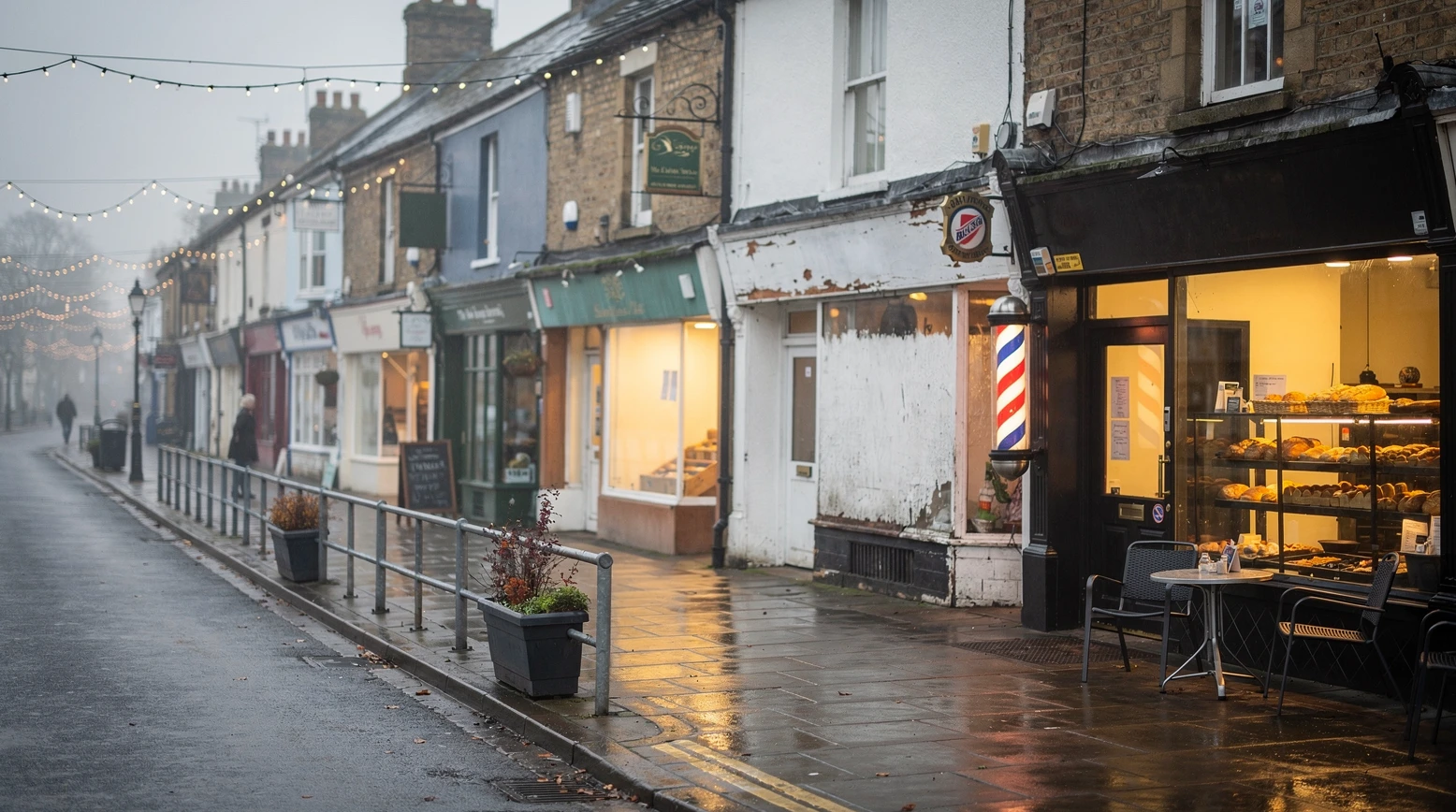
MPs will question the British Retail Consortium, the night-time economy’s best-known campaigner and one of the country’s sharpest tax critics on Tuesday 17 November, as Parliament’s inquiry into England’s struggling high streets reaches its second public hearing. The Housing, Communities and Local Government Committee has scheduled two oral evidence panels in the Thatcher Room at Portcullis House, according to the committee’s published business calendar. PA Media reported on Sunday that the witnesses include Helen Dickinson of the British Retail Consortium (BRC), Sacha Lord, chair of the Night Time Industries Association, and the independent tax expert Dan Neidle.
The timing is not accidental. With just under seven weeks until Christmas, retailers are counting on a strong final quarter while closures continue, Poundland’s future is unresolved and energy bills are forecast to rise in January. The inquiry, titled Revitalising High Streets, is examining “unwanted” businesses such as vape shops, betting shops and so-called fake barbers, the effect of business rates, and whether councils have the powers they need. For shoppers, independent traders and anyone who has watched a familiar parade fill with look-alike units, Tuesday’s hearing is the clearest signal yet of what MPs may recommend.
In short
- Tuesday 17 November 2026: the Commons Housing, Communities and Local Government Committee holds its second public hearing for the Revitalising High Streets inquiry (HC 548), with two panels from 10am to 11:30am.
- Named witnesses reported by PA include Helen Dickinson (British Retail Consortium), Sacha Lord (Night Time Industries Association) and tax expert Dan Neidle.
- Dodgy shops and tax evasion dominated the first hearing on 13 October, where a journalist told MPs that non-payment of tax lets some shops outbid honest tenants on rent.
- 144 written submissions have been published, from Primark, Boots and McDonald’s to the Association of Convenience Stores, hair and beauty bodies and an anti-corruption group of MPs.
- Cheap street fixes are also on the table: a Create Streets report published on 13 November argues that removing clutter and parking can be worth more to nearby shops than another regeneration scheme.
What is happening on Tuesday 17 November?
The Housing, Communities and Local Government (HCLG) Committee is a cross-party group of MPs that scrutinises the Ministry of Housing, Communities and Local Government. Its calendar lists a formal meeting on Tuesday 17 November starting at 9:30am in the Thatcher Room, Portcullis House. Two oral evidence panels follow: the first from 10am to 10:45am and the second from 10:45am to 11:30am, both under the Revitalising High Streets inquiry.
The committee has not yet published the running order on its own record, so the witness list comes from the PA Media report carried by the Mirror and other titles on Sunday 15 November. That report says Helen Dickinson, Sacha Lord and Dan Neidle are “among those set to give evidence”, which leaves room for other names on the day. Public sessions are normally broadcast on Parliament’s video service and a transcript appears on the committee’s pages, usually the same day.
The inquiry opened on 7 July 2026 and has the House of Commons paper number HC 548. Written submissions were accepted from 15 July until 11:59pm on 7 September 2026, and the committee has so far published 144 of them. The first oral evidence session took place on Tuesday 13 October, which was also the first session chaired by Abena Oppong-Asare as committee chair, according to the published transcript.
| Milestone | Date | What happened |
|---|---|---|
| Inquiry launched | 7 July 2026 | Terms of reference published for England’s high streets |
| Written evidence window | 15 July to 7 September 2026 | 144 submissions published so far, in batches from mid-October |
| First oral evidence | 13 October 2026 | Trading Standards, licensing, crime and industry witnesses (57 questions) |
| Written evidence batch | 15 October 2026 | Submissions from McDonald’s, Boots, Primark and the ACS released |
| Government strategy | 28 October 2026 | Hope on the High Street published alongside the Budget |
| Second oral evidence | 17 November 2026 | Two panels, 10am to 11:30am, Thatcher Room |
| Committee report | Not yet scheduled | Government normally replies within two months of a report |
Why are MPs looking at high streets now?
The committee’s terms of reference say it is “looking at the action needed to revitalise England’s high streets”. In practice the inquiry has three strands: the spread of what MPs call “unwanted” retail and services, the tools councils have to regenerate town centres, and whether the government’s own measures are working. That last strand includes changes to business rates and the Pride in Place Programme, which the government says will provide up to £20 million each to hundreds of areas over the next decade.
Since the inquiry opened, the policy landscape has moved quickly. On 28 October the government published its 90-page strategy for England, which shopappy covered when the high streets strategy targeted dodgy shops and empty units. It promised a £125 million Derelict Buildings Fund, extra money for High Street Rental Auctions and, subject to consultation, more council control over new betting shops and vape shops. The committee can now test those promises against what traders and enforcers say on the ground.
The PA report sets the hearing against a difficult year for shops. Figures from the Centre for Retail Research suggest store closures led to more than 22,800 job losses in the first nine months of 2026. The fashion chain Quiz entered administration in February, a month after more than 30 Russell & Bromley shoe shops closed.
Poundland is the most visible pressure point. The discounter has around 600 stores and more than 10,000 workers, and it has extended the window before it could enter administration while it seeks a buyer. Its owner, the investment firm Gordon Brothers, has been criticised by another committee of MPs over claims it starved the chain of funds, which it denies, PA reported.
Who is giving evidence and what might they say?
Witnesses at select committees do not publish their answers in advance, so what follows is drawn from their organisations’ public positions and earlier statements rather than predictions of Tuesday’s exchanges. The mix of names is telling. It brings together the main voice of large and medium retailers, the evening economy that keeps town centres busy after shops close, and a tax specialist whose presence suggests MPs want to probe the financial mechanics behind some high street businesses.
Helen Dickinson and the British Retail Consortium
The BRC represents retailers of all sizes, from the big grocers to fashion chains and department stores. Its long-running position is that business rates fall too heavily on shops, and that employment costs, including the 2024 rise in employer National Insurance, have made entry-level jobs harder to sustain. Primark’s written evidence to the inquiry cites a BRC estimate that every £1,000 increase in the employer National Insurance threshold would let retailers invest around £420 million in pay, training and new roles.
Expect MPs to ask how the BRC views the new lower rates multipliers for retail, hospitality and leisure properties, and the higher multiplier for large premises. Shopappy explained the small-business side of that package when the Budget lifted rates relief to £18,000, taking around 70,000 high street firms out of rates altogether. The bigger question for the BRC is whether larger anchor stores, which draw footfall for everyone else, are being penalised.
Sacha Lord and the night-time economy
Sacha Lord chairs the Night Time Industries Association and co-founded Manchester’s Parklife festival and the Warehouse Project. His evidence is likely to focus on bars, clubs, music venues and restaurants as reasons to visit a town centre after 6pm. That matters for shops too: a high street that empties at teatime is harder to let, harder to police and less appealing to the families that retailers want to attract.
The government has already announced a 20% business rates cut for pubs, social clubs and live music venues from April 2027, on top of a 15% relief announced in January, according to written evidence from the Shopkeepers’ Campaign. That group argues that such carve-outs add complexity and create “winners and losers” between business types, which is likely to be a point of tension on the day.
Dan Neidle and the tax question
Dan Neidle, a former tax partner who founded the think tank Tax Policy Associates, is described by PA as an independent tax expert. His appearance follows a first hearing in which tax evasion emerged as a central theme. MPs were told that some high street businesses are profitable precisely because they do not pay VAT, corporation tax or PAYE, which lets them offer landlords higher rents than compliant traders can afford.
That framing puts tax enforcement, not only planning, at the centre of the dodgy shops debate. If Neidle is asked about phoenixing, where a company is wound up and its trade moved to a new company to dodge liabilities, his answers could shape whether the committee recommends changes for HMRC, Companies House or commercial landlords.
What did MPs hear at the first session in October?
The 13 October hearing, transcribed in full on the committee’s record, featured two panels. The first heard from Lord Bichard, chair of National Trading Standards; Sue Nelson of the Institute of Licensing; Josh Nicholson of the Centre for Social Justice; and Jim Waterson, editor of the investigative outlet London Centric. The second heard from Nindi Dhanjal of the Gambling Business Group, Andrew Goodacre of the British Independent Retailers Association (Bira) and Dr Marina Murphy of the UK Vaping Industry Association.
Dodgy shops, patsy directors and rent
Josh Nicholson told MPs that 79% of adults are concerned about high street decline, and that the Centre for Social Justice’s freedom of information requests found 1,000 more shops raided for illicit tobacco in a year compared with the year before. He said nine in ten “criminal high street businesses” stay open even after being raided, with just 8% closed. His central argument was that the public sees the high street as “a consequence-free zone”.
Jim Waterson described London Centric’s investigation into souvenir and gift shops in some of the most expensive retail streets in the world. “We kept finding tax evasion,” he said, explaining that a business that does not pay VAT, corporation tax or PAYE can pay a higher rent: a landlord offered £15,000 a month by one tenant and £10,000 by a tax-paying rival will usually take the higher bid. He said HMRC figures show at least around £1 billion was lost to phoenixing in 2022-23, across all sectors, and that “bad pushes out good”.
Lord Bichard told the committee that closure notices against premises linked to crime last 72 hours before a full closure order is needed, and that orders are not long enough. The government has since proposed extending closure orders from six to 12 months, a change the Association of Convenience Stores (ACS) wants implemented quickly.
Rates, rents and the independent shop
Andrew Goodacre of Bira argued that new clusters of vape shops, barbers and sweet shops are “business-model driven” rather than a response to local demand. He told MPs that the last time small retailers were comfortable with business rates was in 2024, with the last of the 75% discounts, which cost the Treasury £2.5 billion. The current relief is worth around £900 million, he said, which he considers too little.
Goodacre also said that in the last revaluation high street rents rose by 10% to 12%, compared with about 4% to 5% for retail parks, because large retailers negotiate harder. As a landlord of office space himself, he noted that he does not have to check whether a tenant can legitimately be in the UK, even though he must do so for an employee. That gap in tenant checks is likely to resurface on Tuesday.
| Issue raised on 13 October | Witness | Figure or claim |
|---|---|---|
| Public concern about decline | Josh Nicholson, Centre for Social Justice | 79% of adults concerned |
| Illicit tobacco raids | Josh Nicholson | 1,000 more shops raided year on year; 8% closed after a raid |
| Phoenixing losses | Jim Waterson, London Centric | At least around £1bn in 2022-23 (all sectors, HMRC figures) |
| Closure powers | Lord Bichard, National Trading Standards | Closure notices last 72 hours; orders too short |
| Rates relief | Andrew Goodacre, Bira | 75% discount cost £2.5bn; current relief about £900m |
| Rent rises at revaluation | Andrew Goodacre | High streets 10% to 12% vs retail parks 4% to 5% |
| Investment by bookmakers | Nindi Dhanjal, Gambling Business Group | Upwards of £300,000 to refurbish a long-vacant unit |
What do retailers and campaigners want from the inquiry?
The 144 written submissions read like a map of every interest on the high street. Councils, business improvement districts, landlords, cinema chains, pharmacists, heritage bodies and individual shop owners have all made their case. A handful of retail submissions stand out for shoppers and small traders.
The ACS, which represents 50,925 local shops and forecourts, told MPs that its Community Barometer 2026 found empty units (63%) and a poor range of shops (53%) were the two most cited reasons people think their high street has got worse. It said 85% of retailers report illicit trade has become more visible in their area. The ACS wants part of the Vaping Products Duty, forecast to raise £565 million by 2030, put into Trading Standards, and estimates £140 million over five years is needed to tackle illicit vapes alone, enough for more than 400 extra officers.
Those numbers build on the cost pressures set out in the trade body’s annual survey, which shopappy reported when the ACS Local Shop Report 2026 showed rates bills doubling as investment stalled. The ACS also wants Small Business Rate Relief thresholds linked to inflation, noting they have not moved since 2017.
Primark, which has 199 UK stores and more than 30,000 staff, told MPs that research it commissioned found 2.3 million people a week cite Primark as their main reason for visiting their high street. For every £10 spent in Primark, a further £3.60 is spent nearby, or around £1.5 billion a year, it said. It argued that retail accounts for 5% of UK output but pays around 21% of business rates.
Boots, with 1,800 stores and pharmacies and more than 51,000 staff, said about two thirds of its stores are on high streets or in community locations. Research it published with Public First in July 2026 found around 50% of the public think their high street is getting worse, while 88% say it is important to their quality of life. Boots cited a national shop vacancy rate of 13.4% in the fourth quarter of 2025.
The British Hair Consortium (BHC) submitted one of the most detailed papers. It cites CBI Economics analysis showing a 23% fall in hair and beauty employee numbers during 2025, to around 68,500, a drop in apprenticeship starts of about 84% since 2015, and losses equivalent to 20 employing salons per working day. The same work estimates £1.2 billion of annual tax leakage in the sector. The BHC wants compulsory national registration of hairdressers, a 10% VAT rate on personal care services and business rates relief tied to tax compliance.
Its case study of Gedling village in Nottinghamshire found 23 hair, barbering, beauty and aesthetics operators within roughly 600 yards. The BHC says a full-time stylist needs at least 512 regular clients to be viable, so 23 outlets would need 11,776 clients in a ward of 6,817 residents. The point is that a parade can look full while the businesses in it are not sustainable.
| Submission | Main ask | Headline figure |
|---|---|---|
| Association of Convenience Stores | Fund Trading Standards from vape duty; index rates relief | £140m over five years for illicit vapes |
| Primark | Lower rates on large shops; faster low-value import reform | 2.3m weekly visits; £3.60 extra per £10 |
| Boots | Coordinated support with health services on high streets | Vacancy 13.4% (Q4 2025) |
| British Hair Consortium | Mandatory registration; 10% VAT on services | £1.2bn annual tax leakage |
| Shopkeepers’ Campaign | Simpler, lower rates across all shops | Rates rose from 34p in 1990 to a 48p standard rate |
| APPG on Anti-Corruption and Responsible Tax | “Know Your Tenant” duty for landlords | At least £1bn laundered via high street firms (NCA) |
A “Know Your Tenant” duty for landlords
The All-Party Parliamentary Group on Anti-Corruption and Responsible Tax argues that regeneration and high street economic crime are “the same policy problem” that England treats as two. It cites a National Crime Agency assessment that more than £12 billion in criminal cash is generated in the UK each year, at least £1 billion of it laundered through high street businesses. It points to the 2020 creation of planning Use Class E, which means a bookshop can become a vape shop without the council being told.
The group wants a statutory “Know Your Tenant” duty on commercial landlords, tougher Companies House rules on dissolving firms, and ringfenced funding for enforcement. It holds up Operation Vulcan in Cheetham Hill, Manchester, where sustained multi-agency action closed 206 criminal premises, seized counterfeit goods valued at £1.56 billion and saw violent crime fall by 69%, as the domestic model. It also cites Rotterdam, where councils can screen the integrity of applicants for permits under Dutch law.
Can cheaper street fixes bring shoppers back?
Not every proposal involves enforcement. Two days before the PA report, the Guardian covered a report by the urban think tank Create Streets, co-produced with the bike storage firm Cyclehoop, which argues that many high streets are “designed to be driven through, not for time to be spent in”. Its message for councils is that small, low-cost changes can do more than multimillion-pound revamps, and the inquiry’s own terms of reference ask about street furniture, design codes and pedestrianisation.
The report’s most striking calculation compares what the same 12 square metres of kerb generates for nearby shops. One parking space on a market town high street is typically used by about 3.5 vehicles a day, bringing in just over £73,000 a year in spending. The same space holding nine shared e-bikes generates an average of 13 trips a day and over £146,000, even allowing for lower spending per person, the Guardian reported.
| Use of one kerbside space (12 sq m) | Setting | Estimated annual spending in nearby shops |
|---|---|---|
| One car parking space (about 3.5 vehicles a day) | Market town | Just over £73,000 |
| Nine shared e-bikes (about 13 trips a day) | Market town | Over £146,000 |
| Nine shared e-bikes | Busier city | More than £300,000 |
| Outdoor dining | City centre | About £120,000 extra |
The report calls the removal of pedestrian guardrails “the most cost-effective upgrade for the majority of high streets” and proposes “a presumption of removal” for street clutter that cannot be justified. It points to Altrincham in Cheshire, where a walkable, car-free centre helped cut retail vacancies from more than 30% to 7% in under a decade, and to a patch of land in Grimsby turned into a park for less than £20,000. “Streets that are ugly are not so because councils lack the desire to change them, but because the system is counting the maintenance liabilities, not the benefits,” said David Milner of Create Streets.
Parking remains contentious for many shop owners, who argue that older customers and those buying bulky goods need to drive. Shoppers in Bridport, Dorset, told the local paper this weekend that cheaper parking would help bring people back to the town centre, a reminder that the right answer differs between a city centre and a rural market town. A Ministry of Housing, Communities and Local Government spokesperson told the Guardian that “funding is available for local leaders to spend on their priorities, including pedestrianising and regenerating their high streets if they so wish”.
How does online shopping fit into the high street debate?
The inquiry is about physical town centres, but online retail runs through the evidence. The anti-corruption group lists e-commerce alongside out-of-town retail, the pandemic and business rates as structural causes of high street decline. Boots’ polling found the rise of online shopping among the reasons people use their high street less.
Primark’s submission goes further, supporting the government’s plan to reform the customs treatment of low-value imports, which currently lets overseas sellers ship parcels worth up to £135 without customs duty. Shopappy reported in October that the £135 duty relief ends by 2028 as Temu’s UK sales grew. Primark told MPs it welcomes the decision to bring implementation forward from March 2029 to October 2028, but wants it accelerated again to July 2028 to match the EU’s timetable.
That is the clearest point where the high street and e-commerce agendas meet. Store-based retailers argue that business rates fall on physical premises while overseas platforms selling into the UK pay little towards local services. If the BRC is asked about online competition on Tuesday, expect it to link rates reform to the treatment of low-value parcels.
What does this mean for shoppers and small shops this Christmas?
Nothing the committee says on Tuesday will change prices, opening hours or rates bills before Christmas. Select committees make recommendations; the government decides policy and is expected to reply to a committee report within two months. But the hearing comes at the start of the most important trading weeks of the year, and the evidence gives shoppers a useful lens on what they see in town.
PA cited a Lloyds Bank poll showing around one in ten people expect to spend less than £100 on Christmas this year, while 7% plan to spend more than £1,000. The most typical festive budget is £250 to £499, chosen by 23% of respondents. A forecast rise in energy prices in January could make some households hold back, even as the jobs market gives others more confidence.
A separate poll commissioned by Libraries Connected, reported by PA, found that cafés, post offices, banks, bakeries, pubs and libraries are all part of the public’s ideal high street, while just 11% want betting shops and 7% want vape shops. “What really stands out is the mix people want,” said Isobel Hunter, chief executive of Libraries Connected. That gap between what people say they want and what fills empty units is exactly what the inquiry is trying to close.
For small shops, the practical steps are local rather than parliamentary:
- Check whether your council has received Derelict Buildings Fund or Pride in Place money, and ask how it will be spent on your street.
- Report suspected illicit tobacco or vape sales to Trading Standards via the Citizens Advice consumer helpline; repeated reports help councils build cases for closure orders.
- Join or contact your business improvement district or town team, many of which submitted evidence to this inquiry.
- Review your 2026 rateable value and relief entitlement before the April 2027 multiplier changes take effect.
- Take part in local “shop local” campaigns in the run-up to Small Business Saturday on 5 December.
Shops selling vapes should also note the rules that already apply. Shopappy set out the detail when the vape and nicotine pouch ban for under-18s started on 29 October with on-the-spot fines of £200, and vape shops are due to lose small business rates relief from April 2027 under the government’s strategy.
For shoppers, the most visible changes will come slowly: fewer new vape and betting shops if councils gain planning powers, more enforcement visits to shops selling illicit goods, and, in some towns, less street clutter and more space to walk or sit. Shoppers who buy from souvenir, sweet or phone accessory shops with unusually low prices may notice more closures if HMRC and Trading Standards step up action. Legitimate independent traders argue that would give them a fairer chance to compete for the same units.
What happens after the hearing?
The committee has not said how many more sessions it plans. Most Commons inquiries end with a minister giving evidence before MPs agree a report, and the government then has two months to respond in writing. With the high streets strategy published on 28 October and several consultations still to come, the committee’s report could arrive while those consultations are open, giving it a chance to influence the detail.
Key questions for Tuesday include whether MPs back a “Know Your Tenant” duty on landlords, whether they call for more HMRC resources aimed at high street tax evasion, and how they view the balance between rates relief for small shops and the higher multiplier on large stores. Answers from Helen Dickinson, Sacha Lord and Dan Neidle will be on the public record within hours, and shopappy will report the substance when the transcript is published.
The wider context will not wait for the report. Poundland’s rescue talks, January’s energy price change and the April 2027 rates reset will all shape which shops are trading on England’s high streets this time next year. For towns where parades are already dominated by one type of business, the inquiry is a chance to argue that the mix matters as much as the number of shutters that are up.
Frequently asked questions
When is the MPs’ high street inquiry hearing?
The Housing, Communities and Local Government Committee meets on Tuesday 17 November 2026 from 9:30am in the Thatcher Room, Portcullis House. Two public oral evidence panels on the Revitalising High Streets inquiry run from 10am to 10:45am and from 10:45am to 11:30am.
Who is giving evidence on 17 November?
PA Media reported that witnesses include Helen Dickinson of the British Retail Consortium, Sacha Lord, chair of the Night Time Industries Association, and the independent tax expert Dan Neidle. The committee’s published record did not yet list the full panel on Sunday 15 November, so other witnesses may also appear.
What is the Revitalising High Streets inquiry?
It is a Commons select committee inquiry, paper HC 548, opened on 7 July 2026. It looks at “unwanted” businesses such as vape shops, betting shops and fake barbers, regeneration tools such as High Street Rental Auctions and compulsory purchase, and the effect of business rates and the Pride in Place Programme on England’s high streets.
Can I watch the hearing?
Public sessions of Commons select committees are normally broadcast live on Parliament’s video service, and a transcript is usually published on the committee’s web pages later the same day. The 13 October session’s transcript was published that afternoon.
Will the inquiry change business rates?
Not directly. The committee can only make recommendations. Rates are set by the government, which has already announced lower multipliers for many retail, hospitality and leisure properties from April 2027, a higher multiplier for premises with a rateable value above £500,000, and the loss of small business rates relief for vape shops.
What is phoenixing and why does it matter for shops?
Phoenixing is when a company is wound up to escape debts such as tax, and the same trade restarts under a new company. Witnesses told MPs on 13 October that some high street shops use it to avoid VAT and other taxes, which lets them pay higher rents than honest competitors. HMRC figures cited at the hearing put losses across all sectors at at least around £1 billion in 2022-23.
Does the inquiry cover Scotland, Wales or Northern Ireland?
No. The committee scrutinises the Ministry of Housing, Communities and Local Government, whose high street responsibilities cover England. Planning and local government in Scotland, Wales and Northern Ireland are devolved, although some tax issues such as VAT and HMRC enforcement apply UK-wide.
How can a small shop give its views?
The formal written evidence window closed on 7 September 2026. Traders can still contact their MP, their council’s economic development team or their business improvement district, and the committee’s general contact address remains open for correspondence, although it says it does not respond to every message.