
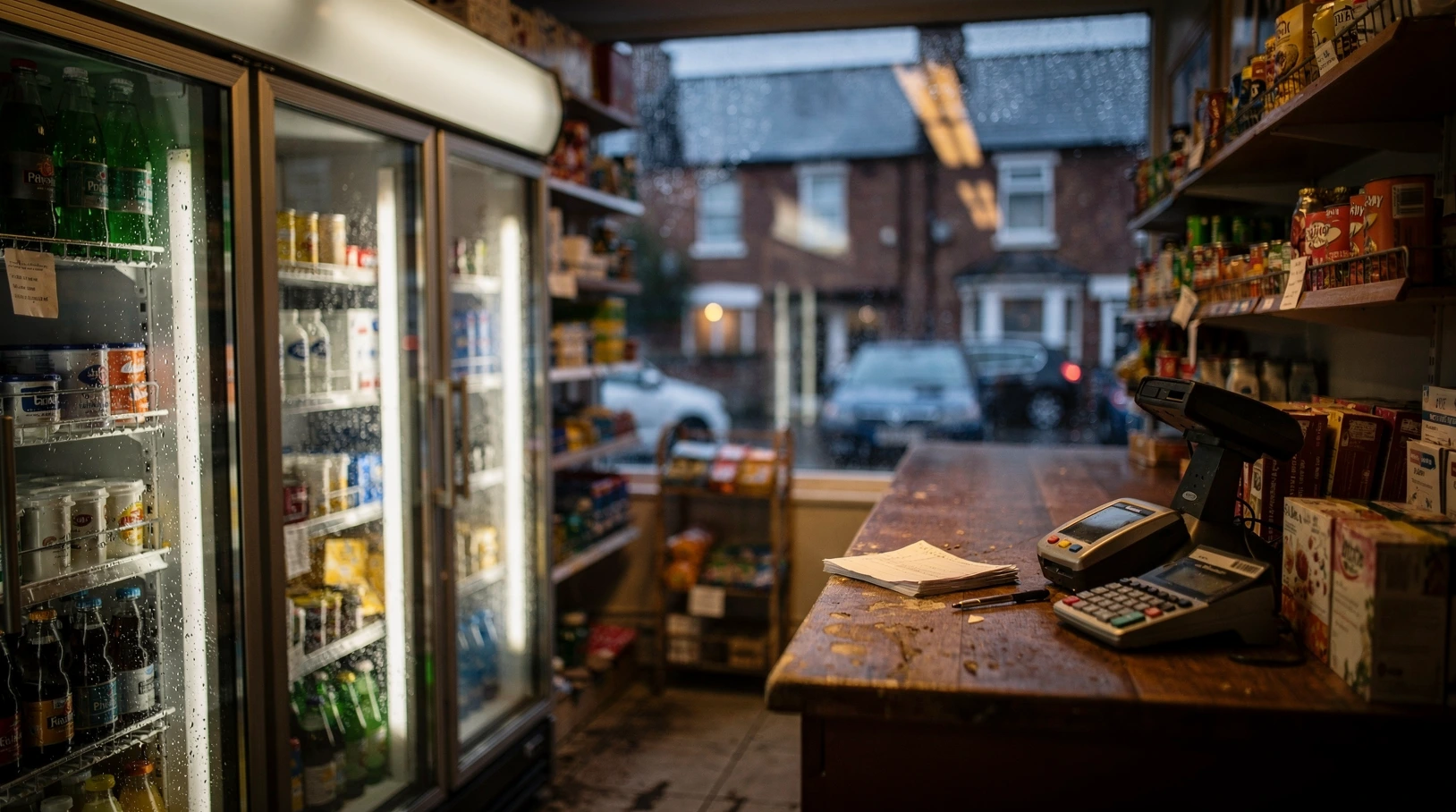
The Association of Convenience Stores (ACS) has published its 2026 Local Shop Report, the annual census of the UK’s convenience sector, and taken its findings straight to Westminster. The report counts 50,925 convenience stores across mainland Britain, forecasts sector sales of £49.1 billion (about USD 66.4 billion at the current rate of roughly 1.35 dollars to the pound), and records £957 million of investment by shopkeepers over the past year. It also states that the sector’s total business rates bill has nearly doubled in two years, and that one in five independent retailers has taken on more hours personally and gone without a holiday in the past 12 months.
The timing is deliberate. ACS launched its “#Checkout the Cost of Trading” campaign in Parliament on 9 September, seven weeks before Chancellor John Healey delivers the Autumn Budget on Wednesday 28 October 2026. For the independent shopkeepers who make up the core of shopappy.com’s audience, the report is both a scorecard and a lobbying document: it shows what local shops contribute, what they cost to run, and what the trade body is asking the Treasury to change.
In short
- 50,925 convenience stores trade in mainland UK, and 71% are run by independents (36% unaffiliated, 35% under a symbol fascia such as Nisa or Spar), according to William Reed data cited in the report.
- Sales of £49.1bn are forecast for 2026, up just 0.6% on 2025 while inflation averaged 2.9%, meaning the sector shrank in real terms. Lumina Intelligence expects sales to reach £54bn by 2029.
- Investment fell from a record of more than £1bn in 2024 to £957m in the past year; trade press summarise the 2025 and 2026 run-rate as “around £900m annually”.
- Business rates have nearly doubled for the sector in two years, to £356m, after the 40% retail relief ended on 31 March 2026 and the 2026 revaluation took effect. Employer National Insurance now costs the sector £434m a year.
- The ask for 28 October: ACS chief executive Ed Woodall says shops are “not looking for handouts” but need “breathing space to invest and innovate” ahead of the Autumn Budget.
What does the 2026 Local Shop Report actually count?
The Local Shop Report is the sector’s standard reference document, published every September and cited by MPs, councils and suppliers. The 2026 edition draws on two ACS surveys: a telephone survey of 1,650 independently owned convenience businesses carried out by BCC Marketing between 15 June and 10 July 2026, and an online survey of multiple-chain members covering 7,561 stores. Store counts come from William Reed, shopper data from Lumina Intelligence’s Convenience Tracking Programme (a survey of more than 20,000 shoppers in store), and community data from a More in Common poll of 1,000 UK consumers conducted in July 2026.
The headline figures are these. There are 50,925 convenience stores in mainland UK. The sector generates £10.6 billion in gross value added (about USD 14.3 billion), pays more than £9.2 billion in taxes (about USD 12.4 billion) and employs 456,000 people who worked a combined 9.7 million hours a week over the past year. Ninety-seven per cent of those staff are on permanent contracts.
The report’s own introduction sets the tone for the political argument that follows. It describes convenience stores as “an integral part of local infrastructure” and notes that consumers rank them among the top three local businesses with the biggest positive impact on their community, behind pharmacies and post offices. It then pivots immediately to cost: “total business rates costs for the sector have nearly doubled over the past two years and rising employment costs have led to a fifth of independent retailers taking on more hours themselves and working without taking any holiday in the past 12 months.”
Who owns Britain’s local shops
Seven in ten convenience stores (71%) are run by independent retailers. Of those, 36% are unaffiliated independents trading under their own name (including unaffiliated forecourts), and 35% are symbol group independents trading under a shared fascia such as Nisa, Spar, Premier or Londis. The remaining 29% are multiples: 22% are chains of ten or more stores such as Tesco Express or Sainsbury’s Local, and 7% are co-operatives. Among independents, 89% operate a single store.
The ownership profile is changing. For the first time, a third (33%) of the people who own and run independent stores are aged 30 or under, according to the ACS Independent Retailer Survey. A further 22% are aged 31 to 40. Women make up 37% of owners and 63% are men; 58% of owners are Asian or Asian British, 29% White British and 13% from all other ethnic groups. Nearly half of independents (46%) employ at least one family member.
Where they trade
The geographic spread is almost even: 37% of stores are urban, 36% rural and 27% suburban, by William Reed’s population-density definitions. The average convenience store has 3,299 people living within a 500-metre radius, per CACI data, and 26% of stores have no other convenience store within that radius. For those communities, the local shop is often the only walk-to option for milk, bread, cash and a parcel counter.
Why is a 0.6% sales rise being described as a squeeze?
Lumina Intelligence forecasts total sector sales of £49.1 billion for 2026, a rise of 0.6% on the previous year. On its own that reads as growth. Set against average inflation of 2.9% over the last 12 months, it is a real-terms fall of more than two percentage points. The Grocer’s summary of the report put it plainly: retailers need “to find efficiencies and claw back margin on products and services to make ends meet.”
The volume picture matters because convenience retail runs on thin margins and high fixed costs. A typical store stocks 4,721 barcoded products (Shopmate data for independents), is open from 7am until 10pm Monday to Saturday, and serves customers who visit 2.3 times a week and spend an average of £8.60 (about USD 11.60) on a basket of 2.8 items, per Lumina’s shopper tracking. When wage, rates and energy costs rise faster than basket value, the only levers left are hours, staffing and investment.
Longer term, Lumina expects the sector to reach £54 billion (about USD 73 billion) by 2029. That would require roughly 3% compound annual growth from 2026, well above the current rate, and ACS argues that growth will not materialise without a change in the cost base. The August retail sales figures due from the ONS on 18 September will give the first official read on whether the wider high street is heading the same way.
What local shops sell
Category data from IGD, covering the overall convenience market in H1 2025, shows how dependent the format is on a handful of lines. The report’s category chart puts tobacco, e-cigarettes and vaping products, chilled foods, alcohol and soft drinks as the largest categories by value, with confectionery, bagged snacks and fresh milk behind them. Fruit and vegetables, bread and bakery, and hot food and drinks to go each account for only a low single-digit share, even though hot food is the category the multiples are growing fastest.
How much have costs risen, and which ones?
The report itemises the sector’s tax contribution for 2025-26 as follows: £356 million in business rates, £434 million in employer National Insurance contributions, £332 million in PAYE, £247 million in employee National Insurance, £333 million in corporation tax and £783 million in VAT. Direct taxes total £9.185 billion once £6.7 billion of excise duties (excluding fuel) are included. The two figures that ACS has chosen to put in front of MPs are the first two: rates and employer NICs.
Business rates: the 2026 cliff edge
Convenience stores in England paid business rates under a 40% retail, hospitality and leisure (RHL) relief in 2025/26, capped at £110,000 per business. That relief ended on 31 March 2026. From 1 April 2026 it was replaced by permanently lower RHL multipliers: 38.2p in the pound for qualifying retail premises with a rateable value below £51,000, and 43.0p for those between £51,000 and £499,999. The standard multipliers for non-RHL property are 43.2p and 48.0p respectively, and a new 50.8p rate applies to any property valued at £500,000 or more.
The catch is that the 2026 revaluation landed at the same time, resetting rateable values to April 2024 rental levels. For a small shop whose rateable value rose at revaluation, the lower multiplier can be more than cancelled out by the loss of the 40% discount. In February ACS warned that “the 2026 revaluation and the loss of reliefs mean many retailers are facing bill increases of several thousand pounds”, and the September report confirms the aggregate: the sector’s rates bill has “nearly doubled” over two years to £356 million (about USD 481 million).
ACS also argues that the system penalises exactly the investment it wants shops to make. Refits, energy-efficient refrigeration and upgraded security all tend to increase a property’s rateable value, locking in a higher bill. The Business and Trade Committee has previously recommended excluding CCTV and security measures from rates calculations, a change that has not yet been made.
Wages and National Insurance
Employer National Insurance rose from 13.8% to 15% in April 2025, and the threshold at which it becomes payable fell from £9,100 to £5,000 a year. For a sector that employs 456,000 people, many part time and many at or near the statutory minimum, the lower threshold was the larger blow: it brought part-time hours that were previously NIC-free into scope. The report puts the sector’s employer NIC bill at £434 million (about USD 587 million).
On top of that, the National Living Wage rose 4.1% to £12.71 an hour in April 2026, up 50p. The report’s colleague data shows 65% of convenience staff are women, 15% are under 24, and the largest single group (32%) work 31 to 40 hours a week. The cumulative effect on owner behaviour is captured in one line: 21% of independent shop owners now work more than 60 hours a week, and a fifth took on more hours themselves and took no holiday in the past year. The mechanics of these cost rises are the same ones that pushed larger UK retailers to cut 18,000 jobs earlier in the year; independents cannot cut headcount in the same way, so the owner absorbs the hours instead.
| Cost line (sector total, 2025-26) | Amount | USD equivalent (approx.) | What changed |
|---|---|---|---|
| Business rates | £356m | $481m | 40% RHL relief ended 31 Mar 2026; 2026 revaluation; “nearly doubled” in two years |
| Employer National Insurance | £434m | $587m | Rate 13.8% to 15%, threshold £9,100 to £5,000 (April 2025) |
| PAYE | £332m | $449m | National Living Wage £12.71 from April 2026 (+4.1%) |
| Employee National Insurance | £247m | $334m | Rises with pay bill |
| Corporation tax | £333m | $450m | Profit dependent |
| VAT | £783m | $1.06bn | Sales dependent |
| Excise duties (exc. fuel) | £6.7bn | $9.06bn | Tobacco, alcohol, soft drinks levy |
Source: ACS Local Shop Report 2026 (ACS calculation on 2025-26 data). USD conversion at approximately 1.35 dollars to the pound, 12 September 2026.
Where did the investment go, and why is it falling?
Investment is the number ACS wants the Treasury to notice. Convenience retailers put £957 million (about USD 1.29 billion) into their stores over the past year, according to the ACS Investment Tracker. That is a fall from the record of more than £1 billion in 2024, and trade press including The Grocer, Talking Retail and Scottish Grocer summarise the current run-rate as around £900 million a year across 2025 and 2026.
Of those who invested, 68% spent on refrigeration, 47% on internal building maintenance, 42% on store signage, 33% on other energy-efficiency measures and 30% on full store refits. Refrigeration dominates for two reasons: chilled food is the format’s growth engine, and the Food and Drink Federation said this week that wholesale gas is roughly twice as expensive as it was in February. More than half of stores (55%) have already fitted LED lighting and 52% have chiller doors; solar panels remain rare.
The funding source is the detail that connects investment to the Budget. The report states that the majority of investment by independents is funded from their own reserves (59%), with suppliers funding or providing 16%, symbol groups 10% and financial institutions and wholesalers the remainder. When rates and NICs rise, the reserves that would have paid for a new chiller pay the tax bill instead. Woodall’s quote to the trade press makes the link explicit: “Local shops are incredibly resilient, but they can only absorb so much before difficult decisions have to be made.” The report attributes the investment stall directly to “the government’s removal of rate reliefs and increased Employer National Insurance Contributions over the past two years.”
The retailer response pattern
Talking Retail’s account of the report lists the coping strategies retailers described: reducing staff hours, owners covering more shifts themselves, delaying or reducing investment and, in some cases, selling the business. None of these show up as a store closure in the William Reed count, which is why the sector can post a stable store number while its owners report a deteriorating position. The closures that do reach the headlines tend to be chains: TG Jones is shutting 19 shops this month and putting Post Office counters at risk, an outcome that pushes more of the “essential services” burden onto the independents next door.
What services do local shops now provide beyond groceries?
The services page of the report is the one that councils and MPs quote most, because it quantifies the local infrastructure argument. Bill payment services are offered by 82% of convenience stores. Cashback is available at 68%, and 39% host a free-to-use cash machine. National Lottery terminals are in 85%. Over-the-counter parcel services (excluding Post Office) are offered by 27% of stores, and 12% host a standalone parcel locker. Home delivery for groceries is offered by 30% of stores overall, prescription collection and food bank donation points by a smaller minority, and fewer than one in five host a Post Office counter.
On the technology side, one in five stores now has self-service checkouts and 14% have electronic shelf-edge labels, both up on previous years. EPoS is near universal at 82%, and 98% accept debit cards, 97% credit cards and 90% contactless and mobile payments. Cash is still accepted at 99% of stores, a figure ACS uses in its access-to-cash lobbying: “Convenience stores are increasingly becoming the only place locally where people can access their cash and in-person banking services,” Woodall has said.
Home delivery: 47% of independents
Almost half of independent retailers (47%) now offer some form of home delivery, according to the Independent Retailer Survey. Of those, 42% partner with a third-party delivery platform such as Deliveroo or Uber Eats, 31% partner with an ordering platform such as Snappy Shopper, 55% take phone orders, 43% deliver to vulnerable customers and 11% run a store website. Most do not charge for it: 74% have no delivery charge, 74% no premium pricing and 83% no minimum spend (where a minimum exists, it averages £10). Among the independents that do not deliver, 80% have no plans to start, 10% plan to, and 10% used to offer it and have stopped. That last group is worth watching: it is the clearest evidence in the report that pandemic-era delivery services are being cut on cost grounds.
| Service or capability | Share of UK convenience stores | Why it matters for the high street |
|---|---|---|
| Accepts cash | 99% | Bank branch closures leave shops as the local cash point |
| National Lottery | 85% | Footfall driver; ACS says £240m rollover weekend was a “golden opportunity” |
| Bill payment services | 82% | Energy top-ups and council payments for households without banking apps |
| Cashback | 68% | Substitutes for ATMs in towns that have lost them |
| Free-to-use cash machine | 39% | Rates and vandalism costs make these hard to keep |
| Home delivery (independents) | 47% | Competes with rapid-grocery apps; mostly free to the customer |
| Parcel counter (non-Post Office) | 27% | Click-and-collect and returns for online shoppers |
| Self-service checkouts | ~20% | Labour-cost response to NIC and wage rises |
| Electronic shelf-edge labels | 14% | Faster repricing during inflationary periods |
| Post Office counter | Under 20% | Shrinking as host retailers close (TG Jones, Co-op estate changes) |
Source: ACS/Lumina Intelligence 2026, averaged across 2025 and 2026 results.
Who uses the local shop, and how far would they go without it?
The customer data reframes the debate from “is the corner shop competitive with Tesco?” to “what happens to a street when the shop goes?” More than half of customers (56%) walk or cycle to their local store and 37% drive; 19% travel less than 100 yards and 65% less than a quarter of a mile. The average customer visits 2.3 times a week. A third of shoppers (33%) say they know the people running and working in their local shop “very well or quite well,” per the Community Barometer.
The most striking line is what happens in the shop’s absence. If their local shop was no longer there, 34% of shoppers would have to travel two miles or more to find another. In rural areas, where 36% of the estate sits, that is a car journey for most people and an impossibility for some. Pharmacies, post offices and convenience stores are the three businesses consumers say have the most positive impact on their local area, in that order.
Community activity is high and, ACS would argue, uncosted. In the past year, 78% of independent retailers engaged in some form of community activity: 55% collected money for a charity, 36% provided sponsorship to a sports team or community event, 12% took part in litter picking or environmental campaigns and 11% joined council or business association meetings. The report also counts 467 community-owned shops trading in the UK (Plunkett UK data), with a 98% five-year survival rate, around 2,000 paid positions and 14,000 volunteer roles.
The search-demand signal
One detail is unusual for a trade body report: ACS pulled Google Trends data and found that searches for “convenience stores near me” peaked during the week of 8 to 15 February, higher than any other week in the 12 months to August 2026. The report does not say why, but the winter timing and the coincidence with school half-term suggests weather and holiday shopping, not a promotional event. For a local-shops directory it is a useful calendar marker: demand for “near me” searches is seasonal and front-loaded into the first quarter, not the pre-Christmas period most retailers plan around.
What is ACS asking the Chancellor for on 28 October?
The “#Checkout the Cost of Trading” campaign was launched at the ACS Heart of the Community conference in Westminster on 9 September, where research manager Rosie Wiggins presented the report and Melanie Onn, MP for Great Grimsby and Cleethorpes, spoke alongside store owners Sukhi Athwal and Neil Ghodania and AF Blakemore chief executive Carol Welch. In the version reported by Talking Retail, ACS put the sector’s contribution at “over £300 million in business rates” and “over £400 million in employer National Insurance contributions”, figures consistent with the £356 million and £434 million in the report.
Woodall’s framing at the launch: “The cost of trading is reaching critical levels, and the groundswell of support from retailers in Parliament to support our campaign makes it clear that this is a problem being felt in communities across the country.” And on the ask: “We’re not looking for handouts, what we need is some breathing space to invest and innovate.”
The specific measures ACS has argued for in its Budget submissions and in earlier statements this year fall into three groups. On rates, it wants investment-related improvements such as security and refrigeration excluded from rateable value, and a system that “rewards investment rather than penalising it.” On employment costs, it has consistently opposed the £5,000 NIC threshold and asked for relief targeted at part-time roles. On regulation, it wants the government to weigh the cumulative cost of new duties, including the Employment Rights Act changes that take effect from 1 October, which add a new duty to prevent third-party harassment of staff, and the deposit return and packaging reforms already in the pipeline.
The Autumn Budget on 28 October is the first for Chancellor John Healey, who confirmed the date on 31 July, and it comes with an OBR economic and fiscal forecast. The retail lobby is not united in its priorities: the British Retail Consortium’s emphasis is on the 50.8p high-value multiplier that hits its larger members, while ACS and Bira, the independents’ association, focus on the small-shop end. Bira has already used the visitor levy announcement to argue that high streets must see the money from any new local tax, and the same “where does the revenue go” argument will run through its Budget response.
How the 2026 rates settlement compares
| Business rates in England | 2025/26 | 2026/27 | Effect on a small shop |
|---|---|---|---|
| RHL relief | 40% discount, capped at £110,000 per business | None (ended 31 March 2026) | Loss of up to 40% of the bill |
| Small business multiplier (RHL) | 49.9p (standard small business rate) | 38.2p (RV under £51,000) | Lower rate partly offsets relief loss |
| Standard multiplier (RHL) | 55.5p | 43.0p (RV £51,000 to £499,999) | Applies to larger convenience formats |
| High-value multiplier | n/a | 50.8p (RV £500,000+) | Rarely relevant to independents |
| Rateable values | 2023 list (April 2021 rents) | 2026 list (April 2024 rents) | Revaluation can raise or lower RV; transitional relief phases increases |
| Small Business Rate Relief | 100% below £12,000 RV | 100% below £12,000 RV | Smallest shops still pay nothing |
Sources: HM Treasury and VOA published multipliers; FHP Accounting summary of 2026/27 changes; ACS statements February and September 2026. Prior-year multipliers are the headline England rates before reliefs.
How does the convenience sector compare with the wider high street?
Convenience is holding up better than most physical retail formats on store numbers, and worse on margin. The 50,925 count is broadly stable year on year, while fashion, department stores and value chains have been shrinking their estates. The difference is structural: convenience stores are small, close to home and sell essentials, so their demand is less exposed to online substitution. Their problem is not footfall but the cost of serving it.
The same week the Local Shop Report was presented, John Lewis Partnership reported a first-half loss that more than doubled to £89 million, Currys posted 7% like-for-like growth on the back of market-share gains, and Poundland’s owner entered takeover talks with the owner of Poundstretcher. All three stories are about scale: the ability to spread fixed costs over more sales. A single-site independent has no such lever, which is why ACS frames its case around fixed costs (rates, NICs) rather than trading conditions.
The BRC-KPMG monitor for August showed total UK retail sales up 0.7%, food up 2.6% and non-food down 0.8%. Convenience’s 0.6% sits at the bottom of that range even though it is food-led, which points to the format losing share of grocery spend to the discounters and to supermarket loyalty pricing. Sainsbury’s half-price organic push under Nectar Prices and Co-op’s “Pop to Co-op” value campaign, both launched this week, are aimed squarely at the top-up shop that independents rely on.
What should an independent shopkeeper do before the Budget?
The report is a lobbying document, but it also contains a checklist. The first item is the rates bill itself. Any shop that received a revised bill in April 2026 should check three things: that the RHL multiplier (38.2p or 43.0p) has been applied rather than the standard rate; that transitional relief has been calculated where the rateable value increased at revaluation; and that Small Business Rate Relief has been claimed where the rateable value is £12,000 or below (with tapered relief up to £15,000). Councils apply the RHL multiplier automatically for most retail hereditaments, but mixed-use premises and forecourts are the ones that most often fall through.
The second item is the investment record. ACS’s argument that investment is being taxed only works if retailers can show it, and the Investment Tracker relies on survey responses. Shops that made improvements in the last 12 months and saw their rateable value rise as a result are the case studies the campaign needs. The third is the 1 October Employment Rights Act changes, which come with new duties for any shop with staff and a shorter runway than most owners assume.
The fourth is the delivery question. The 10% of independents who have stopped offering home delivery represent a real, measured retreat, and the report’s own data shows the shops that continue mostly do so at no charge. Before the Budget adds or removes cost, a shop offering free delivery on a £10 minimum should know its cost per drop. The report does not say what that number is; it does say most retailers are not charging for it.
FAQ
How many convenience stores are there in the UK in 2026?
The ACS Local Shop Report 2026 counts 50,925 convenience stores in mainland UK, using William Reed data. Of these, 71% are run by independent retailers (36% unaffiliated, 35% symbol group) and 29% by multiples and co-operatives.
What is the convenience sector worth?
Lumina Intelligence forecasts total sales of £49.1 billion in 2026, about USD 66.4 billion at current rates, up 0.6% on 2025. The sector generates £10.6 billion in gross value added and pays more than £9.2 billion in taxes, according to ACS calculations.
Why does ACS say business rates have doubled?
The 40% retail, hospitality and leisure relief ended on 31 March 2026 and the 2026 revaluation reset rateable values to April 2024 rents. Lower RHL multipliers (38.2p and 43.0p) replaced the discount, but for many shops the net effect is a higher bill. ACS puts the sector’s total rates cost at £356 million, “nearly doubled” over two years.
How much did local shops invest in 2026?
The report records £957 million of investment over the past year, down from a record of more than £1 billion in 2024. Refrigeration (68% of investors), building maintenance (47%) and signage (42%) were the top areas. Most independents (59%) fund investment from their own reserves.
When is the Autumn Budget 2026 and what is ACS asking for?
Chancellor John Healey will deliver the Autumn Budget on Wednesday 28 October 2026. ACS launched its “#Checkout the Cost of Trading” campaign in Parliament on 9 September, asking for a rates system that rewards investment, relief on employer National Insurance for part-time roles, and a pause on cumulative regulatory costs. Ed Woodall: “We’re not looking for handouts, what we need is some breathing space to invest and innovate.”
How many people work in UK convenience stores?
More than 456,000 people, working a combined 9.7 million hours a week. Ninety-seven per cent are on permanent contracts, 65% are women and 69% say they are satisfied with their job, according to the ACS Colleague Survey of 686 staff conducted in early 2026.
What services do convenience stores offer besides groceries?
Bill payment (82%), cashback (68%), free-to-use cash machines (39%), parcel counters (27%), home delivery for groceries (30% of all stores, 47% of independents), National Lottery (85%) and, in fewer than one in five, a Post Office counter. Cash is accepted in 99% of stores.
Who runs the ACS and who was quoted?
The Association of Convenience Stores is the trade body for the sector. Its chief executive, Ed Woodall, was quoted across the trade press; James Lowman held the role earlier in 2026 and was quoted in ACS’s February rates statement. The report was presented at the Heart of the Community conference in Westminster on 9 September 2026 by research manager Rosie Wiggins.
Is the number of stores falling?
The headline count is broadly stable. The report’s evidence of strain shows up in behaviour rather than closures: 21% of independent owners work more than 60 hours a week, a fifth took no holiday in the past year, and 10% of independents that used to offer home delivery have stopped. Retailers also told ACS they were cutting staff hours, delaying investment and in some cases selling up.
The Local Shop Report 2026 is published by ACS and dated September 2026. Figures in this article are taken from the report and from coverage in The Grocer, Talking Retail, Scottish Grocer and C-Talk. Business rates multipliers are those published for England for 2026/27. The sterling-to-dollar conversions use a rate of approximately 1.35 as of 12 September 2026.