
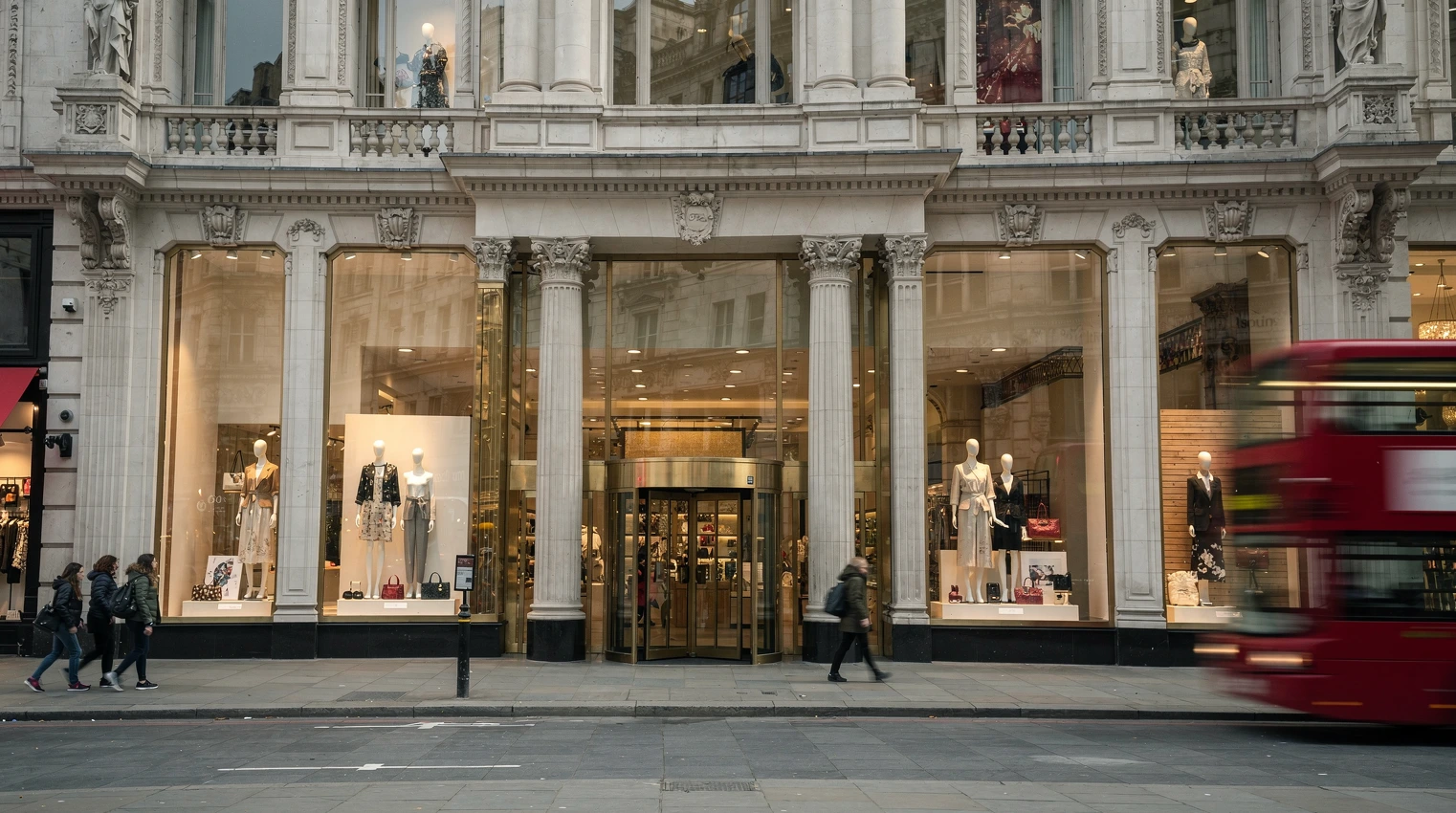
The chief executive of Selfridges Group has called for Sunday trading hours in England and Wales to be extended by two or three hours, reopening a debate that has defeated two governments and one chancellor since the current law was written in 1994. André Maeder told The Sunday Times that the Oxford Street flagship would benefit significantly from a longer Sunday, and that he would prefer to trade from 11am to 7pm rather than the six-hour window the law currently allows. His comments were echoed by Ewan Venters, executive chairman of Paul Smith and a former chief executive of Fortnum & Mason, who described the current rules as “antiquated” and suggested the whole of the UK could move to Scotland’s unrestricted model. Business Matters reported the intervention on Sunday 13 September, a day after the original interview appeared.
The timing matters for anyone running a shop. The Sunday Trading Act 1994 is the single piece of legislation that still decides when a large store may take money on the busiest leisure day of the week, and every serious attempt to loosen it (the 2012 Olympic suspension, George Osborne’s 2016 devolution plan, the 2020 pandemic proposal) either expired or collapsed in Parliament. Two department store leaders speaking out in the same week does not change the law. It does put the question back in front of ministers seven weeks before the Autumn Budget, at a moment when big-format retailers are counting the cost of higher employment taxes and the loss of tax-free shopping for tourists.
In short
- Selfridges Group chief executive André Maeder wants Sunday trading hours in England and Wales extended by two to three hours, telling The Sunday Times he would prefer his Oxford Street store to trade from 11am to 7pm; today it can open for browsing at 11.30am but cannot ring up a sale until 12pm.
- Paul Smith executive chairman Ewan Venters backed the call, describing the current regime as “antiquated” and suggesting a “common model” across the UK based on Scotland, which has no Sunday trading restrictions.
- The Sunday Trading Act 1994 limits shops over 280 square metres (3,000 square feet) in England and Wales to six continuous hours between 10am and 6pm; small shops face no restriction, and large stores must close on Easter Sunday and Christmas Day.
- Every reform attempt has failed: MPs voted 317 to 286 on 9 March 2016 to strip devolution powers out of the Enterprise Bill, and a 2020 plan to suspend the rules for a year was dropped after more than 50 Conservative backbenchers objected.
- Independent shops are the swing vote: the six-hour cap is the one legal advantage a small high street shop holds over a supermarket, and the Association of Convenience Stores and the shop workers’ union Usdaw have opposed every extension to date.
What did the Selfridges and Paul Smith bosses actually say?
Maeder’s argument, as reported by The Sunday Times and Business Matters, rests on a simple observation about when people have time to shop. “I really think even two hours more would really help, because this is the day that everybody has time,” he said. He was careful to frame the request as modest by international standards, noting that in Germany, where he ran Kaufhaus des Westens, and in his native Switzerland, large stores cannot open on a Sunday at all. “I’m happy with the solution here,” he said, before adding that the current arrangement produces an odd spectacle on Oxford Street each week.
That spectacle is the half hour between 11.30am and noon. Selfridges opens its doors for browsing at 11.30am on a Sunday, but under the Act the tills cannot operate until 12pm. “We open the store at 11.30am, but you can’t buy. It’s a little bit crazy,” Maeder said. He also addressed the staffing objection head on, saying Sunday shifts were “quite loved” by Selfridges staff and that “we’re pushing nobody to work on a Sunday”.
Venters supplied the more colourful evidence. Recalling his time running Fortnum & Mason, he described Christmas trading under the current law: “We would literally let people fill trolleys of food. And we’d even scan the items in the few minutes before 12pm, then wait for 12pm to push pay. It is all antiquated.” He acknowledged the original purpose of the compromise, which he said “was born out of a point of view that if you are starting to ask people to work on a Sunday, you should also respect that, as a Christian country, people should be allowed time to go to church and be with their family. But of course life has changed a lot.”
Both executives are speaking for businesses in the middle of a reinvention rather than from a position of strength. Selfridges has been hit by the removal of VAT-free shopping for tourists, a policy Maeder called “this crazy decision” and one the Mulberry chief executive has also asked ministers to reverse. Paul Smith, according to Venters, now has a wholesale business “one third of what it once was”, and TheBusinessDesk reported in March that the brand had slipped to a £10.8 million operating loss (about USD 14.6 million at current rates of roughly 1.35) as wholesale demand weakened.
What does the Sunday Trading Act 1994 actually allow?
The Act, which came into force in July 1994 under John Major’s government after years of parliamentary argument, draws a single line through the retail sector at 280 square metres of relevant floor area. Shops above that threshold are “large shops” and may open on a Sunday for a maximum of six continuous hours, all of which must fall between 10am and 6pm. Shops at or below the threshold can open whenever they like. The full text is on the legislation.gov.uk page for the Sunday Trading Act 1994.
Three further rules sit around the six-hour window. Large shops must close entirely on Easter Sunday. Since the Christmas Day (Trading) Act 2004, they must also close on Christmas Day whatever day of the week it falls. And a large shop has to notify its local authority of the continuous six-hour period it intends to use, which is why most large stores in England and Wales settle on either 10am to 4pm, 11am to 5pm or 12pm to 6pm and rarely deviate. Selfridges has chosen the latest slot available, which is what produces the 11.30am browsing-only half hour Maeder described.
The law applies only in England and Wales. Scotland has never had statutory Sunday trading hours for shops, which is the model Venters pointed to. Northern Ireland is more restrictive: large shops there may open only between 1pm and 6pm on a Sunday, with limited exemptions for holiday resorts, airports, railway stations and petrol stations, according to the shop workers’ union Usdaw.
Which shops are exempt from the six-hour rule?
The Act carves out a short list of large-shop exemptions. They include farm shops selling mainly their own produce, shops whose trade is wholly or mainly the sale of alcohol, registered pharmacies selling only medicinal products and appliances, shops at airports, railway stations and motorway service areas, and petrol filling stations. Everything else above 280 square metres, from a Tesco Extra to a John Lewis, sits inside the window.
What protections do shop workers have?
Alongside the trading hours, the 1994 settlement gave shop workers in England and Wales a statutory right to opt out of Sunday working by giving their employer written notice, with protection against dismissal or detriment for doing so. The standard notice period is three months. The one time Parliament suspended the trading rules, for the 2012 Olympic and Paralympic Games, it also temporarily cut that notice period to two months so that staff could opt out faster. Those employment protections are separate from the trading hours themselves, which is why the 2016 reform package tried to strengthen them at the same time as loosening the hours, and why the union objection has never gone away. Shops are already absorbing a wider set of workplace changes this autumn, including the Employment Rights Act changes landing on 1 October, so any Sunday reform would land on top of an already crowded compliance calendar.
| Jurisdiction | Large-shop Sunday rule | Small-shop rule | Notes |
|---|---|---|---|
| England and Wales | Six continuous hours between 10am and 6pm; closed Easter Sunday and Christmas Day | No restriction | Threshold 280 sq m (3,000 sq ft); Sunday Trading Act 1994 |
| Scotland | No statutory restriction | No restriction | Model cited by Ewan Venters as a “common model” for the UK |
| Northern Ireland | 1pm to 6pm | No restriction | Belfast City Council ran a pilot extension from May 2025 and consulted again in 2026 |
| Germany | Generally closed on Sundays, limited exceptions | Generally closed | Maeder ran KaDeWe in Berlin under these rules |
| Switzerland | Generally closed on Sundays, limited exceptions | Generally closed | Maeder’s home market; “you cannot open on a Sunday” |
Why has every attempt to change the law failed?
The 1994 Act was itself a compromise reached after the Thatcher government lost a vote on full deregulation in 1986, and the coalition of interests that produced it has held ever since. Church groups, the shop workers’ union, small-shop trade bodies and a cross-party group of MPs have lined up against each subsequent attempt, while the case for change has been carried by large retailers and, at various points, the Treasury. The pattern is consistent enough to be predictive.
2012: the Olympic suspension
The Sunday Trading (London Olympic Games and Paralympic Games) Act 2012 suspended the six-hour limit for eight Sundays, from 22 July to 9 September 2012. It was sold as a one-off to serve visitors and was explicitly time-limited. The Association of Convenience Stores later published analysis arguing that convenience stores closest to supermarkets lost sales during those eight weeks compared with the same period in prior years, and that evidence has been cited in every debate since.
2015 to 2016: Osborne’s devolution plan
George Osborne, then chancellor, proposed handing the power to extend Sunday hours to local councils and elected mayors. The government consulted from 5 August to 16 September 2015, received more than 7,000 responses, and published its response on 9 February 2016 confirming it would legislate through the Enterprise Bill, with strengthened opt-out rights for staff. On 9 March 2016 the House of Commons voted 317 to 286 to remove the provisions from the bill, a rare defeat for the government on the floor of the House. The Scottish National Party voted against the measure even though it applied only in England and Wales; without Scotland’s 59 MPs, the government would have won by 21. The official consultation page now carries a one-line epitaph: “Government has no plans to take forward reform of Sunday trading at this stage.”
2020: the pandemic proposal
In June 2020 the government considered suspending Sunday trading rules for a year to help the high street recover from lockdown. Seven Conservative MPs, including Fiona Bruce, William Wragg and Bob Blackman, wrote to the Prime Minister warning that “over 50 MPs, from a range of intakes” opposed the idea, and the measure was left out of the Business and Planning Bill when it reached Parliament. The objection then was that small shops had been a lifeline during the outbreak and that longer supermarket hours would divert trade away from them.
| Year | Proposal | Who drove it | Outcome |
|---|---|---|---|
| 1986 | Full deregulation (Shops Bill) | Thatcher government | Defeated at second reading |
| 1994 | Six-hour window for large shops | Major government | Enacted; in force July 1994 |
| 2012 | Eight-Sunday suspension for the Olympics | Osborne, Treasury | Enacted, expired 9 September 2012 |
| 2016 | Devolve hours to councils and mayors | Osborne, via Enterprise Bill | Commons defeat 317 to 286 on 9 March 2016 |
| 2020 | One-year suspension for Covid recovery | Johnson government | Dropped after 50-plus backbench objections |
| 2025 to 2026 | Belfast pilot extension and consultation | Belfast City Council | Pilot ran from May 2025; 2026 consultation closed 14 May |
| 2026 | Two to three extra hours in England and Wales | Selfridges, Paul Smith (public call) | No government response reported |
Who benefits from a longer Sunday and who loses?
The economics of the Sunday cap are unusually well documented, because the Office for National Statistics published a retrospective on the twentieth anniversary of the Act. Between 1994 and 2015 the number of people working on Sundays rose from 2.1 million (8.5 per cent of the workforce) to 5.2 million (16.7 per cent), and the share of Sunday workers in sales occupations almost doubled from 6.8 per cent to 12.6 per cent. Retail sales grew 3.9 per cent in the year after implementation, 5.6 per cent in 1996 and 6.4 per cent in 1997, although the ONS was explicit that the data “does not confirm that Sunday trading has been responsible” for those increases.
For a flagship such as Selfridges the case is straightforward. A destination store with rising footfall (Maeder said it has increased for four consecutive years) loses the first and last hour of its natural Sunday trading day to the statute. Two extra hours on the busiest leisure day, across a store of that size, is real money, and the marginal cost of staffing them is lower than the marginal revenue. The same logic applies to every large-format store on a major high street or in a shopping centre.
For a shop under 280 square metres the calculation runs the other way. The six-hour cap is the one legal advantage a small shop holds over a supermarket or a department store, and it is worth most in the early Sunday morning, when convenience stores, bakeries and newsagents trade without competition from the large formats. That is why the Association of Convenience Stores described devolution to mayors in 2016 as “a hammer blow to our sector”, and why its 2012 Olympic analysis remains its central exhibit. The sector’s cost pressures have not eased since: the ACS Local Shop Report 2026 found that business rates bills have doubled for many local shops while investment has stalled, which leaves little appetite for surrendering a protected trading window.
There is a complication in that argument, and Business Matters flagged it. The rules were sold as protection for small shops against the big grocers, but the big grocers now operate thousands of their own convenience stores below the 280 square metre line, all of which trade on a Sunday without restriction. A Tesco Express or a Sainsbury’s Local enjoys the same early-morning window as an independent, which weakens the claim that the cap shields independents from the multiples specifically.
What the unions say
Usdaw, the shop workers’ union, runs a standing “Keep Sunday Special” campaign and opposes any extension beyond six hours. Its former general secretary Paddy Lillis said in July 2025 that “our members remain totally opposed to extending Sunday trading hours. Longer Sunday trading will take a heavy toll on staff who will come under even more pressure to work.” The current general secretary, Joanne Thomas, repeated the position in 2026 in the Northern Ireland debate, arguing that extended hours would not create jobs or economic benefit and would harm smaller retailers that rely on Sunday morning trade.
What is happening in Belfast, and why does it matter for England?
The most recent live test of the Sunday question has been in Northern Ireland rather than Westminster. Belfast City Council forced through a pilot scheme in May 2025 that extended trading hours for larger shops on a Sunday, and in March 2026 it opened a fresh consultation on a more permanent extension, which closed on 14 May 2026. Usdaw called the consultation “an unwelcome distraction”, and Thomas noted the council had reviewed the issue “in 2024, 2020, 2017 and numerous times before that”.
The evidence fight in Belfast is instructive because both sides are using surveys of the same workers. Usdaw surveyed more than 200 members and reported that 82 per cent viewed extended Sunday trading as negative, with 76 per cent of working parents and carers saying it would harm their family life. The council rejected that figure, pointing out that only 109 of the respondents were from Belfast, and said its own public consultation found retail workers split almost 50:50. Retail NI’s chief executive Glyn Roberts sided with the union, saying that to “completely deregulate Sunday trading and create another normal shopping day shows a poverty of ambition” and that the proposal would give “large multinationals even more trading time, directly at the expense of small independent retailers”.
For England, Belfast is a rehearsal. The 2016 plan would have devolved exactly this decision to English councils and combined-authority mayors, and the current government has already shown a willingness to hand mayors new economic levers; the recent confirmation of mayoral tourist-tax powers is the most direct precedent. If ministers wanted to test the Selfridges proposal without a national vote, a mayoral pilot on the Belfast model is the obvious route, and the reaction of independent traders in Belfast is a reasonable guide to how one in Manchester or Birmingham would be received.
Why are department stores raising this now?
The Sunday plea is one item on a longer list of asks from large-format retailers that have absorbed several policy hits in quick succession. The end of VAT-free shopping for overseas visitors, which took effect when the UK left the EU single market at the start of 2021 under Rishi Sunak as chancellor, removed a draw that Selfridges, Harrods and the Bond Street houses had used to compete with Paris and Milan. Maeder was blunt: “It’s not only luxury. This is harming retail, hotels, taxi drivers, airports, everybody.” Higher employer National Insurance and energy costs have since compounded the pressure.
The department store format itself is under strain. Business Matters noted that Frasers Group bought Harvey Nichols in August, continuing a consolidation that Venters said had squeezed his wholesale margins because “as the consolidation happens, the bigger guys then expect bigger discounts”. Across town, John Lewis Partnership’s first-half loss doubled to £89 million (about USD 120 million) on the same combination of cost inflation and soft big-ticket demand, with the department store arm the weak link. Two extra Sunday hours will not fix any of that, but they are a rare ask that costs the Treasury nothing.
Maeder’s stated strategy is to turn the Oxford Street store into an “experiential” destination with more pop-ups, brand collaborations and hospitality, aimed at Londoners rather than the tourists now shopping in Paris or Milan. That model is time-hungry: restaurants, events and residencies fill hours that a pure product floor does not, and Sunday is when Londoners have those hours. It also explains why the request is for later closing (7pm) rather than earlier opening. The shift towards concessions and brand residencies, which we examined in our piece on concession models on department store floors, means a longer Sunday is now shared between the landlord and dozens of brand partners rather than borne by the store alone.
Ownership adds a further dimension. Selfridges was owned by the Weston family until 2022, when it was sold to Thailand’s Central Group and Austria’s Signa Holding. Signa collapsed into financial crisis in 2023 as rising interest rates pressed on its debts, and its stake passed to Saudi Arabia’s Public Investment Fund, which now runs the store alongside Central. Both are investors used to markets where Sunday is an ordinary trading day, and both will be measuring the London flagship against peers that trade seven full days.
What would it take to change the law?
Any extension of the six-hour window requires primary legislation, because the hours are written into the 1994 Act rather than set by regulation. That means a bill or an amendment to a bill, a Commons majority, and passage through the Lords. The 2012 suspension needed its own Act. The 2016 attempt piggybacked on the Enterprise Bill and was voted down. A future government could in theory use a wider retail or high streets bill as the vehicle, but it would have to be confident of surviving a free-vote style rebellion, because Sunday trading has never divided cleanly on party lines.
Three things would need to be true for a change to pass. Ministers would have to want it enough to spend political capital on a measure that unites church groups, the union movement and the small-shop lobby against them. The proposal would probably have to be devolved rather than national, so that MPs in areas with strong Sunday-observance traditions could vote for a local opt-in without imposing it on their own constituents. And it would need to arrive packaged with stronger worker protections than the 1994 settlement, as the 2016 plan tried to do, to peel off some Labour and union opposition.
None of those conditions is visible today. No government response to the Selfridges and Paul Smith comments had been reported by Business Matters at the time of writing, and the Autumn Budget on 28 October is already carrying heavy expectations from small businesses on business rates and VAT thresholds. A measure that would be read as helping Oxford Street at the expense of the local parade is an unlikely addition to that list.
The more plausible path is the one Osborne tried: give the decision to mayors and councils. It has three advantages for a minister. It avoids a single national vote on the principle. It allows a London-only or city-centre-only extension that answers the Selfridges case without touching a market town. And it can be presented as local growth policy rather than deregulation. Its disadvantage is that it failed in 2016 precisely because MPs recognised that “local choice” would in practice mean every large council relaxing the rules under competitive pressure from its neighbours.
What should shop owners and shoppers do now?
For a large store in England and Wales, nothing changes this year. The six-hour window stands, the Easter and Christmas closures stand, and the notification to the local authority stands. Retailers that want to lobby have two channels: their trade body (the British Retail Consortium for the large chains, the New West End Company for central London) and the Budget representations process, which closes in the weeks before 28 October. Any store planning Christmas 2026 rotas should plan on the current law.
For an independent under 280 square metres, the practical takeaway is to protect and exploit the window that exists. Sunday morning before noon is the only period in the week when a small shop on a high street with a large-format neighbour trades without direct competition from it. That is worth advertising locally, worth stocking for, and worth defending if the local council or mayor starts talking about a pilot. Belfast shows that pilots can be forced through by a council without national legislation in Northern Ireland; in England they cannot, which is the independent sector’s strongest protection.
For shoppers, the Selfridges observation is the useful one: if a large store appears open on a Sunday morning, it may be browsing only, and the tills will not run before the six-hour window begins. Checking a store’s declared Sunday hours (most publish them, and they are notified to the council) avoids the trolley-at-the-till wait Venters described.
What happens next?
The immediate test is whether any minister or shadow minister picks up the Selfridges and Paul Smith call in the run-up to the Budget. The second is whether Belfast City Council moves from pilot to permanent extension following its 2026 consultation, which would give proponents in England a working example on UK soil. The third is whether the large-format lobby organises: a single Sunday Times interview is a marker, not a campaign, and the 2016 effort had the Treasury behind it and still lost.
The structural facts favour the status quo. The 1994 settlement has survived a Conservative chancellor with a majority, a one-off Olympic suspension that expired on schedule, and a pandemic emergency. Its defenders are organised, its opponents are episodic, and the demand for a longer Sunday is concentrated in a small number of very large stores. Maeder and Venters have made the clearest case for change in a decade. The history suggests they will need a great deal more than clarity.
FAQ: Sunday trading hours in the UK
What are the Sunday trading hours for large shops in England and Wales?
Under the Sunday Trading Act 1994, shops with a relevant floor area over 280 square metres (3,000 square feet) may open for a maximum of six continuous hours between 10am and 6pm on a Sunday. Most choose 10am to 4pm, 11am to 5pm or 12pm to 6pm. Large shops must close on Easter Sunday and, under the Christmas Day (Trading) Act 2004, on Christmas Day.
Do small shops have Sunday trading restrictions?
No. Shops with a relevant floor area of 280 square metres or less can open for as long as they wish on a Sunday in England and Wales. The same applies to certain exempt large shops, including farm shops, registered pharmacies selling only medicines, shops at airports, railway stations and motorway service areas, and petrol filling stations.
What is Selfridges asking for?
Selfridges Group chief executive André Maeder told The Sunday Times he would like Sunday trading hours extended by two or three hours, and that he would prefer the Oxford Street store to trade from 11am to 7pm. The store currently opens for browsing at 11.30am but cannot make sales until 12pm under the six-hour window.
Why is Sunday trading different in Scotland?
Scotland has never had statutory Sunday trading hours for shops; the 1994 Act applies only in England and Wales. Paul Smith executive chairman Ewan Venters cited Scotland as a “common model” that could apply across the UK. Northern Ireland is more restrictive, allowing large shops to open only between 1pm and 6pm.
Has the government tried to relax Sunday trading before?
Yes, three times since 1994. The rules were suspended for eight Sundays during the 2012 Olympics. In 2016 George Osborne’s plan to devolve hours to councils and mayors was defeated in the Commons by 317 votes to 286. In 2020 a proposal to suspend the rules for a year during the pandemic was dropped after more than 50 Conservative MPs objected.
Can shop workers refuse to work on Sundays?
Shop workers in England and Wales have a statutory right to opt out of Sunday working by giving their employer written notice, normally three months, and are protected from dismissal or detriment for doing so. The 2012 Olympic legislation temporarily cut the notice period to two months. Strengthening these rights was part of the 2016 reform package.
Who opposes extending Sunday trading hours?
The shop workers’ union Usdaw runs a standing “Keep Sunday Special” campaign against any extension. The Association of Convenience Stores opposes changes that would erode the advantage small shops hold on Sunday mornings, and church groups and a cross-party group of MPs have voted against reform in the past. In Northern Ireland, Retail NI has also opposed Belfast’s extension.
Would longer Sunday hours need a new law?
Yes. The six-hour window is written into the Sunday Trading Act 1994, so any extension requires primary legislation passed by both Houses of Parliament. The 2012 suspension needed its own Act, and the 2016 attempt was an amendment to the Enterprise Bill. No such bill has been announced.
What does the Sunday trading debate mean for independent shops?
The six-hour cap gives shops under 280 square metres an exclusive trading window on Sunday mornings, when large stores cannot open their tills. Independent trade bodies argue that any extension would hand that trade to supermarkets and department stores. For now the law is unchanged, and small shops can continue to plan around the protected window.