
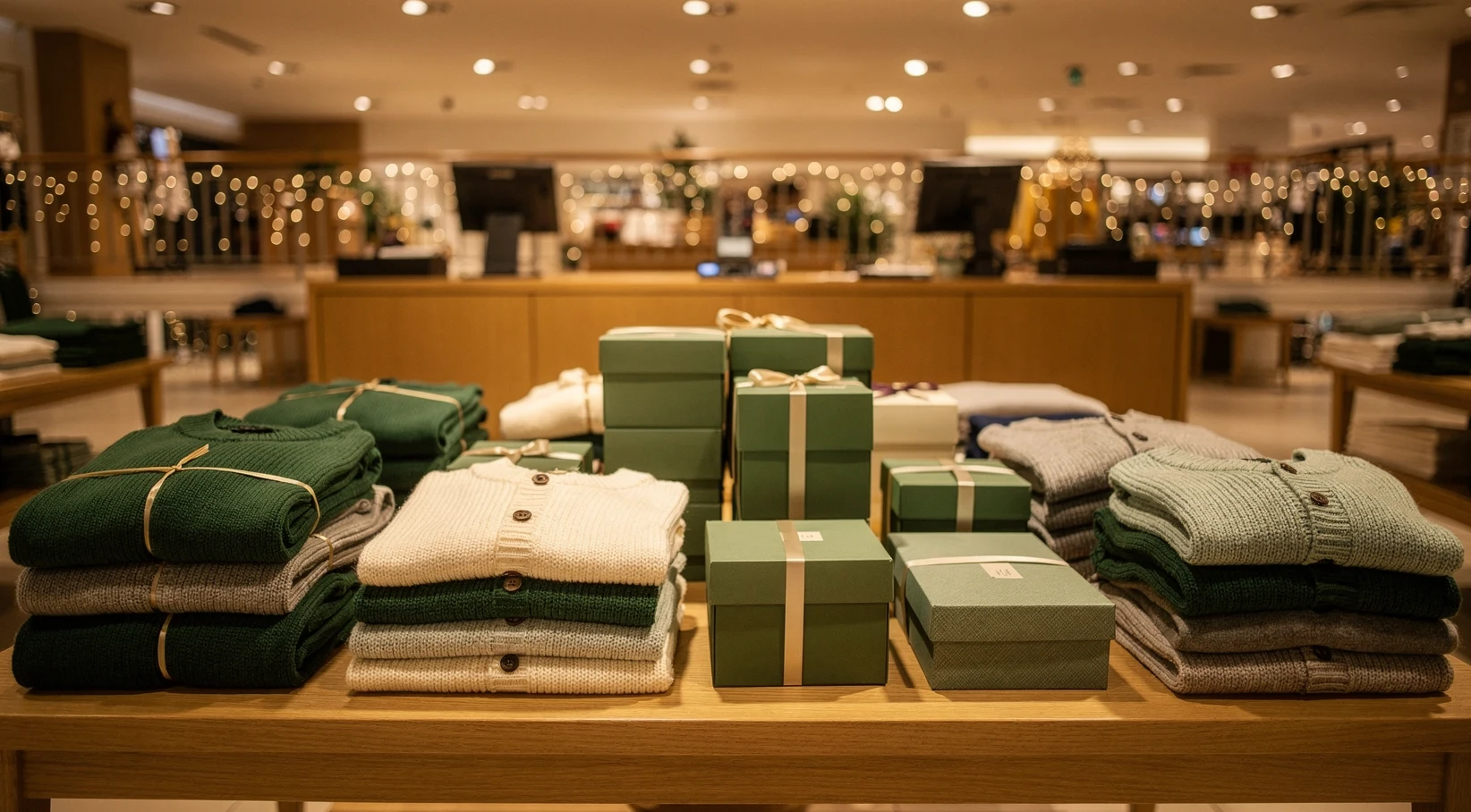
The John Lewis Partnership has opened its Christmas 2026 recruitment with 10,400 seasonal roles across Waitrose, John Lewis and its supply chain, according to a company statement issued on 7 September. The figure is the first major seasonal hiring call from a UK retailer this year, and it is a quarter smaller than the 13,700 roles the Partnership advertised for Christmas 2025, which it billed at the time as its biggest ever festive recruitment drive.
Pay for the temporary roles starts at £13.00 an hour outside London and £14.55 in the capital, stepping up to £13.25 and £14.80 after 30 days, per the company statement. At roughly USD 1.35 to the pound (the rate on 13 September), that is about USD 17.60 to USD 20.00 an hour. Applications open at jlpjobs.com this month, with the roles running through Black Friday on 27 November, Christmas and the January clearance.
The announcement matters beyond the Partnership’s own shop floors. John Lewis and Waitrose set the reference point that thousands of smaller UK retailers use when they price their own seasonal staff, and the size of the call is one of the earliest hard signals of how the country’s best-known department store group expects the golden quarter to trade. Both signals point the same way this year: a cautious Christmas, priced to hold rather than to expand.
In short
- 10,400 seasonal roles: 6,000 at Waitrose across 320 branches, 2,600 at John Lewis across 36 shops, and 1,800 in distribution centres and the supply chain, per the 7 September company statement.
- Down 24% on 2025: the Partnership advertised 13,700 roles last September and 12,500 in October 2024, so this is the first year-on-year cut since the post-pandemic rebuild.
- Pay of £13.00 to £14.80: £13.00 outside London and £14.55 inside, rising to £13.25 and £14.80 after 30 days; the London step-up matches the real Living Wage exactly.
- Youth framing: roughly three quarters of last year’s seasonal joiners were under 25, and 100 roles are ring-fenced for care-experienced young people through the Building Happier Futures programme.
- What it signals: a smaller call from a group that has just reported a half-year loss, at a time when the Partnership says festive searches on its own site are running three weeks ahead of 2025.
What did the John Lewis Partnership announce on 7 September?
The Partnership’s statement, published on its media centre on Monday 7 September, set out 10,400 temporary positions to be filled for the festive period. The roles are split three ways. Waitrose takes the largest share with 6,000 positions across its 320 supermarkets and convenience branches. John Lewis takes 2,600 across its 36 department stores. A further 1,800 sit in the distribution centres and supply chain network that feeds both brands.
The company describes the coverage as nationwide, from Edinburgh to Exeter, and says the roles span both shop floor and back-of-house work. Successful candidates are promised training and what the statement calls flexible and blended working options. Vacancies go live on the Partnership’s careers site, jlpjobs.com, during September, according to the statement, with trade press including Drapers and The Grocer reporting the same timing.
Helen Webb, the Partnership’s chief people officer, framed the drive around career entry rather than headcount. “Our seasonal roles are more than just a job for the festive period; for many, they are a catalyst for building confidence and kickstarting a long-term career,” she said in the statement, adding that the group sees retail as “a vital stepping stone for young people entering the workforce”.
The statement also set the recruitment against the Partnership’s recent capital spending, citing £1bn invested at Waitrose and £800m at John Lewis in shops and technology. That framing is deliberate: the group wants the smaller seasonal call read as a productivity story, with better-equipped stores needing fewer temporary hands, rather than as a retreat.
How does 10,400 compare with the last three Christmases?
The Partnership’s seasonal hiring has been on a clear upward path since 2023, which makes this year’s figure the first reversal. In August 2023 it advertised more than 10,000 festive roles, according to Retail Gazette reporting from the time. In October 2024 it lifted that to 12,500, which City AM reported as an increase of 4,100 on the comparable point the year before. In September 2025 it went to 13,700 and called the drive its biggest ever.
This year’s 10,400 therefore takes the Partnership back below its 2024 level and roughly to where it stood in 2023. The table below sets the four years side by side using the figures each announcement gave at the time.
| Christmas | Total seasonal roles | Waitrose | John Lewis | Supply chain | Change on prior year |
|---|---|---|---|---|---|
| 2023 | 10,000+ (August plan) | n/a | n/a | n/a | n/a |
| 2024 | 12,500 | 7,700 (300+ shops) | 2,000 (34 stores) | 2,800 | +4,100 per City AM |
| 2025 | 13,700 | 8,500 (315 shops) | 3,000 (35 stores) | c.2,200 | +1,200 (+9.6%) |
| 2026 | 10,400 | 6,000 (320 shops) | 2,600 (36 stores) | 1,800 | -3,300 (-24.1%) |
Sources: John Lewis Partnership statements as reported by Retail Gazette, City AM and Drapers. The 2023 breakdown was not published in the same form.
Where the cut falls: Waitrose carries most of it
The reduction is not spread evenly. Waitrose is advertising 2,500 fewer seasonal roles than last year, a fall of 29%, even though its branch count in the announcement has risen from 315 to 320. John Lewis is down 400 roles, or 13%, while adding one store to reach 36. The supply chain figure has fallen by about 400, or 18%.
That pattern is consistent with a grocer that has spent heavily on store automation and on online fulfilment, and with a department store business that has already trimmed its estate to the shops it intends to keep. It is also consistent with a Partnership that reported Waitrose sales up and John Lewis sales down in its most recent half, and which has more room to absorb Christmas volume in supermarkets it has just refitted than in department stores it is still trying to turn.
Why the estate grew while the headcount shrank
Both brands are hiring for more shops than a year ago but for fewer people. Part of that is planning assumptions: the 2025 figure was set against a stated expectation of 30 million store visits and 180 million online visits over the peak, per Retail Gazette, in a year when the Partnership was leaning into expansion. Part of it is the investment programme the company keeps citing. Self-checkout, electronic shelf labelling and reorganised back-of-house in refitted Waitrose branches all reduce the number of temporary shifts a store needs to get through December.
The Partnership has not published a per-store or per-hour productivity figure to support that reading, so the link between the refits and the smaller call remains its own account rather than a verifiable metric. What can be measured is the headline: 3,300 fewer seasonal jobs across the UK from one of its largest private-sector Christmas employers.
How many seasonal staff per store does that mean?
Dividing the announced roles by the number of shops each announcement cited gives a rough measure of how much extra labour each branch will actually see, and it sharpens the picture of where the cut lands. At Waitrose, 6,000 roles across 320 branches works out at about 19 seasonal staff per shop, against roughly 27 per shop in 2025 (8,500 across 315) and about 26 in 2024 (7,700 across a stated 300-plus). The average Waitrose branch is therefore recruiting around eight fewer temporary colleagues this Christmas than last.
At John Lewis the per-store figure is 2,600 across 36 shops, or about 72 seasonal staff per department store. That compares with roughly 86 per store in 2025 (3,000 across 35) and about 59 in 2024 (2,000 across 34). On this measure John Lewis is not back to its 2024 intensity; it sits between the two prior years, which is consistent with a store estate that has stabilised and is being staffed to a steadier plan rather than a growth plan.
The supply chain figure cannot be broken down the same way because the Partnership does not publish a site count for its distribution network. What the sequence shows is a supply chain call that peaked in 2024 at 2,800, eased to around 2,200 in 2025 and now stands at 1,800. That is the steepest two-year decline of the three divisions, and it lines up with the automation investment the Partnership has cited repeatedly at its fulfilment centres.
These are averages across very different shops. A flagship John Lewis in Oxford Street or a large Waitrose in a commuter town will take far more than the mean, and a small Waitrose convenience branch will take a handful. The per-store arithmetic is useful as a direction of travel rather than as a forecast for any one branch, and the Partnership has not published a branch-level breakdown.
What do the roles pay, and how does that sit against the legal minimum?
The pay rates are the most useful part of the announcement for anyone else hiring this autumn, because they give a public benchmark from a large, employee-owned employer that most UK shoppers recognise. The Partnership’s starting rate is £13.00 an hour outside London and £14.55 inside. Both rise after 30 days of service, to £13.25 and £14.80 respectively.
Set against the statutory floor, the starting rate is 29p above the National Living Wage of £12.71 an hour that has applied to workers aged 21 and over since 1 April 2026. It is well above the 18 to 20 rate of £10.85 and the 16 to 17 and apprentice rate of £8.00, which matters because the Partnership says around three quarters of its seasonal joiners last year were under 25.
| Rate | Outside London | London | Who sets it | Status |
|---|---|---|---|---|
| JLP seasonal, day one | £13.00 | £14.55 | John Lewis Partnership | Company statement, 7 Sep 2026 |
| JLP seasonal, after 30 days | £13.25 | £14.80 | John Lewis Partnership | Company statement, 7 Sep 2026 |
| National Living Wage (21+) | £12.71 | £12.71 | UK government | Legal minimum from 1 Apr 2026 |
| National Minimum Wage (18 to 20) | £10.85 | £10.85 | UK government | Legal minimum from 1 Apr 2026 |
| Real Living Wage | £13.45 | £14.80 | Living Wage Foundation | Voluntary, announced Oct 2025 |
Sources: John Lewis Partnership statement; gov.uk minimum wage rates; Living Wage Foundation. USD equivalents at USD 1.35 to the pound: £13.00 is about USD 17.60, £14.80 about USD 20.00.
The 30-day step-up and the London Living Wage match
Two details in the pay structure stand out. The first is the 30-day step, which is a retention device: a temporary worker who joins in early October and stays through Black Friday will be on the higher rate for the busiest weeks, and the Partnership can advertise the higher number without paying it to anyone who leaves in the first month. The second is that the London rate after 30 days, £14.80, is exactly the real Living Wage for London set by the Living Wage Foundation in October 2025.
Outside London the match does not hold. The post-30-day rate of £13.25 sits 20p below the £13.45 real Living Wage for the rest of the UK, although 54p above the statutory floor. The Living Wage Foundation is due to announce new rates in late October, at which point the gap will widen unless the Partnership adjusts. The Partnership is not an accredited Living Wage employer, so it carries no obligation to do so.
Why is the Partnership hiring fewer people this Christmas?
The statement does not say the call is smaller, let alone why. The context, however, was set only days later when the Partnership published its half-year results, which showed the loss before exceptional items doubling to £89m, with John Lewis sales down 2% and Waitrose up 4%. The group guided cautiously on the second half and reiterated a £600m investment programme rather than announcing new spending.
A department store business whose sales are shrinking has less reason to staff up for December than one whose sales are growing, and a Partnership that is loss-making at the half-year point has a stronger incentive to protect the margin on its most important quarter. Seasonal labour is one of the few large cost lines a retailer can flex at short notice, and the Partnership has flexed it down.
There is a second reading, which the company itself prefers. The £1.8bn of combined investment cited in the statement has gone into shops and systems that, on the Partnership’s account, need fewer temporary hands to deliver the same service. If that is right, a smaller call is a sign of a more efficient business, not a weaker one. The two readings are not mutually exclusive, and the half-year numbers suggest both are in play.
What the announcement does not do is cut permanent jobs. The 10,400 figure is entirely temporary, and the Partnership has made no statement on its permanent headcount alongside it. Anyone reading the reduction as a redundancy programme is reading too much into a seasonal figure.
What does the youth-jobs framing tell us?
The Partnership chose to lead its announcement not with the number but with who the roles are for. It says about 75% of last year’s seasonal joiners were under 25, and it has built a specific pathway for care-experienced young people: 100 guaranteed roles, 300 welcome visits and 250 job-shadowing placements through December, with a guaranteed interview for anyone who completes a shadowing placement. The scheme runs through its Building Happier Futures programme.
The timing is not accidental. According to Office for National Statistics figures cited by London Business News, the number of 16 to 24 year olds not in education, employment or training passed one million earlier in 2026 before easing to 981,000 in the April to June quarter, still around 30,000 higher than a year before. Retail remains the single largest first employer for that group, and a retailer that positions itself as the answer to youth unemployment buys goodwill with ministers at a time when it is also lobbying on business rates and employment costs.
For applicants, the practical implication is that the Partnership is not screening for retail experience. Its own account is that the roles are for people of all ages and backgrounds, and the care-experienced pathway makes clear that a first job is the target market. That is worth knowing for anyone who assumed a John Lewis or Waitrose seasonal role required prior shop-floor time.
What does it signal for Christmas 2026 trading?
The size of the seasonal call is one of the earliest tangible reads on how a large retailer expects the golden quarter to go, and this one says: cautiously. But it is not the only signal the Partnership has sent. It opened a waitlist for its advent calendars on 11 August and launched its online festive shop on 28 August, according to Retail Gazette, and it told TheIndustry.fashion that Christmas-related searches on its site were up 33% week on week, with festive interest emerging three weeks earlier than in 2025.
Those two data points cut against each other. Early demand and a smaller staffing call is the profile of a retailer that expects customers to start early and spread their spending, rather than a compressed December rush that needs bodies on the floor. It is also the profile of a grocer that expects a food-led Christmas: Waitrose is where the Partnership’s growth is, and food inflation, while easing, remains the constraint on how much of a shopper’s budget is left for the department store side.
The Food and Drink Federation’s forecast, published two days after the Partnership’s announcement, put UK food inflation at 3.9% by Christmas, down from the 9 to 10% it had warned of in April but still well ahead of the headline rate. For Waitrose that is a manageable tailwind on sales value. For John Lewis it is a reason to expect the non-food basket to stay tight.
The wider seasonal-hiring calendar will fill in over the next month. In a typical year, Tesco, Sainsbury’s, Amazon’s UK operation and Royal Mail publish their own festive recruitment figures between mid-September and mid-October. None had done so at the time of writing, which is why the Partnership’s number carries more weight than usual: it is the only large UK read available.
What should independent retailers take from the benchmark?
For the independent shops that make up most of the UK high street, the Partnership’s announcement is less a news item than a pricing sheet. A £13.00 starting rate in a market town where the local Waitrose is hiring at the same rate sets the floor a small shop will have to match, or explain, when it advertises for December help. The gap between that rate and the £12.71 legal minimum is only 29p, which tells small employers that the market is not paying a large premium above the floor this year.
That is some relief for a sector under cost pressure. A survey of 526 UK small businesses published on 11 September found that three in ten high street firms had considered closing in the past year, with VAT and wage costs as the top two pressures. Against that backdrop a large employer choosing not to push seasonal pay far above the minimum is a benchmark independents can live with.
Setting seasonal pay against a £13 anchor
The practical question for a small shop is not whether to match £13.00 but how to structure it. The Partnership’s 30-day step-up is a model that scales down well: a lower advertised rate for the first month, with a promised increase for staff who stay through the peak, reduces the cost of early leavers and rewards the workers a shop actually needs in the week before Christmas. It also gives an independent a way to advertise the higher number without paying it from day one.
The age-band arithmetic also matters. A 19-year-old seasonal worker can legally be paid £10.85 an hour, but the Partnership is paying £13.00 regardless of age. A small shop that advertises at the 18 to 20 rate will find its applicant pool drained by any large retailer nearby paying the adult rate to everyone. In practice the Partnership’s flat rate makes the age bands irrelevant for anyone competing with it for staff.
The October rule changes that land mid-recruitment
Whoever a shop hires this autumn will be on the books when the first tranche of the Employment Rights Act 2025 takes effect. From 1 October the time limit for bringing a tribunal claim extends from three months to six, and from 30 October employers take on a duty to take all reasonable steps to prevent harassment of staff, including harassment by customers. Seasonal staff are covered from day one. A small retailer taking on Christmas help for the first time in a year should treat those dates as part of the recruitment checklist, not as something to deal with in the new year.
How and when do you apply?
The Partnership’s statement directs applicants to its careers site, jlpjobs.com, where the Christmas roles are listed under a dedicated page. The statement says roles open in September; TheIndustry.fashion reports mid-September specifically. Vacancies are posted by branch, so a candidate applies to a specific Waitrose or John Lewis store rather than to the group, and the 1,800 supply chain roles are listed separately against distribution sites.
The roles run through the peak trading period, which the Partnership defines as the build-up to Black Friday (27 November this year), Christmas, and the January winter sale. Anyone starting in early October and staying through to the sale would be on the post-30-day rate for the entire high-volume stretch. The statement gives no fixed end date and does not say how many seasonal staff it typically converts to permanent roles, although Webb’s framing of the jobs as a career catalyst implies conversion is part of the pitch.
For care-experienced applicants, the route runs through the Building Happier Futures programme rather than the standard listing, with the welcome visits and shadowing placements offered through December and a guaranteed interview on completion. The Partnership has not said whether the 100 guaranteed roles sit inside or on top of the 10,400 total.
One timing point applies to every applicant: the recruitment overlaps with the Employment Rights Act changes landing on 1 October, which means seasonal staff hired for this Christmas start with a longer tribunal window and, from 30 October, a statutory harassment protection that last year’s cohort did not have. That is a change in the worker’s favour and one the Partnership will have priced in, given that the British Retail Consortium puts abuse of shop staff across the sector at around 1,600 incidents a day.
What should you watch next?
Three dates fill in the picture over the coming weeks. On 18 September the ONS publishes retail sales for August, and the August indicators already point to a slowdown, with the BRC-KPMG monitor showing non-food sales down and food carrying the growth. If that reading holds, the Partnership’s decision to weight its seasonal call toward Waitrose looks well judged.
In late October the Living Wage Foundation announces its new real Living Wage rates. The Partnership’s London step-up rate currently matches the London figure exactly; if the new rate moves up, as it has every year, the match breaks unless the Partnership adjusts mid-season. It has not committed to doing so.
On 28 October the Chancellor delivers the Autumn Budget. Retailers have been lobbying on business rates and on the employer National Insurance changes that took effect in April, and any measure that changes the cost of employing seasonal staff after that date will land in the middle of the peak. The Partnership’s cautious call gives it room to add hours if trading beats its plan; it gives it less room to cut if the Budget adds cost.
Finally, watch the other announcements. The Partnership’s 10,400 is a single data point until Tesco, Sainsbury’s, Amazon and Royal Mail publish theirs. If the pattern of smaller calls repeats across the sector, Christmas 2026 will have been priced as a defensive quarter by the industry as a whole. If the Partnership turns out to be the outlier, the story is specific to a group still working through its own turnaround.
Frequently asked questions
How many Christmas jobs is John Lewis offering in 2026?
The John Lewis Partnership announced 10,400 seasonal roles on 7 September 2026: 6,000 at Waitrose, 2,600 at John Lewis and 1,800 in its distribution centres and supply chain, per the company statement.
How much do John Lewis and Waitrose Christmas jobs pay?
Starting pay is £13.00 an hour outside London and £14.55 in London, rising to £13.25 and £14.80 after 30 days of service, according to the Partnership.
Is 10,400 more or fewer than last year?
Fewer. The Partnership advertised 13,700 seasonal roles for Christmas 2025 and 12,500 for Christmas 2024, so this year’s figure is down about 24% on 2025 and below the 2024 level.
When do applications open?
The Partnership says the roles open on jlpjobs.com during September 2026, with trade press reporting mid-September. Vacancies are listed by individual branch or distribution site.
Do you need retail experience?
The Partnership says the roles suit people of all ages and backgrounds, and around three quarters of last year’s seasonal joiners were under 25. It has a specific pathway for care-experienced young people with 100 guaranteed roles.
How does the pay compare with the National Living Wage?
The £13.00 starting rate is 29p above the £12.71 National Living Wage for workers aged 21 and over that has applied since 1 April 2026, and well above the £10.85 rate for 18 to 20 year olds.
Why is the Partnership hiring fewer seasonal staff?
The company has not given a reason. Its statement cites £1.8bn of investment in shops and technology, and its half-year results, published days later, showed a loss before exceptional items of £89m with John Lewis sales down 2%.
How long do the seasonal roles last?
The Partnership says they cover the build-up to Black Friday on 27 November, the Christmas period and the January winter sale. It has not published a fixed end date or a conversion rate to permanent roles.