
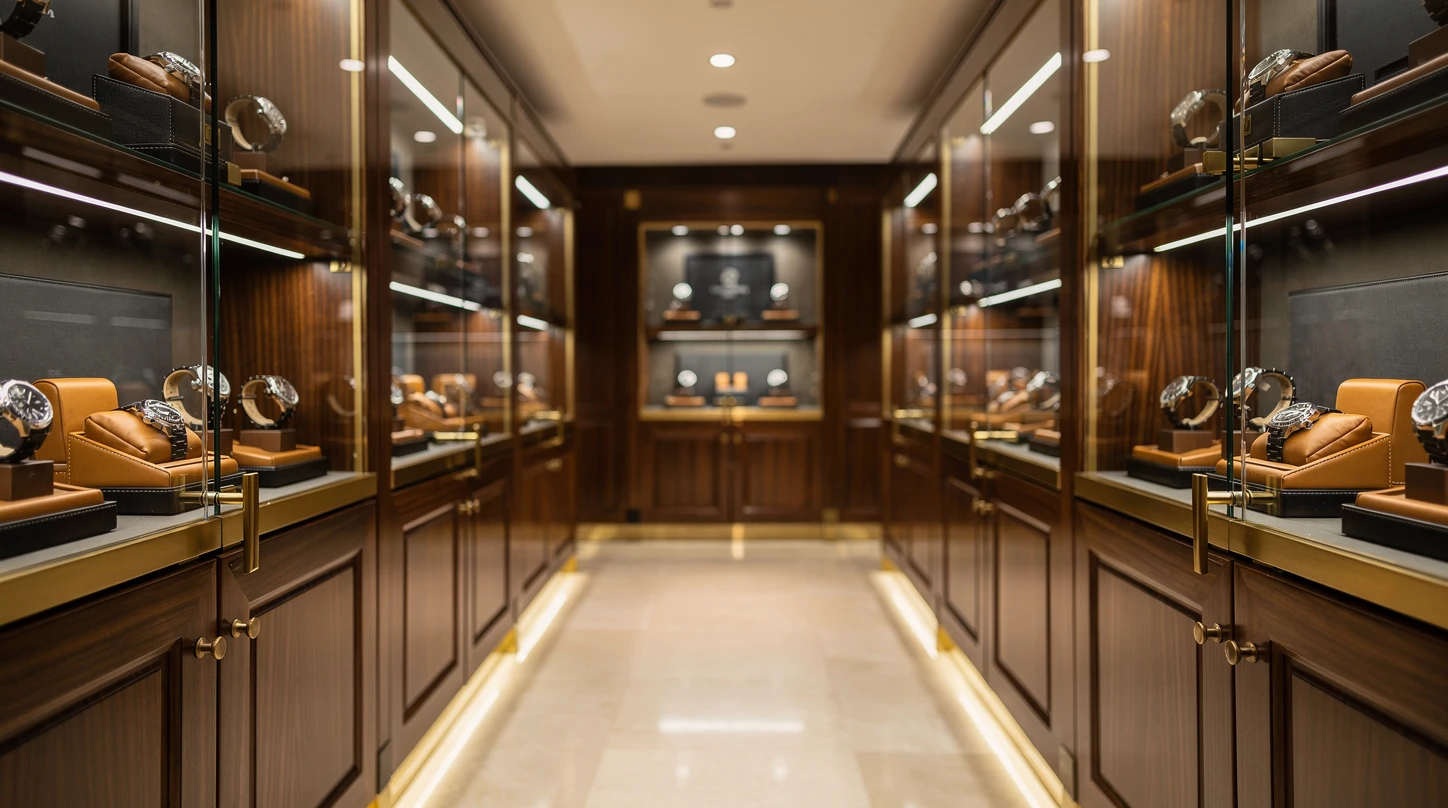
Watches of Switzerland Group, the London-listed luxury watch and jewellery retailer behind Mappin & Webb, Goldsmiths and a fast-growing chain of showrooms in the United States, reported record annual revenue on Tuesday and confirmed a milestone that has been years in the making: America is now its single largest market, ahead of the United Kingdom and Europe combined.
The audited results for the 53 weeks to 3 May 2026, released to the London market at 07:00 BST, showed group revenue of £1,827.9 million (about USD 2.45 billion at roughly 1.34 US dollars to the pound in mid-July 2026), up 13 percent in constant currency. Statutory profit before tax jumped 76 percent to £133.5 million (about USD 179 million), lifted by fewer exceptional charges than a year earlier.
The numbers cap a period in which the group leaned hard into the American luxury consumer, closed weaker sites at home, and bet that scarce Swiss watches from brands such as Rolex, Patek Philippe and Audemars Piguet would keep drawing affluent buyers even as broader retail demand softened. Chief executive Brian Duffy called it “a year of strong execution” against a “complex operating backdrop.”
In short
- Record revenue: Group sales reached £1,827.9 million (about USD 2.45 billion), up 13 percent in constant currency over the 53-week year.
- America leads: US revenue rose 24 percent in constant currency to £927.2 million and now accounts for 51 percent of the group, overtaking the UK and Europe combined for the first time.
- Profit rebounds: Statutory pre-tax profit climbed 76 percent to £133.5 million, while adjusted profit before tax rose 5 percent to £143.4 million.
- Fewer, bigger stores: The estate shrank to 191 showrooms from 208, as the group closed 26 sites, opened 5, and bought the Rolex-focused US retailer Deutsch & Deutsch.
- Cautious outlook: Management guided to 5 to 10 percent constant-currency revenue growth in FY27 and a modest margin recovery, signalling confidence tempered by a weak UK backdrop.
What Watches of Switzerland reported for FY26
The headline figure was revenue of £1,827.9 million, a record for the group and an increase of 11 percent as reported or 13 percent measured in constant currency, which strips out swings in exchange rates. The reporting period ran to 53 weeks rather than the usual 52, a quirk of the retail calendar that added an extra trading week and modestly flattered the reported growth rate.
Luxury watches remain the engine of the business. Watch sales reached £1,507.0 million (about USD 2.02 billion), up 13 percent in constant currency, and still make up more than four-fifths of group revenue. Luxury jewellery, a smaller but faster-expanding category, grew 18 percent in constant currency to £238.1 million.
The headline numbers
Below the revenue line, the picture was one of steady operating performance rather than a margin surge. Gross margin slipped to 35.6 percent from 36.3 percent a year earlier, a reflection of the growing share of watches, which typically carry lower percentage margins than jewellery, and of the rising weight of the United States in the mix.
Adjusted operating profit, which the group reports as adjusted EBIT, rose 6 percent in constant currency to £154.8 million (about USD 207 million). The adjusted EBIT margin narrowed to 8.5 percent from 9.1 percent, as heavy investment in new and refurbished showrooms weighed on near-term profitability.
How the profit line moved
The most eye-catching profit figure was statutory: pre-tax profit of £133.5 million, up 76 percent year on year. That leap owed less to a sudden jump in trading profit than to the absence of the larger one-off charges that had depressed the prior-year statutory result. On an adjusted basis, which the group argues better reflects underlying trading, pre-tax profit rose a more modest 5 percent to £143.4 million.
Basic earnings per share reached 42.6 pence, up 87 percent, again distorted upward by the prior-year comparison. Adjusted earnings per share, a cleaner gauge, rose 9 percent to 45.2 pence.
Why the United States now sets the pace
The defining story of the year was geographic. US revenue rose 24 percent in constant currency to £927.2 million (about USD 1.24 billion), lifting the country to 51 percent of group sales. For a company that began life as a British high-street jeweller, the crossing of that threshold marks a structural shift rather than a one-year blip.
Management has been explicit that the American market is now a larger contributor to both revenue and profit than the UK and Europe combined. That reordering has been building since the group entered the US in 2017 and accelerated its expansion through acquisitions of established regional jewellers.
What is driving American demand
Duffy has attributed the strength of US spending to a wealth effect among affluent Americans, pointing to buoyant equity markets and firm property values in cities such as New York, Las Vegas and across Florida. When paper wealth rises, discretionary purchases of five-figure and six-figure watches tend to follow.
That dynamic mirrors what other consumer names have reported about a resilient, top-end American shopper even as lower-income households trade down. The pattern of a strong US consumer propping up global results has also surfaced in apparel: Levi Strauss beat quarterly expectations on US demand before cautious guidance unsettled investors, a reminder that even healthy top lines can meet market skepticism.
There are also structural reasons the American market suits the group’s model. The United States has a large and geographically dispersed population of high earners, a comparatively fragmented luxury watch retail landscape, and cities where new wealth is concentrated. That combination gives a well-capitalised chain room to consolidate independents and to open destination showrooms in markets that European rivals have historically under-served.
Currency has helped as well. A firm dollar over much of the year raised the sterling value of American sales when translated back into the group’s reporting currency, amplifying the reported figures. The flip side is that the same mechanism becomes a headwind the moment the pound strengthens, which is one reason management frames its guidance in constant-currency terms.
The Deutsch & Deutsch acquisition
The group deepened its American footprint in January 2026 with the purchase of Deutsch & Deutsch, a Texas-based retailer anchored around the Rolex brand. The deal added four showrooms and extended the group’s presence in the southern United States, a region where luxury demand has held up well.
Bolt-on acquisitions of this kind have become a core part of the strategy. Rather than build brand relationships and showroom locations from scratch, the group has repeatedly bought established, brand-authorised retailers with existing allocations of scarce watches, then folded them into its network.
What happened at home in the UK and Europe
The domestic picture was steadier and more subdued. UK and Europe revenue rose 4 percent in constant currency to £900.7 million (about USD 1.21 billion), a respectable outcome given the pressure on British discretionary spending but a clear step behind the American growth rate.
The backdrop at home has been difficult for much of the sector. British consumer confidence has been fragile, and gauges of high-street demand have repeatedly disappointed, with the UK retail sales slump deepening in June to a two-year low on one closely watched measure. Against that, holding domestic revenue in modest growth counts as a solid result.
Luxury watch retail has proved more resilient than mainstream retail because its customers skew wealthy and its supply is constrained. When brands allocate limited stock of the most sought-after references, retailers can sell what they receive almost regardless of the wider mood, which insulates the category from the swings that batter mid-market chains.
FY26 versus FY25 at a glance
The table below summarises the group’s key financial metrics for the 53 weeks to 3 May 2026 against the prior year. Constant-currency growth rates are cited where the group reported them.
| Metric | FY26 | FY25 | Change |
|---|---|---|---|
| Group revenue | £1,827.9m | £1,646m (approx) | +11% reported, +13% cc |
| US revenue | £927.2m | £786m (approx) | +24% cc |
| UK & Europe revenue | £900.7m | £866m (approx) | +4% cc |
| Luxury watches | £1,507.0m | n/a | +13% cc |
| Luxury jewellery | £238.1m | n/a | +18% cc |
| Gross margin | 35.6% | 36.3% | -70bps |
| Adjusted EBIT | £154.8m | n/a | +6% cc |
| Adjusted EBIT margin | 8.5% | 9.1% | -60bps |
| Statutory profit before tax | £133.5m | £75.9m (approx) | +76% |
| Adjusted profit before tax | £143.4m | £136.6m (approx) | +5% |
| Adjusted EPS | 45.2p | 41.5p (approx) | +9% |
| Net debt | £57.0m | £96.2m | lower |
| Free cash flow | £161.7m | £97.8m | higher |
| Showrooms | 191 | 208 | -17 |
Prior-year figures marked “approx” are derived from reported growth rates and rounded; the group’s audited statements remain the definitive source.
Watches versus jewellery and the shift to pre-owned
The composition of sales matters as much as the total. Watches accounted for the overwhelming majority of revenue, but jewellery grew faster and carries different economics, while a small but rapidly expanding pre-owned business is beginning to change the shape of the model.
The market-versus-market split below shows how differently the two geographies are growing, and why the group’s centre of gravity has moved across the Atlantic.
| Segment | Revenue (FY26) | Constant-currency growth | Share of group |
|---|---|---|---|
| United States | £927.2m | +24% | 51% |
| UK & Europe | £900.7m | +4% | 49% |
| Luxury watches (group) | £1,507.0m | +13% | ~82% |
| Luxury jewellery (group) | £238.1m | +18% | ~13% |
Pre-owned and ecommerce
Two channels grew well ahead of the group average. Pre-owned watches surpassed 8 percent of luxury watch revenue and grew 22 percent, as the group leaned into certified second-hand pieces that widen its addressable market and capture margin on trade-ins.
Ecommerce revenue rose 21 percent in constant currency, outpacing the physical estate. For a category built on high-touch service and in-person authentication, online growth of that order signals that even discretionary luxury buyers are comfortable transacting digitally when trust and provenance are established.
Pre-owned matters strategically as well as financially. A credited second-hand programme gives the retailer a supply of watches that does not depend on brand allocation, a valuable hedge in a market where new stock of the most desirable references is chronically scarce. It also deepens customer relationships, since trade-ins encourage buyers to return and upgrade over time.
Jewellery as the faster-growing category
While watches dominate the revenue mix, jewellery grew faster and carries structural appeal. At 18 percent constant-currency growth, luxury jewellery expanded more quickly than the watch business and tends to be less dependent on the tight allocation dynamics that govern top watch brands. That makes it a useful diversifier as the group scales.
The group has invested behind that opportunity, including a new Mappin & Webb boutique in Manchester and expanded jewellery space in refurbished showrooms. Building a larger branded jewellery presence gives it a second growth lever that it controls more directly than watch supply.
How the results compare with the wider retail earnings season
Watches of Switzerland reported into a mixed earnings season for global retail, in which strong US demand and cost discipline lifted some names while soft guidance or currency effects punished others. The common thread has been a bifurcated consumer: robust at the top, cautious in the middle.
The apparel giant behind Uniqlo offered a parallel example days earlier, when Fast Retailing lifted its full-year outlook to a record even as a currency warning knocked its shares. In both cases, record operating numbers coexisted with investor nervousness about margins and macro risk.
| Company | Reporting period | Revenue signal | Market angle |
|---|---|---|---|
| Watches of Switzerland | FY26 (to May 2026) | Record £1.83bn, +13% cc | US now 51% of sales |
| Fast Retailing (Uniqlo) | 9 months to May 2026 | Record revenue, raised outlook | Yen warning hit shares |
| Levi Strauss | Q2 FY26 | Beat expectations | Soft guidance spooked investors |
The peer comparison is illustrative rather than like-for-like: the three companies report on different calendars and serve different price tiers. What links them is a reliance on the American consumer to carry group results.
That reliance cuts both ways for investors. A market leaning heavily on one geography can post outsized growth while the cycle runs in its favour, but it also concentrates exposure to a single economy’s fortunes. For Watches of Switzerland, the question investors will weigh is whether the American wealth effect that powered FY26 proves durable, or whether it has borrowed growth from tougher years ahead.
The scarcity model that underpins the results
To understand the numbers, it helps to understand the business model. Authorised dealers of the most coveted Swiss brands do not simply buy stock and mark it up. They receive limited allocations of scarce references, sell them to waiting customers, and build long-term relationships that determine who gets access to the next hard-to-find piece.
That scarcity is the retailer’s moat and its constraint at once. It insulates the group from the discounting wars that erode margins in mainstream retail, because demand for flagship watches routinely exceeds supply. It also caps how quickly the business can grow organically, since sales of the hottest models are limited by what brands choose to allocate.
Why the model favours scale
Scale reinforces the retailer’s position with brands. A larger, better-invested network with premium showrooms and strong sell-through is a more attractive partner for a watch house deciding where to place limited stock. That creates a virtuous circle in which growth begets allocation, and allocation begets further growth.
It is also why acquisitions feature so heavily in the strategy. Buying an established, brand-authorised retailer such as Deutsch & Deutsch is often the fastest route to inheriting valuable supplier relationships and allocations that would take years to build from a standing start.
The store estate is shrinking even as sales climb
One of the more revealing details in the results was the direction of the store count. The group ended the year with 191 showrooms, down from 208, having closed 26 locations and opened only 5, with the Deutsch & Deutsch deal adding a further 4.
Rising revenue on a smaller footprint points to a deliberate strategy of concentration. The group has been closing smaller, lower-productivity sites while investing in larger flagship showrooms and brand-dedicated environments, including standalone boutiques operated jointly with watch houses.
Bigger boxes, brand partnerships
Capital spending in the year went toward relocations and expansions rather than a wider net of small stores. That included new and enlarged showrooms in the United States and the United Kingdom, alongside jewellery and mono-brand boutiques designed with partner watch and jewellery houses.
The logic is that scarce, high-value inventory sells best in premium environments that reinforce brand prestige, and that a smaller number of destination locations can generate more revenue and profit than a scattered estate of modest shops.
Cash, buybacks and the dividend question
The balance sheet strengthened over the year. Net debt fell to £57.0 million from £96.2 million, and free cash flow rose sharply to £161.7 million (about USD 217 million) from £97.8 million, a cash conversion rate the group put at around 80 percent.
Consistent with its approach since listing in 2019, the group did not declare a dividend, choosing instead to reinvest in growth and return surplus capital through buybacks. It completed a £25 million share repurchase programme, of which £12.9 million was bought back during FY26.
For income-focused investors, the absence of a dividend remains a distinguishing feature of the stock. Management’s wager is that reinvestment in showrooms and acquisitions, plus opportunistic buybacks, will compound value faster than cash payouts would.
The improvement in cash generation gives that strategy more room to run. Lower net debt and stronger free cash flow leave the group better placed to fund further US acquisitions without stretching its balance sheet, and to keep investing in flagship showrooms through a period when many retailers are conserving cash. It also provides a cushion should trading soften, reducing the risk that a downturn would force a retrenchment mid-cycle.
What management guided for FY27
Looking ahead, the group struck a confident but measured tone. It guided to constant-currency revenue growth of 5 to 10 percent in FY27, a step down from the 13 percent just delivered but still ahead of the wider retail market.
On profitability, management pointed to adjusted EBIT margin expansion of 40 to 80 basis points, a signal that the heavy investment phase should begin to pay back. Capital expenditure was guided to £60 to 70 million, with free cash flow conversion of around 70 percent.
The risks around the outlook
The guidance carries clear risks. A stronger pound would dampen the translated value of US sales, currency swings having already complicated peers’ results. A pullback in American equity or property markets could cool the wealth effect that has powered US demand.
Supply is another variable. Because the most desirable watches are allocated by brands in limited quantities, the group’s growth depends partly on decisions made in Switzerland rather than on demand alone. Any shift in how brands distribute stock, including greater direct-to-consumer sales, would affect authorised retailers.
What it means for the luxury retail sector
The results reinforce a theme that has run through luxury retail for several years: the money, increasingly, is American. As European demand matured and Chinese luxury spending cooled, the United States has become the pivotal battleground for high-end brands and the retailers that sell them.
That shift has consequences for corporate strategy across the sector. Ownership of prestige assets is being reshuffled, as seen when CK Hutchison explored a sale of the Marionnaud beauty chain, a sign that conglomerates are reassessing where premium retail fits. Watches of Switzerland’s answer has been to double down on the format it knows and to follow the wealthy customer westward.
The contrast with mainstream British retail is stark. Where mid-market names have fought margin erosion and weak footfall, and turnaround stories such as Debenhams Group narrowing its loss on a marketplace pivot have dominated domestic headlines, the luxury watch retailer has grown revenue to a record by serving a customer base largely insulated from cost-of-living pressures.
There are broader lessons for retailers watching from outside the luxury tier. The group’s results show the value of concentrating investment in fewer, higher-productivity locations rather than spreading capital thinly across a large estate. They also underline how a clearly defined, affluent customer base can carry a business through a period of weak general demand.
At the same time, the reliance on a single market and a small group of powerful suppliers is a concentration risk that few mainstream retailers face to the same degree. The strategy has worked handsomely in a rising American wealth cycle. The test will come if that cycle turns, or if the brands that supply the group decide to sell more of their scarce output directly to consumers themselves.
For now, the group’s strategy of fewer, larger showrooms, US expansion and reinvestment over dividends has produced record sales and a rebound in statutory profit. The FY27 guidance suggests management expects the American engine to keep running, if a little slower, into the year ahead.
Frequently asked questions
What did Watches of Switzerland report for FY26?
The group reported record revenue of £1,827.9 million (about USD 2.45 billion) for the 53 weeks to 3 May 2026, up 13 percent in constant currency. Statutory profit before tax rose 76 percent to £133.5 million, while adjusted profit before tax rose 5 percent to £143.4 million.
Why is the United States now so important to the group?
US revenue rose 24 percent in constant currency to £927.2 million and now represents 51 percent of group sales, making America the largest market by both revenue and profit, ahead of the UK and Europe combined. The group has expanded there since 2017, partly through acquisitions of established regional jewellers.
Did Watches of Switzerland pay a dividend?
No. Consistent with its policy since listing in 2019, the group did not declare a dividend, choosing to reinvest in growth and return capital through buybacks. It completed a £25 million buyback programme, spending £12.9 million during the year.
Why did the number of showrooms fall?
The estate shrank to 191 from 208 as the group closed 26 smaller or lower-productivity sites and opened 5, while the Deutsch & Deutsch acquisition added 4. The strategy favours fewer, larger flagship showrooms and brand partnerships over a wider network of small stores.
What was the Deutsch & Deutsch acquisition?
Deutsch & Deutsch is a Texas-based luxury retailer anchored around the Rolex brand. The group bought it in January 2026, adding four showrooms and strengthening its presence in the southern United States, a region of resilient luxury demand.
How did online and pre-owned sales perform?
Ecommerce revenue grew 21 percent in constant currency, outpacing the physical estate. Pre-owned watches surpassed 8 percent of luxury watch revenue and grew 22 percent, as the group expanded certified second-hand and trade-in offerings.
What is the outlook for FY27?
Management guided to constant-currency revenue growth of 5 to 10 percent, adjusted EBIT margin expansion of 40 to 80 basis points, capital expenditure of £60 to 70 million, and free cash flow conversion of around 70 percent.
What are the main risks to the results?
A stronger pound would reduce the translated value of US sales, and a downturn in American equity or property markets could cool luxury demand. The group also depends on brands such as Rolex allocating scarce inventory, so shifts in distribution policy could affect growth.
How do the results compare with other retailers?
The results fit a broader earnings-season pattern of a bifurcated consumer that is strong at the top and cautious in the middle. Peers including Fast Retailing and Levi Strauss also leaned on resilient US demand, though currency effects and cautious guidance weighed on their shares.