
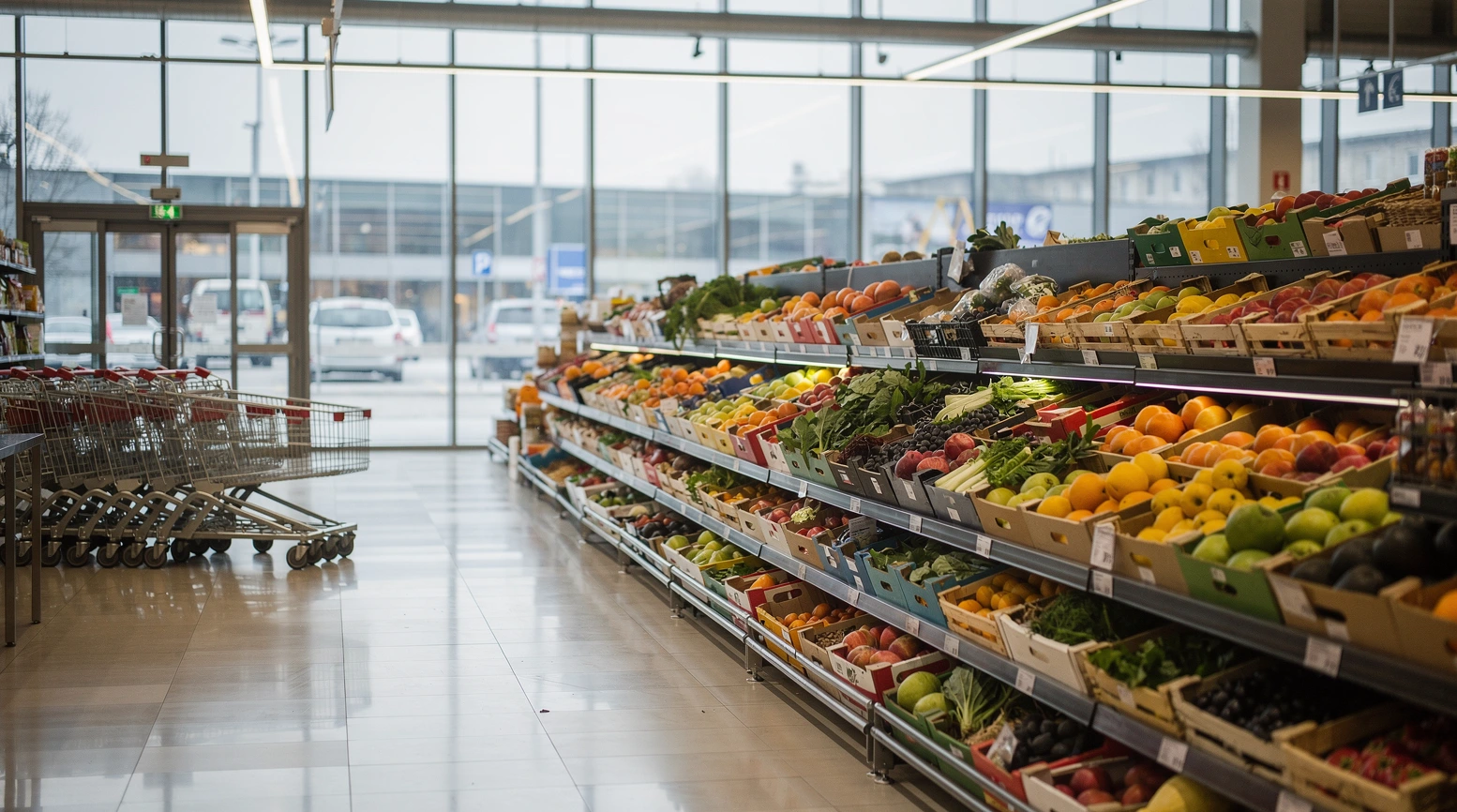
Tesco has agreed to sell its businesses in the Czech Republic and Slovakia to Ahold Delhaize, the Dutch-Belgian owner of Albert Heijn and Food Lion, in a deal that values the operations at about €1.7bn (around £1.5bn at the conversion used in company and press reports). The announcement, made to the London Stock Exchange on the morning of Friday 30 October 2026, takes Britain’s largest grocer out of two more overseas markets and leaves Hungary as its only remaining central European business. Tesco says most of the cash will go back to shareholders through an additional share buyback, and that the sale sharpens its focus on its core UK and Irish operations.
For the millions of people who shop at Tesco in Britain, nothing changes at the till this weekend. But the deal says a great deal about where Tesco thinks its money is best spent, and it adds to a long list of decisions that have turned a once sprawling international retailer into a business built overwhelmingly around the British and Irish shopper. This article sets out what was agreed, what the numbers mean, why Tesco is selling now, and what it could mean for prices, delivery and competition on the UK high street.
In short
- The deal: Tesco is selling its Czech and Slovak businesses to Ahold Delhaize at an enterprise value of about €1.7bn (£1.5bn), on a cash and debt-free basis.
- The cash: Tesco expects net cash proceeds of about €1.2bn (£1bn) before tax and transaction costs, with the majority returned through an additional share buyback.
- The scale: the businesses run 184 stores in the Czech Republic and 179 in Slovakia, according to City AM, and generated combined sales of about £2.9bn in the latest year.
- The timing: completion is expected in the second half of 2027, subject to competition and other regulatory approvals.
- The UK angle: no direct change for UK shoppers or Clubcard holders, but Tesco says the sale increases its focus on the UK and Ireland, where it holds roughly 27.8% of the grocery market.
What exactly has Tesco agreed to sell?
Tesco is selling 100% of its Czech and Slovak businesses to Ahold Delhaize, according to The Grocer. The package covers all Tesco stores and offices in both countries, along with distribution centres at Kralupy in the Czech Republic and at Presov and Beckov in Slovakia, Retail Gazette and Grocery Gazette report. Hungary, where Tesco first entered central Europe in 1995, is not part of the transaction.
City AM puts the store count at 184 in the Czech Republic and 179 in Slovakia, a combined estate of 363 shops. The Grocer describes the portfolio as more than 360 supermarkets, hypermarkets and convenience stores, plus in excess of 100 franchise stores. The format mix matters, because the hypermarkets that Tesco opened in the region in the 1990s and 2000s are a very different proposition from the convenience and online grocery models that now drive growth in most European markets.
How much is the deal worth?
The headline figure is an enterprise value of about €1.7bn, which press reports convert to roughly £1.5bn. The Grocer describes this as a total enterprise value on a cash and debt-free basis. That means the buyer pays for the operating business as if it carried no cash and no borrowings, with adjustments made separately.
The figure Tesco will actually bank is lower. Retail Gazette reports that Tesco expects net cash proceeds of about €1.2bn (£1bn) before tax and transaction costs, and The Grocer’s own headline used the £1bn figure. That gap of around €0.5bn explains why some outlets reported the deal at £1bn and others at £1.5bn: they are describing different measures of the same transaction. None of the reports seen by shopappy itemises the difference, so readers should treat the £1bn as the cash expectation and the £1.5bn as the headline valuation.
When will it complete?
Retail Gazette and The Grocer report that completion is expected in the second half of 2027. The Grocer says the deal is subject to antitrust and other regulatory approvals. The reports seen do not name the specific competition authorities involved, but a transaction of this size, involving a buyer that already trades in the Czech Republic, can be expected to face a careful competition review before it closes.
Until then, Tesco continues to own and run the stores. Staff, suppliers and customers in both countries should see business as usual for many months, and the shops will keep trading under the Tesco name until the transfer completes.
Why is Tesco selling its Czech and Slovak stores now?
Tesco’s chief executive, Ken Murphy, framed the sale as a way to sharpen the group’s priorities. In comments carried by Retail Gazette, Grocery Gazette, The Grocer and City AM, he said he was “delighted that Ahold Delhaize intends to invest in both markets”, and that the deal would increase “our focus on our core UK and Irish businesses”. The language is familiar: it echoes the way Tesco has described almost every overseas exit since 2014.
The sale did not come out of nowhere. Grocery Gazette reported in July 2026 that Tesco was allegedly exploring a sale of its eastern European operations, so the market had several months to prepare for an announcement. What is new is the buyer, the price and the confirmation that Hungary will be kept, at least for now.
How small is central Europe within Tesco?
The simple answer is: small. City AM reports that Tesco’s European division generated about £4.5bn of the group’s £66.6bn total revenue last year, which is less than 7% of the business. The Czech and Slovak operations accounted for about £2.9bn of sales, according to all four trade and business titles that shopappy reviewed.
Profit is harder to pin down. The reports say the two businesses account for “most” or “a majority” of the £115m adjusted operating profit earned by Tesco’s central European region, which also includes Hungary. No standalone figure for the Czech Republic or Slovakia has been published in the coverage. Even so, a regional profit of around £115m sits against group guidance of £3.15bn to £3.3bn in adjusted operating profit for the full year, which shows how marginal central Europe has become to Tesco’s earnings.
Is this a fire sale or a good price?
Analysts quoted in the trade press were broadly positive about the price. Bernstein analyst Richard Trainor told The Grocer that the price looked “quite expensive” for the buyer and that the deal was “more positive for Tesco than for Ahold”. He also expected the buyback to be received “very positively”. City AM reports that analysts at RBC welcomed the reduced exposure to central Europe, noting that most of Tesco’s value has long sat in the UK and Ireland.
A rough check on the numbers supports that view. An enterprise value of £1.5bn against £2.9bn of sales implies a value of around half a year’s turnover. That is shopappy’s own arithmetic rather than a figure published by Tesco or the analysts, and grocery valuations depend heavily on profit margins and property ownership, which have not been disclosed in detail. But for a business that contributes a small slice of group profit, selling it for a sum of this size is not, on the face of it, a distressed disposal.
Who is Ahold Delhaize and what does it gain?
Ahold Delhaize is one of Europe’s largest food retail groups, with a portfolio that City AM says includes 17 brands, among them Albert Heijn in the Netherlands and Food Lion in the United States. Grocery Gazette notes its presence across Europe, the US and Indonesia. In the Czech Republic it already trades under the Albert banner, which means the Tesco stores would be joining an established local network rather than a standing start.
Ahold Delhaize’s chief executive, Frans Muller, told The Grocer that the acquisition “is an important step in strengthening our position in the central and southeastern European region”. According to The Grocer, the buyer says that once the deal completes it will become “the leading grocery retail brand in the Czech Republic by market share” and “a significant player in Slovakia”. That claim of market leadership is precisely the kind of statement that draws the attention of competition regulators.
The timing is notable for another reason. Ahold Delhaize has had a difficult October, and shopappy has examined how Ahold Delhaize is handling its 2026 guidance after a cyberattack. Agreeing a deal of this size shortly afterwards suggests the group’s management sees central Europe as a long-term priority, whatever the near-term distractions.
How does this fit Tesco’s long retreat from overseas markets?
Tesco was once the poster child of British retail expansion abroad. During the 1990s and 2000s it opened or bought businesses across central Europe and Asia and made a high-profile push into the United States. The Grocer reports that the group has slowly retreated from operating overseas since 2014, including sell-offs in South Korea, Thailand, Malaysia, Turkey and Poland, as well as the closure of the lossmaking Fresh & Easy chain in the US.
City AM lists withdrawals from France, Japan, Malaysia, Poland, South Korea, Thailand, Turkey and America, noting that Tesco quit the US in 2013 and that its Thai and Malaysian operations were sold for £8bn in 2020. The Czech and Slovak sale continues that pattern. After completion, Tesco’s store estate outside the UK will consist of the Republic of Ireland and Hungary, where City AM counts 198 locations.
| Market | Status after this deal | What the reports say |
|---|---|---|
| United Kingdom | Core market, retained | Roughly 27.8% grocery market share, per City AM |
| Republic of Ireland | Core market, retained | Named by Ken Murphy as part of the “core UK and Irish businesses” |
| Hungary | Retained, under review | About 198 locations; Tesco will “continue to review all options”, per City AM |
| Czech Republic | Being sold to Ahold Delhaize | 184 stores, per City AM; completion expected H2 2027 |
| Slovakia | Being sold to Ahold Delhaize | 179 stores, per City AM; completion expected H2 2027 |
| Thailand and Malaysia | Exited | Sold for £8bn in 2020, per City AM |
| Poland | Exited | Listed among sell-offs since 2014, per The Grocer |
| United States | Exited | Fresh & Easy shut; Tesco quit the US in 2013, per City AM |
What happens to Hungary?
Hungary is the obvious loose end. Tesco told City AM that it “will continue to review all options for the future of our business in Hungary”. That phrase stops well short of announcing a sale, but it is also not a commitment to stay. The Grocer reports that Tesco runs almost 200 stores there.
Hungary has widely been reported as a difficult market for international grocers in recent years, with government measures such as sector-specific retail taxes and price caps on some staples weighing on profitability. For Tesco shareholders, the open question is whether a separate Hungarian deal follows, which would complete the group’s exit from central Europe entirely.
What does the sale mean for UK shoppers?
In the short term, almost nothing. Tesco’s UK prices, Clubcard scheme, store opening hours and online delivery slots are run by the UK business and are not affected by a transaction in Prague or Bratislava. Clubcard points and vouchers earned in Britain remain valid in exactly the same way as before, and there is no reason for UK customers to change how they shop.
The more interesting question is the medium term. When a retailer removes a distraction and frees up management time and capital, that attention has to go somewhere. Tesco has said explicitly that the sale increases its focus on the UK and Ireland. The chance that more effort, and potentially more investment, flows into the British shopping experience is the real UK story here, even if Tesco has not yet set out any specific plans for the proceeds beyond a buyback.
Could this help keep UK prices down?
There is no direct link between the sale and UK shelf prices, and Tesco has not suggested one. Most of the cash is earmarked for shareholders, not for price cuts. That said, a simpler business with less capital tied up overseas is, in principle, better placed to fund price investment at home if competition demands it.
Competition is certainly intensifying. The discounters continue to win customers, and shopappy has reported on the CMA’s decision to designate Aldi and Lidl as large grocery retailers, which brings them under the same groceries code rules that have long applied to the big four. Meanwhile, the British Retail Consortium’s figures show that UK shop price inflation rose to 2.1% in October, the highest in around two and a half years. In that environment, the grocer with the most firepower to hold prices has an advantage, and Tesco is strengthening its balance of capital at home.
Online is one area where Tesco has been investing heavily in Britain. Tesco reported online sales growth of around 8% in its first half, according to Grocery Gazette and City AM, and the business has been pushing its rapid delivery service hard. Shopappy has covered Tesco’s free Whoosh rapid delivery offer that runs until January, a promotion aimed squarely at winning more of the weekly and top-up shop online.
A clearer focus on the UK and Ireland makes it more likely that investment in delivery capacity, technology and stores continues. It does not guarantee any specific improvement for shoppers, but the direction of travel is towards a business that pours more of its resources into the markets where it is strongest.
How strong is Tesco’s UK business right now?
Tesco goes into this deal from a position of relative strength. In its half-year results, published on 8 October 2026 for the 26 weeks to 29 August, adjusted operating profit rose 6.5% to £1.78bn, according to Grocery Gazette. Group sales excluding VAT and fuel grew 2% to £33.8bn over the same period.
The company also raised its full-year adjusted operating profit guidance to a range of £3.15bn to £3.3bn, from £3bn to £3.3bn previously, and lifted its planned share buyback for the year from £750m to £950m, Grocery Gazette reports. City AM said Tesco held about 27.8% of the UK grocery market, comfortably ahead of its nearest rivals.
| Measure | Tesco H1 2026/27 | Source |
|---|---|---|
| Adjusted operating profit | £1.78bn, up 6.5% | Grocery Gazette |
| Group sales (ex VAT, ex fuel) | £33.8bn, up 2% | Grocery Gazette |
| Full-year profit guidance | £3.15bn to £3.3bn (raised) | Grocery Gazette, City AM |
| Share buyback for the year | £950m (from £750m) | Grocery Gazette |
| Online sales growth | Around 8% | Grocery Gazette, City AM |
| Central Europe operating profit | £63m, up 38% | City AM |
| UK grocery market share | About 27.8% | City AM |
One caveat: the published figures for UK like-for-like sales in the half differ slightly between outlets, with Grocery Gazette and City AM using different periods and measures. The broad picture is consistent, however: modest sales growth, rising profit and a raised outlook. That backdrop means Tesco is selling from a position of choice rather than necessity.
Tesco’s main listed rival, Sainsbury’s, has also been gaining ground in groceries. Shopappy reported earlier this year that Sainsbury’s grocery sales rose 3.6% in its first quarter, its fifth straight quarter of gains. Unlike Tesco, Sainsbury’s has no significant overseas grocery business, so its fortunes have always depended on the UK shopper.
With this deal, Tesco moves closer to that model. Once the sale completes, almost all of Tesco’s sales will come from the UK and Ireland, with Hungary and the Booker wholesale business in Britain alongside. The comparison with rivals will increasingly be about who serves the British customer best, not who has the broadest map.
How did investors react?
The market response was positive but measured. The Grocer reports that Tesco shares rose about 1% when London markets opened on Friday, and City AM says they gained around 1% in early trading to 536p. For context, City AM had reported the shares at 492p earlier in October, so the stock has climbed noticeably over the month, helped by the upgraded guidance at the half-year stage.
The reaction reflects two things. First, the price looks fair or better according to the analysts quoted, which removes a potential worry that Tesco would accept a low offer simply to leave. Second, the promise of an additional buyback appeals to shareholders, who benefit as the number of shares in issue falls. Bernstein’s expectation that the buyback would be received “very positively” captures the mood.
Tesco has not given a figure in the coverage seen by shopappy. Retail Gazette reports that the majority of the proceeds will be returned through an additional share buyback, and The Grocer uses similar wording. With expected cash proceeds of about £1bn before tax and costs, the additional buyback is likely to be a substantial sum, but it would be speculative to put a precise number on it before Tesco does. The timing is also linked to completion, which is not expected until the second half of 2027.
What happens next, and what are the risks?
The most immediate step is regulatory review. Because Ahold Delhaize says the deal would make it the leading grocery brand in the Czech Republic by market share, competition authorities will be expected to examine whether the combination reduces choice for Czech and Slovak consumers. Remedies such as store disposals are common in grocery mergers where local overlaps are significant, and they could affect the final shape of the deal.
The second step is the long wait to completion. A gap of more than a year between signing and closing is not unusual for a cross-border retail transaction, but it creates uncertainty for staff and suppliers in both countries. Tesco will need to keep the businesses performing during that period, because their value to the buyer depends on it.
Third, there is Hungary. Tesco’s statement that it will review all options leaves the door open to a further sale. If a deal for Hungary follows, Tesco would become an almost purely UK and Irish grocer, with the strategic clarity that brings.
Finally, there is the question of what Tesco does with its renewed focus at home. The UK grocery market faces rising costs, including the increase in the National Living Wage from April 2027 and other changes announced in the 28 October Budget, along with pressure from the discounters and the shift online. A leaner Tesco has more room to respond, but it also has fewer places to hide if the UK business stumbles.
What should UK shoppers and suppliers watch for?
For most shoppers, the sensible approach is to watch Tesco’s actions in Britain over the coming months rather than the deal itself. The signals that matter will be price investment, especially on everyday staples and Clubcard Prices, the reach and cost of online and rapid delivery, and any changes to the store estate.
- Clubcard: no change. UK points, vouchers and Clubcard Prices continue as normal.
- Prices: no direct effect from the sale. Watch for price-matching moves against Aldi and Lidl as the Christmas trading period approaches.
- Delivery: continued investment in online and rapid delivery is more likely than not, given Tesco’s stated focus.
- Suppliers: UK suppliers are unaffected by the sale itself; central European suppliers to Tesco’s Czech and Slovak stores will eventually deal with Ahold Delhaize.
- Shareholders: an additional buyback is promised, with timing tied to completion in the second half of 2027.
For British food and drink suppliers who sell into Tesco’s central European stores, the change of ownership could, in time, mean new buying terms and a different range strategy. That is a matter for the second half of 2027 and beyond, once the regulators have had their say.
Frequently asked questions
Who is buying Tesco’s Czech and Slovak stores?
Ahold Delhaize, the Dutch-Belgian food retail group that owns brands including Albert Heijn and Food Lion. It already trades in the Czech Republic under the Albert name and says the deal would make it the leading grocery brand there by market share.
How much is Tesco selling the business for?
The deal values the Czech and Slovak operations at an enterprise value of about €1.7bn, or roughly £1.5bn, on a cash and debt-free basis. Tesco expects net cash proceeds of about €1.2bn (£1bn) before tax and transaction costs, according to Retail Gazette.
Why did some reports say £1bn and others £1.5bn?
They describe different measures. £1.5bn is the headline enterprise value of the deal, while £1bn is the net cash Tesco expects to receive before tax and costs. Both figures come from the same announcement.
Does the sale affect Tesco stores or prices in the UK?
No. UK stores, prices, online delivery and opening hours are run by the UK business and are not part of the deal. Tesco says the sale increases its focus on its core UK and Irish businesses.
Will my Clubcard points be affected?
No. Clubcard points, vouchers and Clubcard Prices in the UK continue exactly as before. The sale only concerns Tesco’s businesses in the Czech Republic and Slovakia.
When will the sale be completed?
Completion is expected in the second half of 2027, subject to antitrust and other regulatory approvals. Until then, Tesco continues to own and operate the stores.
Is Tesco also selling its Hungarian business?
Not as part of this deal. Hungary is excluded, but Tesco has said it will continue to review all options for the future of its Hungarian business, which has around 200 stores.
What will Tesco do with the money?
Tesco says the majority of the proceeds will be returned to shareholders through an additional share buyback. No amount has been published in the coverage so far.
Which countries will Tesco still operate in?
After completion, Tesco’s grocery stores will be in the UK, the Republic of Ireland and Hungary. It has previously exited markets including the US, Poland, Thailand, Malaysia, South Korea, Turkey, Japan and France.