
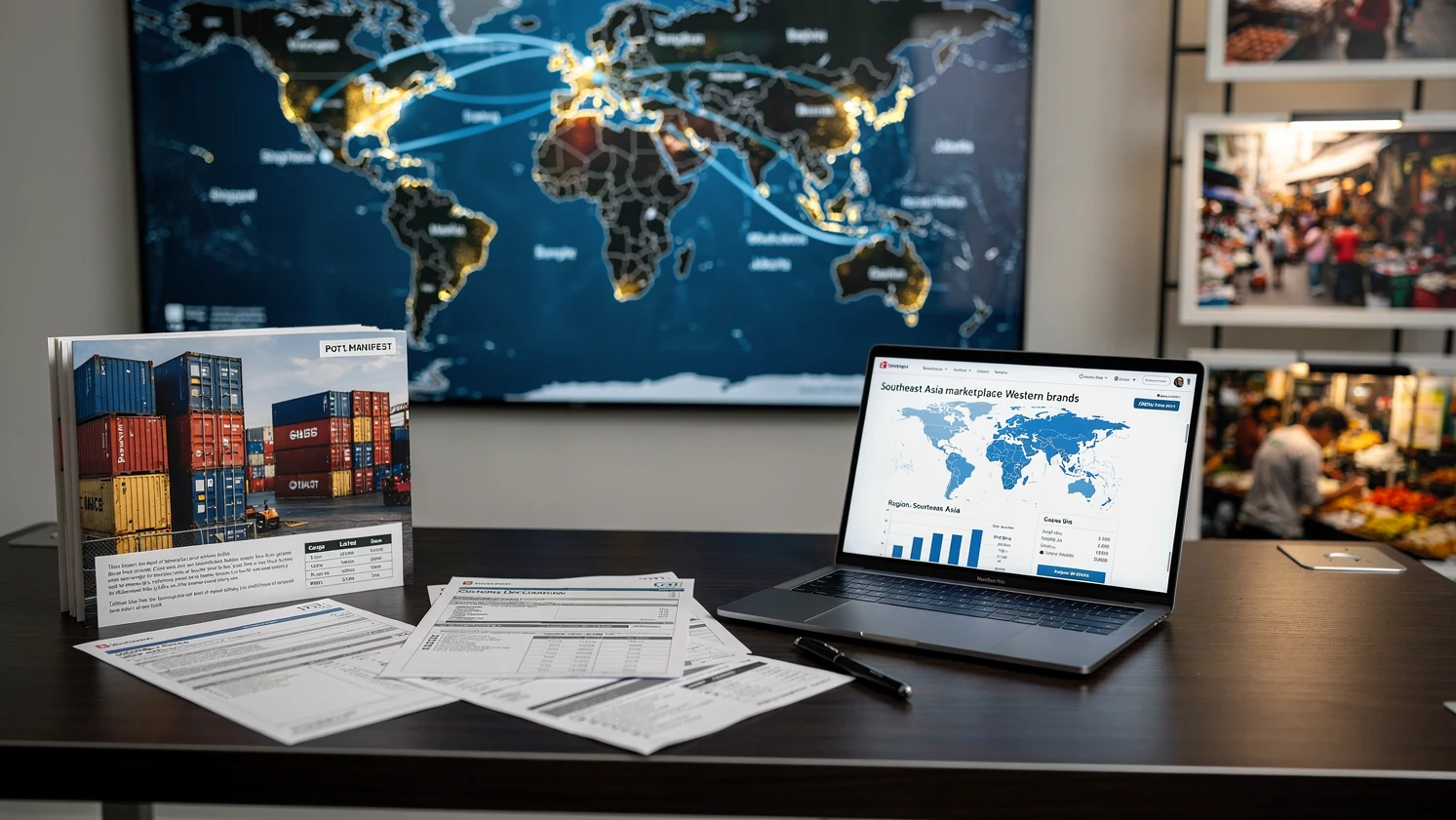
Western brands keep treating Southeast Asia as one market when it behaves like six. A skincare label that prices for Singapore margins gets undercut in Jakarta within a week, and a homewares seller that nails Shopee Malaysia discovers its listings invisible in Vietnam. The difference is not demand: it is which regional marketplaces own the checkout, how each one handles logistics, and what local payment habits actually convert browsers into buyers. This guide compares the platforms that matter, with the fee structures, fulfillment models, and entry rules you need before you commit a single SKU.
We focus on the operators that move real volume for outside brands: Shopee, Lazada, Tokopedia, and TikTok Shop, plus the cross-border programs that let you sell without a local entity. Where the numbers come from public rate cards and seller documentation, we cite ranges, because every category and country tier prices differently. The aim is not a vendor pitch, it is a decision framework you can run against your own catalog, margins, and tolerance for operational complexity.
In short
- Shopee and Lazada dominate pan-regional reach, but TikTok Shop now drives the fastest discovery-led sales in Indonesia and Thailand.
- Cross-border programs (Shopee Global, Lazada LazGlobal) let Western brands list without a local company, at the cost of slower delivery and tighter category rules.
- Commission plus payment plus transaction fees typically land between 5% and 16% per order before advertising, and ad spend is effectively mandatory for visibility.
- Indonesia is the prize (largest population) but the hardest on local-entity, halal, and import rules; Singapore is the easiest beachhead with the thinnest margins.
- Get the tax and customs treatment right first: a clean landed-cost model decides whether any of these channels is profitable.
Which marketplaces actually matter in Southeast Asia
Four platforms account for the overwhelming majority of branded marketplace sales across the region. Shopee, owned by Sea Limited, leads on combined traffic and gross merchandise value across Indonesia, Vietnam, Thailand, the Philippines, Malaysia, and Singapore. Lazada, backed by Alibaba, runs a close second and skews slightly more premium and brand-curated, which suits Western labels worried about counterfeits sitting beside their listings.
Tokopedia matters almost entirely inside Indonesia, where it merged operations with TikTok in 2024, so the two now share commerce infrastructure in that single market. TikTok Shop is the disruptor: it converts video discovery into in-app purchase and has pulled meaningful share away from the incumbents in Indonesia, Thailand, and Vietnam, especially in beauty, fashion, and impulse categories under twenty US dollars.
It helps to picture the region as a layered audience rather than a flat one. The top layer is Singapore, small but affluent and English-speaking. The middle layer is Malaysia and Thailand, with rising disposable income and growing card adoption. The base, and the bulk of the population, is Indonesia, Vietnam, and the Philippines, where price sensitivity, mobile-first browsing, and cash habits still shape every conversion. A platform that wins one layer can be an afterthought in another, which is why share figures quoted region-wide hide more than they reveal.
Before you choose, separate two decisions that brands routinely conflate. The first is platform: which marketplace your buyers use. The second is selling model: whether you operate as a domestic seller (local entity, local stock) or as a cross-border seller (foreign entity, stock shipped or warehoused into the region). These choices interact, and the cost of getting them wrong shows up directly in your landed cost, which is where your cross-border tax basics need to be settled before listing anything.
Platform comparison: fees, reach, and fulfillment
The table below summarizes how the four platforms compare for an outside brand entering in 2026. Treat fee ranges as indicative: actual rates vary by country, category, seller tier, and whether you join managed programs like Shopee Mall or LazMall.
| Platform | Strongest markets | Typical all-in fees per order | Cross-border program | Best for |
|---|---|---|---|---|
| Shopee | Indonesia, Vietnam, Philippines, all six | 6% to 16% (commission, payment, service) | Shopee Global (SIP) | Volume, broad reach, price-driven categories |
| Lazada | Singapore, Malaysia, Thailand | 5% to 14% incl. LazMall premium | LazGlobal | Brand control, premium positioning |
| Tokopedia | Indonesia only | 5% to 10% category-dependent | Limited (TikTok-linked) | Indonesia-only domestic plays |
| TikTok Shop | Indonesia, Thailand, Vietnam | 5% to 12% plus creator commissions | Cross-border seller program | Discovery, beauty, fashion, impulse buys |
Two structural points sit behind those numbers. First, fulfillment drives both cost and conversion. Shopee and Lazada each run their own logistics arms (Shopee Xpress, Lazada Logistics) and offer fulfilled-by-platform warehousing in-region. Holding stock locally turns multi-week cross-border delivery into one-to-three-day domestic delivery, which lifts conversion sharply but commits capital and forces you to handle local import and tax on the way in.
Second, payment mix is not optional knowledge. Cash on delivery still clears a large share of orders in Vietnam, the Philippines, and parts of Indonesia, while Singapore and Malaysia lean on cards and bank-linked wallets. The way platforms route and settle these payments, including how interchange flows through the underlying rails, shapes your fee load: it is worth understanding how card networks work behind every checkout before you assume a flat percentage covers it.
The fee ranges in the table deserve a closer look, because the headline commission is the least of your worries. A Shopee or Lazada deduction typically stacks a category commission (often 2% to 8%), a payment fee tied to the buyer’s chosen method (frequently 2% to 4%), and a service or transaction fee on top. Premium programs such as Shopee Mall and LazMall add a few points in exchange for a verified-brand badge, priority placement, and buyer trust. For most considered-purchase categories the badge pays for itself; for pure price plays it can erode the only advantage you had.
Withdrawal and settlement timing also belong in your model. Cross-border sellers usually wait longer for funds to clear and convert, and currency conversion spreads quietly shave another slice off each order. A brand that prices to a clean 18% gross marketplace cost on paper can discover an effective 22% to 25% once conversion, withdrawal, and chargeback handling are counted. None of this is hidden, but it is scattered across rate cards and rarely added up in one place before launch.
Cross-border versus local entity: the real entry decision
The single most expensive mistake Western brands make is defaulting to cross-border because it looks simpler, without modeling what it does to delivery speed and duty exposure. Here is the practical sequence to decide.
- Validate demand cheaply. Launch cross-border on Shopee Global or LazGlobal first. You list from abroad, stock stays home, and the platform handles the import path. Delivery runs slower (often seven to fourteen days) but you avoid incorporating and you learn which SKUs sell.
- Model landed cost per country. Calculate product cost plus shipping plus duties plus the platform fee stack plus payment fees plus expected ad spend. If the margin survives, the market is viable; if not, no growth tactic rescues it.
- Localize the winners. Once a country and category prove out, move stock into a regional warehouse (Singapore and Malaysia are common hubs) to unlock fast domestic delivery and platform mall programs.
- Incorporate only where rules force it. Indonesia in particular pushes foreign sellers toward local presence, halal certification on relevant goods, and import licensing. Treat incorporation as a milestone you earn with proven revenue, not a starting cost.
- Reassess quarterly. Fee schedules, duty thresholds, and platform algorithms shift faster here than in Western markets. A channel that was profitable in January can turn marginal by July if commissions rise or a customs exemption disappears, so rebuild the landed-cost model on a fixed cadence rather than at launch only.
The cross-border model has a quiet trap that catches even experienced operators: it scales demand validation beautifully but punishes you the moment volume arrives. Customers who waited fourteen days for a first order will not wait again, and review scores tied to delivery speed drag your ranking down precisely when you start to win. The transition from cross-border proof to local fulfillment is therefore not optional polish, it is the step that decides whether early traction compounds or stalls.
Local stock, in turn, changes your tax position entirely. The moment you import inventory into Indonesia or Malaysia you become an importer of record, responsible for duties, local consumption tax, and often registration with the tax authority. The cross-border shortcut deferred all of that; localization brings it forward in full. This is exactly why the financial groundwork has to precede the operational ambition, and why settling your tax treatment is the gate you pass through before committing warehouse capital.
Customs treatment is where this gets sharp in 2026. Low-value import thresholds that once let small parcels enter duty-free are being dismantled across major economies, and Southeast Asian regulators are tightening in parallel to protect domestic sellers. If your model leaned on de minimis exemptions, read how the end of duty-free treatment for low-value imports is reshaping DTC economics, because the same logic is arriving in this region.
Country-by-country: where to start and why
Singapore is the natural beachhead. English-language operations, mature card and wallet payments, strong rule of law, and a logistics hub that feeds the rest of the region. The catch is margin: the population is small and competition among premium brands is fierce, so treat Singapore as a proof point and warehouse base rather than your volume engine. Many brands run their regional inventory and returns processing out of Singapore precisely because its customs and banking infrastructure make onward distribution predictable.
Indonesia is the volume prize by a wide margin, with the largest population and the deepest social-commerce behavior. It is also the most regulated: foreign sellers face local-entity pressure, halal certification on food, cosmetics, and related goods, and active enforcement against pure cross-border discount flooding. Win here and you have scale nobody else in the region offers. The regulatory weight is real, but it cuts both ways: the same rules that slow your entry also blunt the price-dumping that would otherwise erode your margins once you are established.
Vietnam, Thailand, the Philippines, and Malaysia sit between those poles. Vietnam and the Philippines remain cash-on-delivery heavy and price-sensitive; Thailand over-indexes on TikTok-driven beauty and fashion; Malaysia behaves like a smaller, card-friendly cousin of Singapore. The EU VAT machinery does not apply here, but the discipline of registering, collecting, and remitting consumption tax correctly does, and the habits you build managing schemes like IOSS and OSS for cross-border sellers transfer directly to handling SST in Malaysia or VAT in Vietnam.
Language and trust signals deserve a line of their own. Bahasa Indonesia, Thai, and Vietnamese listings convert far better than machine-translated English, and local-language customer service measurably lifts review scores, which in turn feed ranking. A Western brand that ports its English catalog verbatim and answers queries on a delay is competing with one hand tied. Budget for native-language listing copy and at least business-hours local support per priority country, and treat it as a conversion investment rather than an overhead.
What it actually costs to run a listing
Brands underestimate the recurring cost of visibility. The headline commission is only the entry fee. A realistic monthly cost stack for an active cross-border listing on Shopee or Lazada includes platform commission, payment processing, a transaction or service fee, in-platform advertising, and creator or affiliate commissions on TikTok Shop. Advertising is effectively compulsory: organic reach for new outside brands is thin, and the platforms reward sellers who buy placement.
Plan for advertising to consume a meaningful slice of revenue in the first six months, often comparable to your commission load, before brand search builds. Bundle that into the landed-cost model from the start. A SKU that looks profitable on commission alone but cannot absorb fifteen percent of ad spend is not a viable launch, it is a slow loss. Industry trackers compiling Southeast Asia e-commerce data consistently show advertising intensity rising as more brands compete for the same finite attention.
There is also a hidden labor cost that spreadsheets miss. Each platform has its own seller console, promotion calendar, campaign mechanics, and dispute process, and running four of them is four operational workflows, not one. Most successful Western entrants either dedicate a regional marketplace manager early or partner with a local enabler (a Tier 1 agency that operates the storefront on your behalf for a revenue share). The enabler route adds another deduction, frequently 8% to 20% of revenue, but it buys local fluency in promotions, logistics, and compliance that is hard to build from abroad in the first year.
Returns and chargebacks close out the true-cost picture. Cash-on-delivery markets carry higher refusal rates, where a buyer simply declines the parcel at the door, leaving you with return shipping and restocking on goods that were never paid for. Factor a refusal and return allowance into cash-on-delivery country models specifically, because a headline conversion rate that ignores doorstep refusals overstates real revenue by a frustrating margin.
Winning the listing and the algorithm
Getting onto a platform is the easy part; getting found is where most Western entrants stall. Each marketplace ranks listings on a blend of relevance, conversion rate, fulfillment performance, price competitiveness, and review volume. A new foreign brand starts with zero signal on most of those axes, which is why the launch phase feels like shouting into a void until you deliberately seed the signals the algorithm rewards.
Concretely, that means three early moves. First, harvest reviews fast through legitimate channels: bundle launch promotions, samples, and prompt fulfillment so your first hundred orders generate genuine ratings, because review count gates organic visibility. Second, keep your fulfillment metrics clean, since late shipments and cancellations are penalized harder here than in Western marketplaces and the damage to ranking outlasts the individual order. Third, participate in platform campaign days (Shopee and Lazada run heavily promoted double-date sales such as 9.9 and 11.11) where traffic spikes by multiples and a well-stocked, well-priced listing can compress months of organic growth into a single weekend.
Pricing psychology differs by market too. In Indonesia and the Philippines, visible discounts, vouchers, and free-shipping thresholds drive clicks more than absolute price, so a slightly higher list price with an aggressive voucher often outperforms a flat low price. In Singapore and Malaysia, buyers respond to bundling and bank or wallet promotions. Tuning the same SKU’s promotion mechanics per country is not busywork, it is the difference between a listing that ranks and one that languishes on page four.
Common mistakes
Treating the region as one market. A single price, listing, and logistics plan across six countries guarantees you are mispriced in most of them. Pick a lead country, win it, then expand.
Ignoring payment behavior. Launching card-only in a cash-on-delivery market silently kills conversion. Match accepted payment methods to local habits per country.
Underpricing because de minimis looked permanent. Building margins around duty-free low-value imports is fragile in 2026 as thresholds disappear. Model duties as if exemptions will end, because they are.
Skipping local certification. Selling cosmetics or food into Indonesia without halal certification or required licensing risks delisting and seized stock, not just a warning.
Treating advertising as optional. New outside brands get almost no organic reach. If you cannot fund placement, you do not have a marketplace strategy.
Porting English listings verbatim. Machine-translated copy and delayed, foreign-language support depress both conversion and review scores, which feed ranking. Localize copy and support per priority market.
Frequently asked questions
Do I need a local company to sell on Shopee or Lazada in Southeast Asia?
Not to start. Both platforms run cross-border programs (Shopee Global, LazGlobal) that let a foreign-registered brand list and sell without incorporating locally, with the platform managing the import path. You will trade away delivery speed and some mall-program access. A local entity becomes worth it once a specific country and category prove profitable, and in Indonesia regulation may push you toward local presence sooner than commercial logic alone would.
Which platform should a Western brand try first?
For broad regional reach and price-driven categories, start with Shopee cross-border because of its volume and pan-regional footprint. If your brand is premium and you fear sitting beside counterfeits, Lazada with its LazMall program offers more brand control. If your products are beauty, fashion, or impulse buys under twenty dollars, TikTok Shop in Indonesia or Thailand often delivers faster discovery-led sales. Validate demand on one platform in one country before spreading thin.
What do marketplace fees really add up to?
Plan for an all-in deduction of roughly five to sixteen percent per order before advertising, combining commission, payment processing, and a transaction or service fee. The exact figure depends on country, category, seller tier, and whether you join premium mall programs. On TikTok Shop, add creator or affiliate commissions on top. Crucially, layer in advertising spend, which is effectively mandatory for new outside brands and can match your commission load in the first months.
How do customs and duties affect cross-border selling here?
They are decisive. Low-value import thresholds that once let small parcels enter duty-free are being tightened across major economies in 2026, and Southeast Asian regulators are following to protect domestic sellers. If your pricing assumed de minimis exemptions, model duties as if those exemptions end. Settle your landed-cost calculation, including duties and consumption tax, before you list a single SKU, because customs treatment, not commission, usually decides profitability.
Is TikTok Shop worth it compared to the established marketplaces?
For the right categories, yes. TikTok Shop converts video discovery into in-app purchase and has pulled real share from incumbents in Indonesia, Thailand, and Vietnam, especially in beauty, fashion, and impulse goods. It rewards content and creator partnerships rather than search optimization, so it suits brands that can produce or sponsor a steady stream of short-form video. For considered, higher-ticket purchases where buyers compare specs, Shopee and Lazada still convert better.
How important is local payment support?
Very. Cash on delivery still clears a large share of orders in Vietnam, the Philippines, and parts of Indonesia, while Singapore and Malaysia lean on cards and bank-linked wallets. Offering only cards in a cash-heavy market quietly suppresses conversion without any obvious error message. Match your accepted methods to each country, and understand how the underlying payment rails settle, because routing affects both your fees and how quickly you receive funds.
Should I use a local enabler or run the storefront myself?
It depends on volume and internal capacity. A local enabler operates your storefront, promotions, logistics, and compliance for a revenue share of roughly eight to twenty percent, which buys fluency that is slow to build from abroad. For a first market or a small catalog, that fee often pays for itself in avoided mistakes. As volume grows and you understand the playbook, bringing operations in-house with a dedicated regional manager usually improves margin, so treat the enabler as a learning accelerator rather than a permanent arrangement.
What’s next
Pick one country and one platform, build a landed-cost model that survives the loss of duty-free thresholds, and fund advertising from day one rather than hoping for organic reach. Tie that financial discipline back to your cross-border tax fundamentals so duties and consumption tax are priced in before launch, and treat your first profitable country as the template you replicate, localizing copy, payment, and support before you scale spend. The brands that win Southeast Asia in 2026 are not the ones with the lowest price or the biggest catalog, they are the ones that picked one market, modeled its true cost honestly, and earned the algorithm’s trust before competitors had finished translating their listings.