
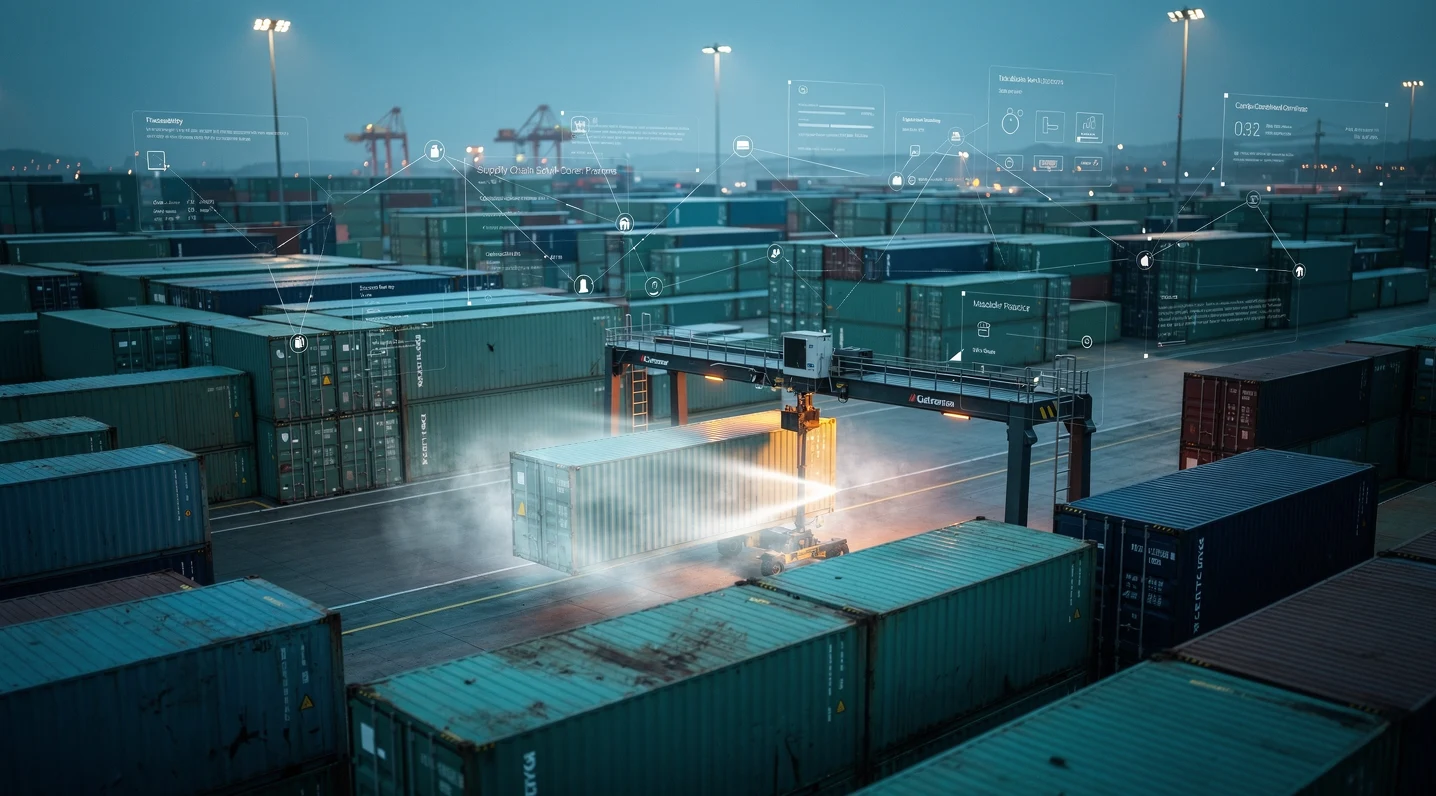
Every importer selling into the United States now carries a question that did not exist a few years ago: can you prove where your goods came from, all the way down to the raw material? The Uyghur Forced Labor Prevention Act (UFLPA) turned that question from a corporate social responsibility talking point into a customs clearance problem with real cash consequences.
For online sellers the shift is uncomfortable, because most supply chains were built for cost and speed rather than traceability. A seller who buys finished goods from a trading company in Shenzhen often has no contractual visibility into the cotton gin, the polysilicon refiner or the aluminum smelter three tiers upstream. UFLPA enforcement asks for exactly that visibility, and it asks for it after the container is already at the port.
This primer explains how the rules work, what US Customs and Border Protection (CBP) looks for, what documentation tends to matter, and where to confirm current details. It is written as general information for sellers and operators, not as advice about any specific shipment.
In short
- UFLPA creates a rebuttable presumption: according to CBP, goods mined, produced or manufactured wholly or in part in the Xinjiang Uyghur Autonomous Region (XUAR), or by entities on the UFLPA Entity List, are presumed to be made with forced labor and barred from entry.
- The burden sits with the importer, not the government. CBP states that overcoming the presumption requires clear and convincing evidence plus full responses to its inquiries.
- Traceability is the deliverable. The practical test is whether you can document a chain of custody from finished good back to raw material, with transaction records that actually reconcile.
- Detention is the cost event. Demurrage, storage, missed sell-through windows and cancelled purchase orders usually hurt more than the duty itself.
- Rules and lists change. The UFLPA Entity List and the enforcement strategy are updated by the Forced Labor Enforcement Task Force, so any figure or list in this article should be verified at the official source before you act on it.
What the UFLPA forced-labor import rules are and why they matter for online sellers
UFLPA is a United States import law, enacted as Public Law 117-78 and signed in December 2021, with its central presumption taking effect on June 21, 2022 according to the Department of Homeland Security (DHS). It does not create a new tariff. It creates a presumption about admissibility, which is a different and blunter instrument.
Tariffs make goods more expensive. An admissibility rule can make goods worthless at the border, because merchandise that cannot be released cannot be sold in the United States at any price. That distinction is the single most important thing for a seller to internalize when comparing UFLPA exposure against ordinary duty exposure such as the Section 301 tariffs on China imports.
Sellers who want the wider context of how trade rules, duties and cross-border logistics interact can start with our guide to understanding global trade for retail and cross-border commerce, then return here for the forced-labor layer specifically.
The statute behind the statute
UFLPA did not appear from nothing. It builds on Section 307 of the Tariff Act of 1930, codified at 19 U.S.C. 1307, which prohibits importing goods mined, produced or manufactured wholly or in part by convict labor, forced labor or indentured labor. That prohibition has existed for decades.
What changed is the evidentiary posture. Under the older Withhold Release Order (WRO) mechanism, CBP generally acted where it had information reasonably indicating forced labor for a specific producer or commodity. UFLPA flips the default for a defined geography and a published entity list, which is why practitioners describe it as a presumption rather than an allegation.
Who is actually on the hook
The importer of record carries the legal responsibility for admissibility, and that is often not the party a small seller expects. If you buy on DDP terms from an overseas supplier, someone is acting as importer of record on your behalf, and the paperwork may name a party you have never spoken to.
Marketplace sellers using consolidated freight are especially exposed here, because a single detained container can hold goods from dozens of unrelated sellers. If you are unclear who files your entries and under whose bond, that is the first thing to establish, and our explainer on how CBP entry types and broker requirements work is a useful companion read.
Why the sector matters more than the country label
DHS has published an enforcement strategy that identifies high-priority sectors for enforcement, with cotton, tomatoes and polysilicon named as initial priorities and further sectors flagged in subsequent updates. Sellers in apparel, home textiles, solar, certain electronics and some food categories therefore face a higher base rate of scrutiny than sellers of, say, ceramic tableware.
The country of assembly on your commercial invoice does not settle the question. Because the presumption reaches goods produced wholly or in part in the XUAR, an input sourced there can pull a finished good assembled in a third country into scope. Sellers who moved final assembly out of China without moving the upstream inputs sometimes discover this the hard way.
| Dimension | Section 307 WRO (traditional) | UFLPA rebuttable presumption |
|---|---|---|
| Trigger | CBP information reasonably indicating forced labor for a producer or commodity | Nexus to the XUAR or to an entity on the UFLPA Entity List |
| Default assumption | Goods admissible until CBP acts | Goods presumed inadmissible where the nexus applies |
| Evidentiary burden | Importer shows the goods are not subject to the order | Importer must meet a clear and convincing evidence standard, per CBP guidance |
| Scope of inputs | Often focused on the named producer | Reaches goods made wholly or in part with covered inputs |
| Typical outcome if unresolved | Exclusion or re-export | Exclusion or re-export, with the exception path reported to Congress |
Treat that table as a conceptual comparison rather than a legal summary. Both mechanisms remain in use, and CBP has continued to issue and modify orders under Section 307 alongside UFLPA enforcement.
How UFLPA enforcement works in practice at the border
Enforcement is not a courtroom event. It is a sequence of operational decisions made by CBP officers and trade specialists, mostly on paper, mostly on a clock that does not care about your sell-through calendar.
Targeting and detention
Shipments are selected using risk targeting that draws on entry data, supplier history, commodity codes, shipping routes and open-source information. When CBP decides to hold merchandise, it issues a detention notice, and under the detention regulations at 19 CFR 151.16 merchandise not released within five days of presentation is generally treated as detained, with notice to the importer.
The detention notice tells you the reason and what CBP wants. In UFLPA matters the request is typically for supply chain tracing documentation covering the covered input, not just proof of the finished goods transaction. Many first-time responses fail because the importer sends the purchase order and invoice for the last hop only.
The applicability review
An importer who believes the goods are outside the presumption can seek to show that the merchandise has no XUAR or Entity List nexus at all. This is commonly described as an applicability review, and it is the path most sellers should hope to be on, because it is a factual question about sourcing rather than a request for statutory relief.
The documentation expectation here is genealogical. CBP wants to see the finished good traced back through each production step to the raw material, with dated records at every hop that reconcile in quantity and timing. A gap of one tier is often enough to keep the goods detained.
The exception path
Where a XUAR or Entity List nexus does exist, the statute provides an exception path. According to CBP, an exception requires the importer to demonstrate compliance with the applicable guidance, to respond completely and substantively to CBP inquiries, and to show by clear and convincing evidence that the goods were not produced with forced labor.
Exceptions granted under that provision are reported to Congress, which tells you something about how rarely and how carefully the path is used. As a planning matter, most sellers should treat the exception route as a last resort rather than a strategy, and should verify the current standard directly with CBP’s UFLPA resources.
| Stage | What happens | What the importer typically provides | Practical pressure |
|---|---|---|---|
| Targeting | Entry data and supplier profile flagged for review | Nothing yet; entry filing already submitted | None visible until the hold posts |
| Detention | Notice issued stating the reason and the information sought | Acknowledgement, broker coordination, tracing package | Storage and demurrage begin accruing |
| Review | CBP evaluates the submission and may issue follow-up questions | Supplemental records, affidavits, production logs | Sell-through window narrows |
| Release | CBP determines the presumption does not apply or is overcome | Nothing further beyond recordkeeping | Costs already incurred remain |
| Exclusion | Merchandise denied entry | Re-export, destruction, or protest of the exclusion | Inventory write-down risk |
Timelines in individual cases vary widely, and CBP publishes aggregate statistics on shipments detained, denied and released. Verify current processing expectations and any regulatory deadlines with CBP or a licensed customs broker rather than relying on a general article.
What sellers need to check before importing or shipping
The work that actually reduces risk happens months before the container sails. Once goods are detained, your options are limited to producing records that either exist or do not.
Map your supply chain past tier one
Most sellers know their tier-one supplier and almost nothing beyond it. Start by writing down, for each SKU family, the factory that assembles the good, the components that go into it, and the material inputs behind those components. Where you cannot name the party, write “unknown” rather than leaving the cell blank, because the unknowns are your risk register.
Prioritize by material rather than by revenue. A low-revenue SKU containing cotton or polysilicon may carry more admissibility risk than a high-revenue SKU made from injection-molded resin, and the sectors DHS has flagged should drive the order in which you dig.
Screen against the published lists
The UFLPA Entity List is maintained by the Forced Labor Enforcement Task Force and published by DHS, and it is updated over time. Screening only at onboarding is insufficient, because an entity can be added after your relationship began.
Practical screening covers your direct supplier, the named manufacturer, and any upstream parties you have identified. Keep the screening evidence with a date stamp, because “we checked” is worth far less than a dated record showing what you checked and when.
Fix your contracts before you need them
Supplier agreements written for price and delivery rarely include the right to obtain upstream records. Adding a clause that requires disclosure of subsuppliers and production records on request costs nothing at signing and is close to impossible to obtain during a detention.
The same applies to remedies. If a supplier’s opacity causes a detention, your recovery depends on what the contract says about indemnity, chargebacks and termination, not on how reasonable your request sounds after the fact.
Decide who files and who holds the bond
Clarify in writing whether you are the importer of record, and if so, whether your customs bond is sized for your import volume. Detentions and exclusions interact with bond sufficiency, and a bond that was adequate at last year’s volumes may not be adequate now.
Building a documentation package that can survive a detention
Think of the tracing package as a story told in documents, where each document hands off cleanly to the next. CBP has published guidance describing the types of documentation it expects, and the common thread is that records should be contemporaneous, complete and internally consistent.
Consistency is where most packages fail. If the production order says 12,000 units and the shipping record says 12,400, or the yarn purchase predates the cotton harvest record, the reviewer sees a reconciliation problem rather than a chain of custody.
Work backwards from the finished good
Start with the entry documents, then the finished goods invoice and packing list, then the assembly factory’s production records, then component purchases, then the raw material transactions. Each hop should carry dates, quantities, parties and a document that ties it to the next hop.
Where a hop crosses a legal entity boundary, expect to need both sides of the transaction. A single internal spreadsheet asserting the chain is not the same as matched purchase and sale records from two parties.
Translations, formats and legibility
Records in Chinese, Vietnamese or Turkish generally need English translations, and photographed documents need to be legible. This sounds trivial and it is not, because a 400-page package assembled under time pressure with unlabeled scans is a package that invites follow-up questions.
Index the submission. A short cover memo that maps each claim to the exhibit supporting it makes a reviewer’s job easier, and reviewers who can follow the argument tend to ask fewer supplemental questions.
| Tier | Documents commonly expected | Who holds them | Typical gap |
|---|---|---|---|
| Entry and shipment | Entry summary, bill of lading, commercial invoice, packing list | Importer and broker | Usually complete |
| Finished goods | Purchase order, sales invoice, production order, factory output records | Tier-one supplier | Production records missing or reconstructed |
| Components | Component invoices, bills of materials, subsupplier names | Tier-two suppliers | Supplier refuses to disclose subsuppliers |
| Raw material | Yarn or ingot purchase records, mill certificates, origin declarations | Tier three and beyond | No visibility at all |
| Program evidence | Supplier code of conduct, audits, screening logs, training records | Importer | Undated or not linked to the shipment |
The table describes patterns commonly discussed by trade practitioners, not a checklist guaranteed to secure release. Confirm what applies to your commodity and facts with a licensed customs broker or trade attorney.
Common mistakes and compliance risks to avoid
The failure modes repeat across sellers of very different sizes. None of them are exotic, and all of them are cheaper to fix before a shipment moves.
Treating a supplier attestation as proof
A signed letter stating “we do not use forced labor” is an assertion, not evidence. It may be worth collecting as part of a program, but on its own it does not trace anything, and a package built primarily on attestations tends to read as thin.
Assuming a third-country assembly resets the analysis
Moving final assembly to Vietnam, Cambodia or Mexico changes the country of origin analysis for duty purposes, but the forced-labor presumption follows the input, not the last substantial transformation. Sellers sometimes conflate this with origin engineering used to manage duty exposure, which is a separate question governed by different rules such as those behind anti-dumping and countervailing duties.
Discovering the paperwork problem at the port
Requesting tier-three records for the first time during a detention puts you at the mercy of a supplier who has no contractual obligation and no incentive to move quickly. Run a documentation drill on one live SKU before you need it, and treat the response time as the real finding.
Ignoring the recordkeeping obligation
US customs recordkeeping rules require importers to maintain entry records for a defined retention period, commonly cited as five years from date of entry under 19 U.S.C. 1508 and the implementing regulations. Verify the current retention requirement and its scope, because it covers more than the invoice.
Letting the compliance function sit outside the buying decision
If sourcing signs a new supplier and compliance hears about it when the first container ships, the program is decorative. The cheapest control available is a gate in the supplier onboarding process that requires screening and subsupplier disclosure before the first purchase order.
What a detention actually costs
Sellers usually model tariff risk and rarely model detention risk, which is odd because the second is often larger per event. The direct costs start with terminal storage and carrier demurrage, both of which accrue daily and neither of which pauses while you gather documents.
Then come the indirect costs. Seasonal goods that clear after the season are worth a fraction of plan, marketplace listings lose ranking when they go out of stock, and advertising spend already committed against unavailable inventory is simply lost.
There is also a working capital effect. Goods sitting in detention are cash converted into inventory that cannot be sold, and for a seller running on a thin line of credit, a single detained container can be an existential event rather than a line item.
Finally, consider the operational tail. Once a supplier chain has produced a detention, subsequent shipments from that chain may draw closer attention, so the cost of the first event is rarely the total cost.
How the rules can change and where to confirm the current details
This is a fast-moving area, and anything specific in this article can go out of date. Three things change independently: the Entity List, the enforcement strategy and priority sectors, and the wider legal landscape including litigation and agency guidance.
The primary sources worth bookmarking
For UFLPA specifically, CBP’s forced labor pages and the DHS pages maintained for the Forced Labor Enforcement Task Force are the authoritative starting points, and the DHS UFLPA hub is where strategy updates and Entity List changes are announced. The Federal Register carries formal notices, and the eCFR carries the current text of the detention and recordkeeping regulations.
Statistics on detentions and outcomes are published by CBP and updated periodically. If you are building a business case for a traceability investment, cite the CBP figures directly with the date you retrieved them rather than a secondhand number.
The rest of the world is moving too
The European Union adopted a regulation on prohibiting products made with forced labour on the Union market, which according to the European Commission applies from late 2027 following a transition period. The mechanism differs from UFLPA in important ways, including the role of national authorities and the absence of a geographic presumption, so do not assume a US-ready package satisfies EU requirements.
Canada and the United Kingdom operate reporting-oriented regimes rather than US-style import presumptions, and other jurisdictions are consulting on their own approaches. Sellers shipping into several markets should track each regime separately, and our global trade guide for retail and cross-border commerce is a reasonable place to keep that wider picture in view.
Build a review cadence, not a one-off project
A sensible pattern is a quarterly review that re-screens suppliers, refreshes the risk map for new SKUs, and re-tests one tracing package end to end. Annual reviews tend to drift, because sourcing changes faster than compliance calendars.
Important: this is general information, not legal, tax or customs advice
Everything above is general educational information about how the UFLPA framework is described by official sources. It is not legal advice, customs advice or tax advice, and it does not create any professional relationship between you and ShopAppy.
Admissibility outcomes depend on facts that are specific to your shipment, your commodity, your suppliers and the records you hold. Two importers with similar-looking supply chains can reach different outcomes on the same statute.
If you import into the United States, or you are unsure whether your goods fall within scope, consult a licensed customs broker, a trade attorney or a qualified compliance advisor about your particular circumstances. Where this article states a rule, threshold, date or standard, verify it at the official source (CBP, DHS, the Federal Register or the eCFR) before relying on it, because these details change.
FAQ
Does UFLPA apply only to goods shipped directly from China?
No. The presumption described by CBP reaches goods mined, produced or manufactured wholly or in part in the XUAR or by listed entities, which means an input can bring a finished good assembled elsewhere into scope. Country of shipment and country of origin are separate questions from the forced-labor analysis.
What does clear and convincing evidence mean in practice?
It is a higher standard than a simple preponderance and it is applied by CBP to the specific record you submit. In operational terms, practitioners describe it as a complete, reconcilable chain of custody documentation rather than assurances, and you should confirm the current standard and expectations with CBP guidance or a trade attorney.
How long can CBP hold a detained shipment?
Detention timelines are governed by the customs regulations, including 19 CFR 151.16, which sets out notice requirements and the point at which a failure to make a determination is treated as an exclusion that can be protested. Actual elapsed time varies by case, so verify the current regulatory text at the eCFR and ask your broker what is typical for your port and commodity.
Is a third-party social audit enough to clear a detention?
An audit is program evidence, not tracing evidence. It can support a compliance narrative, but it does not by itself show where the cotton, polysilicon or metal in a specific shipment came from, which is the question a tracing review is asking.
I sell on a marketplace and my supplier ships DDP. Am I exposed?
Possibly, and the first step is to establish who is named as importer of record on your entries. Commercial exposure also exists independently of legal liability, because detained goods are unavailable to sell regardless of whose name is on the entry summary.
Which product categories draw the most scrutiny?
DHS has identified high-priority sectors in its enforcement strategy, with cotton, tomatoes and polysilicon named as initial priorities and additional sectors flagged in later updates. Check the current strategy document at DHS rather than assuming the initial list is still the whole list.
What happens to goods that are excluded?
Excluded merchandise cannot enter US commerce, and the usual paths are export to another market or destruction, with the exclusion itself subject to protest procedures under the customs laws. The commercial question then becomes whether another market accepts the goods and at what recovery rate.
Do smaller importers get a lighter touch?
Risk targeting is driven by data rather than company size, so a small importer buying a flagged commodity from a flagged supply chain can be selected. Scale affects your capacity to respond, which is an argument for doing the traceability work before volumes grow rather than after.
Where should I start if I have done nothing so far?
Pick your highest-risk SKU by material rather than by revenue, write down every party you can name from finished good back to raw material, and ask your tier-one supplier in writing for the next tier. The gaps you find in that one exercise usually tell you what the rest of the program needs to look like.