
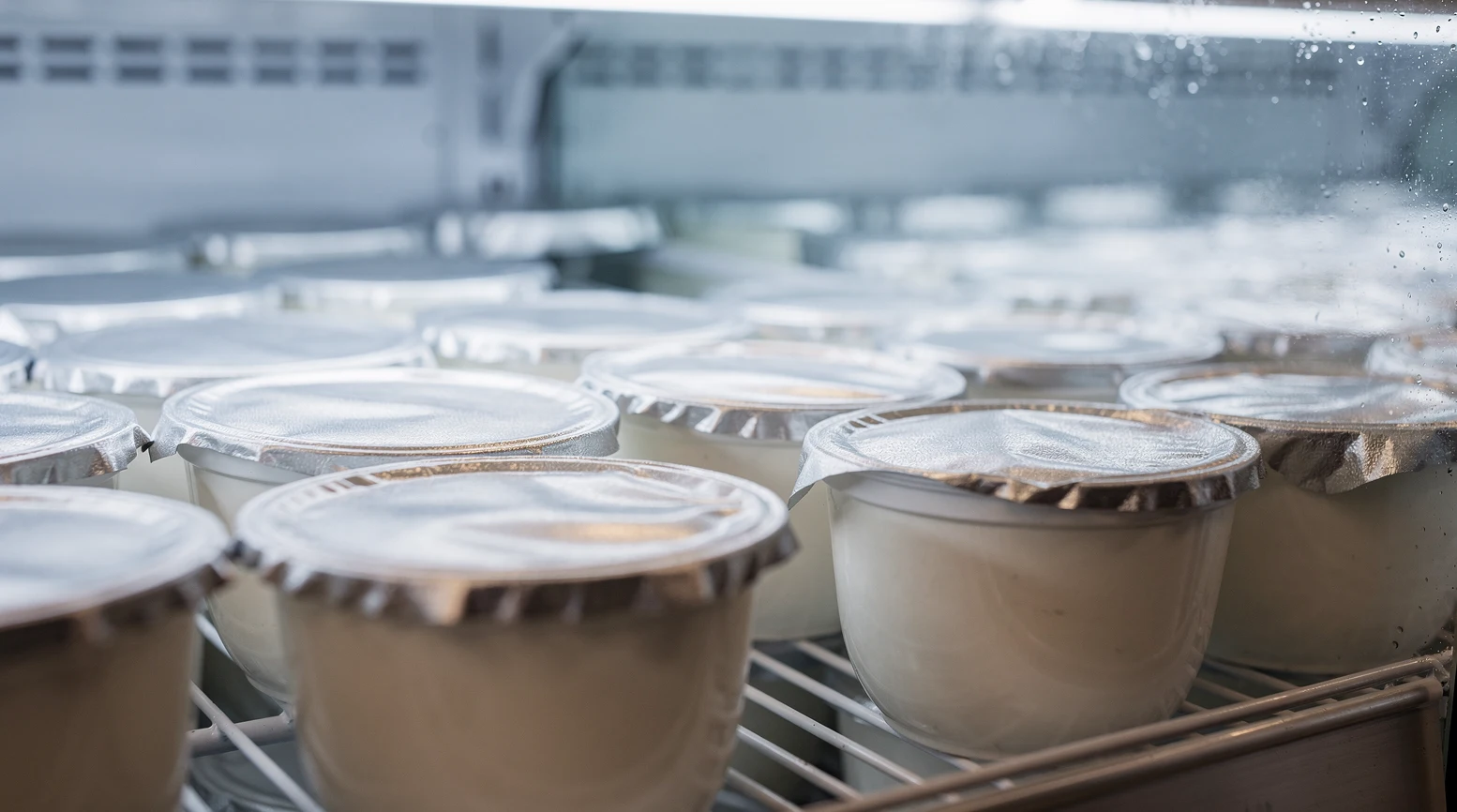
Arla Foods has recalled three flavours of its Arla Protein Pudding from UK shops because the pots may contain pieces of glass. The Food Standards Agency (FSA) published the recall notice on Friday 23 October 2026 and told anyone who has bought the affected batches not to eat them and to take them back for a full refund. Regional and national titles across Britain have reported that the puddings were on sale at Tesco, Asda, Sainsbury’s and Morrisons.
The recall covers 200g pots of Chocolate, Salted Caramel and Vanilla Cookie, each identified by specific best-before dates in January and February 2027. Because those dates sit three to four months ahead, many pots bought in recent weeks will still be in fridges, which is why the FSA notice matters to shoppers now rather than to stock already gone. This article sets out exactly which pots are affected, how to get your money back in store or online, what UK law says about refunds on unsafe food, and how this recall compares with the rest of the year’s food alerts.
In short
- Arla Protein Pudding recall: the FSA notice (reference FSA-PRIN-51-2026) covers 200g Chocolate, Salted Caramel and Vanilla Cookie pots because they may contain glass.
- Nine best-before dates are affected, running from 11 January 2027 to 6 February 2027; pots with other dates are not part of the recall.
- Do not eat them: return affected pots to the shop where you bought them for a full refund; reports say no receipt is needed.
- Where sold: Tesco, Asda, Sainsbury’s and Morrisons, according to Reach titles including Yorkshire Live and the Mirror.
- Separate recall abroad: Arla has also recalled Protein Pudding batches in Greece with April 2027 dates from its Esbjerg plant in Denmark, with different dates from the UK list.
Which Arla Protein Pudding products are being recalled?
The FSA notice names three products, all in a 200g pack size and all sold under the Arla Protein brand. Each is tied to a short list of best-before dates, printed on the pot. The agency’s risk statement is brief: the products “may contain glass which makes them unsafe to eat”.
The table below reproduces every product and date listed in the FSA data feed for the recall. If your pot shows one of these best-before dates, it is part of the recall. If it shows a different date, the FSA notice does not cover it.
| Product | Pack size | Best-before dates affected | Number of dates |
|---|---|---|---|
| Arla Protein Pudding, Chocolate | 200g | 11 January 2027, 18 January 2027, 20 January 2027, 6 February 2027 | 4 |
| Arla Protein Pudding, Salted Caramel | 200g | 21 January 2027, 23 January 2027, 31 January 2027, 2 February 2027 | 4 |
| Arla Protein Pudding, Vanilla Cookie | 200g | 25 January 2027 | 1 |
| Total | 11 January to 6 February 2027 | 9 |
Chocolate and Salted Caramel carry most of the affected dates, with four each. Vanilla Cookie has a single date. Arla has not said, in the material published by the FSA, how many pots were produced under each date, so there is no public figure for the number of units involved.
How to read the date on the pot
Best-before dates on chilled dairy desserts are usually printed on the lid or around the rim of the pot. Check the full date, including the year, because the recall applies only to 2027 dates on the list. A pot marked 25 January 2027 in Chocolate flavour, for example, is not covered: that date appears only against Vanilla Cookie.
The best-before date, not the flavour alone, is what decides whether a pot is recalled. Shoppers who buy several flavours in one shop should check each pot separately, since the affected dates differ by flavour.
What should you do if you have one in the fridge?
The FSA’s consumer advice is direct: “If you have bought the above products, do not eat them. Instead, return them to where you bought them from for a full refund.” The agency adds that further information is available from Arla on 01133 827009 or by email at hello@arlafoods.com.
Arla is also required to display point-of-sale notices in every shop selling the products. According to the FSA, these notices “explain to customers why the products are being recalled and tell them what to do if they have bought the products”. Shoppers who visit a store this weekend should expect to see them near the chilled dessert or yoghurt fixtures and at customer service desks.
If you bought the pudding in a shop
Take the pot back to the store where you bought it. Yorkshire Live, citing the Mirror, reports that customers can return the items for a full refund without a receipt. It is still sensible to bring a receipt or a loyalty card if you have one, because it speeds up the refund at the till, but the recall refund should not depend on it.
Do not open the pot or tip out the contents to check for glass. The FSA advice is to return the product, not to inspect it, and handling the contents creates its own risk of cuts.
If you bought it with an online grocery order
Shoppers who received the puddings in a home delivery or click-and-collect order should contact the retailer they ordered from. Major UK grocers handle recalled items through their normal customer service and refund routes, usually crediting the original payment method. Keep the pot until the retailer confirms whether it wants the product returned or simply disposed of.
Online orders leave a clear record of the purchase, so proving where you bought the pot should be straightforward. The same applies to shoppers who scanned a loyalty card in store, since the transaction is linked to their account.
If you have already eaten some
The FSA notice does not give medical advice beyond telling people not to eat the products. Anyone who has eaten from an affected pot and feels unwell, notices pain in the mouth or throat, or believes they may have swallowed a fragment should seek medical advice through NHS 111 or their GP. Keep the pot and its lid, as the best-before date will help both the retailer and Arla trace the batch.
Where were the puddings sold?
The FSA notice does not list individual retailers, which is normal for a manufacturer-led recall. Coverage by Reach regional titles, including Yorkshire Live, WalesOnline and Derbyshire Live, says the puddings were on sale at Tesco, Asda, Sainsbury’s and Morrisons. The Independent, Metro, the Daily Express and The Sun also ran the story on Saturday 24 October.
Those four chains are among the largest grocers in Britain, so the recall touches a large share of chilled aisles even if only a limited number of pots are affected. Smaller grocers and convenience stores may also have stocked the product. The safest approach is to check the best-before date on any Arla Protein Pudding you own, wherever you bought it.
When a branded product is recalled from a supermarket, the shop acts as the refund point even though the manufacturer issued the recall. That is why the FSA tells customers to return the pots “to where you bought them from”. The retailer then recovers the cost from the supplier through its trading terms.
The grocery market that sits behind those shelves is changing fast. The competition regulator recently confirmed that Aldi and Lidl now count as large grocers alongside the traditional big four, a shift explained in our report on the CMA designating Aldi and Lidl as large grocers. Neither discounter has been named in reports about this recall.
Why is glass treated as a recall, not a withdrawal?
UK food safety rules give businesses two main tools when a product is unsafe. A withdrawal takes the product off shelves before it reaches customers. A recall goes further and asks customers who already have the product at home to return or destroy it. The FSA itself makes this distinction in its guidance, which Yorkshire Live quoted in its report.
Glass is one of the clearest cases for a recall. Foreign bodies such as glass, metal or hard plastic can cause cuts and internal injuries, and they cannot be removed by cooking or washing. Once there is a credible risk that fragments are present in a batch, the product counts as unsafe food under UK food law, and the business must act.
The three types of FSA alert
The FSA publishes three main kinds of notice. A Product Recall Information Notice (PRIN) tells consumers and local authorities about a recall such as this one. An Allergy Alert (AA) covers allergens that are missing or wrong on the label. A Food Alert for Action (FAFA) goes to local authorities with specific steps they must take on behalf of consumers.
| FSA alert type | Code prefix | Typical trigger | Example from October 2026 |
|---|---|---|---|
| Product Recall Information Notice | PRIN | Contamination, foreign bodies, wrong dates | Arla Protein Pudding (glass), Greencore (Salmonella), Waitrose Tuna Pate (incorrect use-by date) |
| Allergy Alert | AA | Undeclared or mislabelled allergens | Pot Noodle Piri Piri Chicken (undeclared milk), Halo Foods Skinny Crunch bars (undeclared peanuts) |
| Food Alert for Action | FAFA | Local authority enforcement needed | Shell eggs from Yasensvit Ltd, Ukraine, stamped 3UA1012066 |
The Arla notice is a PRIN, the standard route for a manufacturer recall where customers need to act. It carries the reference FSA-PRIN-51-2026, meaning it is the 51st recall information notice of the year.
Under the general food law retained in UK legislation after Brexit, food that is injurious to health counts as unsafe and must not be placed on the market. A business that believes it has supplied unsafe food must withdraw it, inform the competent authorities and, where the product may already have reached consumers, inform them and recall it. The Food Safety Act 1990 sits alongside those rules and gives local authorities enforcement powers.
In practice, that means Arla notifies the FSA, the retailers pull remaining stock from shelves and storerooms, and the point-of-sale notices go up in stores. The FSA covers England, Wales and Northern Ireland; Food Standards Scotland handles the equivalent role in Scotland.
Is this the same recall as the one in Greece?
Arla has also recalled Protein Pudding products in Greece over the same risk, according to Greek City Times, which published its report late on 23 October. The Greek recall was issued by Arla Foods amba, the Danish parent company, and covers products from its manufacturing site in Esbjerg, Denmark, identified by plant code M224.
The two recalls share a hazard and a brand, but the details differ in ways that matter for UK shoppers. The Greek notice lists best-before dates in April 2027, not the January and February dates in the UK notice. Greek City Times also reports that consumers there are told to return the products for a replacement, while the FSA notice offers a full refund.
| Detail | UK recall (FSA) | Greek recall (Arla Foods amba, per Greek City Times) |
|---|---|---|
| Issued by | Arla Foods Ltd | Arla Foods amba |
| Date published | 23 October 2026 | 23 October 2026 |
| Flavours | Chocolate, Salted Caramel, Vanilla Cookie | Chocolate, vanilla biscuit, salted caramel |
| Best-before dates | 11 January to 6 February 2027 (9 dates) | 7 April, 23 April and 26 April 2027 |
| Production site named | Not stated in the FSA notice | Esbjerg, Denmark (plant code M224) |
| Remedy | Full refund | Replacement |
| Company risk wording | “May contain glass which makes them unsafe to eat” | Risk “appears extremely limited”; recall is precautionary |
The FSA notice does not say where the UK batches were made, so it would be wrong to assume they came from the same Esbjerg plant. What the two notices do show is that Arla treated a glass risk in its Protein Pudding range as serious enough to act in more than one market on the same day.
For UK shoppers, the practical point is simple: only the nine dates on the FSA list count. A pot with an April 2027 date bought in the UK is not covered by the FSA notice, although anyone with doubts can contact Arla on the number given by the FSA.
What are your refund rights under UK law?
The recall refund is the quickest route, and it is the one the FSA recommends. Behind it sits the Consumer Rights Act 2015, which gives shoppers statutory rights that apply whether or not a recall has been announced.
Under that Act, goods sold by a trader must be of satisfactory quality, and safety is one of the factors that decides whether they are. Food that may contain glass fails that test. Within 30 days of purchase, a consumer has a short-term right to reject faulty goods and receive a full refund, and for a chilled product the practical window is shorter still because the product would normally be eaten before it expires.
Reports say the retailers are refunding the recalled puddings without a receipt. That reflects standard practice on recalls: the retailer knows it sold the product and the batch details are on the pot. Outside a recall, the law requires proof of purchase rather than a paper receipt specifically; a bank statement, card transaction or online order record usually does the job.
Consumer protection rules are tightening in other areas too. Our report on the UK subscription rules taking effect on 1 January 2027 covers the next big change to how refunds and cancellations work for shoppers buying online.
The FSA notice offers a full refund. Shoppers who would rather swap the pot for an unaffected one can ask the store, but they are entitled to their money back. In Greece, by contrast, Arla’s notice offers a replacement, according to Greek City Times, which is a reminder that recall remedies vary between markets even for the same brand.
How unusual is a glass recall in 2026?
Glass recalls are rare. Shopappy analysed every FSA alert published since 1 January 2025 using the agency’s open data feed. The Arla notice is only the second recall in 2026 to name glass in its title, compared with seven during 2025.
Overall recall activity is running slightly ahead of last year. The FSA has published 50 recall information notices so far in 2026, against 46 by the same date in 2025 and 55 across the whole of 2025. Allergy alerts are lower: 49 so far this year, compared with 65 by this point in 2025.
| FSA alerts (excluding updates) | 2025, 1 Jan to 24 Oct | 2025, full year | 2026, 1 Jan to 24 Oct |
|---|---|---|---|
| Product Recall Information Notices (PRIN) | 46 | 55 | 50 |
| Allergy Alerts (AA) | 65 | 85 | 49 |
| Food Alerts for Action (FAFA) | 2 | 2 | 2 |
| Recalls naming glass, plastic or metal | 14 | 19 | 10 |
| Recalls naming glass | n/a | 7 | 2 |
Source: Shopappy analysis of the FSA food alerts data feed, counting each alert reference once and excluding update notices. Foreign-body counts are based on the hazard named in the alert title.
Other foreign-body recalls this year
The Arla recall joins a short list of 2026 notices for physical contaminants. Most involved own-label products from major grocers, which is why supermarket shoppers see these notices more often than shoppers at specialist stores.
| Date | Business | Product | Hazard |
|---|---|---|---|
| 23 Oct 2026 | Arla Foods Ltd | Arla Protein Pudding (three flavours) | Glass |
| 21 Jul 2026 | Waitrose & Partners | 8 Chocolate Chip Brioche Rolls | Hard plastic and metal |
| 25 Jun 2026 | Ferrero UK | Frozen Nutella Croissant | Metal |
| 28 May 2026 | Fox’s Burton’s Companies UK | Arran Fine Foods Caramelised Red Onion Chutney | Metal |
| 26 May 2026 | Morrisons | Morrisons Savers Cashews | Glass |
| 30 Apr 2026 | Asda | Exceptional by Asda Beer Battered Cod Fishcakes | Plastic or metal |
| 9 Apr 2026 | Tesco | Tesco Finest Summer Edition Chocolate Affogato Dessert | Plastic |
The FSA has issued 12 alerts in October 2026 up to 24 October, the same number as in the same part of October 2025. The month has included a Salmonella recall by Greencore, a Listeria recall of SuperValu and Centra seafood cocktails in Northern Ireland, a Waitrose recall over an incorrect use-by date, and a Food Alert for Action on Ukrainian shell eggs.
On Saturday 24 October the FSA added another allergy alert, for Emma Basic Curry Cubes Japanese Style over undeclared milk. For shoppers, the takeaway is that recall notices are a routine part of the food system rather than a sign of wider failure, but the glass and Salmonella cases are the ones that most need action at home.
What does the recall mean for supermarkets and online grocery?
For retailers, a recall like this tests two systems: how fast they can clear shelves and storerooms, and how well they can trace who bought the product. Both depend on batch and date data captured at goods-in and on the shop floor.
Batch-level tracking is what allows a recall to stop at nine best-before dates instead of pulling every Arla Protein Pudding in the country. Our guide to lot and expiry tracking for retailers selling perishables explains how grocers and online sellers record batch codes so that a recall can target only the stock at risk.
Every online grocery order records the exact items delivered to a named customer. In principle, that lets retailers contact affected customers directly. Loyalty card data does the same for in-store purchases where the card was scanned. Retailers have not said publicly whether they are contacting customers directly about this recall, so shoppers should not wait for a message before checking their fridges.
Online grocery remains a large channel in Britain. The latest official data showed online’s share of retail sales at 28.8% in September, as covered in our report on UK retail sales falling 0.4% in September. That figure covers all retail, not just food, but it shows how many purchases now come with a digital record attached.
High-protein yoghurts, puddings and shakes have become a fixture of UK chilled aisles in recent years, aimed at gym-goers and shoppers looking for higher-protein snacks. Arla’s Protein range is one of the better-known brands in that space. A recall in a fast-growing category can affect shopper confidence in the short term, although the narrow date range in this notice limits the scale of the disruption.
Arla has not published a statement on the cause of the possible contamination beyond the FSA notice. Neither the FSA nor the company has said whether any injuries have been reported.
The UK system relies on the manufacturer to recall and the retailer to refund, with the FSA publishing the notice and local authorities enforcing. Other markets follow a similar pattern. In the United States, for example, large food recalls such as the one described in our report on the Kroger and Brookshire egg recall over Salmonella are announced by the manufacturer and published by the regulator, while shops handle refunds.
One difference is in how widely notices travel. FSA alerts go out by email, SMS and social media, and are carried within hours by regional newspapers across the UK. The Arla notice was published on Friday evening and had reached dozens of local titles by Saturday morning.
The FSA offers a free alert service by email and text message, covering both recalls and allergy alerts. Shoppers with food allergies, in particular, may find the allergy alert stream useful, since allergen mislabelling is the most common reason for an FSA notice.
What happens next?
The immediate steps are already in motion: affected stock should be off shelves, point-of-sale notices should be in stores, and refunds are available. Arla and the FSA may update the notice if more batches are found to be at risk, as happens with some recalls. Updated notices carry an “update” reference, so shoppers should check for any revision before assuming the list is final.
For shoppers, the job is short. Check any Arla Protein Pudding in the fridge, compare the best-before date with the nine on the list, and return any match to the shop for a refund. Anyone with questions can contact Arla on 01133 827009 or at hello@arlafoods.com, the contact details given in the FSA notice.
- An updated FSA notice adding further dates or products.
- Any statement from Arla on the cause and the production site of the UK batches.
- Further recalls of the same range in other European markets, following the Greek notice.
- Whether retailers contact online and loyalty card customers directly.
Frequently asked questions
Which Arla Protein Puddings are being recalled?
Three 200g products: Chocolate with best-before dates of 11, 18 and 20 January and 6 February 2027; Salted Caramel with dates of 21, 23 and 31 January and 2 February 2027; and Vanilla Cookie with a best-before date of 25 January 2027.
Why is Arla recalling Protein Pudding?
The FSA says the products may contain glass, which makes them unsafe to eat. Arla has not published further detail on the cause in the material released by the FSA.
Where were the recalled puddings sold?
Reports by Reach titles including Yorkshire Live and the Mirror say the puddings were sold at Tesco, Asda, Sainsbury’s and Morrisons. The FSA notice itself does not name retailers, so check any Arla Protein Pudding you own, wherever you bought it.
How do I get a refund for an Arla Protein Pudding?
Return the pot to the shop where you bought it for a full refund. If you bought it online, contact the retailer’s customer service. Reports say a receipt is not needed for the recall refund.
What if my pudding has a different best-before date?
Only the nine dates listed in the FSA notice are covered. Pots with other dates are not part of the UK recall. If you are unsure, contact Arla on 01133 827009 or hello@arlafoods.com.
What should I do if I have already eaten some?
The FSA notice tells people not to eat the products. If you have eaten from an affected pot and feel unwell, have pain in your mouth or throat, or think you may have swallowed a fragment, contact NHS 111 or your GP and keep the pot for reference.
Is the Greek Arla recall the same as the UK one?
No. The Greek recall, reported by Greek City Times, covers batches with April 2027 best-before dates from Arla’s Esbjerg plant in Denmark and offers a replacement. The UK recall covers January and February 2027 dates and offers a full refund.
How often does the FSA recall food because of glass?
Rarely. The Arla notice is the second FSA recall in 2026 to name glass in its title, compared with seven in 2025, based on Shopappy’s analysis of the FSA alerts data feed.