
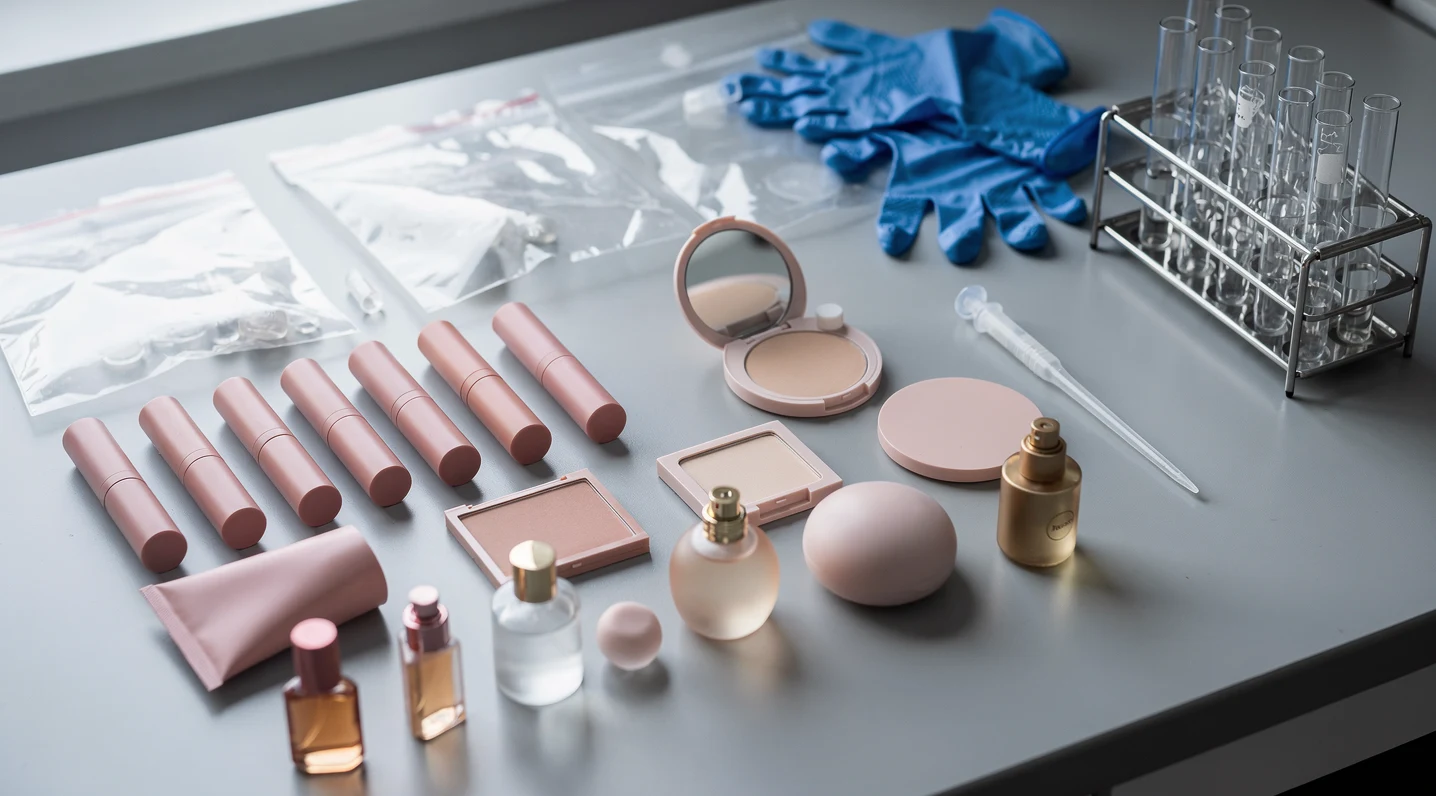
Mercury, lead, nicotine and methanol have been found in counterfeit beauty products seized across the UK, Trading Standards said on Friday 30 October 2026. One fake skincare product contained 13,200 parts per million of mercury, and one counterfeit fragrance was made up of roughly 80% methanol, a toxic alcohol that can cause serious poisoning. The findings were released alongside a new Intellectual Property Office (IPO) campaign, Face the Fakes, and fresh government guidance for salons and shops.
The warning lands four weeks before Black Friday and at the start of the Christmas gifting season, when perfume, make-up sets and skincare bundles are among the most searched and most discounted products online. The BBC, the Guardian, Sky News, the Telegraph and the Independent all carried the findings on Friday. This article sets out what was found, where the fakes came from, how to spot them and what UK shoppers can do to get their money back.
In short
- Toxic results: Trading Standards tested 50 seized counterfeit cosmetics and found mercury in skincare, lead in lipstick, eyeshadow and contour products, nicotine in perfume and a fragrance that was about 80% methanol.
- Four in 10 fakes: according to the BBC, four in 10 seized cosmetics contained potentially harmful substances, and beauty is now among Trading Standards’ 10 most investigated fake product types.
- Young buyers: a fifth of 18 to 24-year-olds who bought beauty products last year knowingly bought fakes, up from 6% in 2023, according to the IPO’s counterfeit goods tracker.
- Bought online: nearly three in four people who bought counterfeit cosmetics and toiletries did so online, Trading Standards surveys found, which puts marketplaces and social media sellers at the centre of the problem.
- Your rights: a fake is not “as described” under the Consumer Rights Act 2015, so shoppers can claim a refund from the seller, and card, chargeback and PayPal protections offer a second route if the seller vanishes.
What did Trading Standards find in the seized beauty products?
Trading Standards officers tested a cross-section of 50 counterfeit cosmetic products taken in seizures and identified potentially harmful substances across several product types, the Guardian reports. The BBC says four in 10 seized cosmetics contained potentially harmful substances. The products were copies of popular and expensive brands, the kind of items that sell well as gifts and on social media.
The results matter because counterfeit cosmetics skip every safety step that a legitimate product must pass in Great Britain. Genuine products need a safety assessment, an accurate ingredient list and a named UK Responsible Person on the label. Fakes have none of that, so a shopper has no way of knowing what is inside the tube or bottle.
The mercury result
The most striking finding was 13,200 parts per million of mercury in one counterfeit skincare product, according to Trading Standards. That is 1.32% of the product by weight. Mercury has historically turned up in illegal skin-lightening creams, where it suppresses melanin, and it is banned as a cosmetic ingredient in the UK.
The Guardian notes that mercury is increasingly being found in skincare and that repeated exposure through the skin can damage the kidneys and the nervous system. For comparison, the Minamata Convention on Mercury, the international treaty the UK has signed, set a limit of 1 part per million for mercury in cosmetics such as skin-lightening products. The seized product was more than 13,000 times over that line.
Lead in lipstick, eyeshadow and contour
Some counterfeit make-up, including lipsticks, eyeshadows and contour products, contained high levels of lead. Lead can damage the brain, nervous system and kidneys, with particular risks for children and during pregnancy, the Guardian reports. Lipstick is a particular concern because some of it is swallowed during normal wear.
Lead and its compounds are on the list of substances prohibited in cosmetic products in Great Britain, although tiny, technically unavoidable traces can be tolerated where a safety assessment shows the product is safe. As a point of reference, the US Food and Drug Administration recommends a maximum of 10 parts per million of lead in lip products and externally applied cosmetics. Trading Standards has not published the exact lead readings, so the size of the exceedances is not yet public.
Nicotine in perfume and an 80% methanol fragrance
Tests also found nicotine in counterfeit perfume. Nicotine and its salts are prohibited in cosmetic products, and nicotine can be absorbed through the skin. Its presence suggests the fakes were blended with whatever cheap ingredients were to hand, with no ingredient control at all.
One counterfeit fragrance was made up of about 80% methanol, according to Trading Standards. Methanol is a toxic alcohol that the Guardian notes can cause serious poisoning, and it has been linked to blindness in severe cases. Legitimate perfumes use cosmetic-grade ethanol, and methanol is only permitted in cosmetics in small amounts as a denaturant for that alcohol.
| Substance found | Seized product type | Health risk reported | Position in UK cosmetics rules |
|---|---|---|---|
| Mercury (13,200 ppm in one item) | Skincare | Kidney and nervous system damage through repeated skin exposure | Prohibited as an ingredient; treaty limit of 1 ppm for mercury-added cosmetics |
| Lead (high levels) | Lipstick, eyeshadow, contour | Brain, nervous system and kidney damage; extra risk for children and in pregnancy | Prohibited; only unavoidable traces tolerated if assessed as safe |
| Nicotine | Perfume | Absorbed through the skin; toxic in sufficient doses | Prohibited in cosmetic products |
| Methanol (about 80% of one fragrance) | Perfume | Serious poisoning; linked to sight damage | Only allowed in small amounts as an alcohol denaturant |
The findings draw on raids in Greater Manchester. In July, the Police Intellectual Property Crime Unit (PIPCU) and Greater Manchester Police seized about 1,660 counterfeit hair products, including hair extensions, shampoo and conditioner, at a warehouse in Manchester, the BBC reports. The Guardian puts the figure at 1,666 items.
A separate raid in Bolton by Trading Standards officers uncovered about GBP 2 million worth of counterfeit goods at a production facility in a commercial property. The haul included perfume, cosmetics, clothing and vapes. Photographs issued by the IPO show a production site for counterfeit products, which suggests some fakes are being finished or packaged in the UK rather than only imported ready-made.
The two operations show how wide the counterfeit beauty supply chain now runs. Hair care, fragrance and colour cosmetics were all present, and the Bolton site mixed beauty fakes with clothing and vapes, the same product mix seen on some unlicensed market stalls and social media shops. No details of any charges have been published alongside Friday’s findings.
Why are more young shoppers knowingly buying fakes?
The most uncomfortable number in Friday’s release is about choice, not deception. About 20% of 18 to 24-year-olds who bought beauty products last year knowingly bought counterfeits, up from 6% in 2023, according to the IPO’s latest counterfeit goods tracker. That is more than a threefold rise in two years.
Several pressures help explain it. Prestige skincare and fragrance prices have climbed, viral products sell out quickly, and social media feeds blur the line between a cheaper lookalike and an outright copy. The rise of dupe culture among value shoppers has made “a version of the expensive thing” feel normal, and some buyers do not see a meaningful difference between a legal dupe and a counterfeit carrying the original brand name.
A dupe is a product from another company, sold under its own name, that aims for a similar look, scent or finish. It still has to meet UK cosmetics law: a safety assessment, a proper label, a UK Responsible Person and a notification on the official cosmetics portal. A counterfeit copies the brand name, logo and packaging of the original, which is a criminal offence, and it has no safety checks at all.
That distinction is the core of the IPO’s message. A shopper who knowingly buys a cheap fake perfume may think they are only cheating a luxury brand, but the test results show they may be spraying methanol on their skin. Helen Barnham, head of enforcement engagement at the IPO, said fakes “can contain dangerous substances that have no place in the cosmetics people use every day, and can be made in appalling, unhygienic conditions”.
Why is online shopping the main route for fake cosmetics?
Surveys by Trading Standards found that nearly three in four people who bought counterfeit cosmetics and toiletries did so online, the Guardian reports. That makes online marketplaces, social media shops, pop-up websites and messaging-app sellers the main channel, not market stalls or car boot sales. It also means the problem scales with the volume of online beauty sales, which peaks between Black Friday and Christmas.
Online selling suits counterfeiters for several reasons. Listings can use genuine brand photographs, sellers can open and close accounts quickly, and buyers cannot inspect packaging, batch codes or smell a fragrance before they pay. The IPO’s new guidance for businesses specifically warns about “unknown or unverified sellers, including third-party marketplace sellers or social media profiles”.
The findings add to existing pressure on platforms. Earlier this month, Which? reported finding unsafe products still listed on Amazon and eBay and called for a new law making online marketplaces responsible for what they sell. Counterfeit cosmetics sit squarely in that debate, because a fake sold through a marketplace can harm a shopper even when the platform removes the listing after a complaint.
Social media is a growing part of the picture. The IPO says Face the Fakes is working with content creators because many young shoppers discover beauty products through short videos and influencer recommendations. Counterfeit sellers use the same channels, often through direct messages, closed groups or links to short-lived web shops.
The government guidance warns against “limited-time offers, flash sales or online adverts that put pressure on you to make a quick decision“. It also notes that counterfeit products may be priced only slightly below the genuine product, so a modest discount is not proof that an item is real. That last point matters in the sales season, when legitimate retailers also cut beauty prices.
How can you spot fake make-up, skincare and perfume?
The honest answer from the regulators is that you often cannot, at least not with certainty. Rani Ghosh, an independent toxicologist quoted by the BBC and the Guardian, said counterfeit beauty products “can look incredibly convincing” and that “you cannot tell from the packaging what chemicals are inside”. The safest protection is where you buy, not what you see.
That said, the IPO guidance published on Friday lists warning signs that apply equally to shoppers and to businesses. The table below sets them out alongside what a genuine product should show.
| What to check | Genuine product | Warning sign of a fake |
|---|---|---|
| Seller | The brand, a major retailer or an authorised stockist listed on the brand’s website | Unknown marketplace seller, social media profile or new website with little contact information |
| Price | In line with other big retailers, or a clearly advertised sale | Far below the usual price, or a small discount that looks “safe” from an unverified seller |
| Label | Ingredients list, company name and UK address of the Responsible Person, batch code, weight and warnings | Missing or incomplete details, no UK address, no batch code |
| Print and packaging | Sharp printing, consistent fonts and colours, sealed packaging | Blurry print, spelling mistakes, flimsy boxes, broken or missing seals |
| Product itself | Smells, looks and feels as expected | Unusual smell, texture, colour or consistency compared with a product you know |
| Pressure to buy | Normal checkout with clear returns information | Countdown timers, “last few left” messages, payment by bank transfer only |
Check the seller before the product
Buy beauty products directly from the brand, from a big retailer or from a stockist that the brand lists as authorised. On a marketplace, check who the actual seller is, not just the marketplace logo at the top of the page. A listing that says “dispatched by” one company and “sold by” another is selling on behalf of a third party.
Look up the seller’s business name, address and reviews outside the marketplace. Be cautious of sellers with very few reviews, reviews that mention other products, or accounts that were created recently. The IPO advises using a trusted supplier instead if you are unsure.
Check the label and the packaging
Every cosmetic product sold in Great Britain must name a UK Responsible Person on the label, with an address. Look for a full ingredient list, a batch code and any warnings, and compare the box with photographs on the brand’s own website. Spelling mistakes, wrong fonts and blurry printing are classic signs.
Bear in mind that the absence of these flaws proves nothing. Counterfeiters increasingly copy packaging very well, and the IPO says authentic-looking packaging can still appear on fake products. Treat good packaging as necessary but never sufficient.
After you open it
If a product smells, looks or feels different from what you expect, stop using it. Fragrance is often the easiest giveaway: a fake may smell sharply of alcohol, fade within minutes or have a slightly different colour from the genuine juice. Any burning, stinging, swelling or rash after using a new product is a reason to stop immediately and seek medical advice.
Keep the product, the packaging, the receipt or order confirmation and the seller’s details. You will need them for a refund claim and for any report to Trading Standards. Do not pass suspected fakes on to friends or resell them.
What should you do if you think you have bought a fake?
Stop using the product and keep everything. Then pursue two tracks at once: getting your money back, and reporting the seller so that other shoppers are protected. The order matters less than acting quickly, because some payment protections have time limits.
Under the Consumer Rights Act 2015, goods bought from a trader must be as described, of satisfactory quality and fit for purpose. A counterfeit sold as a branded product fails the “as described” test, so you are entitled to a remedy from the seller. Within 30 days of delivery you can reject the goods for a full refund, and online purchases also carry a separate 14-day right to cancel under the Consumer Contracts Regulations.
| How you paid or where you bought | Route to your money | Key limits |
|---|---|---|
| UK retailer or trader (any payment) | Consumer Rights Act claim against the seller: refund, repair or replacement | 30-day short-term right to reject; seller must be a trader, not a private individual |
| Credit card | Section 75 claim against the card provider, which is jointly liable with the seller | Item or order must cost more than GBP 100 and no more than GBP 30,000 |
| Debit card, or credit card under GBP 100 | Chargeback request through your bank under card scheme rules | Not a legal right; banks usually expect a claim within about 120 days |
| PayPal | Purchase Protection claim for an item “significantly not as described” | Generally within 180 days; goods may need to be returned |
| Marketplace order | Seller first, then the platform’s own buyer guarantee or dispute process | Each platform sets its own time limits and evidence rules |
| Bank transfer to a social media seller | Report to your bank as a possible scam as soon as possible | Weakest protection; recovery is not guaranteed |
The IPO guidance tells people to report sellers of counterfeit cosmetics to their local Trading Standards service through their council, or through Citizens Advice, which passes consumer complaints to Trading Standards. Report the listing to the marketplace or social media platform as well, and tell the brand, since most beauty companies run their own anti-counterfeiting teams. If you suffered a reaction, your GP or pharmacist should know that a counterfeit product may be involved.
What does UK law say about counterfeit cosmetics?
Selling counterfeit goods is a criminal offence. Under section 92 of the Trade Marks Act 1994, unauthorised use of a registered trade mark on goods offered for sale can lead to an unlimited fine and up to 10 years in prison on conviction in the Crown Court. Buying a fake for personal use is not itself an offence, but reselling it is.
Separately, cosmetic products sold in Great Britain must comply with UK cosmetics regulation, the post-Brexit version of the EU cosmetics rules. That requires a safety assessment, a named UK Responsible Person, a product notification before sale, accurate labelling and compliance with lists of banned and restricted substances. Trading Standards enforces these rules, as well as product safety law more broadly.
The open question is how far online marketplaces should be held responsible for unsafe and fake goods sold by third parties. The Product Regulation and Metrology Act 2025 gave ministers powers to set new duties for online marketplaces, but detailed rules have yet to be published. Consumer groups want platforms to verify sellers and to be liable when unsafe goods reach UK homes.
That debate reaches Parliament next week. Commons committee chair Liam Byrne has been pressing Amazon and TikTok to appear at a safety hearing on online marketplace consumer protection on 3 November. Friday’s counterfeit beauty findings are likely to feature in the questioning, given that three in four fake cosmetics buyers bought online.
What does this mean for salons, independent shops and beauty sellers?
The IPO published new guidance on 30 October, developed with the beauty and salon industry, to help businesses avoid using and selling counterfeit products. It says selling or using fakes can lead to investigation by Trading Standards and legal consequences for the business, even when the business was itself deceived. It also warns that using counterfeit or non-compliant products may affect a salon’s professional indemnity and public liability insurance.
The guidance sets out five steps: buy from trusted suppliers, check who you are buying from, do not rely on price or appearance, check products before use or sale, and report suspected fakes rather than using or selling them. It singles out cold calls, walk-in sellers and promotional offers on hard-to-source products as risks. Readers can find the full checklist in the IPO’s guidance on avoiding fake beauty products.
The guidance also covers products that are not cosmetics at all. It reminds businesses that weight-loss injections such as Mounjaro, Ozempic and Wegovy, and botulinum toxin products commonly known as Botox, are prescription-only medicines. Buying medicines from unregulated sellers, including through social media, raises the risk of falsified products with wrong doses, harmful ingredients or no active ingredient at all.
For independent beauty retailers and salons on the high street, the findings are double-edged. Legitimate traders lose sales to cheap fakes, but they also have a clear selling point: verified supply, proper labels and someone accountable behind the counter. That fits the wider push in the government’s Hope on the High Street strategy, which pledged extra Trading Standards enforcement against shops trading in illicit goods.
Which products are most at risk ahead of Christmas?
Based on Friday’s results and the seizures, the highest-risk categories are fragrance, colour cosmetics, skincare and hair products, including hair extensions. Perfume stands out because a counterfeit can be bottled cheaply, sells at a high price and is a classic Christmas gift. It was also the category where both nicotine and methanol were found.
Skincare creams sold online with promises of fast lightening, spot removal or “miracle” results deserve extra caution, given the mercury finding. Lip products matter because of the lead results and because they are partly swallowed. Gift sets bought from unfamiliar sellers are a further risk, because the recipient will not have the original listing or receipt to check.
| Product type | What was found or seized | Main risk for shoppers | Safer way to buy |
|---|---|---|---|
| Perfume and fragrance | Nicotine; one fragrance about 80% methanol; perfume in the Bolton haul | Skin absorption and poisoning risk | Brand websites, department stores and authorised retailers |
| Skincare creams | 13,200 ppm mercury in one product | Kidney and nervous system damage over time | Pharmacies and major retailers; avoid unlabelled “lightening” creams |
| Lipstick, eyeshadow, contour | High levels of lead | Lead exposure, especially for children and in pregnancy | Authorised stockists; check UK Responsible Person on the label |
| Hair care and extensions | About 1,660 counterfeit items seized in Manchester in July | Unknown ingredients and hygiene standards | Salons and retailers that can name their supplier |
What happens next with the Face the Fakes campaign?
The IPO says Face the Fakes will work with content creators and the beauty industry to highlight the harms of counterfeit products, aiming squarely at the younger shoppers whose knowing purchases of fakes have risen fastest. Millie Kendall, chief executive of the British Beauty Council, said the council is proud to support the campaign and “help consumers buy beauty with confidence and keep fakes out of their beauty bags”. She said counterfeiters “trade on the reputation and creativity that brilliant beauty businesses have worked hard to build”.
The timing is deliberate. Black Friday 2026 sales, which started early this year, peak on Friday 27 November, and beauty is one of the busiest gifting categories in the weeks that follow. Counterfeit sellers rely on the same urgency and discount messaging that legitimate retailers use, which makes the run-up to Christmas the moment shoppers are most exposed.
Further enforcement is likely. Trading Standards has said cosmetics, skincare and perfume are now among its 10 most commonly investigated fake product types, and the Bolton production site shows that some of the supply is being prepared in the UK. Shoppers should expect more seizures, more platform takedowns and more warnings before Christmas, but the practical advice will not change: buy beauty from a seller you can identify and hold to account.
Frequently asked questions
What harmful substances were found in fake beauty products?
Trading Standards found mercury in counterfeit skincare (13,200 parts per million in one product), high levels of lead in lipsticks, eyeshadows and contour products, nicotine in perfume, and a counterfeit fragrance made up of about 80% methanol. The results came from tests on a cross-section of 50 seized counterfeit cosmetics.
Where were the counterfeit cosmetics seized?
In July, the Police Intellectual Property Crime Unit and Greater Manchester Police seized about 1,660 counterfeit hair products at a warehouse in Manchester. A separate Trading Standards raid in Bolton uncovered about GBP 2 million of counterfeit perfume, cosmetics, clothing and vapes at a production facility.
How can I tell if make-up or perfume is fake?
Check the seller first: buy from the brand, a major retailer or an authorised stockist. Then look for a full ingredient list, a batch code and a UK Responsible Person’s name and address on the label, and watch for blurry print, spelling mistakes or an unusual smell or texture. Regulators warn that fakes can look very convincing, so a trusted seller is the best protection.
Is it illegal to buy fake beauty products in the UK?
Buying a counterfeit for your own use is not a criminal offence, but selling counterfeit goods is, under the Trade Marks Act 1994, with penalties of up to 10 years in prison. Reselling a fake you bought, including on a resale app, could expose you to enforcement action.
Can I get a refund for a fake beauty product bought online?
Yes, if you bought it from a trader. A counterfeit sold as a branded product is not “as described” under the Consumer Rights Act 2015, so you can claim a refund within 30 days. If the seller will not help, a Section 75 claim (credit card purchases between GBP 100 and GBP 30,000), a chargeback through your bank or a PayPal claim may recover your money.
Who do I report a seller of fake cosmetics to?
Report the seller to your local Trading Standards service through your council or through Citizens Advice. Also report the listing to the marketplace or social media platform and let the brand know, since most beauty companies have anti-counterfeiting teams.
How many young people buy fake beauty products?
About 20% of 18 to 24-year-olds who bought beauty products last year knowingly bought counterfeits, up from 6% in 2023, according to the Intellectual Property Office’s counterfeit goods tracker.
Are dupes the same as counterfeit products?
No. A dupe is sold under its own brand name and must still meet UK cosmetics safety rules, including a safety assessment and proper labelling. A counterfeit copies another brand’s name and packaging, is illegal to sell and has no safety checks, which is why fakes have been found to contain mercury, lead and methanol.
What should I do if a product has caused a skin reaction?
Stop using it straight away and seek advice from a pharmacist, your GP or NHS 111, mentioning that the product may be counterfeit. Keep the product and packaging, and report the seller to Trading Standards so the item can be investigated.