
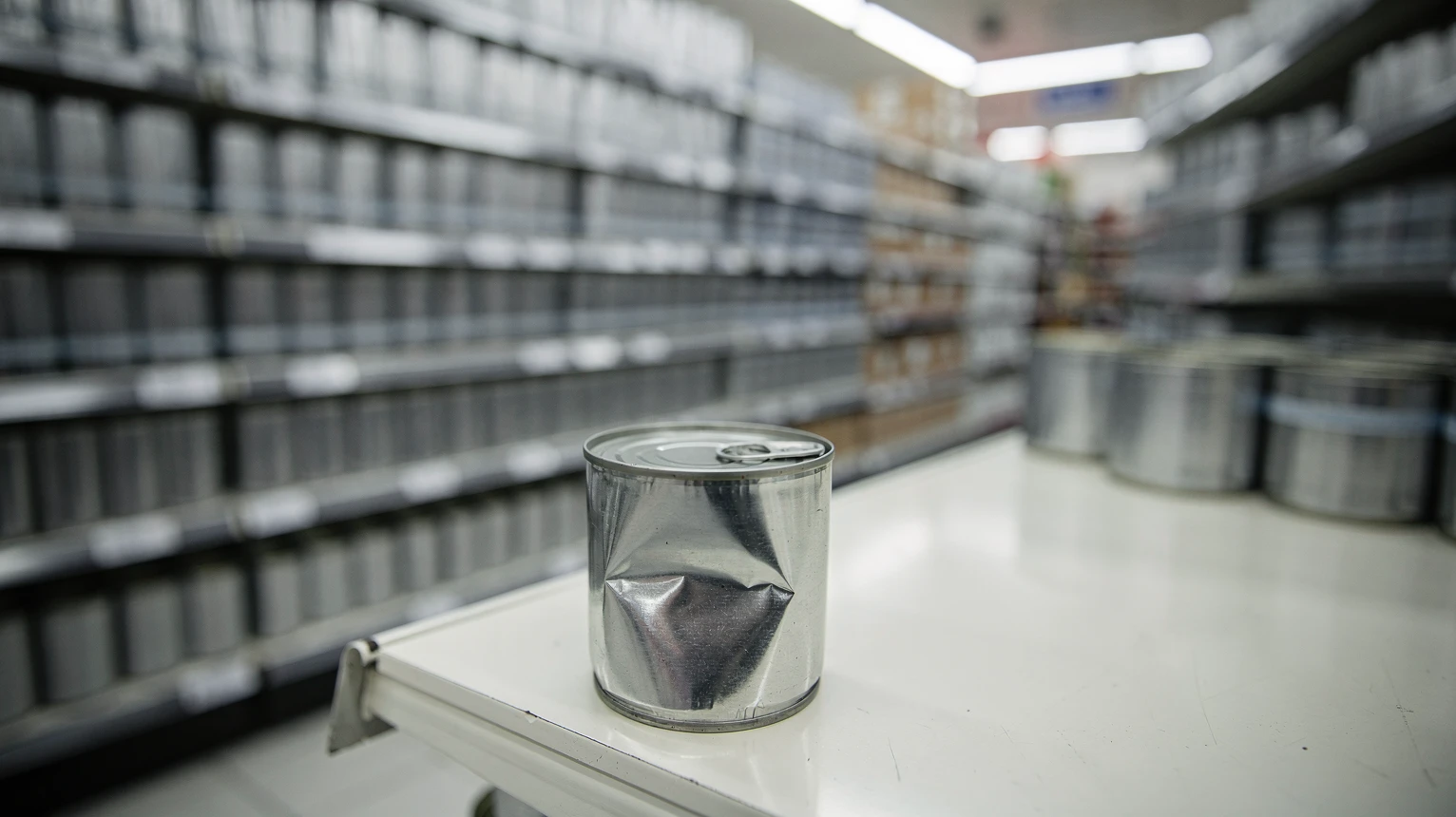
Baxters has recalled a batch of its Chef Selections Cullen Skink soup because a manufacturing fault may cause the contents to spoil and the cans to swell and potentially rupture. The Food Standards Agency (FSA) published the alert on Friday 6 November 2026 and told anyone holding an affected 400g can not to eat it, not to open it and to put the full can in a bag in an outside bin.
The soup has been sold at Tesco and Waitrose, according to GB News, which quoted notices from both supermarkets. Those notices tell customers something different from the FSA alert: take the can back to a store for a refund. This article sets out exactly which cans are affected, how to read the code on the base, which instruction to follow in which situation, what the law says about your money and what is still not known.
In short
- The recall: Baxters Chef Selections Cullen Skink soup, 400g can, batch code L07XC (all time stamps), best before April 2029 LCS1. The FSA reference is FSA-PRIN-52-2026.
- The risk: a manufacturing fault may cause spoilage, an unpleasant odour and flavour, and cans that swell and possibly rupture. Do not eat the soup and do not open the can.
- Two sets of instructions: the FSA says bin the full can outside and contact Baxters for a replacement; Tesco and Waitrose offer a refund if you return it to a store.
- A swollen or leaking can stays at home: our reading of the notices is that the FSA disposal route is the right one for any can that already looks wrong, with the refund claimed by phone or email.
- Long shelf life, long tail: with a best-before date in 2029, affected cans could sit unnoticed in cupboards for years, so check the base of every Cullen Skink tin you own.
Which Baxters soup has been recalled?
The recall is narrow. It covers one product in one pack size and one batch code, and the FSA says the alert concerns “Baxters Chef Selections Cullen Skink soup”. GB News reports that no other Baxters products are known to be affected, so Baxters soups outside the Chef Selections Cullen Skink line are not part of this notice.
Cullen skink is a Scottish smoked haddock soup named after the Moray coastal town of Cullen; STV describes the Baxters version as a smoked haddock chowder. Baxters, which is based at Fochabers in the same county, says on its website that it was established in 1868 and has been a family business for four generations. That makes this a recall of a heritage product from a household name, and it explains why the story travelled across Scottish and national titles on Saturday.
| Detail | What the recall notice says |
|---|---|
| Product | Baxters Chef Selections Cullen Skink soup |
| Pack size | 400g can |
| Batch code | L07XC (all time stamps) |
| Best before | April 2029 LCS1 |
| Where to find the code | On the underside of the tin |
| FSA reference | FSA-PRIN-52-2026, dated 6 November 2026 |
| Date on the Baxters customer notice | 5 November 2026 |
| Contact | Baxters on 0800 389 8389 or CCUK@baxters.com |
The FSA’s own alert page carries the same details, along with the customer notice as a download: FSA alert FSA-PRIN-52-2026.
How do you check whether your tin is affected?
Turn the can over without shaking it and read the base. The Baxters notice says the identification details are on the underside of the tin, and it advises taking a picture of the notice or writing down the batch code and date to use at home. You are looking for two things together: L07XC and April 2029.
What “all time stamps” means
Canned food is usually coded with a batch reference and the time it was filled. The words “all time stamps” mean that the time printed beside the code makes no difference: any can marked L07XC with the April 2029 date is covered.
That is a wider net than the recall of Lucky Saint Hazy IPA in September, whose customer notice limited the problem to cans with a production time stamp between 20:50 and 22:30. Baxters has not said why the whole batch is included. It does mean you do not need to work out a production window, which makes the check simpler.
One line on the Baxters notice is awkward. Above the details it reads “All pack sizes, batch codes and best before dates affected”, then lists a single pack size, a single batch code and a single date.
Read on its own, that heading could suggest every can of the soup is included. The FSA alert lists only batch L07XC, and Tesco’s notice, as quoted by GB News, refers to “a specific date and batch code”. The sensible reading is that the listed details are the affected ones. If your can carries a different code and you are still unsure, the Baxters careline on 0800 389 8389 can confirm it.
Why could the tins swell and rupture?
The FSA’s risk statement is short: “A manufacturing fault has occurred which may result in spoilage causing unpleasant odour and flavour, swelling and possible rupture of the can.” Neither the FSA nor Baxters has said publicly what the fault was, whether it involved the seal, the heat treatment or another stage of production.
What can be said in general terms is why a sealed can might swell at all. The John O’Groat Journal, reporting FSA consumer guidance, has said that the agency warns against eating food from visibly bulging cans because the bulge could be gas building up from the presence and growth of microorganisms. The same report says the FSA considers food in a shallowly dented can to be fit to eat when there are no other obvious signs of damage. A bulge and a dent are therefore treated very differently.
The wording of this alert is worth reading closely. It describes spoilage, smell, flavour and physical damage to the can; it does not name an organism such as salmonella or listeria, and it does not mention illness. Other FSA notices this year have named those organisms in their titles, so the absence here is notable.
That should not be read as a reassurance that the soup is safe. The FSA has told people not to eat it, and a can that has spoiled for an unknown reason is not something to taste-test. The alert simply does not state a specific health outcome, and this article does not supply one.
Food spoilage has been an unusually visible theme in British grocery this autumn. Waitrose recalled its Essential Unsweetened Oat Drink in September over poor temperature control and the risk of microbiological contamination and spoilage, and shoppers have also read about cyber-attacks on supermarket fridges and freezers. Those events have different causes and no reported link to Baxters.
Should you bin the can or take it back to the shop?
This is the question most shoppers will actually have, because the published advice is not uniform. The FSA alert tells consumers to dispose of the full can without opening it and to contact Baxters for a replacement. The supermarkets, as quoted by GB News, ask customers to bring the product back.
| Source | What to do with the can | What you get | Who to contact |
|---|---|---|---|
| FSA alert and Baxters notice | Do not open. Place the full can in a bag and put it in an external bin | A replacement | Baxters: 0800 389 8389 or CCUK@baxters.com |
| Tesco notice (via GB News) | Do not eat it. Return it to any Tesco store | A full refund; no receipt required | Baxters, or Tesco Customer Services |
| Waitrose statement (via GB News) | Do not consume it. Package it up and return it to a local branch | A refund | Waitrose Customer Care: 0800 188 884, option 4, or Baxters |
None of these notices says the others are wrong, and the difference may reflect how they were drafted. A retailer’s notice is usually written around its own refund process, while the manufacturer’s notice focuses on the can itself. Even so, the mismatch matters when the stated hazard is a can that may burst.
A practical way to choose
The notices do not draw a distinction between a normal-looking can and a damaged one, so the following is our own reading rather than official guidance. If the can is swollen, domed, leaking or smells, do not carry it to a shop. Follow the FSA route: handle it as little as possible, bag it, put it in the outside bin, then claim by phone or email.
If the can looks completely normal, the Tesco or Waitrose route is available if you bought it there and would prefer money back. Waitrose’s instruction to package the item up is a sensible precaution wherever you take it, and a sealed bag in a stable position in the car or shopping bag is better than a loose can. If you would rather not transport it at all, the FSA route remains open to you.
Take a clear photograph of the base showing the batch code and date, ideally with the front label visible in a second shot, before you dispose of it. Keep any receipt, loyalty-card record or online order confirmation. Those details are likely to speed up a claim once the can itself has gone, although neither Baxters nor the supermarkets has published what evidence it will ask for.
If a can has already leaked in a cupboard, general kitchen hygiene applies. Wear gloves if you have them, bag the can and any soaked packaging, clean the surfaces with hot soapy water, and wash your hands afterwards.
Are you owed a refund or a replacement?
Baxters is offering a replacement and the two named supermarkets are offering refunds, but your legal rights do not depend on which notice you read. When you buy goods, your contract is with the seller, not the manufacturer. Under section 9 of the Consumer Rights Act 2015 goods must be of satisfactory quality, and the Act lists safety among the aspects of quality that can count.
In practice, a can that the producer has publicly recalled for a manufacturing fault is hard to describe as satisfactory. The Act gives a short-term right to reject faulty goods for a full refund, generally within 30 days under section 22, with the money due without undue delay and within 14 days of the trader agreeing the consumer is entitled to it. A can bought more than 30 days ago falls under the next tier: a repair or replacement, then a price reduction or final right to reject.
Why the retailer is your first stop for money back
Baxters is free to offer a replacement as its voluntary remedy, and many shoppers will be content with that. If you want your money back, the shop you bought the soup from is the party with the contractual duty, which is why Tesco’s and Waitrose’s refund offers fit the legal picture. The same principle applies to online sellers, as our report on who pays when Royal Mail delays hit online sellers explained in a different context.
A retailer other than Tesco or Waitrose should also be approached directly if you bought the soup there. The FSA says point-of-sale notices will be displayed in all retail stores selling the product, so ask at customer services if you cannot see one. If a seller refuses to help, Citizens Advice covers England and Wales, Advice Direct Scotland covers Scotland and the Consumer Council covers Northern Ireland.
Many shoppers buy cupboard staples through a supermarket delivery slot rather than in an aisle. Tesco’s notice points customers to its contact page, and Waitrose gives its Customer Care number, so online buyers have a route that does not involve a trip to a store. Your order history also gives you dated proof of purchase, which a cash buyer may not have.
The online order record will not necessarily show the batch code, so the base of the can remains the thing to check. A can bought from a smaller online grocer or a marketplace seller should be raised with that seller first, then with Baxters if the seller does not respond.
What if a can bursts and causes damage?
Most people will never face this, and the FSA alert does not report that any can has burst. But the possibility is the reason the notice carries the words “potentially rupture”, so it is reasonable to ask who pays if soup ruins a carpet or a can injures someone.
In Great Britain, Part 1 of the Consumer Protection Act 1987 makes producers liable for damage caused by defective products, and Northern Ireland has parallel legislation. Injury is covered, as is damage to private property, but there are limits. Under section 5 the producer is not liable under this Part for damage to the product itself, and property claims are excluded where the amount that would be awarded does not exceed £275.
A small cupboard clean-up would therefore be unlikely to meet the threshold, although it can still be raised with Baxters as a customer service matter. Keep photographs, the can’s details and receipts for any cleaning or replacement. Anyone who has eaten soup from the batch and feels unwell should contact their GP or NHS 111, and should tell the clinician about the recall.
Where was the soup sold?
The FSA alert does not list retailers. Tesco and Waitrose are named because each issued its own notice, which GB News published on the afternoon of 6 November and which The Independent, the Daily Express, The Mirror and Wales Online then carried in their headlines on 7 November. That does not mean the soup was sold only there.
The alert says notices will be displayed “in all retail stores that are selling this product and on their website”, without naming the stores. If you bought Baxters Chef Selections Cullen Skink anywhere, including a convenience store, a farm shop or an online grocer, check the code rather than assuming the recall applies only to the two supermarkets in the headlines.
The FSA’s published data tags this alert to England and Wales, because Food Standards Scotland runs its own alert system. Hello Rayo reports that Food Standards Scotland has issued its own warning, with buyers in England, Wales and Scotland told not to eat the soup.
The material we read does not mention Northern Ireland, and the FSA’s data entry does not list it. That may simply reflect how the alert was distributed. A can with the same code bought in Northern Ireland, or carried there from Great Britain, should be treated the same way until Baxters says otherwise.
How unusual is a can recall like this?
Bursting cans are not unheard of in Britain, but most of the recent examples involve drinks. A search of the FSA’s open alert data, which runs back to January 2018, found the following can-integrity and swollen-can cases by title or by contemporaneous report.
| Date | Product | Stated problem | Consumer instruction |
|---|---|---|---|
| February 2020 | John West Sardines in Tomato Sauce, 120g | Suspected bacterial contamination; a small number of swollen cans, per press reports of the company statement | Return to store for a full refund |
| April 2020 | Green Giant Original Sweetcorn | Some seams may be faulty | Contact General Mills for a refund; no receipt needed |
| June 2024 | Brew York Juice Forsyth, 440ml | Risk of cans exploding, which may cause injury | Do not return to store; dispose of it safely |
| June 2026 | Dalston’s Pineapple Soda, 330ml | Cans may break apart unexpectedly | Do not return to store; use an external waste bin |
| September 2026 | Lucky Saint 0.5% Hazy IPA, 330ml | Cans may become over-pressurised and swell, leak or rupture | Do not return cans to the store; proof of purchase for a refund |
| November 2026 | Baxters Chef Selections Cullen Skink, 400g | Manufacturing fault; spoilage, swelling and possible rupture | External bin via the FSA; supermarkets offer return for refund |
Two things stand out. This is the third alert of 2026 where the can itself is the hazard, after Dalston’s in June and Lucky Saint in September, and it is the only one of the three involving a soup rather than a fizzy drink. There is no evidence linking the three cases, and different products fail for different reasons.
The second point is the instruction. In the three previous rupture-type recalls from 2024 to September 2026, the published notices explicitly said not to take cans back to the shop. The Baxters notice does not contain those words, which may be part of why Tesco and Waitrose can offer in-store returns without directly contradicting it.
Where this sits among 2026 recalls
The FSA’s numbering makes this the 52nd Product Recall Information Notice of 2026. Its open data shows between 52 and 69 such notices in every full year from 2018 to 2025, so the volume is broadly normal. Allergy alerts run alongside these, with 51 so far this year, including the Rubicon cartons recalled on 5 November.
| Cause named in the title of a 2026 recall notice | Notices |
|---|---|
| Listeria | 10 |
| Salmonella | 6 |
| Plastic | 5 |
| Metal | 5 |
| Incorrect use-by date | 5 |
| E. coli or related | 3 |
| Pests (mouse, rodent or insect) | 3 |
| Can failure or rupture | 3 |
| Glass | 2 |
The table is our count of the 51 notices visible in the FSA’s data feed at the time of writing, based on the titles alone, so a notice naming two causes counts twice and others fall outside these categories. It is a rough guide to what gets recalled. The most recent glass example, Arla’s Protein Pudding recall, is a useful comparison: that notice told shoppers to return the product for a full refund, with none of the disposal instructions seen here.
What do Baxters and the shops have to do by law?
The legal basis is Article 19 of Regulation 178/2002, part of the general food law retained in Great Britain. It requires a food business that has reason to believe a product does not meet food safety requirements to start withdrawing it immediately and to inform the authorities. Where the food may have reached consumers, the business must inform them accurately of the reason and, if other measures are not enough, recall it.
Article 14 explains what “unsafe” means. Food is treated as unsafe if it is injurious to health or unfit for human consumption, and unfit includes food that is unacceptable through contamination or “through putrefaction, deterioration or decay”. A spoilage fault therefore sits squarely within the rules, even if no specific illness has been stated.
What a Product Recall Information Notice means
The FSA label on this alert is PRIN, for Product Recall Information Notice. Food Standards Scotland describes a PRIN as being issued when a solution has been put in place or the product has been, or is being, recalled from consumers. A Food Alert for Action, the rarer category with two so far in 2026, is used when enforcement authorities need to intervene.
So the label indicates that the company is handling the recall and that the regulator is informing the public, rather than signalling an enforcement action against Baxters. Published guidance from the regulators for the food industry identifies point-of-sale notices as a key way of reaching consumers, which is why you may see a printed notice beside the soup aisle. The FSA’s data also shows earlier notices naming the company: a Fray Bentos Just Chicken Pie recall in April 2022, over small pieces of plastic, and an allergy alert on Baxter’s Sliced Gherkins in February 2025, over undeclared mustard.
The wider gap is that a recall only works if a buyer hears about it. Which? has campaigned for a new law on unsafe products sold online, a separate problem from this one, but both raise the question of how notices reach people who no longer have a shop’s attention. Shoppers can subscribe to FSA and Food Standards Scotland alerts by text or email, which is the most direct way to catch these notices.
What is still not known?
Several questions were unanswered in the material published by the time of writing. Treat the following as open rather than assuming the answer is reassuring or alarming.
- How many cans are involved: neither the FSA nor Baxters has published a figure for the batch.
- What the fault was: the notice says “manufacturing fault” and “spoilage issue”, with no further detail.
- Whether any can has ruptured: the alert describes a possibility and does not report any incidents or injuries.
- When the batch was sold: no sale dates have been published. With a date of April 2029, the cans could have been bought at any recent point.
- Which other retailers stocked it: only Tesco and Waitrose have been named in the reports we read.
The long date is the part most likely to catch people out. A shopper who bought a few tins for winter may not look at them until well into 2027, by which time the headlines will be long forgotten. A thirty-second check of the cupboard this weekend deals with that.
The next development, if there is one, would come as an update to the FSA alert. The agency has issued updates to other notices this autumn, including the Walkers Variety Snacks Sharing Box recall, so it is worth checking the reference again if you hold back a can or are waiting on a claim. Baxters had not, in the reports we read, added any public statement beyond the recall notice.
Frequently asked questions
Which Baxters soup has been recalled?
Baxters Chef Selections Cullen Skink soup in the 400g can, with batch code L07XC (all time stamps) and a best-before date of April 2029 LCS1. GB News reports that no other Baxters products are known to be affected.
Where do I find the batch code on the tin?
The Baxters notice says the identification details are on the underside of the tin. You are looking for L07XC together with the April 2029 date. The time printed beside the code does not matter, because all time stamps are included.
Is it safe to eat if the can looks normal?
No. The FSA says do not eat it and do not open it, whatever the can looks like. The alert covers the whole batch, not only cans that have visibly swollen.
Can I take it back to Tesco or Waitrose?
Yes, according to notices quoted by GB News. Tesco says to return it to any Tesco store for a full refund, with no receipt required. Waitrose says to package it up and return it to a local branch for a refund. We would not carry a can that is already swollen or leaking; claim by phone or email instead.
Will Baxters refund me or replace the soup?
The FSA alert and the Baxters notice say to contact Baxters customer care for a replacement, on 0800 389 8389 or at CCUK@baxters.com. If you would prefer your money back, go to the shop you bought it from, because your contract under the Consumer Rights Act 2015 is with the seller.
Do I need a receipt?
Tesco says no receipt is required. Waitrose’s statement as reported does not mention receipts, and Baxters has not published its evidence requirements. Photograph the base of the can before you dispose of it and keep any order confirmation or loyalty-card record.
What should I do if I have already eaten the soup?
The alert does not describe specific symptoms. If you feel unwell, contact your GP or NHS 111 and mention the recall. You can also tell Baxters on 0800 389 8389, which helps the company understand the scale of the problem.
How do I dispose of a recalled can safely?
The FSA says to dispose of the full can without opening it: carefully place it in a bag and put it in an external bin. Do not pierce it, empty it or put it in a kitchen bin, and photograph the code first.