
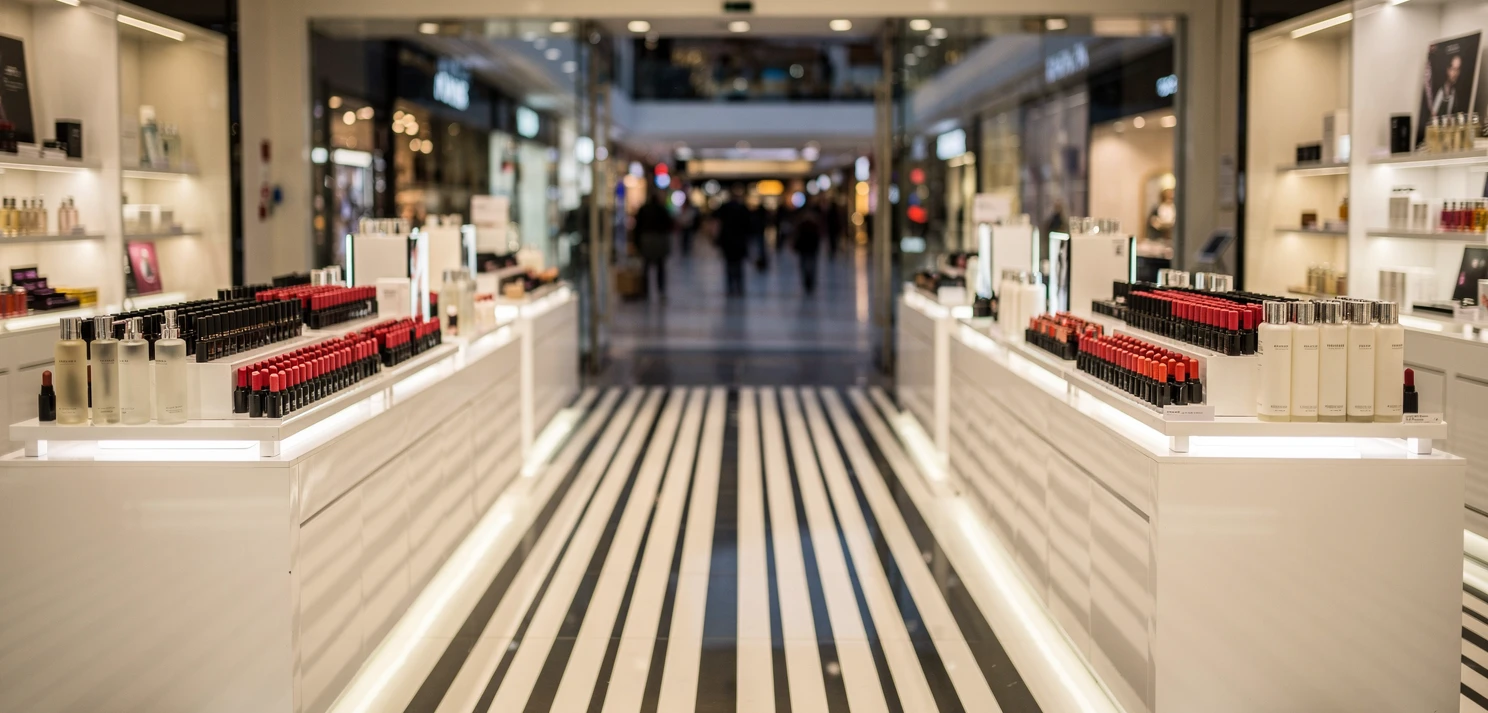
Sephora is preparing its biggest year of UK store openings since it returned to Britain in 2023. The LVMH-owned beauty chain is planning at least 10 new shops over the next year, The Times reported on 16 November 2026, citing property sources. Sites on High Street Kensington in London and at the Harlequin shopping centre in Watford are said to be already signed.
The plan lands four days after Sephora opened a new store at Brent Cross in north London, and seven weeks after it agreed to run beauty departments inside 100 Marks & Spencer stores from spring 2027. It also arrives shortly after the company filed its 2025 accounts at Companies House. Those accounts, which shopappy.com has reviewed, show UK sales up 38% to £266.2m, alongside a pre-tax loss that widened to £8.1m.
In short
- 10 new stores: Sephora plans at least 10 more UK shops over the next year, which This is Money says would take it to about 28. Kensington and Watford are the first named sites.
- 18 stores today: trade reports put the current estate at four shops in London and 14 elsewhere, up from 12 at the end of 2025 and one in March 2023.
- Sales up, losses up: the UK business, legally Feelunique International Limited, grew revenue from £192.9m to £266.2m in 2025, but its pre-tax loss rose from £5m to £8.1m as it paid for new stores.
- M&S tie-up: “Sephora at M&S” shop-in-shops are due in 100 M&S stores and on M&S.com from spring 2027.
- Pressure on Boots: the expansion targets a UK beauty market worth £5.2bn, where Boots, Space NK, Superdrug and John Lewis are all reworking their stores.
What has Sephora announced about new UK stores?
The core of the story is a report in The Times on Monday 16 November that Sephora intends to open at least 10 more UK shops next year. The paper attributed the detail to property sources rather than to a formal company announcement. TheIndustry.beauty, Retail Gazette and This is Money all followed the report later the same day, and each carried the same two named locations.
Those two sites are on High Street Kensington, west London, and in the Harlequin shopping centre in Watford, Hertfordshire. Neither has an opening date yet. Sephora has not published a full list of the other eight or more locations, and none of the reports named them.
Sarah Boyd, managing director of Sephora UK, gave a statement that was carried in several of the reports. “We see a significant opportunity to continue building our presence and bringing our unique beauty experience to more customers across the country,” she said. The statement confirms the direction of travel, though it does not confirm the number of shops.
How many Sephora stores are there in the UK now?
Retail Gazette and TheIndustry.beauty both put the current UK estate at 18 stores, made up of four in London and 14 in the rest of the country. This is Money said 10 more would take the total to 28. If all 10 open over the next 12 months, Sephora would have more than doubled its estate in two years.
There is a small counting question worth flagging. Some of the 16 November reports still described the Brent Cross shop as “planned for this winter”, yet the Ham & High reported that it opened on 12 November. Our own tally of reported openings, set out in the table below, reaches 19 if Brent Cross is included, so the figure of 18 may predate that opening. Sephora had said earlier in 2026 that it was aiming for 20 UK locations by the end of the year.
The Times framed the plan as openings “next year”, while This is Money described it as “over the next year”. In practice, the difference matters little for shoppers. Large shopping centre units typically take several months to fit out once a lease is signed, so the Kensington and Watford shops are unlikely to trade before spring 2027 at the earliest. That is our assessment based on Sephora’s own pattern, not a date the company has given.
Where is Sephora opening, and where is it already trading?
Sephora’s UK rollout has followed a clear pattern: big regional shopping centres first, then city-centre and boutique formats. Its first store back in Britain opened at Westfield London in White City in March 2023. The company’s own accounts say it opened five stores during 2025 to reach 12 by the end of that year, and trade and local press have tracked each opening since.
| Opening | Location | Format | Reported detail |
|---|---|---|---|
| March 2023 | Westfield London, White City | Destination store | First UK store after the brand left Britain in 2005 |
| 2025 | Liverpool ONE, Meadowhall (Sheffield), Manchester Arndale, St David’s (Cardiff), Westgate (Oxford) | Destination stores | Five openings in 2025, reaching 12 stores at year end (company accounts) |
| 12 February 2026 | Victoria Square, Belfast | Destination store | 13th UK store and first on the island of Ireland |
| April 2026 | Cabot Circus, Bristol | Destination store | Reported as the 14th UK store |
| 9 July 2026 | St James Quarter, Edinburgh | Destination store | First Scottish store, 15th UK location |
| 23 July 2026 | Carnaby Street, London | Boutique | First small-format boutique, 16th UK location |
| 13 August 2026 | Silverburn, Glasgow | Destination store | Last of the “Sephora Summer” openings |
| 2026 | Old Spitalfields Market, London | Boutique | Second boutique |
| 12 November 2026 | Brent Cross, north London | Destination store | Reported as 4,500 sq ft (one caption said 5,500 sq ft) |
| Next 12 months | High Street Kensington; Harlequin, Watford; at least eight more | Not confirmed | Signed per The Times; no dates given |
The earliest openings were built around crowd-pulling launches. This is Money recalled that hundreds of shoppers queued for the Manchester Arndale opening, with one couple sleeping outside overnight. The Silverburn launch in Glasgow also drew queues from early morning, according to retail trade coverage at the time.
Why Kensington and Watford?
Neither Sephora nor the landlords have explained the choice of the two signed sites. Both, however, fill visible gaps in the existing map. Kensington gives the chain a west London high street presence away from the Westfield mall, while Watford’s Harlequin centre serves a large commuter catchment north-west of London that currently has to travel to Brent Cross or central London for a Sephora.
The Brent Cross opening shows how landlords see the brand. Hammerson, which operates the centre, has described Sephora as one of the brands most requested by Brent Cross customers, the Ham & High reported. Shopping centre owners are competing hard for tenants that drive footfall, and the state of individual centres varies widely, as the recent ranking of the UK’s best and worst shopping centres showed.
What do Sephora UK’s latest accounts show?
The new store plan is easier to understand alongside the numbers behind it. Sephora UK trades through a company called Feelunique International Limited, which Sephora bought in 2021 when it acquired the online beauty retailer Feelunique. Its report and financial statements for the year ended 31 December 2025 are now on the Companies House register.
According to the strategic report in those accounts, revenue rose to £266.2m in 2025 from £192.9m in 2024. That is an increase of £73.3m, or about 38%. The directors attributed the growth mainly to strong retail performance from new stores, with improved online sales as the Sephora brand “continued to gain traction in the UK”.
| Measure | 2024 | 2025 | Change |
|---|---|---|---|
| Revenue | £192.9m | £266.2m | +£73.3m (about +38%) |
| Gross profit margin | 37.4% | 38.1% | +0.7 points |
| Operating costs as a share of revenue | 38.3% | 39.1% | +0.8 points |
| Loss before tax | £5.0m | £8.1m | Loss up £3.1m |
| Stores at year end | 7 | 12 | +5 openings |
The 2024 store count in the table is derived from the accounts, which say five stores opened in 2025 to reach a total of 12. The employee figure of 681 comes from the company’s separate modern slavery statement for 2025, which also gives revenue of £266.2m.
Why is Sephora UK still losing money?
The accounts are candid that the losses are deliberate. The directors wrote that the company continues “to make significant investment across the business to ensure the longer-term growth plans are achieved”, and that operating costs and the pre-tax loss rose as a result. The gross margin improved because the brand mix shifted and the business became less promotional after rebranding from Feelunique to Sephora, particularly in stores.
Funding comes from the parent group. The accounts say intercompany payables increased “to reflect the funding received from LVMH”, that external debt was replaced with group loans in 2021, and that the business now draws on cash pooling from LVMH Finance Belgique. The parent has provided a letter of support for at least 12 months, and the directors say further investment has been committed in forecasts running to December 2027.
For shoppers, the practical reading is simple: Sephora’s UK expansion is being paid for by one of the world’s largest luxury groups, and it is not under pressure to turn a profit quickly. That gives it room to sign expensive prime units and absorb launch costs that a standalone UK chain could not.
Sephora’s parent has been leaning on the chain while its fashion and leather houses face softer demand. This is Money reported that LVMH said last month that the division housing Sephora grew sales by 8% in its most recent quarter, citing new exclusive launches including Rhode and several Chinese beauty brands. Sephora operates around 3,400 stores in 35 countries, according to the same report.
How does Sephora’s UK return compare with its first attempt?
Sephora has been here before. It entered the UK around 2000 and closed its six British shops in 2005 after about five years, This is Money noted, at a time when Boots, Superdrug and department stores such as Debenhams dominated beauty retail. It even had an earlier store at Brent Cross, which closed a few years after opening, the Ham & High reported.
Three things look different this time. First, Sephora arrived with a working online business: the 2021 Feelunique deal gave it a UK website, customer base and distribution before any shop opened. Second, Debenhams has gone, leaving a gap in prestige beauty on many high streets and in shopping centres. Third, the brand now relies heavily on exclusive labels that are hard to find elsewhere in Britain, with the Brent Cross launch highlighting “Only At Sephora” names such as Rhode, Makeup by Mario, Haus Labs, Merit and Tower 28.
Social media has also changed demand. Sephora’s events now sell out in minutes. TheIndustry.beauty reported that tickets for the first London edition of its Sephoria beauty festival, held last month, sold out in 10 minutes. That kind of pent-up interest is exactly what landlords want in an empty unit.
What is the Sephora and M&S partnership?
On 29 September 2026, Marks & Spencer and Sephora announced a partnership to create “Sephora at M&S”, a beauty destination inside selected M&S stores and on M&S.com. M&S said in its press release that the format would launch from spring 2027 and reach 100 high streets and retail parks across the UK.
The release said specialist beauty teams will work in the shop-in-shops, while M&S.com will carry a broader online range with home delivery and Click & Collect from M&S stores nationwide. The final brand line-up has not been confirmed and will be announced closer to launch, along with any Sephora exclusives. M&S also said it will keep investing in its own-label beauty.
The numbers in the release explain the logic. M&S said its share of the UK beauty market was just 1.3% over the 12 weeks to 19 July 2026, in a market worth £5.2bn that grew 1.2% over the year, citing Worldpanel by Numerator data. Beauty is a category with frequent repeat visits, which M&S needs as it tries to fix a clothing business that has lagged its booming food arm, a theme that ran through M&S’s half-year results in November.
For Sephora, the partnership is a shortcut. Sephora said in the joint release that its UK launch had been “such a huge success” that it wanted “to go further and faster”, and called the shop-in-shop model “more diversified and scalable”. Combining 28 or so standalone stores with 100 M&S concessions would give Sephora well over 100 UK points of sale within roughly two years, without signing 100 leases.
The M&S concessions do not count towards the 10 new shops reported by The Times, which are standalone Sephora stores. Retail Gazette and TheIndustry.beauty both described the M&S tie-up as an extra channel that extends Sephora’s reach beyond its own stores, rather than part of the 10.
How does Sephora stack up against Boots, Space NK and other UK rivals?
Sephora is entering one of the most crowded parts of British retail. Boots remains the dominant beauty chain by store count, and This is Money reported that it has added 61 new cosmetics and fragrance brands since last August. Boots has also opened two beauty-only stores, the first at Battersea Power Station in London in 2023 and the second at Cabot Circus in Bristol in May 2026, an 11,000 sq ft shop carrying more than 200 brands.
Bristol is now a direct test of the two approaches. Sephora opened its own Cabot Circus store in April 2026, and Boots followed with its beauty-only format in the same shopping centre in May. Boots’s ownership is also in play, with reports in October that the Weston family was nearing a £7bn deal for Boots, which could shape how much it invests in beauty from here.
| Retailer | Owner | Recent UK beauty move | Latest reported figure |
|---|---|---|---|
| Sephora UK | LVMH | At least 10 new stores planned; 100 M&S shop-in-shops from spring 2027 | Revenue £266.2m in 2025, pre-tax loss £8.1m (Companies House) |
| Boots | Sycamore Partners (via Walgreens Boots Alliance) | Beauty-only stores in Battersea and Bristol; 61 new brands since August 2025 | Not split out for beauty |
| Space NK | Ulta Beauty (since July 2025) | New and enlarged stores, growing online sales | £282.7m turnover in nine months to January 2026, per its filed accounts as reported by Cosmetics Business |
| John Lewis | John Lewis Partnership | New beauty halls with newer and established brands | Not split out for beauty |
| Superdrug | A.S. Watson | Store refurbishments, per TheIndustry.beauty | Not reviewed for this article |
| M&S | Listed | Handing its beauty departments to Sephora concessions | 1.3% beauty market share (12 weeks to 19 July 2026) |
Is Sephora now bigger than Space NK in the UK?
On revenue, the two are now close, but the periods do not line up neatly. Sephora UK’s £266.2m covers the calendar year 2025. Space NK reported £282.7m for a shorter nine-month period to January 2026, after a change of year end following its takeover by Ulta Beauty, according to Cosmetics Business. That suggests Space NK still had the larger UK-focused business on an annualised basis, although Sephora’s growth rate was faster.
The comparison also hides different business models. Space NK is known for premium skincare in smaller units, while Sephora’s destination stores are larger and lean on make-up, fragrance and exclusive brands. Both sell heavily online, and Sephora UK’s accounts credit its stores with lifting web sales as well.
What does Sephora’s expansion mean for UK shoppers?
For most shoppers, the immediate effect is access. Sephora promotes many of its labels, such as Rhode and Haus Labs, as “Only At Sephora” exclusives, so they are not on the shelves at Boots or Superdrug. A new store within driving distance means no delivery charges, the chance to test shades in person and in-store services from beauty advisers.
Competition is also likely to sharpen promotions. The accounts show Sephora has moved away from Feelunique’s heavier discounting, but its arrival in a town has tended to prompt rivals to refresh their own beauty halls. With Black Friday deals already running across UK beauty retailers, shoppers comparing prices between Sephora, Boots, Space NK and Lookfantastic online may find the same product at quite different prices on the same day.
What should shoppers check before buying prestige beauty online?
Because high-demand brands are often counterfeited, buying from an authorised retailer matters. Fake cosmetics bought from unofficial sellers have been found to contain banned substances, as Trading Standards warned when it found mercury and lead in fake beauty products sold to UK shoppers. Buying from Sephora, Boots, Space NK or a brand’s own UK website removes most of that risk.
Shoppers buying online also have a 14-day right to cancel under the Consumer Contracts Regulations 2013. That right does not apply to sealed goods that are unsuitable for return for health or hygiene reasons once the seal is broken, which covers most opened cosmetics. Retailers can offer more generous returns as a goodwill policy, so it is worth reading the returns page before buying.
Under the Consumer Rights Act 2015, goods must be of satisfactory quality, fit for purpose and as described. If a product is faulty, shoppers have a short-term right to reject it for a full refund within 30 days. After that, the retailer can repair or replace it first. A reaction to an ingredient that was correctly listed is usually not a fault, but a product that has been contaminated or has separated before its expiry date generally is.
What does it mean for UK high streets and shopping centres?
Sephora’s expansion is one of the few large store-opening programmes in British non-food retail this year. Most of the recent news has run the other way, with closures at Poundland, TG Jones and others, and footfall under pressure. UK footfall fell 4.7% year on year in October, according to the BRC-Sensormatic monitor, with storms hitting high streets hardest.
Beauty is one of the categories still filling space. It suits physical retail because shoppers want to try products, and it attracts younger customers whom landlords value. Brent Cross’s operator explicitly cited Sephora and Hollister as part of a strategy to attract a broader customer base, according to the Ham & High.
The flip side is concentration. Sephora’s sites have so far been in the strongest shopping centres and the busiest London streets. The M&S deal will take the brand into smaller towns and retail parks, but standalone stores in places with weaker footfall are not part of what has been reported.
Will Sephora open in my town?
Only two of the next 10 sites have been named. Based on the pattern so far, the most likely candidates are large regional centres in English cities without a Sephora yet, as well as more London boutiques following Carnaby Street and Spitalfields. That is an inference from the existing map rather than anything Sephora has said. Shoppers in smaller towns are more likely to see Sephora first through an M&S concession from spring 2027.
What happens next?
Several dates and documents will show whether the plan is on track:
- Christmas trading: Sephora UK does not publish a trading statement, but LVMH’s full-year results in January usually comment on Sephora’s performance by region.
- Store announcements: local planning and licensing notices, and landlord press releases, usually confirm each new site several months before opening.
- Spring 2027: the first Sephora at M&S shop-in-shops and the M&S.com beauty range are due, along with the brand line-up.
- 30 September 2027: the deadline for Feelunique International Limited to file its 2026 accounts at Companies House, which will show whether 2026’s openings narrowed the loss.
For now, the key facts are clear. Sephora is spending heavily to become a serious alternative to Boots in British beauty, its UK sales are rising quickly, and its parent is willing to fund losses while the estate grows. Kensington and Watford are the first two names on a list that should get longer through 2027.
Frequently asked questions
How many Sephora stores are there in the UK?
Trade reports on 16 November 2026 put the total at 18: four in London and 14 elsewhere in the UK. Sephora opened a new store at Brent Cross on 12 November, which may take the real count to 19. The company has said it aimed to have 20 UK locations by the end of 2026.
Where are the new Sephora stores opening?
The two confirmed sites are on High Street Kensington in London and at the Harlequin shopping centre in Watford, according to The Times. Sephora plans at least 10 new stores in total over the next year, but the remaining locations have not been named.
When will the new Sephora stores open?
No opening dates have been announced. The Times described the plan as openings next year, and This is Money as over the next year. Based on typical fit-out times, the Kensington and Watford stores are unlikely to open before spring 2027.
Is Sephora coming to M&S stores?
Yes. Sephora at M&S shop-in-shops are due to launch from spring 2027 in 100 M&S stores across UK high streets and retail parks, with a wider range on M&S.com offering home delivery and Click & Collect. The brand line-up will be confirmed closer to launch.
Who owns Sephora UK?
Sephora is owned by LVMH, the French luxury group that also owns Dior and Louis Vuitton. In the UK it trades through Feelunique International Limited, the online beauty retailer Sephora bought in 2021 and later rebranded as Sephora UK.
Is Sephora UK profitable?
Not yet. Its accounts for 2025 show revenue of £266.2m, up from £192.9m, but a loss before tax of £8.1m, up from £5m in 2024. The directors say the losses reflect deliberate investment in stores and staff, funded by LVMH.
Is Sephora cheaper than Boots?
Not as a rule. The two retailers stock different ranges, and where they sell the same brand, prices are usually close to the brand’s recommended price. Sephora’s appeal lies more in exclusive brands that Boots does not carry. Comparing prices on the day is the best approach, especially during Black Friday promotions.
Can I return opened make-up bought online from Sephora UK?
The legal 14-day right to cancel online orders does not cover sealed health or hygiene items once they have been opened, which includes most cosmetics. Faulty products are different: under the Consumer Rights Act 2015 you can reject them for a refund within 30 days. Any wider returns policy is at the retailer’s discretion, so check its returns page before buying.